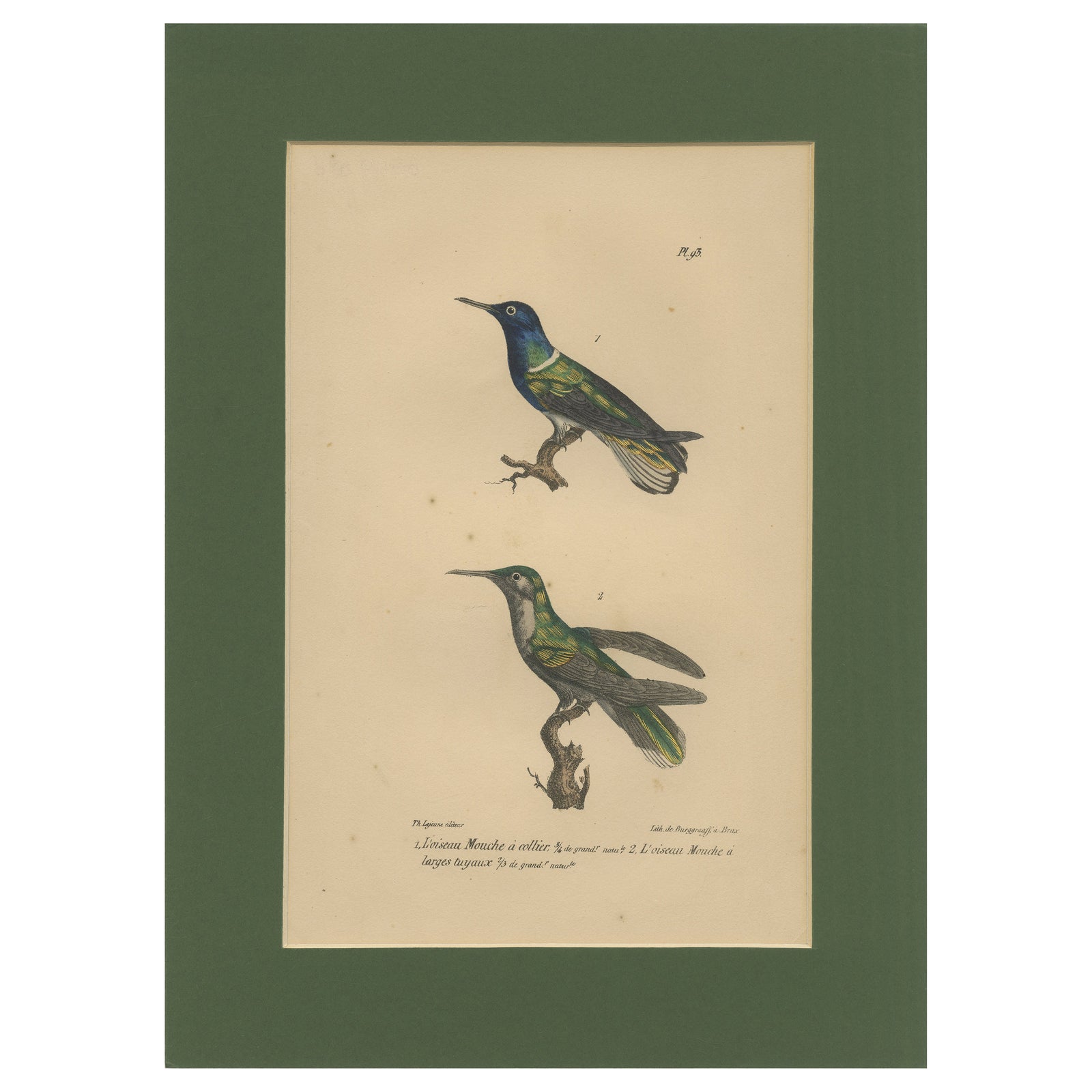
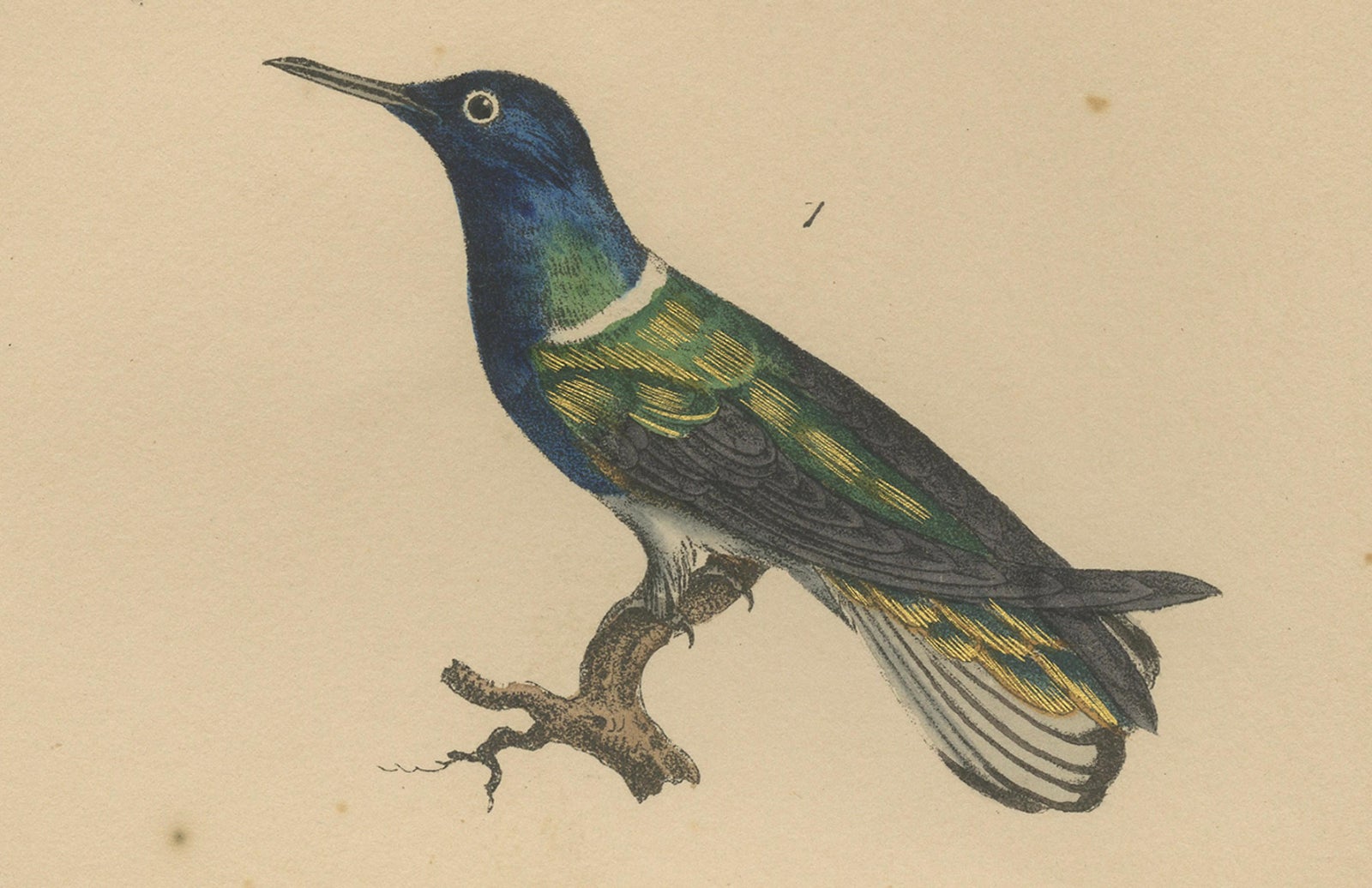
Close-ups
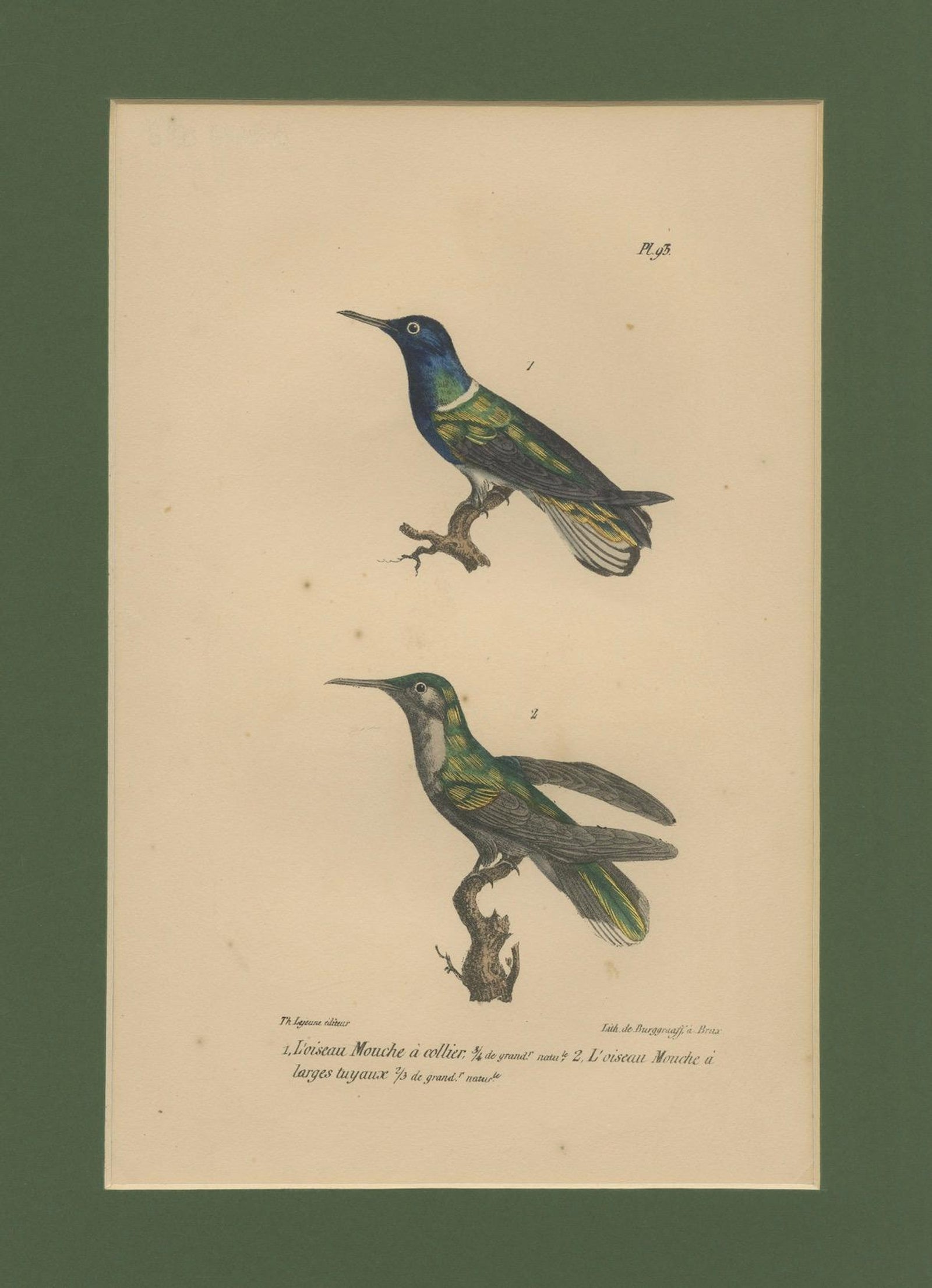
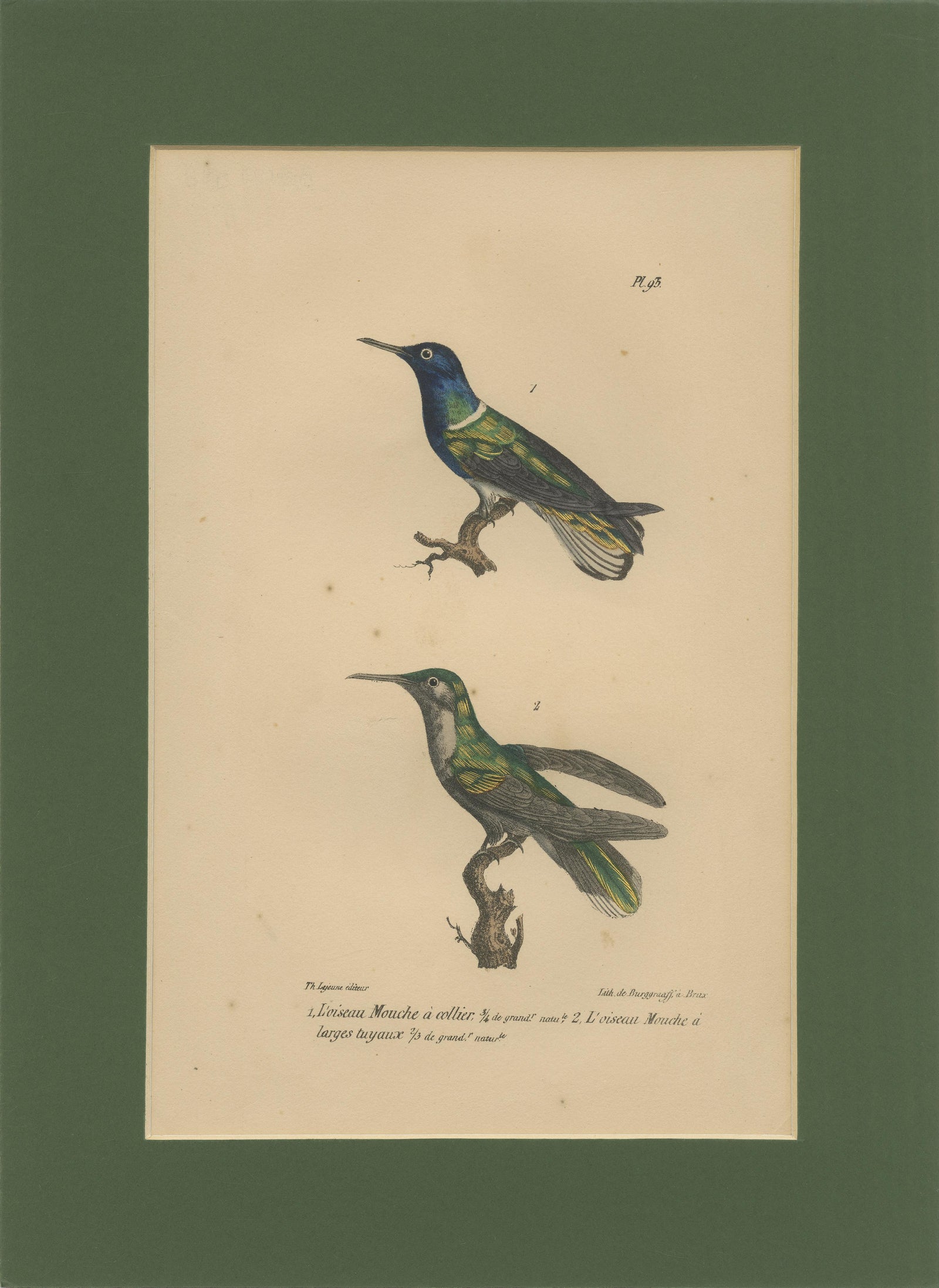
Framed and on the wall
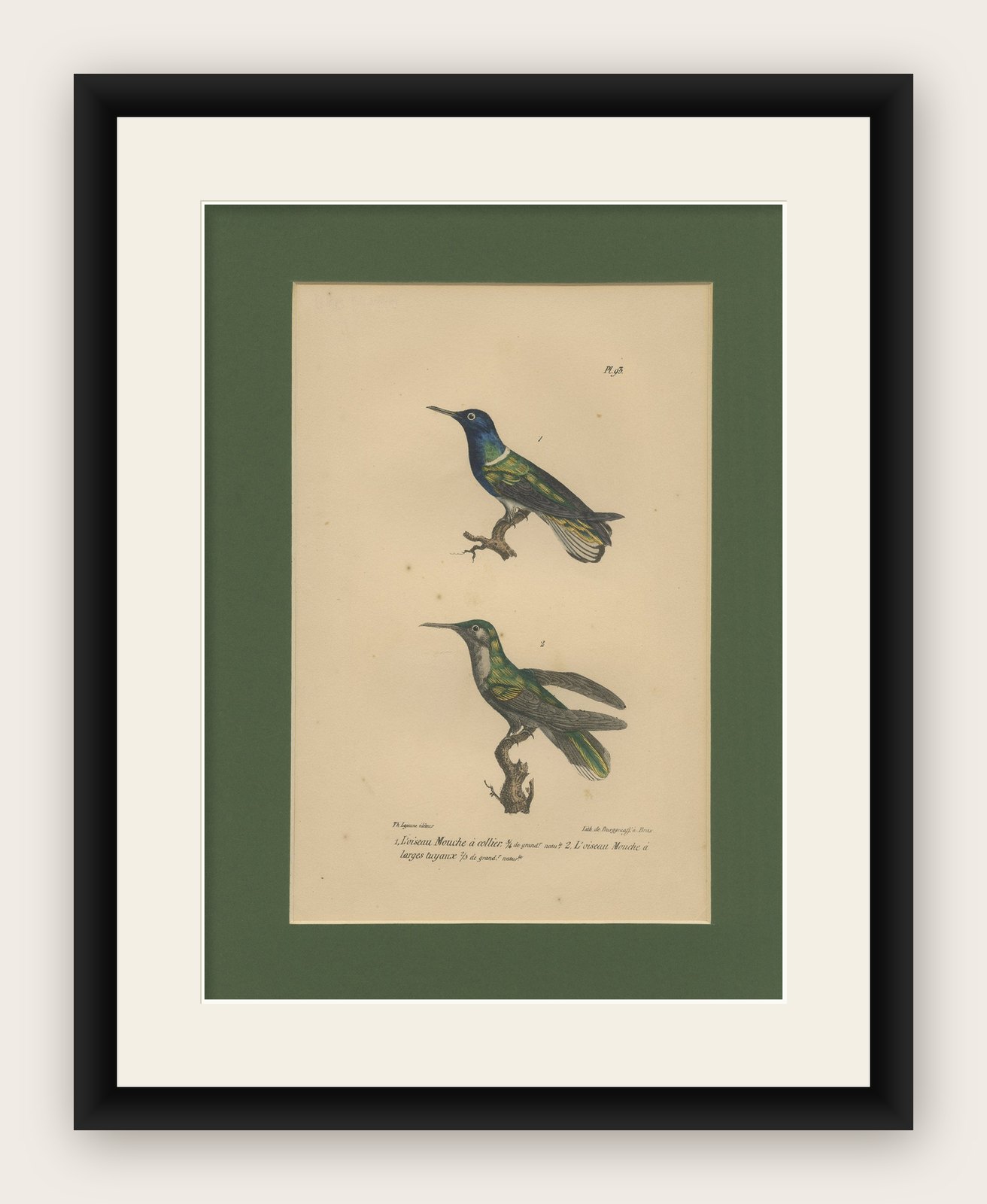
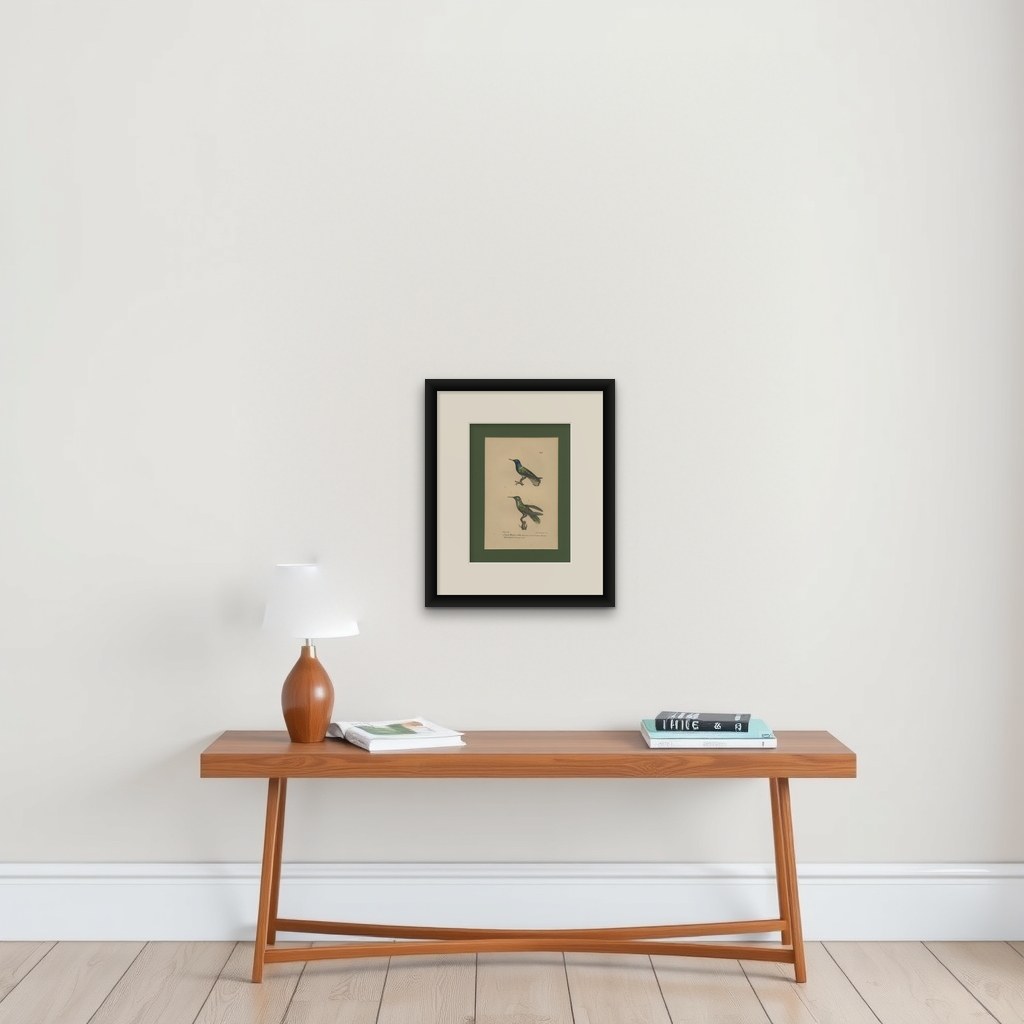

Frame and rooms are illustrations of how the print could look; the description says what is included.
Antique Hand-Colored Hummingbird Engraving with Gold Highlights, c.1835
£240£18025% off ($235, €216)
Period original, not a reproduction.
Shipped from the Netherlands, flat or rolled, insured and tracked, worldwide. Returns accepted within 14 days.
- Date
- 1835
- Size
- 11.6 × 8.5 in (29.5 × 21.6 cm)
- Condition
- Very good for its age. Light scattered foxing and faint age toning, mostly in the margins, with bright, well-preserved colors. Plate mark visible. Comes in a matting board.
- Period
- Early 19th century
- Section
- Birds
- Reference
- f_46251772
- Color
- Hand colored
What the condition grades mean
- Excellent
- Bright and clean, with no faults worth mentioning.
- Very good
- Only light signs of age, such as faint toning.
- Good
- Normal signs of age for a sheet of this period: toning, some foxing, small marks or neat old repairs.
- Fair
- Clear faults such as staining, tears or repairs, priced to match.
Every fault we see is written in the condition note, and the whole sheet is shown uncropped in the photos.
Antique Hand-Colored Hummingbird Engraving with Gold Highlights, c.1835
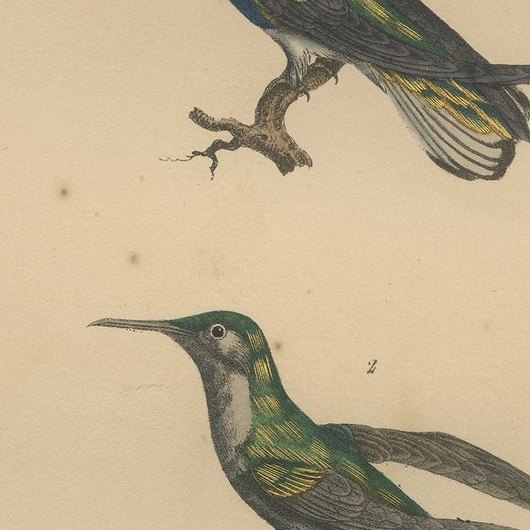
This finely detailed hand-colored engraving presents two exquisite hummingbirds perched on delicate branches, rendered with remarkable precision and vibrant color. The print depicts:
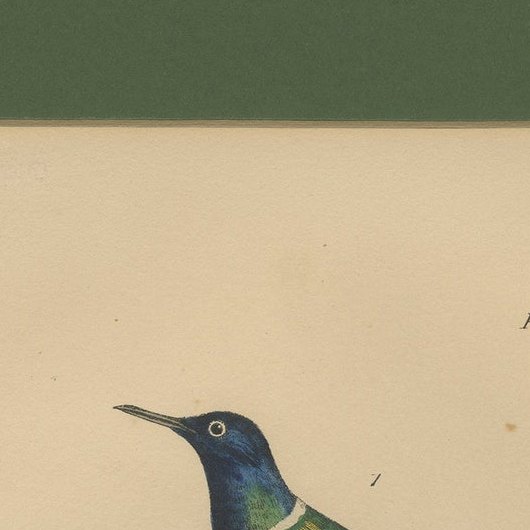
1. L’oiseau Mouche à collier (Collared Hummingbird), shown at three-quarters of its natural size, with a vivid cobalt-blue head and throat, iridescent green upperparts, and striking golden highlights on the wings and tail.
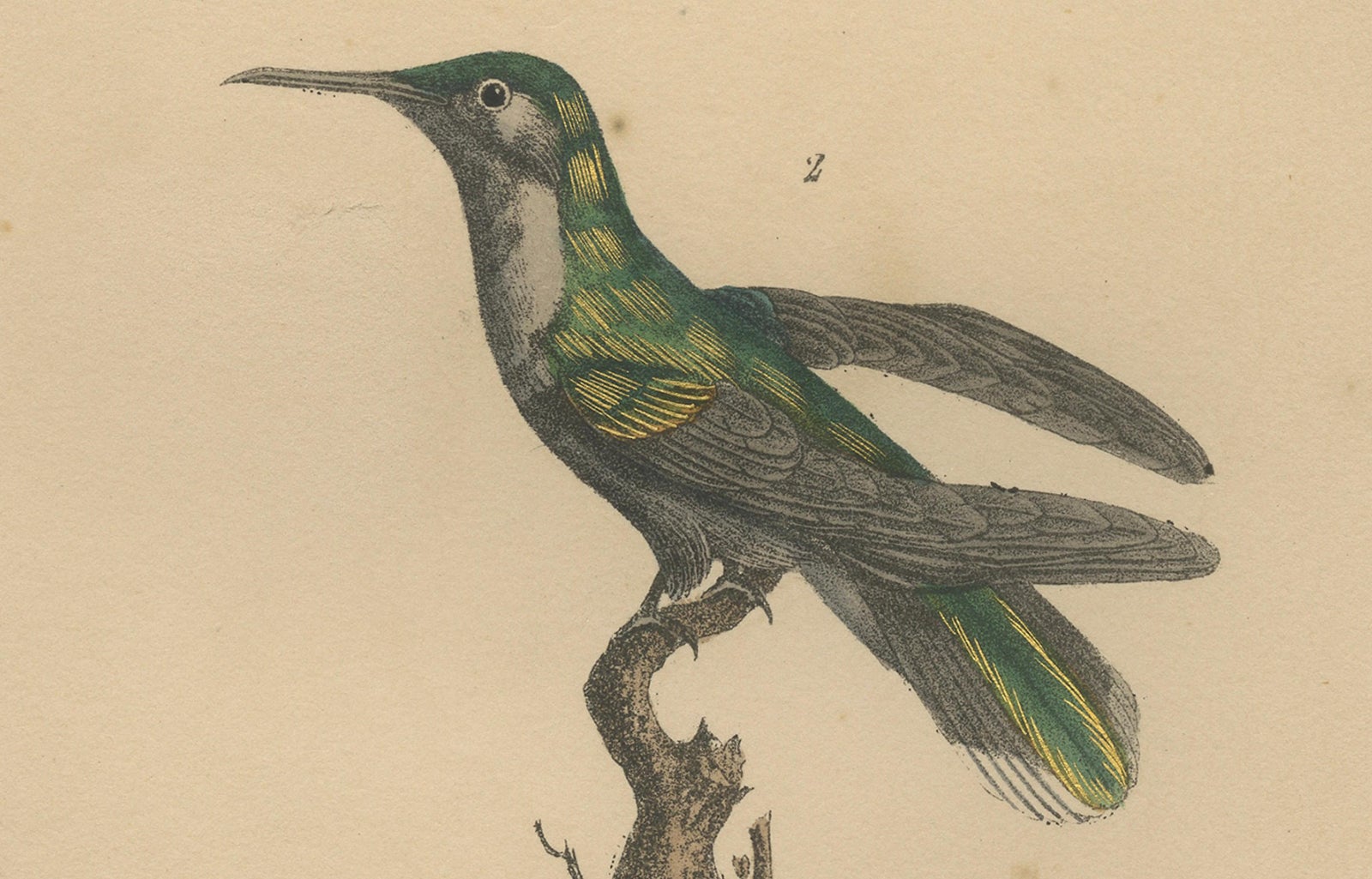
2. L’oiseau Mouche à larges tuyaux (Broad-Tailed Hummingbird), also at three-quarters natural size, with shimmering emerald-green plumage, golden feather accents, and a graceful, elongated tail.
The engraving was produced by Louis-Aimé Martin Beau, based on designs from leading 19th-century natural history illustrators. It was published by T. Lejeune, Paris, around 1835, during a period when European audiences were fascinated by exotic New World bird species. Such plates were prized not only for their scientific accuracy but also for their decorative beauty, making them popular with both naturalists and collectors.
The coloring, applied by hand, is further enhanced with delicate gold highlights that capture the metallic luster typical of hummingbird plumage, while the fine line engraving preserves intricate feather patterns. These species, native to Central and South America, are celebrated for their iridescent colors, rapid wingbeats, and ability to hover while feeding on nectar.
Framing tips: A natural wood or gold-toned frame with a soft cream or off-white mat will complement the vibrant greens and blues. Alternatively, a deep green mount, as shown here, enhances the naturalistic presentation and makes the iridescent colors pop.
Technique: Hand-colored engraving with gold highlights
Maker: Louis-Aimé Martin Beau (engraver), published by T. Lejeune, Paris, c.1835