Close-ups
Framed and on the wall
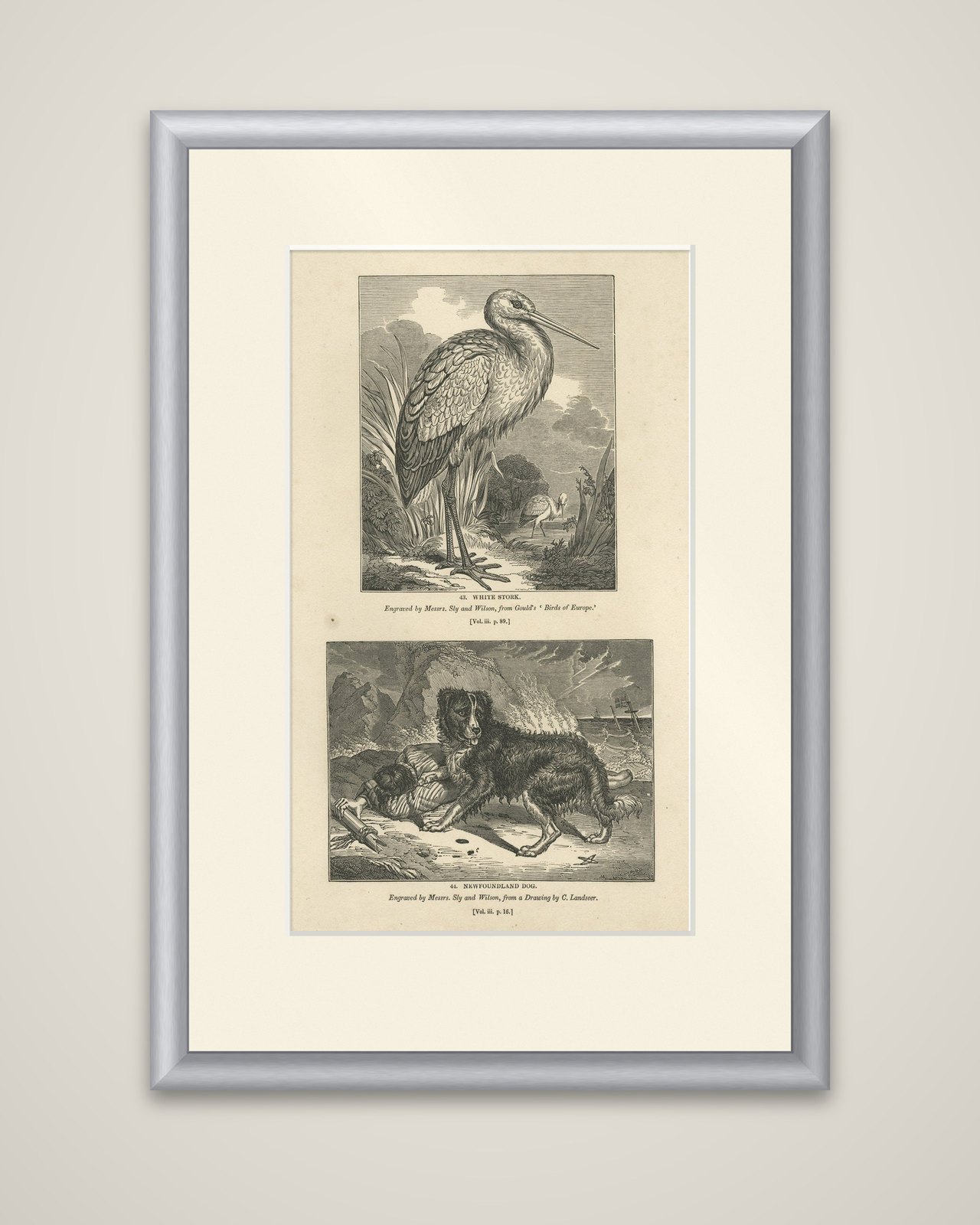


Frame and rooms are illustrations of how the print could look; the description says what is included.
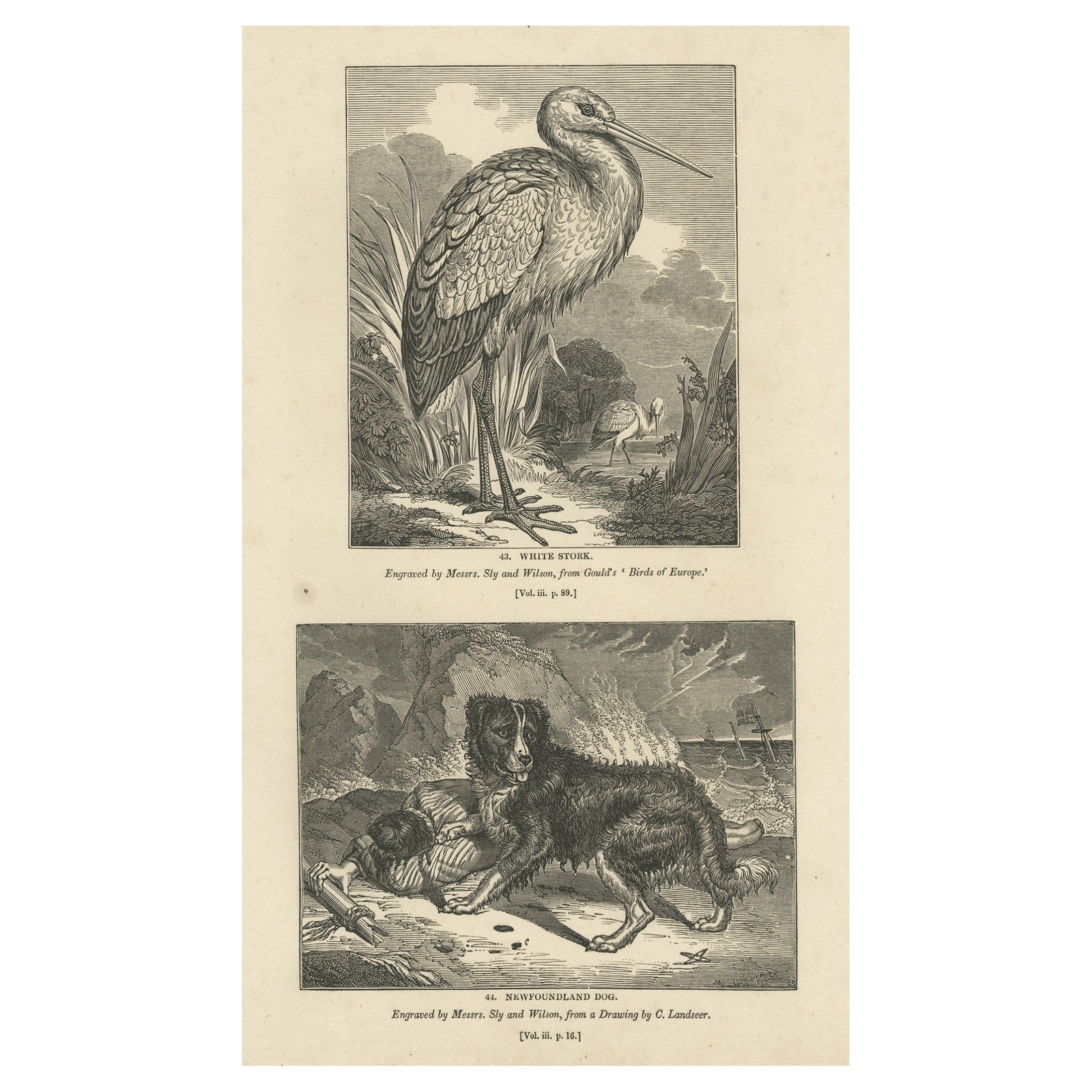
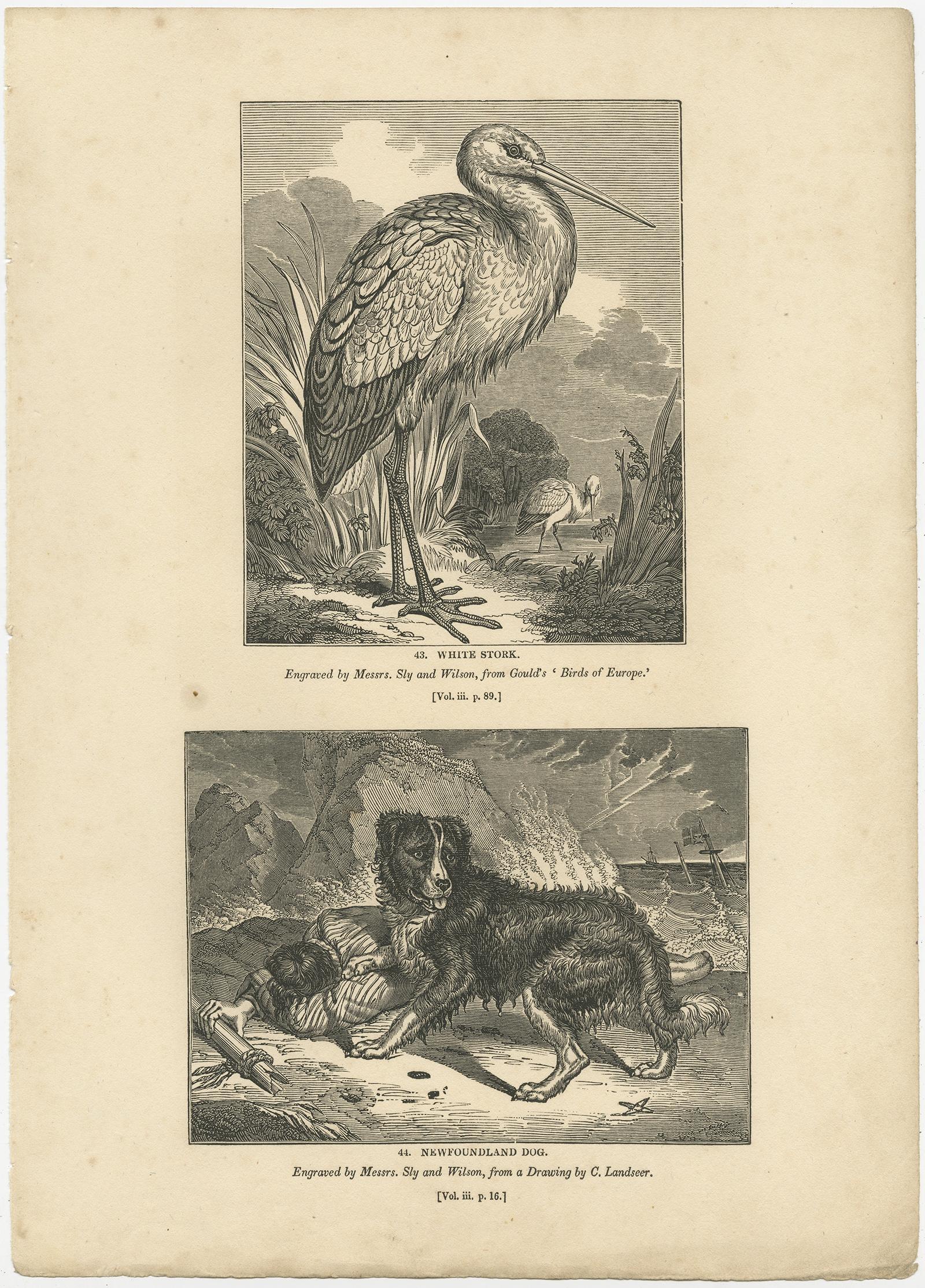
Old Antique Print of a White Stork and Newfoundlander Dog, 1835
€130 ($145, £110, €130)
Period original, not a reproduction.
Shipped from the Netherlands, flat, insured and tracked, worldwide. Returns accepted within 14 days.
- Date
- 1835
- Size
- 13.8 × 9.6 in (35 × 24.5 cm)
- Condition
- Fair. /good, general age-related toning. Minor soiling and wear, mainly in margins. Blank verso, please study image carefully.
- Period
- Early 19th century
- Section
- Birds
- Reference
- f_26680012
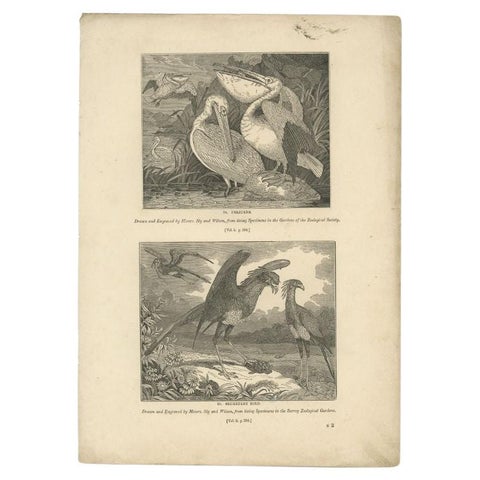
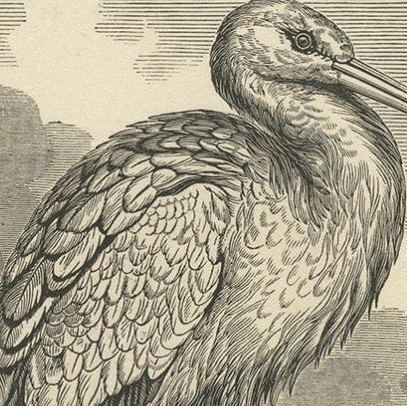
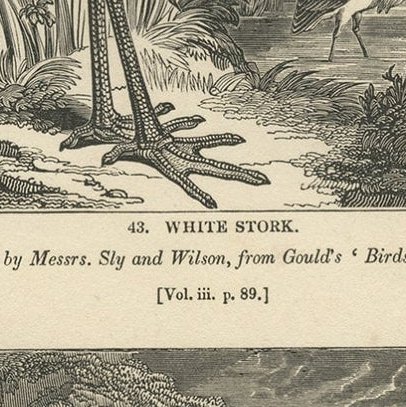
White Stork and Newfoundland Dog, two original wood engravings on one sheet from One Hundred and Fifty Wood Cuts selected from the Penny Magazine, published by Charles Knight, c.1835. Each image carries its own printed caption and number. The upper is "43. White Stork. Engraved by Messrs. Sly and Wilson, from Gould's Birds of Europe", and the lower is "44. Newfoundland Dog. Engraved by Messrs. Sly and Wilson, from a Drawing by C. Landseer", each with a volume and page reference.
In the upper image a tall white stork stands in profile among reeds and bushes beside a stream, its long bill pointed forward, with a second bird in the water behind. The lower image is a dramatic scene on a stormy shore. A large long-haired black and white Newfoundland dog crouches over the body of a boy lying on the beach, a dismasted shipwreck and heaving waves behind. It illustrates the rescue instinct for which the breed became famous.
The Penny Magazine, founded by Charles Knight for the Society for the Diffusion of Useful Knowledge, brought inexpensive illustrated articles on natural history and other subjects to a large readership in the 1830s.