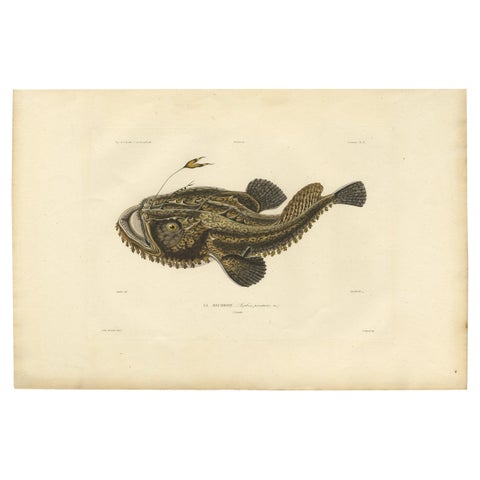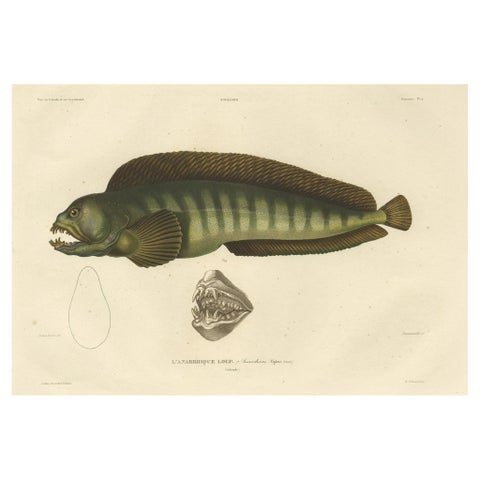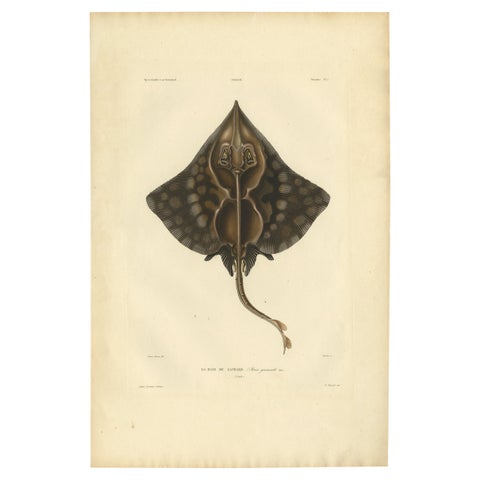
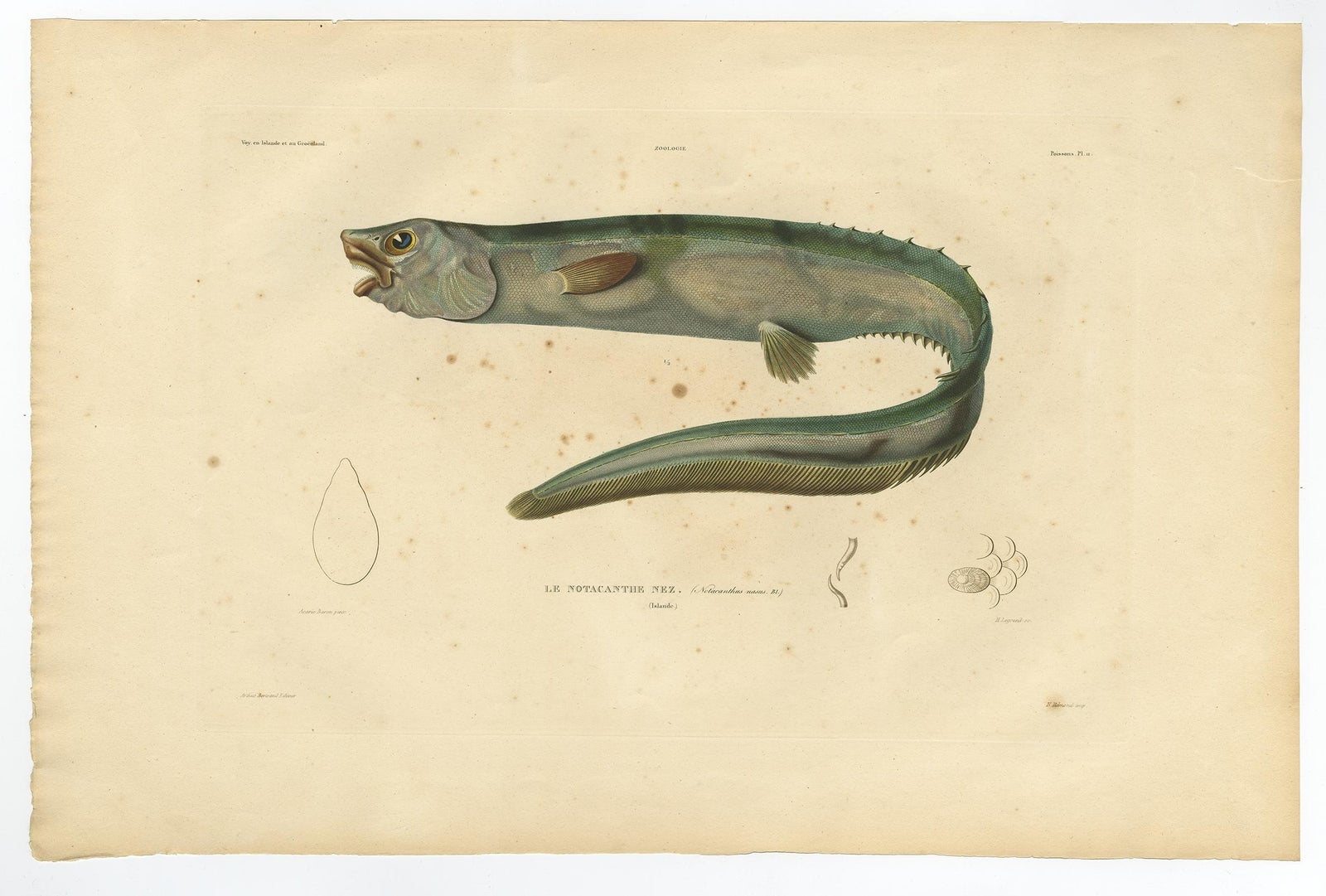
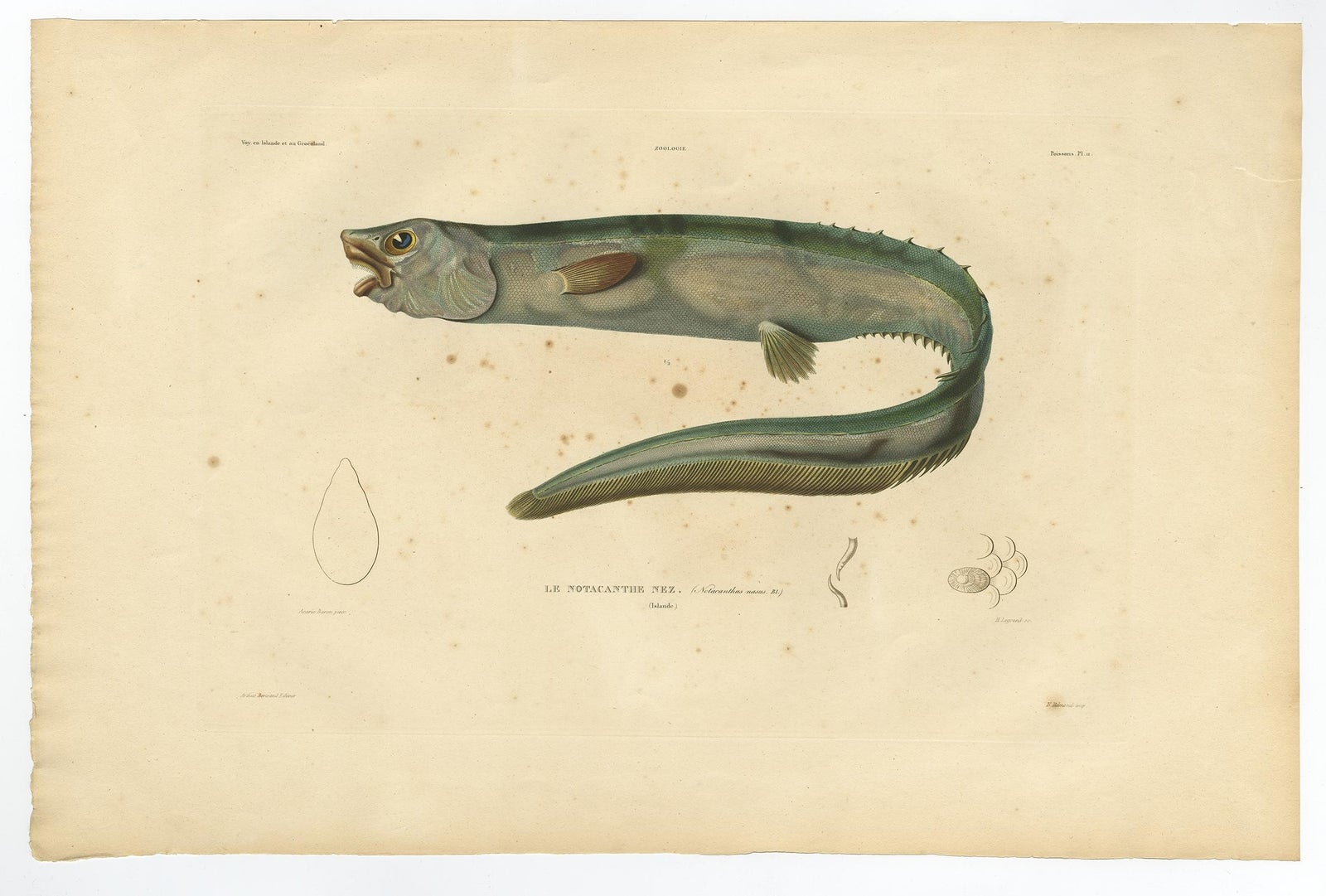
Close-ups
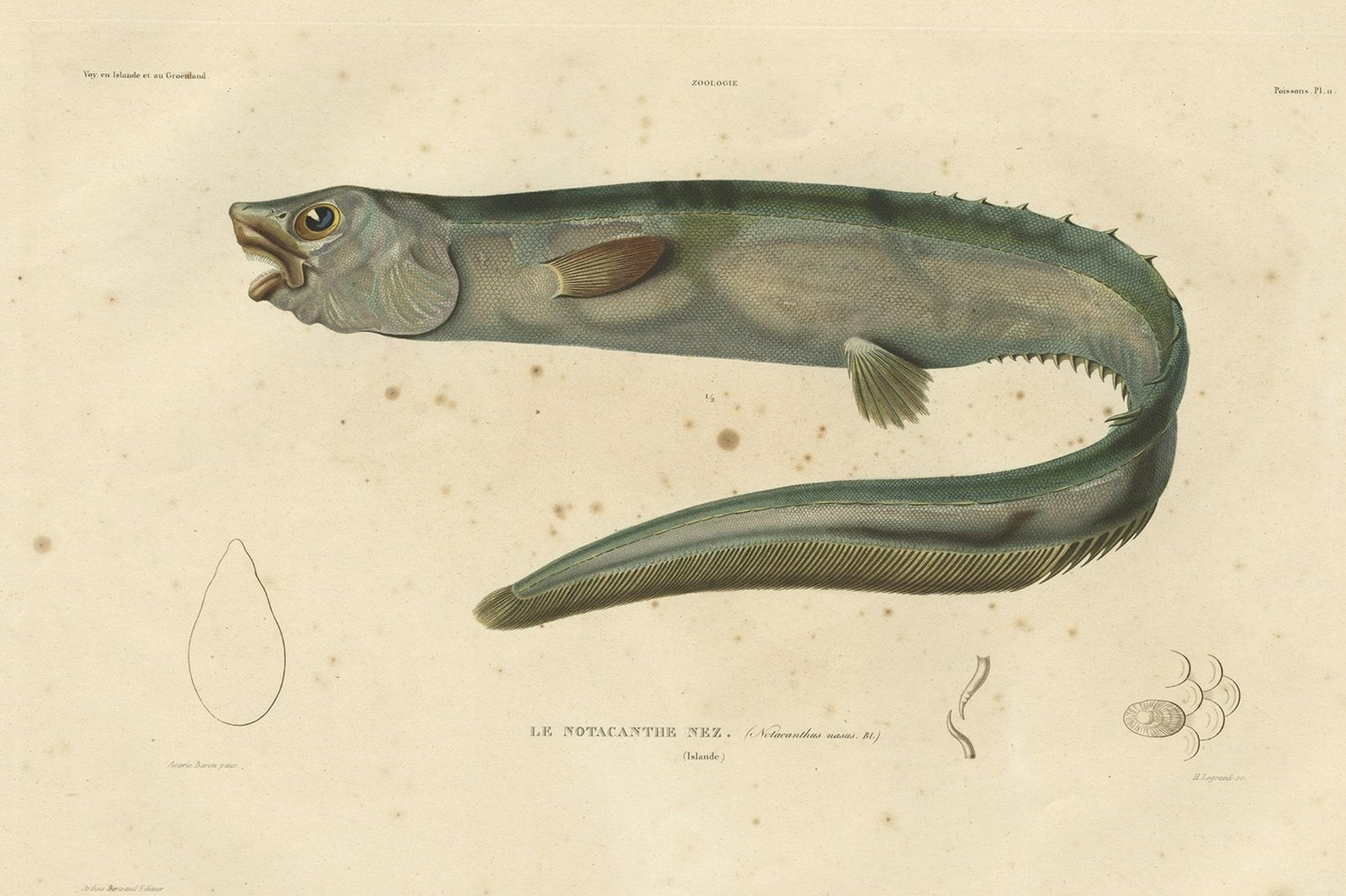
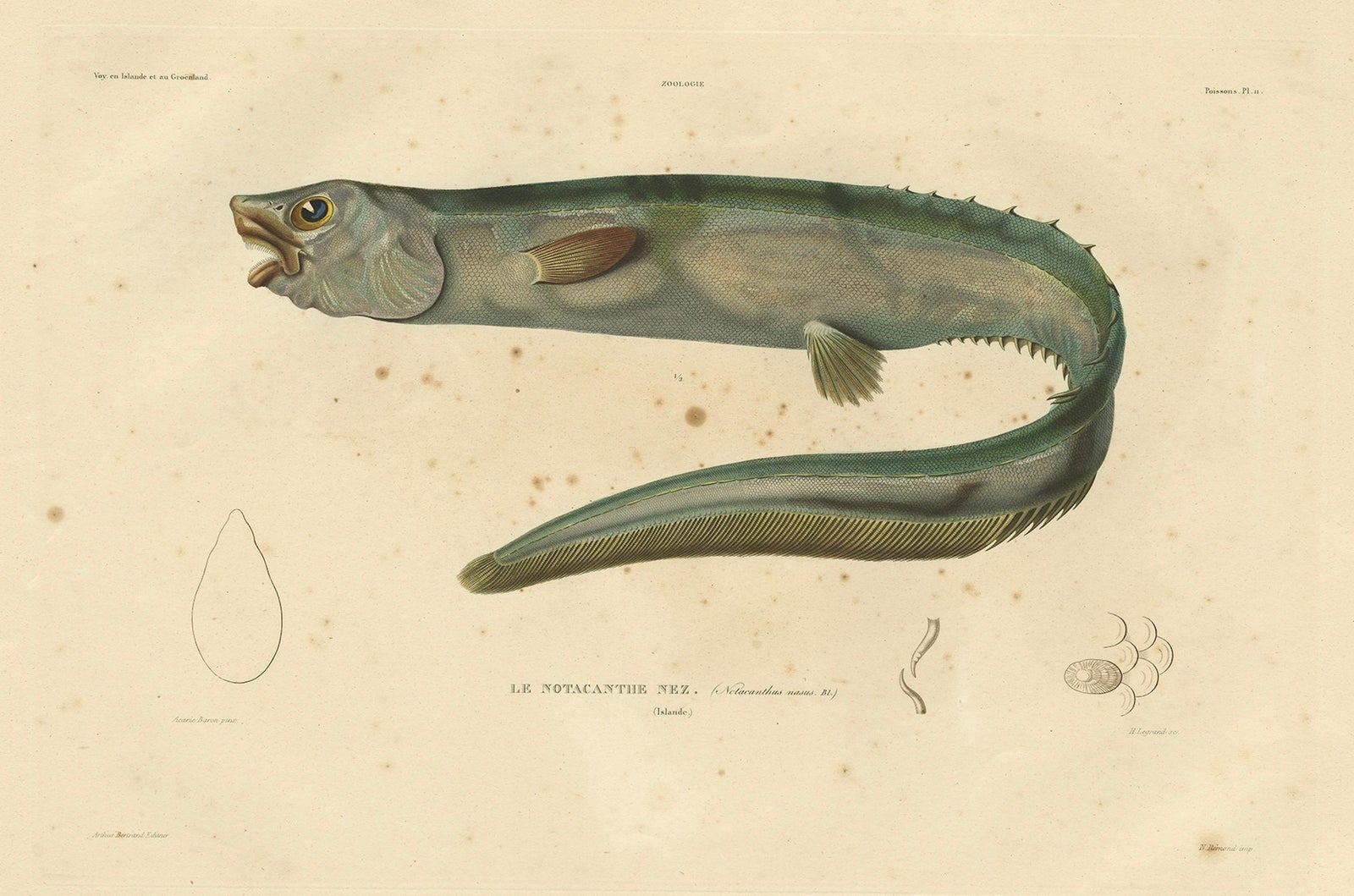
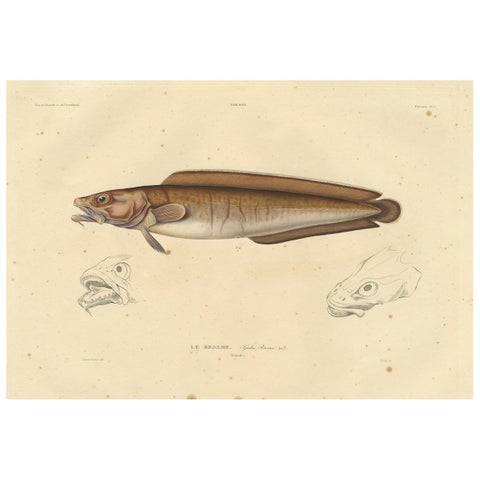
Antique Hand-Colored Fish Print of the Snub-Nosed Spiny Eel, 1842
€540 ($605, £460, €540)
Period original, not a reproduction.
Shipped from the Netherlands, flat, insured and tracked, worldwide. Returns accepted within 14 days.
- Date
- 1842
- Size
- 13.8 × 21.3 in (35 × 54 cm)
- Condition
- Good. Condition report: Strong impression with excellent hand coloring. Wide margins with light foxing and mild age toning, particularly in the background, not affecting the image. Plate mark visible.
- Period
- Early 19th century
- Section
- Fish and shells
- Reference
- f_27420772
- Color
- Hand colored
What the condition grades mean
- Excellent
- Bright and clean, with no faults worth mentioning.
- Very good
- Only light signs of age, such as faint toning.
- Good
- Normal signs of age for a sheet of this period: toning, some foxing, small marks or neat old repairs.
- Fair
- Clear faults such as staining, tears or repairs, priced to match.
Every fault we see is written in the condition note, and the whole sheet is shown uncropped in the photos.
Antique Print of the Snub-Nosed Spiny Eel (Notacanthus), Gaimard, 1842
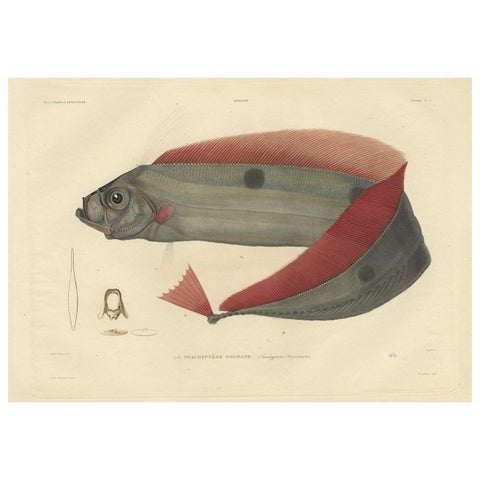
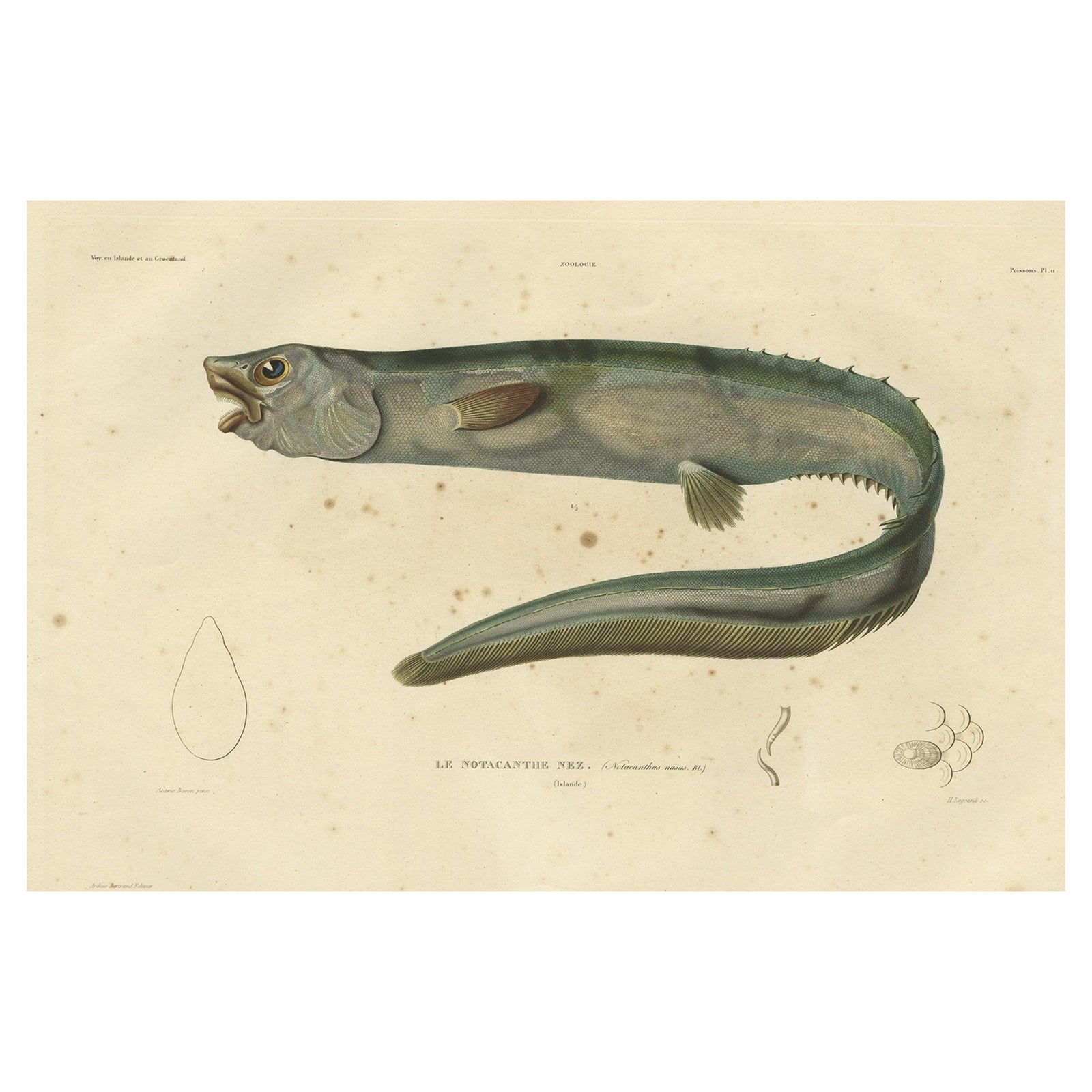
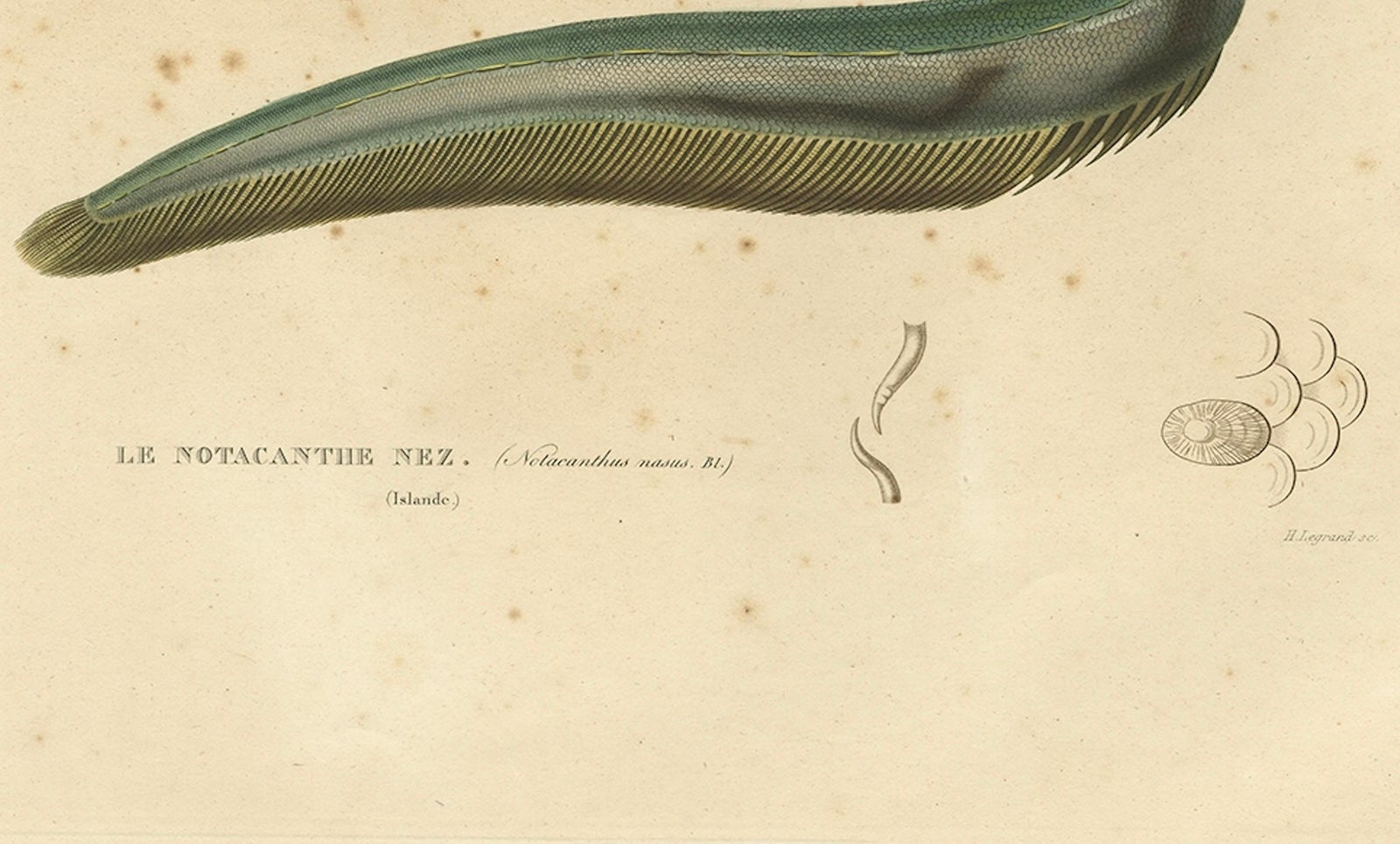
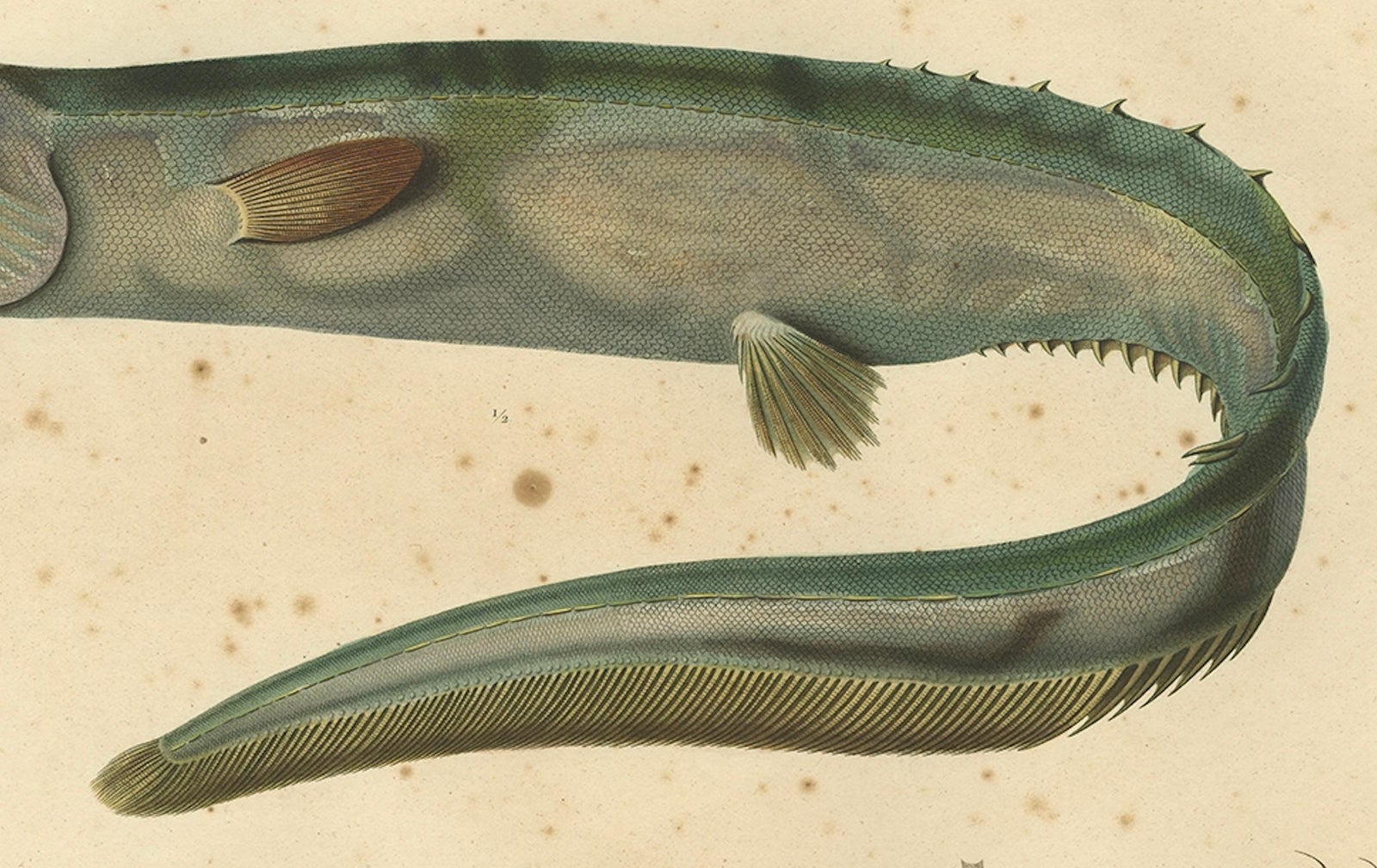
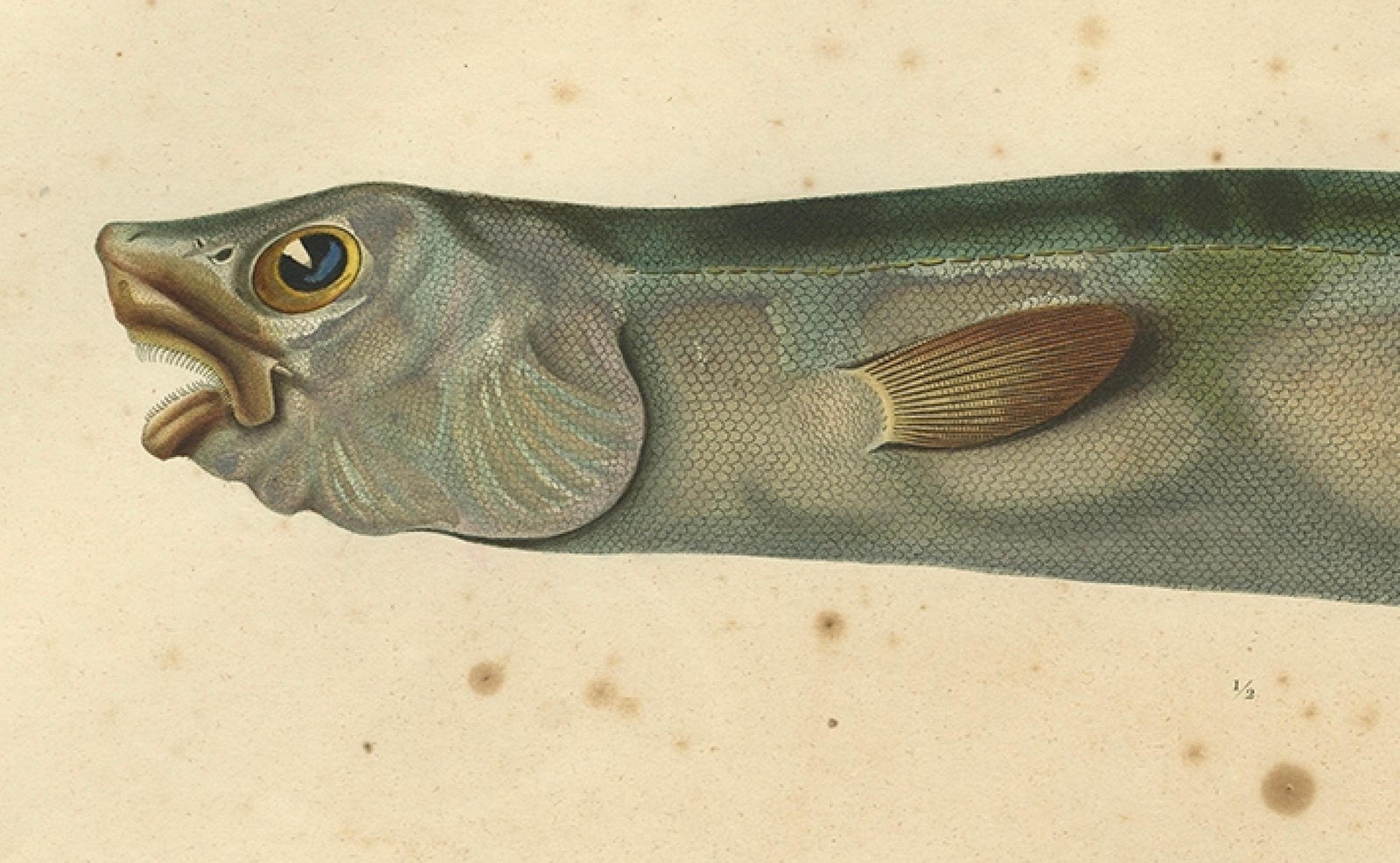
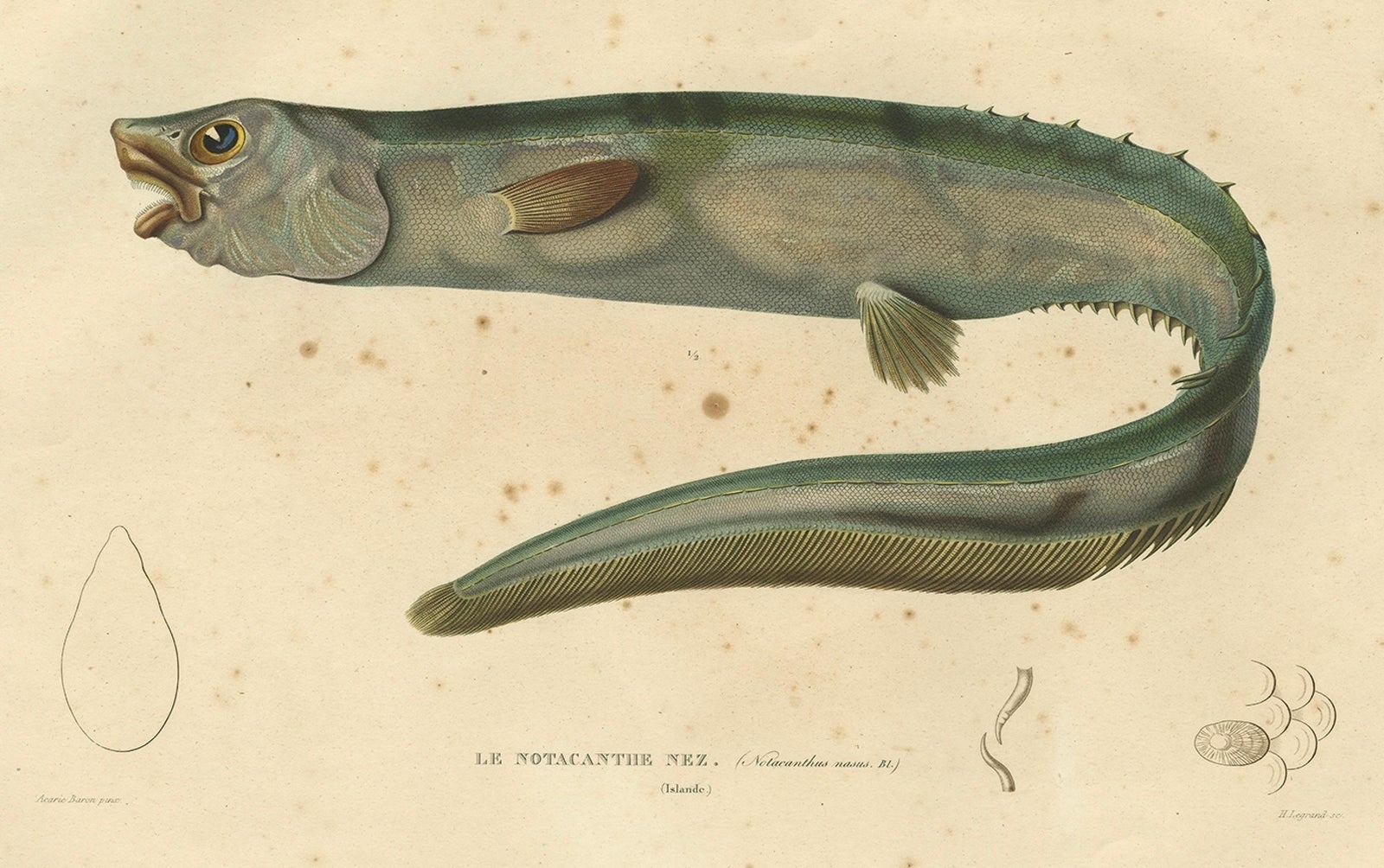
This rare hand-colored lithograph depicts the Snub-Nosed Spiny Eel (Notacanthus nasus), here titled Le Notacanthe Nez. The fish is shown in full profile, its elongated, eel-like body covered with fine spines along the dorsal ridge. The lithograph captures its distinctive features, including the pointed head, large eyes, and long tapering form. Below the main figure are detailed anatomical studies, including magnified views of scales and internal structures, highlighting the scientific intent of the plate.
The Notacanthus belongs to a group of deep-sea fishes rarely encountered by early naturalists. Its inclusion in Paul Gaimard’s Voyage en Islande et au Groenland (Paris, 1842) underlines the comprehensive nature of the expedition’s zoological documentation. Conducted in 1835, Gaimard’s voyage, originally intended to search for Jean de Blosseville’s lost Arctic expedition, produced a landmark scientific survey of Iceland and Greenland’s flora, fauna, and culture.
The artwork was prepared by Louis Bévalet, an accomplished French natural history illustrator, and lithographed by J. Bernard. The carefully applied hand coloring emphasizes the rich green and bluish tones of the fish, bringing to life a creature that would otherwise have remained obscure to 19th-century audiences.
Today, the print is especially valued for its rarity, as depictions of deep-sea fish from this period are uncommon. Its mixture of artistic elegance and zoological precision makes it an exceptional collector’s item for natural history enthusiasts and those interested in Arctic exploration.
Condition report: Strong impression with excellent hand coloring. Wide margins with light foxing and mild age toning, particularly in the background, not affecting the image. Plate mark visible.
Framing tips: A simple black or walnut frame with a wide ivory mat will best highlight the unusual form of the eel. A double mat with a dark green or sea-blue inner border can further emphasize the aquatic theme.
Technique: Hand-colored lithograph
Maker: Drawn by Louis Bévalet, lithographed by J. Bernard, from Paul Gaimard, Paris, 1842