Close-ups
Framed and on the wall


Frame and rooms are illustrations of how the print could look; the description says what is included.
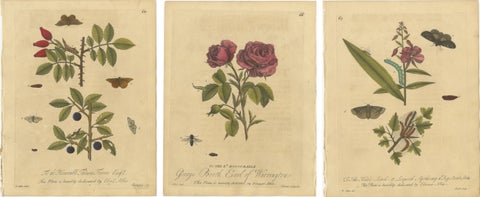
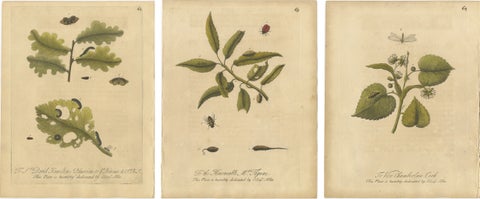
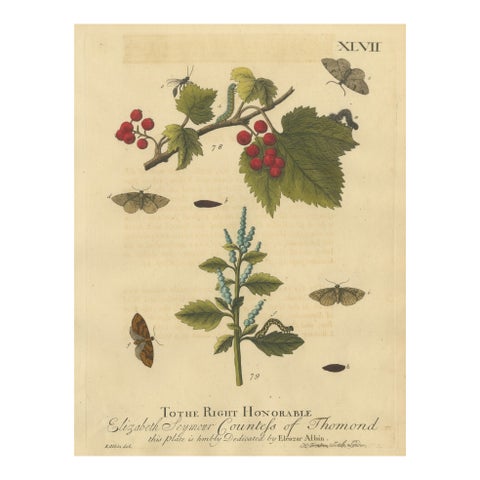
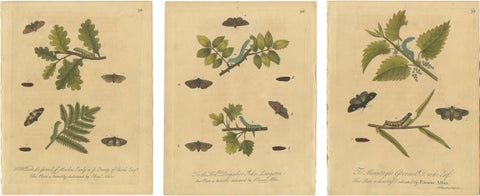
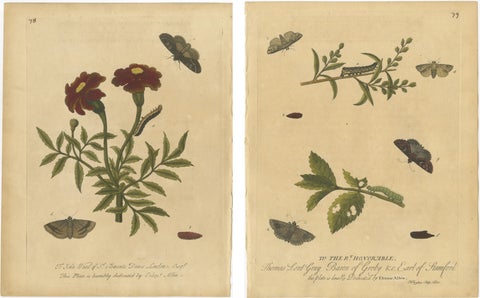
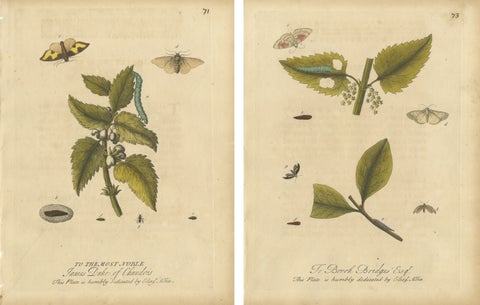
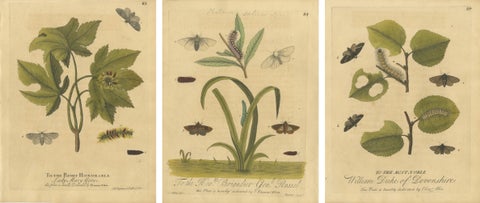
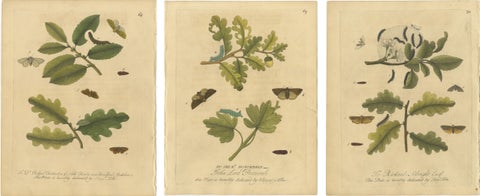
Antique English Moths with Oak Leaves, Hand-Colored Entomology Engravings 1720
€330 ($370, £280, €330)
Period original, not a reproduction.
Shipped from the Netherlands, flat, insured and tracked, worldwide. Returns accepted within 14 days.
- Date
- 1720
- Size
- 11.1 × 8.7 in (28.3 × 22.1 cm)
- Condition
- Good. Light overall toning consistent with early 18th-century paper. Minor surface marks and faint age spotting. Hand coloring remains clear and well defined.
- Period
- 18th century
- Section
- Insects and butterflies
- Reference
- f_48108022
Antique English Moths with Oak Leaves, Hand-Colored Entomology Engravings 1720
Description:
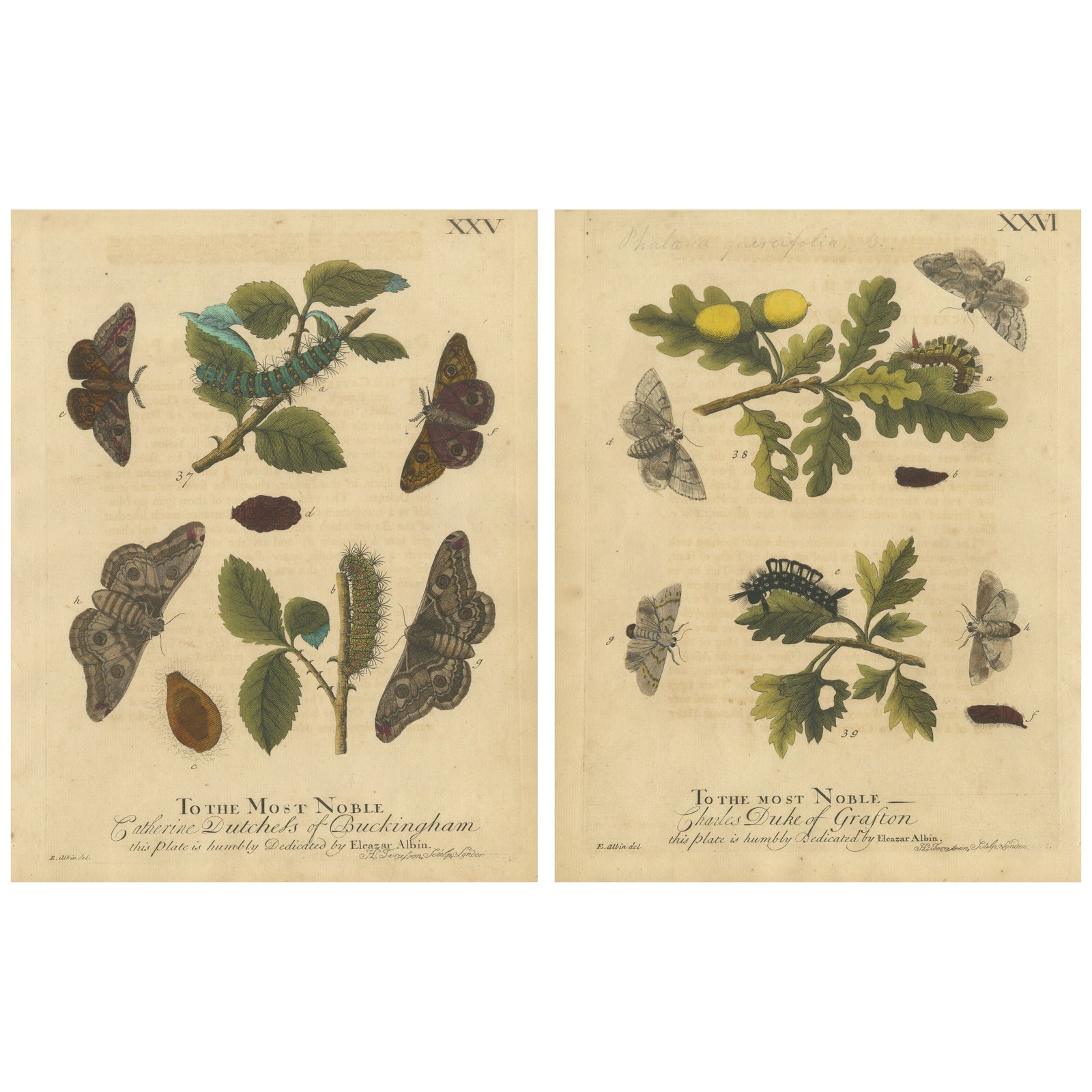
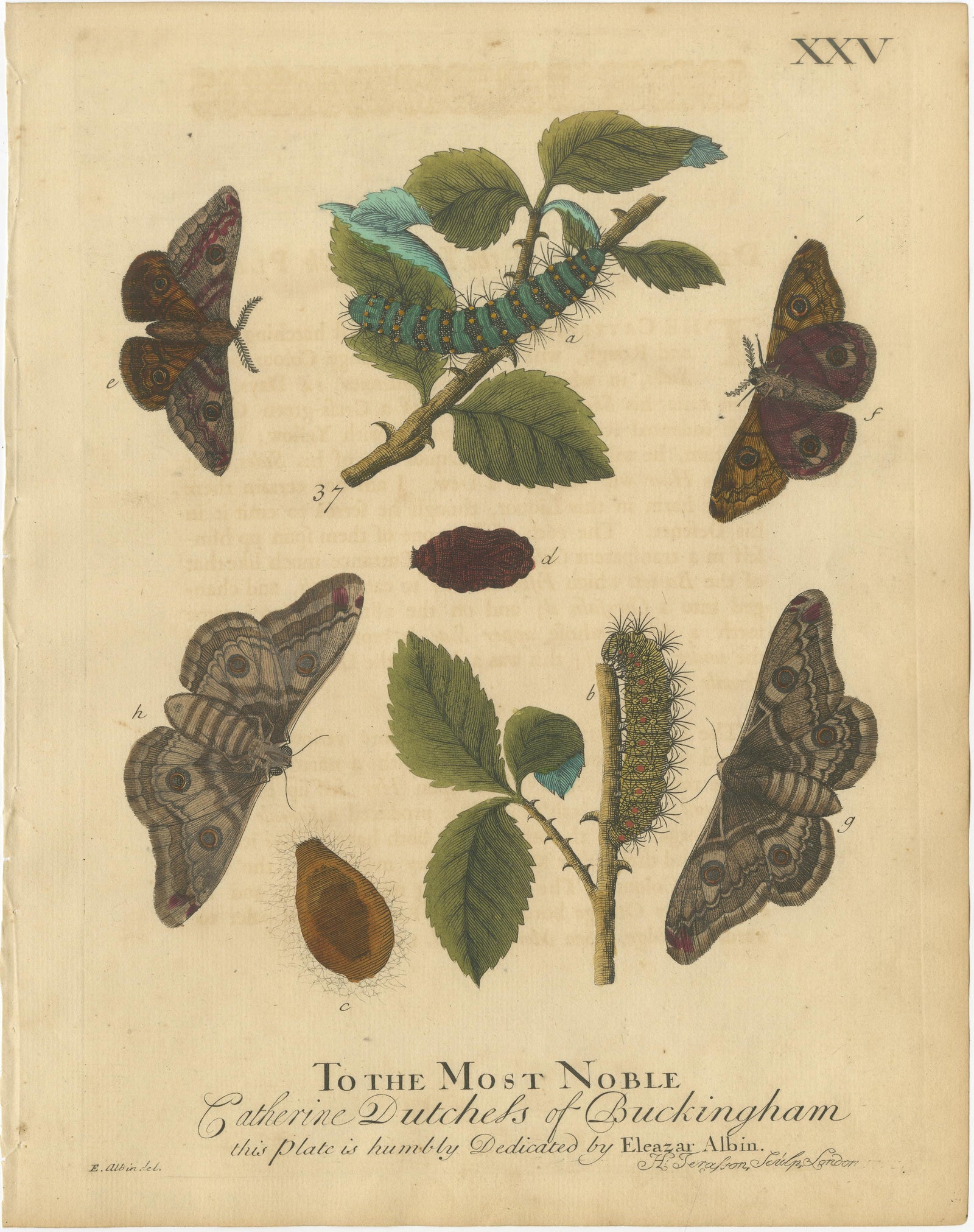
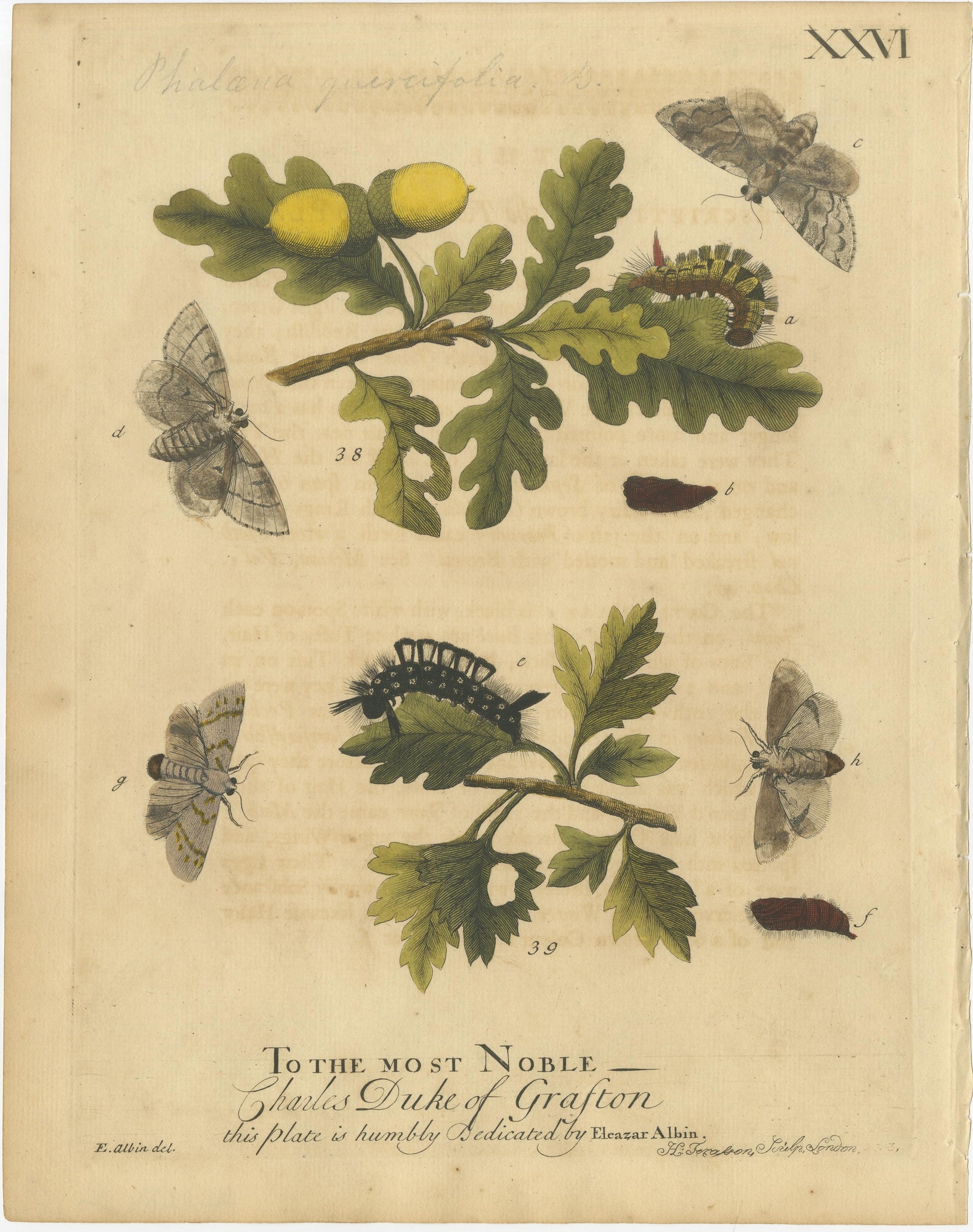
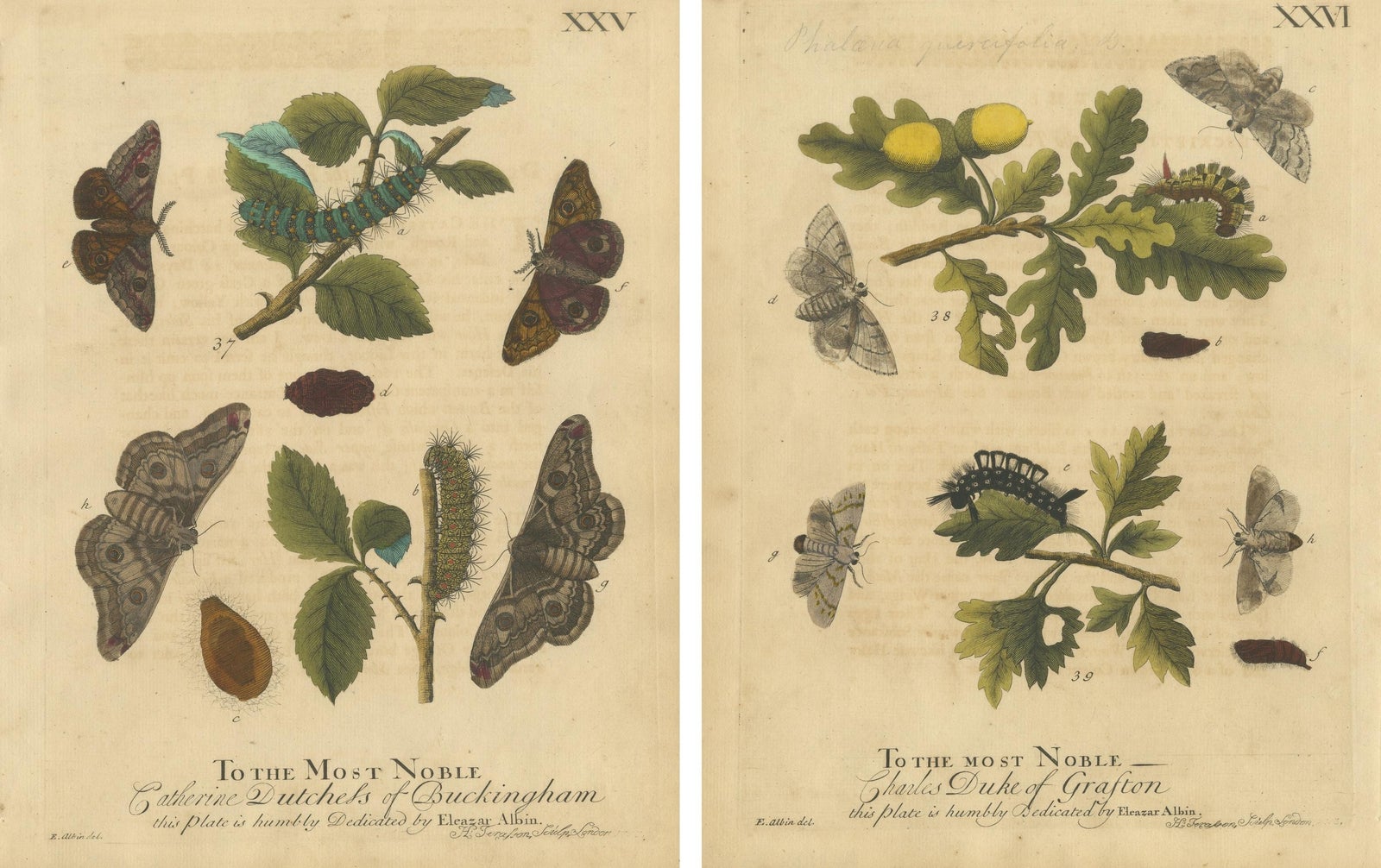
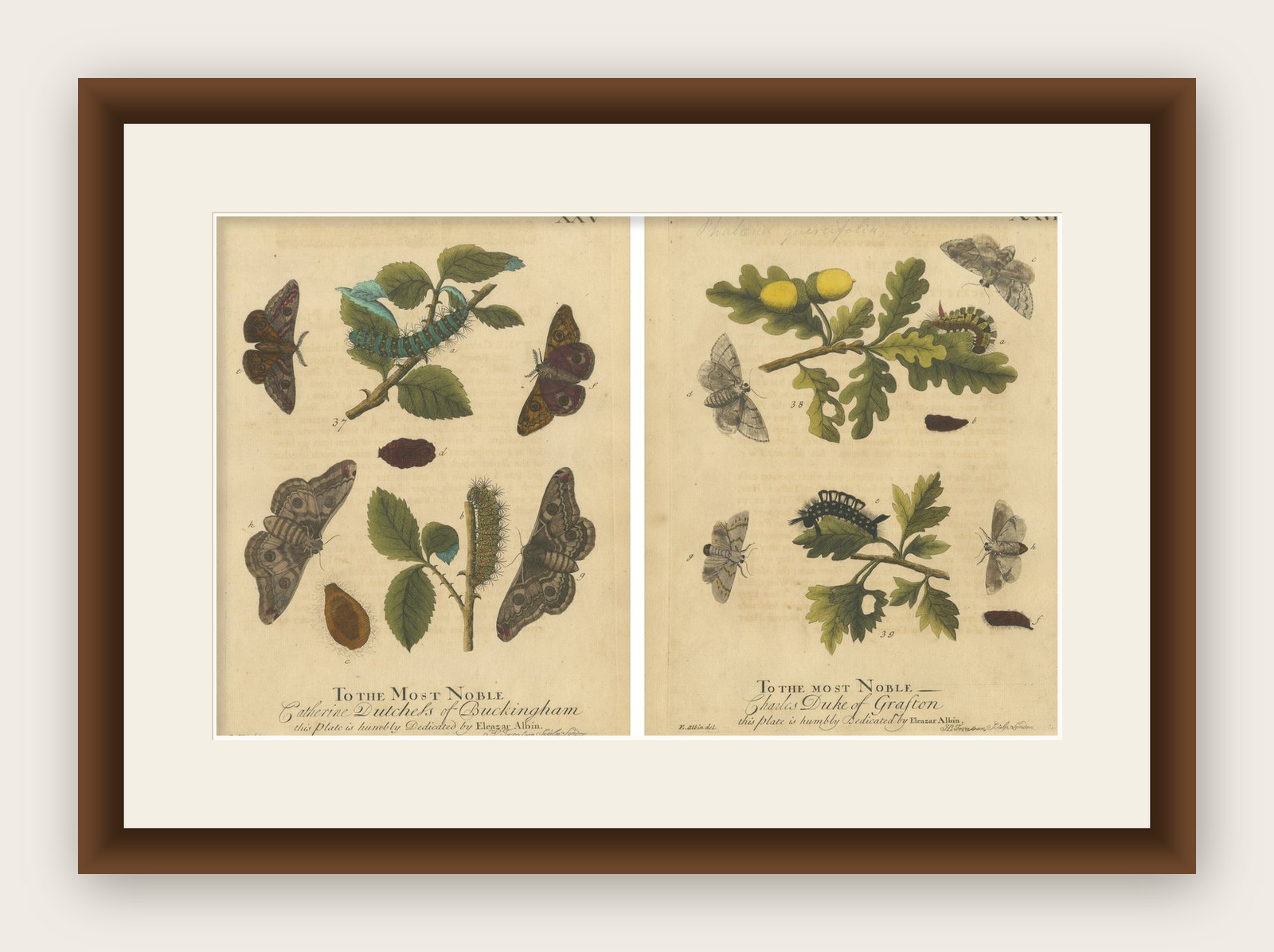
This set of two original hand-colored copper engravings was created by Eleazar Albin for his landmark work A Natural History of English Insects, published in London in 1720. Both plates depict English moths together with their caterpillars and chrysalides, arranged on oak branches and presented in Albin’s characteristic life-cycle format, combining scientific observation with decorative refinement.
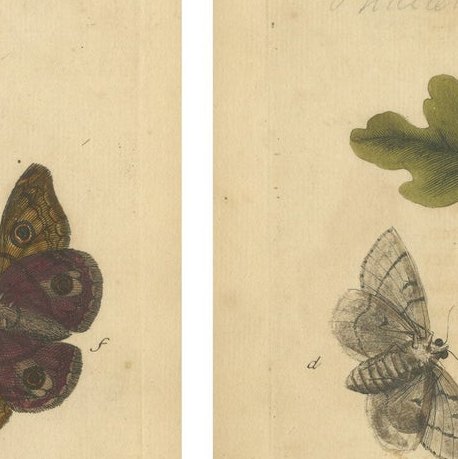
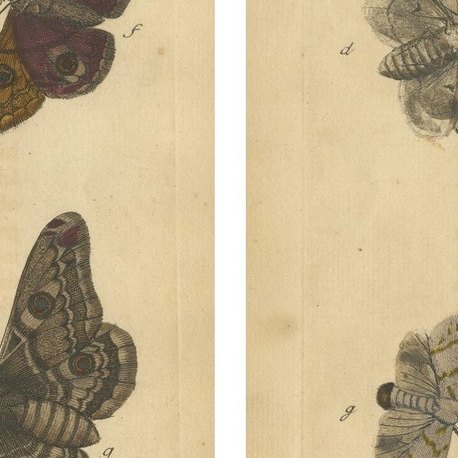
The first plate is formally dedicated by Albin “To the Most Noble Catherine Duchess of Buckingham.” It features large moths with striking eye-like markings on their wings, closely related to emperor- and peacock-type moths. Several adult moths are shown in different positions, while a vividly colored caterpillar feeds on oak leaves at the center of the composition. The chrysalis stage is illustrated below. The oak foliage, with its deeply lobed leaves, is carefully rendered and clearly identifiable, emphasizing the relationship between insect and host plant.
The second plate bears a dedication “To the Most Noble Charles Duke of Grafton.” It likewise focuses on oak as the host plant, including lobed leaves and acorns. Spiny and banded caterpillars are shown feeding on the leaves, accompanied by adult moths in soft grey and brown tones. These moths resemble prominent and dagger-type species commonly found in English woodlands. Eggs and pupae are included, completing the life cycle and reinforcing the educational purpose of the plate.
Together, these two engravings form a cohesive and historically rich pair. Their shared subject matter, consistent hand coloring, and aristocratic dedications illustrate both the scientific ambitions and the social context of early eighteenth-century natural history publishing. The set offers strong appeal for collectors of early entomology, botanical illustration, or refined antique works on paper.
Condition report:
Light overall toning consistent with early 18th-century paper. Minor surface marks and faint age spotting. Hand coloring remains clear and well defined.
Framing tips:
Frame as a matched pair using simple black or dark wood frames with off-white or light linen mats to complement the aged paper and highlight the engraved detail.