Close-ups
Framed and on the wall


Frame and rooms are illustrations of how the print could look; the description says what is included.
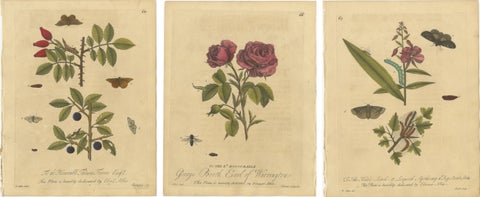
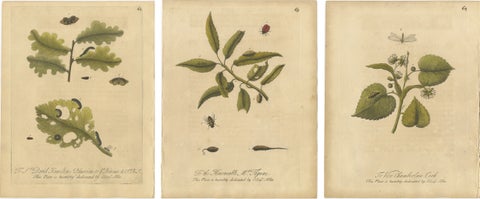
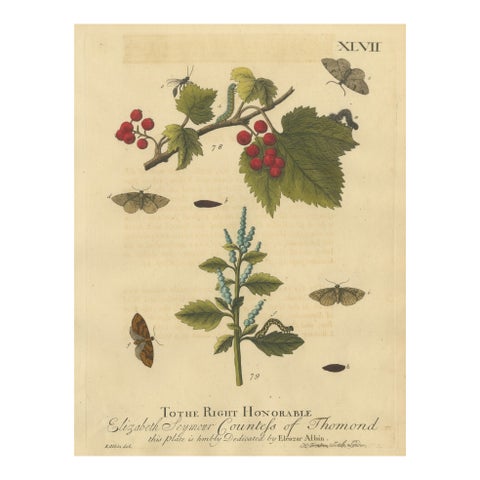
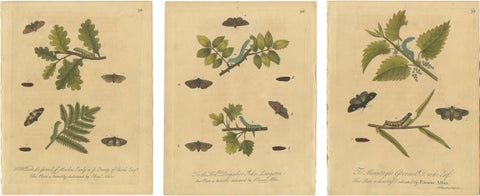
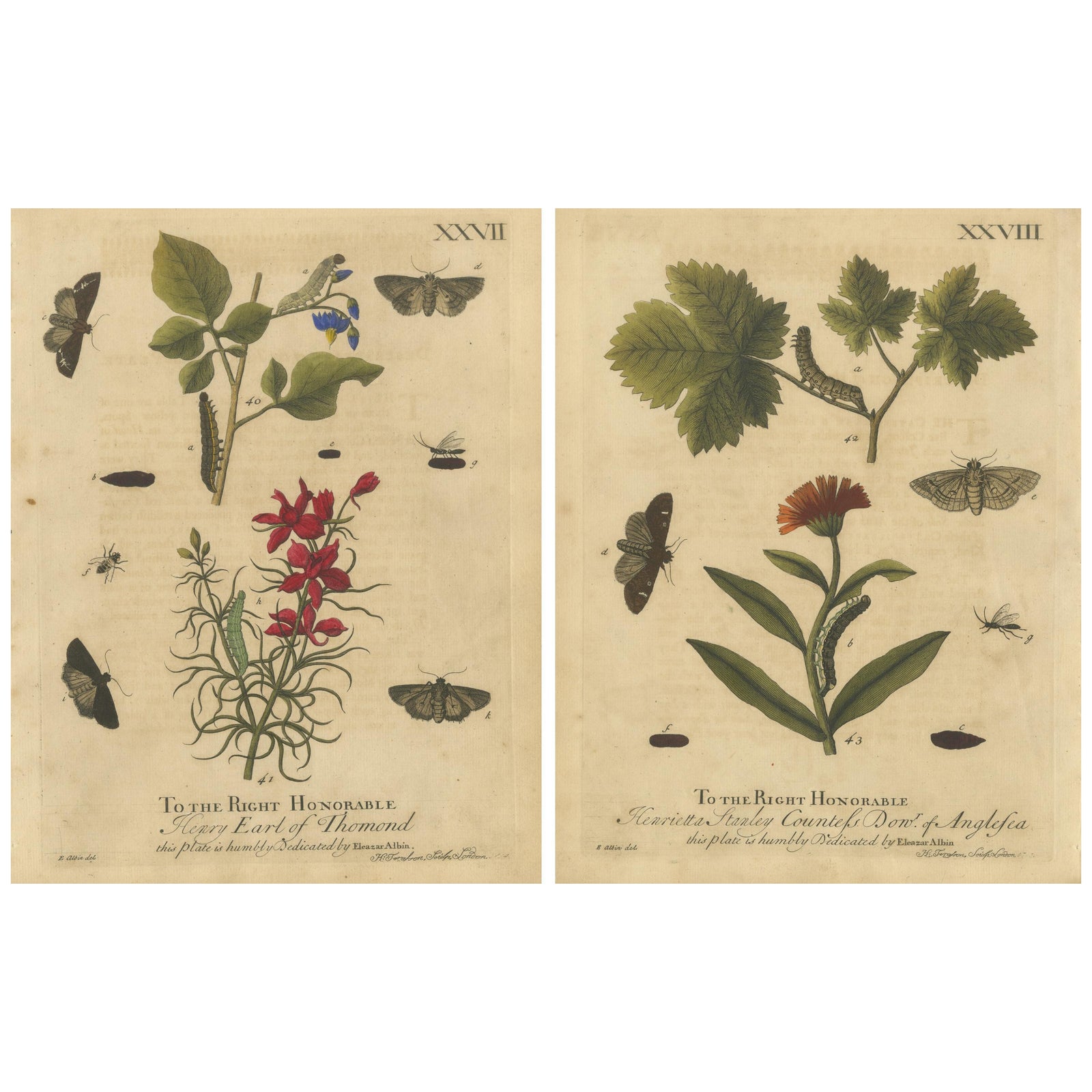
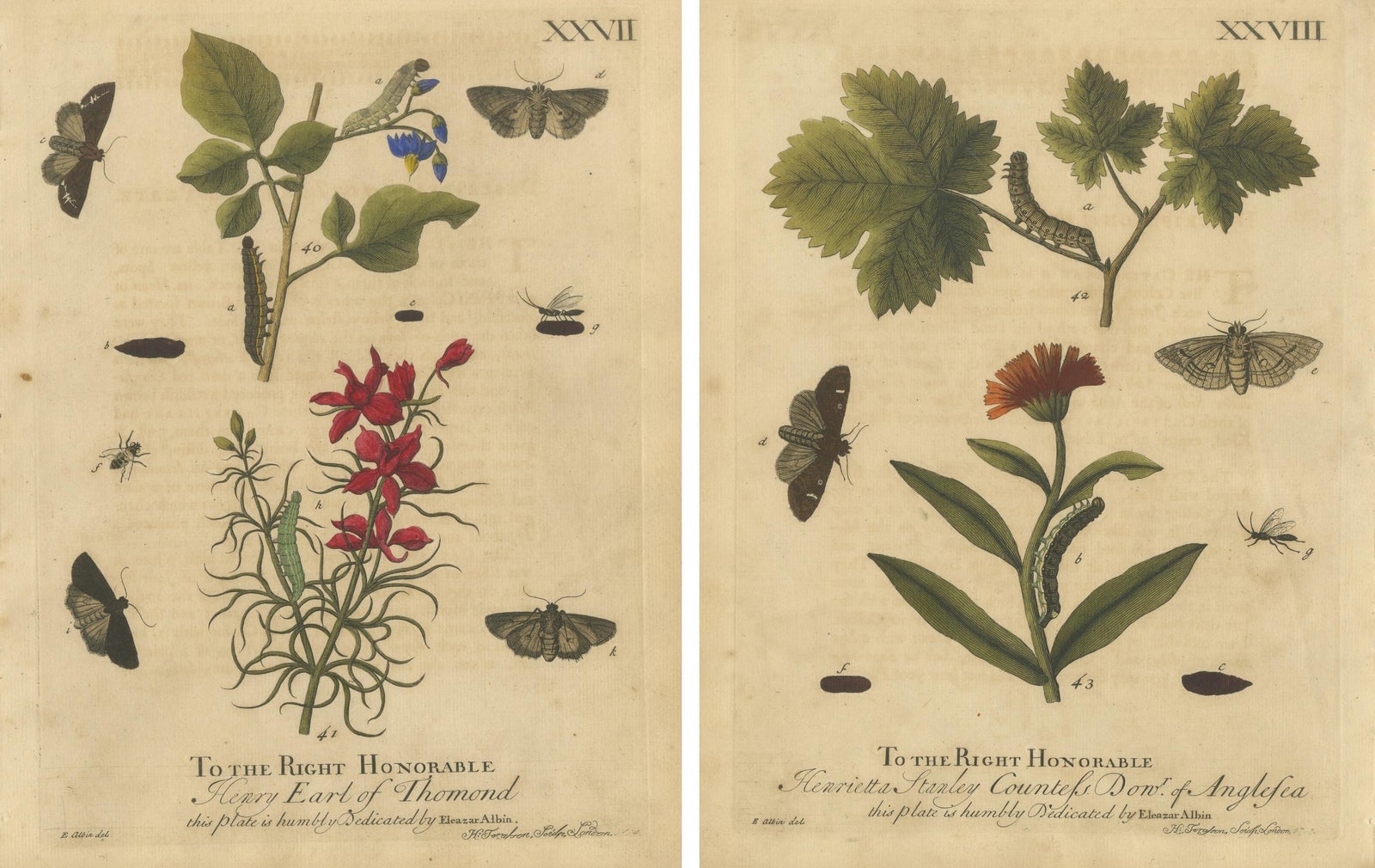
Antique English Moths with Garden Flowers, Hand-Colored Engravings 1720
£280 ($370, €330)
Period original, not a reproduction.
Shipped from the Netherlands, flat, insured and tracked, worldwide. Returns accepted within 14 days.
- Date
- 1720
- Size
- 11.1 × 8.7 in (28.3 × 22.1 cm)
- Condition
- Good. Light overall toning consistent with early 18th-century paper. Minor age-related surface marks and faint spotting. Hand coloring remains clear and stable.
- Period
- 18th century
- Section
- Insects and butterflies
- Reference
- f_48108262
Antique English Moths with Garden Flowers, Hand-Colored Entomology Engravings 1720
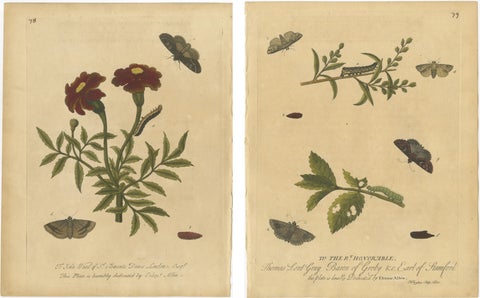
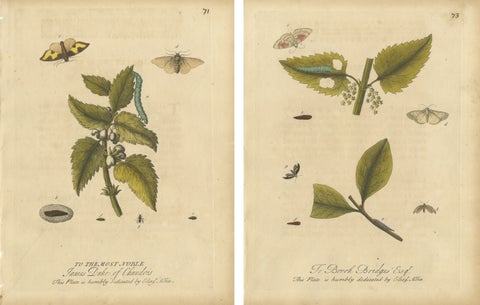
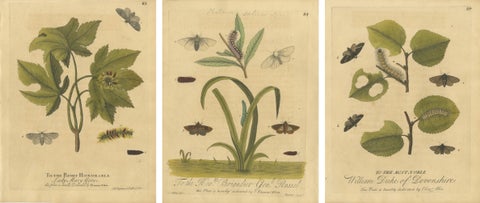
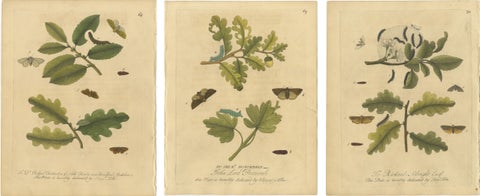
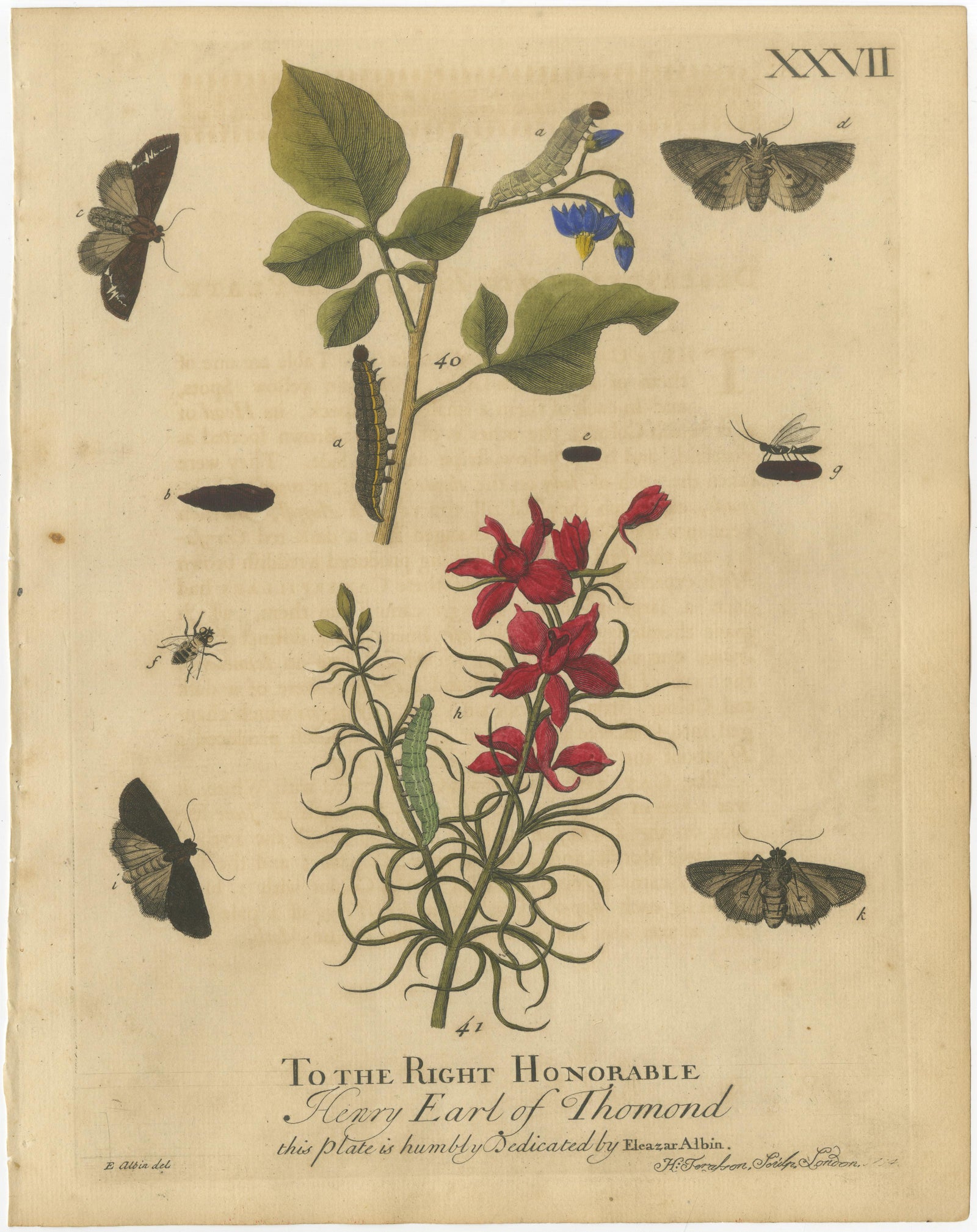
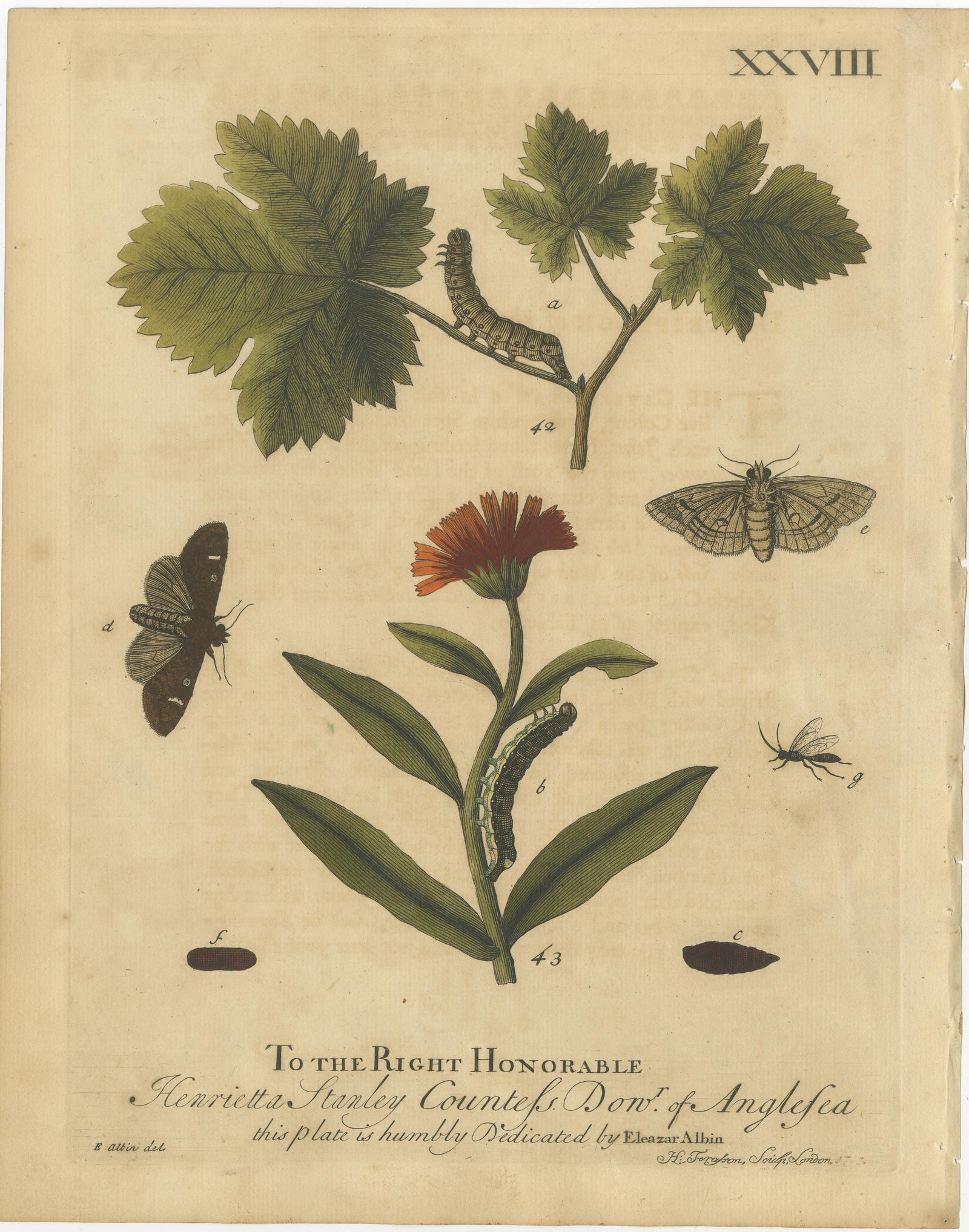
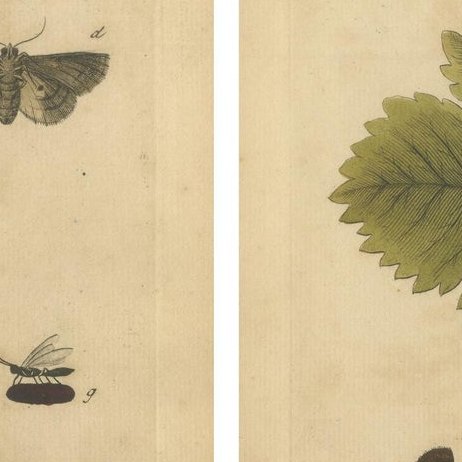
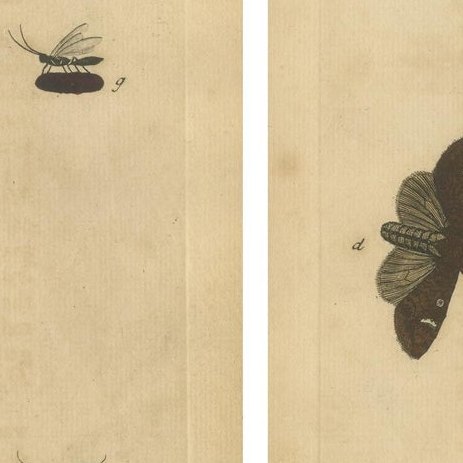
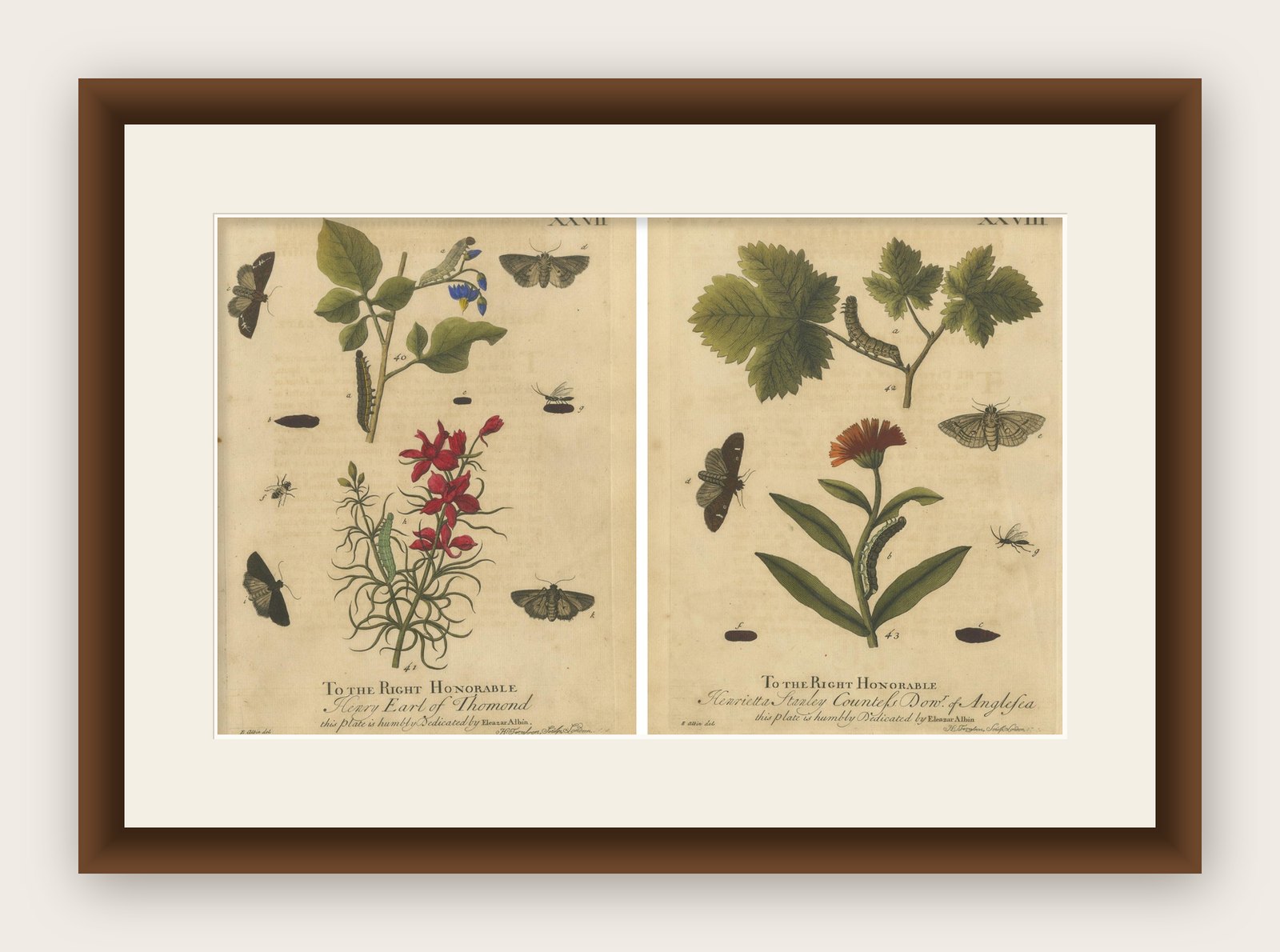
This set of two original hand-colored copper engravings was produced by Eleazar Albin for his celebrated work A Natural History of English Insects, published in London in 1720. The plates depict English moths together with their caterpillars, pupae, and host plants, arranged in carefully balanced compositions that illustrate each stage of the insect life cycle.
The first plate in this set is dedicated by Albin “To the Right Honorable Henry Earl of Thomond.” It shows caterpillars feeding on leafy garden plants with small blue bell-shaped flowers, alongside adult moths rendered in soft grey and brown tones. The moths are shown both in flight and at rest, while the chrysalis stage is placed nearby. The plant appears to be a flowering herb or garden shrub, drawn with clear veining and naturalistic posture, emphasizing the close relationship between insect and food plant.
The second plate is dedicated “To the Right Honorable Henrietta Stanley, Countess Dowager of Anglesea.” This engraving features caterpillars feeding on tall-stemmed plants with narrow leaves and vivid red flowers resembling campion or pinks. Adult moths are positioned around the composition, their wings displaying subtle banding and muted coloration typical of English noctuid and rustic moth species. Eggs and pupae are again included, completing the life cycle narrative.
Together, these two engravings form a harmonious pair focused on flowering plants and garden environments rather than woodland settings. Their strong vertical compositions, rich hand coloring, and aristocratic dedication inscriptions make them both visually engaging and historically significant. The set is well suited to collectors of early entomology, botanical illustration, or decorative eighteenth-century works on paper.
Condition report:
Light overall toning consistent with early 18th-century paper. Minor age-related surface marks and faint spotting. Hand coloring remains clear and stable.
Framing tips:
Frame as a matched pair using simple dark or natural wood frames with off-white mats to enhance the floral colors and preserve the antique character of the paper.