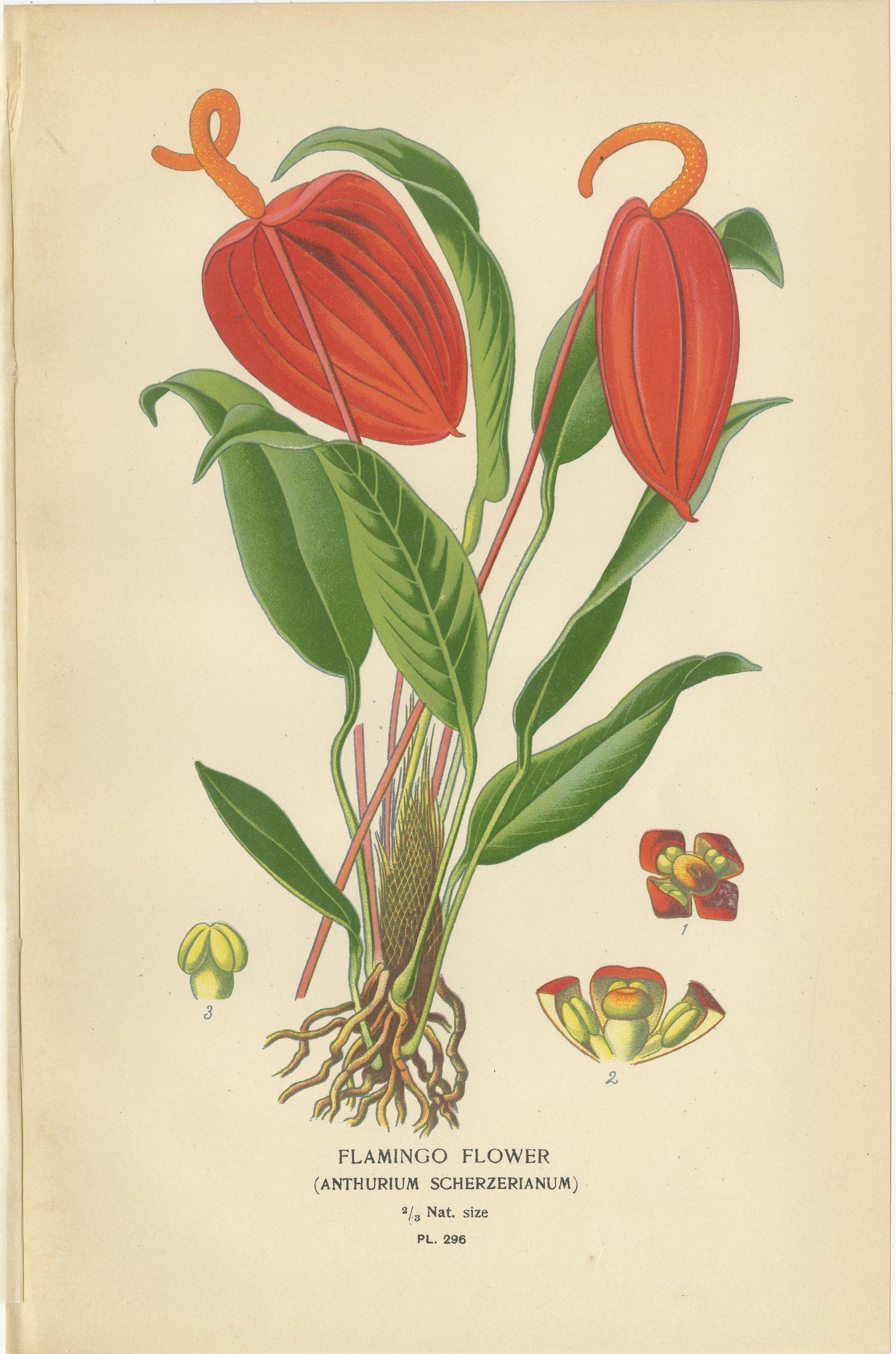
Close-ups
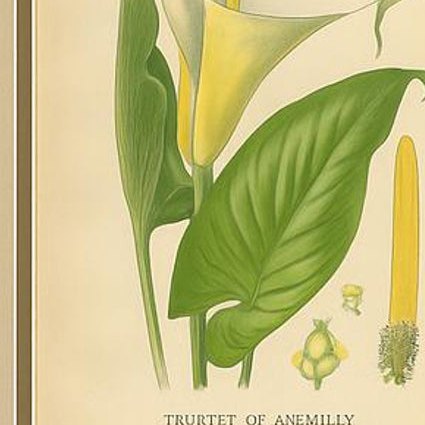
Framed and on the wall
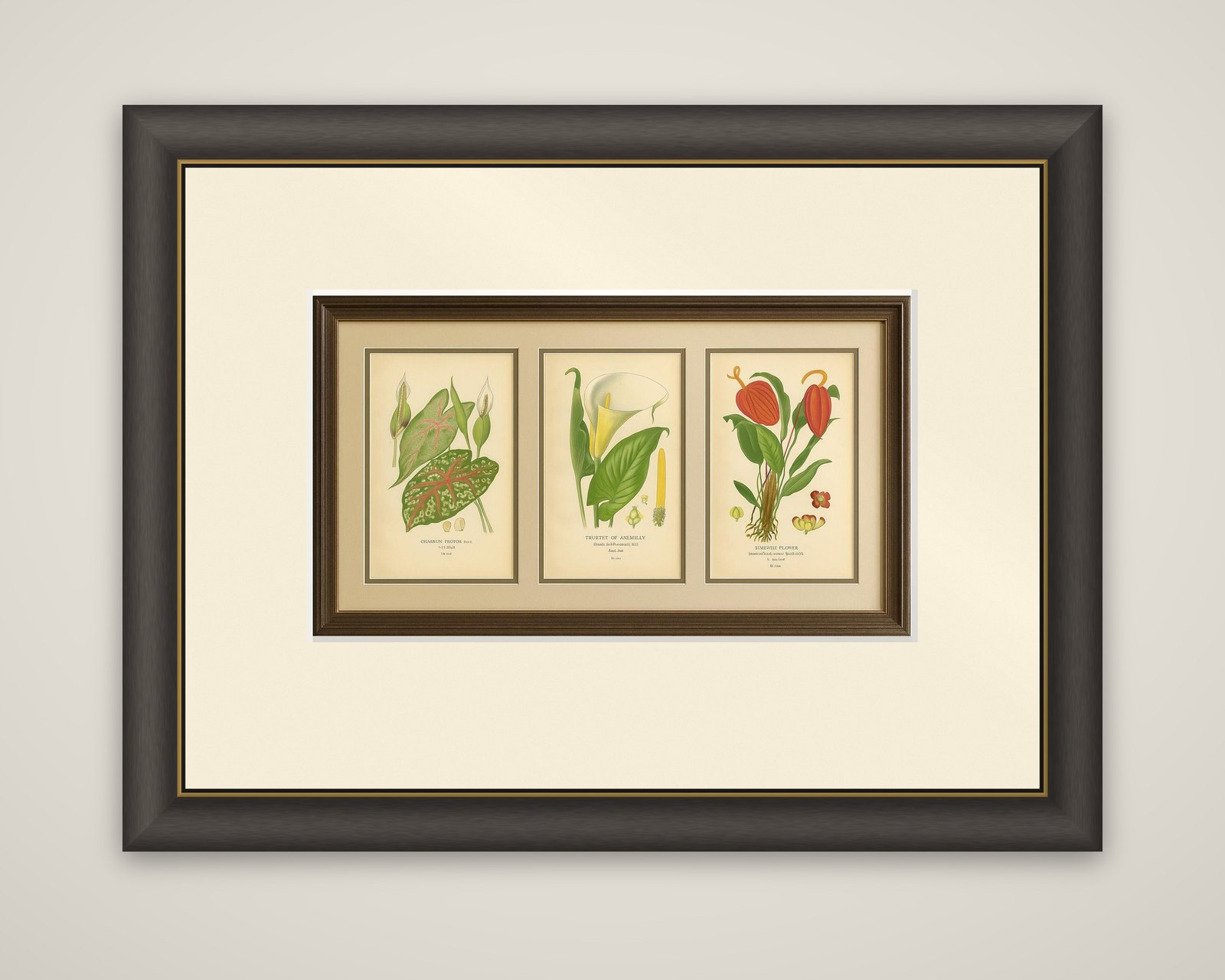


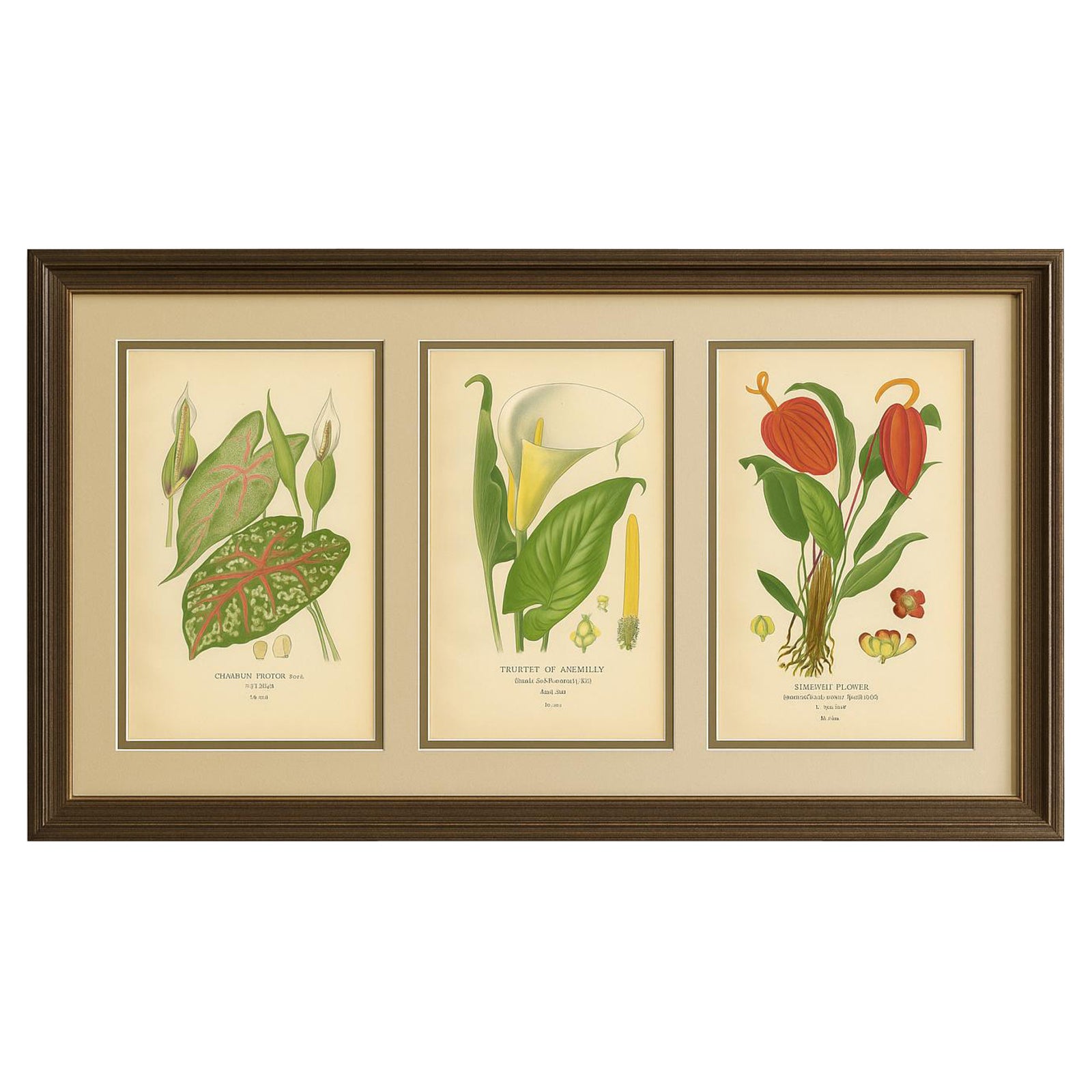
Frame and rooms are illustrations of how the print could look; the description says what is included.
Antique Botanical Lithographs, Caladium, Arum Lily & Flamingo Flower, c.1897
€340 ($380, £290, €340)
Period original, not a reproduction.
Shipped from the Netherlands, flat, insured and tracked, worldwide. Returns accepted within 14 days.
- Date
- 1897
- Size
- 9.4 × 6.3 in (24 × 15.9 cm)
- Condition
- Very good, with light age toning consistent with age, and minimal handling marks at the margins. Colors remain fresh and well-preserved. Plate marks are clearly visible, adding to their authenticity. Frame is not included.
- Period
- Late 19th century
- Section
- Botanical
- Reference
- f_46490032
- Colour
- Printed colour
What the condition grades mean
- Excellent
- Bright and clean, with no faults worth mentioning.
- Very good
- Only light signs of age, such as faint toning.
- Good
- Normal signs of age for a sheet of this period: toning, some foxing, small marks or neat old repairs.
- Fair
- Clear faults such as staining, tears or repairs, priced to match.
Every fault we see is written in the condition note, and the whole sheet is shown uncropped in the photos.
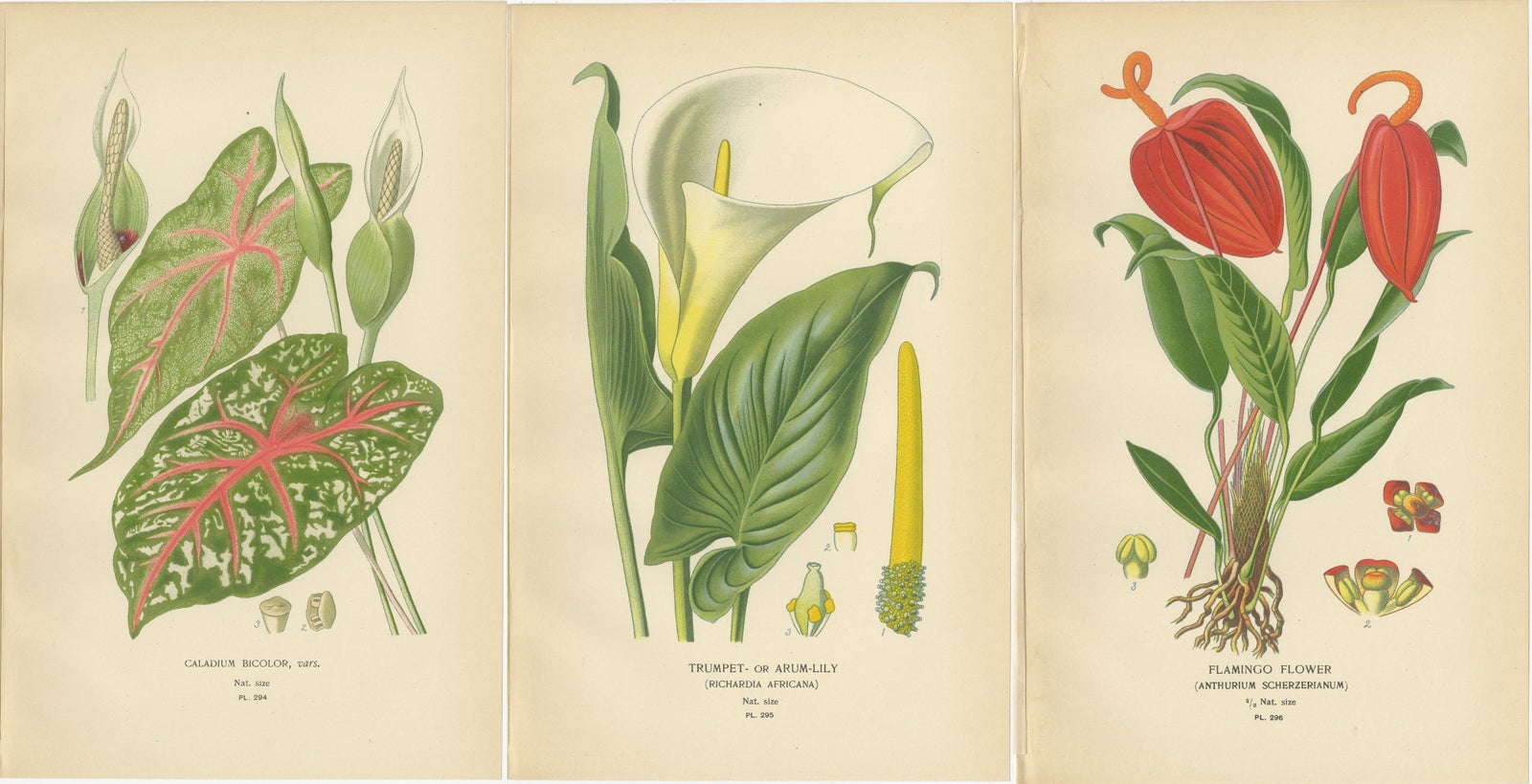
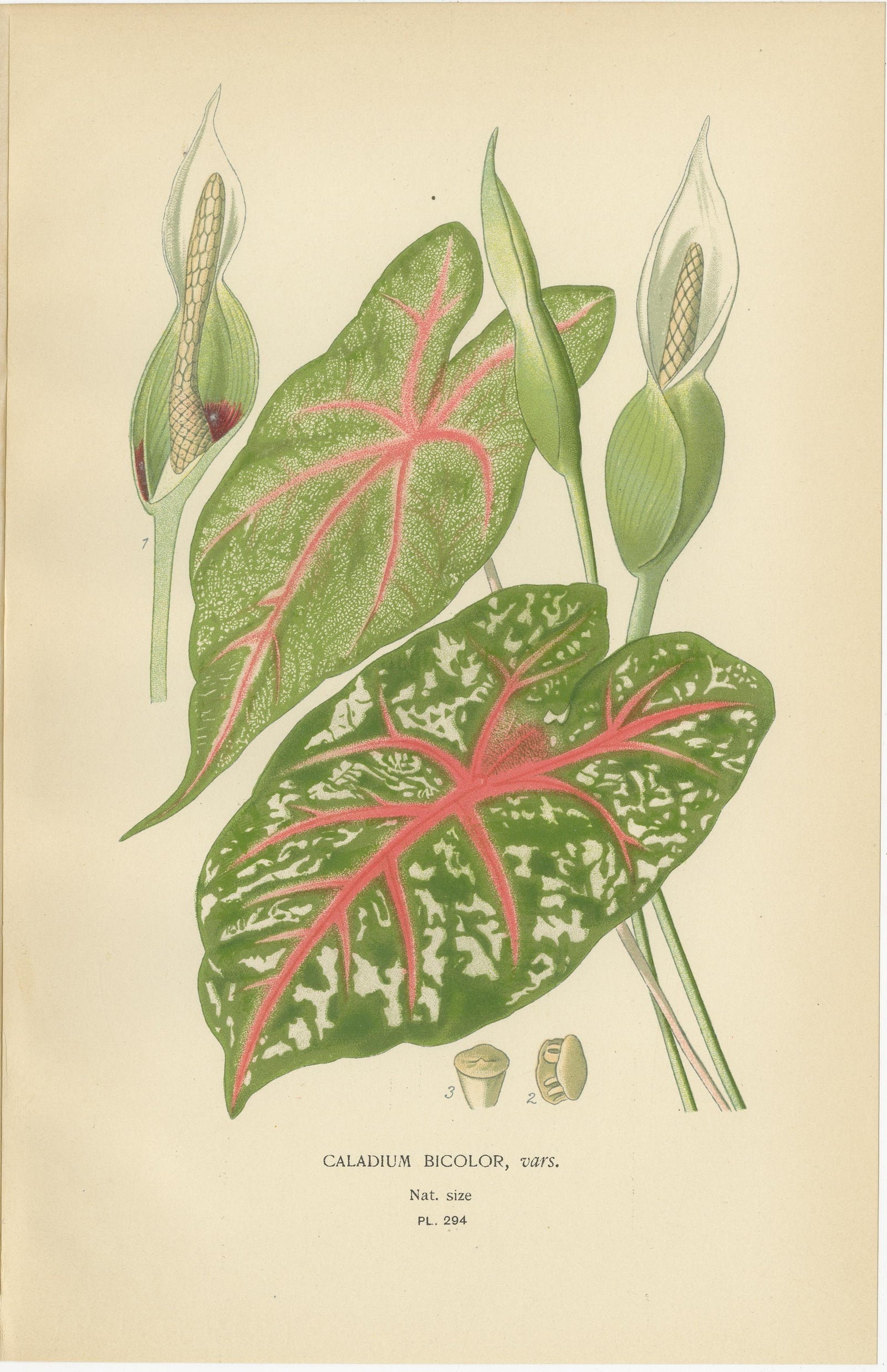
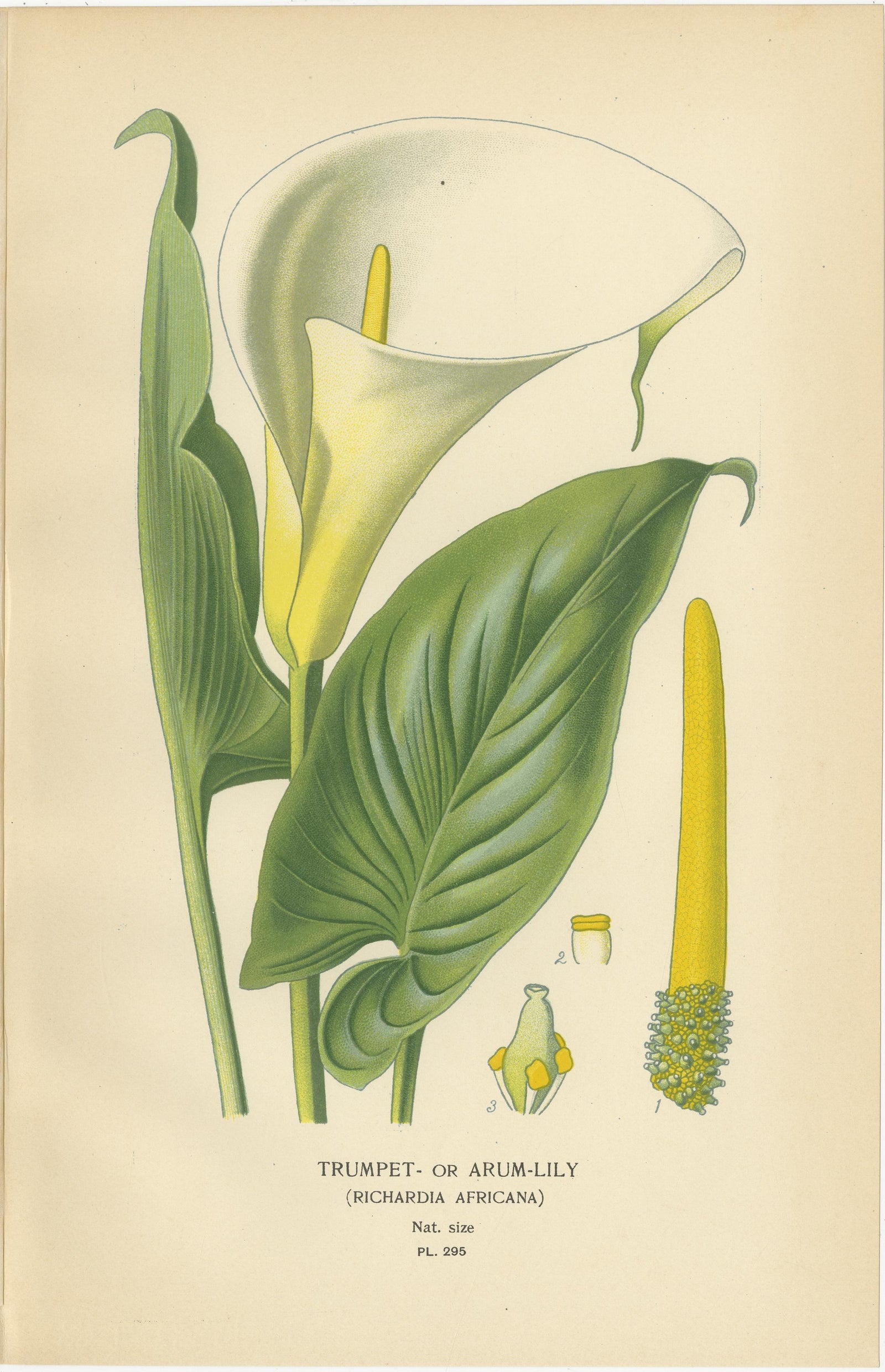
Three tropical foliage and flowering plants, late 19th-century botanical plates printed in color, shown here as a set of three sheets. The plants are Caladium bicolor, the Arum Lily (Richardia africana) and the Flamingo Flower (Anthurium scherzerianum).
The first plate shows Caladium with heart-shaped leaves marked in green, white and crimson veins, together with a few small flower details. The second shows the Arum Lily, a white spathe curled around a yellow spadix, with broad arrow-shaped leaves and small flower details. The third shows the Flamingo Flower, with glossy red spathes, a twisting orange spadix and a tuft of roots, with two small flower details at the lower right.
Caladium and Anthurium come from tropical Central and South America, while the Arum Lily is a native of southern Africa. All three were widely grown in the conservatories and glasshouses of the Victorian period, when new tropical plants were collected and sold across Europe.