Antique Bird Print of the Snowy Owl by Sepp & Nozeman, 1809
$2,520 (£1,905, €2,250)
Period original, not a reproduction.
Shipped from the Netherlands, flat, insured and tracked, worldwide. Returns accepted within 14 days.
- Date
- 1809
- Size
- 21.1 × 14.6 in (53.5 × 37 cm)
- Condition
- Good. Original text page included. Please study image carefully.
- Period
- Early 19th century
- Artist or book
- Nozeman and Sepp
- Section
- Birds
- Reference
- f_10927653
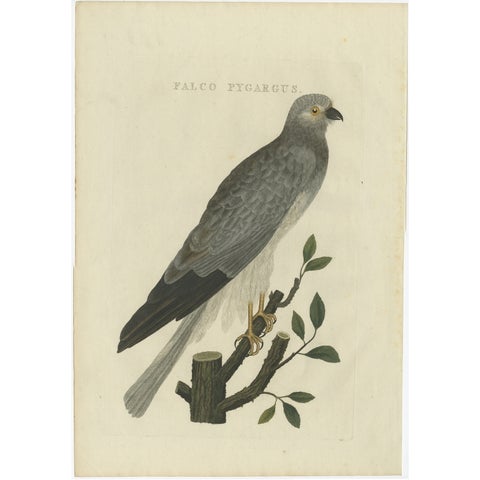
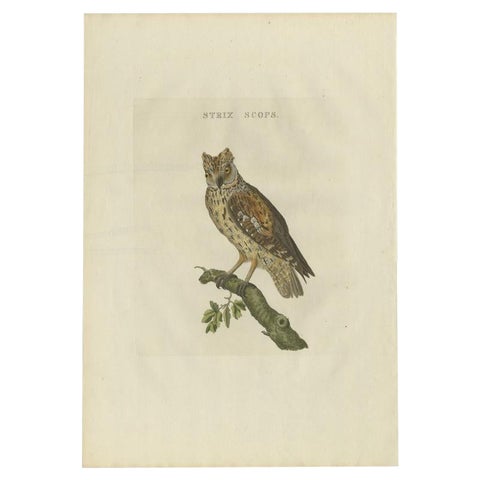
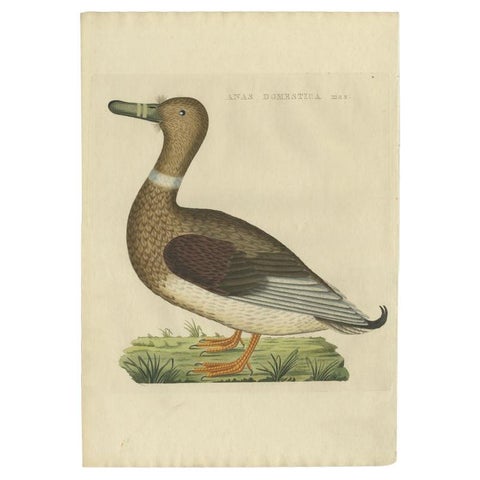
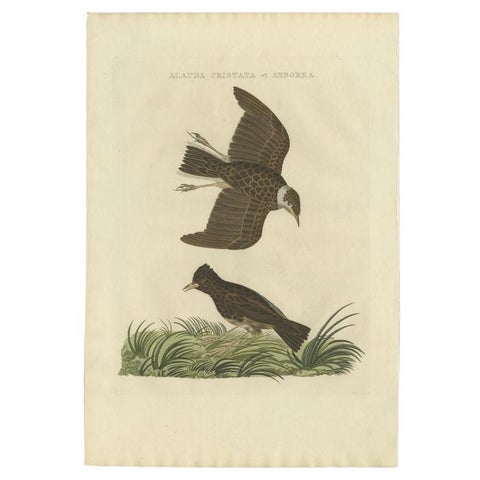
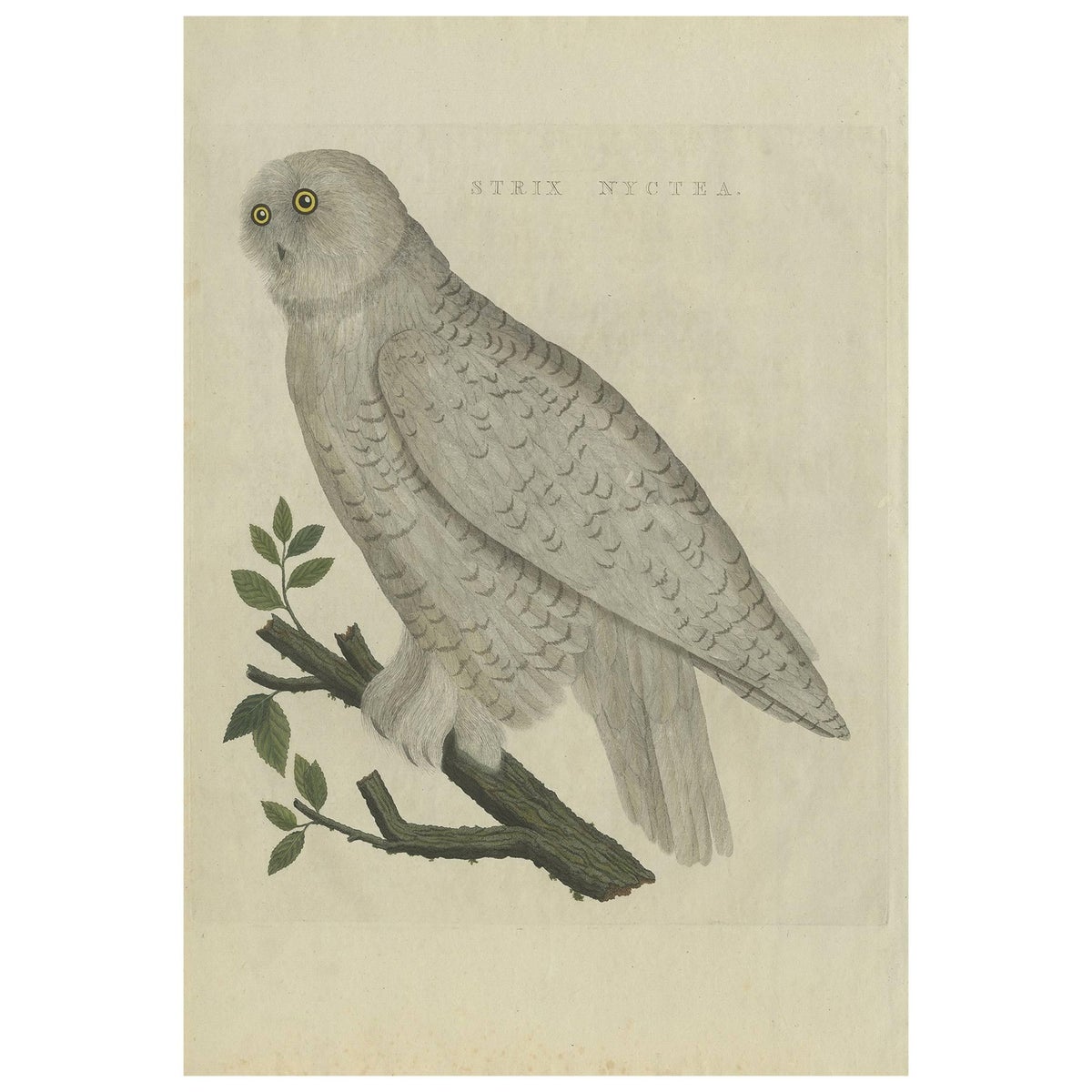
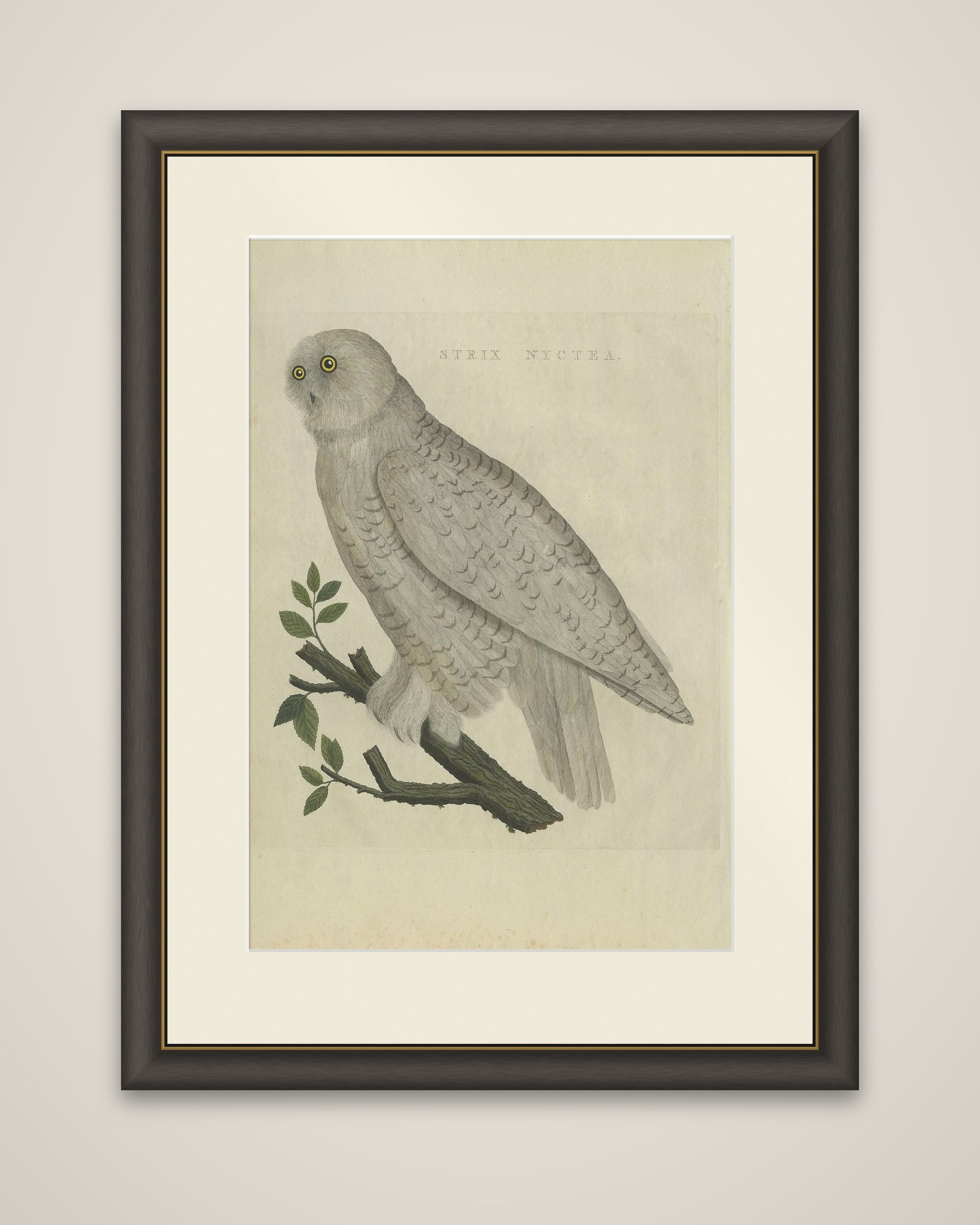
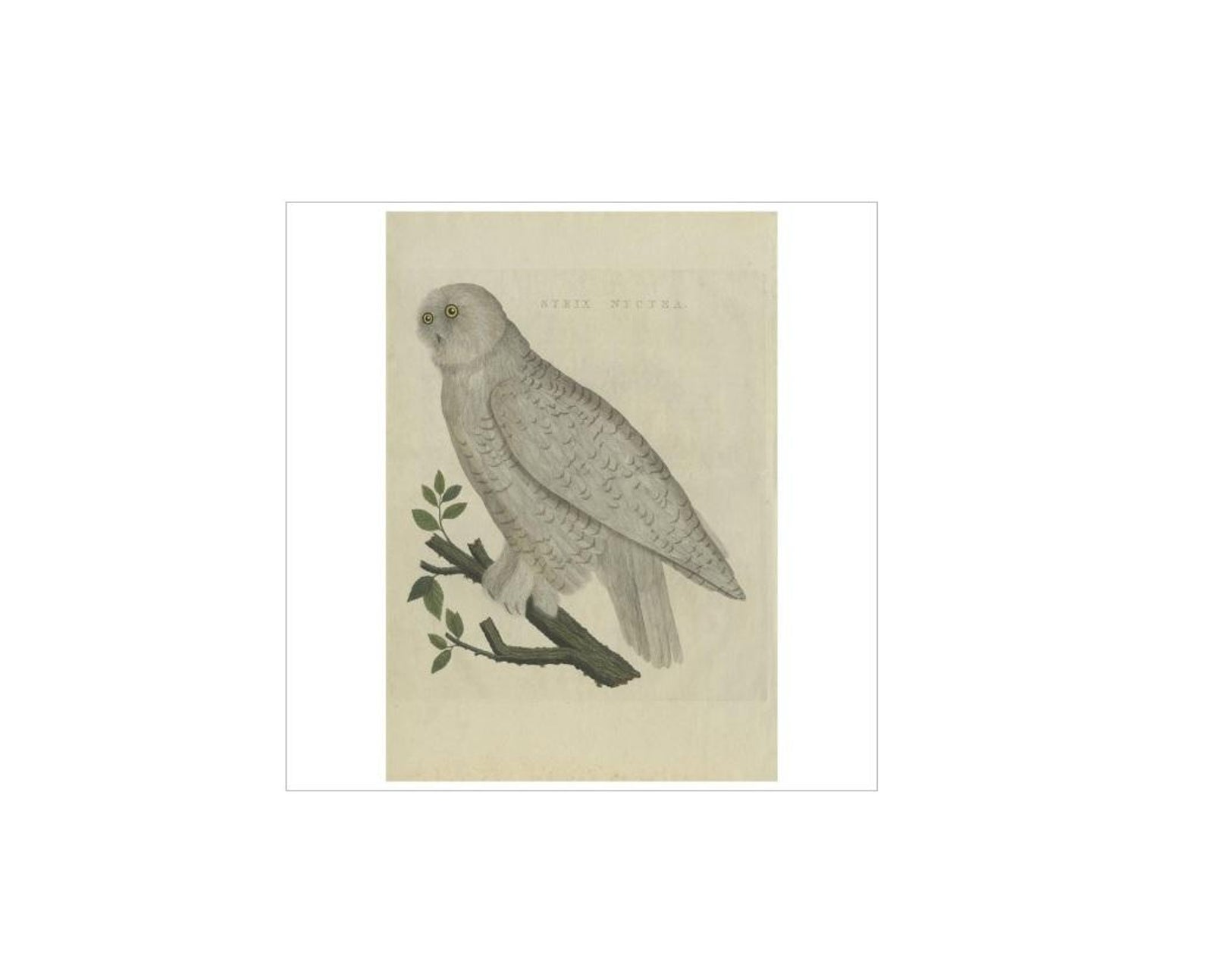
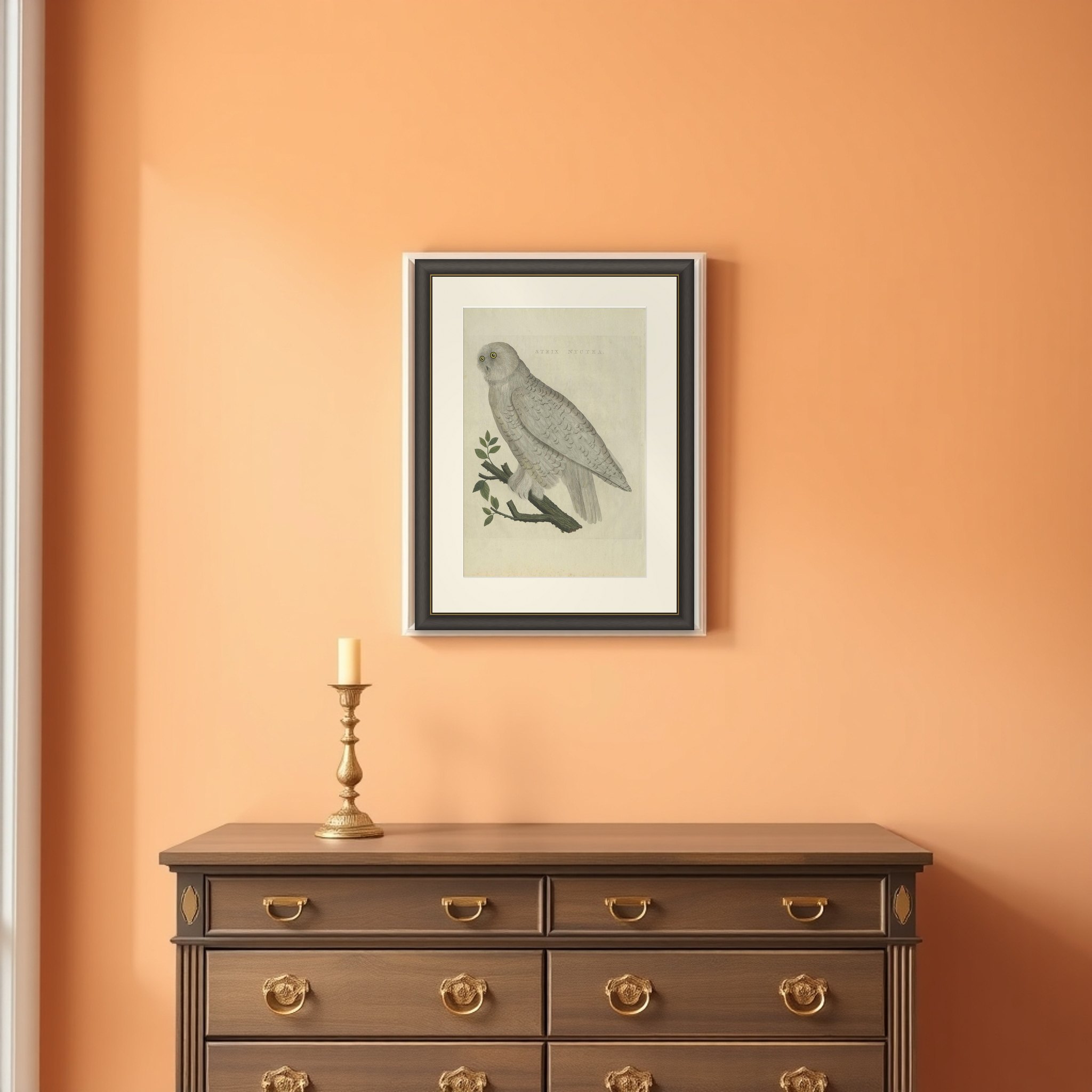
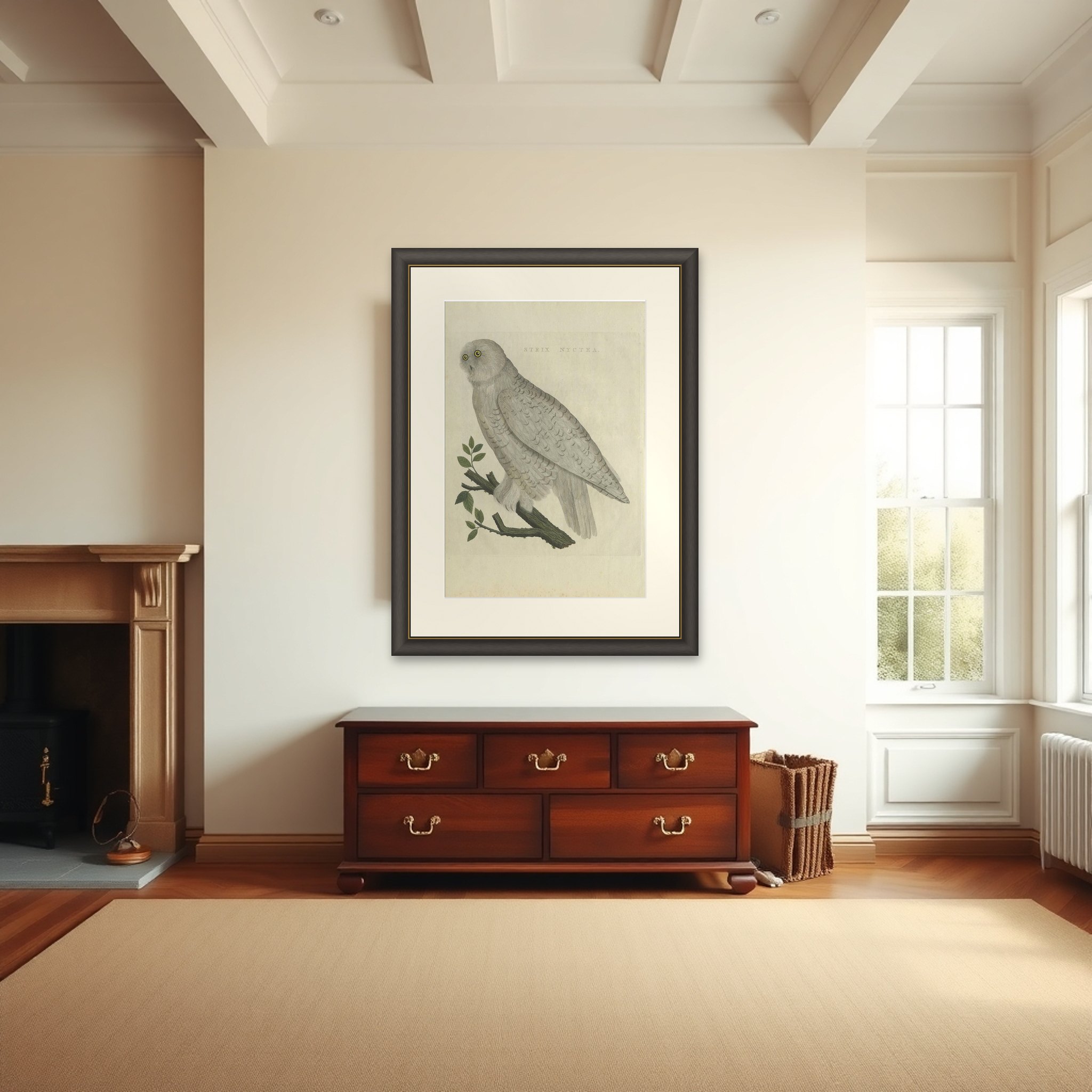
The snowy owl, plate "Strix Nyctea," a hand-colored engraving from Nederlandsche Vogelen, the Dutch bird book by Cornelius Nozeman, Martinus Houttuyn and Jan Christiaan Sepp, published in Amsterdam between 1770 and 1829. The scientific name of the bird is lettered at the top of the sheet.
The owl is shown life size on a leafy branch, turned to look back over its shoulder with round yellow eyes, its pale plumage built up in soft gray and cream washes with the barring on the back and wing coverts picked out feather by feather. The plain ground leaves the bird isolated, as in the book's other plates.
The snowy owl (Bubo scandiacus) is a large white owl native to Arctic regions of North America and Eurasia. It nests on the ground, hunts rodents and waterfowl, and, unlike most owls, is active by day in summer.
Nederlandsche Vogelen is regarded as the first major Dutch study of ornithology, and its plates, by Sepp and his son, were noted for showing the birds close to life size and in their natural surroundings.