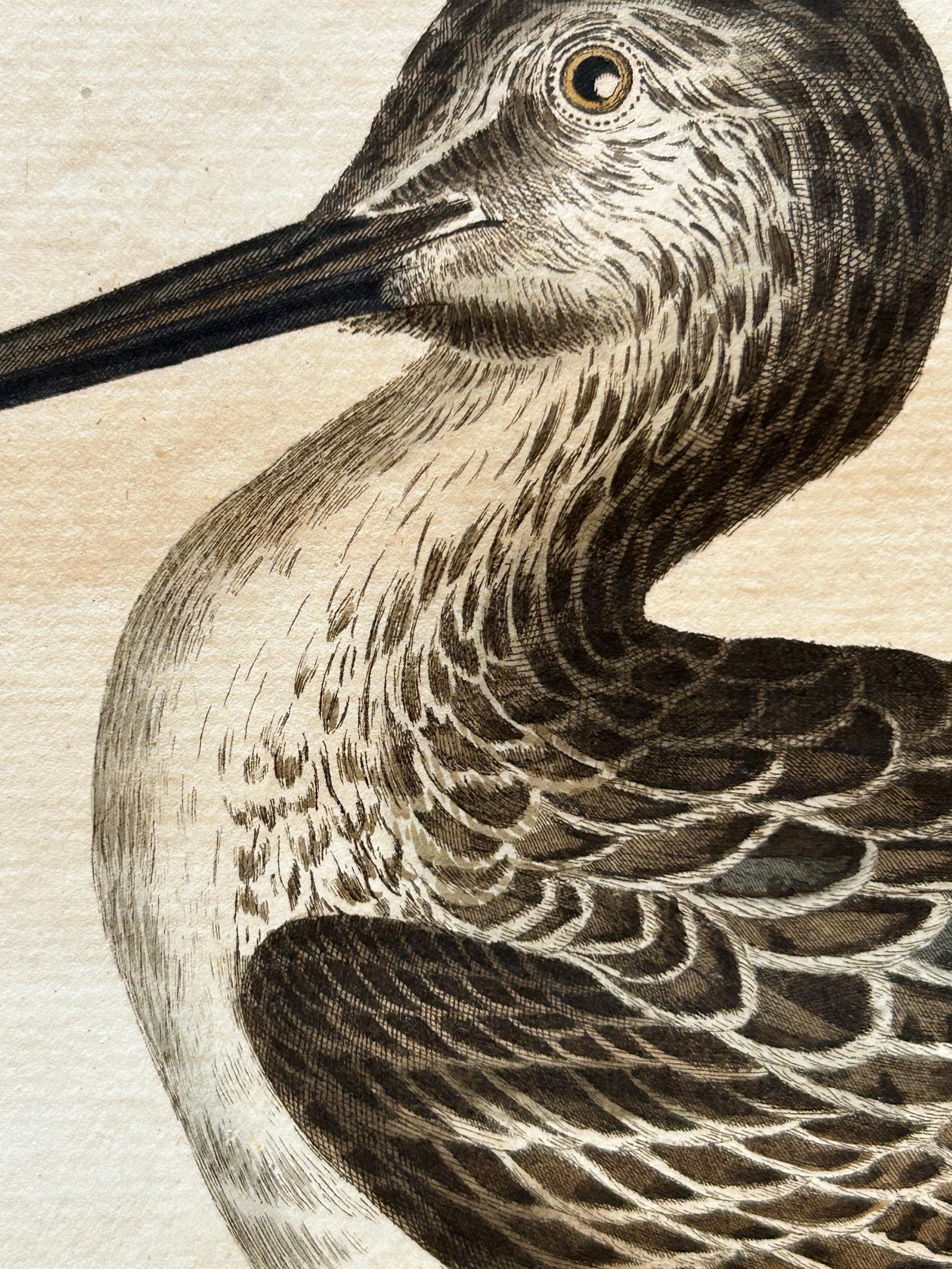
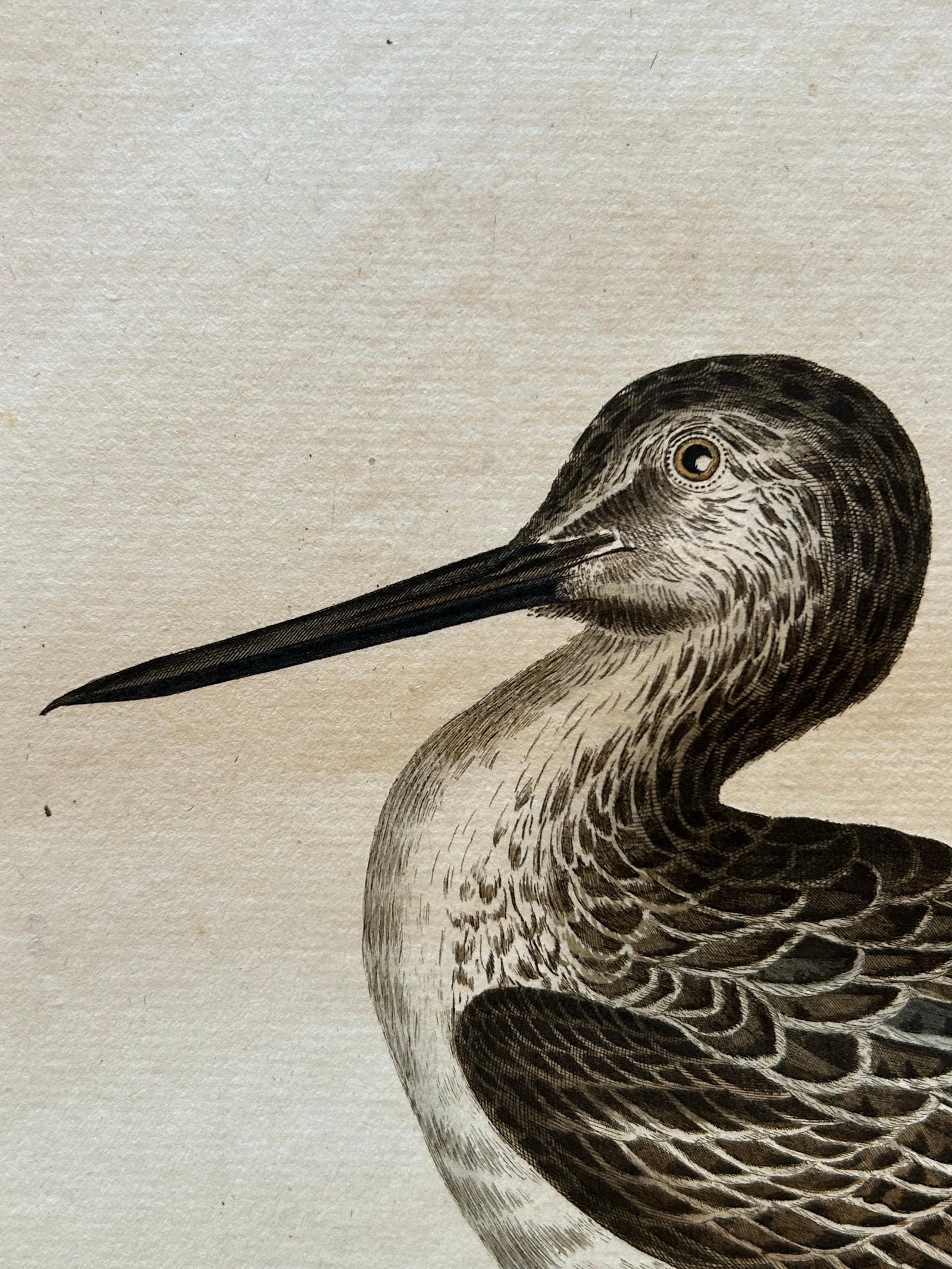
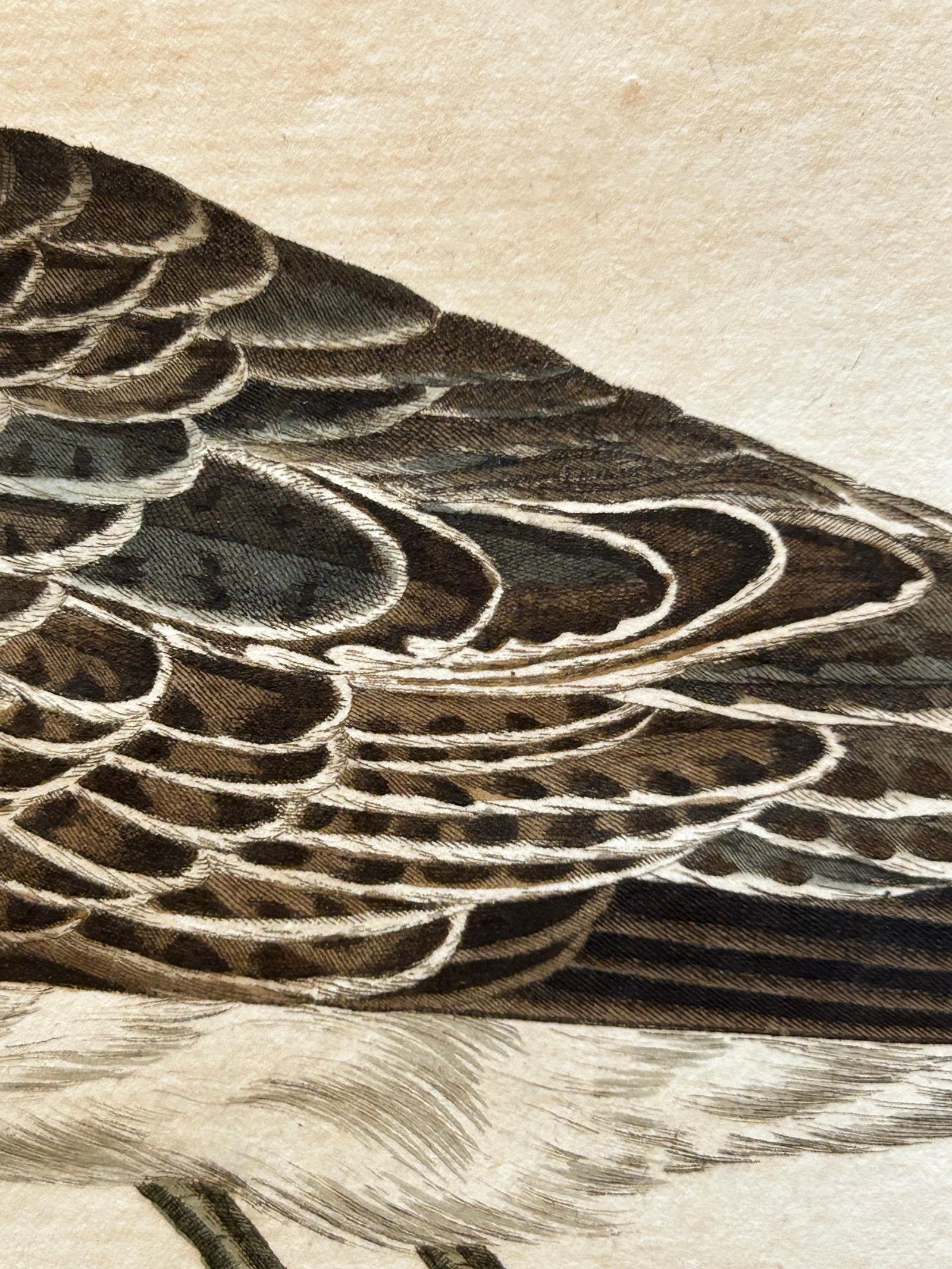
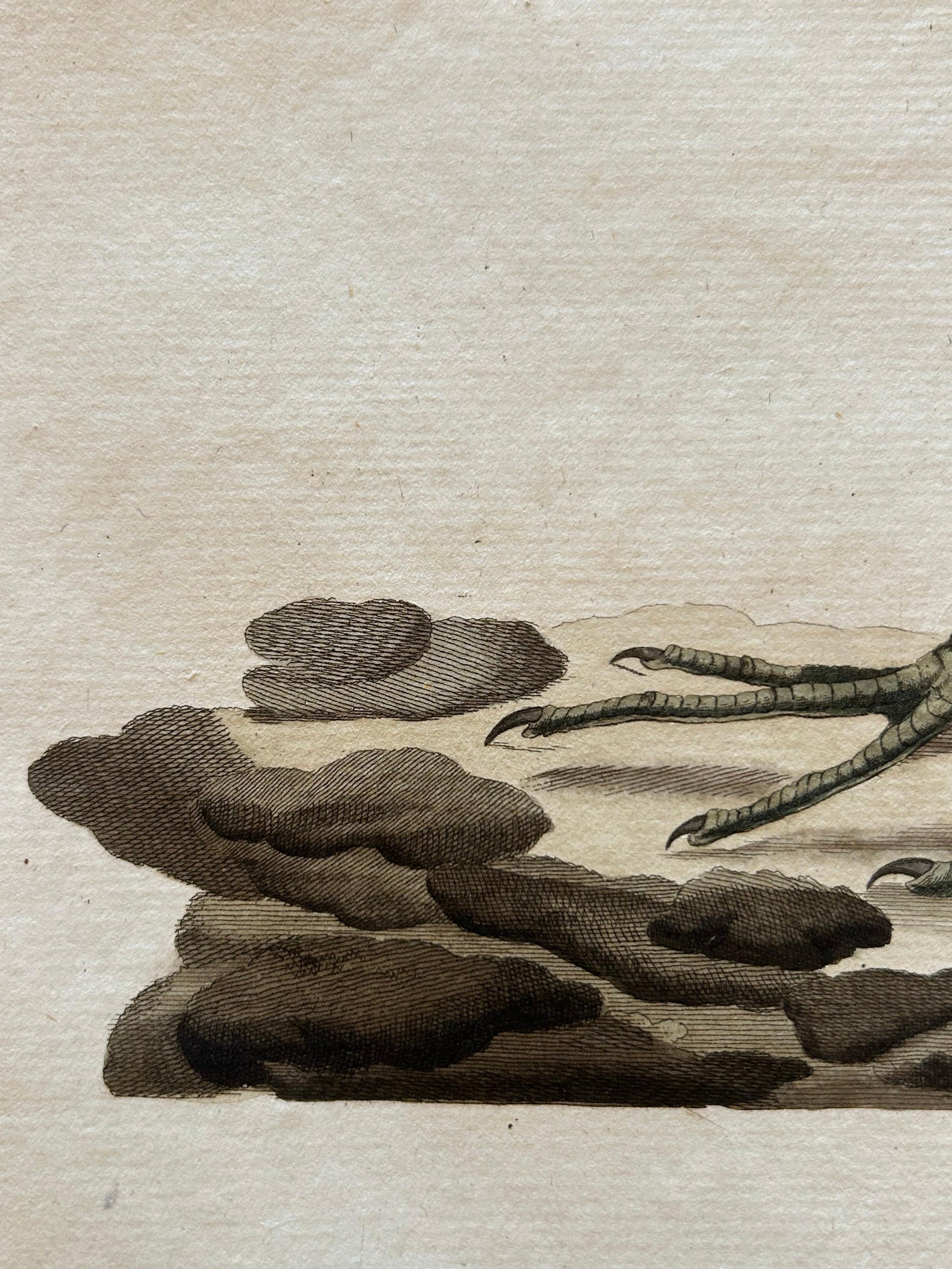
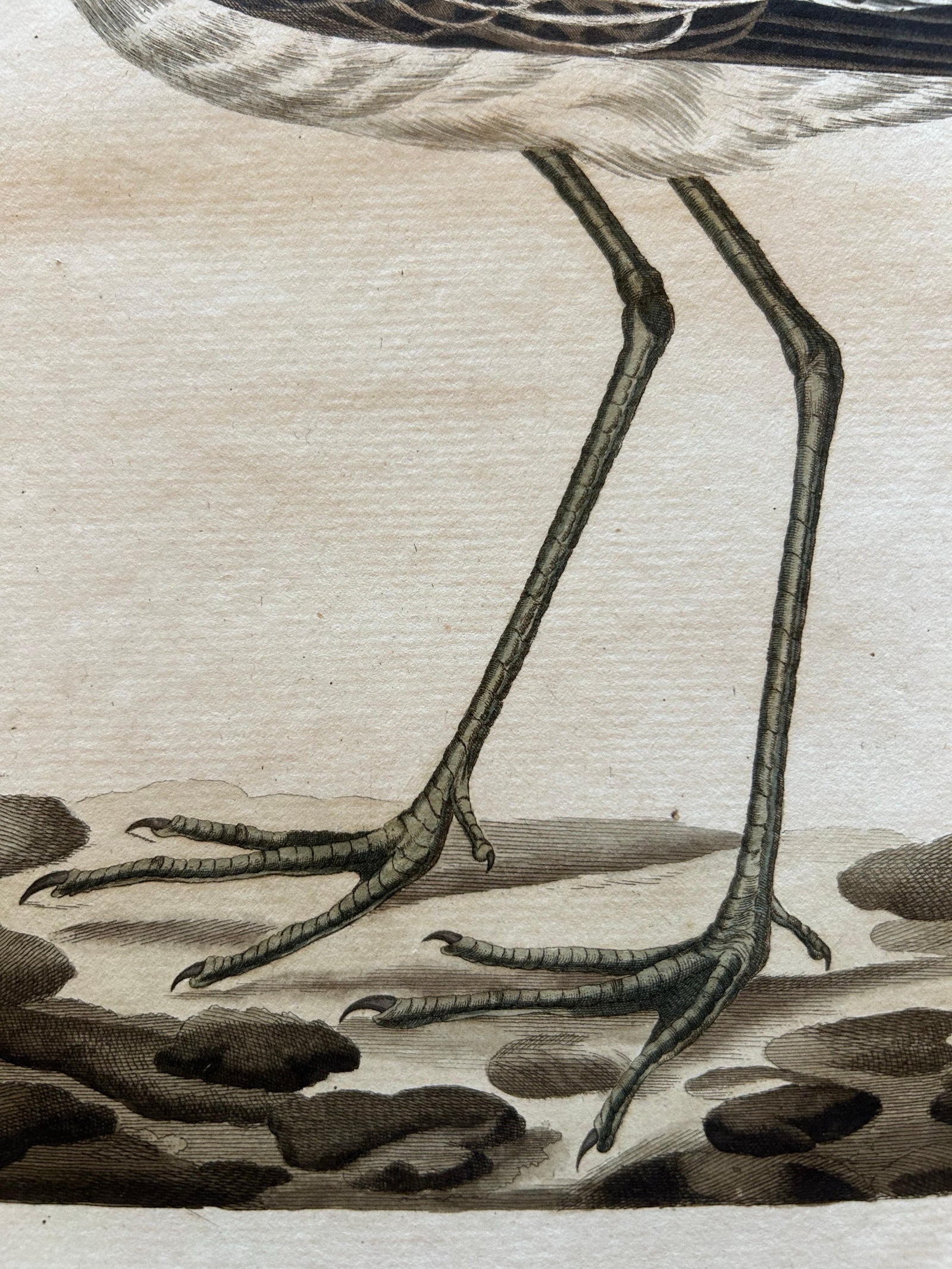
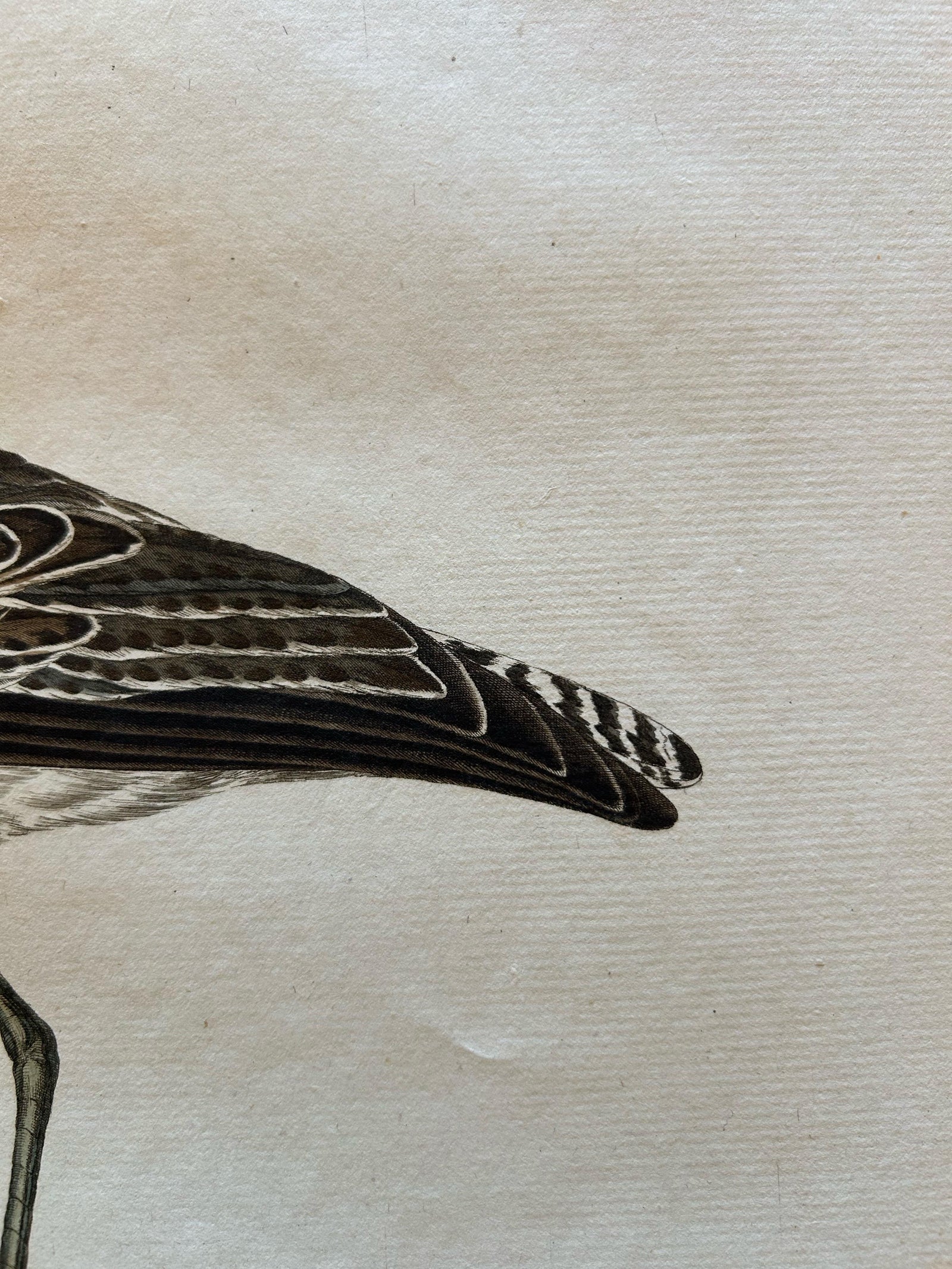
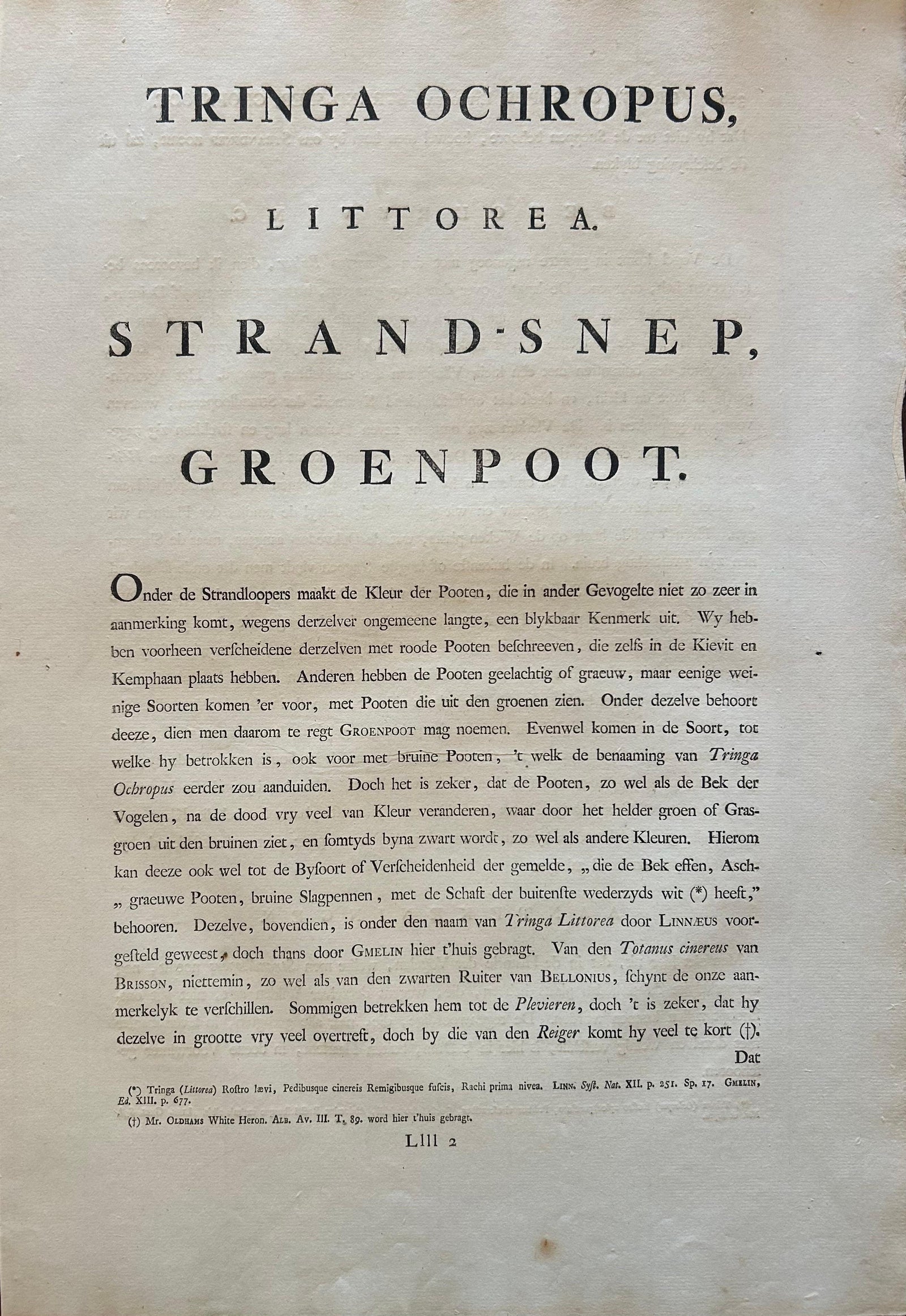
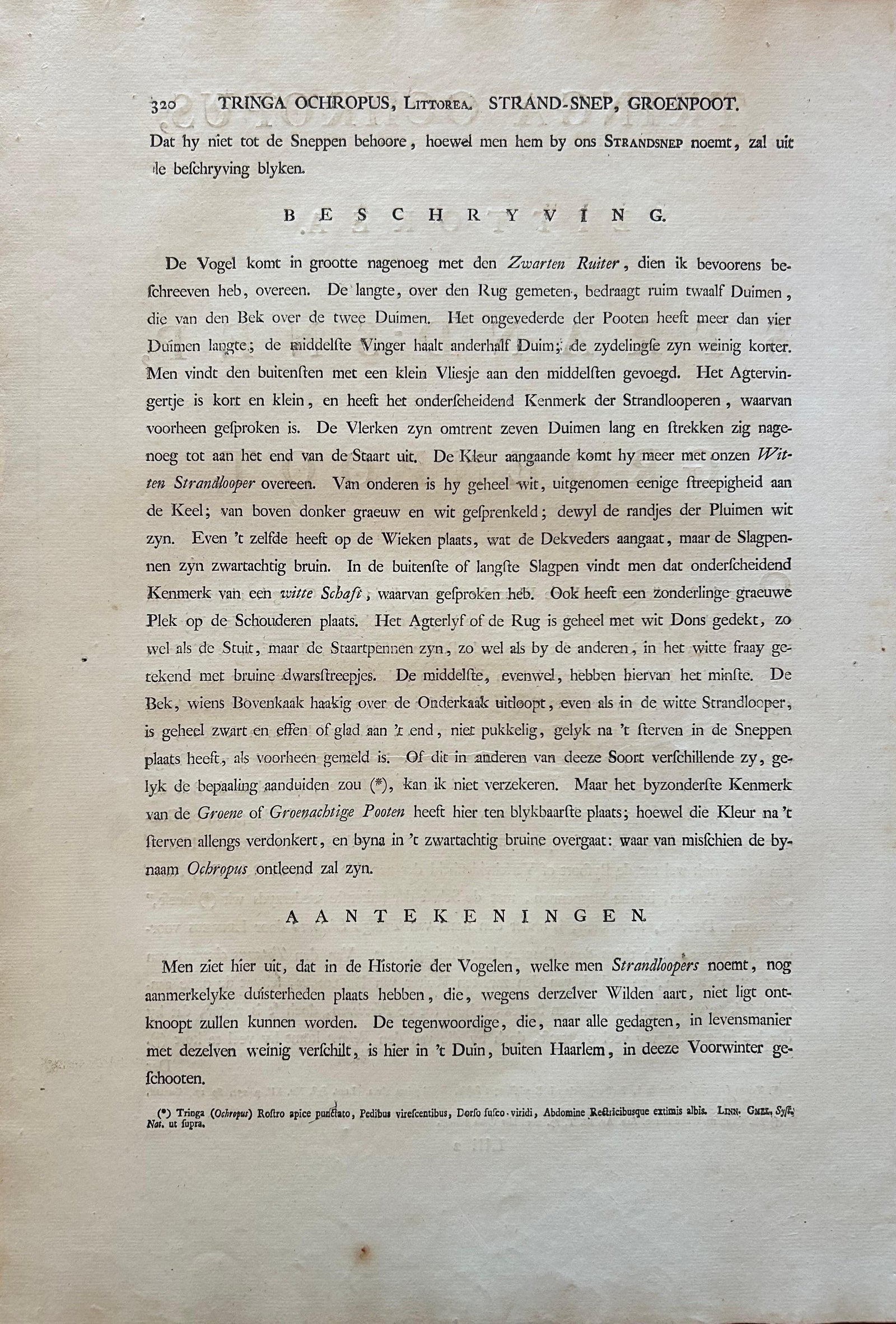
Close-ups
Framed and on the wall
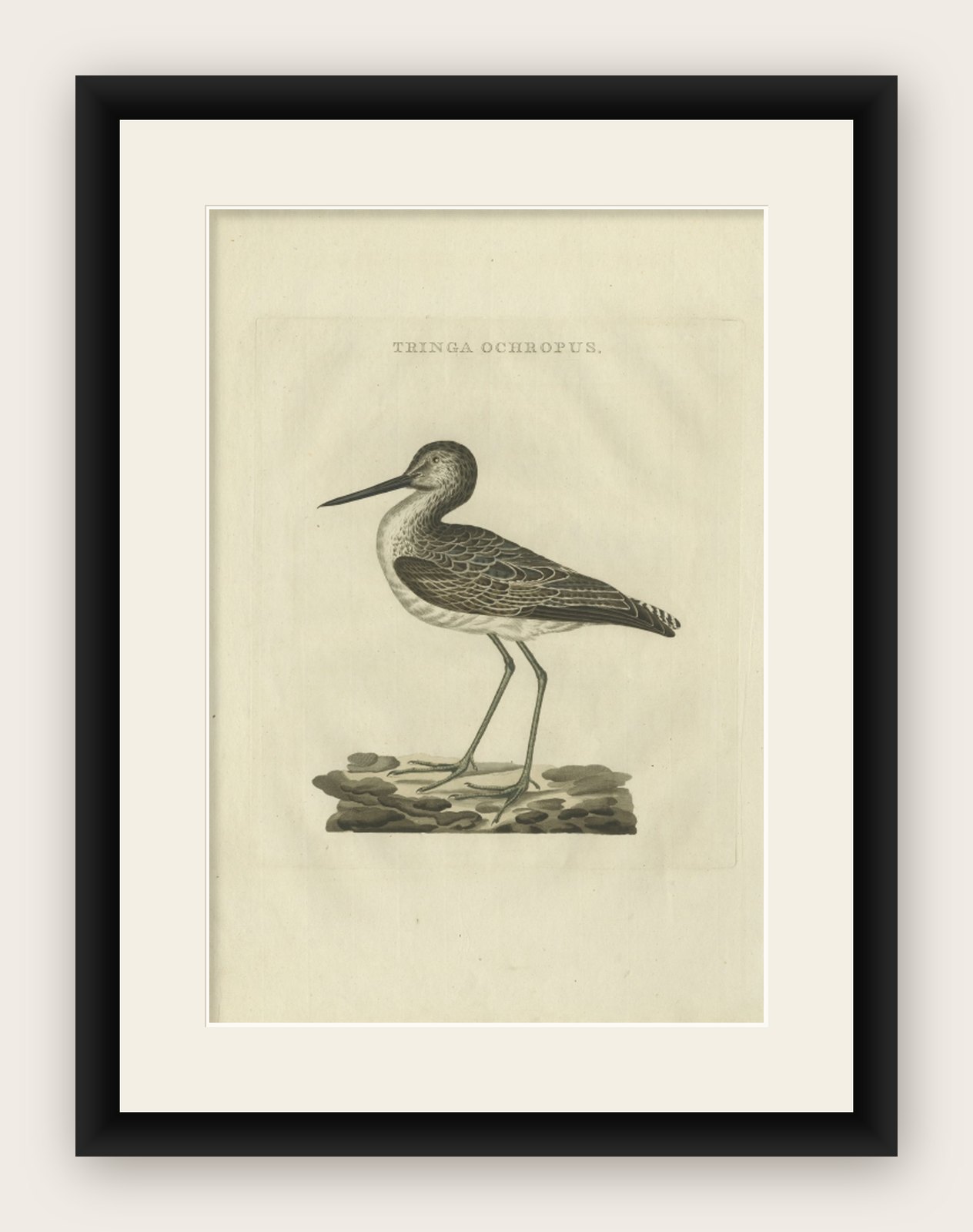
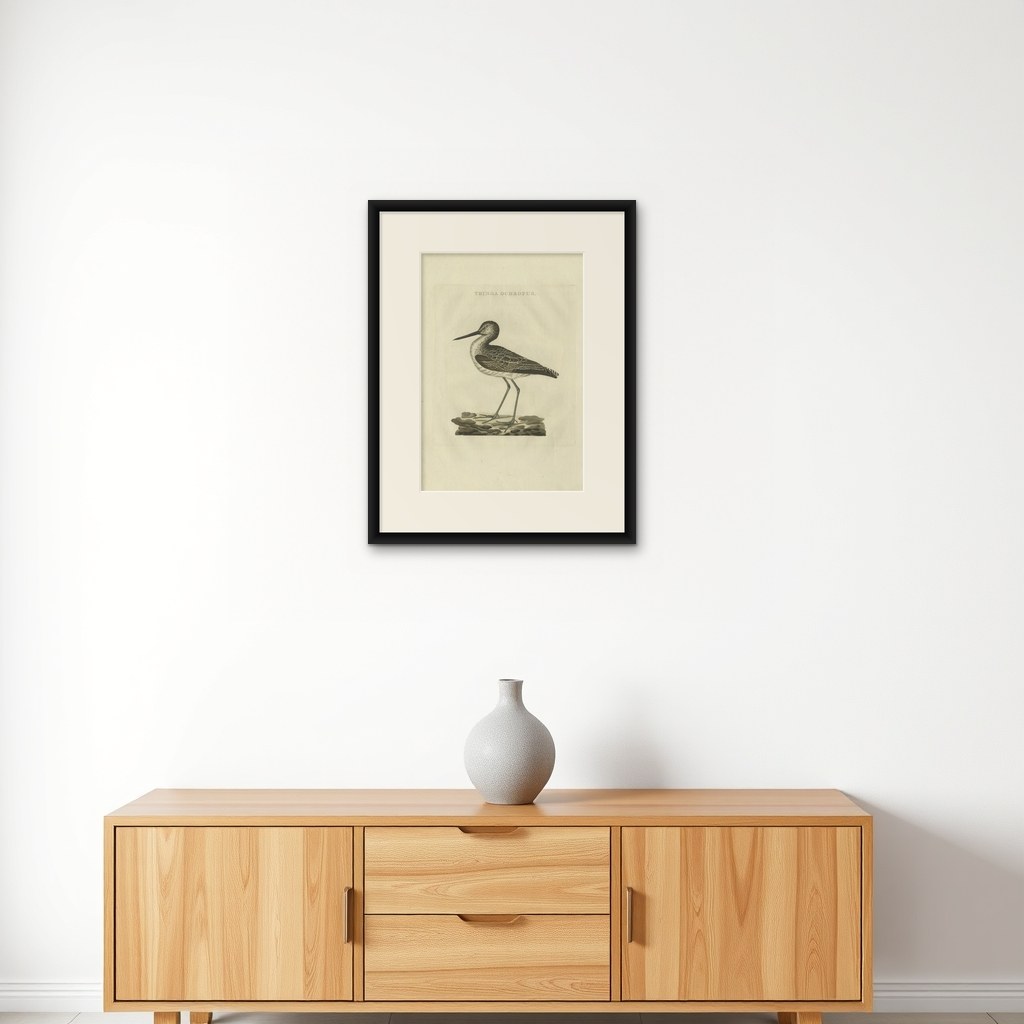
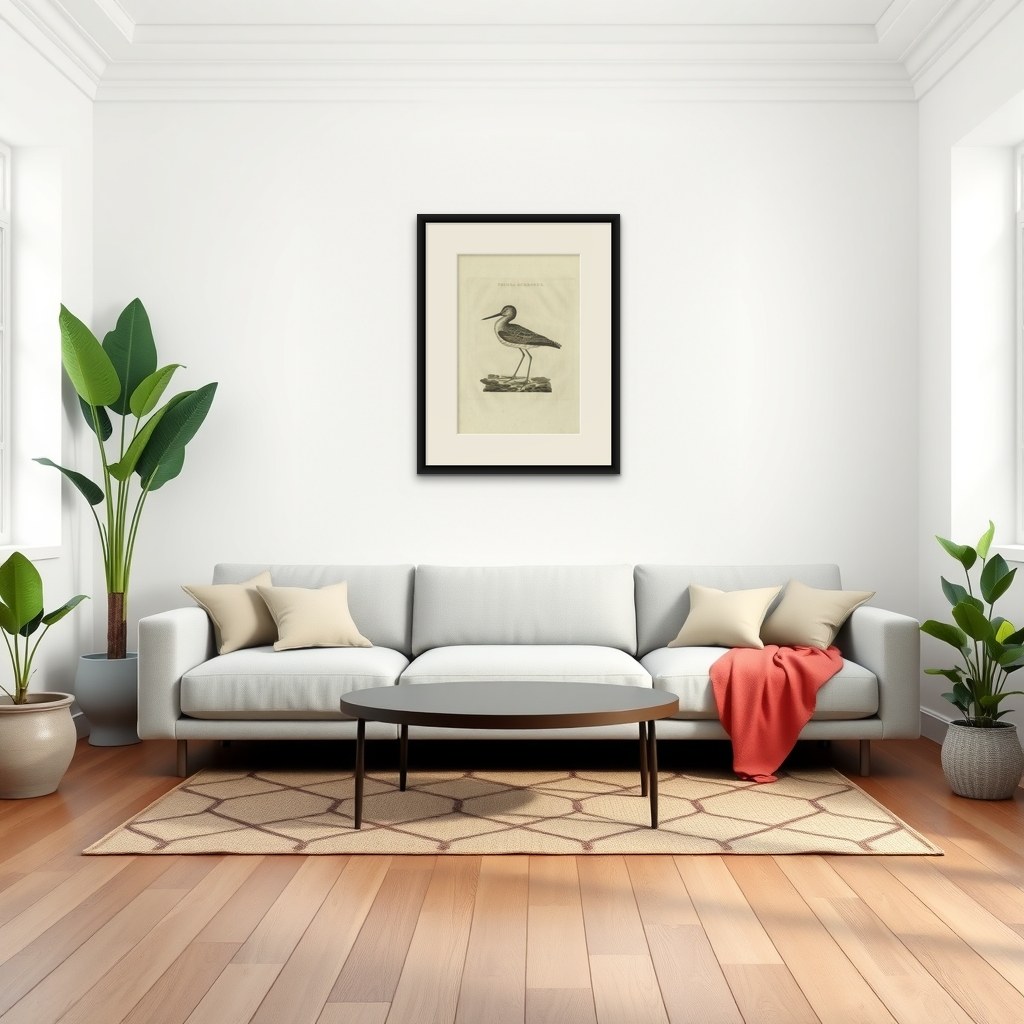
Frame and rooms are illustrations of how the print could look; the description says what is included.
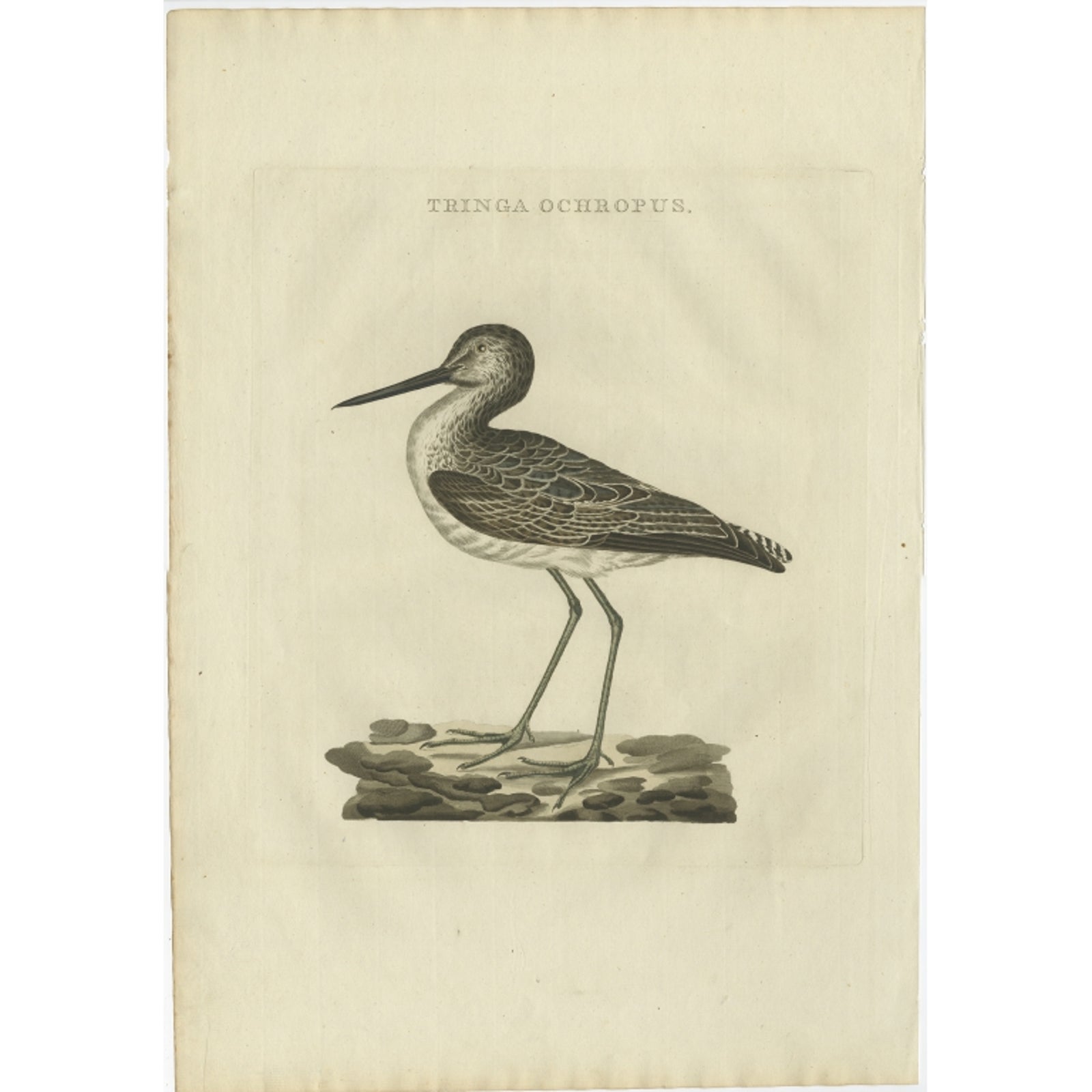
Antique Bird Print of the Green Sandpiper by Sepp & Nozeman, 1809
€620 ($695, £525, €620)
Period original, not a reproduction.
Shipped from the Netherlands, flat, insured and tracked, worldwide. Returns accepted within 14 days.
- Date
- 1809
- Size
- 20.9 × 14.6 in (53 × 37 cm)
- Condition
- Good. Very good. Clean paper with mild age-related toning. Strong impression with visible plate mark. Original text page has soft age-related toning and a few spots in the margins, not affecting the text. Please study images carefully.
- Period
- Early 19th century
- Artist or book
- Nozeman and Sepp
- Section
- Birds
- Reference
- f_25790772
- Colour
- Hand coloured
What the condition grades mean
- Excellent
- Bright and clean, with no faults worth mentioning.
- Very good
- Only light signs of age, such as faint toning.
- Good
- Normal signs of age for a sheet of this period: toning, some foxing, small marks or neat old repairs.
- Fair
- Clear faults such as staining, tears or repairs, priced to match.
Every fault we see is written in the condition note, and the whole sheet is shown uncropped in the photos.
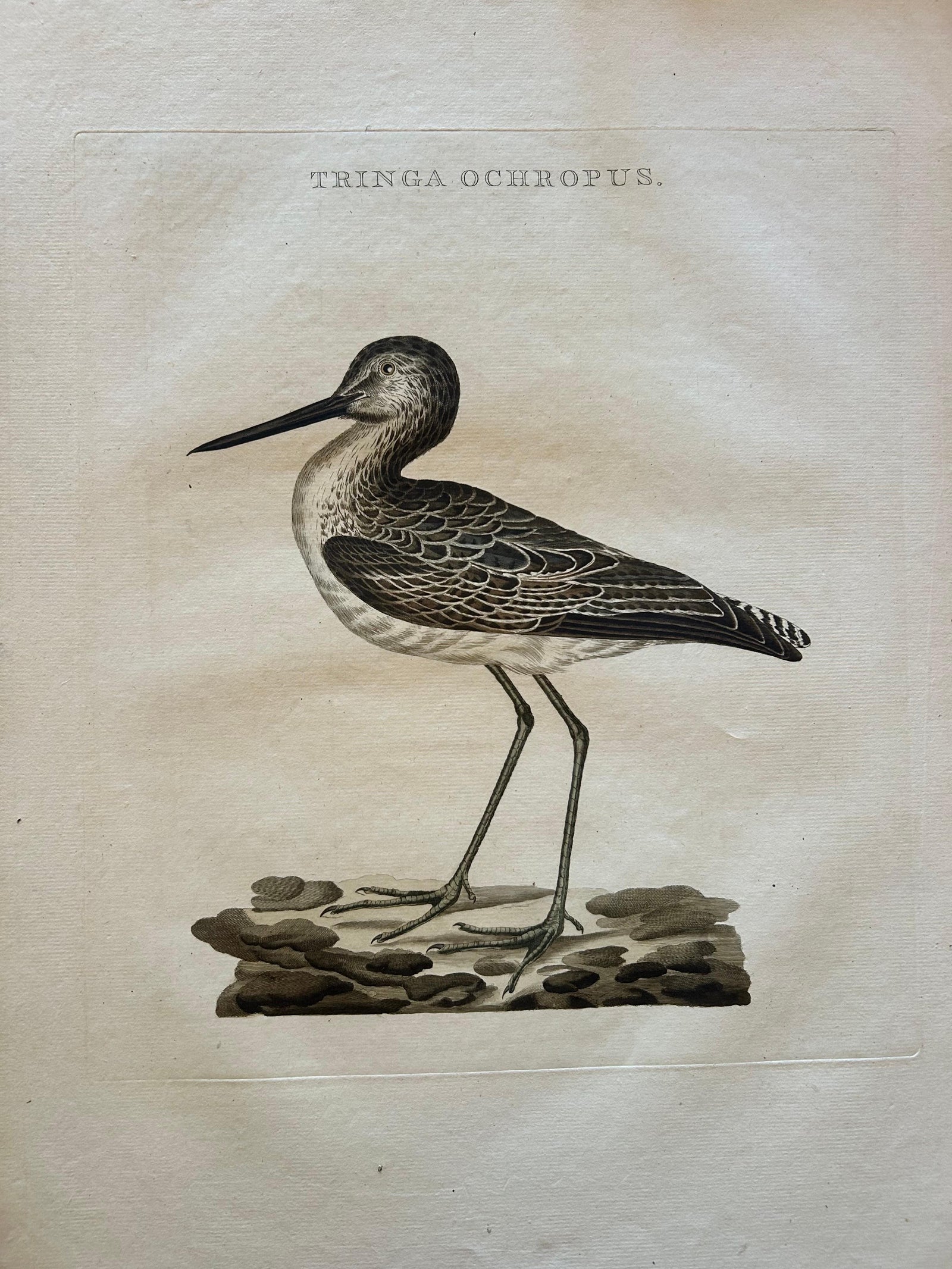
Tringa Ochropus, Antique Green Sandpiper Print by Nozeman & Sepp, 1809
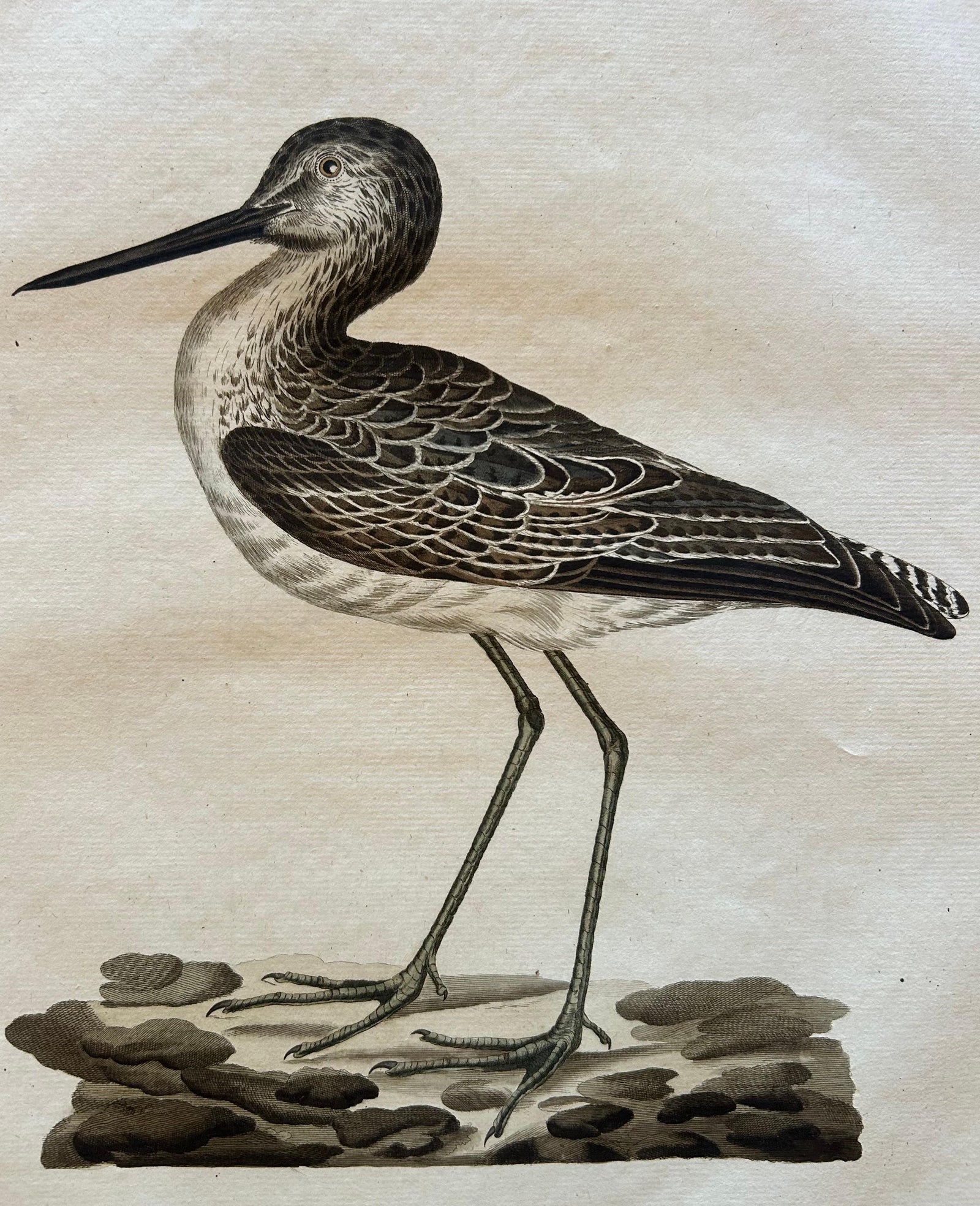
This finely hand-coloured engraving depicts the green sandpiper (Tringa ochropus), known in Dutch as the “witgat.” A small but distinctive wader, the green sandpiper is recognised by its dark, finely patterned upperparts, clean white underparts, and long, slender bill. Shown standing alert on a rocky riverbank, the bird’s elegant proportions and poised posture are captured with remarkable accuracy, reflecting the combination of artistic skill and scientific observation that defines this celebrated ornithological series.
The plate originates from Nederlandsche Vogelen; volgens hunne huisdouding, aert, en eigenschappen beschreeven (Amsterdam, 1770–1829), the first comprehensive study of Dutch birds. Created by Cornelis Nozeman, Martinus Houttuyn, and Jan Christiaan Sepp, the work is renowned for its life-sized depictions, faithful anatomical detail, and fine hand-colouring. Printed on high-quality laid paper and hand-finished, each plate was intended as both a scientific record and a decorative work of art.
The green sandpiper, though not a breeding bird in the Netherlands, was included for its regular appearance during migration and winter. The accompanying original text page provides fascinating period observations on its seasonal movements, feeding habits, and behaviour along European waterways.
Highly valued by collectors and interior designers, Nederlandsche Vogelen plates are prized for their historic significance, decorative beauty, and timeless natural history appeal.
Condition: Very good. Clean paper with mild age-related toning. Strong impression with visible plate mark. Original text page has soft age-related toning and a few spots in the margins, not affecting the text.
Framing tips: A soft off-white or pale grey mount will complement the bird’s plumage, while a narrow dark wood or ebonised frame will provide a classic presentation. Floating the print to reveal the plate mark adds to its authenticity. UV-protective glazing is recommended to preserve the hand-colouring.
Overall size: 37 x 53 cm.
Image size: 0.001 x 30.4 x 34.5 cm.