Close-ups
Framed and on the wall
Frame and rooms are illustrations of how the print could look; the description says what is included.
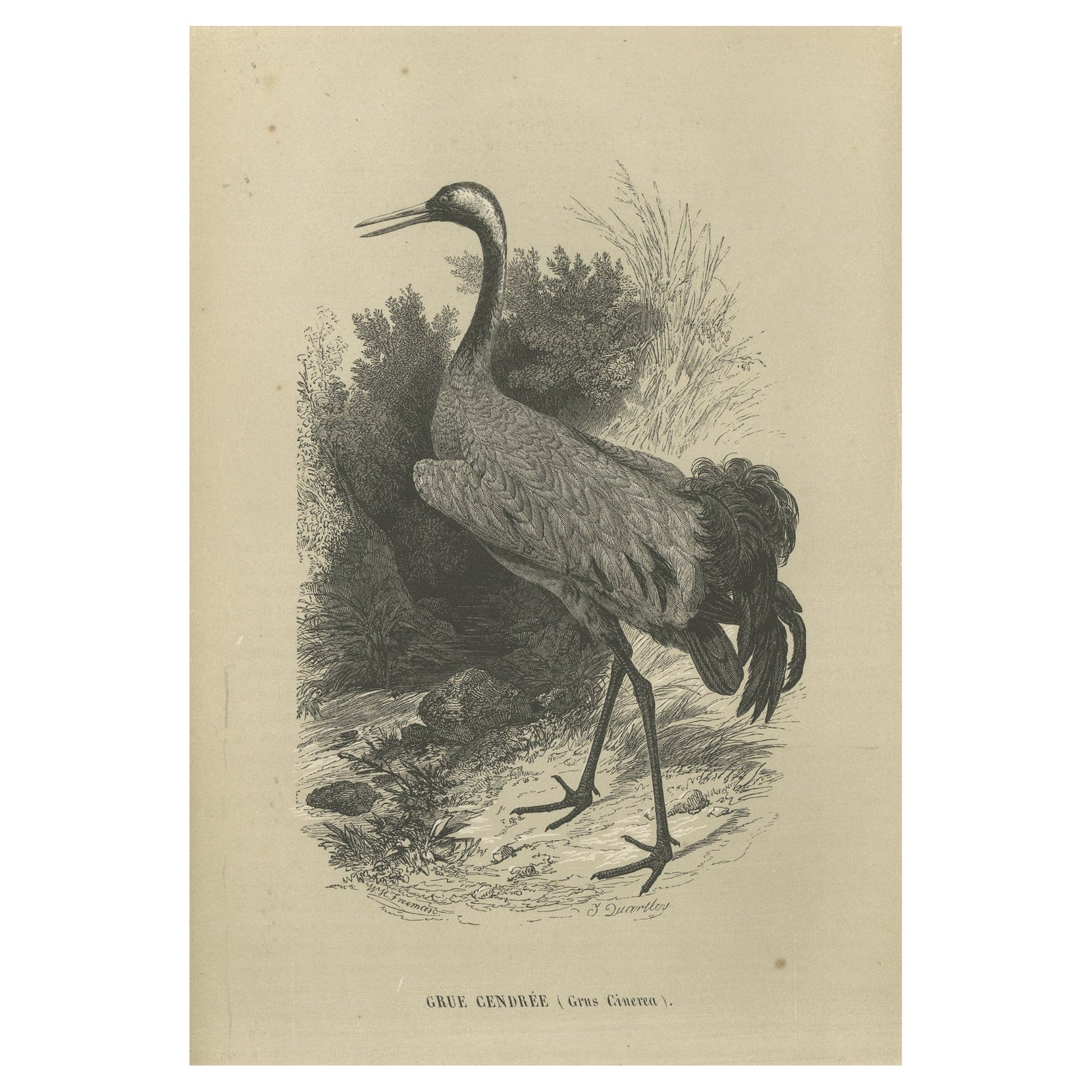
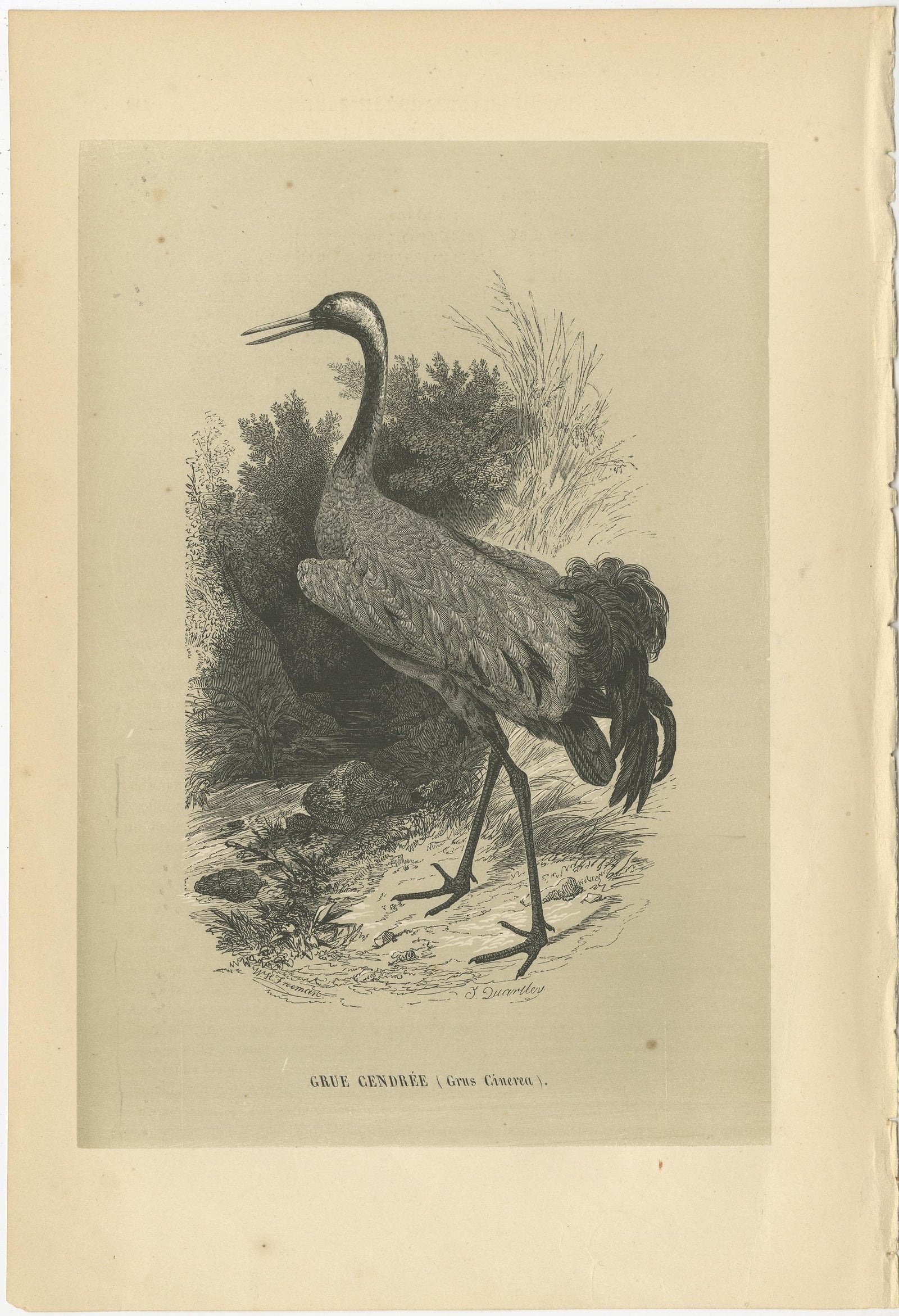
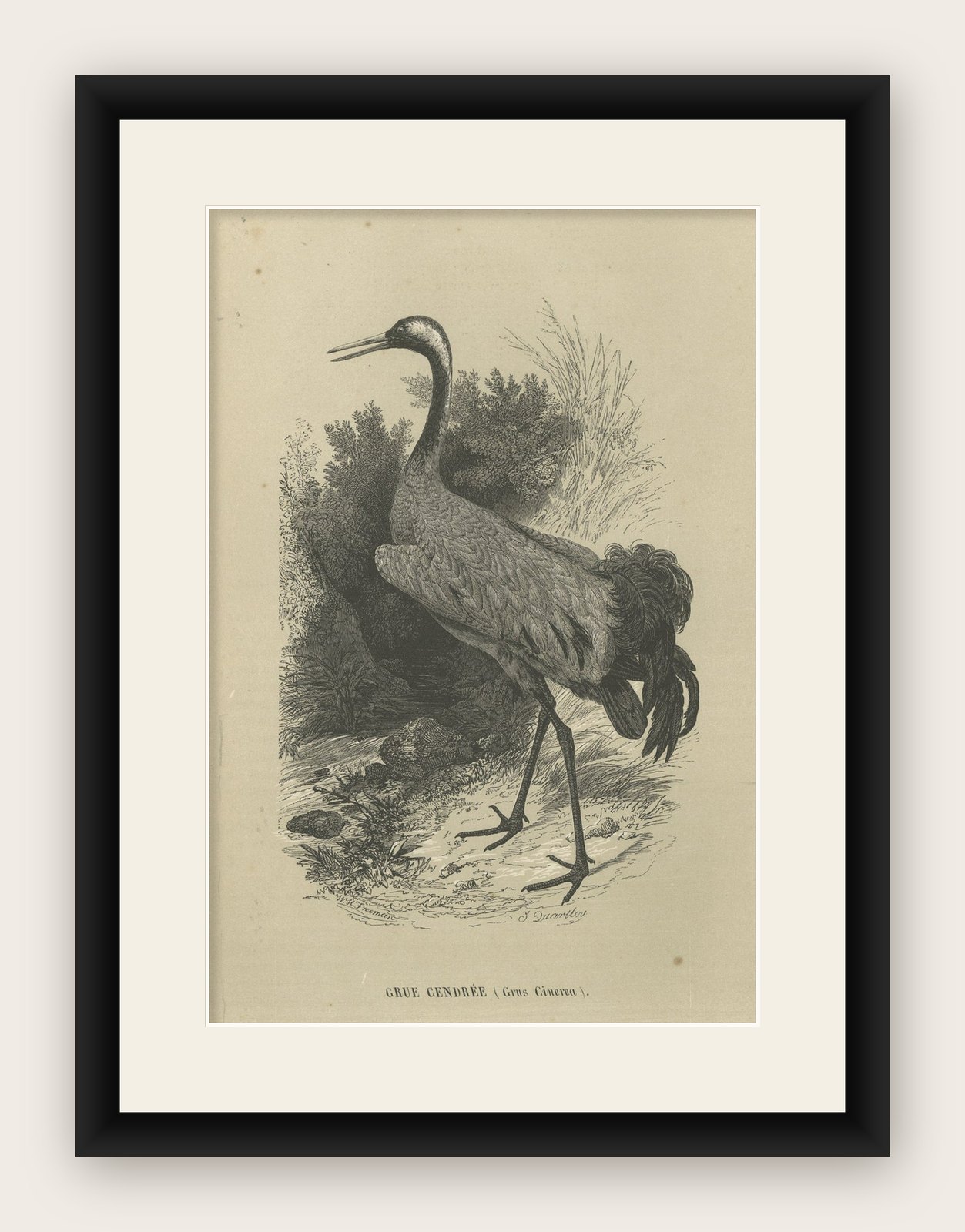
Antique Bird Print of a Common Crane, 1853
€68 ($75, £60, €68)
Period original, not a reproduction.
Shipped from the Netherlands, flat, insured and tracked, worldwide. Returns accepted within 14 days.
- Date
- 1853
- Size
- 10.2 × 7.1 in (26 × 18 cm)
- Condition
- Good
- Period
- Late 19th century
- Section
- Birds
- Reference
- f_26564582
Antique bird print titled 'Grue Gendrée'. Original print of a common crane. This print originates from 'Histoire Naturelle des Oiseaux' by M. Emm. le Maout. Published 1853.
The common crane (Grus grus), also known as the Eurasian crane, is a bird of the family Gruidae, the cranes. A medium-sized species, it is the only crane commonly found in Europe besides the demoiselle crane (Grus virgo). Along with the sandhill (Antigone canadensis) and demoiselle cranes and the brolga (Antigone rubicunda), it is one of only four crane species not currently classified as threatened with extinction or conservation dependent on the species level. Despite the species' large numbers, local extinctions and extirpations have taken place in part of its range, and an ongoing reintroduction project is underway in the United Kingdom.
Artists and Engravers: Jean-Emmanuel-Marie Le Maout (29 December 1799, Guingamp, 23 June 1877, Paris) was a French naturalist.
Condition: Good, general age-related toning. Minor wear and foxing, please study image carefully.
We also offer thousands of antique prints covering fields of interest as diverse as architecture, natural history, religion, ethnology and many more. Antique prints have long been appreciated for both their aesthetic and investment value. They were the product of engraved, etched or lithographed plates. These plates were handmade out of wood or metal, which required an incredible level of skill, patience and craftsmanship. Whether you have a house with Victorian furniture or more contemporary decor an old engraving can enhance your living space.