Close-ups
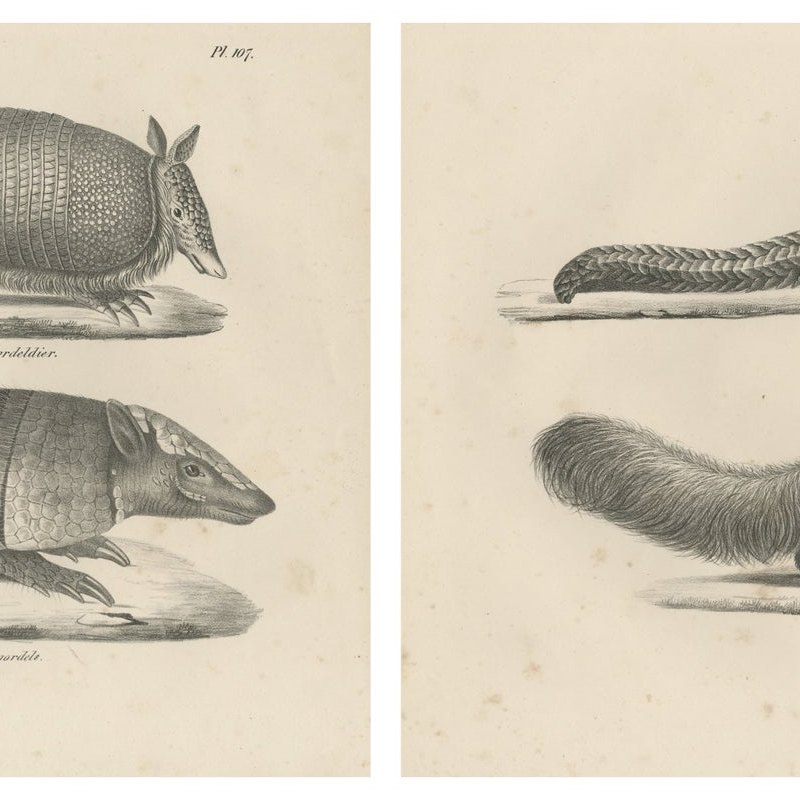
Framed and on the wall
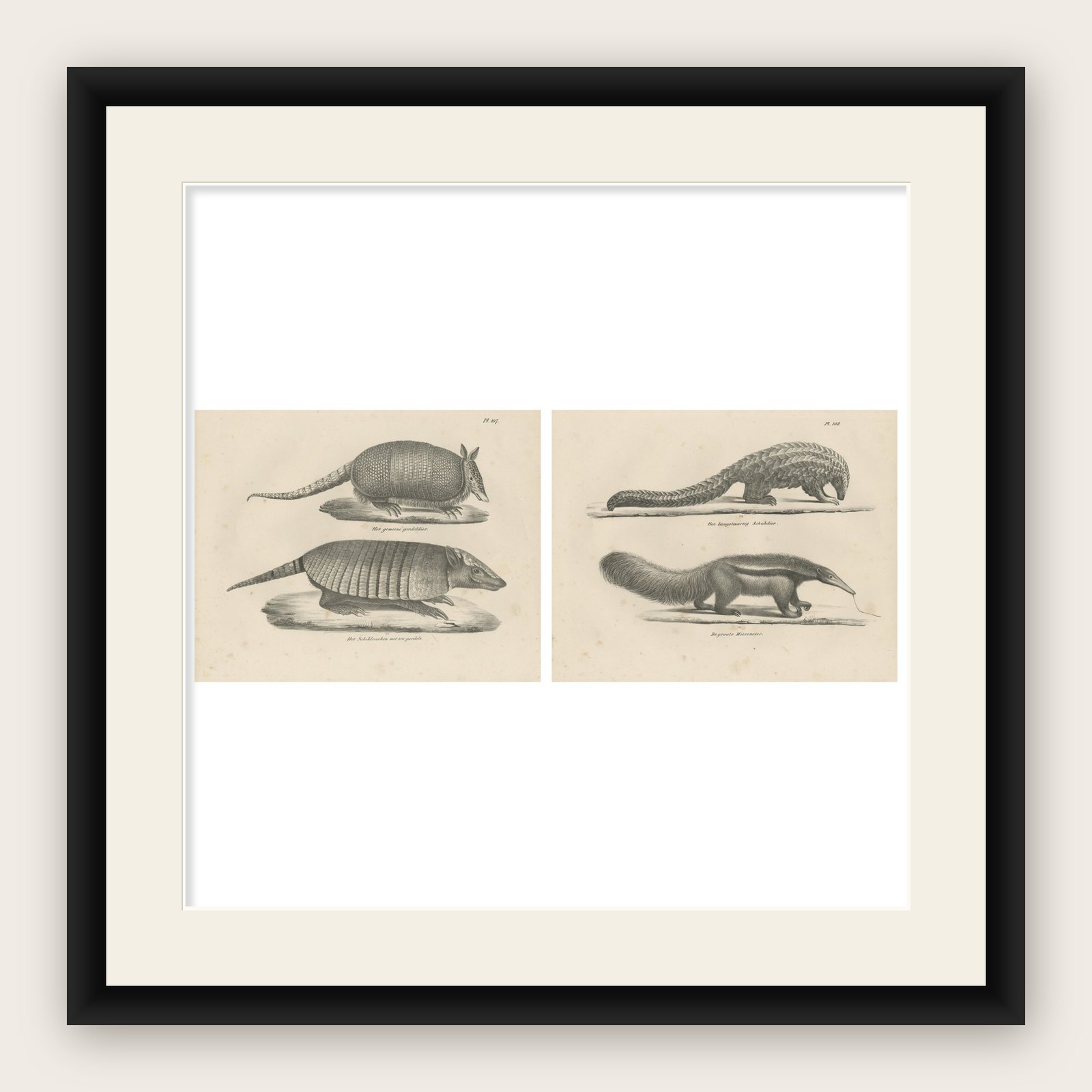
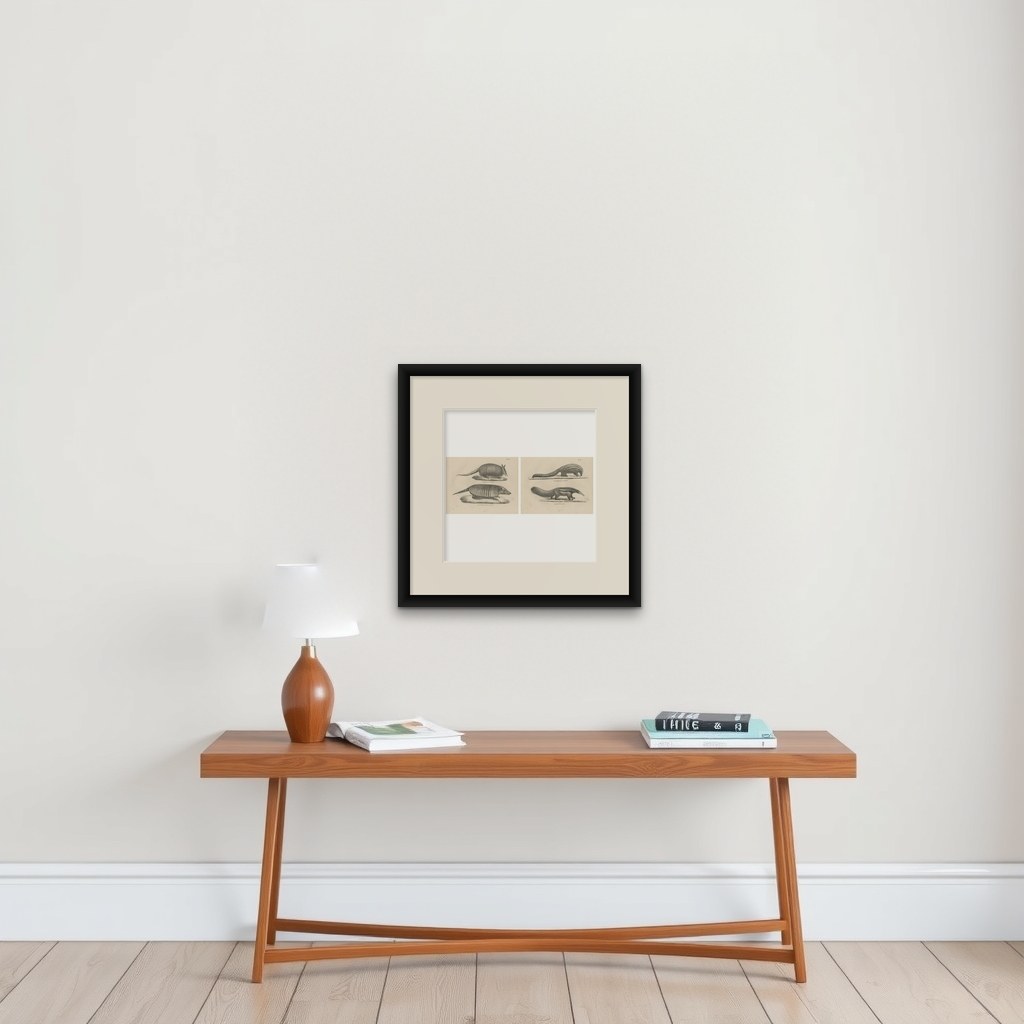

Frame and rooms are illustrations of how the print could look; the description says what is included.
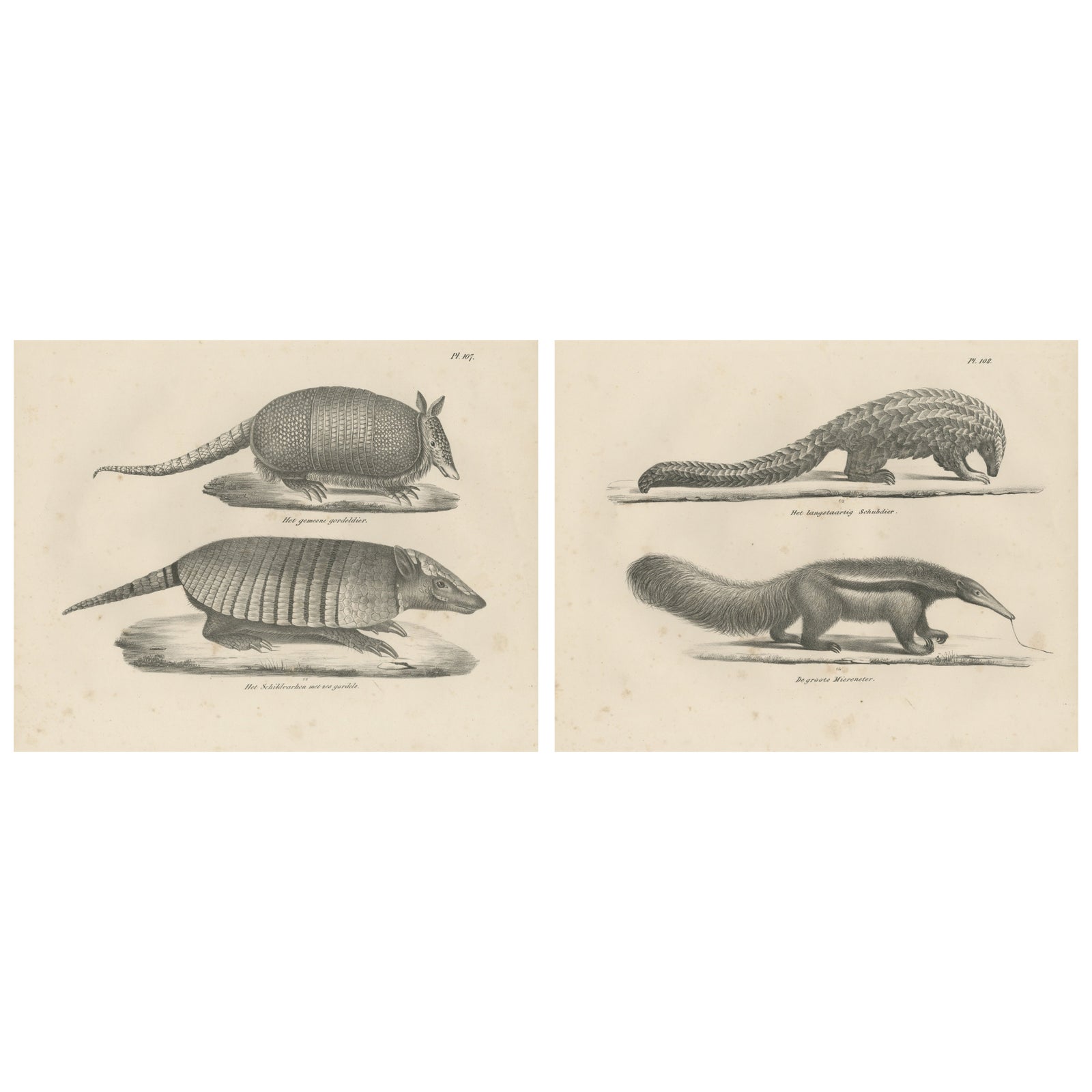
Antique Armadillo, Pangolin & Anteater Lithographs, Brodtmann c.1830
$495 (£375, €440)
Period original, not a reproduction.
Shipped from the Netherlands, flat, insured and tracked, worldwide. Returns accepted within 14 days.
- Date
- 1830
- Size
- 10.2 × 12.7 in (26 × 32.2 cm)
- Condition
- Good. Overall good antique condition. Light foxing and scattered age-related spotting visible, consistent with lithographs from circa 1830. No major tears or losses observed.
- Period
- Early 19th century
- Section
- Mammals
- Reference
- f_48134162
Antique Armadillo, Pangolin & Anteater Lithographs, Brodtmann c.1830
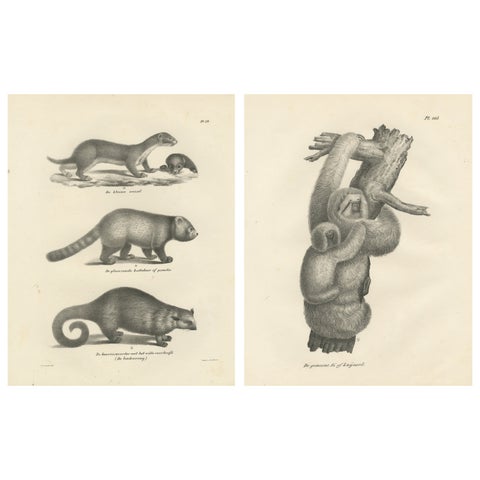
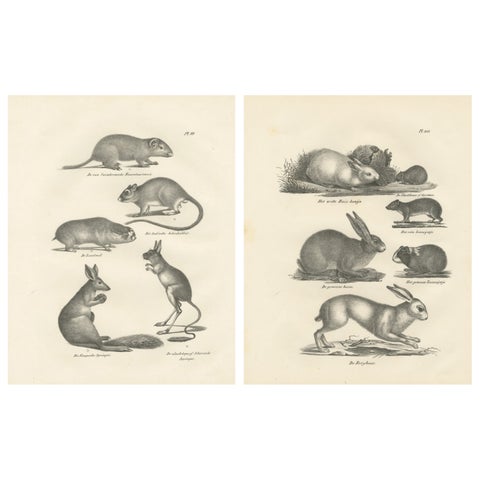
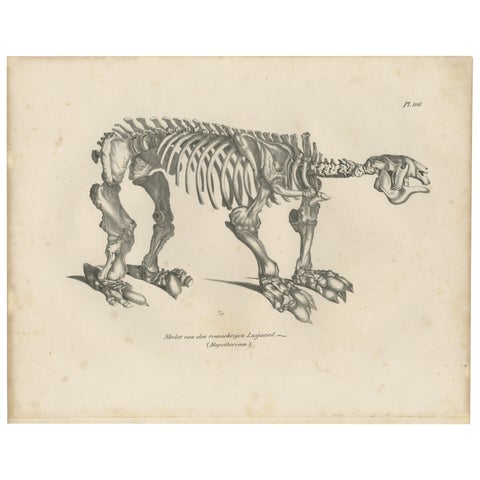
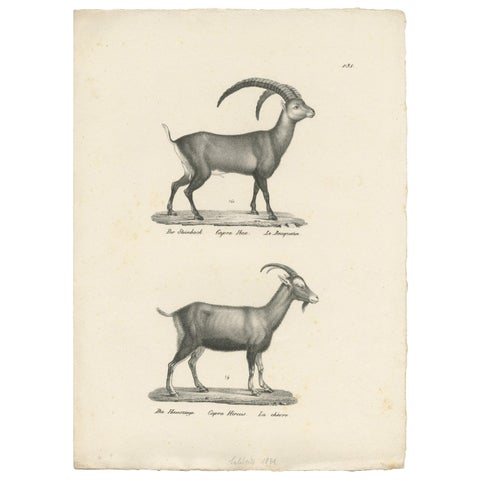
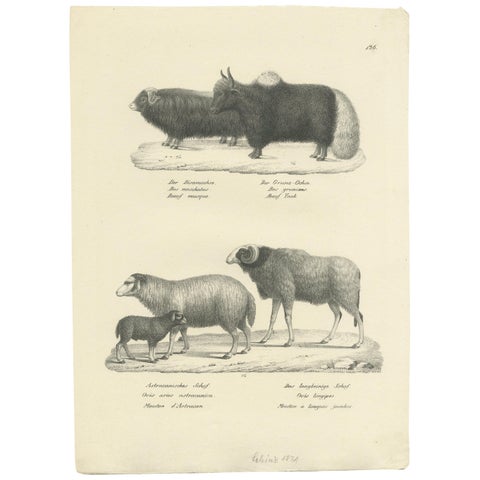
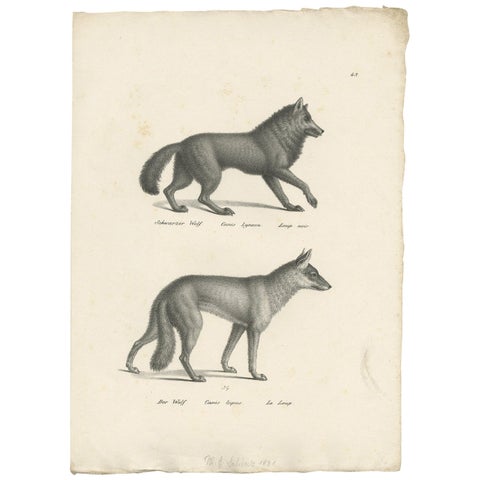
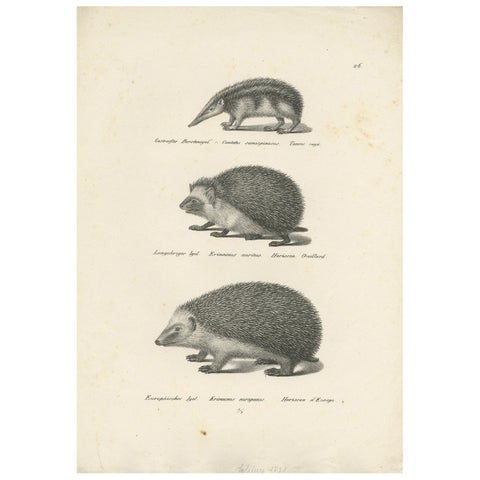
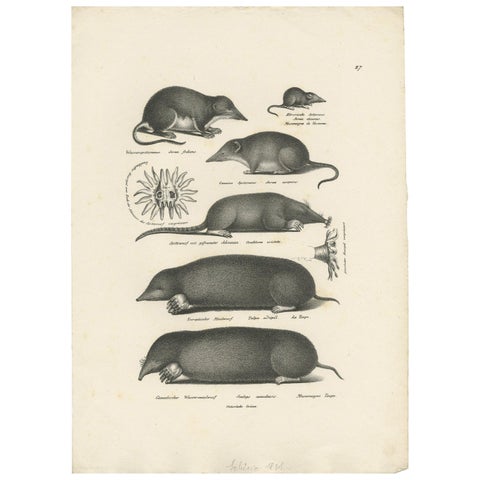
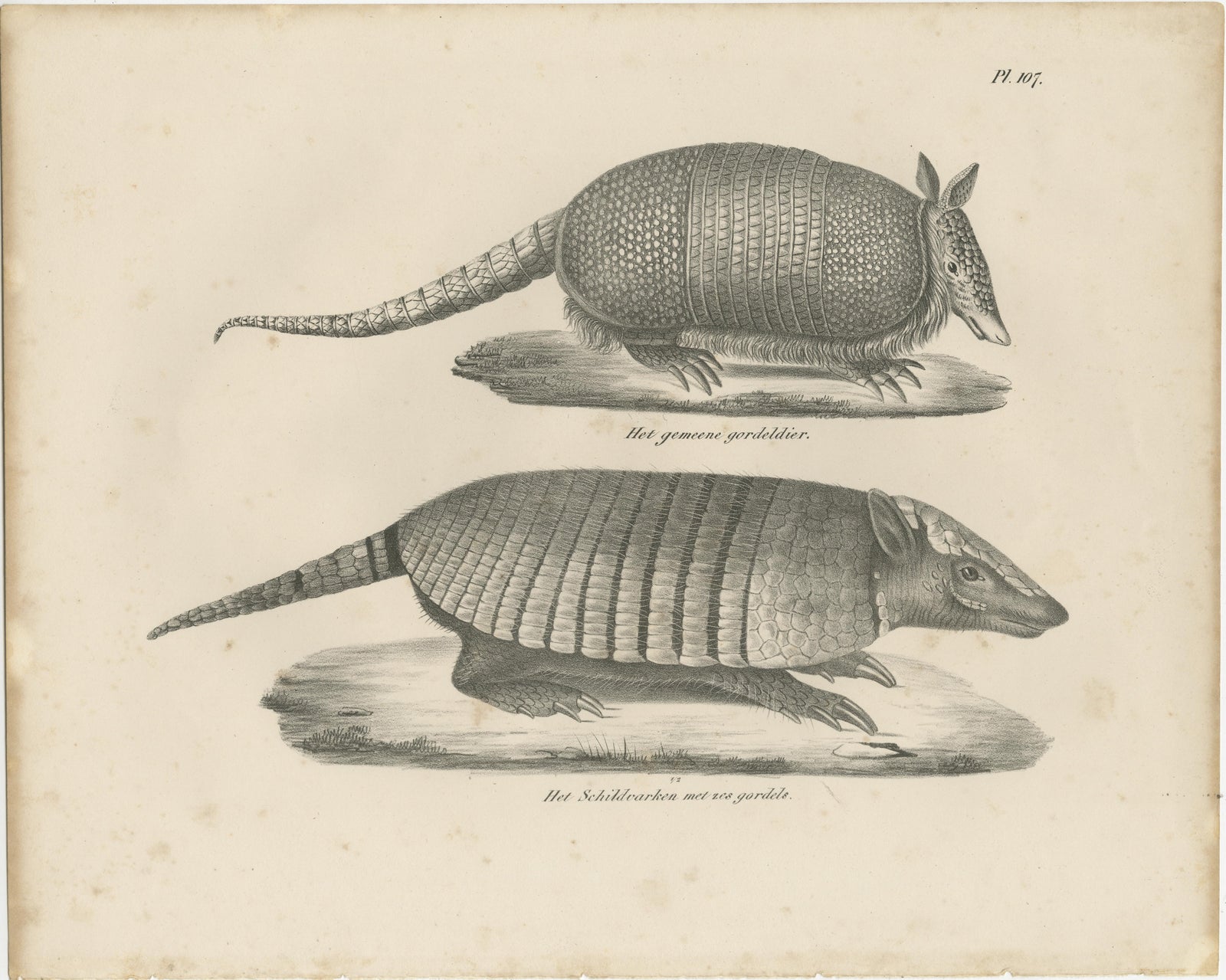
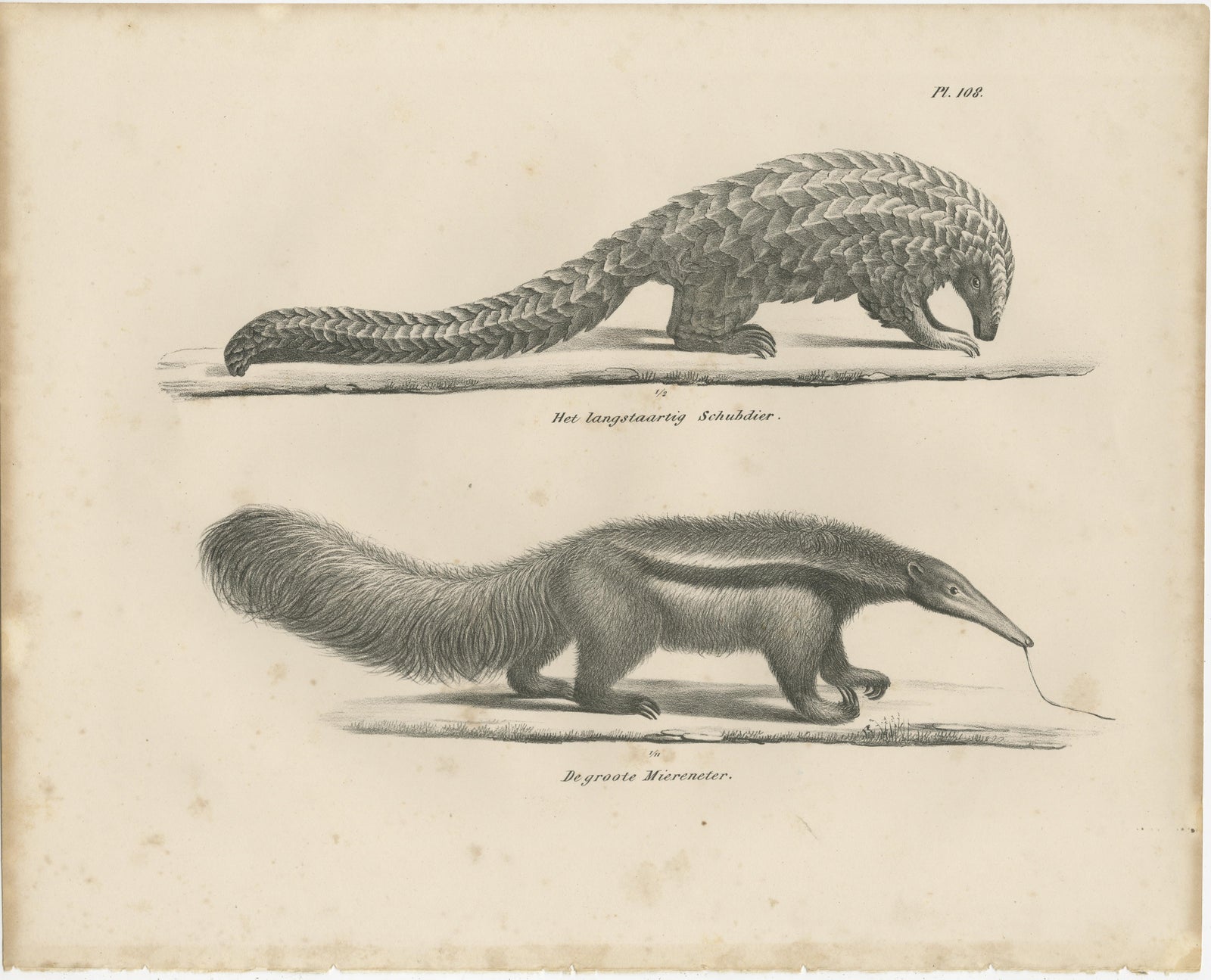
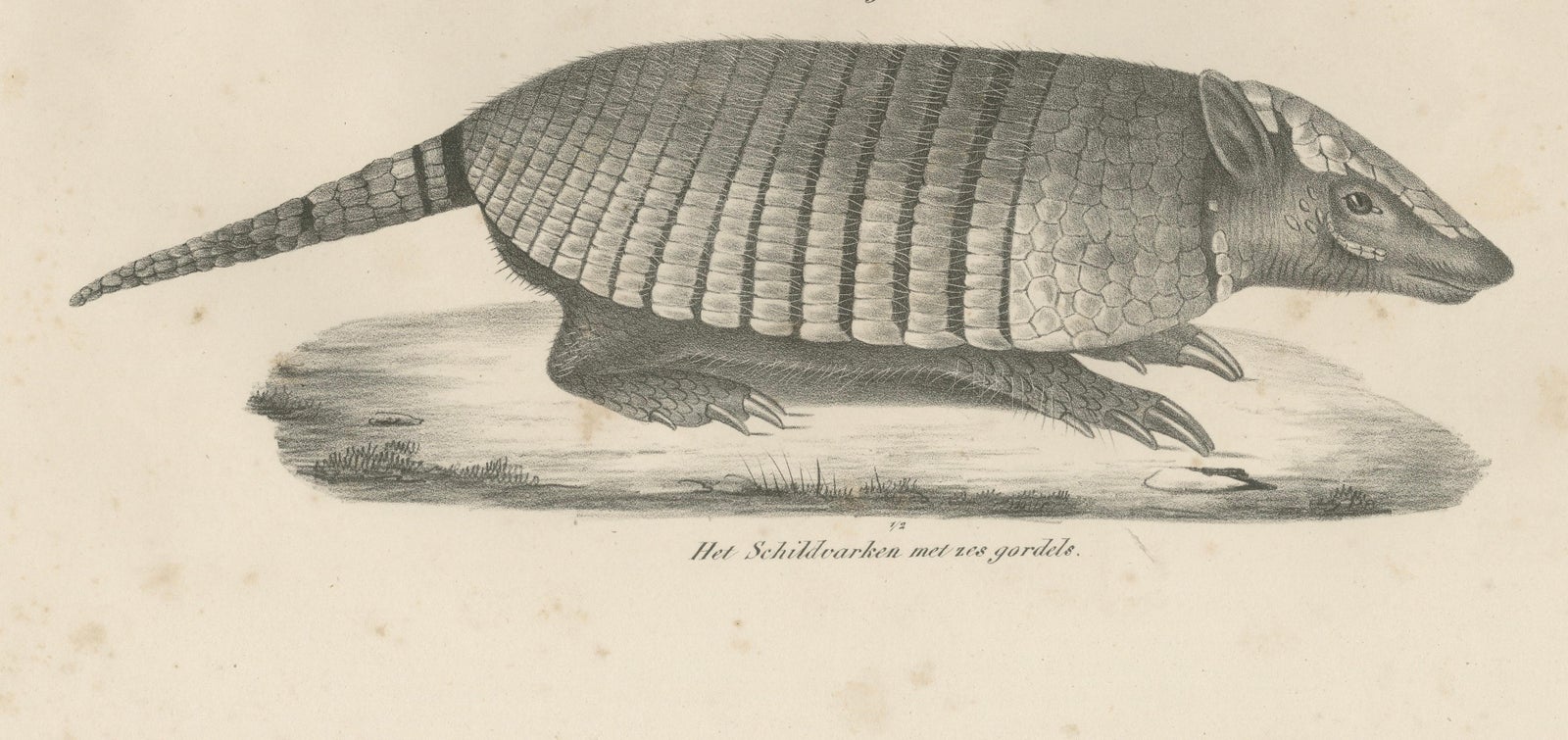
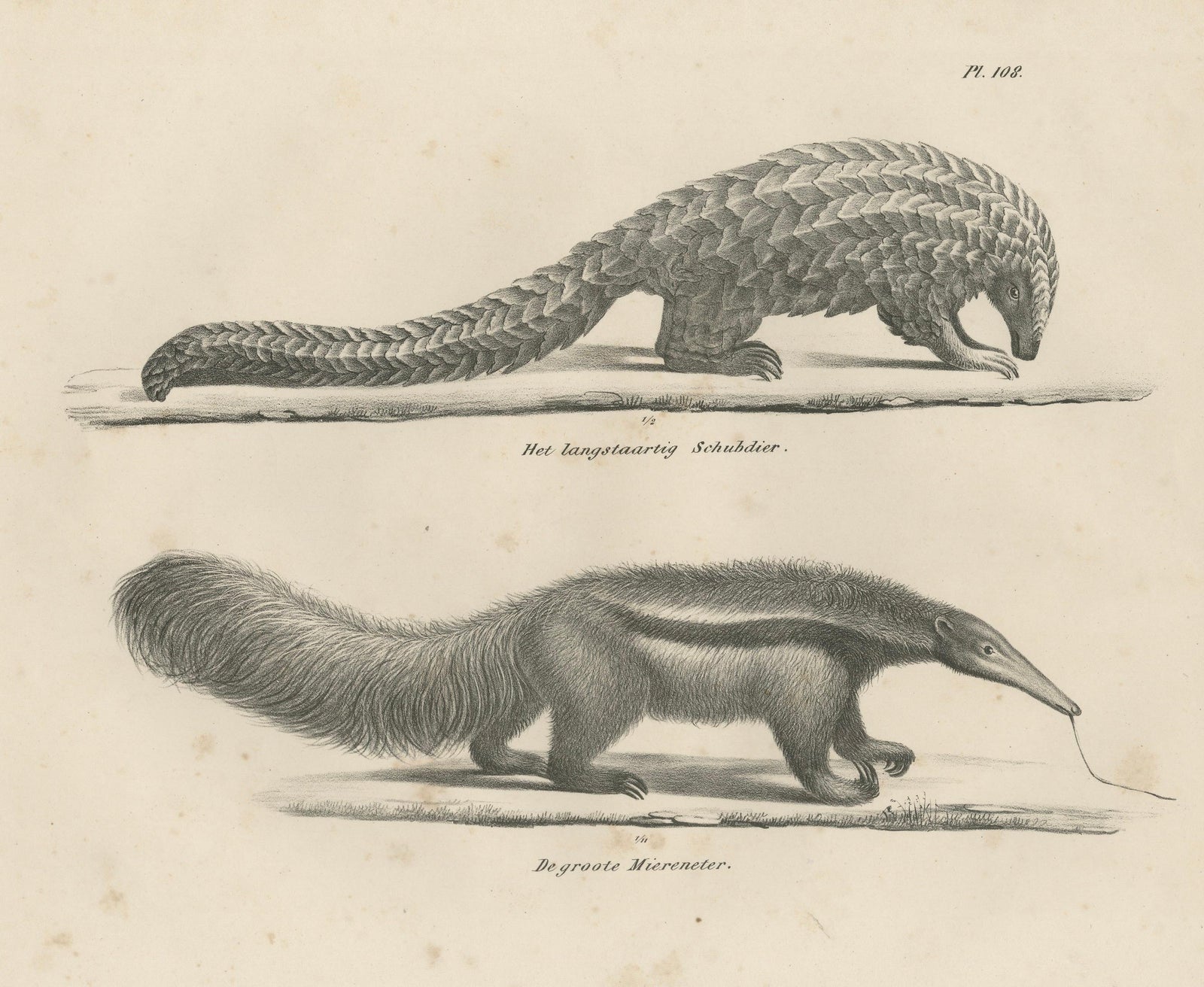
This striking pair of early 19th-century zoological lithographs was produced around 1830 by the Swiss artist and lithographer Karl Joseph Brodtmann, after the scientific studies of the naturalist Heinrich Rudolf Schinz. The plates originate from Schinz’s *Geïllustreerde Natuurlijke Geschiedenis van Menschen en Dieren* and related natural history publications, which played a key role in introducing exotic mammals to a European audience.
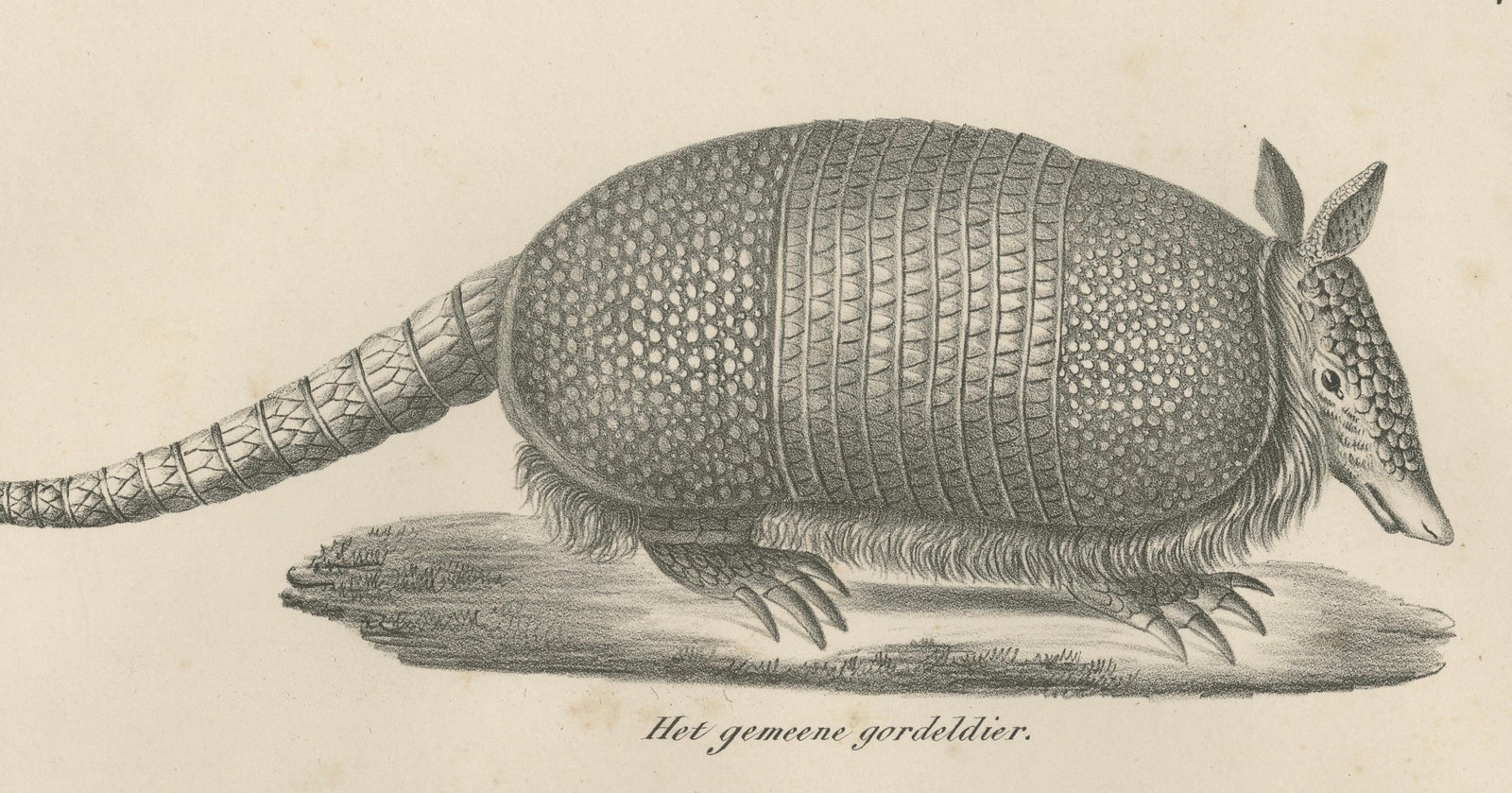
The left plate is devoted to armadillos. It shows the common armadillo (Dasypus novemcinctus), often referred to as the nine-banded armadillo, alongside a larger, heavily armoured species historically described as the “shielded armadillo.” The animals are depicted in profile, allowing a clear view of their segmented bony armour, elongated tails, and clawed feet adapted for digging. These prints fascinated early 19th-century viewers, as armadillos were among the most unusual mammals known from the Americas, frequently nicknamed “little armored pigs” in older European sources.
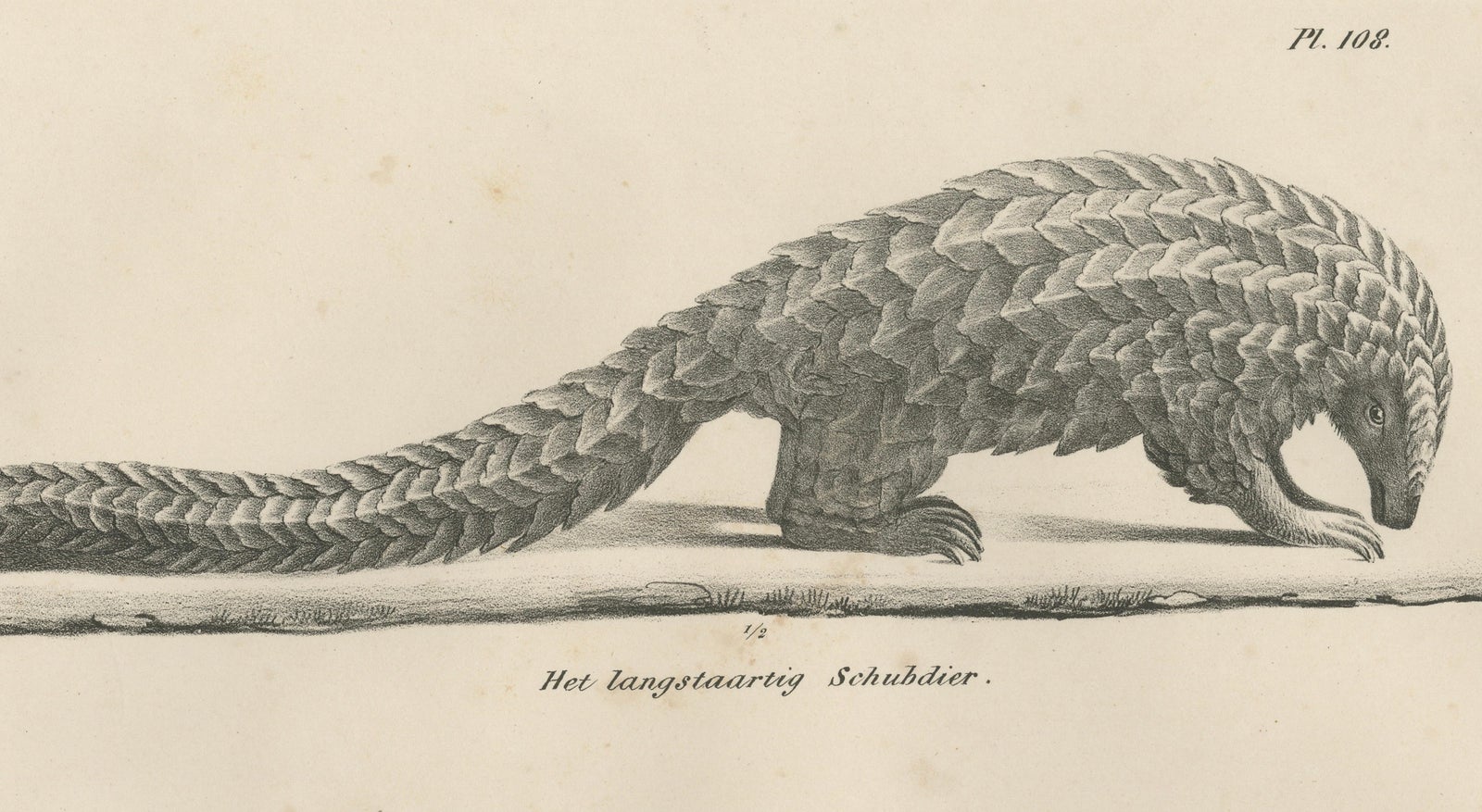
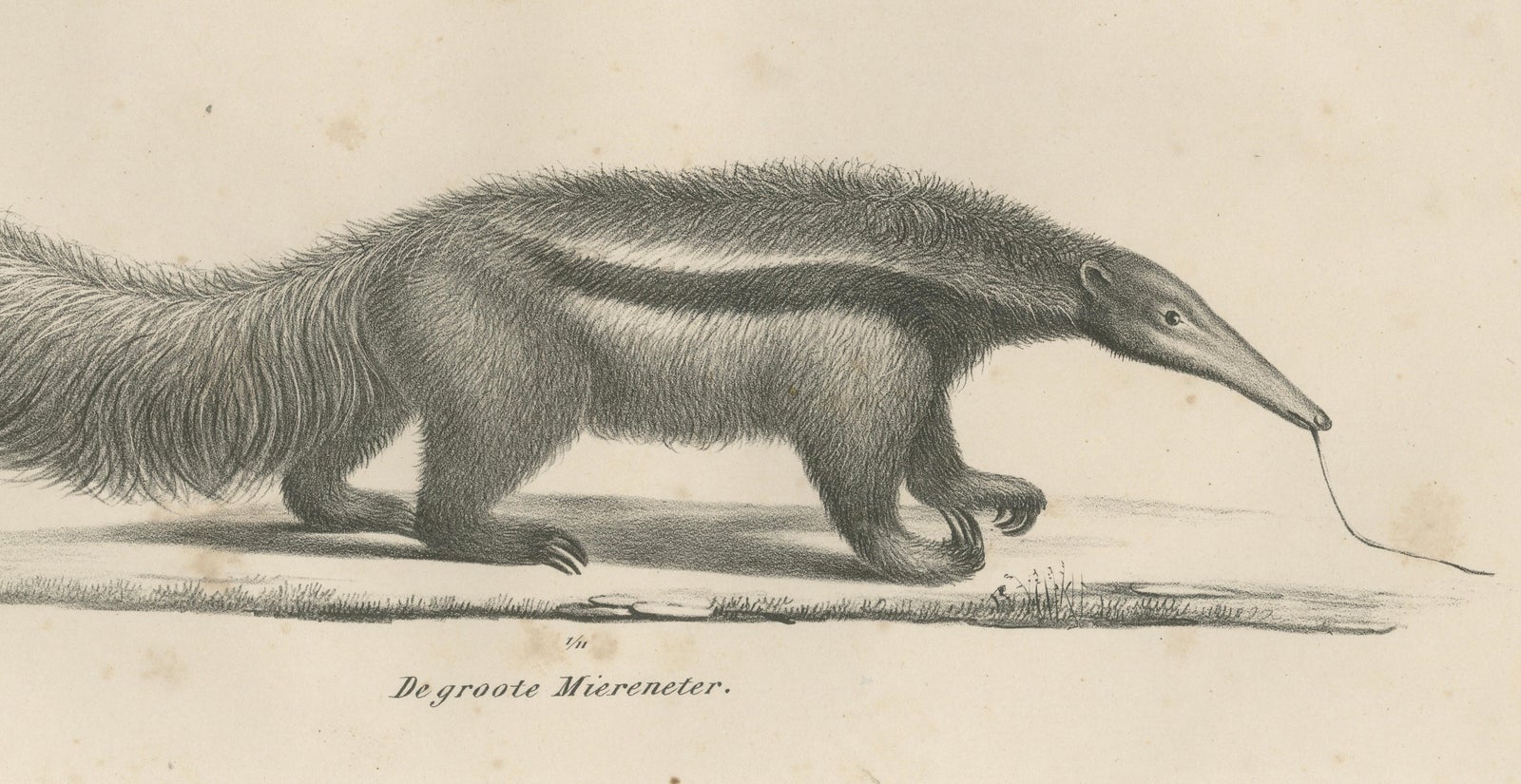
The right plate features two other remarkable insect-eating mammals. At the top is the long-tailed pangolin (Manis tetradactyla), also known as the scaly anteater, shown with its distinctive overlapping keratin scales and powerful tail. Pangolins were long surrounded by myth and curiosity in Europe, often described as “walking pinecones.” Below is the giant anteater (Myrmecophaga tridactyla), sometimes called the great ant-eater, recognisable by its elongated snout, bushy tail, and bold shoulder markings. The protruding tongue is subtly indicated, emphasizing its specialised feeding behaviour.
Together, these plates form a visually powerful and coherent set highlighting mammals defined by armour, scales, and specialised anatomy. They appeal strongly to collectors of natural history illustration and to interior designers seeking unusual, conversation-starting imagery. Displayed side by side, the prints create a balanced composition that combines scientific clarity with strong decorative presence.
Condition report:
Overall good antique condition. Light foxing and scattered age-related spotting visible, consistent with lithographs from circa 1830. No major tears or losses observed.
Framing tips:
Frame as a pair with wide off-white or light taupe mats and simple black, dark walnut, or ebonised frames to emphasize the fine engraved textures and sculptural forms.
Keywords:
antique animal print, armadillo lithograph, pangolin print, scaly anteater, giant anteater, ant-eater, exotic mammals, 19th century natural history, Brodtmann lithography, Schinz zoology, scientific illustration, antique zoological art, animal prints for interior
Technique: Lithography
Maker: Karl Joseph Brodtmann, Switzerland, circa 1830