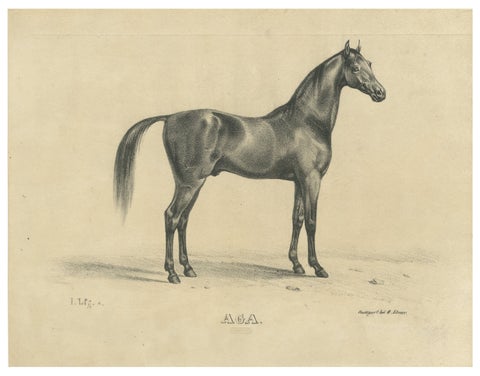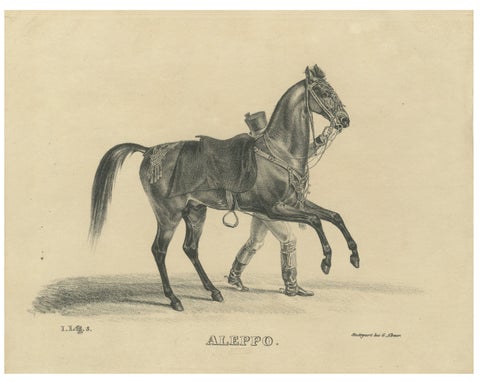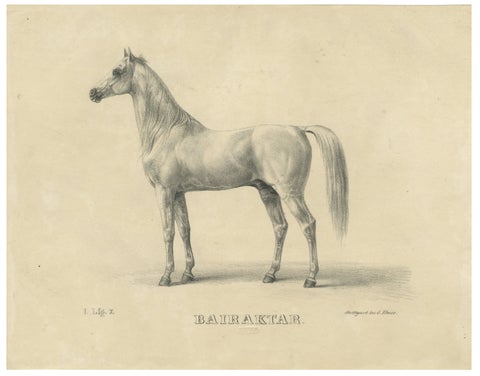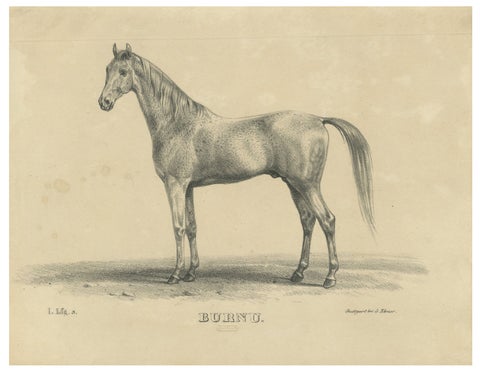
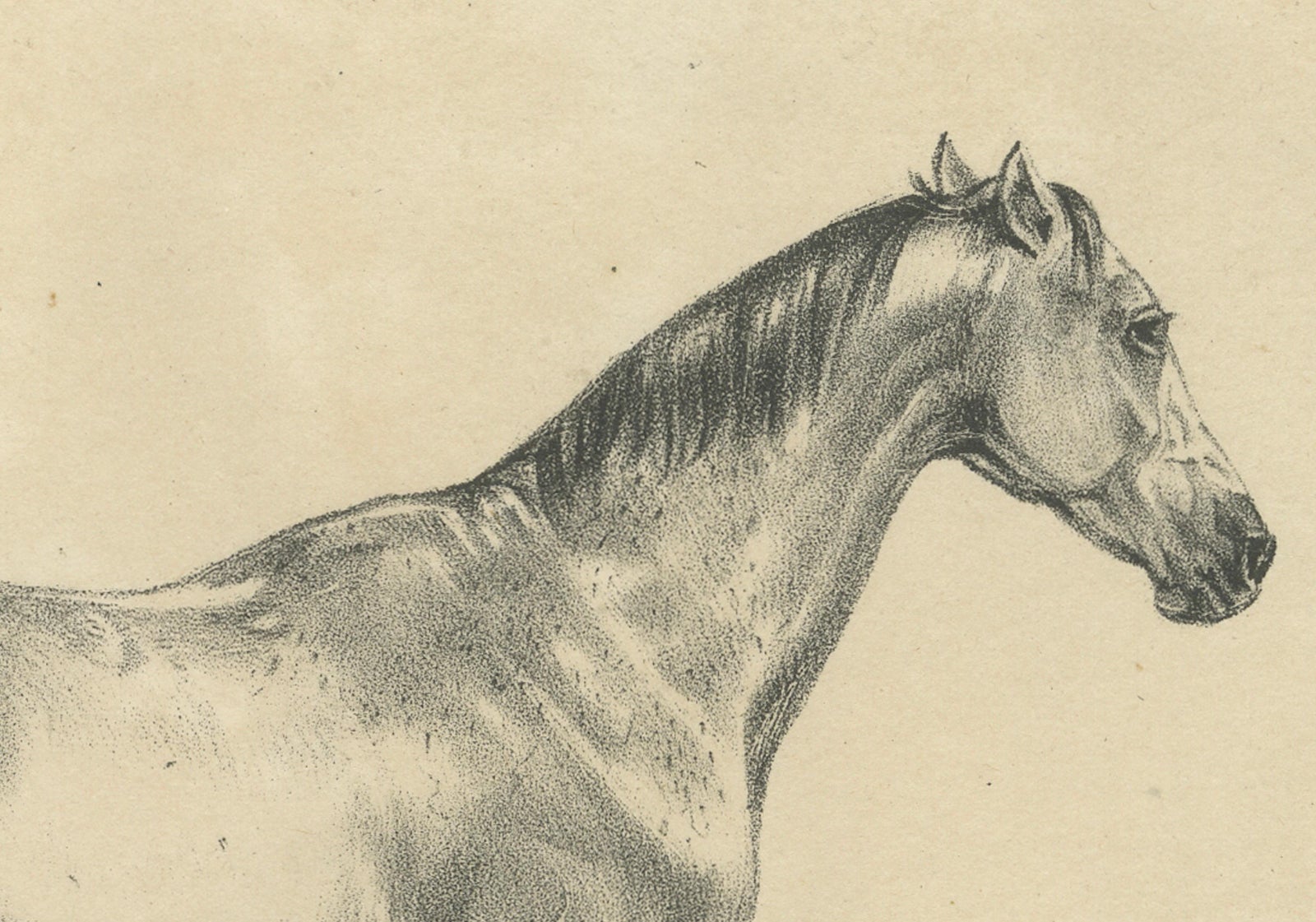
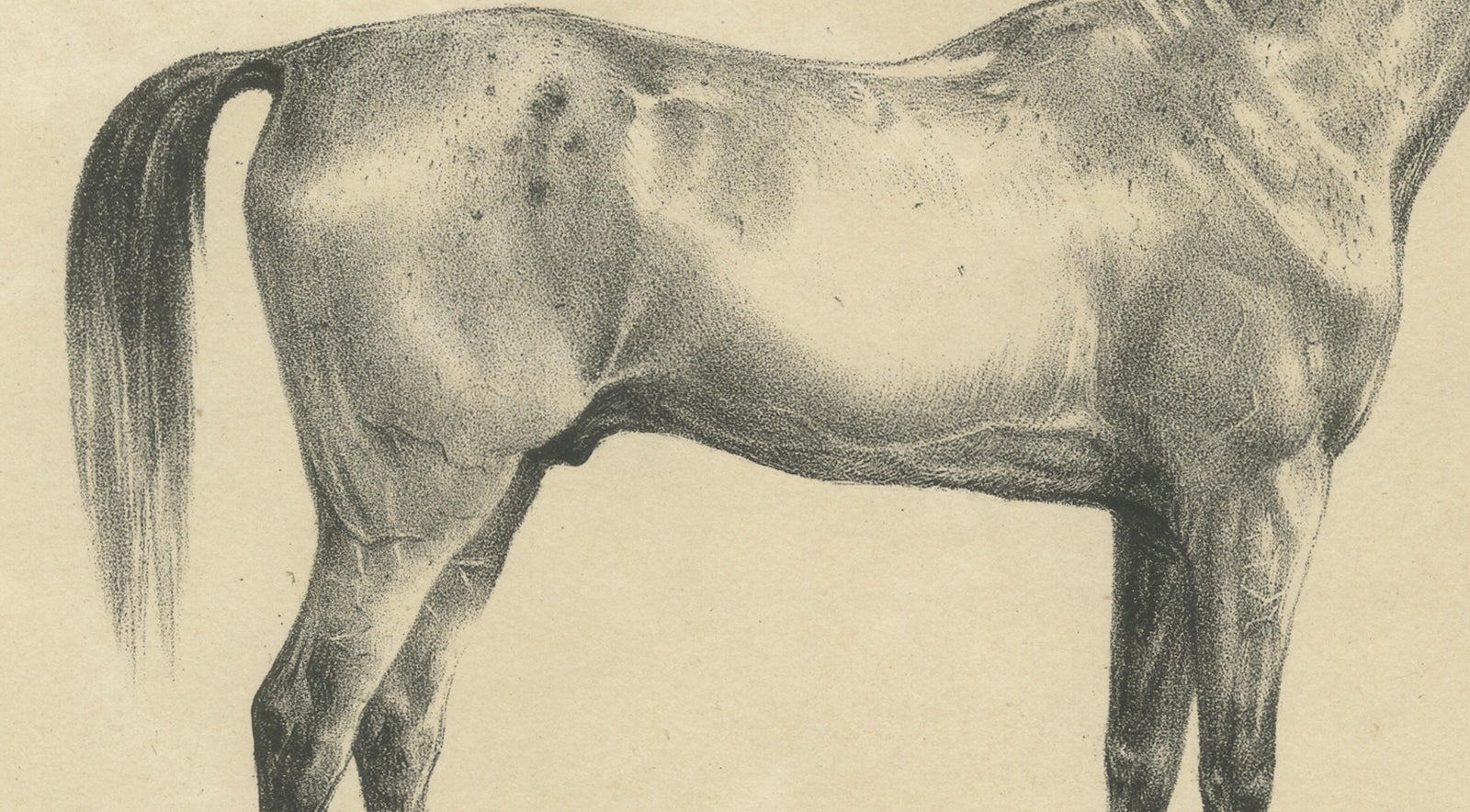
Close-ups
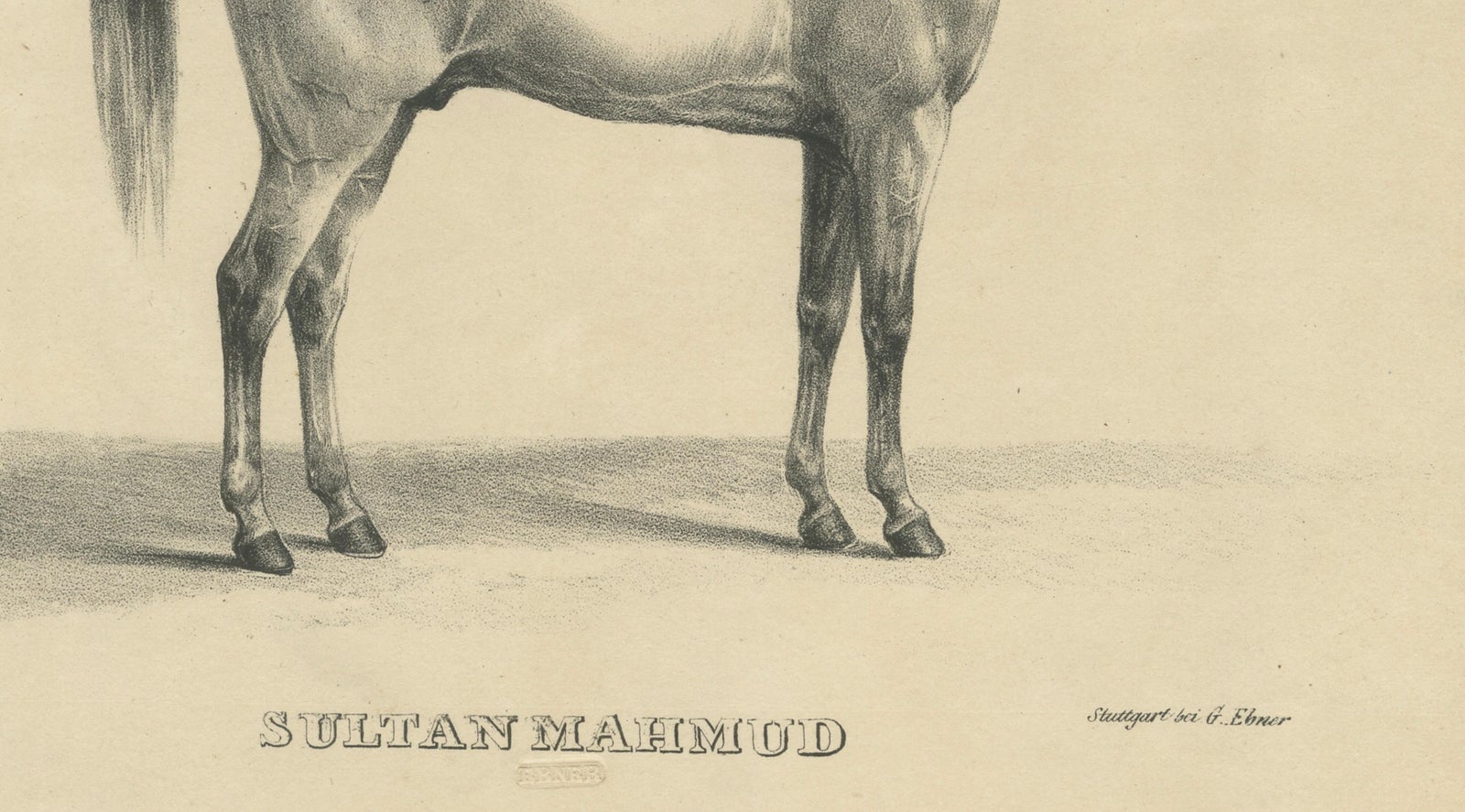
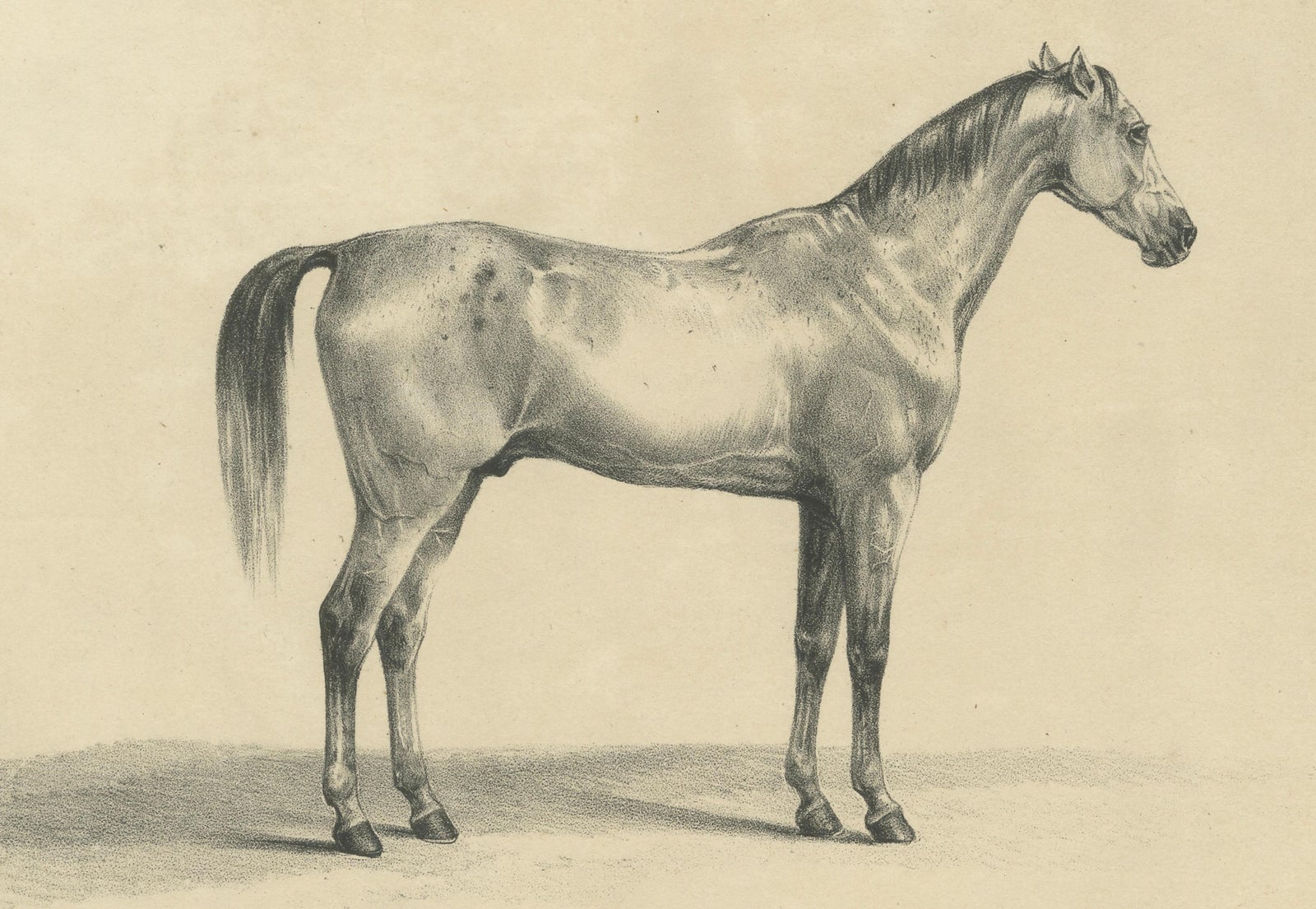
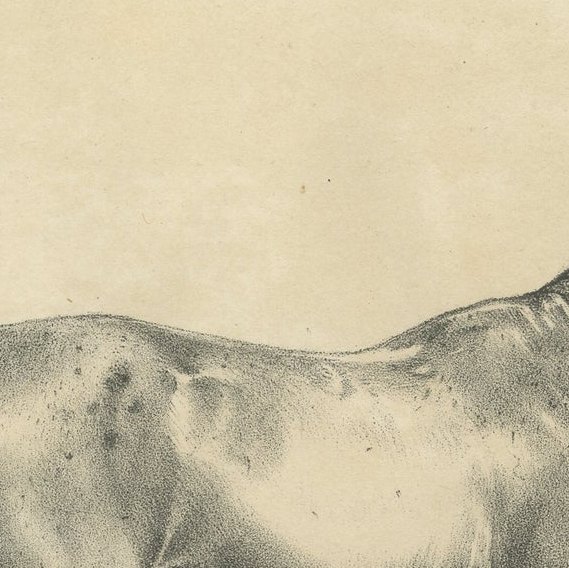
Framed and on the wall
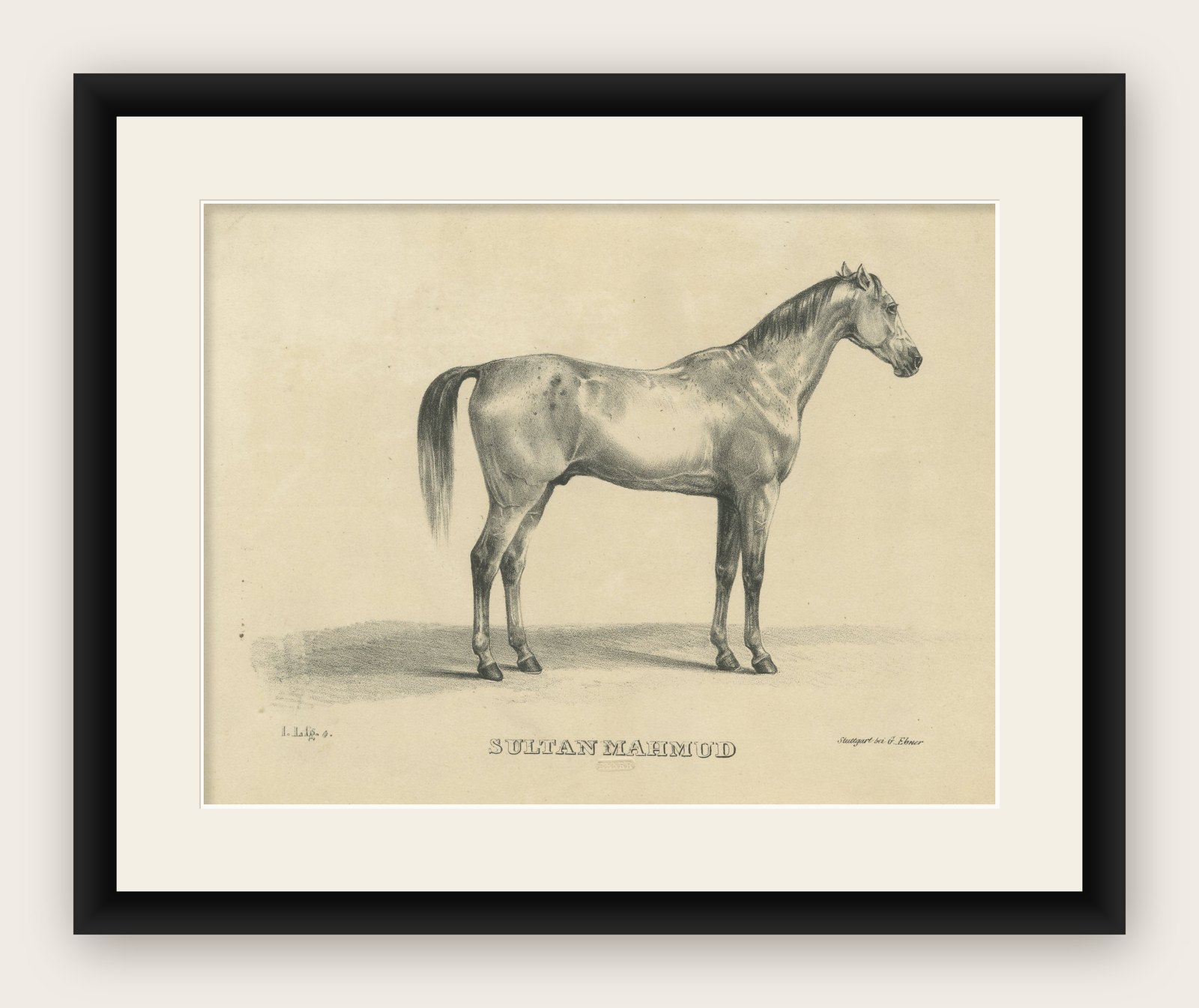
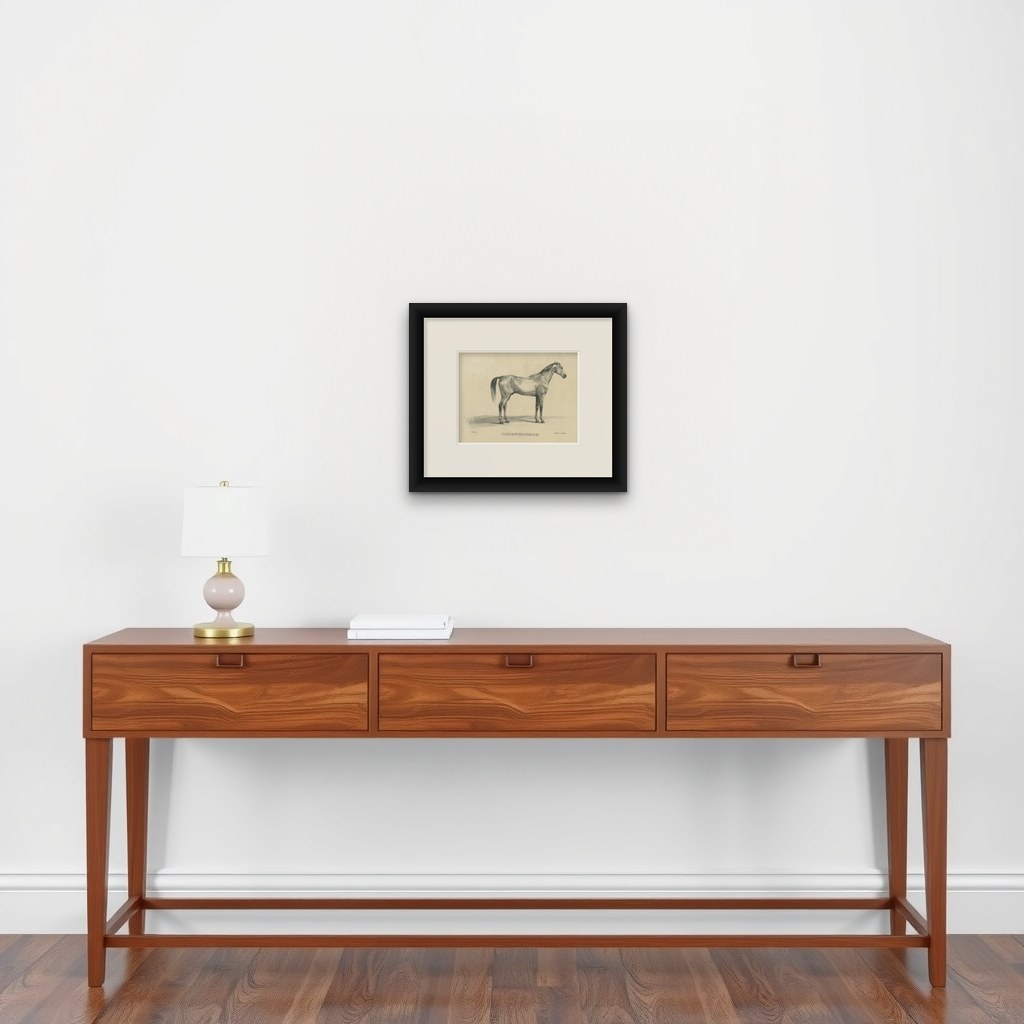

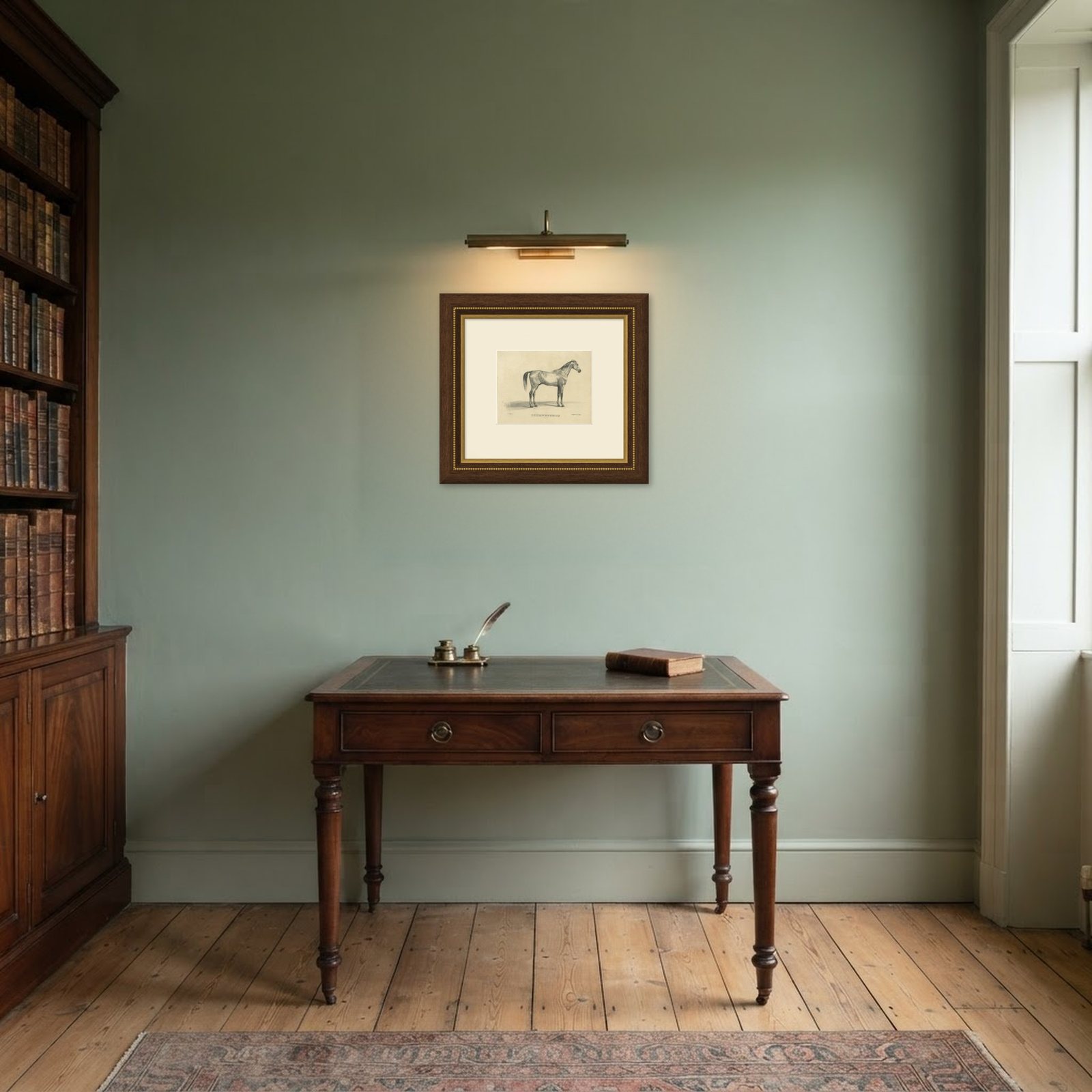
Frame and rooms are illustrations of how the print could look; the description says what is included.
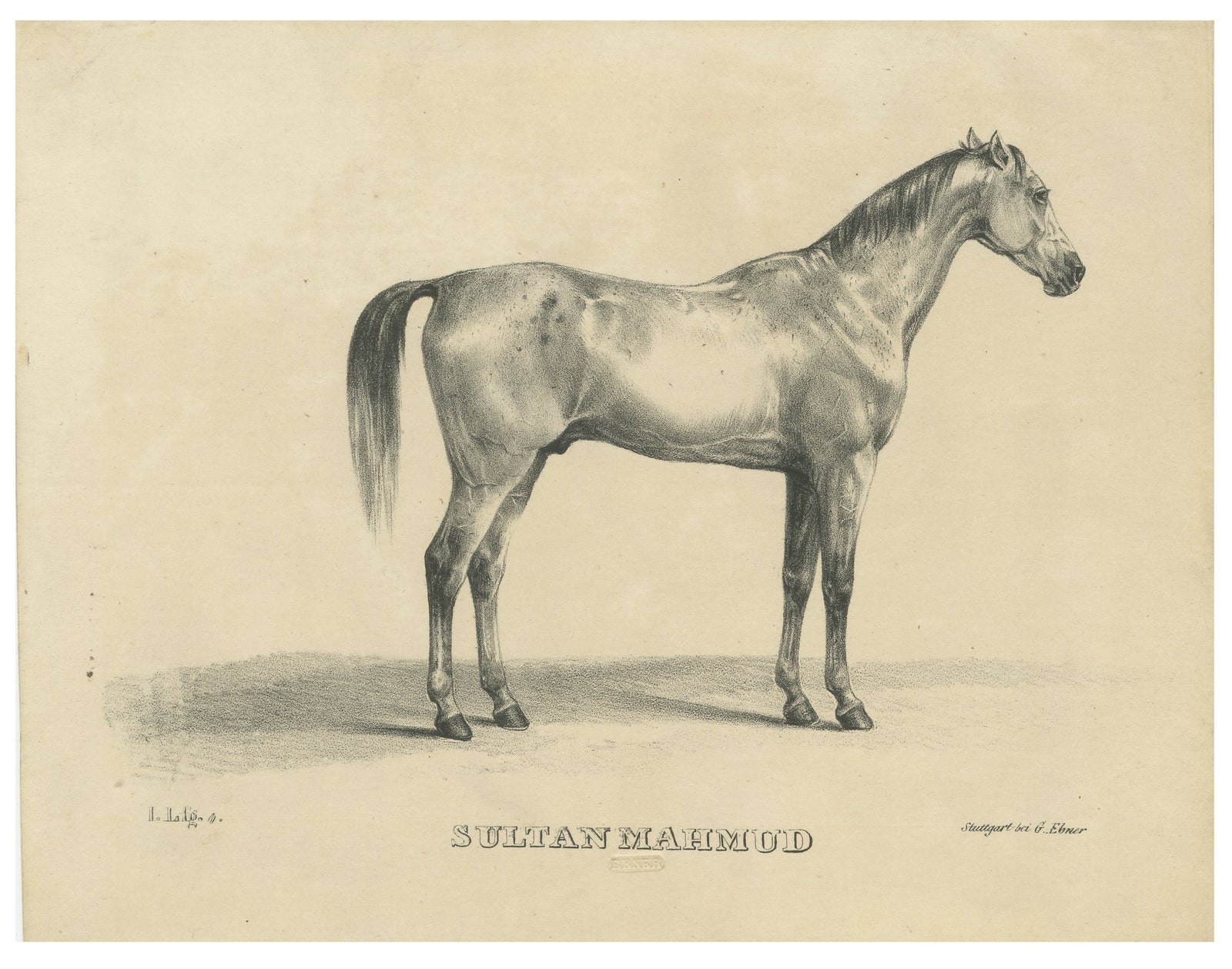
Antique Arabian Horse Lithograph Sultan Mahmoud, Stuttgart 1846
£310£23025% off ($305, €277)
Period original, not a reproduction.
Shipped from the Netherlands, flat or rolled, insured and tracked, worldwide. Returns accepted within 14 days.
- Date
- 1846
- Size
- 6.3 × 8.1 in (16 × 20.5 cm)
- Condition
- Good. Age-related toning, occasional light foxing, and minor wear consistent with age. Overall in good antique condition with attractive tonal quality and strong decorative appeal.
- Period
- Early 19th century
- Section
- Mammals
- Reference
- f_50231092
What the condition grades mean
- Excellent
- Bright and clean, with no faults worth mentioning.
- Very good
- Only light signs of age, such as faint toning.
- Good
- Normal signs of age for a sheet of this period: toning, some foxing, small marks or neat old repairs.
- Fair
- Clear faults such as staining, tears or repairs, priced to match.
Every fault we see is written in the condition note, and the whole sheet is shown uncropped in the photos.
Title: Antique Arabian Horse Lithograph “Sultan Mahmoud,” Stuttgart 1846
Description:
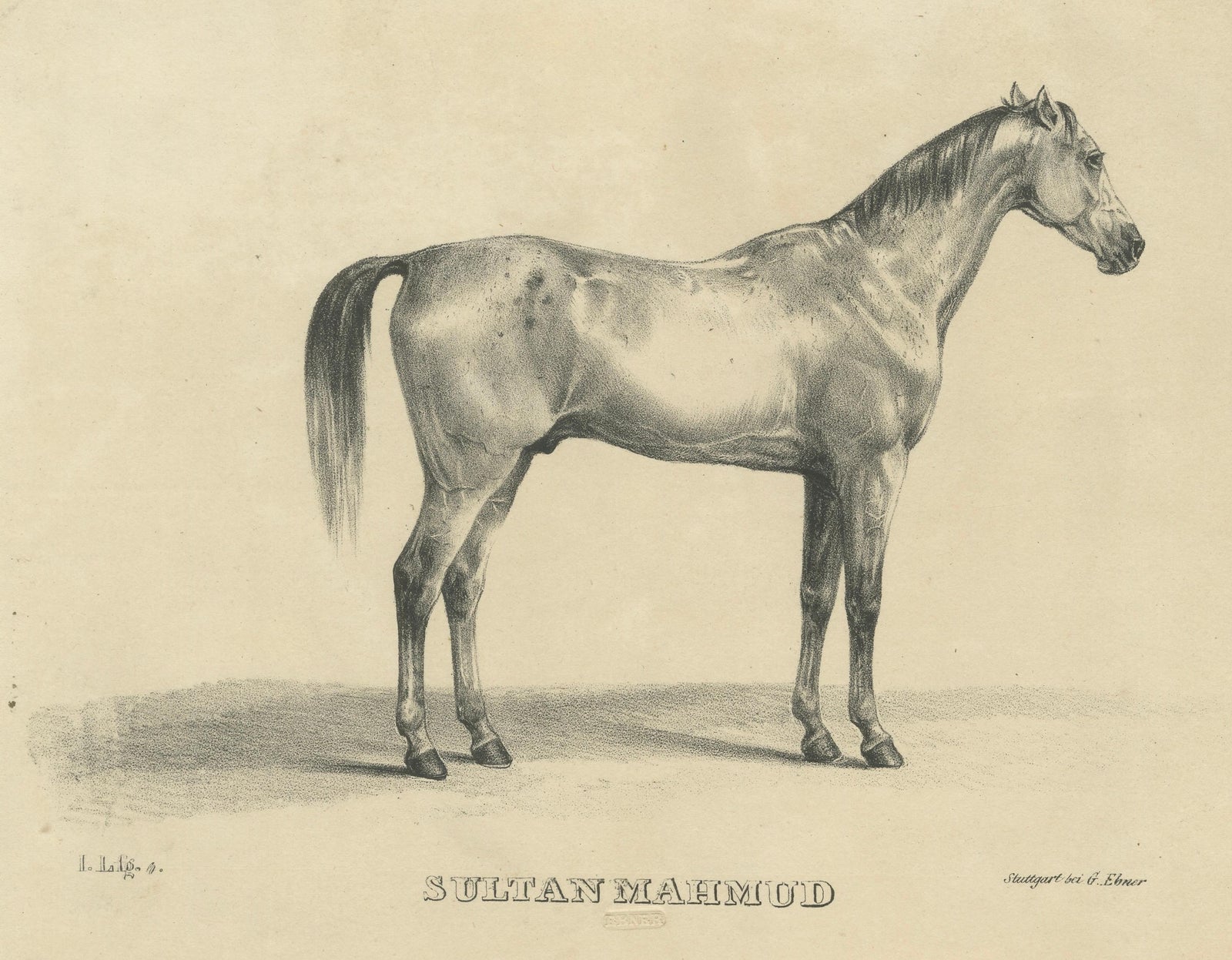
A refined and highly decorative antique lithograph depicting the Arabian stallion “Sultan Mahmoud,” published in Stuttgart in 1846 as part of August Jäger’s celebrated equestrian publication Das orientalische Pferd (“The Oriental Horse”). Elegant in its simplicity and executed with exceptional lithographic skill, the composition presents the horse in a poised side profile intended to emphasize the noble proportions, refined anatomy, and graceful bearing associated with elite Arabian bloodlines.
The lithograph was issued by the Stuttgart publisher G. Ebner, whose imprint appears in the lower right margin. The notation in the lower left indicates that the print formed part of the first installment of the series. During the mid-19th century, European fascination with Oriental horses reached its height, and richly illustrated works such as Das orientalische Pferd became important references for breeders, cavalry officers, collectors, and admirers of Arabian equestrian culture.
Arabian horses were among the most prized horses of the 18th and 19th centuries, admired for their endurance, intelligence, elegance, and speed. Carefully bred by Bedouin tribes across the Arabian Peninsula, these horses later became foundational bloodlines for many modern breeds, including the Thoroughbred. Their distinctive features, refined heads, arched necks, high tail carriage, and athletic build, made them symbols of prestige throughout Europe.
This particular lithograph possesses a quiet monumentality and timeless elegance. The horse stands alone against a restrained ground with no unnecessary background detail, allowing full attention to focus on the animal itself. The monochrome lithographic technique creates subtle tonal transitions and sculptural modeling, while the precise draftsmanship demonstrates the quality associated with mid-19th-century German lithography.
Today, prints from Das orientalische Pferd are highly appealing both as historical equestrian studies and as sophisticated decorative artworks. The minimalist composition and elegant tonal palette allow this piece to work equally well in traditional interiors and modern curated spaces.
This print displays exceptionally well in dark walnut, black lacquer, or lightly gilt frames paired with a wide ivory or oatmeal mat. Its refined monochrome palette and noble equestrian subject make it particularly suitable for libraries, studies, country houses, horse stables, riding clubs, or sophisticated gallery walls.
This is an original antique print, not a reproduction.
Age-related toning, occasional light foxing, and minor wear consistent with age. Overall in good antique condition with attractive tonal quality and strong decorative appeal.
Framing Tips:
This lithograph displays beautifully in dark walnut, ebonized, or black lacquer frames with a wide cream or ivory mat. A lightly gilt frame can also create an elegant traditional equestrian presentation. Ideal for libraries, offices, country interiors, horse stables, or refined sporting collections.
Technique: Lithograph
Maker: G. Ebner after August Jäger, Stuttgart, Germany, 1846