Close-ups
Framed and on the wall
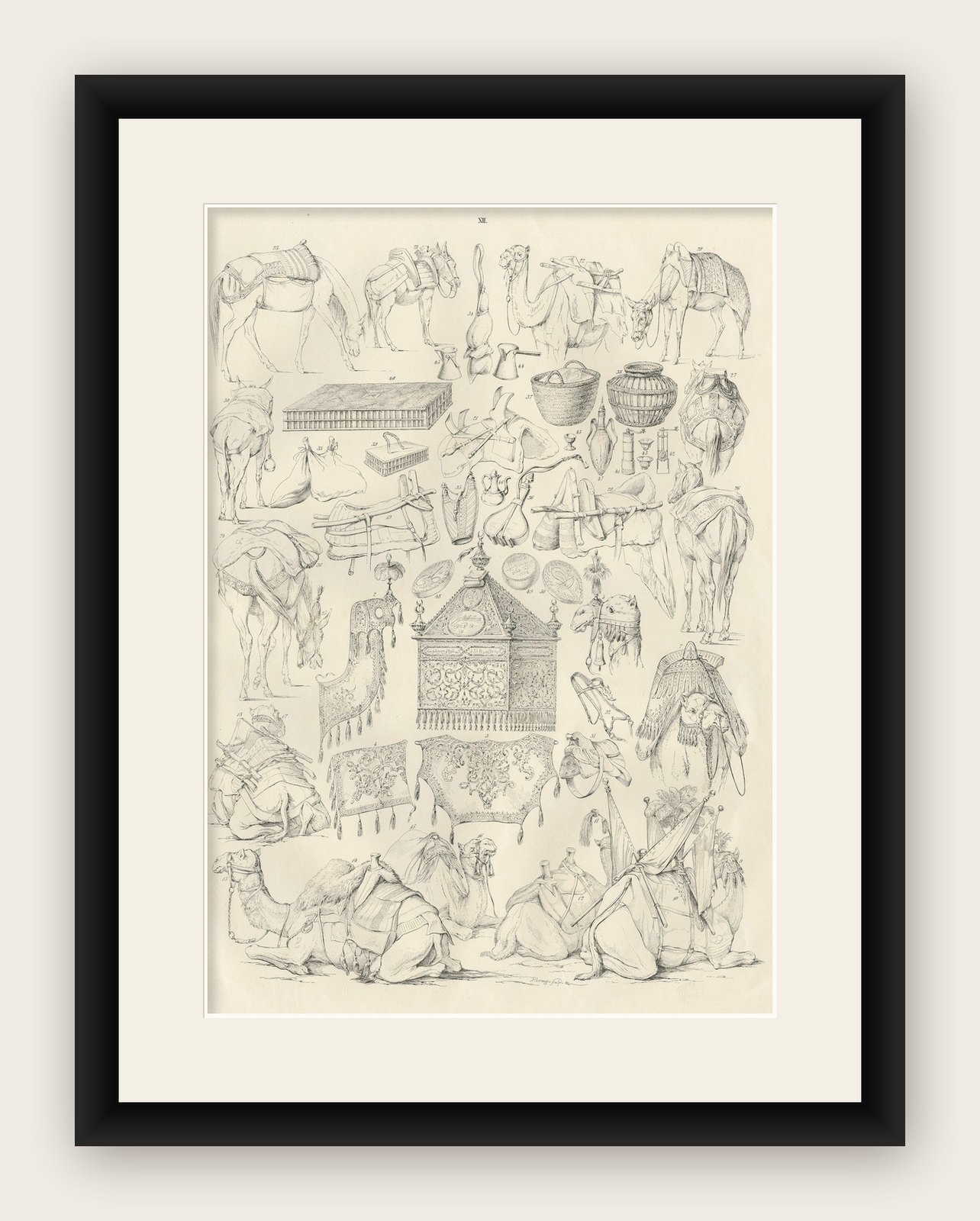
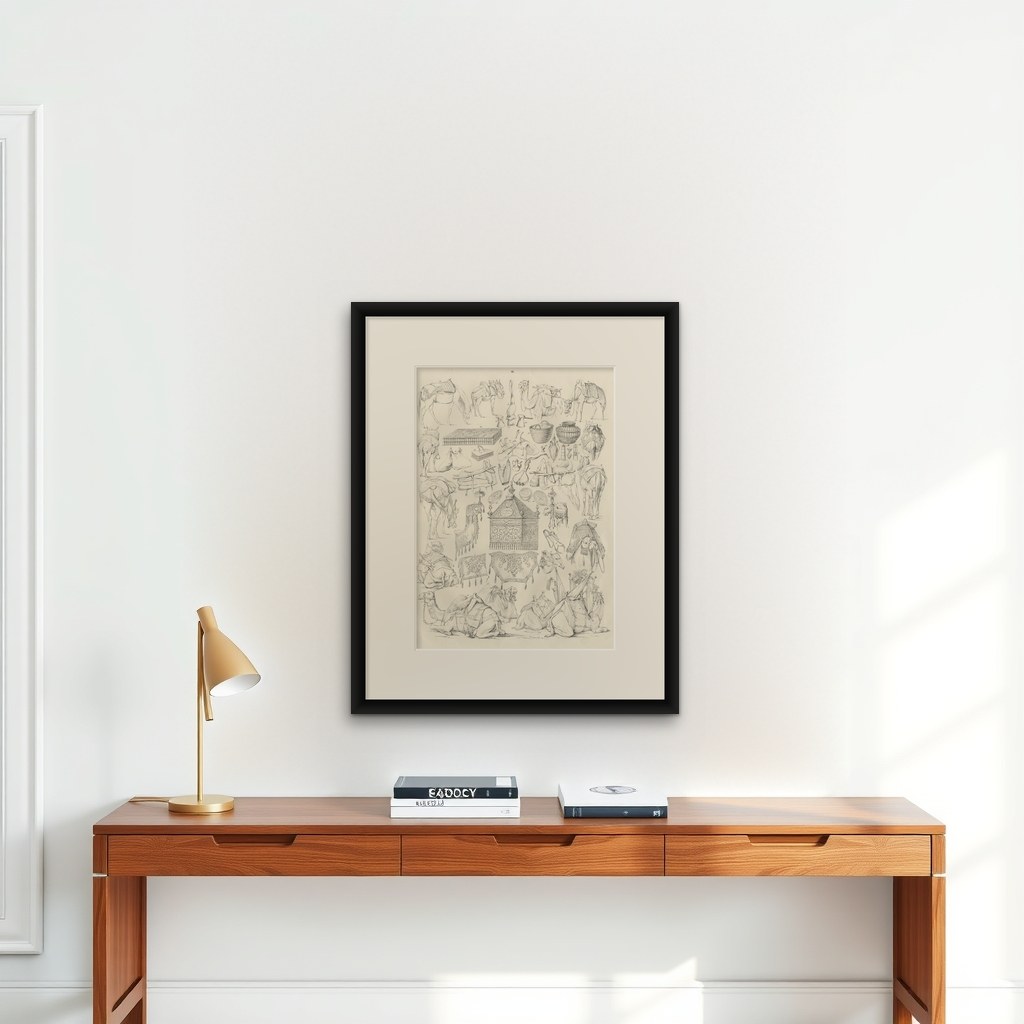

Frame and rooms are illustrations of how the print could look; the description says what is included.
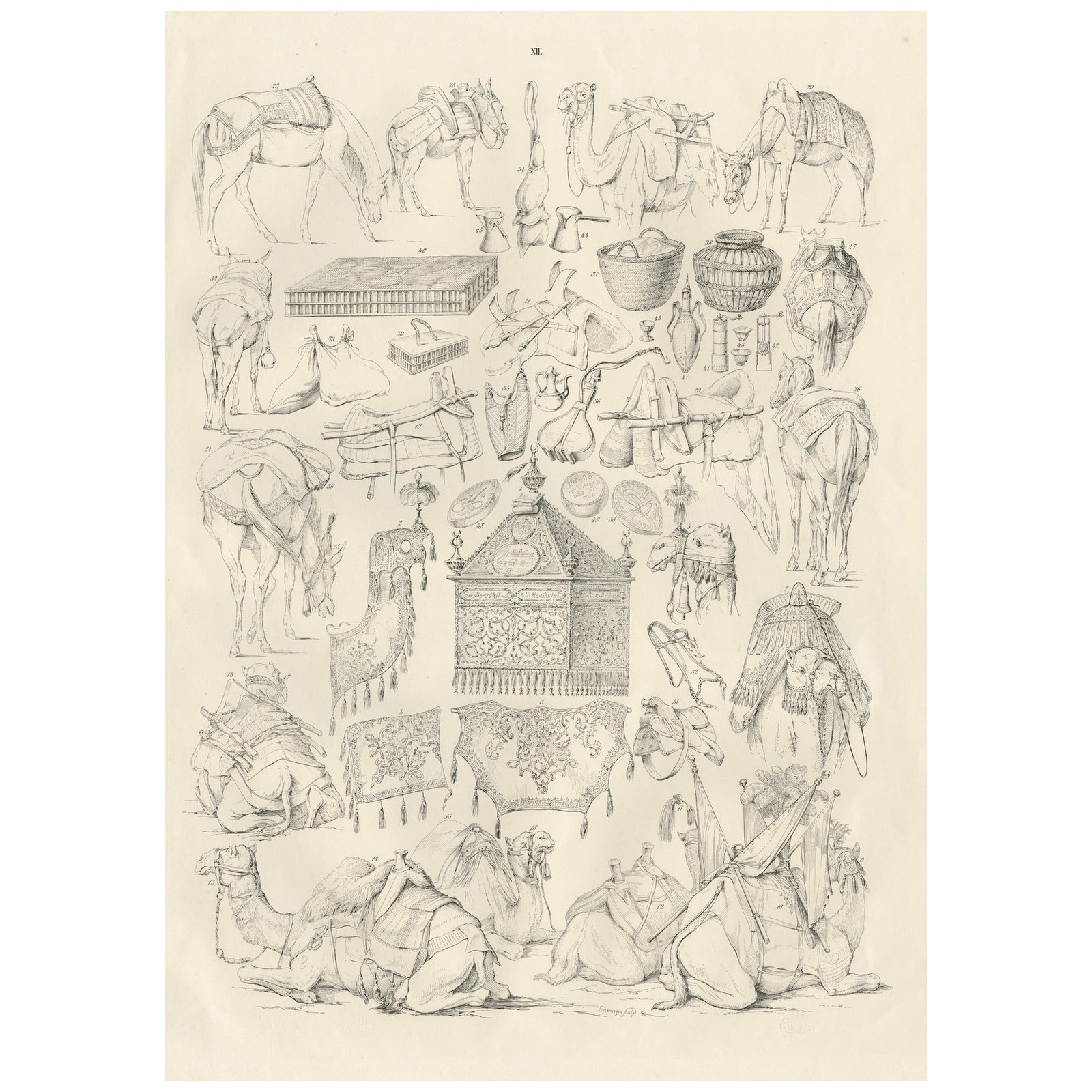
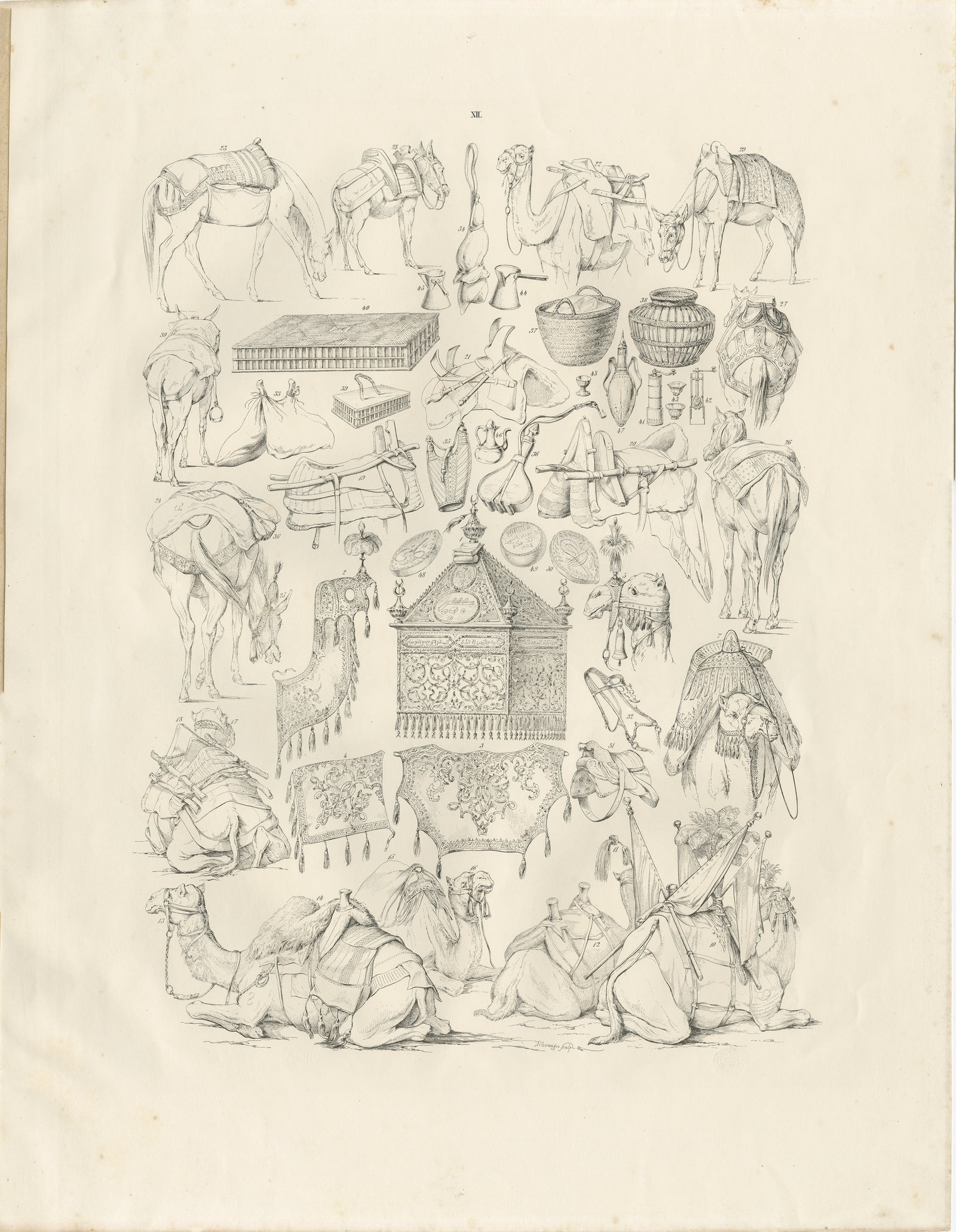
Antique Camel & Caravan Equipment Studies from Maximilian in Bavaria, 1846
€360 ($405, £305, €360)
Period original, not a reproduction.
Shipped from the Netherlands, flat, insured and tracked, worldwide. Returns accepted within 14 days.
- Date
- 1846
- Size
- 19.7 × 15.2 in (50 × 38.6 cm)
- Condition
- Good. Good antique condition. Light overall age-related toning and scattered foxing, most visible in the margins. Minor edge wear consistent with age. The engraved image remains crisp and detailed throughout. Faint plate impression visible.
- Period
- Early 19th century
- Section
- Mammals
- Reference
- f_47880482
Antique Camel & Caravan Equipment Studies from Maximilian in Bavaria, 1846
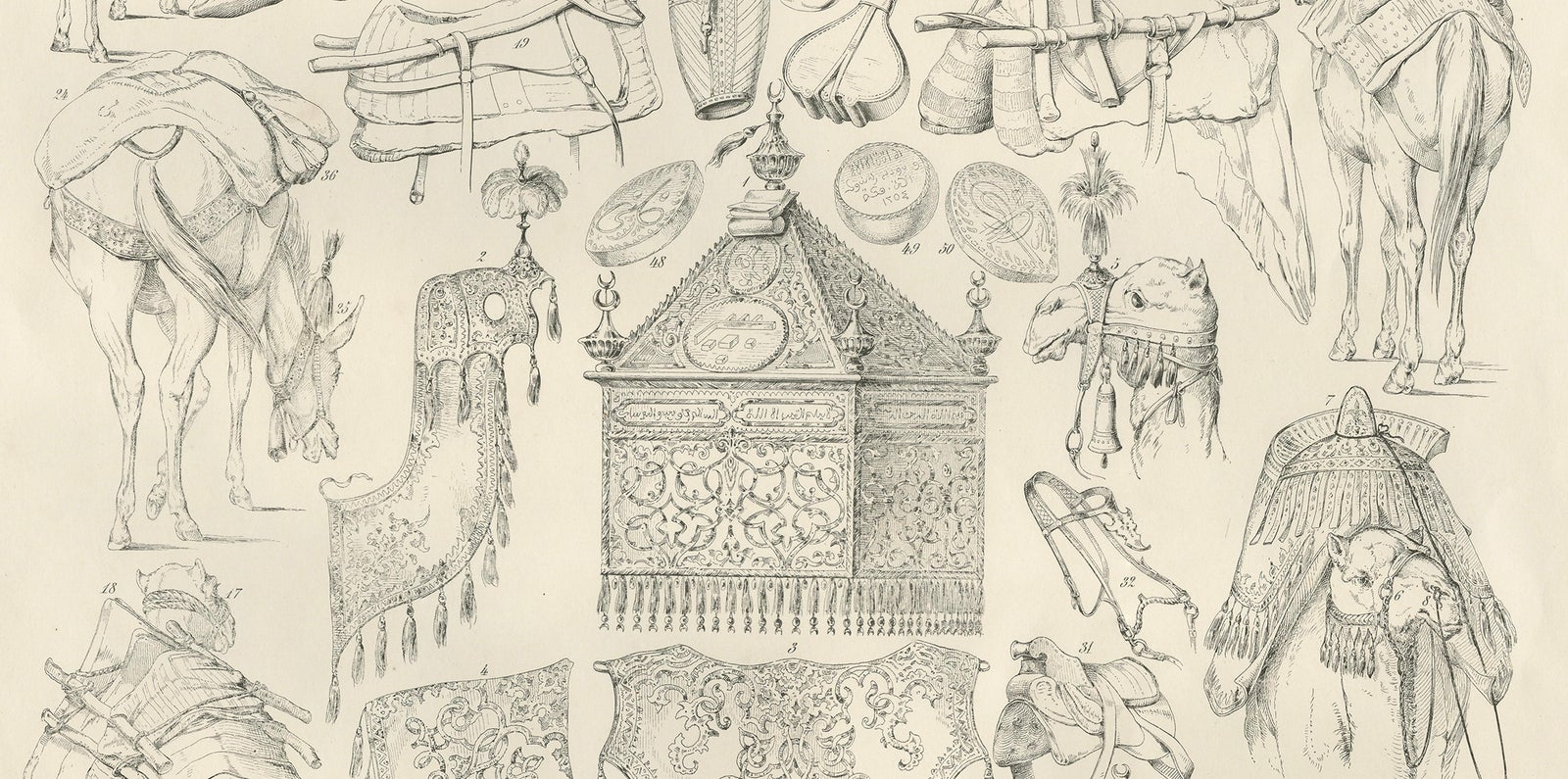
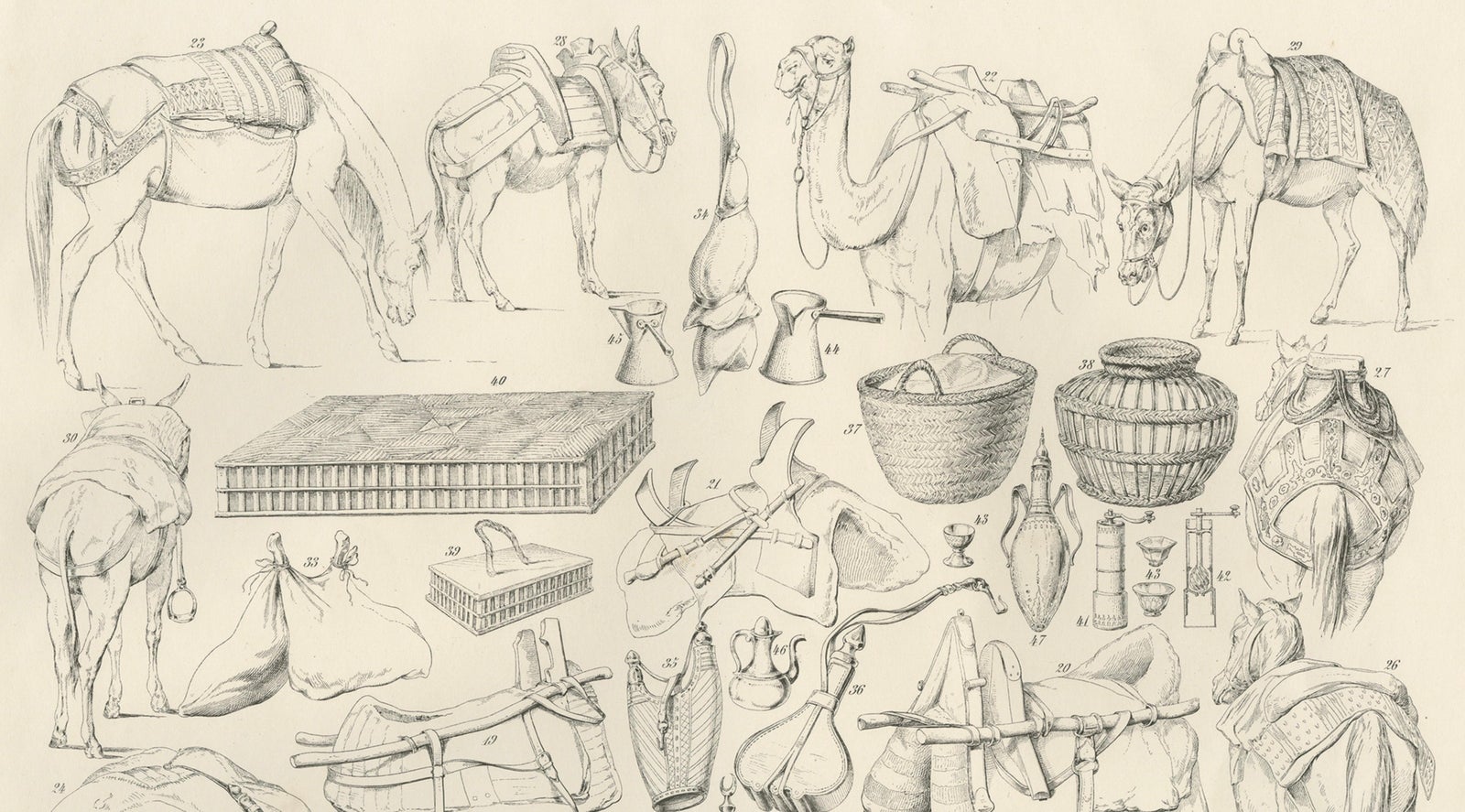
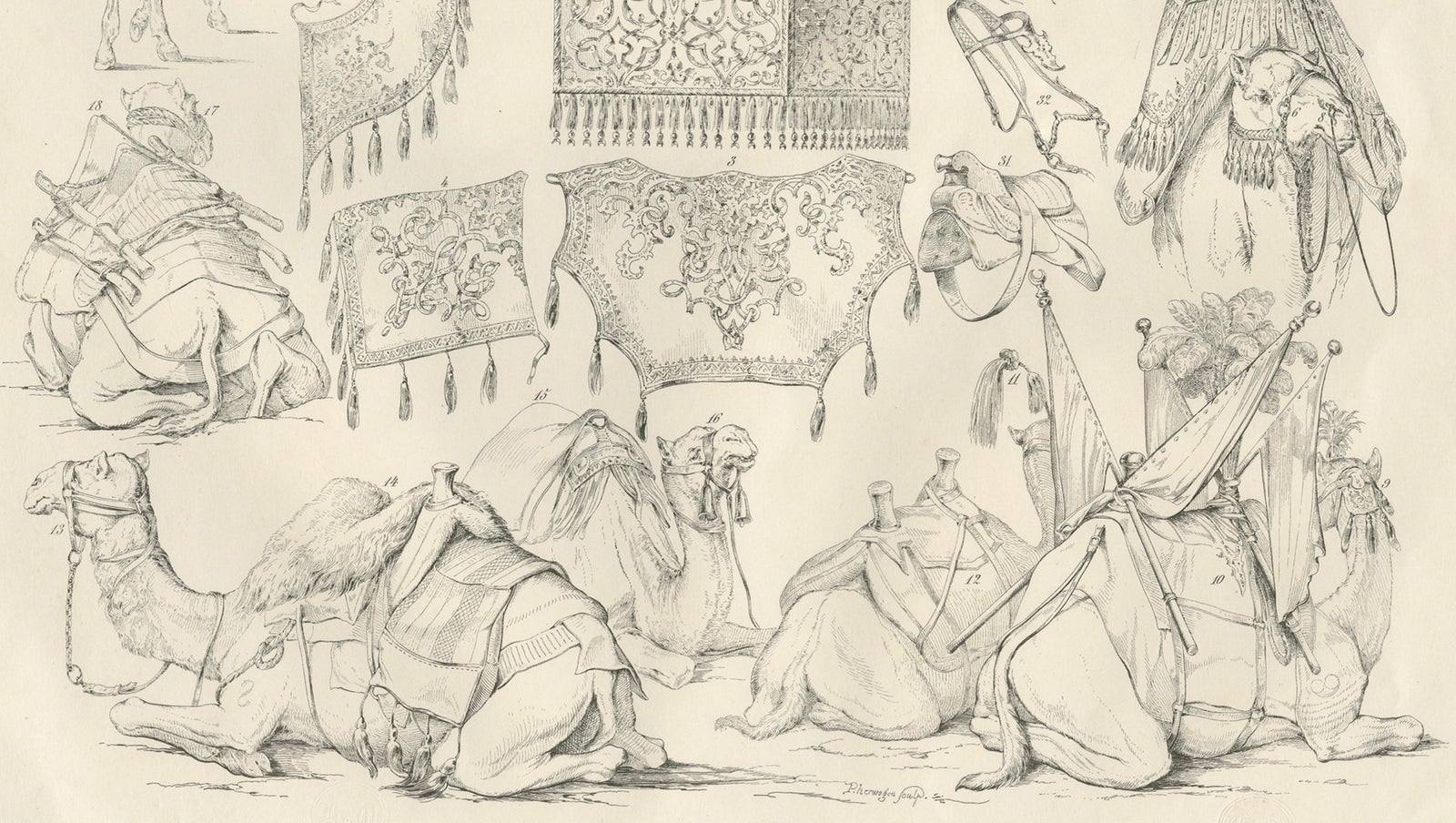
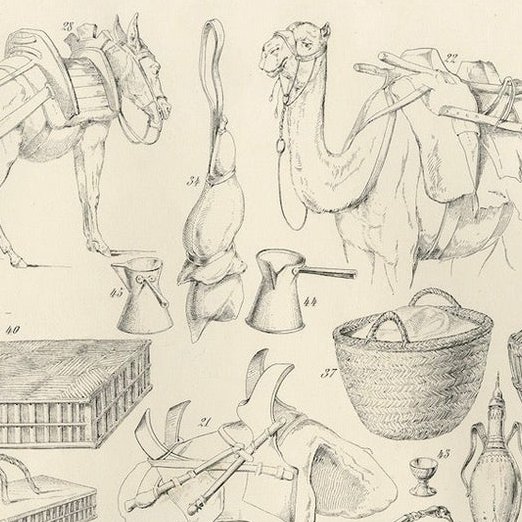
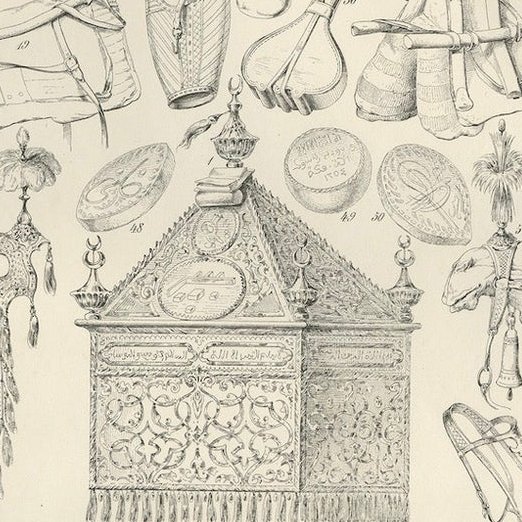
This exceptionally detailed 19th-century Orientalist engraving presents a comprehensive visual study of camels and caravan equipment as observed during the Middle Eastern expedition of Duke Maximilian of Bavaria. The composition is arranged as a carefully structured encyclopedic plate, depicting camels from multiple angles, standing, kneeling, loaded, and at rest, alongside an array of saddles, harnesses, storage baskets, water vessels, tools, and ornate ceremonial coverings.
Unlike the dramatic battle and city scenes of the series, this plate functions as a rare ethnographic document. Every object is rendered with scientific precision and artistic clarity, offering a direct visual record of how caravan transport functioned in daily practice across Egypt and the broader Middle East. The presence of numbering throughout the composition confirms its educational purpose within the original publication.
The engraving originates from the important travel work documenting the oriental journey of Duke Maximilian of Bavaria, with drawings by Heinrich von Mayr and explanatory text by Dr. Sebastian Fischer. Von Mayr’s draftsmanship here is at its most analytical and disciplined. Each camel’s posture and load distribution is carefully articulated, revealing practical knowledge of animal transport, balance, and desert logistics. The richly decorated saddlecloths and ceremonial trappings also reveal the aesthetic traditions associated with caravan culture.
Historically, such plates were vital to European understanding of long-distance trade, pilgrimage, and transport in the Islamic world before the arrival of railways and modern infrastructure. Caravan systems formed the backbone of economic exchange between cities, deserts, and ports. This engraving records that world with remarkable clarity at the moment just before modernization transformed these ancient networks.
Artistically, the strength of this sheet lies in its rhythm and repetition. The viewer’s eye moves from upright camels to weighted kneeling figures, from rigid storage crates to flowing textiles and tassels. The large ornamental canopy at the center acts as a visual anchor, balancing movement and symmetry across the entire plate. It is both a scientific study and a highly decorative composition.
Today, this work holds exceptional appeal for collectors of ethnographic travel imagery, Orientalist studies, Middle Eastern material culture, and transport history. It also functions beautifully as an interior design statement for libraries, studies, equestrian-themed spaces, and curated gallery walls focused on exploration and trade.
Condition report:
Good antique condition. Light overall age-related toning and scattered foxing, most visible in the margins. Minor edge wear consistent with age. The engraved image remains crisp and detailed throughout. Faint plate impression visible.
Framing tips:
A wide ivory or parchment mat will preserve the documentary clarity of the sheet while enhancing its scale. A dark walnut, black, or softly antiqued gilt frame will give the plate a refined museum presentation. UV-protective glass is recommended to preserve the fine linework.
Technique: Steel engraving
Maker: Heinrich von Mayr, Germany, 1846
Keywords:
antique camel study engraving
orientalist caravan equipment print
19th century camel transport illustration
middle east caravan ethnographic print
camel saddles harnesses antique engraving
orientalist travel study camel
maximilian of bavaria expedition plate
heinrich von mayr camel engraving
antique desert transport artwork
islamic caravan material culture print
ethnographic camel equipment illustration
antique middle east logistics print
museum quality orientalist study
camel caravan decorative wall art
orientalist scientific travel engraving