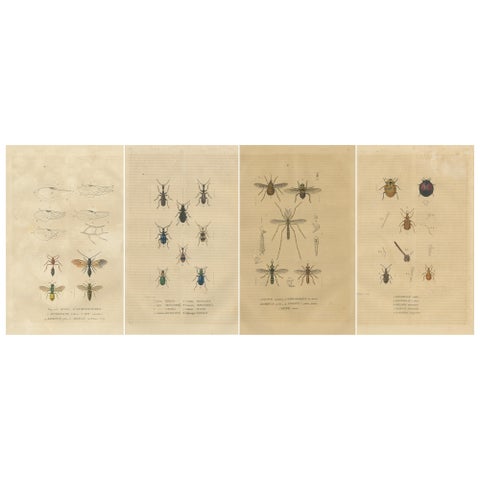
Close-ups
Framed and on the wall

Frame and rooms are illustrations of how the print could look; the description says what is included.
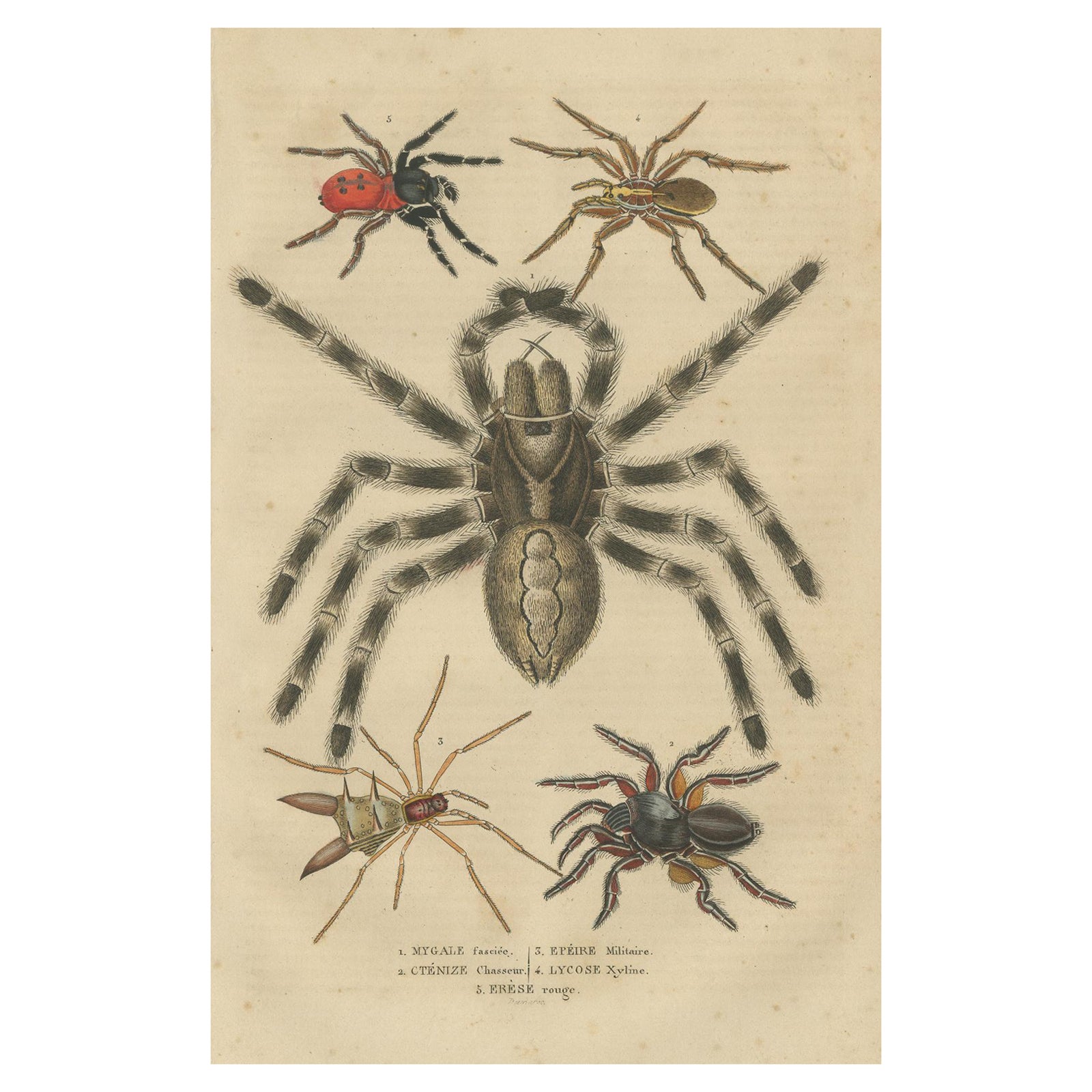
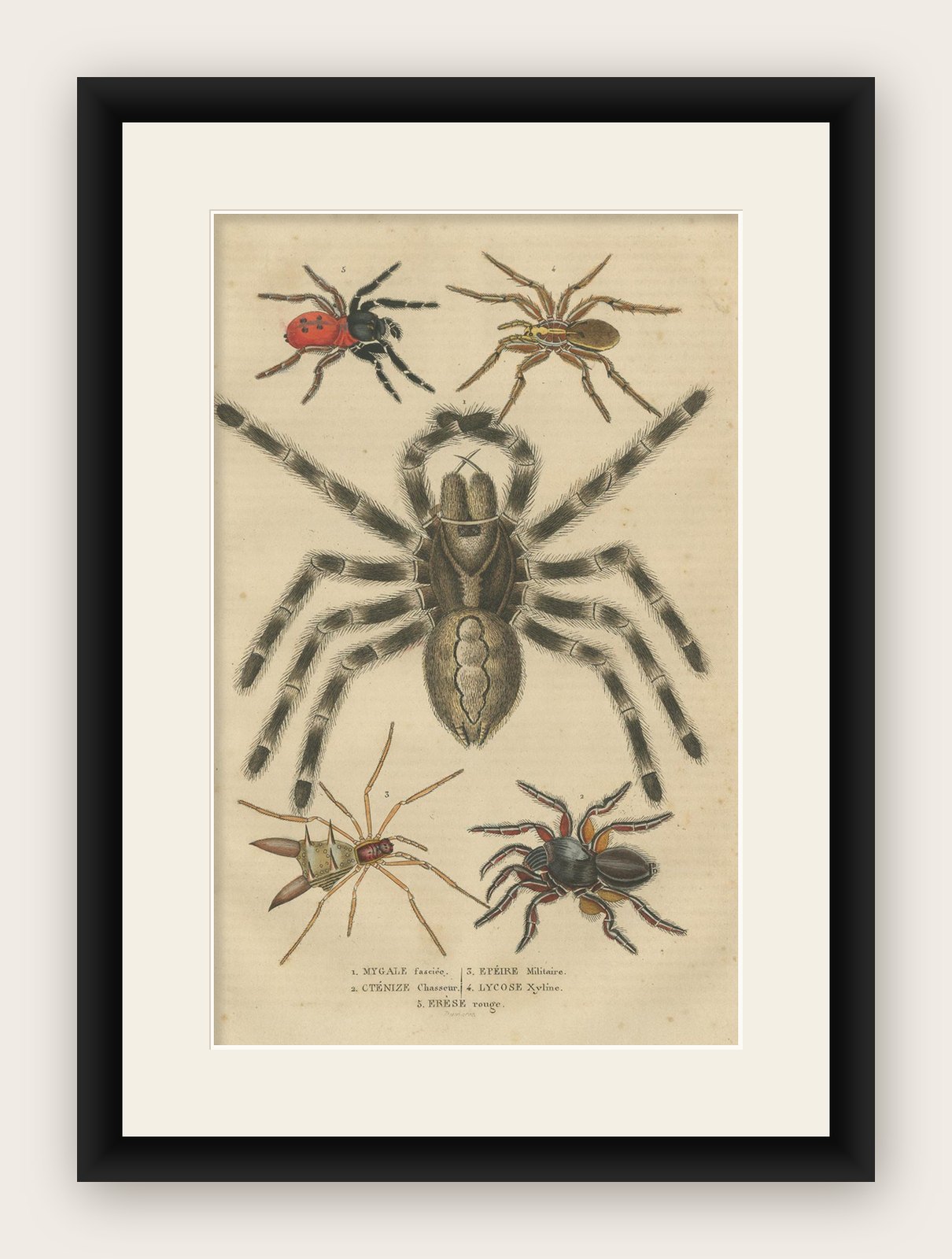
Antique 1845 Arachnid Study: Handcolored Engraving of Varied Spider Species
$295 (£220, €260)
Period original, not a reproduction.
Shipped from the Netherlands, flat, insured and tracked, worldwide. Returns accepted within 14 days.
- Date
- 1845
- Size
- 10.4 × 6.7 in (26.5 × 17 cm)
- Condition
- Good. Light browning and some light spots due to aging and handling. A nice patina. Colors bright and vibrant. Please study scan carefully.
- Period
- Early 19th century
- Section
- Insects and butterflies
- Reference
- f_37683362
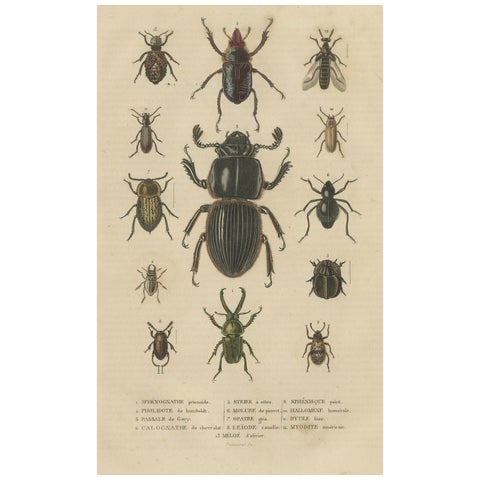
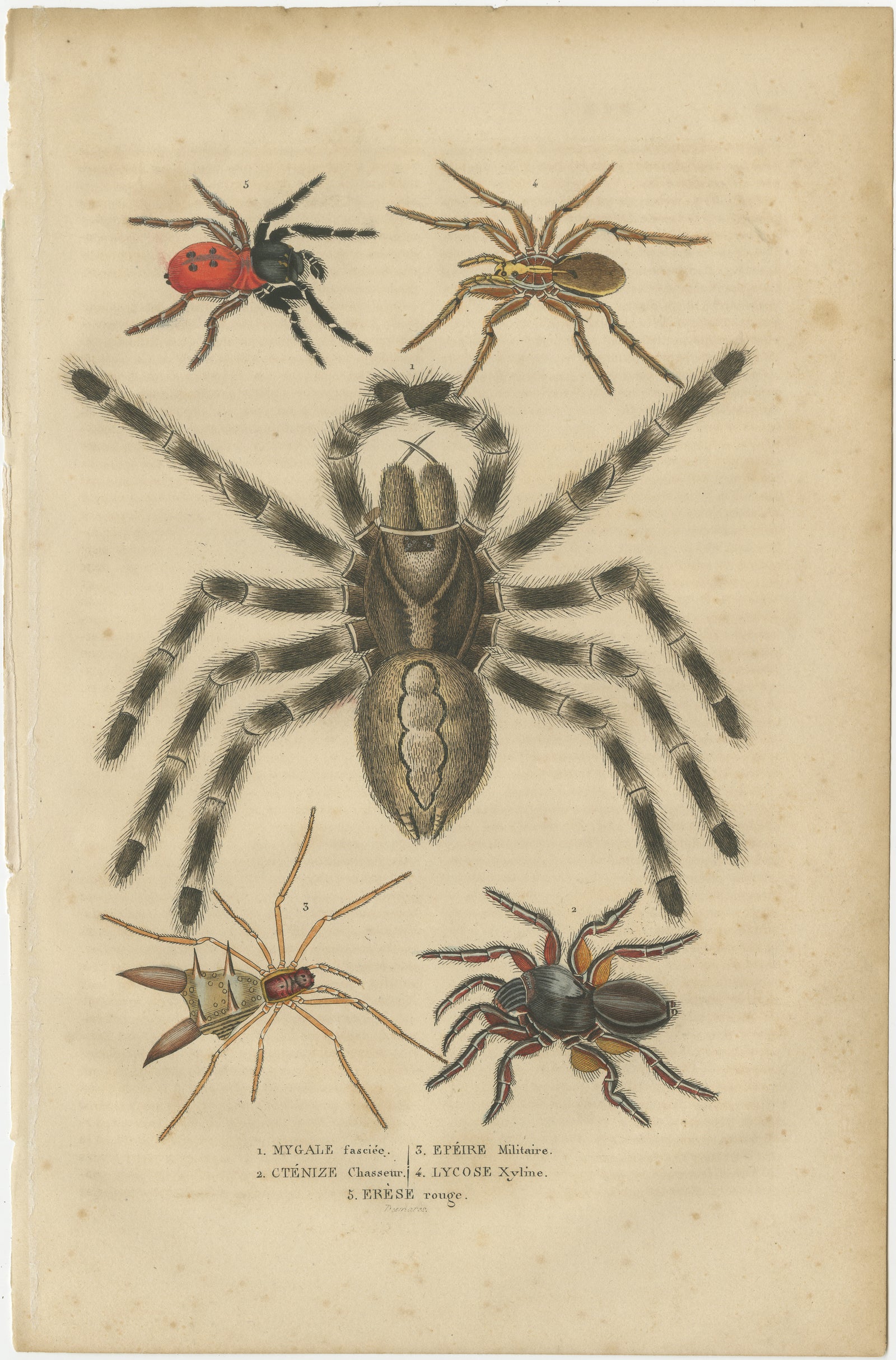
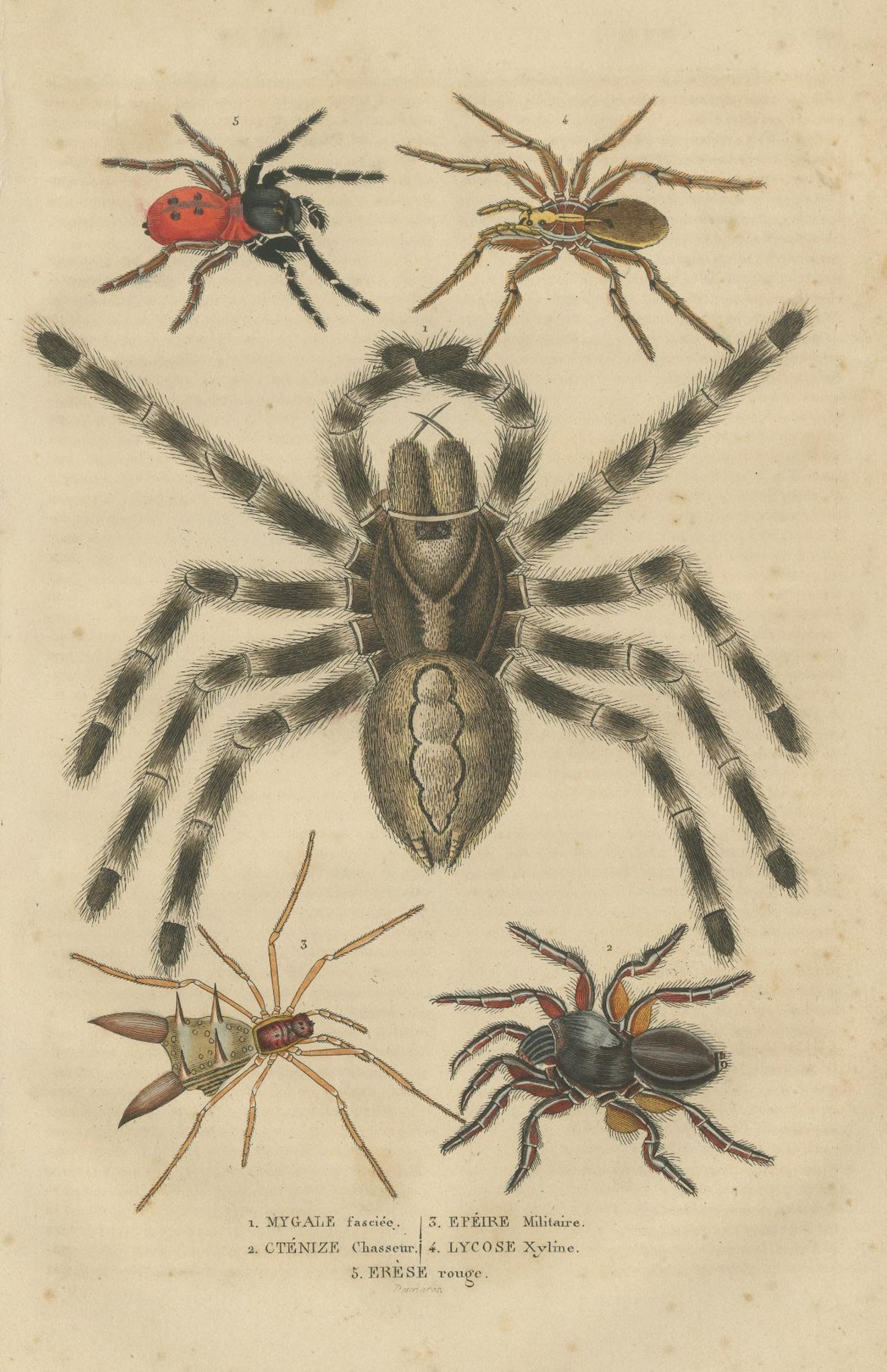
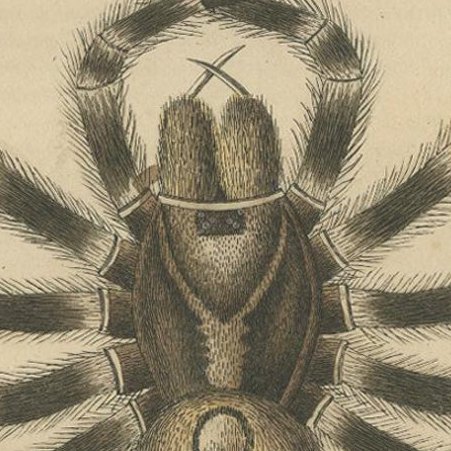
This exquisite 1845 handcolored engraving is a testament to the scientific curiosity and artistic detail of the 19th century. The print features a collection of five arachnids, each meticulously rendered to showcase their unique anatomical features. The spiders are numbered and identified with their respective names in French, suggesting the print's educational use for entomologists and naturalists of the time.
At the top left, we see 'Mygale fasciée', a striking spider with bands of color that accentuate its form. Next, 'Epeire Militaire' is displayed, with its distinctive patterned abdomen and slender legs. The central figure is a tarantula, 'Lycoce Xylime', dominating the page with its impressive size and fuzzy appearance, a testament to the detailed work of the engraver. Below it, 'Epeire Diadème' is depicted, known for the unique cross-shaped mark on its back. Finally, the 'Epeire Rouge', with its vivid red abdomen, stands out for its bright coloration.
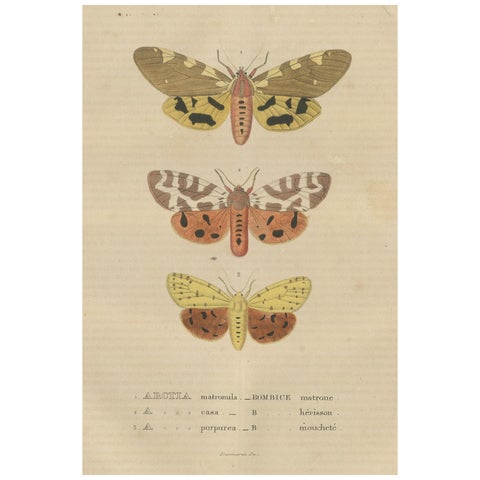
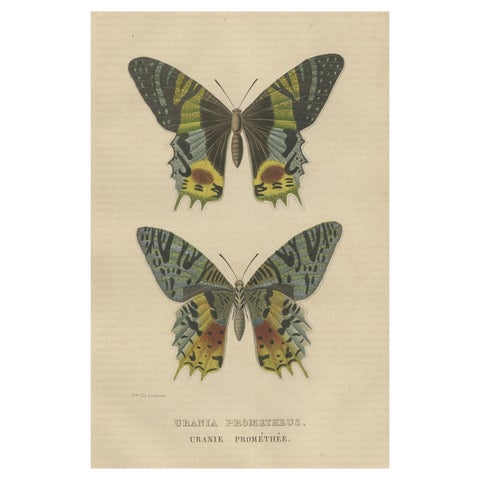
Each spider is illustrated with a naturalistic approach, showing them in varied poses that convey a sense of movement and character. The attention to detail in the shading and coloring suggests that the engraver was a skilled artist, able to capture the essence of these creatures on paper. The paper itself shows signs of age, with a warm patina that adds to the print's antique charm.
This print not only serves as a scientific record but also as a work of art, reflecting the dual interests of the Victorian era in both natural history and illustration. It is a remarkable piece that would be a significant addition to any collection of natural history art or an elegant decorative piece for those with a taste for the historic and the natural world.
The style of the illustration is reminiscent of 19th-century scientific prints, which were often used in natural history books to document various species.
More info on the book in which it was published:
The 'Dictionnaire Classique des Sciences Naturelles' by Pierre Auguste Joseph Drapiez stands as a remarkable testament to 19th-century natural sciences. Published in Brussels in 1845, this work represents an expansive collation of knowledge, building upon the pioneering works of Buffon, Daubenton, Lacepede, Cuvier, de Jussieu, and other influential naturalists.
The prints within this compendium likely showcase a rich amalgamation of artistic precision and scientific accuracy. Drapiez, himself a Belgian naturalist, would have aimed for detailed representations of flora, fauna, and scientific phenomena, mirroring the illustrative styles prevalent during his time. Given the era's emphasis on illustration, these prints were likely engraved meticulously, possibly portraying intricate anatomical details or lifelike depictions of the natural world.
With Drapiez's background in natural history, the prints might bear testament to his commitment to scientific authenticity, aiming to educate and inspire scholars and enthusiasts alike. These engravings would have complemented the text, offering visual aids that elucidate the concepts and specimens discussed in the volume.
Overall, the prints of 'Dictionnaire Classique des Sciences Naturelles' likely serve as both artistic representations and invaluable scientific resources, encapsulating the essence of 19th-century natural history exploration and documentation.