Close-ups
Framed and on the wall
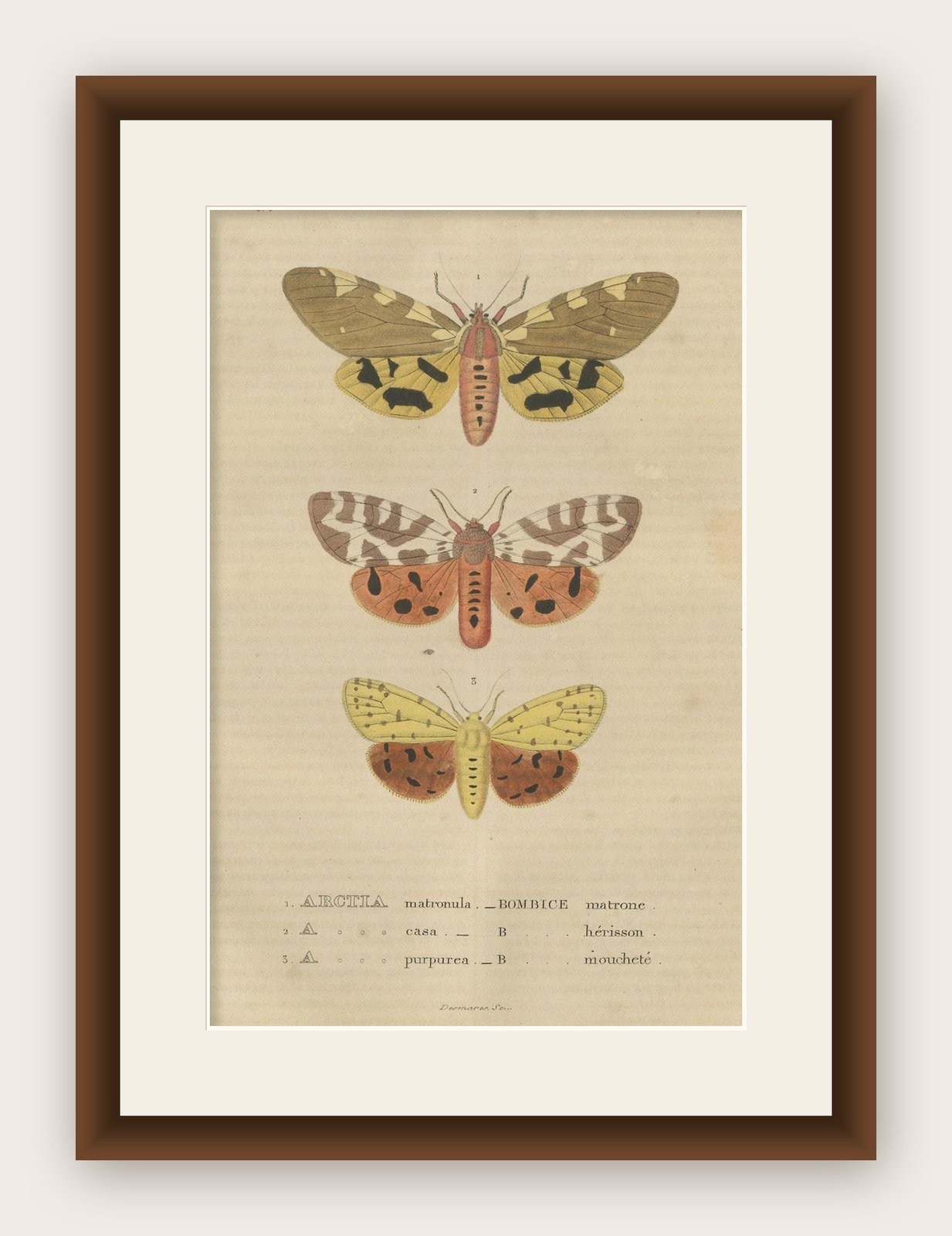
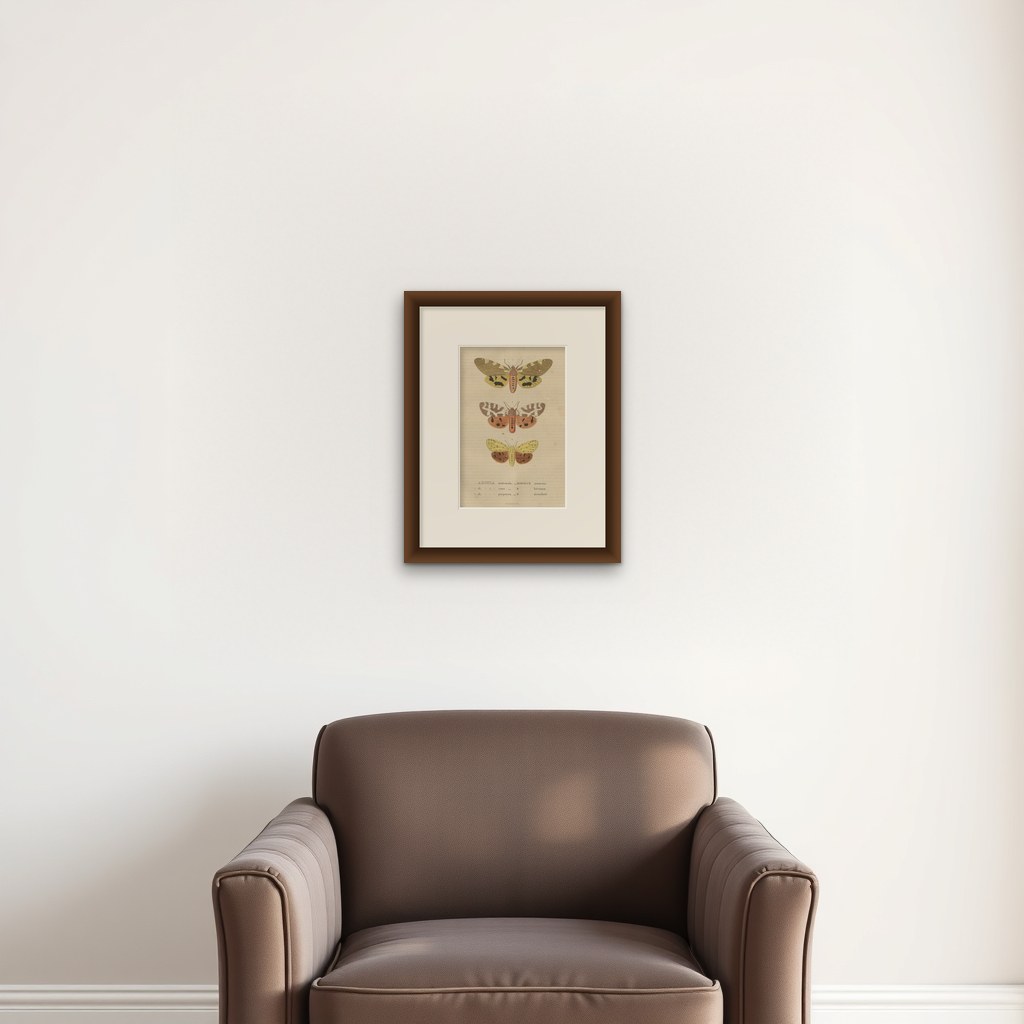

Frame and rooms are illustrations of how the print could look; the description says what is included.
Handcolored Variations of Moths: A Study in Lepidoptera Elegance, 1845
$215 (£160, €190)
Period original, not a reproduction.
Shipped from the Netherlands, flat, insured and tracked, worldwide. Returns accepted within 14 days.
- Date
- 1845
- Size
- 10.4 × 6.7 in (26.5 × 17 cm)
- Condition
- Good. Overal toning and soiling but he images itself clean and hand-colored in expliciet soft colors. Light offset from a opposite text plate in the original book. Left side cut short. Please study scan carefully.
- Period
- Early 19th century
- Section
- Insects and butterflies
- Reference
- f_37751762
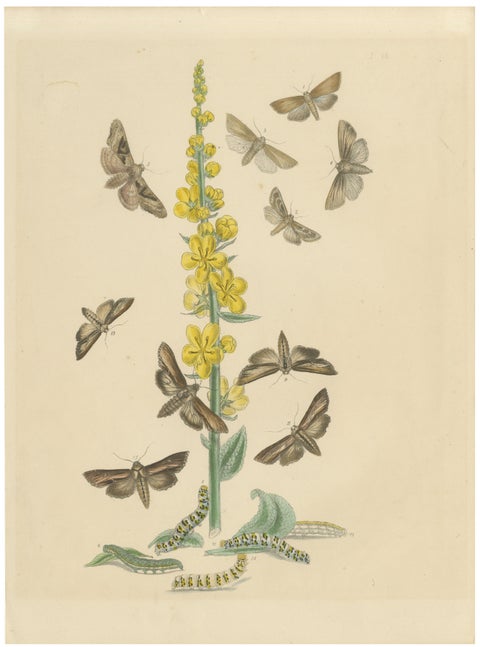
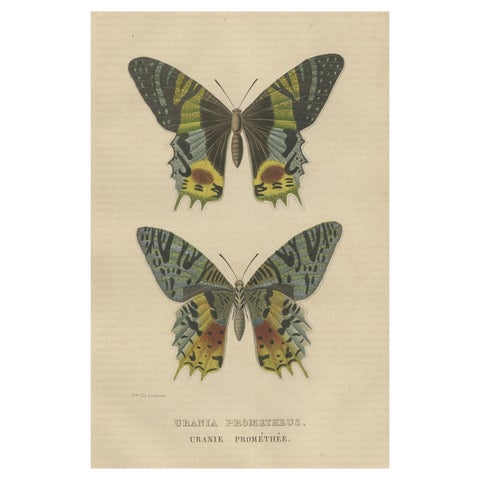
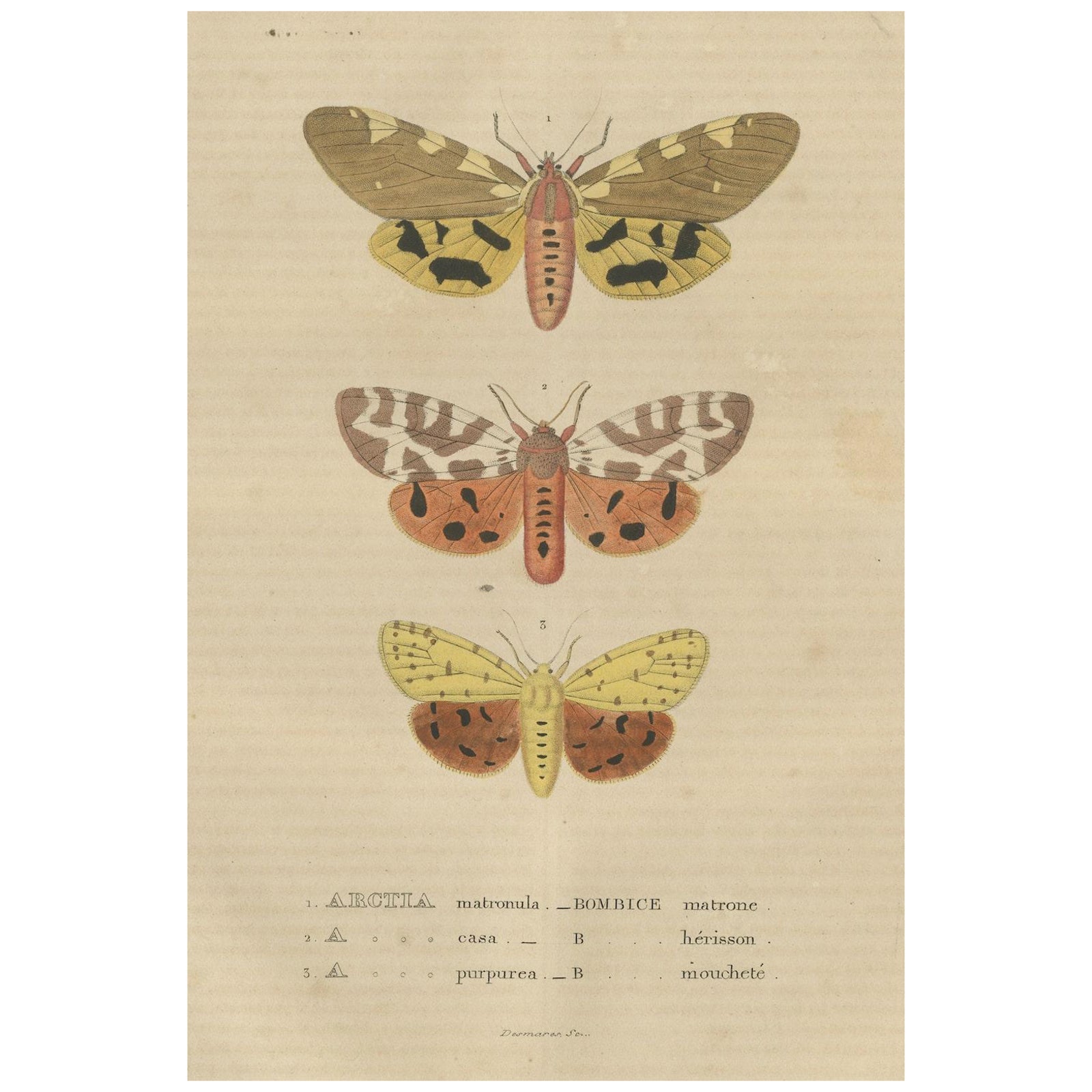
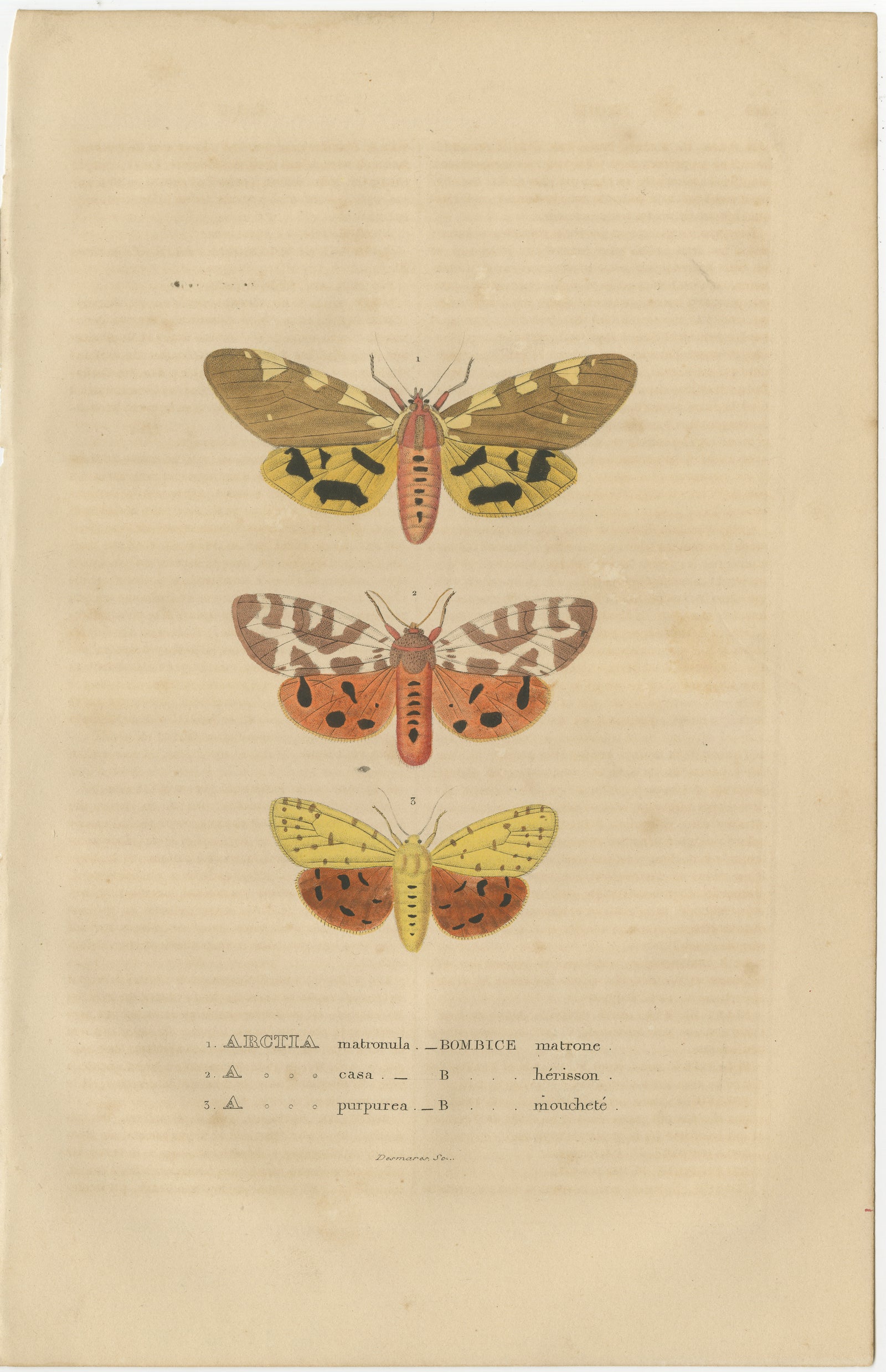
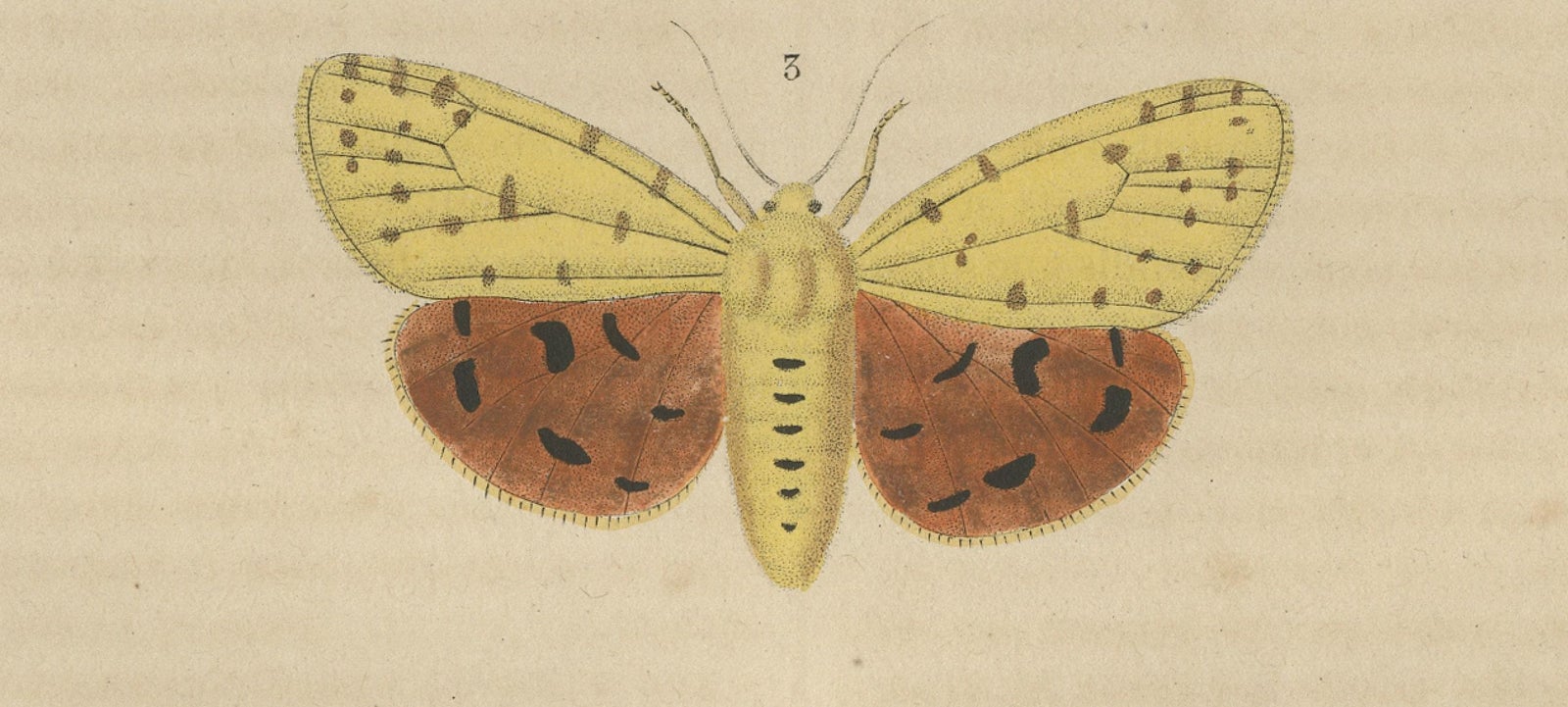
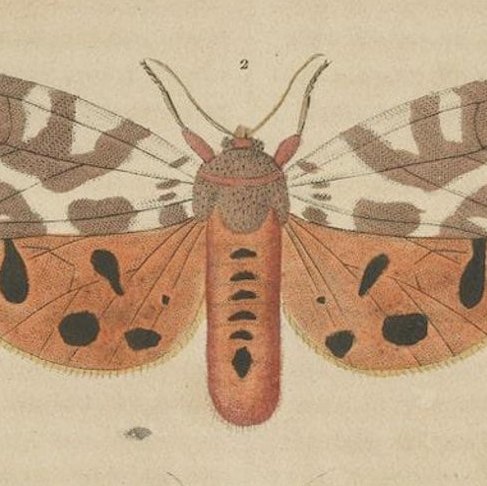
An original handcolored antique print featuring a series of illustrations of moths. Each moth is meticulously detailed, showcasing a variety of wing patterns and colors. The visual style is characteristic of 19th-century natural history illustrations, which were used for scientific documentation and education.
In this print, three moths are depicted with their wings spread, allowing for a full view of their distinctive markings:
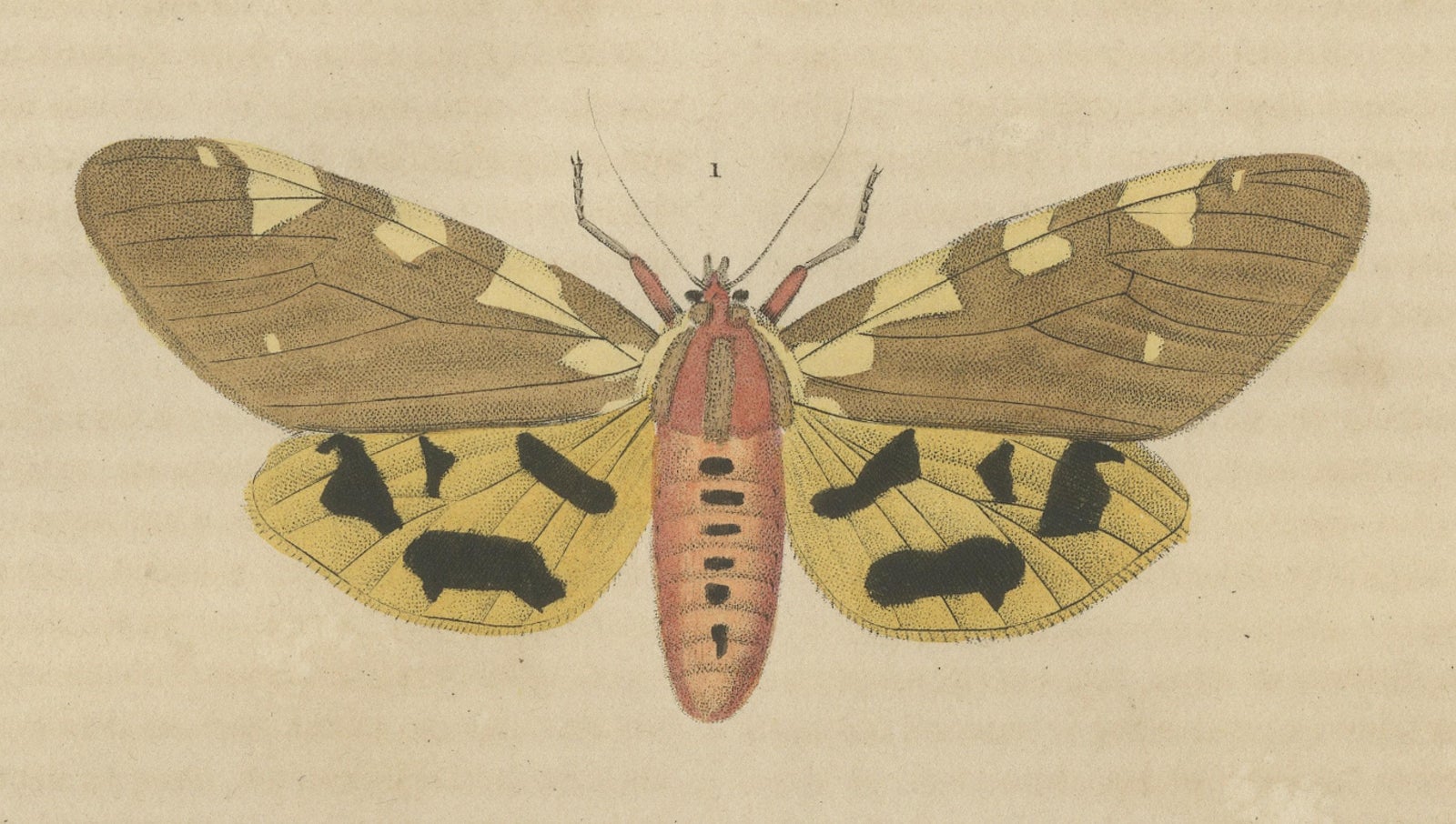
1. The first moth at the top has a pattern that resembles a mix of yellow and black patches on its wings, with a body that is centrally red, giving it a striking appearance.
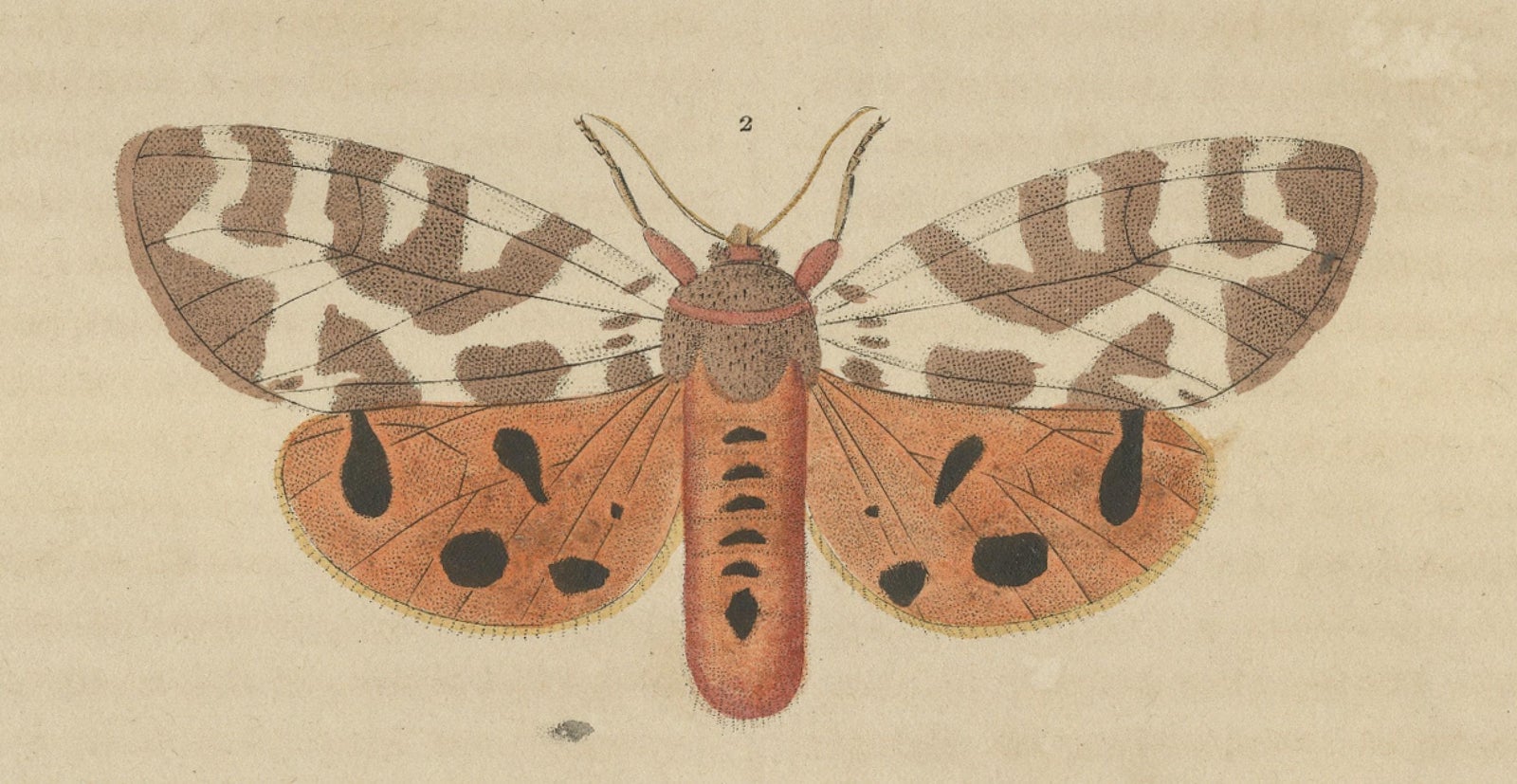
2. The second moth, in the middle, features a combination of red and brown hues with white accents in a band pattern across its wings.
3. The third moth at the bottom displays a lighter coloration, with yellow wings and red spots, which contrast with dark 'moucheté' or speckled markings.
Here's an analysis of each name and a description:
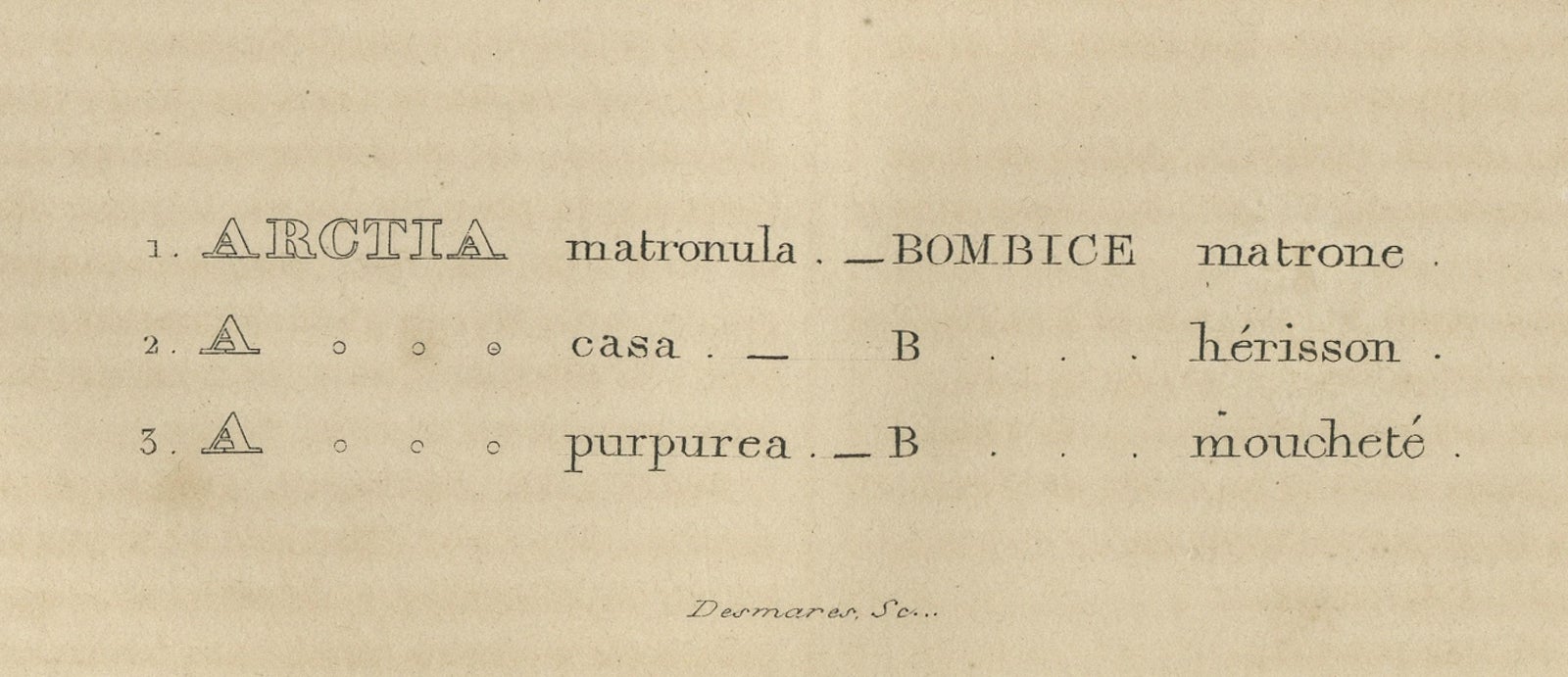
1. **ARCTIA matronula**: "Arctia" is a genus that includes the tiger moths, which are known for their vivid patterns and colors. "Matronula" could refer to a specific species within this genus. The term "BOMBICE matrone" might indicate a particular attribute or a common name related to the species.
2. **A casa - B hérisson**: "Casa" in this context might indicate a species known for constructing cases or cocoons in which they reside during the larval stage. "B hérisson" (hedgehog) could refer to a moth that has spiny or hairy larvae resembling a hedgehog.
3. **A purpurea - B moucheté**: "Purpurea" suggests a purple coloration, which may be a distinguishing feature of this moth species. "B moucheté" means "spotted" in French, indicating a moth with a spotted appearance.
The term "Desmarres Sc..." at the bottom likely refers to the engraver or illustrator of the original image, suggesting that "Desmarres" is the surname and "Sc" stands for "Sculptor" or "engraver" in this context.
These terms provide insights into the morphology and behavior of these moth species, which were likely key aspects of interest in the study of entomology at the time the engraving was produced.
The caption beneath the illustrations provides the scientific names and descriptions of these moths, reflecting the taxonomy and nomenclature conventions of the time. Such prints were essential educational tools, allowing scholars and enthusiasts to study the diversity of moth species and their intricate patterns, which are often used for camouflage or to deter predators in nature. The print is likely part of a larger entomological volume and serves as a fine example of the intersection between art and science during the era of its creation.
The style of the illustration is reminiscent of 19th-century scientific prints, which were often used in natural history books to document various species.
More info on the book in which it was published:
The 'Dictionnaire Classique des Sciences Naturelles' by Pierre Auguste Joseph Drapiez stands as a remarkable testament to 19th-century natural sciences. Published in Brussels in 1845, this work represents an expansive collation of knowledge, building upon the pioneering works of Buffon, Daubenton, Lacepede, Cuvier, de Jussieu, and other influential naturalists.
The prints within this compendium likely showcase a rich amalgamation of artistic precision and scientific accuracy. Drapiez, himself a Belgian naturalist, would have aimed for detailed representations of flora, fauna, and scientific phenomena, mirroring the illustrative styles prevalent during his time. Given the era's emphasis on illustration, these prints were likely engraved meticulously, possibly portraying intricate anatomical details or lifelike depictions of the natural world.
With Drapiez's background in natural history, the prints might bear testament to his commitment to scientific authenticity, aiming to educate and inspire scholars and enthusiasts alike. These engravings would have complemented the text, offering visual aids that elucidate the concepts and specimens discussed in the volume.
Overall, the prints of 'Dictionnaire Classique des Sciences Naturelles' likely serve as both artistic representations and invaluable scientific resources, encapsulating the essence of 19th-century natural history exploration and documentation.