Close-ups
Framed and on the wall
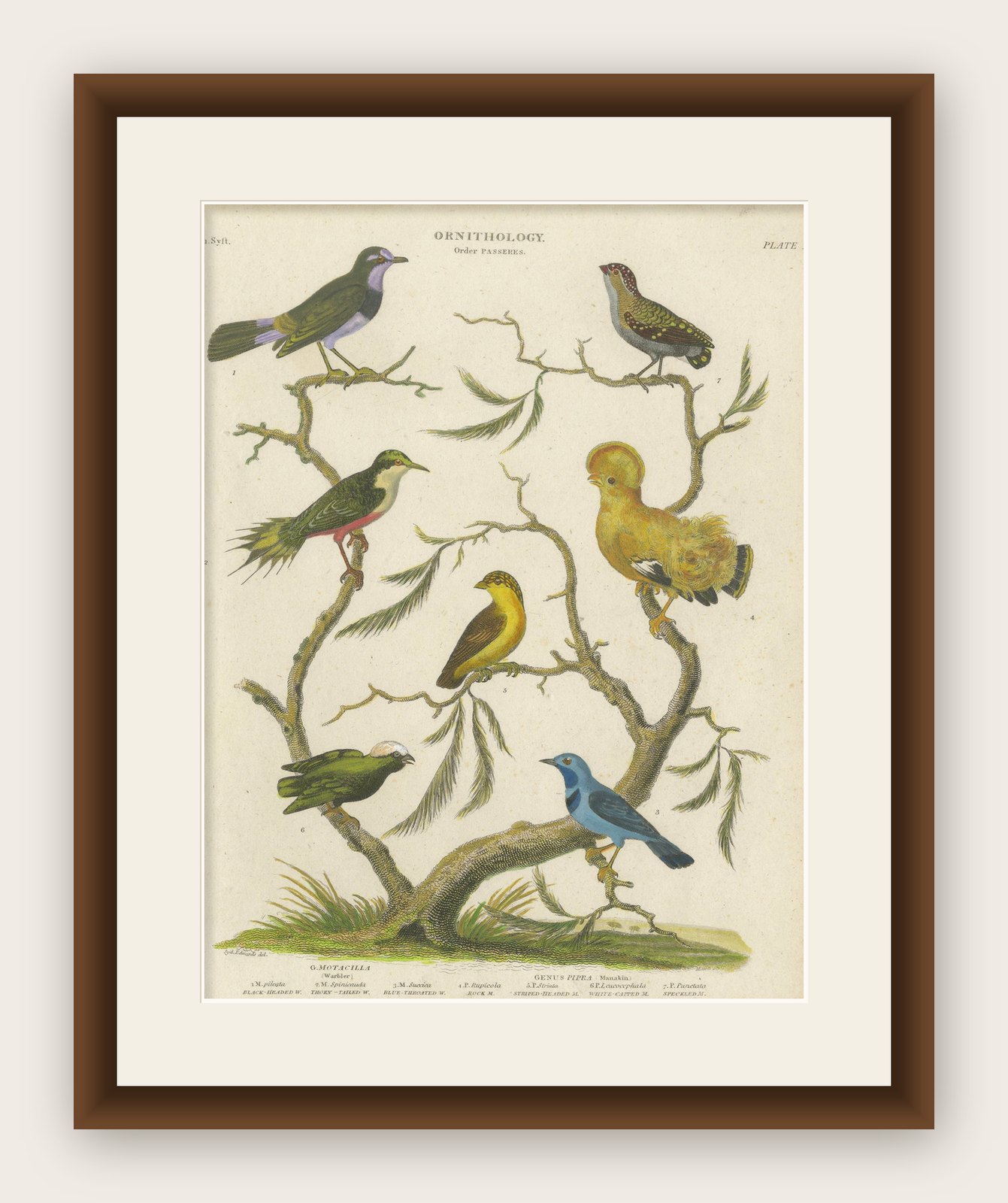


Frame and rooms are illustrations of how the print could look; the description says what is included.
Antique 1811 Ornithology Hand-Colored Print
£245 ($325, €290)
Period original, not a reproduction.
Shipped from the Netherlands, flat, insured and tracked, worldwide. Returns accepted within 14 days.
- Date
- 1811
- Size
- 10.8 × 8.3 in (27.5 × 21 cm)
- Condition
- Good. Good. Some tape along edge on reverse for stability. Browning around the edges only. Left side cropped. Vibrant colors, suggesting the print has been well-preserved. Study the image carefully.
- Period
- Early 19th century
- Section
- Birds
- Reference
- f_37742842
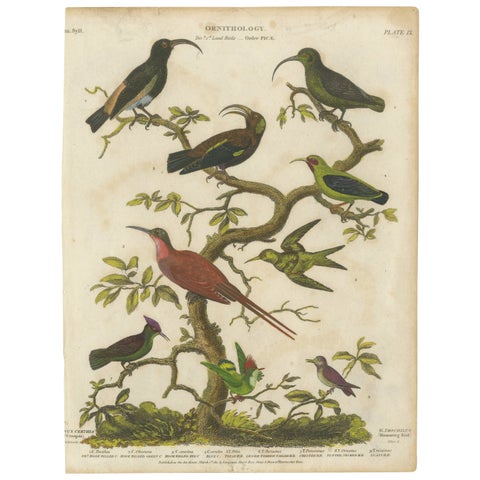
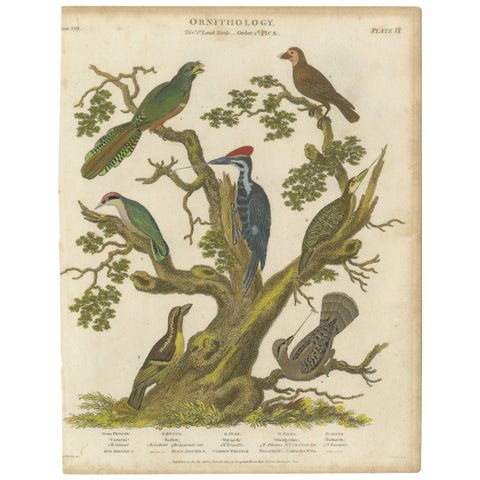
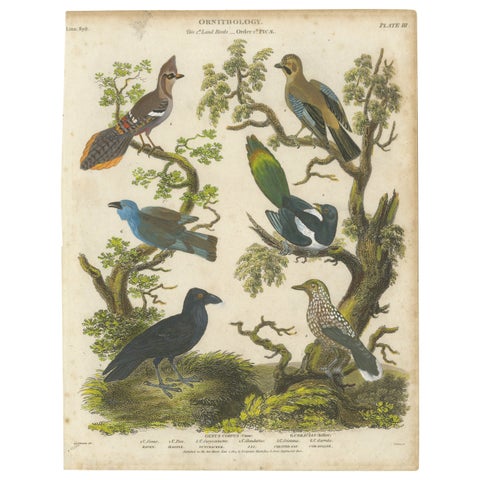
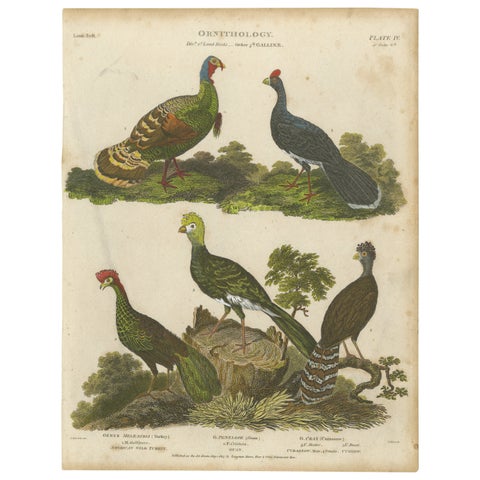
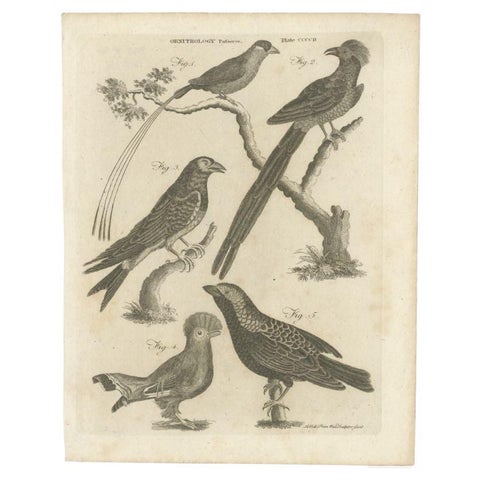
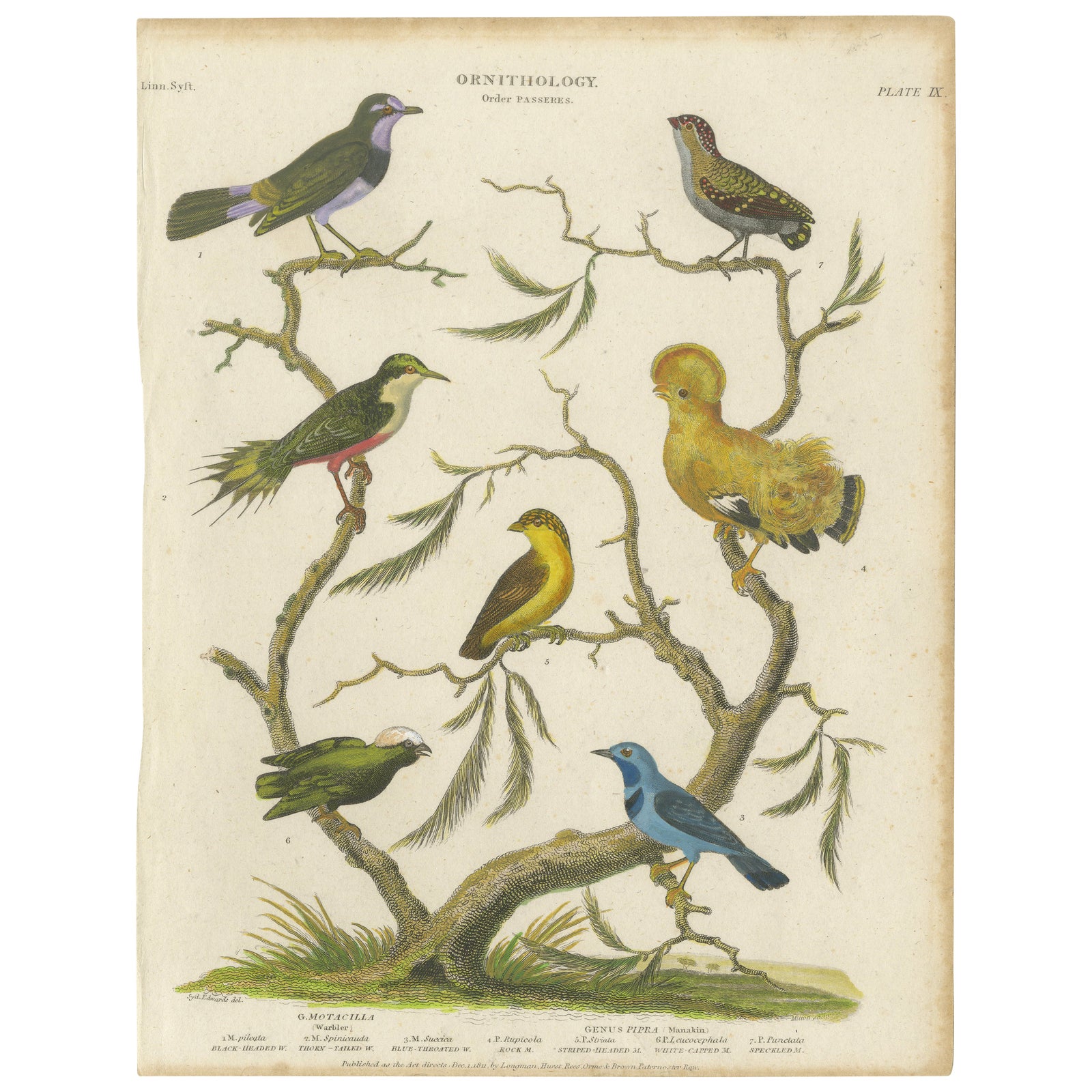
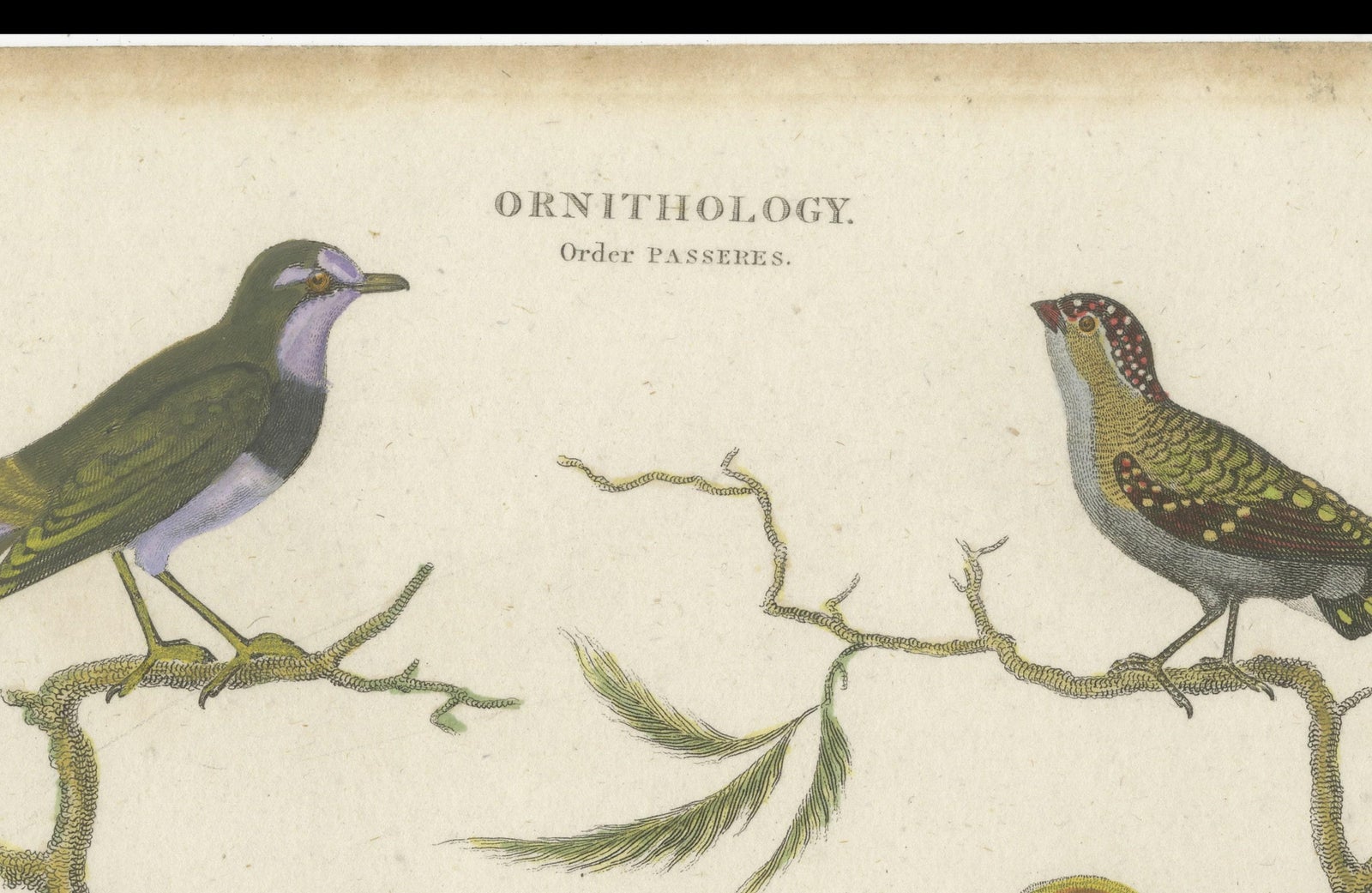
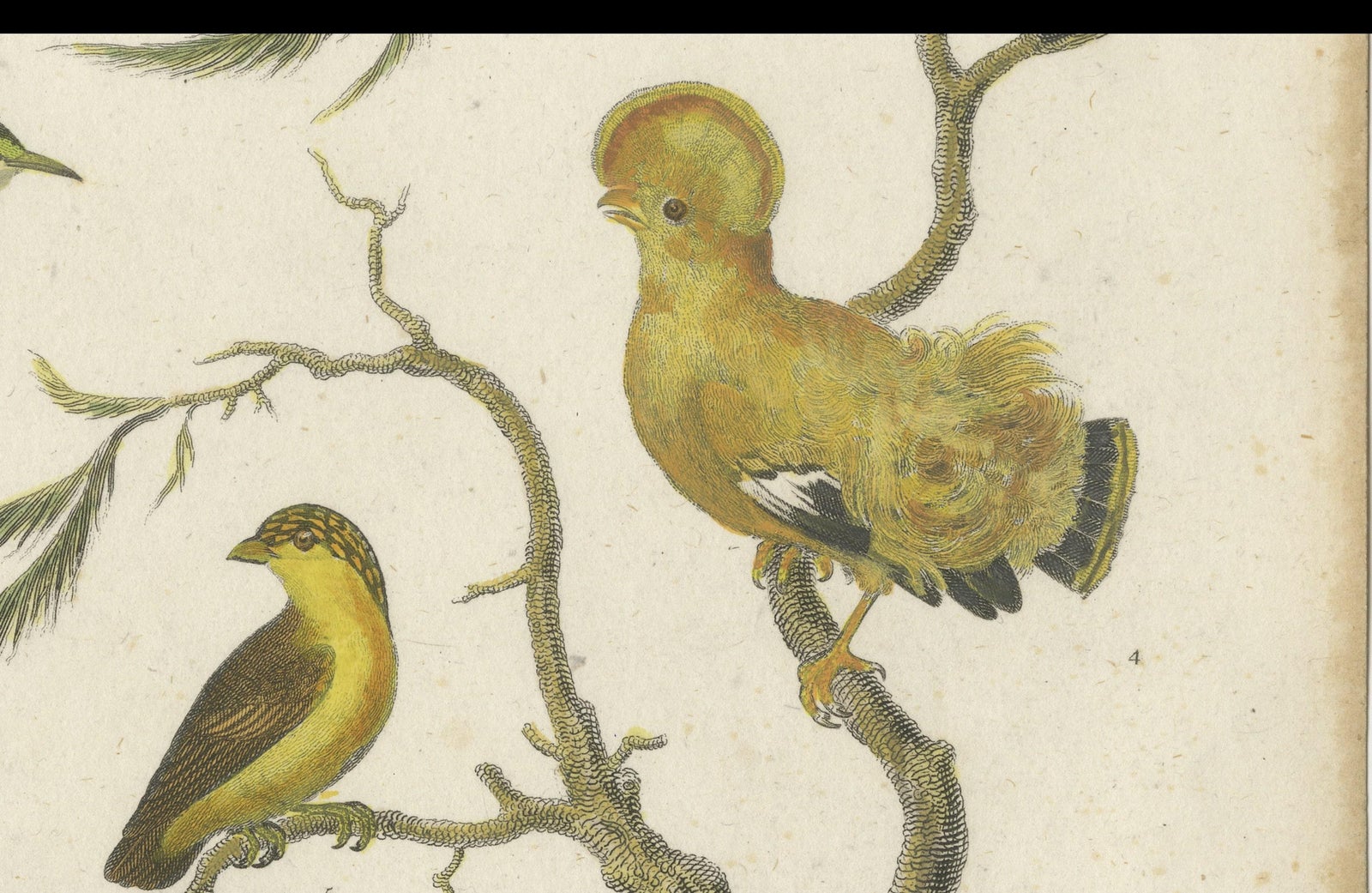
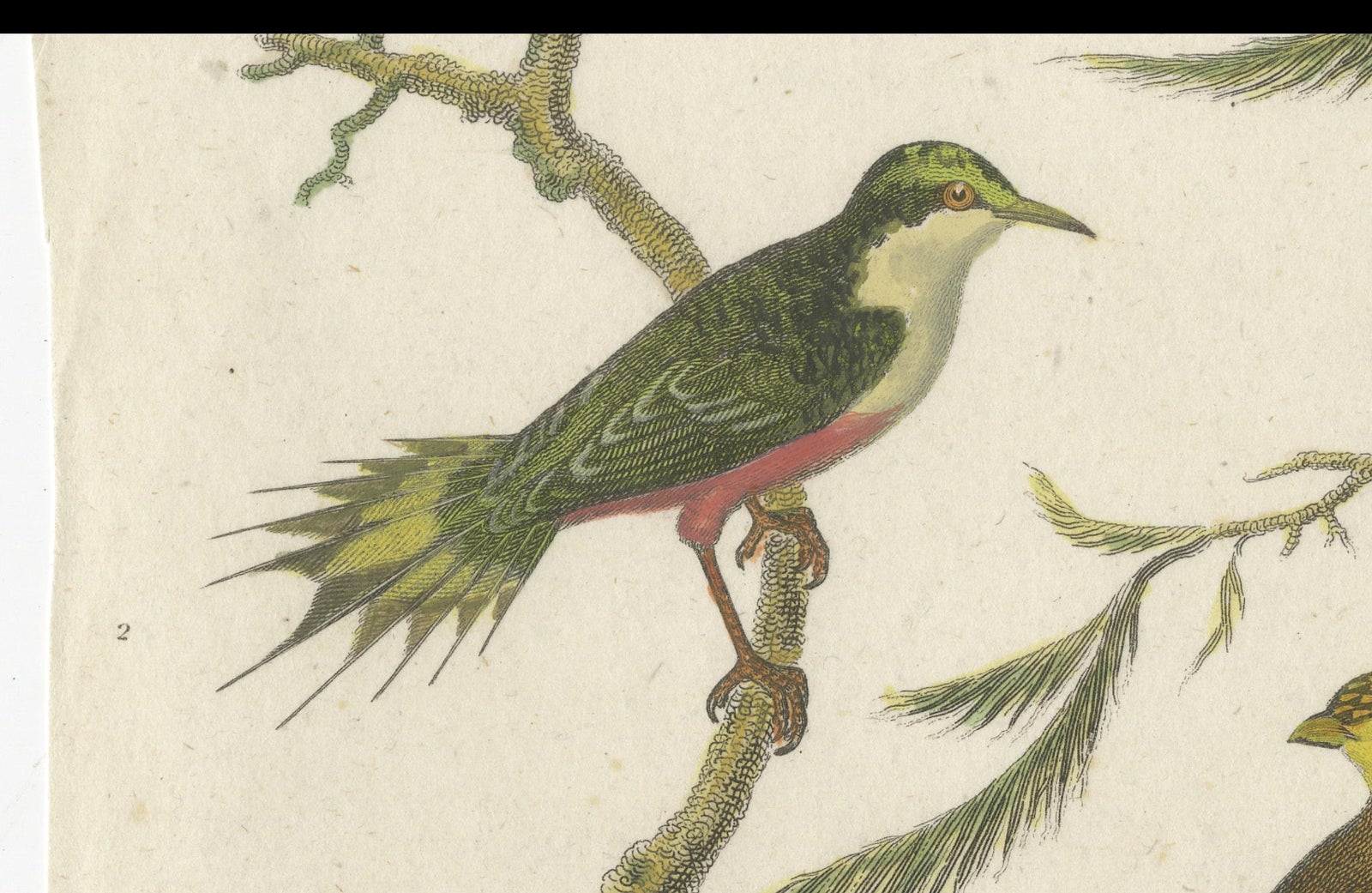
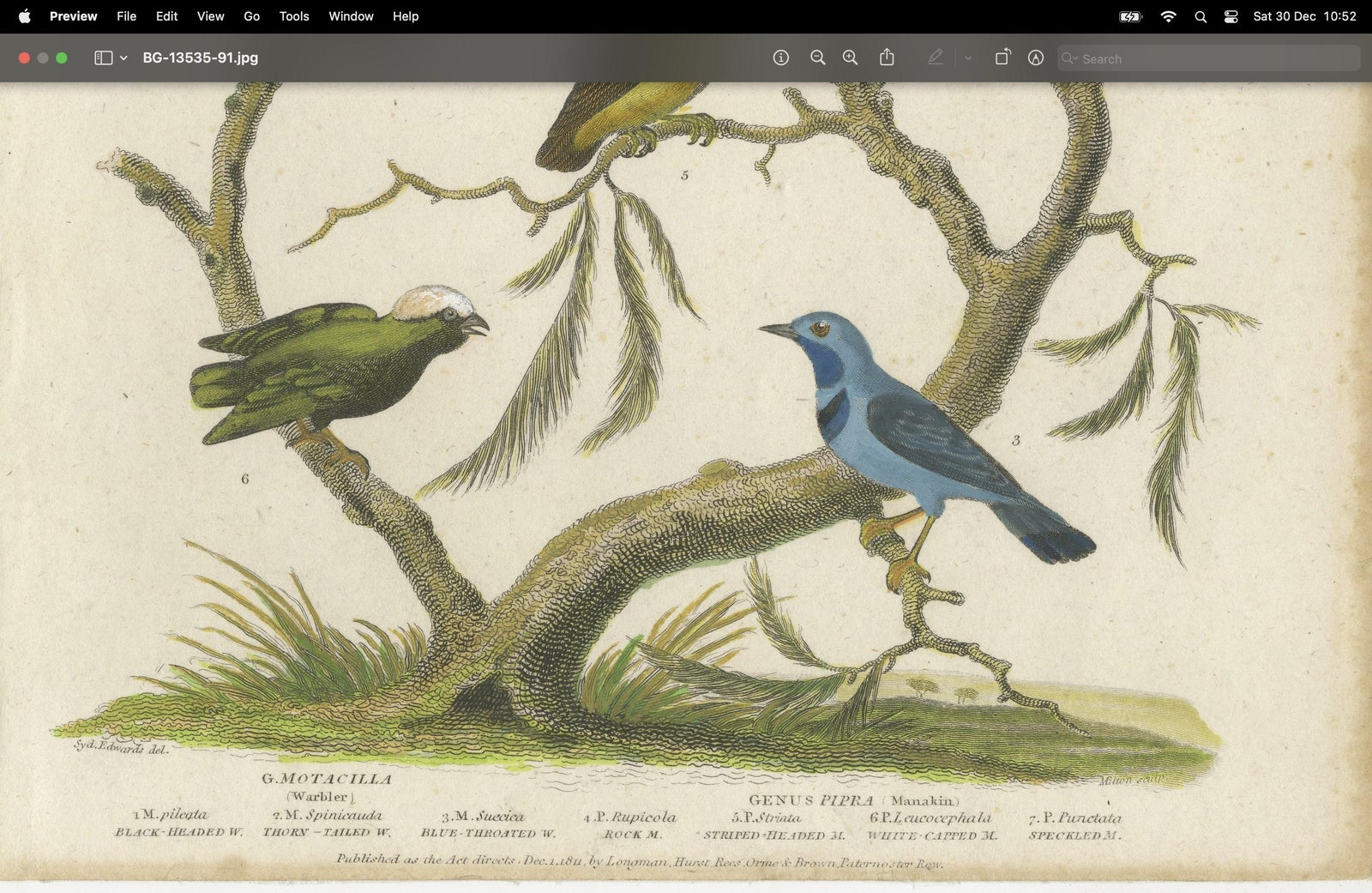
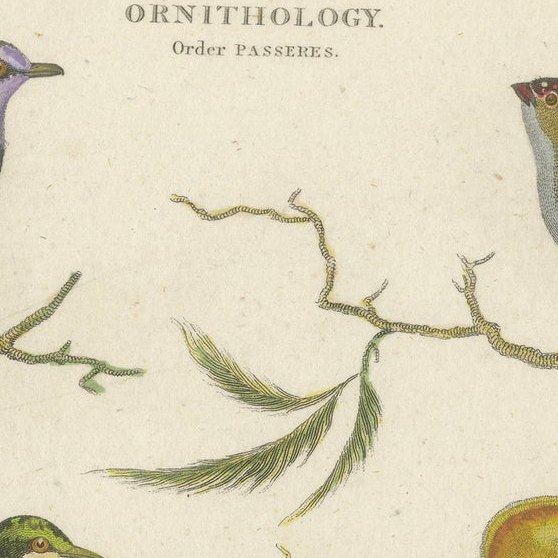
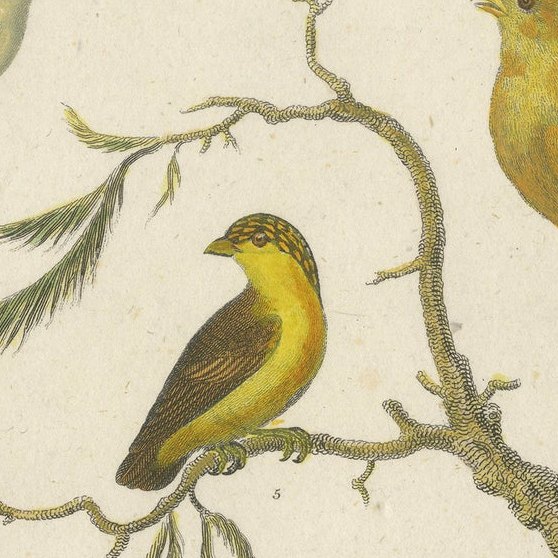
This rare original handcolored print includes detailed illustrations of birds, and there is text at the bottom that serves to identify each bird depicted. Here's the transcribed text along with a description:
1. M. pileata
(Warbler)
BLACK-HEADED W.
2. M. Spinoletta
TIRON-TAILED W.
3. M. Suziza
BLUE-THROATED W.
4. P. Rupicola
ROCK M.
5. P. Vitatta
STRIPED-HEADED J.
6. P. Cucullata
WHITE-CAPPED J.
7. P. Punctata
SPECKLED M.
Published as the Act directs Dec.1.1811 by Longman, Hurst Rees Orme & Brown, Paternoster Row.
- The text appears to be a taxonomic key, identifying each bird with both a common name and a Latin name. The "M." likely stands for a genus name, followed by a specific epithet for each species. The "W." and "J." could be abbreviations for "Warbler" and another bird family name starting with "J", while "M." could possibly stand for "Manakin".
- Each bird is numbered to correspond with the text key, allowing viewers to identify each species depicted in the print. This kind of labeling is typical of scientific illustrations from the period.
- The publishing information indicates that the print was legally registered and published by Longman, Hurst, Rees, Orme, & Brown in Paternoster Row, which was a prominent location for book publishers in London during the 19th century.
- The illustration style is highly detailed and realistic, common in scientific prints of that era, aimed at accurately representing the features of the birds for identification and study purposes.
- The bottom of the image includes credits for the illustration and publishing, which is common in prints of this kind to ensure proper attribution and copyright compliance.
The overall image and text suggest that this print was part of a scientific publication or an ornithological atlas from the early 19th century, designed for educational or reference purposes.
The image is an ornithological print from the early 19th century. It depicts various species of birds perched on branches. The birds are illustrated in vibrant colors with a high level of detail, indicative of the style of natural history illustrations of that period. The species shown include a variety of land birds from the order Piciformes, which is suggested by the term "Picae" in the title.
Each bird is numbered and likely corresponds to a list of species names and descriptions in the associated text of Rees' 'The Cyclopaedia'. The print mentions that it was published by Longman, Hurst, Rees, Orme, and Brown of Paternoster Row on March 1st, 1811. The engraver is named as Milton, and the artist as Sydenham Teast Edwards, both of whom contributed to the visual aspect of the Cyclopaedia.
This type of print would have been used as an educational tool and reference for scholars and enthusiasts of ornithology during the 19th century, providing a visual complement to the written descriptions found in the Cyclopaedia. The detailed rendering of the birds and the accuracy of their portrayal would have been essential for the scientific and educational value of the work.
This original antique print originates from Rees’ ‘The Cyclopaedia. or, Universal Dictionary opf Arts, Sciences and Literature’. This important 19th-century encyclopedic work was published in serialized form from 1802 to 1820. The entire Cyclopaedia consisted of 39 volumes of text, 5 volumes of plates and an atlas. Engraved by Milton after Sydenham Teast Edwards.