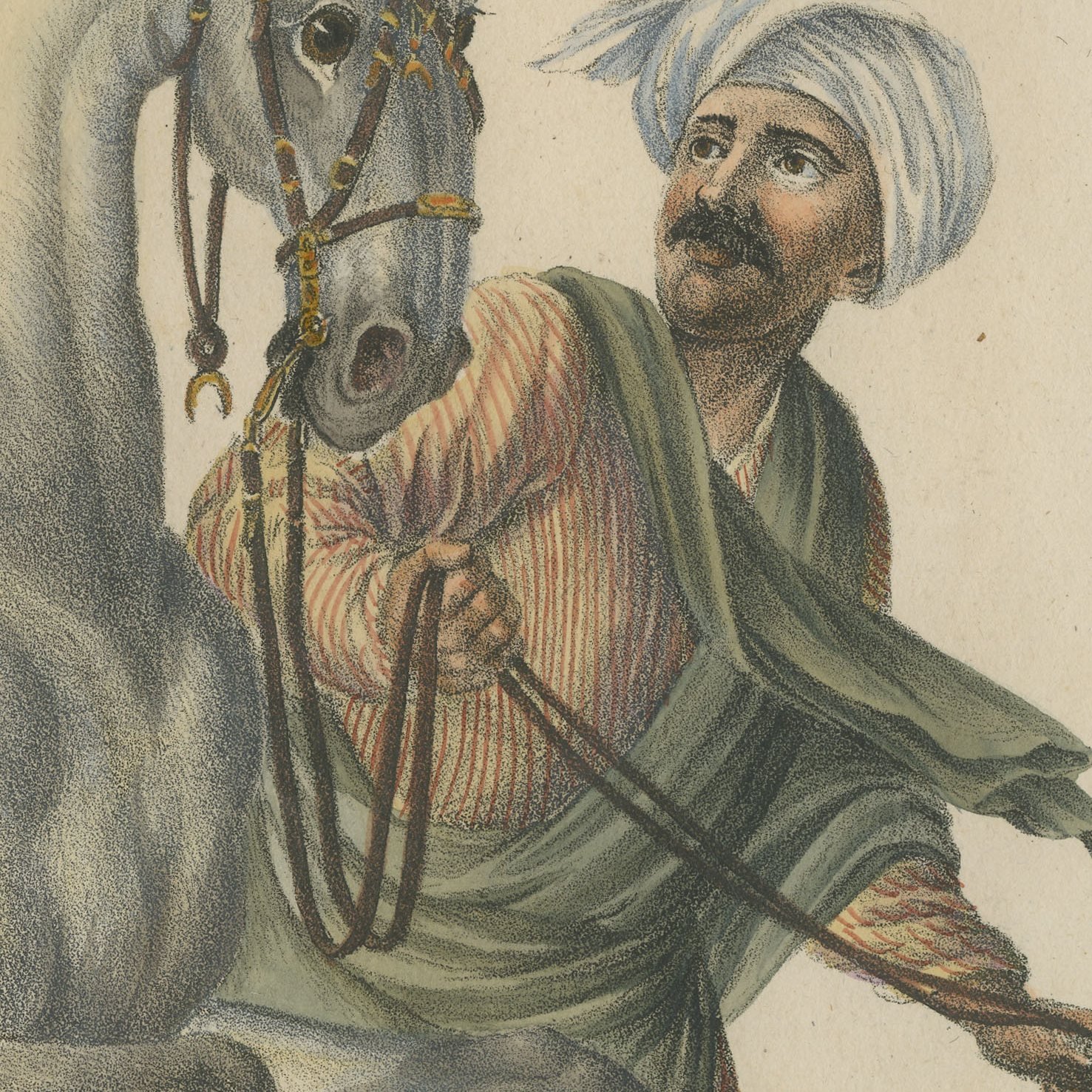
Close-ups
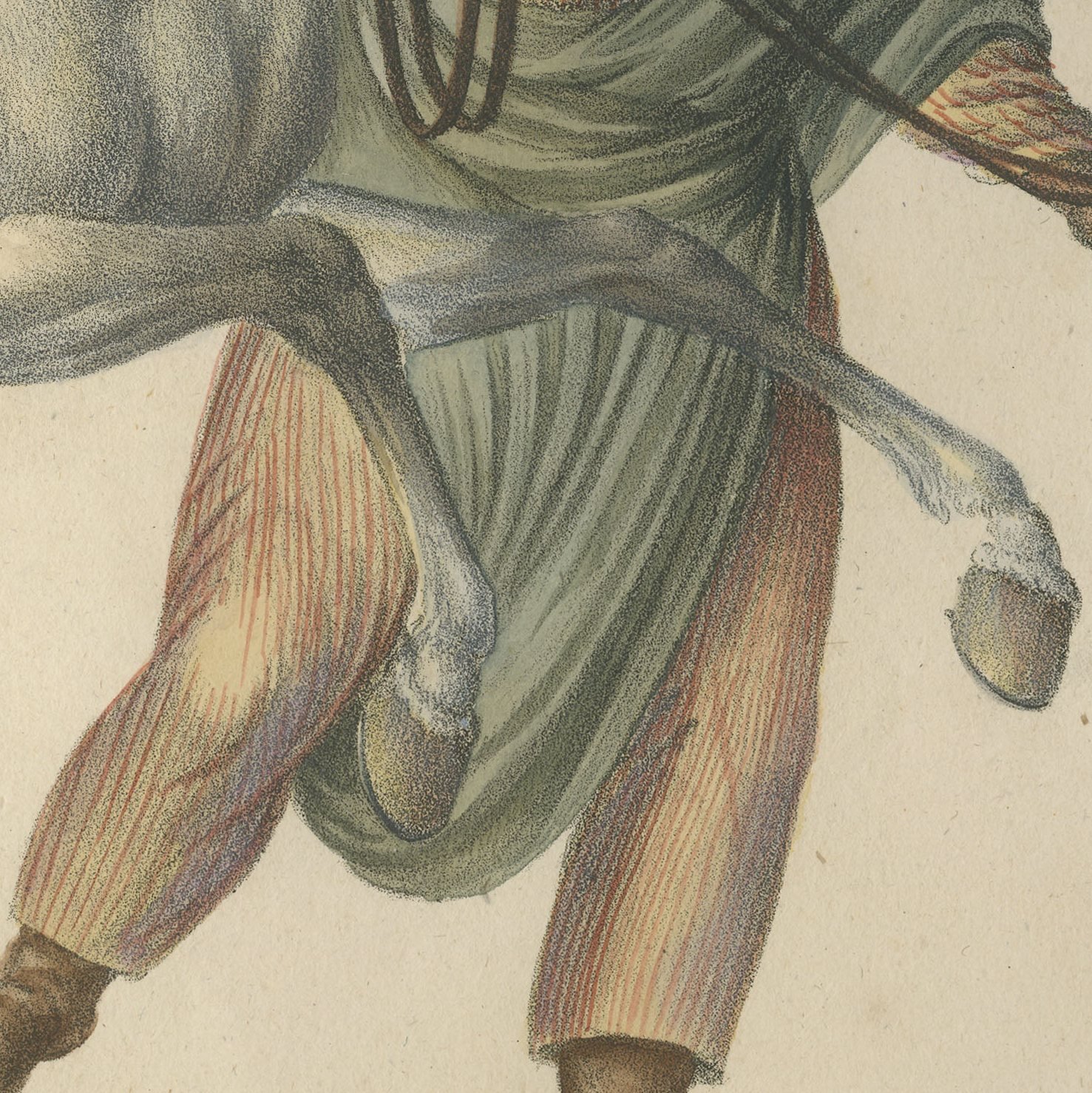
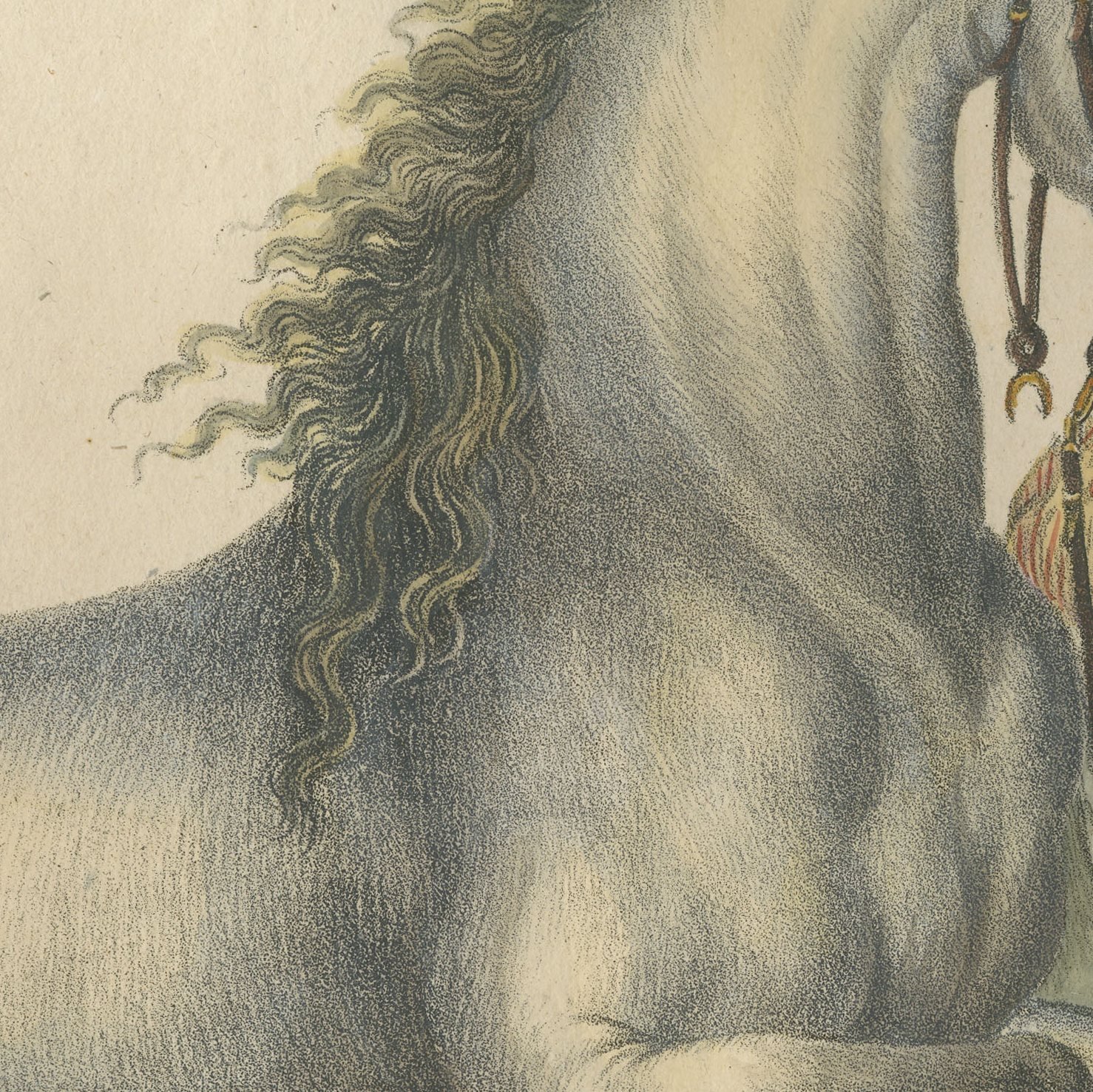
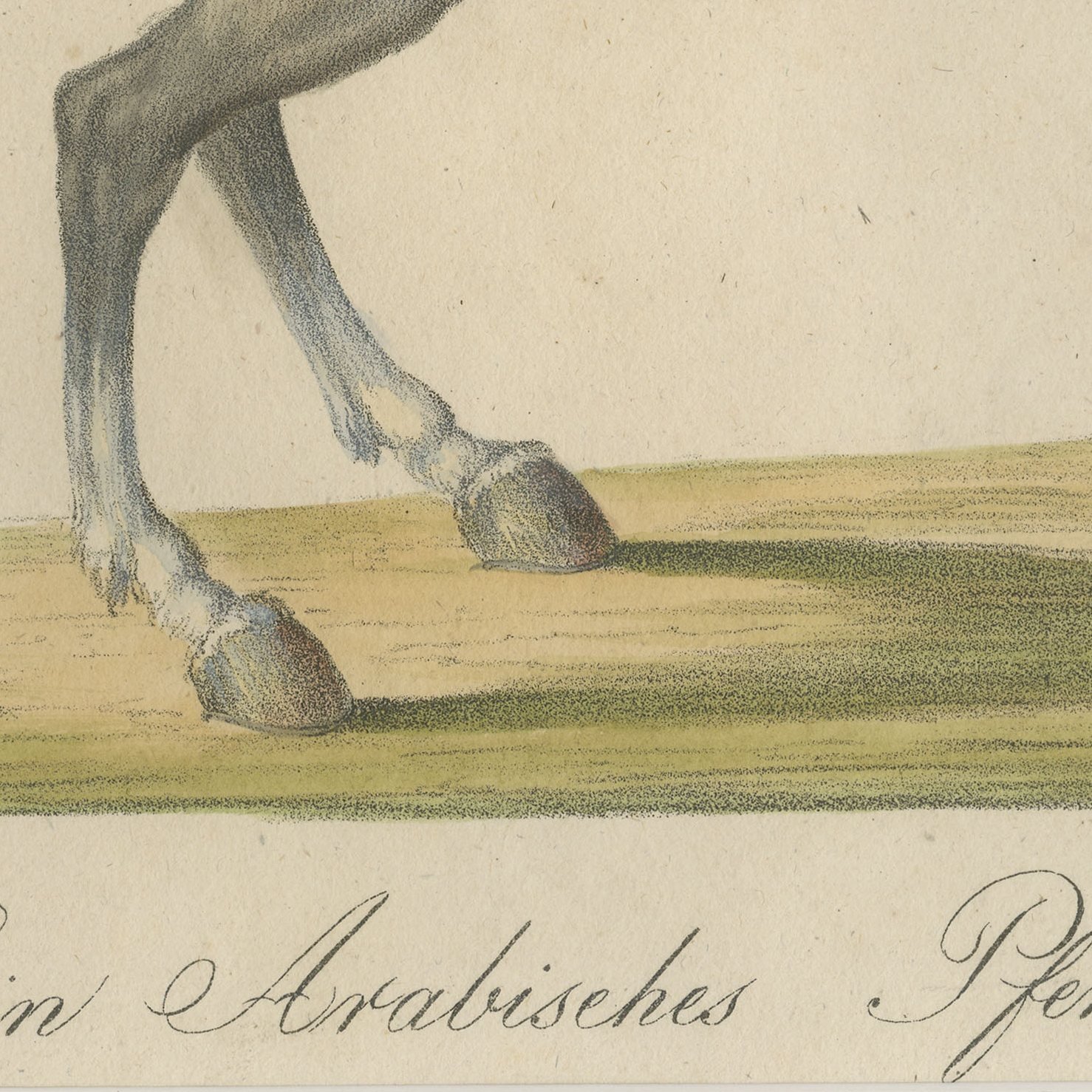
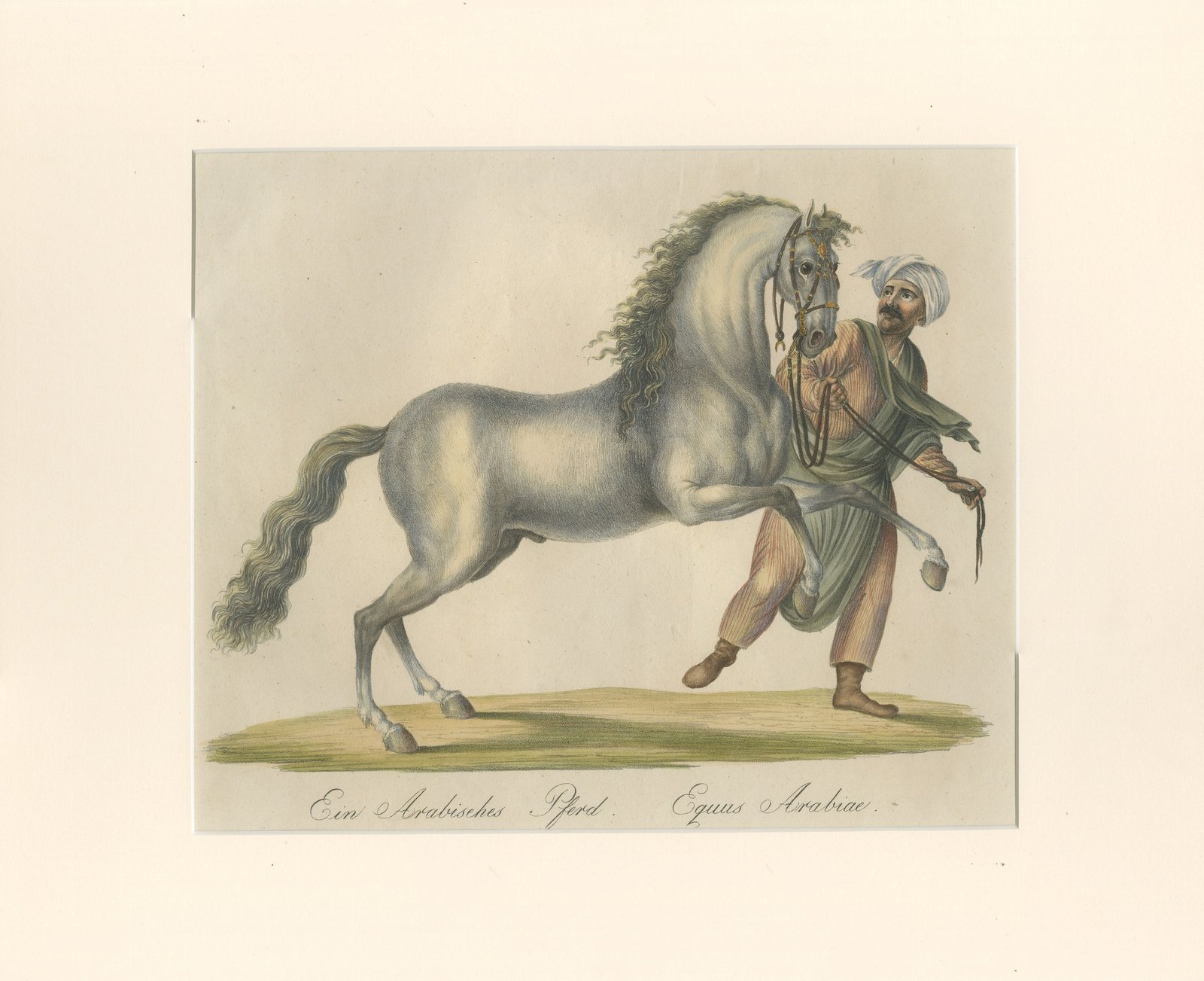
Framed and on the wall
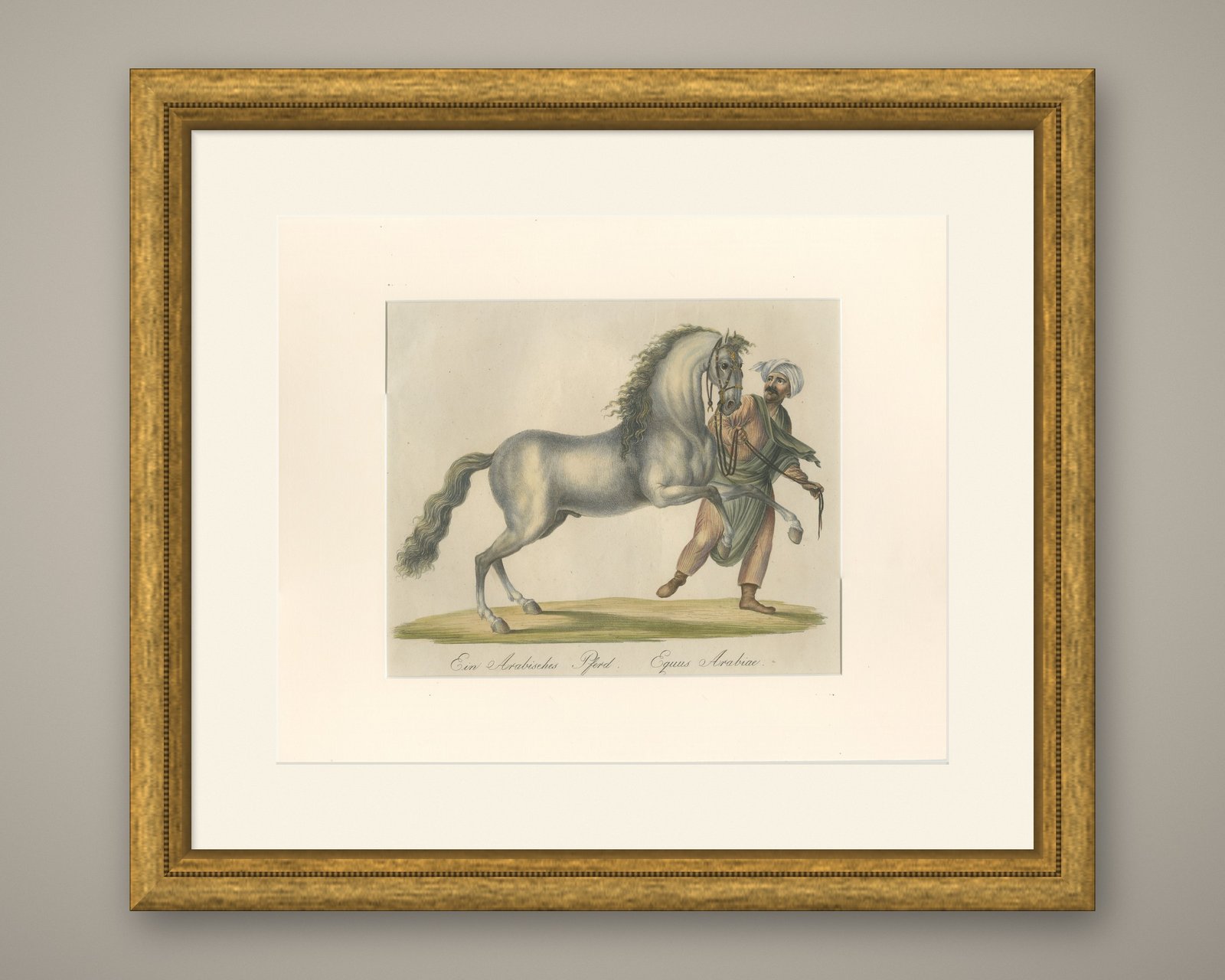
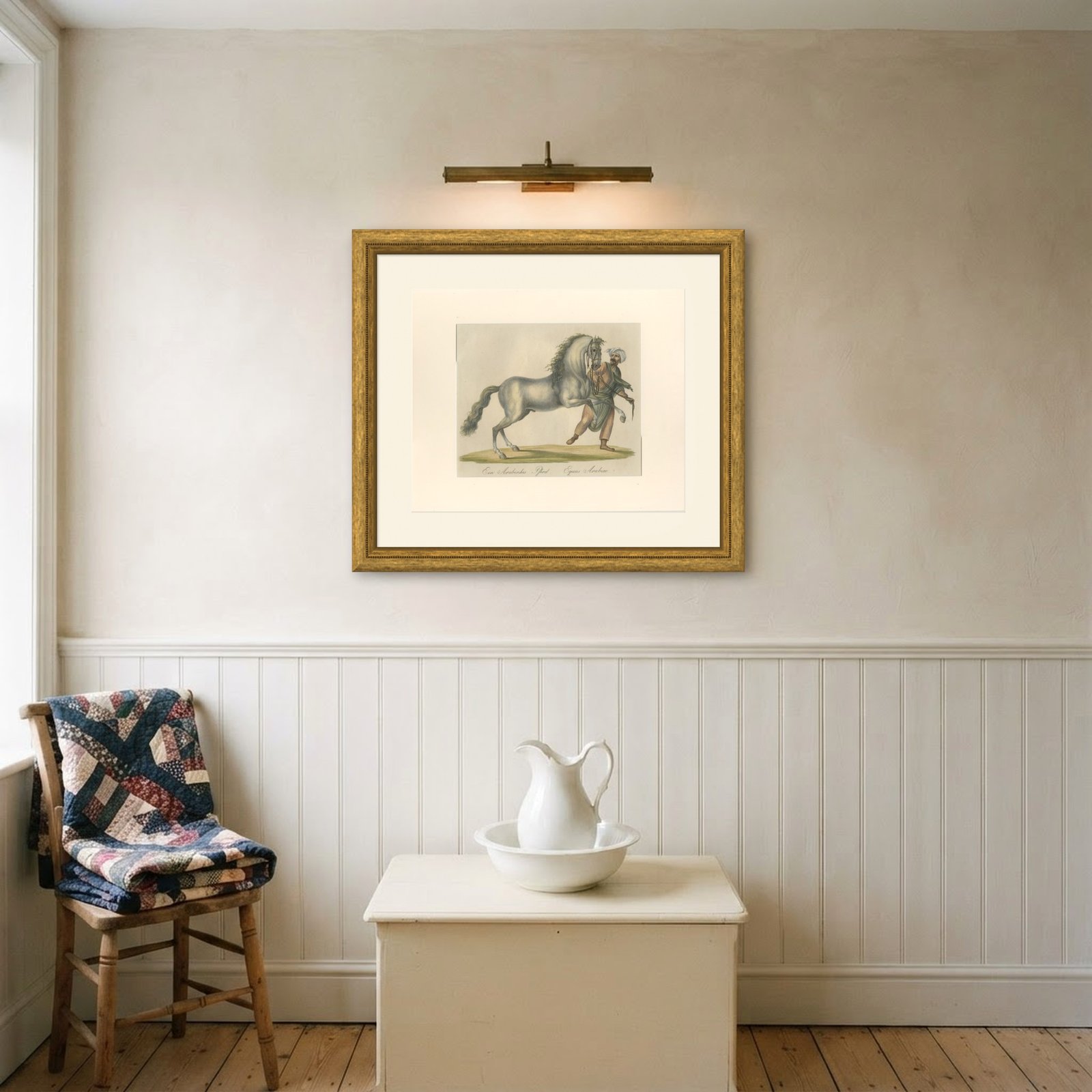
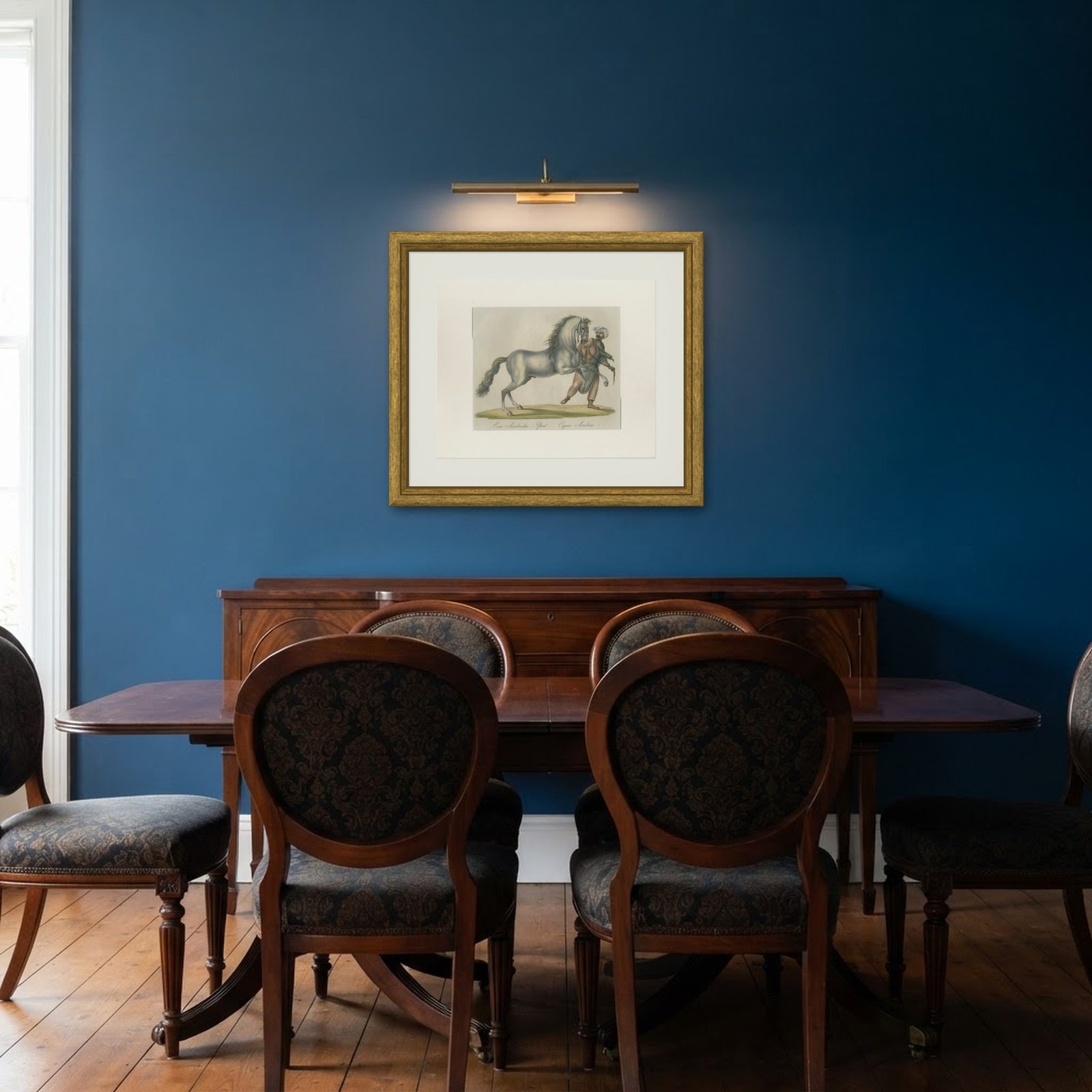
Frame and rooms are illustrations of how the print could look; the description says what is included.
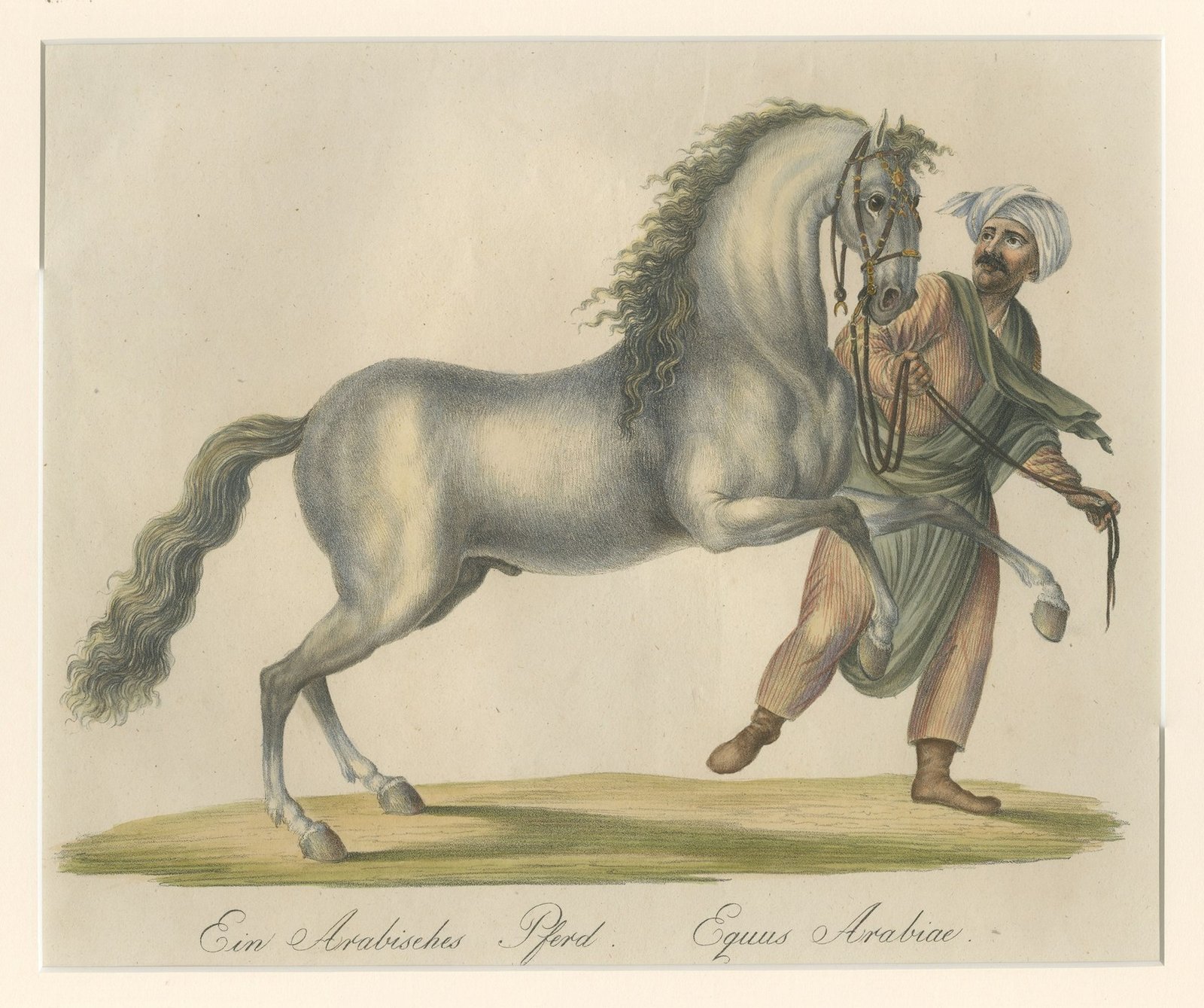
An Arabian Horse with Groom, Brodtmann Lithograph of 1816
€890 ($985, £745, €890)
Period original, not a reproduction.
Shipped from the Netherlands, flat or rolled, insured and tracked, worldwide. Returns accepted within 14 days.
- Date
- 1816
- Size
- 17.3 × 21.3 in (44 × 54 cm)
- Technique
- Lithograph
- Coloring
- Original hand color
- Condition
- Good. Even age toning. Scattered light foxing in the margin. All four corners complete. Minor edge wear, shallow nicks along the bottom.
- Period
- Early 19th century
- Section
- Mammals
- Reference
- BG-14460-1
What the condition grades mean
- Excellent
- Bright and clean, with no faults worth mentioning.
- Very good
- Only light signs of age, such as faint toning.
- Good
- Normal signs of age for a sheet of this period: toning, some foxing, small marks or neat old repairs.
- Fair
- Clear faults such as staining, tears or repairs, priced to match.
Every fault we see is written in the condition note, and the whole sheet is shown uncropped in the photos.
This original antique hand colored lithograph, An Arabian Horse with Groom, was printed at Lindau in 1816 for Carl Joseph Brodtmann's Naturhistorische Bilder-Gallerie aus dem Thierreiche, one of the earliest illustrated natural histories produced in the medium. The sheet shows a gray Arabian stallion rearing against the hand of its groom, the mane and the plaited tail flying, the turbaned groom in a green robe braced against the pull of the rein and the pair set on open sand under a plain sky.
The plate comes from Naturhistorische Bilder-Gallerie aus dem Thierreiche, published at Lindau in 1816 by Carl Joseph Brodtmann. Alois Senefelder had invented lithography barely twenty years earlier, and a hand colored lithograph of this size and date is among the earliest commercial work in the medium, which is why the trade describes sheets from this book as incunabula of lithography.
The technique is lithography, drawn with a greasy crayon directly onto the stone and printed without any engraved or etched line, then finished by hand in watercolor. The softness in the modeling of the hide and the coat is characteristic of the crayon on stone and is the reason lithography took over natural history illustration so quickly. A large animal plate of this kind holds a wall on its own and frames handsomely in a plain dark molding with a wide mount. It suits a study, a library, a hallway or a child's room that is meant to last, and it sits well beside other early natural history material.
Even age toning. Scattered light foxing in the margin. All four corners complete. Minor edge wear, shallow nicks along the bottom.
This is an original antique print, not a modern reproduction. This item is sold unframed.