Close-ups
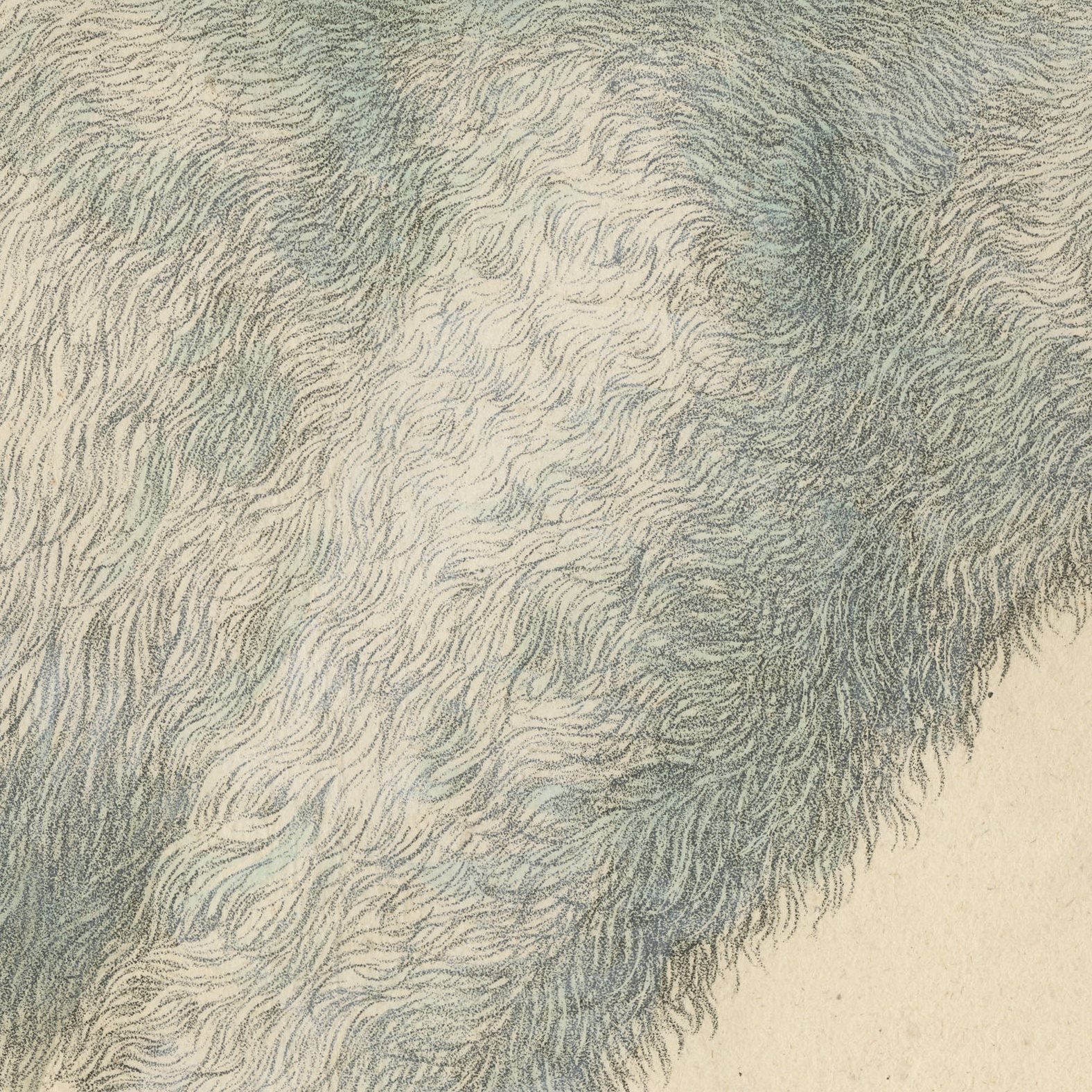
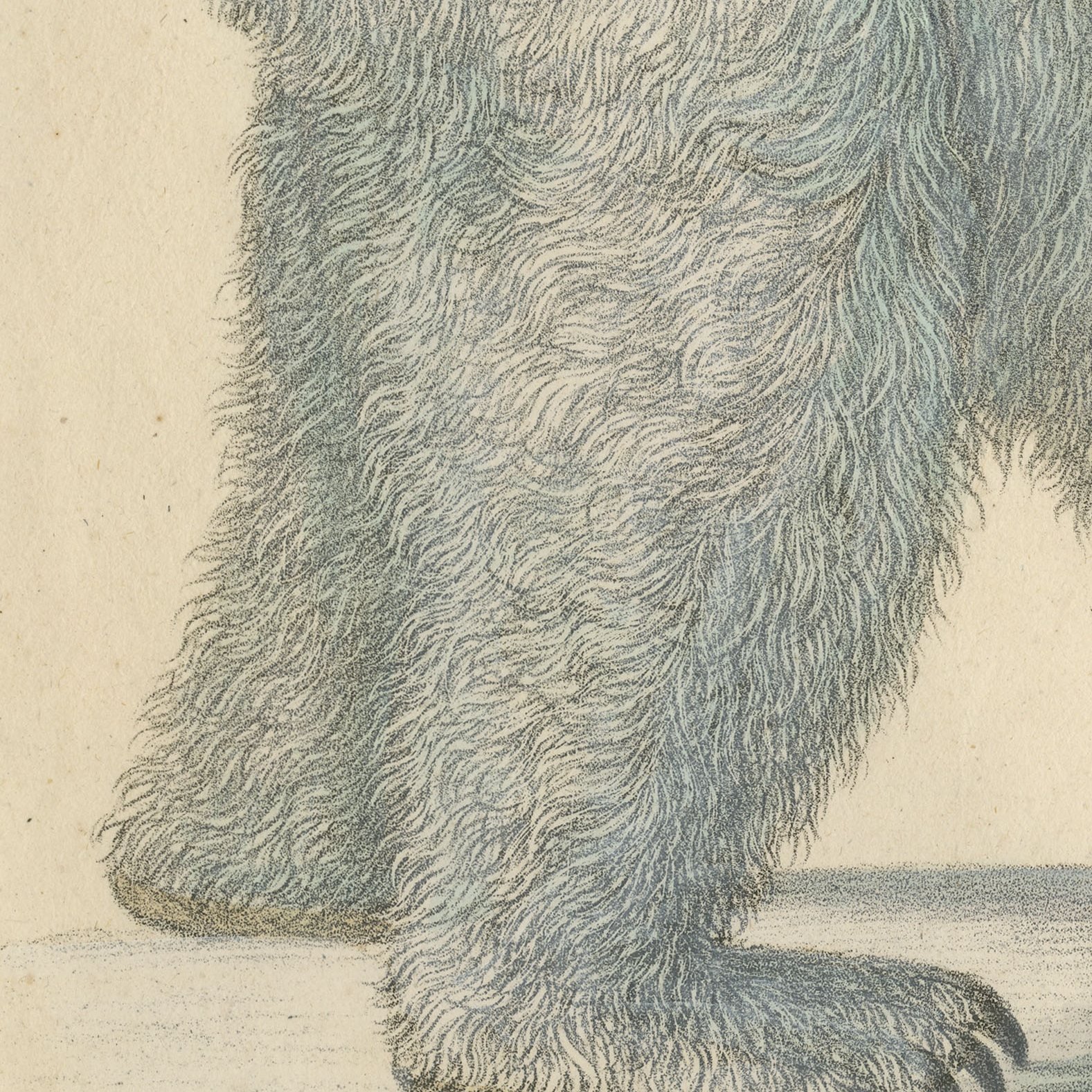
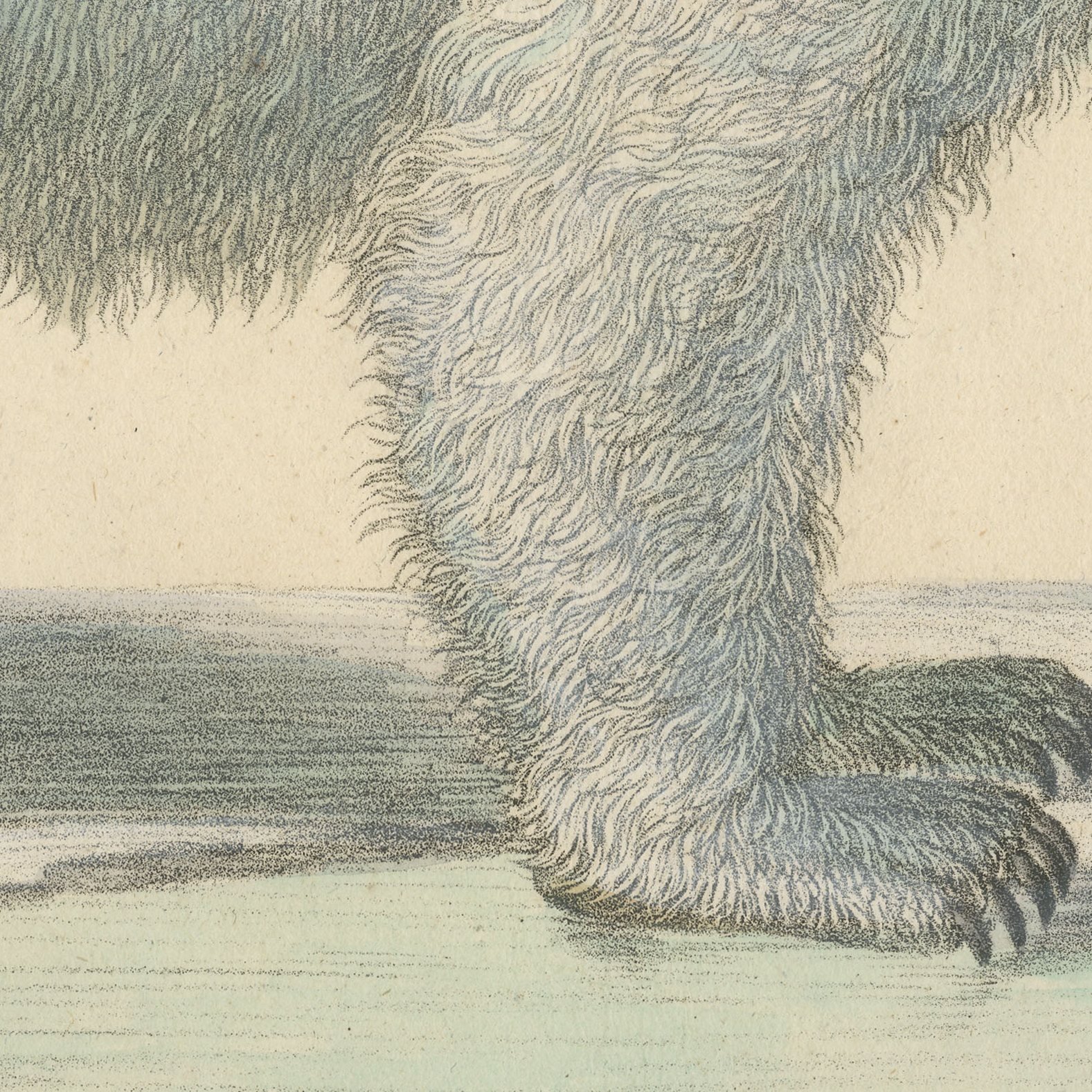
Framed and on the wall
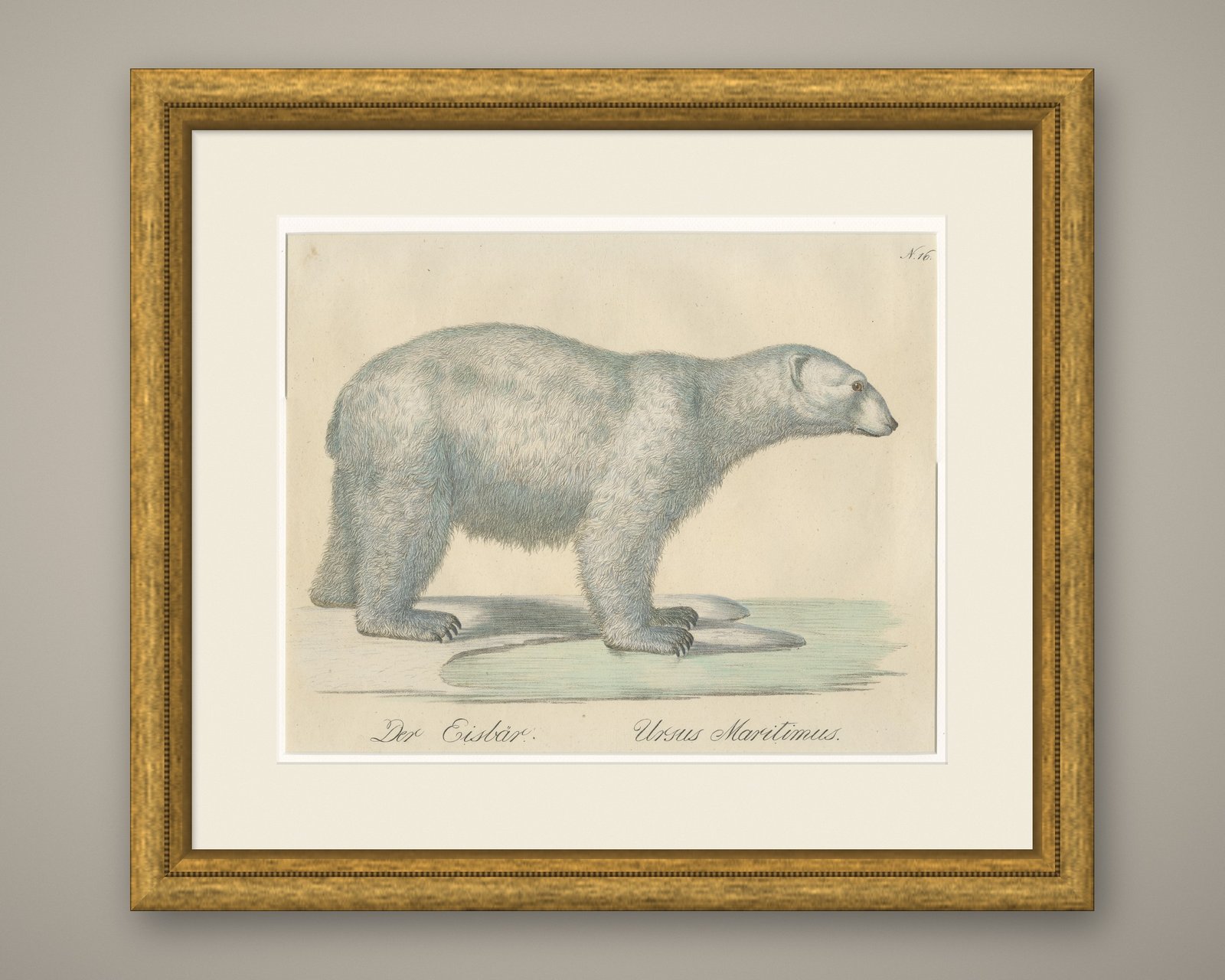
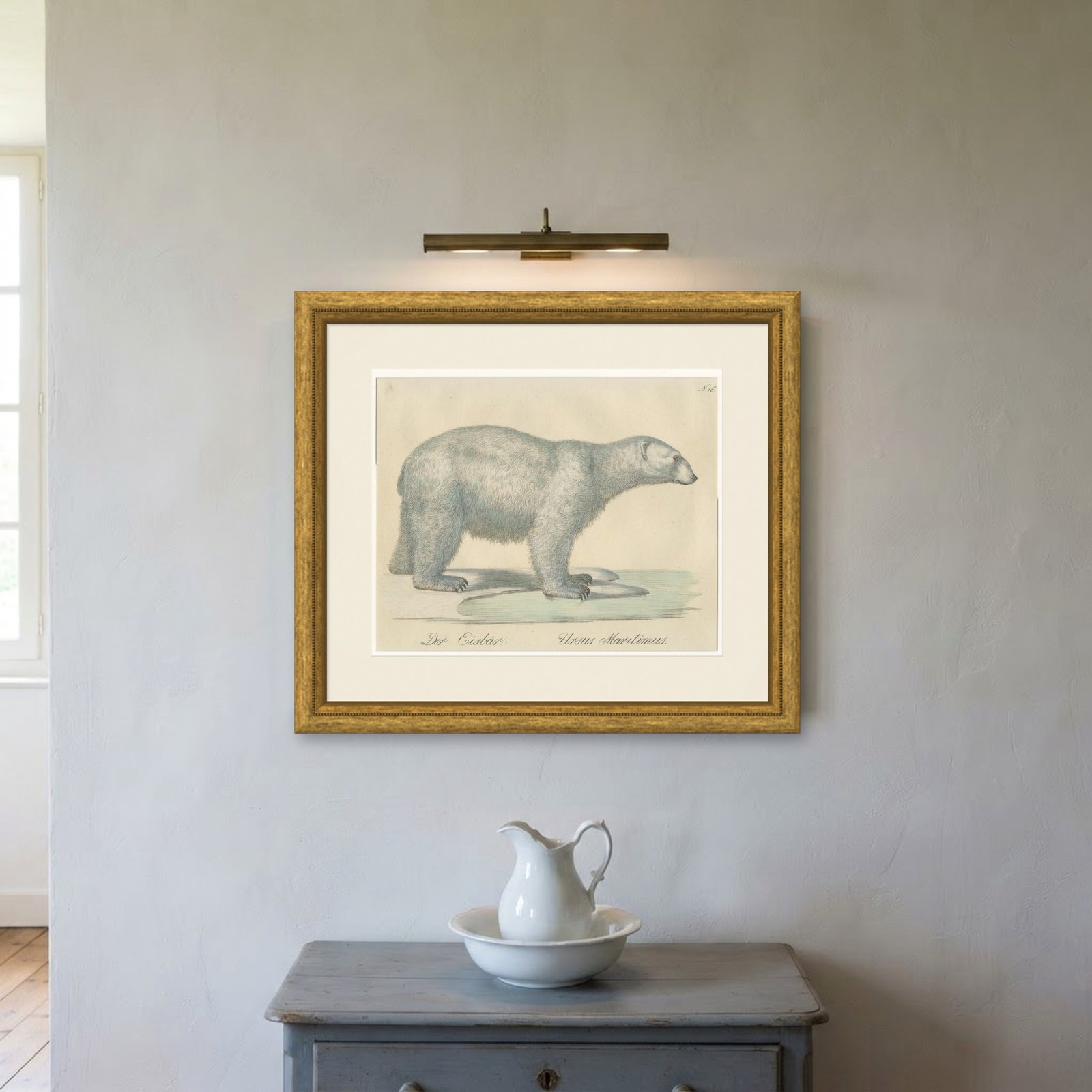
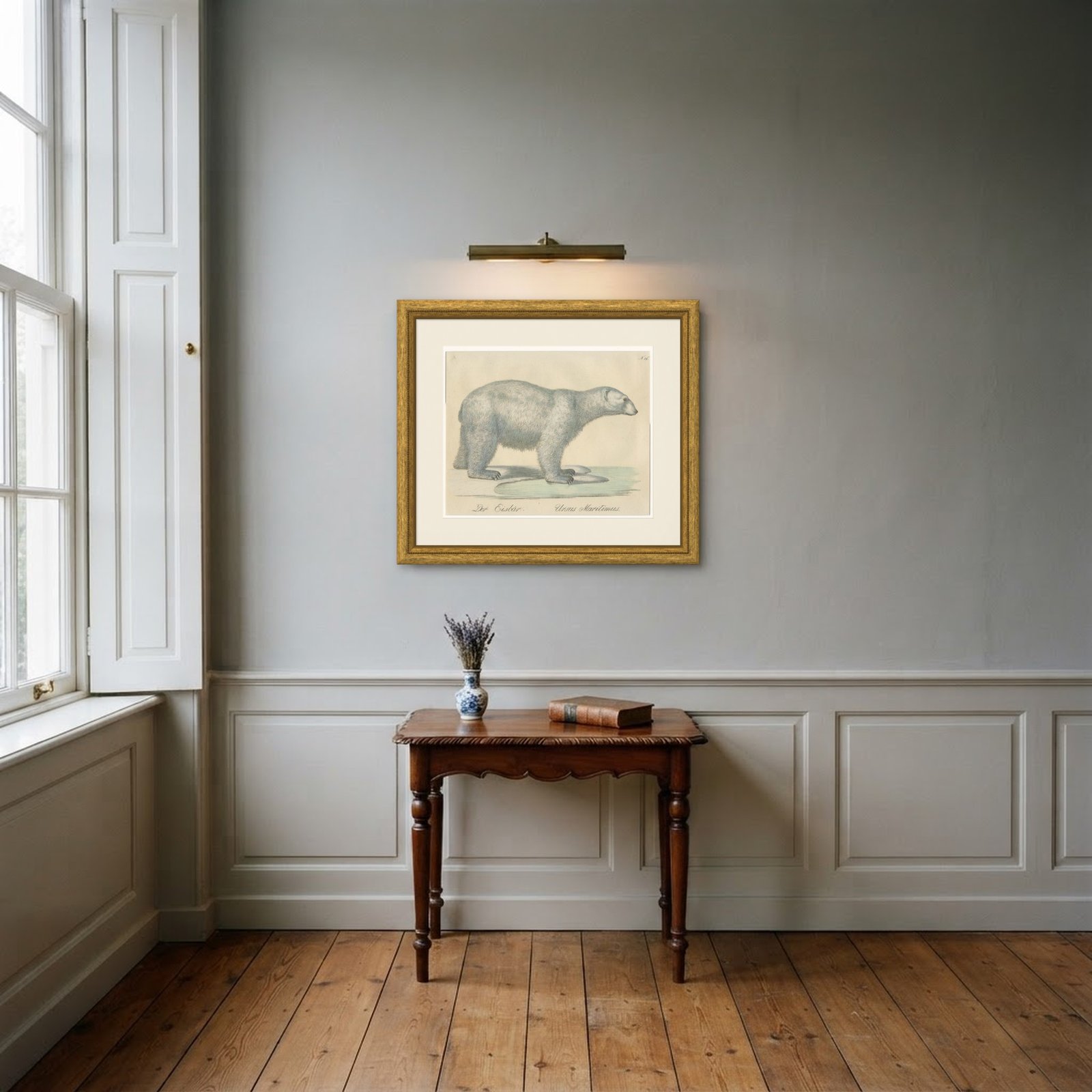
Frame and rooms are illustrations of how the print could look; the description says what is included.
The Polar Bear, Early Hand-Colored Brodtmann Lithograph, 1816
$765 (£575, €690)
Period original, not a reproduction.
Shipped from the Netherlands, flat or rolled, insured and tracked, worldwide. Returns accepted within 14 days.
- Date
- 1816
- Size
- 18.1 × 21.3 in (46 × 54 cm)
- Technique
- Lithograph
- Coloring
- Original hand color
- Condition
- Good. Scattered foxing in the margin. Clean, even paper tone in the margin.
- Period
- Early 19th century
- Section
- Mammals
- Reference
- BG-14460-2
What the condition grades mean
- Excellent
- Bright and clean, with no faults worth mentioning.
- Very good
- Only light signs of age, such as faint toning.
- Good
- Normal signs of age for a sheet of this period: toning, some foxing, small marks or neat old repairs.
- Fair
- Clear faults such as staining, tears or repairs, priced to match.
Every fault we see is written in the condition note, and the whole sheet is shown uncropped in the photos.
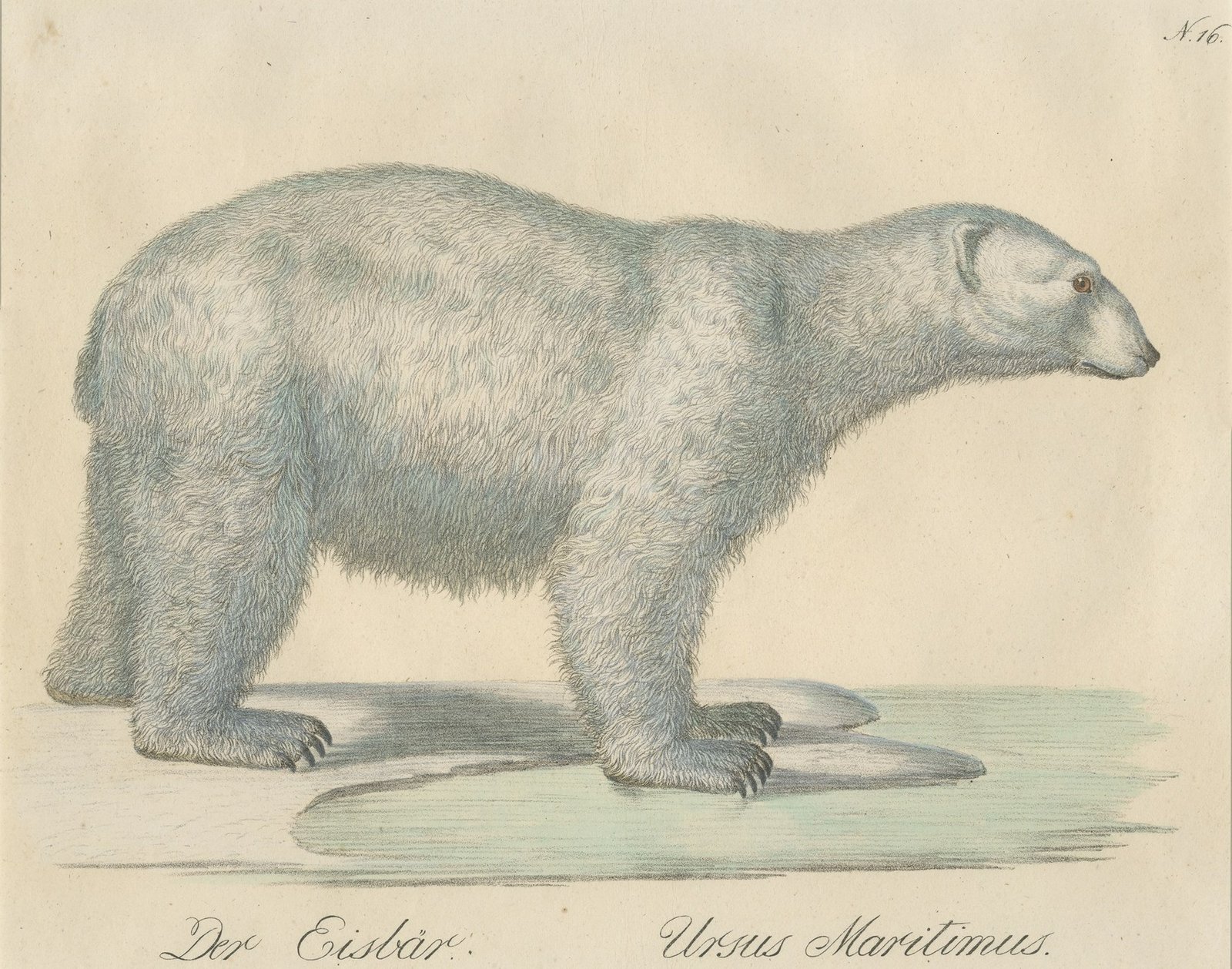
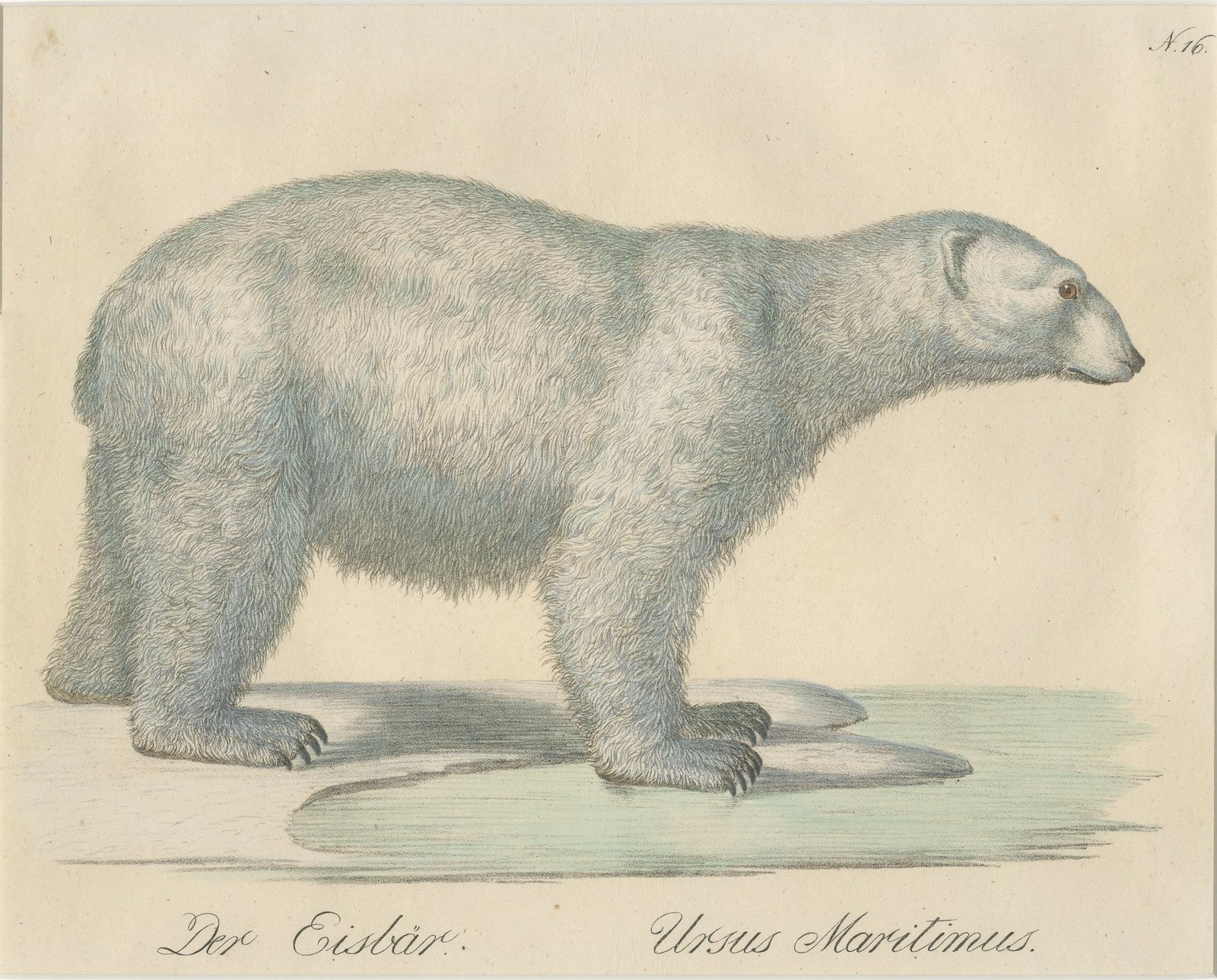
This original antique hand colored lithograph, The Polar Bear, was printed at Lindau in 1816 for Carl Joseph Brodtmann's Naturhistorische Bilder-Gallerie aus dem Thierreiche, one of the earliest illustrated natural histories produced in the medium. The sheet shows a polar bear walking to the right across pale blue ice, the long white coat tinted with the faintest gray and cream, the small dark eye and black nose the only strong accents in the sheet and the ice running out to a cold horizon.
This sheet was issued at Lindau in 1816 in Brodtmann's Naturhistorische Bilder-Gallerie aus dem Thierreiche. Carl Joseph Brodtmann, born at Ueberlingen in 1787, had set up as a lithographic printer while the process was still an experiment, and the Bilder-Gallerie is the book that made his name. He later moved to Zurich and produced the Schinz mammal plates.
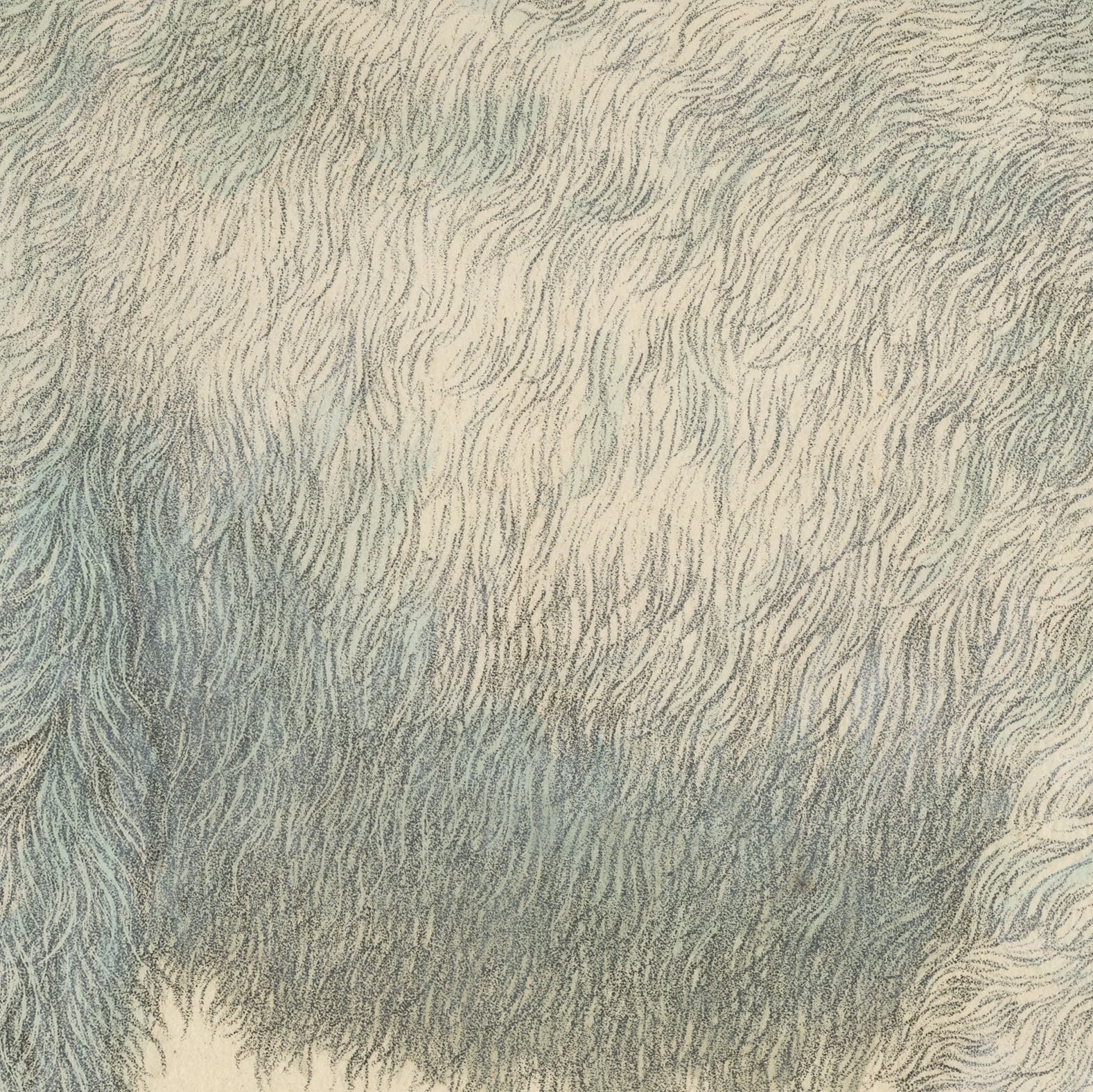
A polar bear drawn in 1816 was drawn from a skin or from a menagerie animal, because almost no European had seen one alive, and the restraint of the coloring here, white on white with the barest blue in the ice, is far more sophisticated than most natural history plates of the period. This is a stone lithograph with original hand coloring. The crayon work gives the long graded tones across the body of the animal, and the color has been laid over it by hand, thinly on the ground and more strongly on the animal itself. The lettering beneath the image is written on the stone in the same fine script used throughout the work. Framed simply and hung at eye level it makes a strong single image above a console or a chest, and a group of two or three from the same work gives a corridor or a stair the kind of natural history sequence that older country houses were hung with.
Scattered foxing in the margin. Clean, even paper tone in the margin.
This is an original antique print, not a modern reproduction. This item is sold unframed.