Close-ups
Framed and on the wall


Frame and rooms are illustrations of how the print could look; the description says what is included.
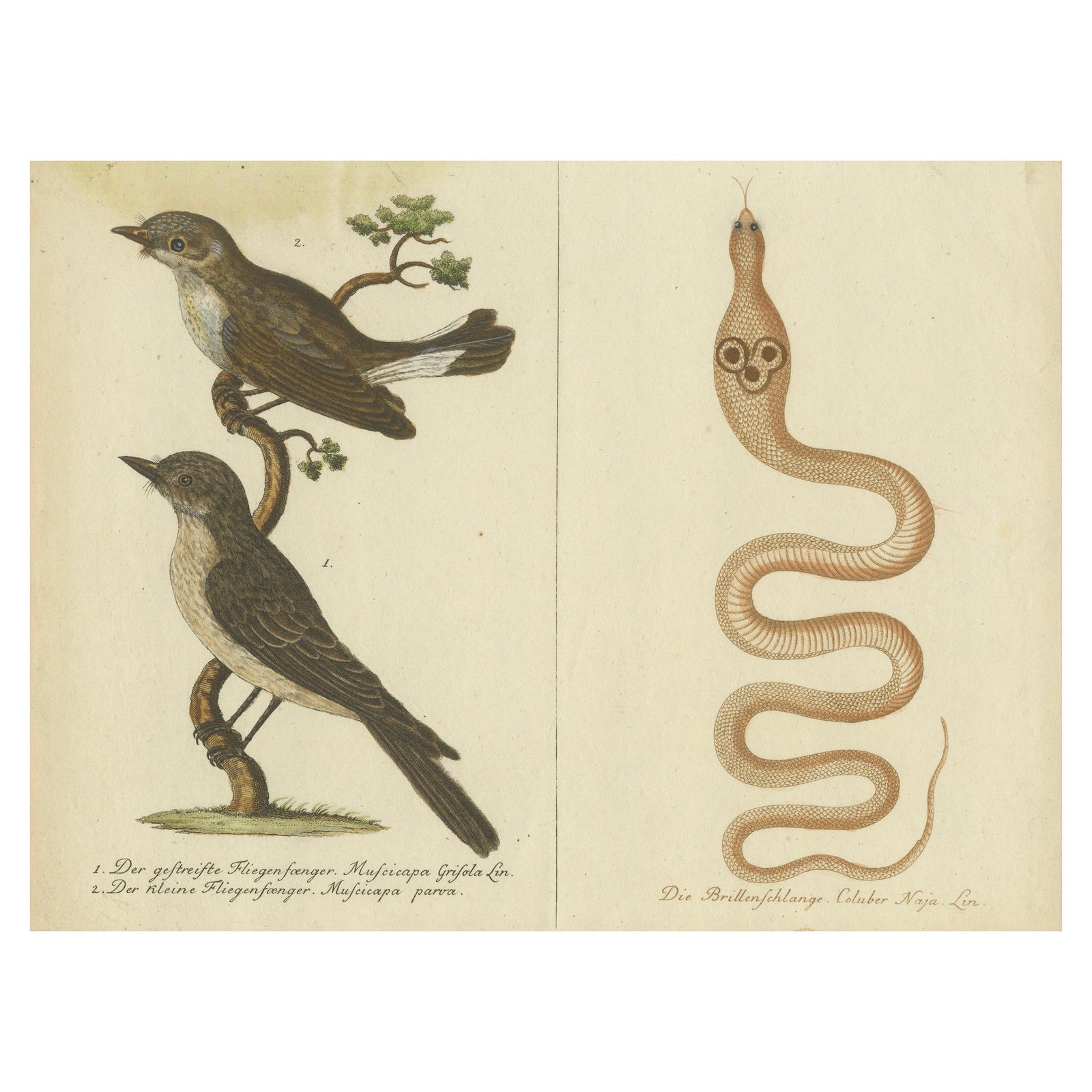
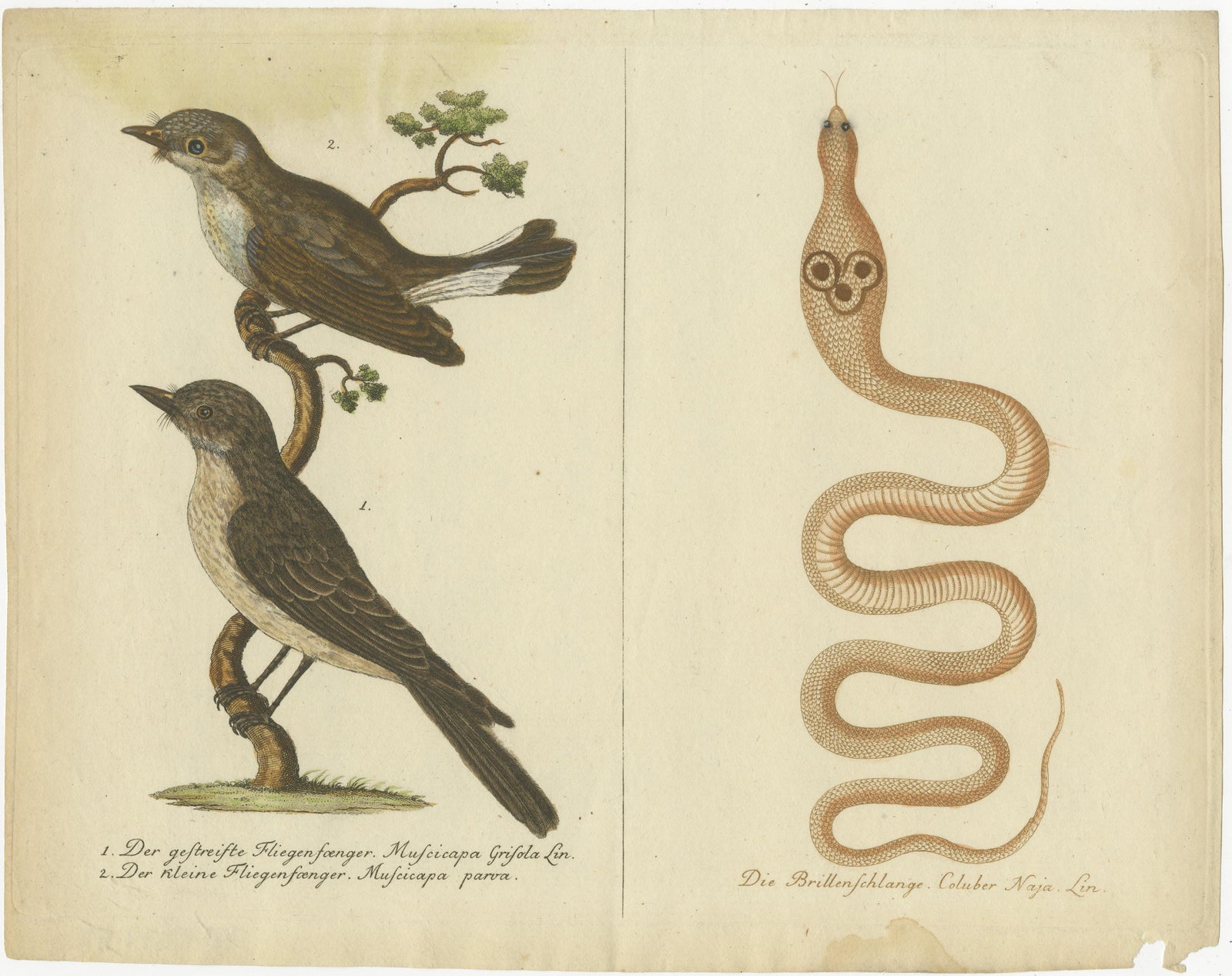
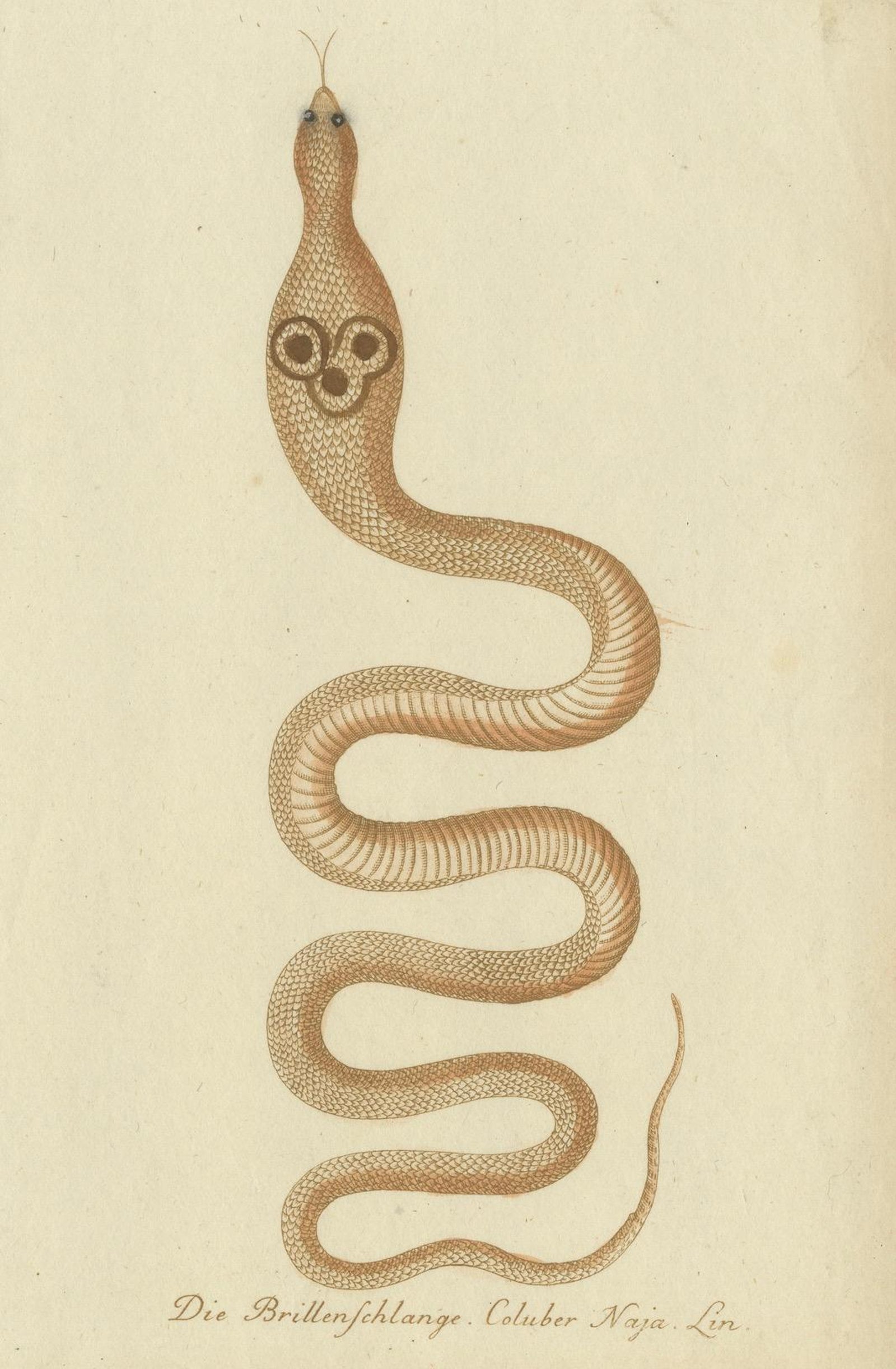
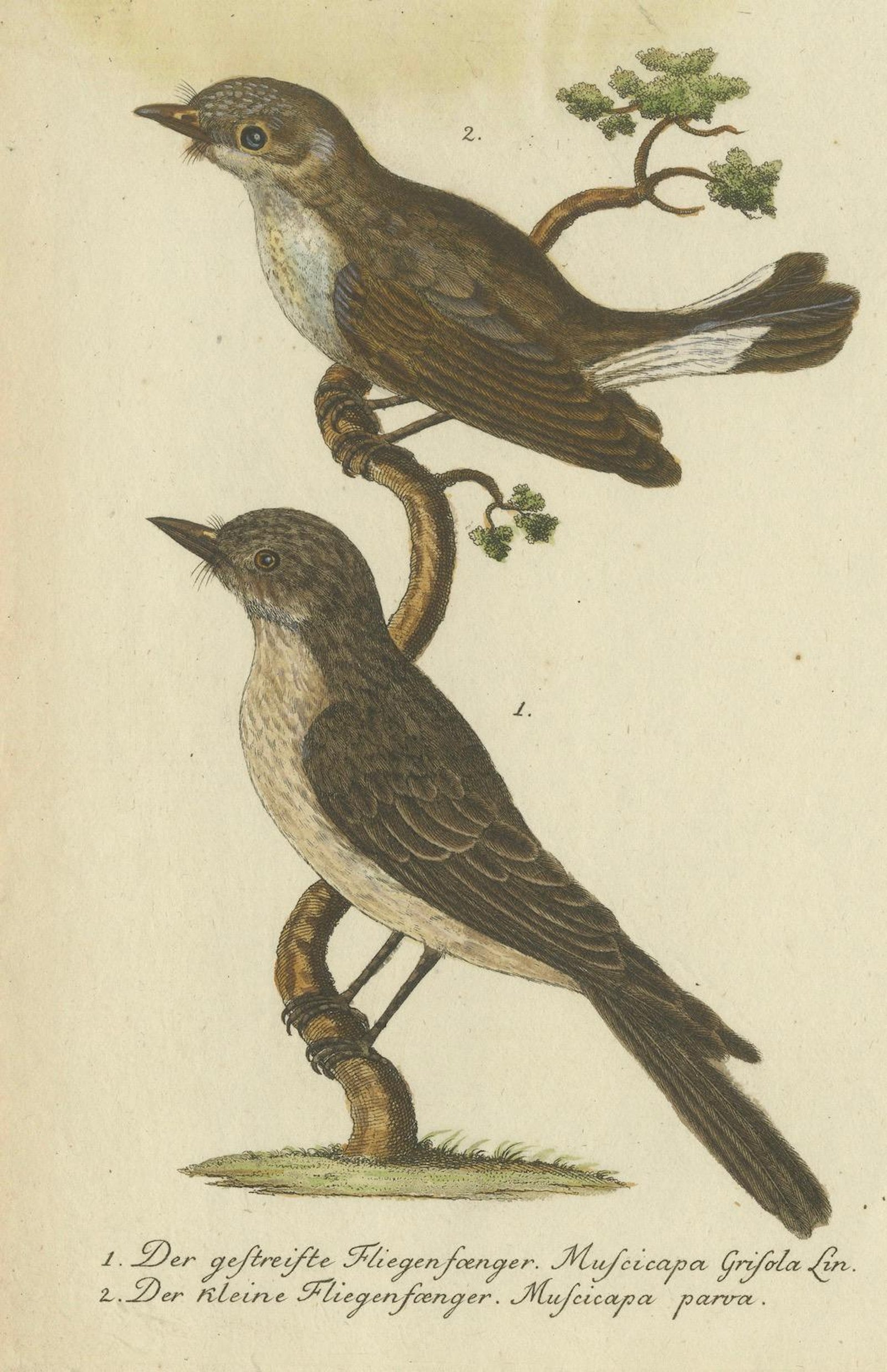
An 18th Century Study of Flycatchers and the Indian Cobra, 1780
$235 (£180, €210)
Period original, not a reproduction.
Shipped from the Netherlands, flat, insured and tracked, worldwide. Returns accepted within 14 days.
- Date
- 1780
- Size
- 8.4 × 10.4 in (21.3 × 26.5 cm)
- Condition
- Good, given age. Some soiling but a bit more above the top bird. General age-related toning, creasing and/or occasional minor defects from handling. Please study scans carefully.
- Period
- 18th century
- Section
- Reptiles and amphibians
- Reference
- f_41193652
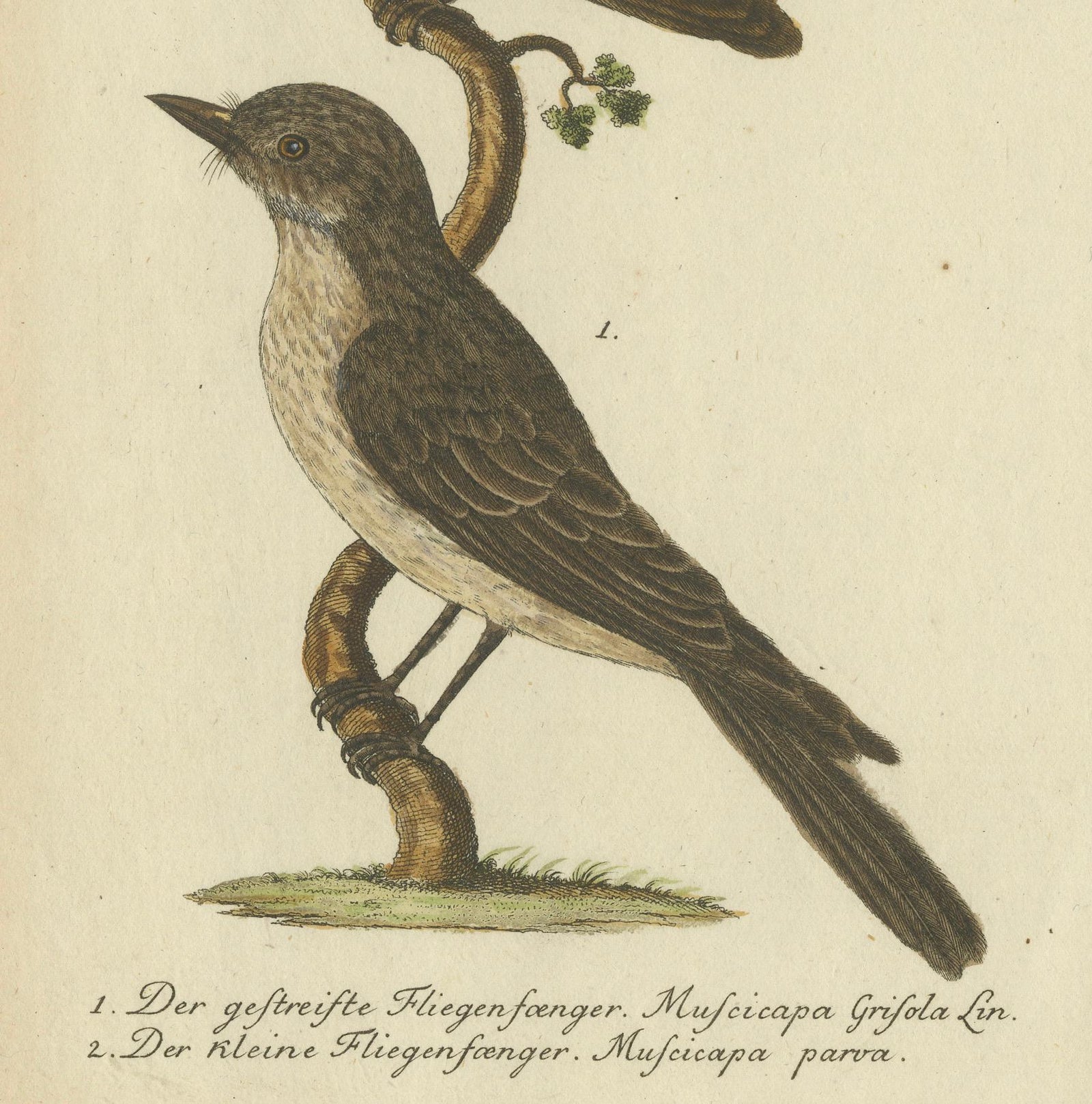
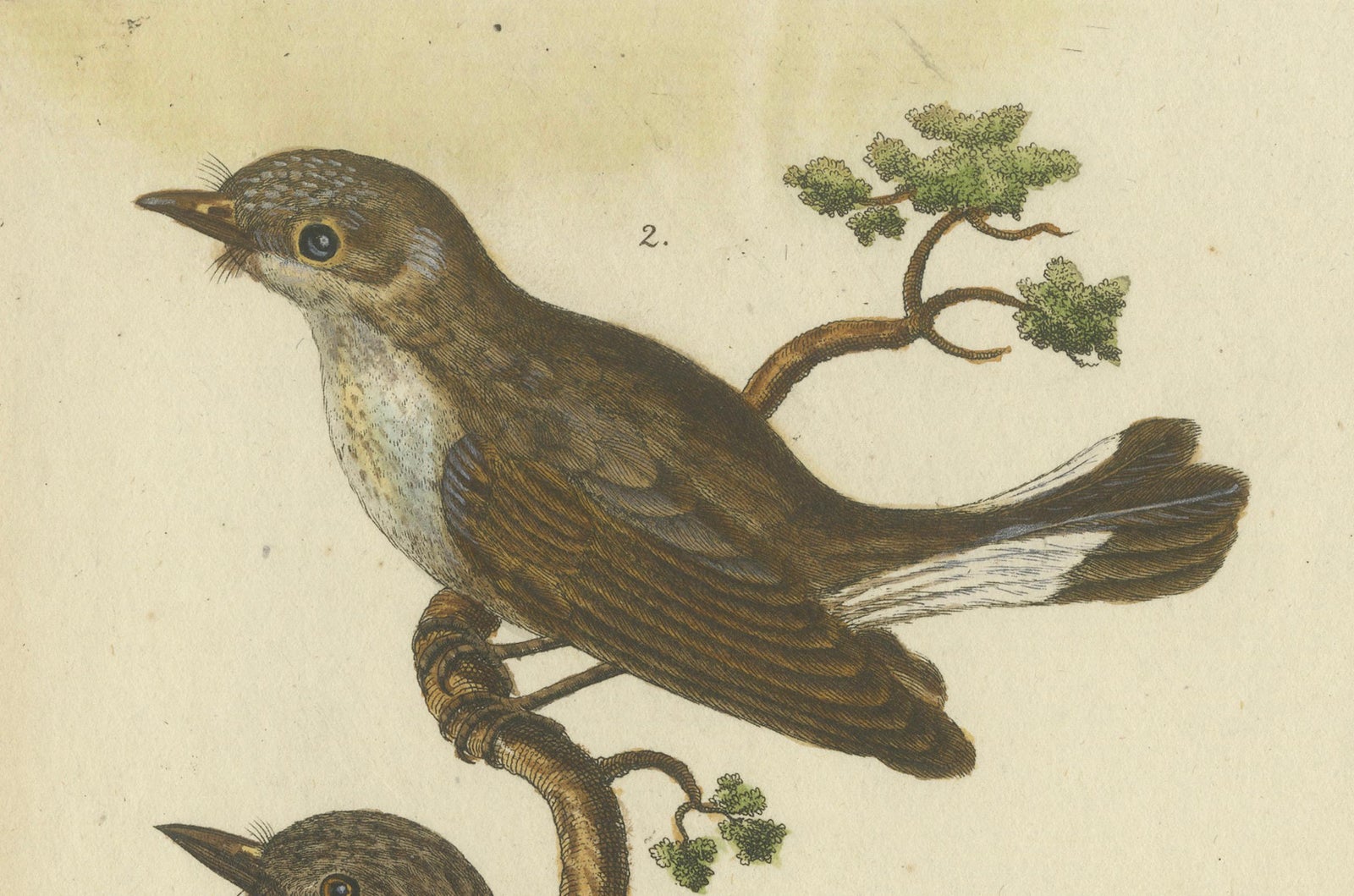
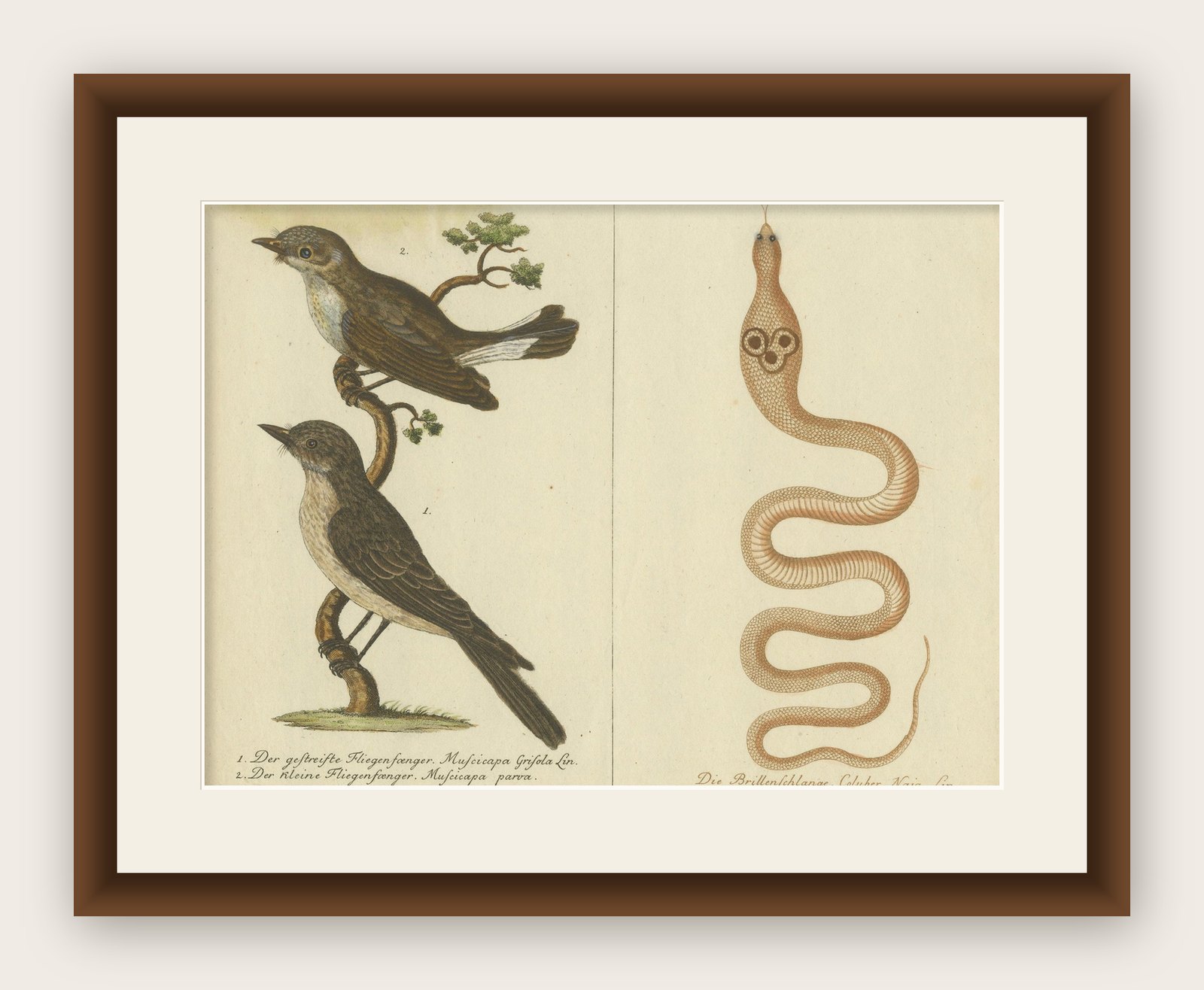
This hand-colored engraving contains images of two bird species and a snake, each labeled in German with their scientific names. Here are the translations and descriptions:
Animal Titles and Descriptions
1. "Der größte Fliegenfänger, Muscicapa grisola Linn."
- Translation: The largest flycatcher, *Muscicapa striata* (Spotted Flycatcher).
- Description: This bird is depicted perched, showcasing its relatively plain appearance with a streaked, grey-brown coloration that is typical for this species. Spotted Flycatchers are known for their inconspicuous plumage but sharp hunting skills.
2. "Der kleine Fliegenfänger, Muscicapa parva."
- Translation: The small flycatcher, *Muscicapa parva* (Red-breasted Flycatcher).
- Description: This bird is illustrated slightly smaller in size, with a more distinct coloration featuring darker and lighter shades possibly indicating the reddish breast which is characteristic of this species during the breeding season. This species is known for its vibrant throat in males and more subdued tones in females.
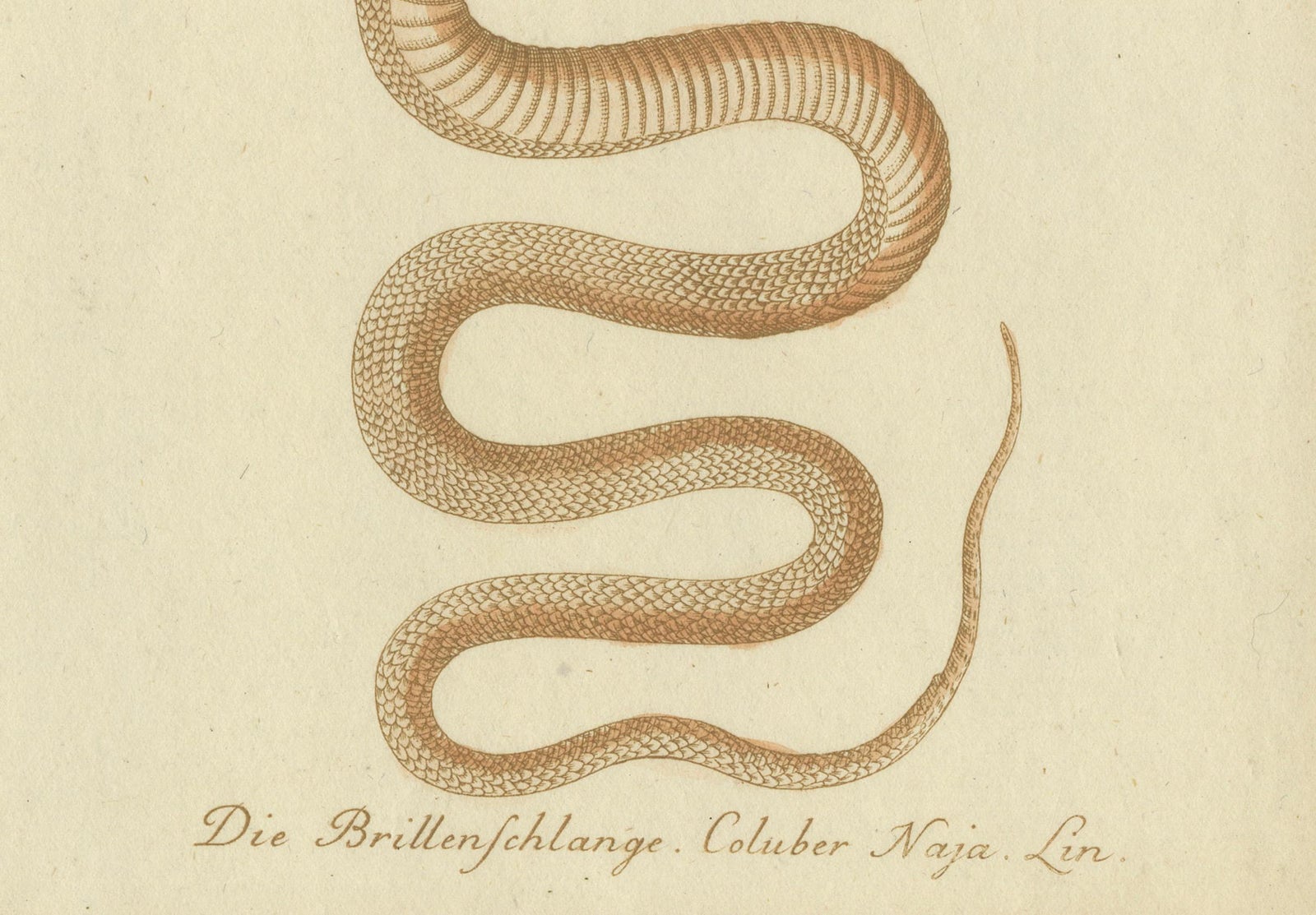
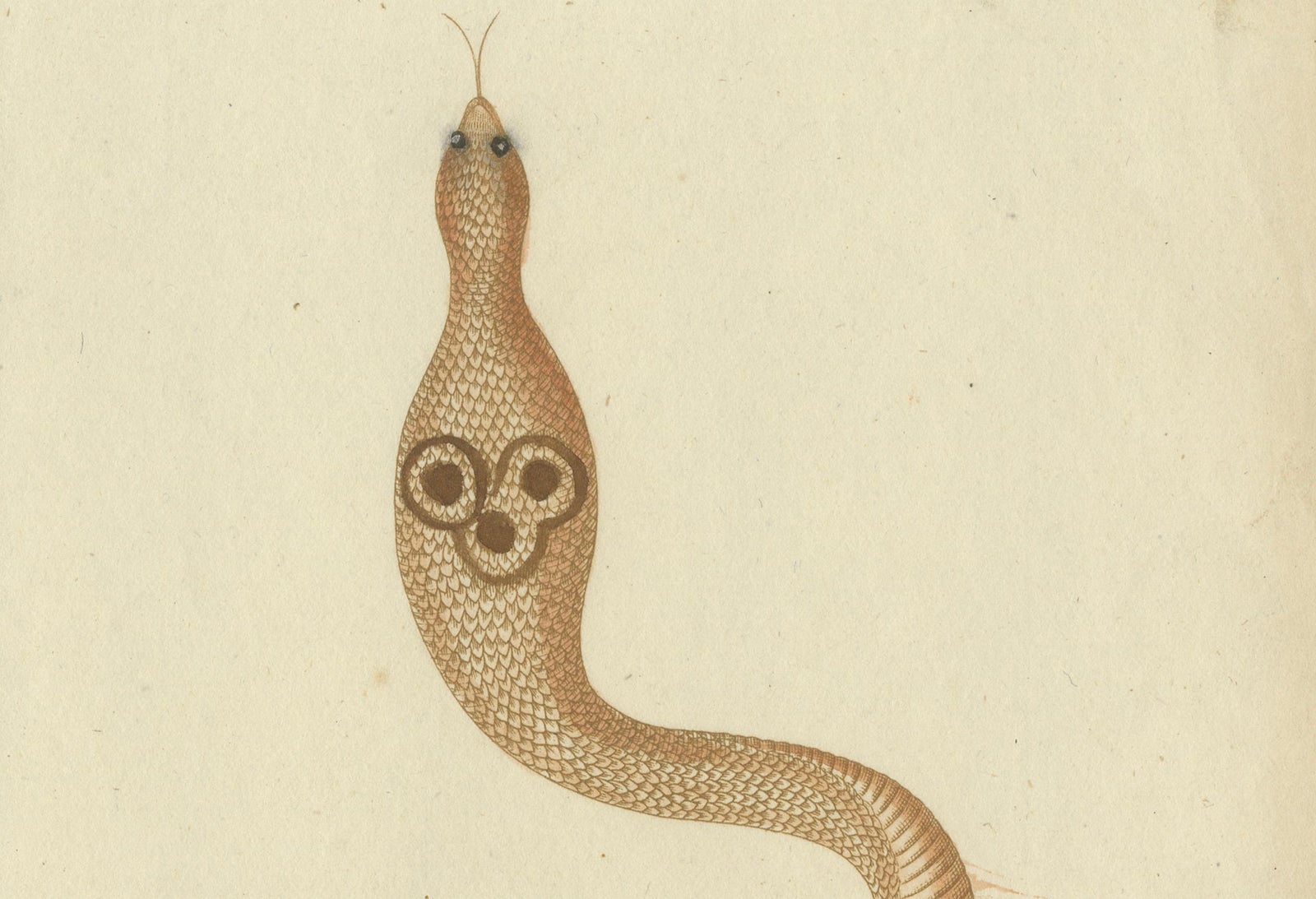
3. "Die Brillenschlange, Coluber Naja."
- Translation: The spectacle snake, *Naja naja* (Indian Cobra).
- Description: This snake is shown in a classic serpentine pose with its hood expanded, displaying the distinctive "spectacle" pattern which gives it its common name, the Indian Cobra. This pattern is crucial for identifying the species and is a defensive display meant to intimidate threats.
Maker of the Engravings
- Artist: The illustrations are marked with "I.Ib. del." and "I.C. Bock fc.", suggesting the artists involved in the drawing (designated by "del." for delineavit, meaning "drew") and the engraver ("fc." for fecit, meaning "made" or "did"). These markings indicate the individual who created the original drawing and the one who engraved the plate, respectively.
- Style and Technique: The style of the engravings is typical of scientific illustrations from the 18th and 19th centuries, combining high accuracy with artistic quality to aid in species identification and study. The hand-coloring adds life-like detail and appeal, characteristic of natural history illustrations from this period used in scientific documentation and educational publications.
These images likely come from a comprehensive work on natural history, aimed at both documenting biodiversity and providing educational content for scholars and the public, reflecting the era's dedication to exploring and cataloging the natural world. Such illustrations were crucial for spreading knowledge about species from different parts of the globe during a time when long-distance travel was limited for most people.