Close-ups
Framed and on the wall
Frame and rooms are illustrations of how the print could look; the description says what is included.
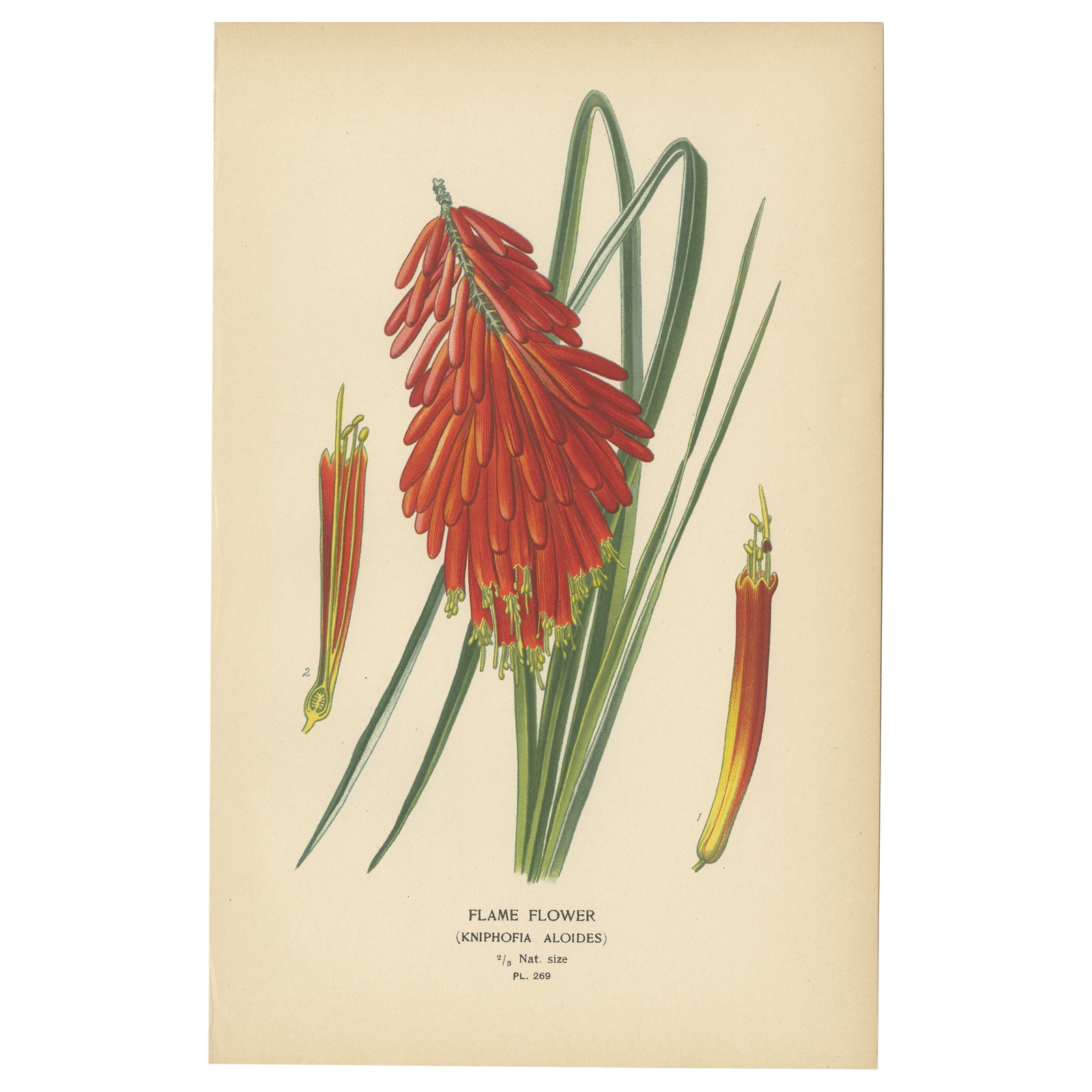
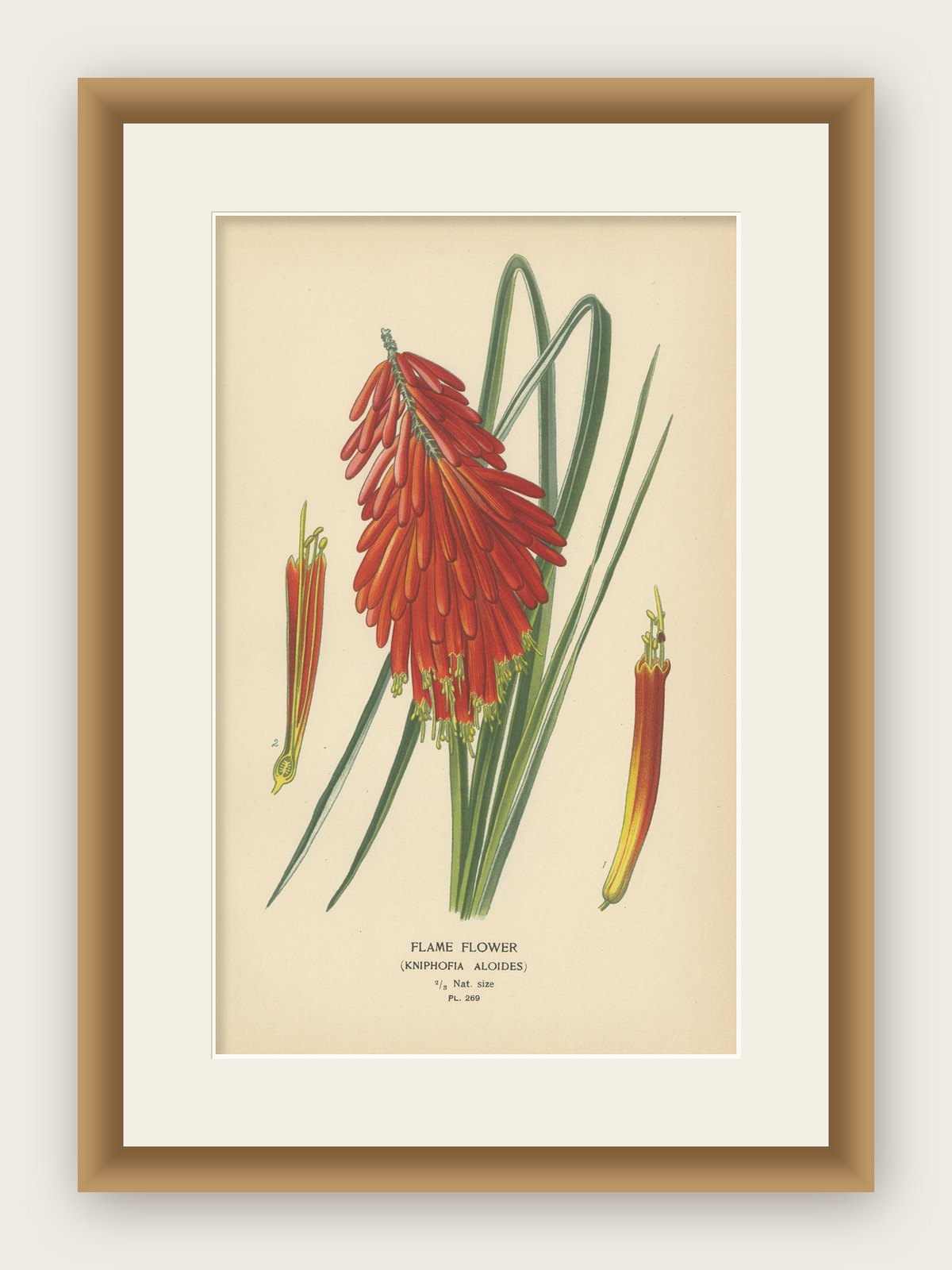
1897 Chromolithograph of the Flame Flower from Step's Botanical Collection
$155 (£120, €140)
Period original, not a reproduction.
Shipped from the Netherlands, flat, insured and tracked, worldwide. Returns accepted within 14 days.
- Date
- 1897
- Size
- 9.4 × 6 in (23.8 × 15.3 cm)
- Condition
- Very good, given age. General age-related toning and/or occasional minor defects from handling. Please study scan carefully.
- Period
- Late 19th century
- Section
- Botanical
- Reference
- f_41424372
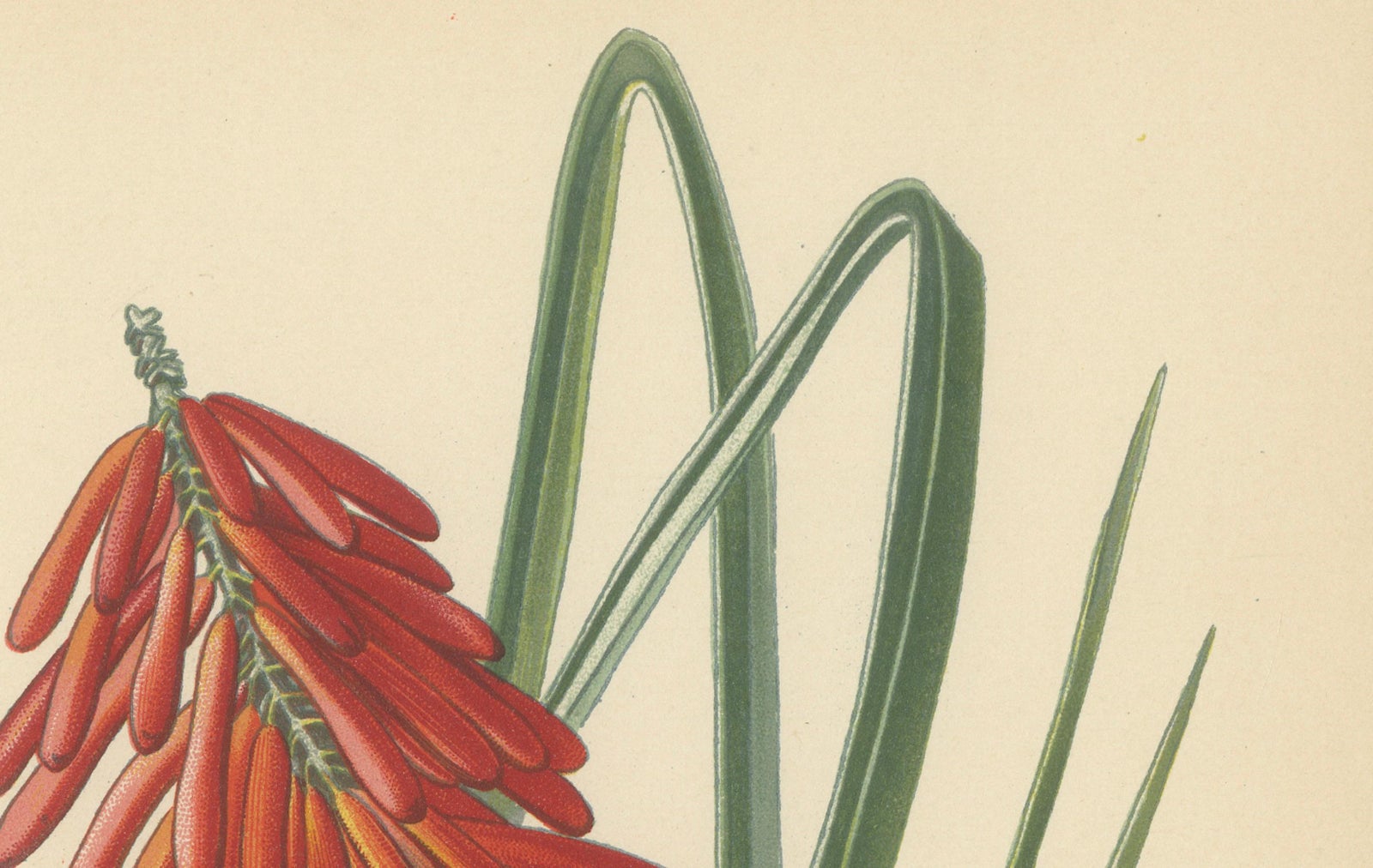
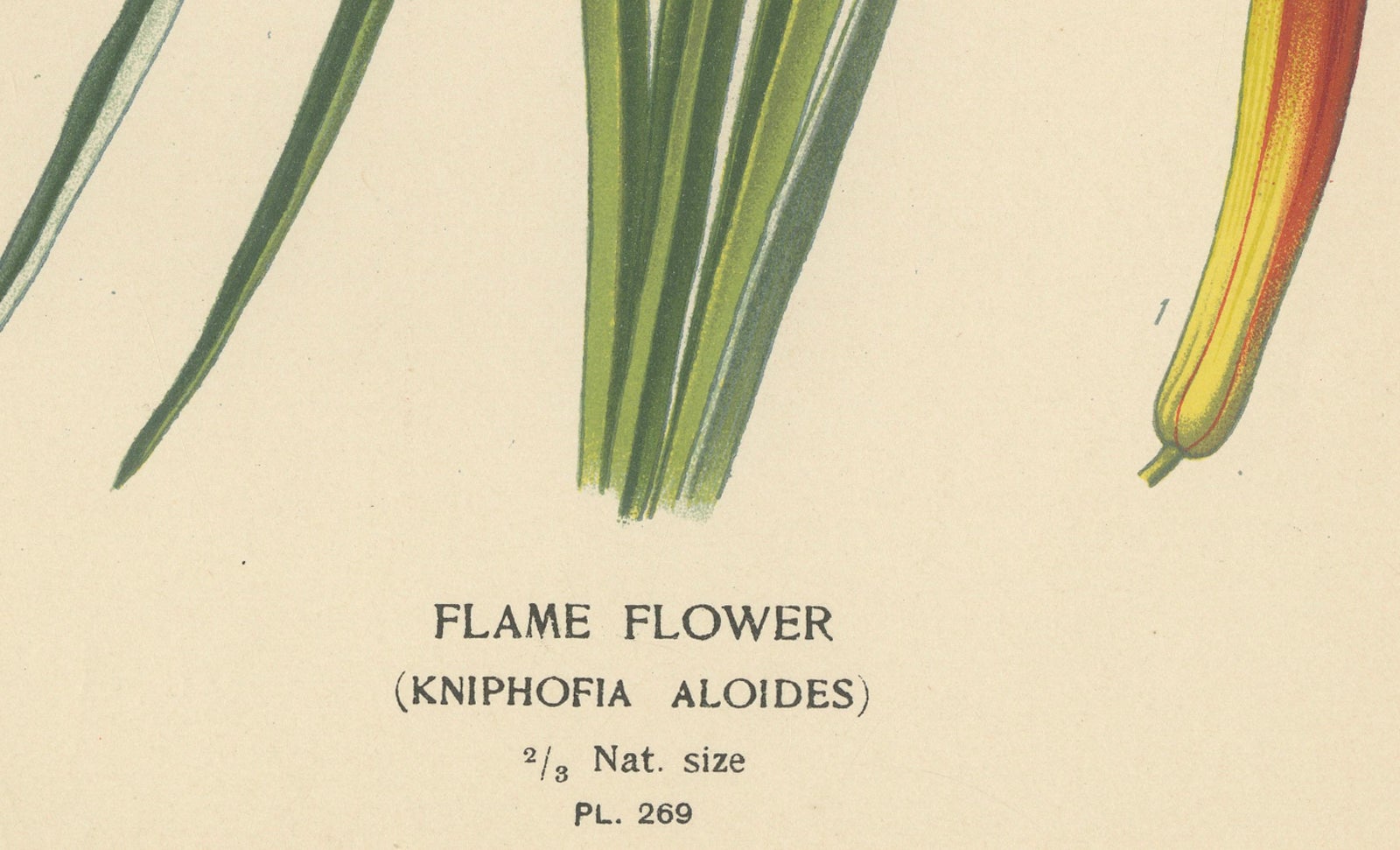
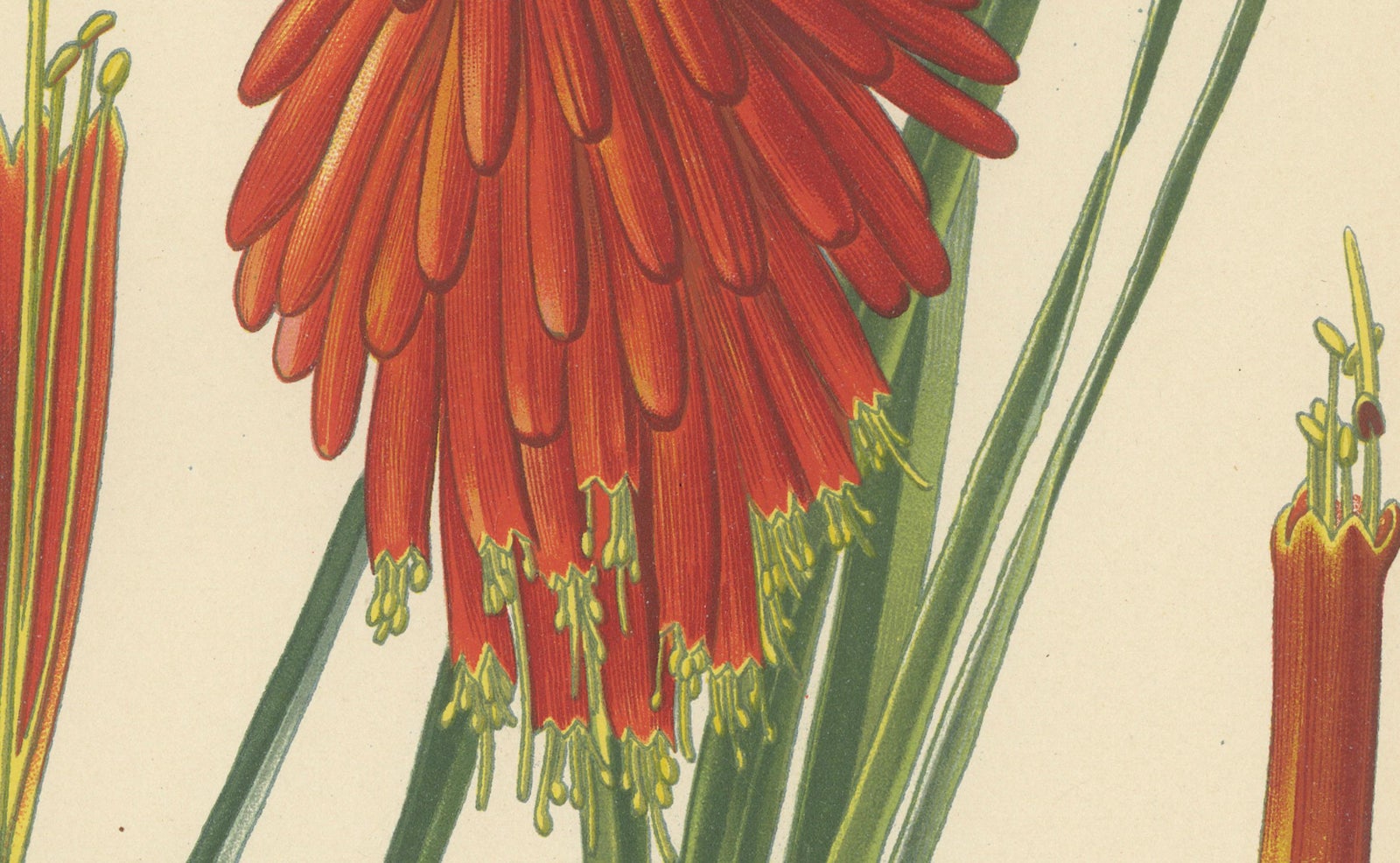
The print features Kniphofia aloides, commonly known as the Flame Flower or Red Hot Poker. This illustration is from Edward Step's "Favourite Flowers of Garden and Greenhouse," published by Frederick Warne & Co. in 1897.
Description of Kniphofia aloides:
- Botanical Characteristics: Kniphofia aloides is known for its striking, upright flower spikes which are densely packed with tubular flowers. The flowers typically exhibit a gradient of colors, ranging from fiery red at the top to a vibrant yellow at the base, resembling a flaming torch.
- Growth and Care: This perennial is appreciated for its hardiness and its ability to thrive in a variety of garden settings. It prefers full sun and well-drained soil, making it a popular choice for borders and ornamental gardens.
Special Features and Cultural Significance:
The Flame Flower is especially valued for its dramatic appearance and its role in attracting pollinators such as hummingbirds and bees. Its long blooming period and structural height make it an excellent focal point in garden designs. The plant's resilience and minimal care requirements also contribute to its popularity among gardeners.
This print from Edward Step's publication serves as a detailed botanical representation, highlighting the beauty and distinctive features of the Flame Flower. The vivid chromolithographic technique used captures the bright, intense colors of the flower, making it not only a useful educational tool but also a visually appealing piece of art.