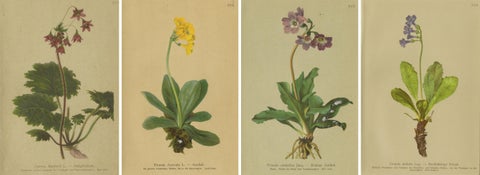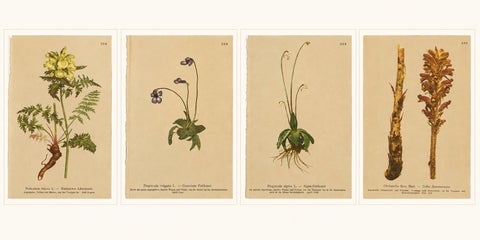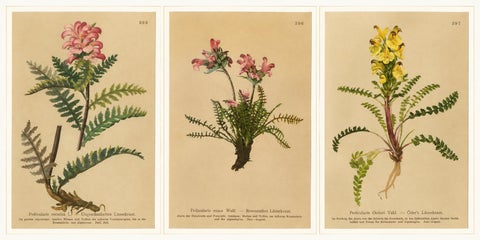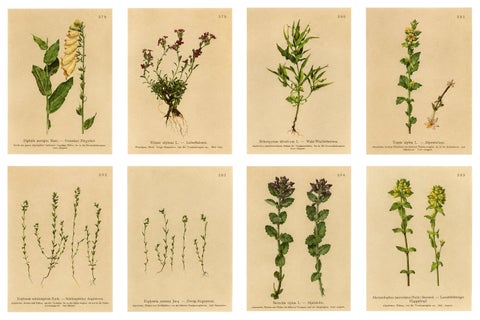
Close-ups
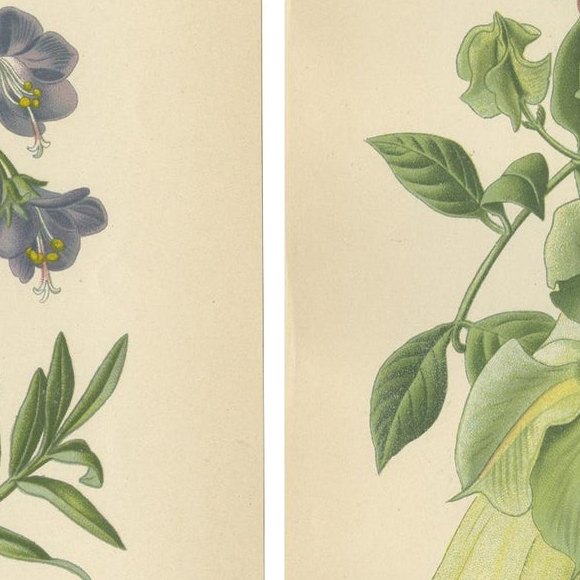
Framed and on the wall
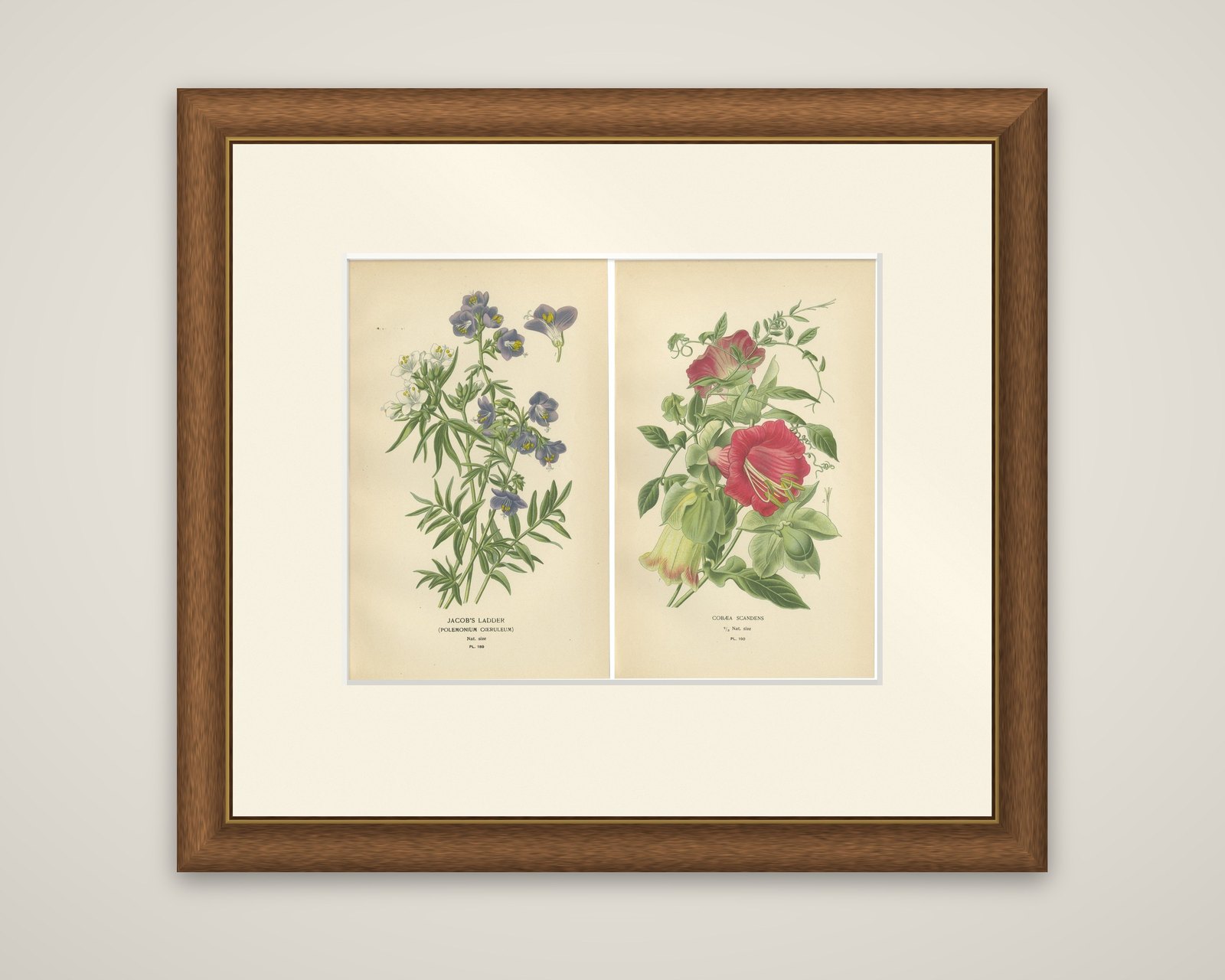

Frame and rooms are illustrations of how the print could look; the description says what is included.
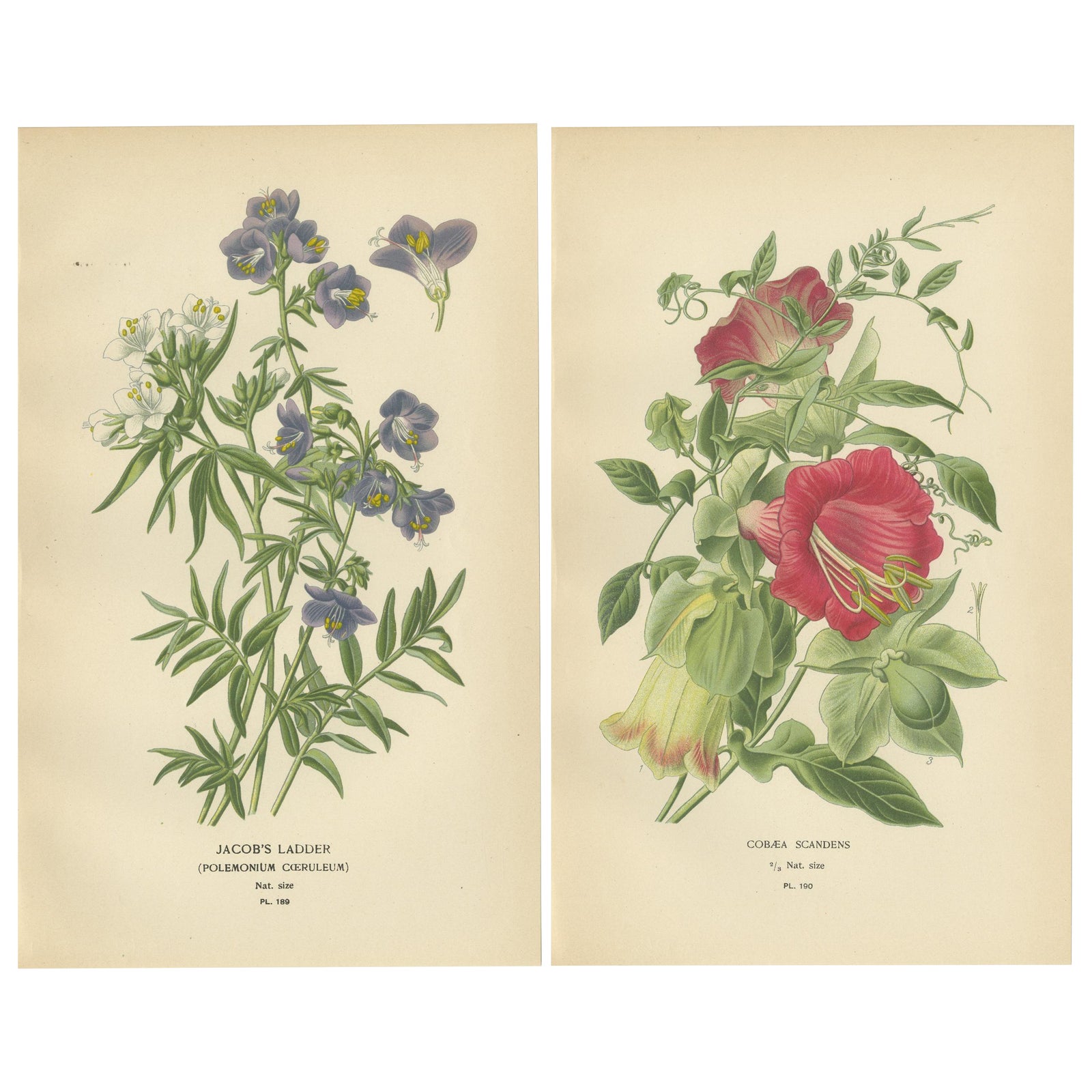
1897 Botanical Prints, Jacob’s Ladder and Cup-and-Saucer Vine
£195£13530% off ($175, €161)
Period original, not a reproduction.
Shipped from the Netherlands, flat or rolled, insured and tracked, worldwide. Returns accepted within 14 days.
- Date
- 1897
- Size
- 9.4 × 6.1 in (24 × 15.5 cm)
- Condition
- Good. These 1897 botanical prints are well-preserved with vibrant colors, minimal edge yellowing, and crisp details, making them stunning pieces for display or collection.
- Period
- Late 19th century
- Section
- Botanical
- Reference
- f_42746172
- Color
- Hand colored
What the condition grades mean
- Excellent
- Bright and clean, with no faults worth mentioning.
- Very good
- Only light signs of age, such as faint toning.
- Good
- Normal signs of age for a sheet of this period: toning, some foxing, small marks or neat old repairs.
- Fair
- Clear faults such as staining, tears or repairs, priced to match.
Every fault we see is written in the condition note, and the whole sheet is shown uncropped in the photos.
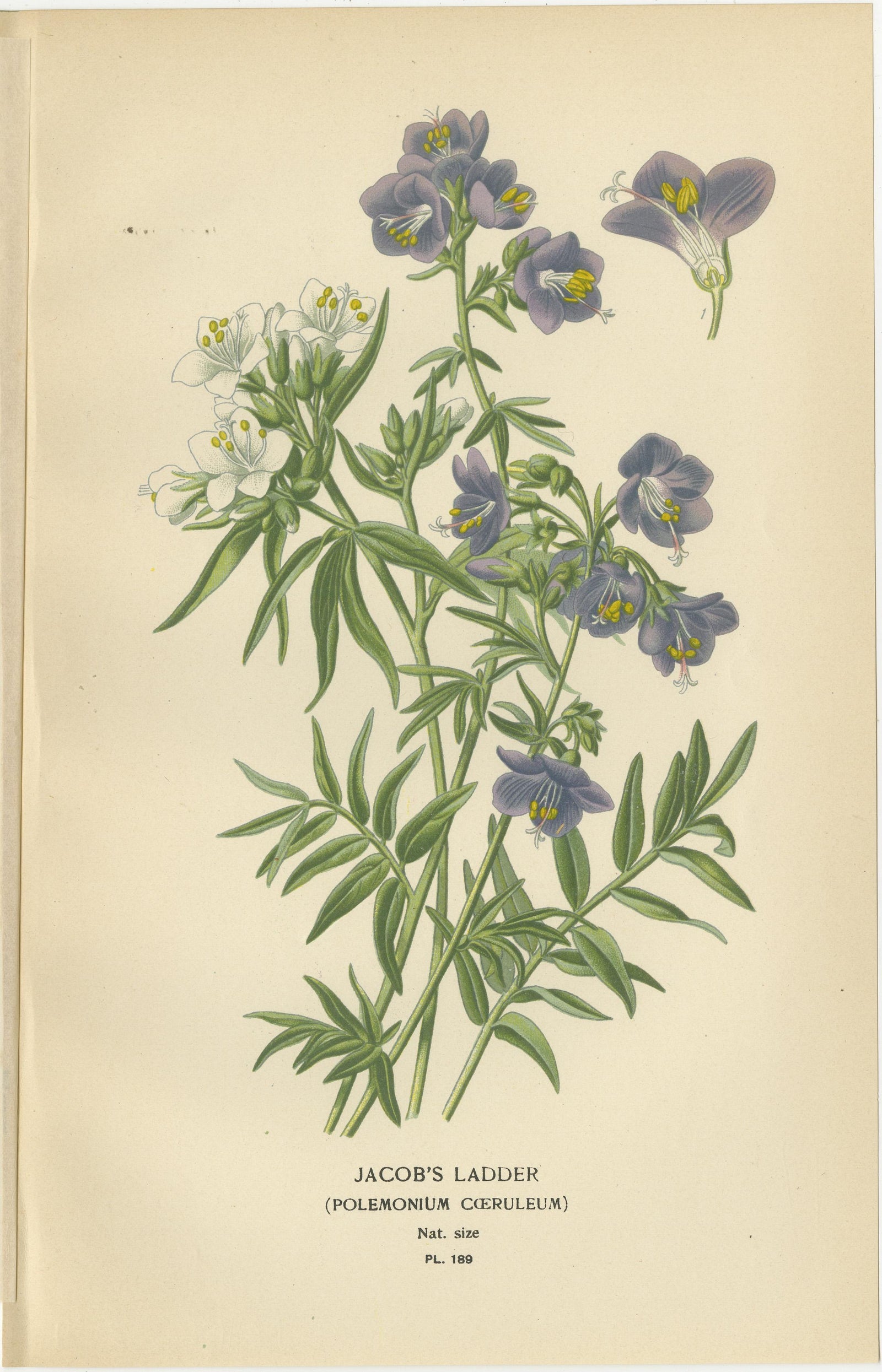
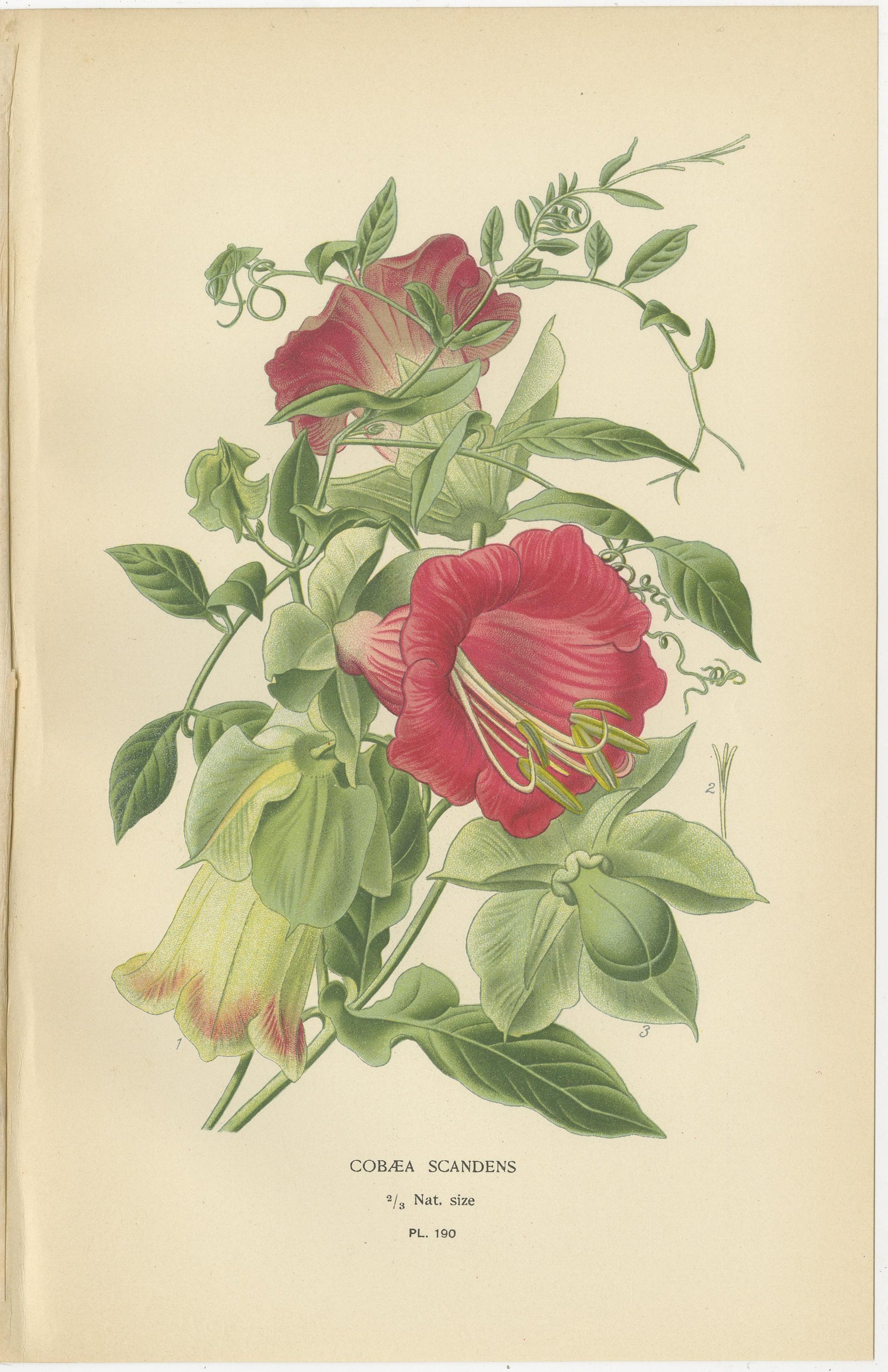
Jacob's Ladder and Cobaea scandens, a pair of original color-printed lithographs from Favorite Flowers of Garden and Greenhouse, 1897. Each plate is on its own sheet, and each has the plant name and "Nat. size" in small capitals below the image.
The left plate shows Jacob's ladder (Polemonium caeruleum), a spray of slender stems with narrow pinnate leaves in fresh green and clusters of violet-blue flowers with yellow stamens, with a few white flowers at the upper left and a single detached bloom at the top. The right plate shows the cup-and-saucer vine, Cobaea scandens, in two nodding flowers of deep rose-crimson with long pale stamens and a pale green and pink-tinged bud below, set among broad green leaves and curling tendrils.
Cobaea scandens is a climber native to Mexico and was widely grown in European gardens and greenhouses, while Jacob's ladder is a hardy perennial of Europe and Asia, so the pair mixes an American plant with an Old World one.