Close-ups
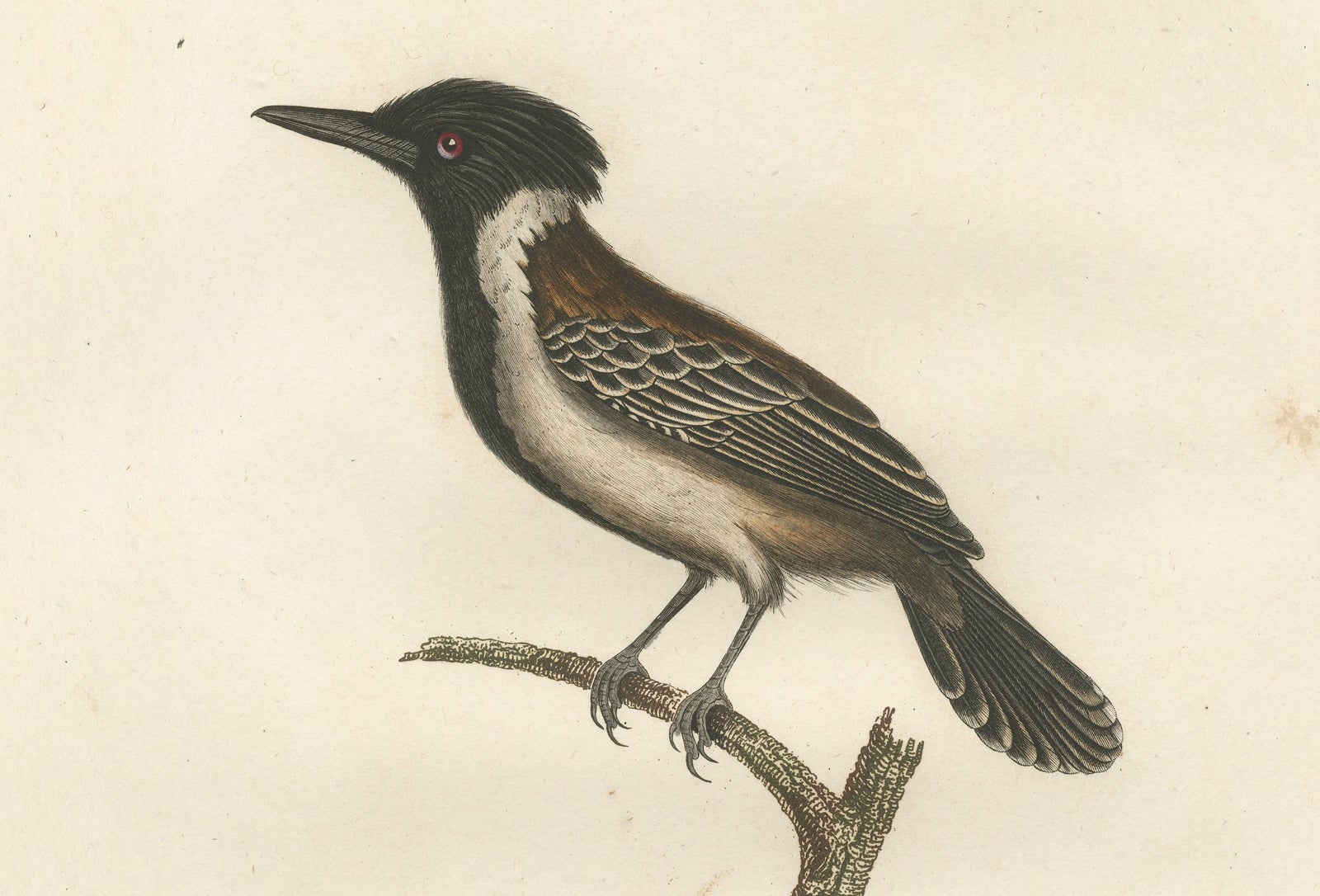
1807 Eastern Kingbird Illustration - 'Le Tyran à huppe noire' Handcolored Print
£340 ($445, €400)
Period original, not a reproduction.
Shipped from the Netherlands, flat, insured and tracked, worldwide. Returns accepted within 14 days.
- Date
- 1807
- Size
- 20.3 × 13.5 in (51.5 × 34.4 cm)
- Condition
- Good. General age-related toning. Minor wear and foxing, blank verso. Please study image carefully.
- Period
- Early 19th century
- Section
- Birds
- Reference
- f_39075792
What the condition grades mean
- Excellent
- Bright and clean, with no faults worth mentioning.
- Very good
- Only light signs of age, such as faint toning.
- Good
- Normal signs of age for a sheet of this period: toning, some foxing, small marks or neat old repairs.
- Fair
- Clear faults such as staining, tears or repairs, priced to match.
Every fault we see is written in the condition note, and the whole sheet is shown uncropped in the photos.
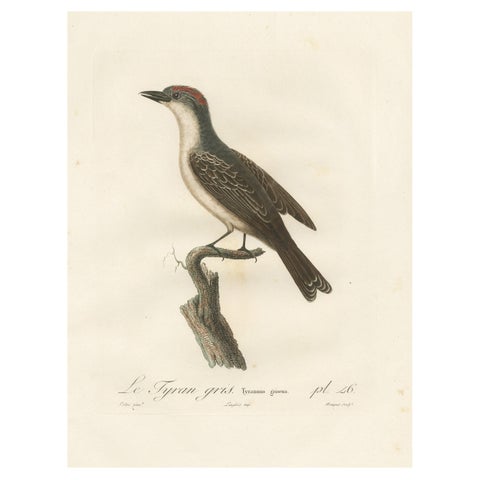
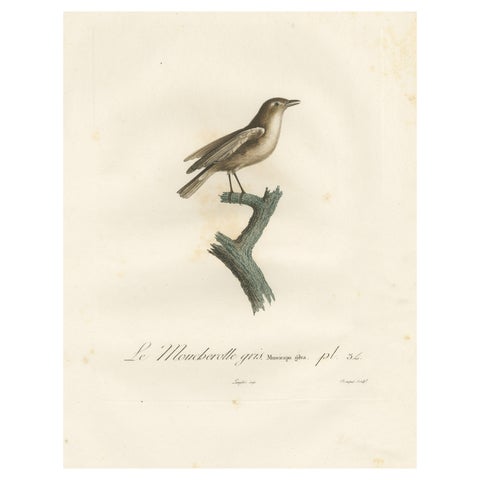
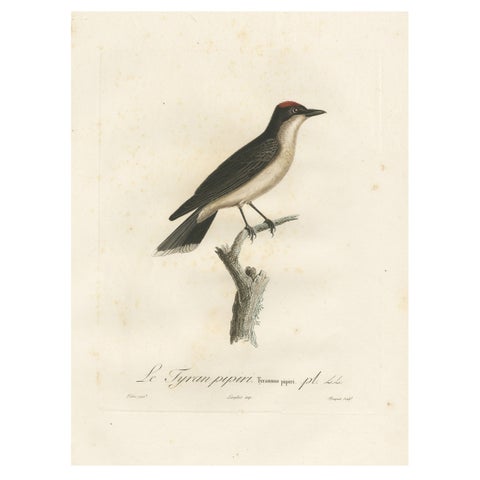
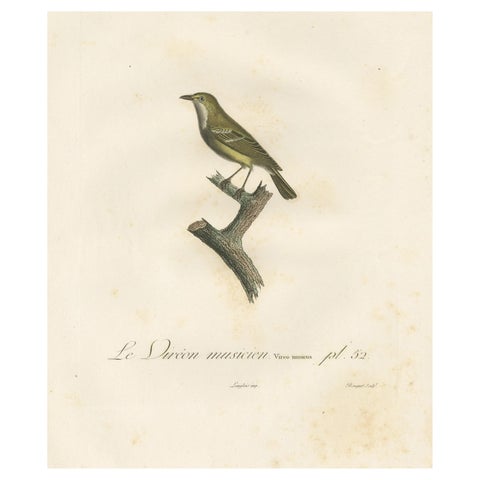
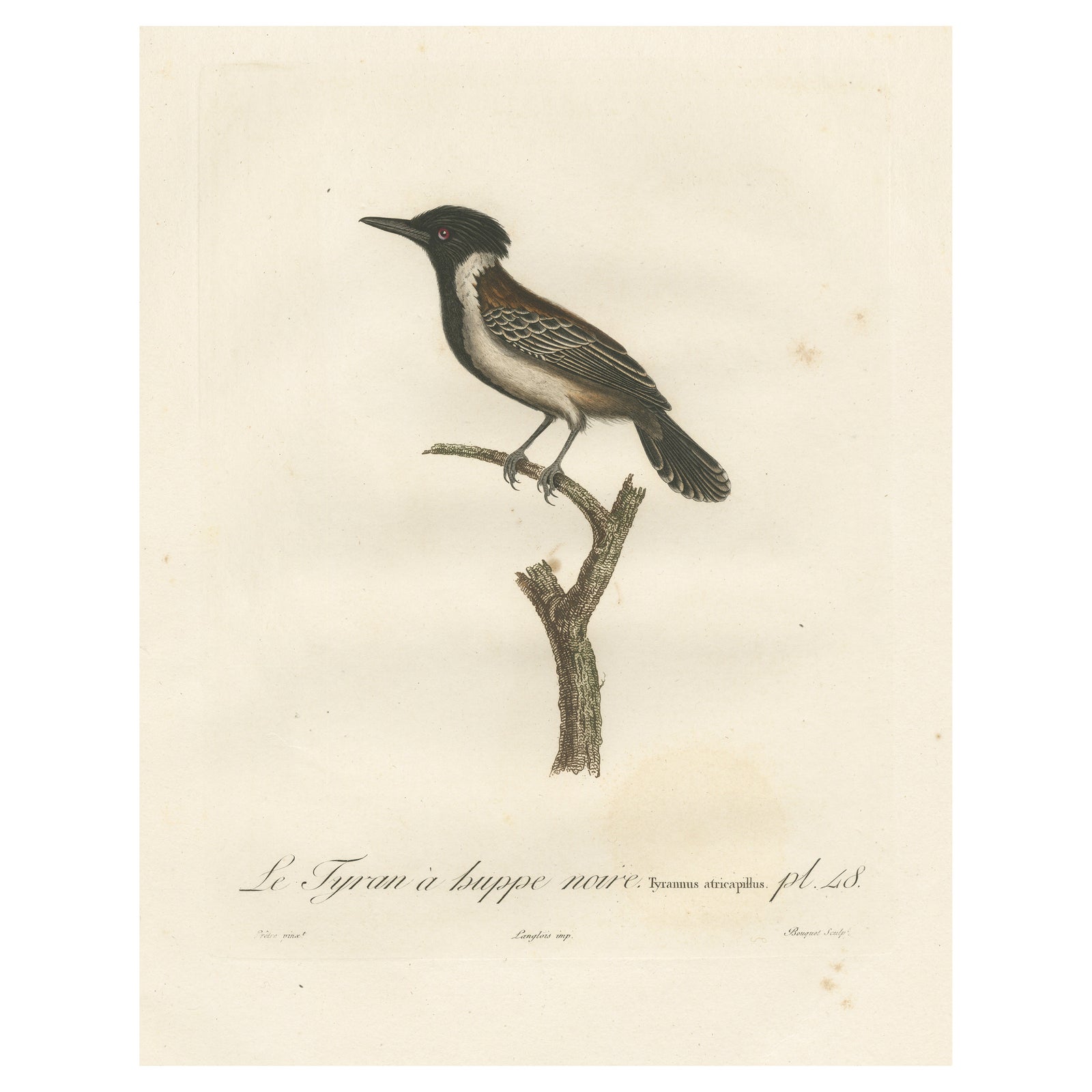
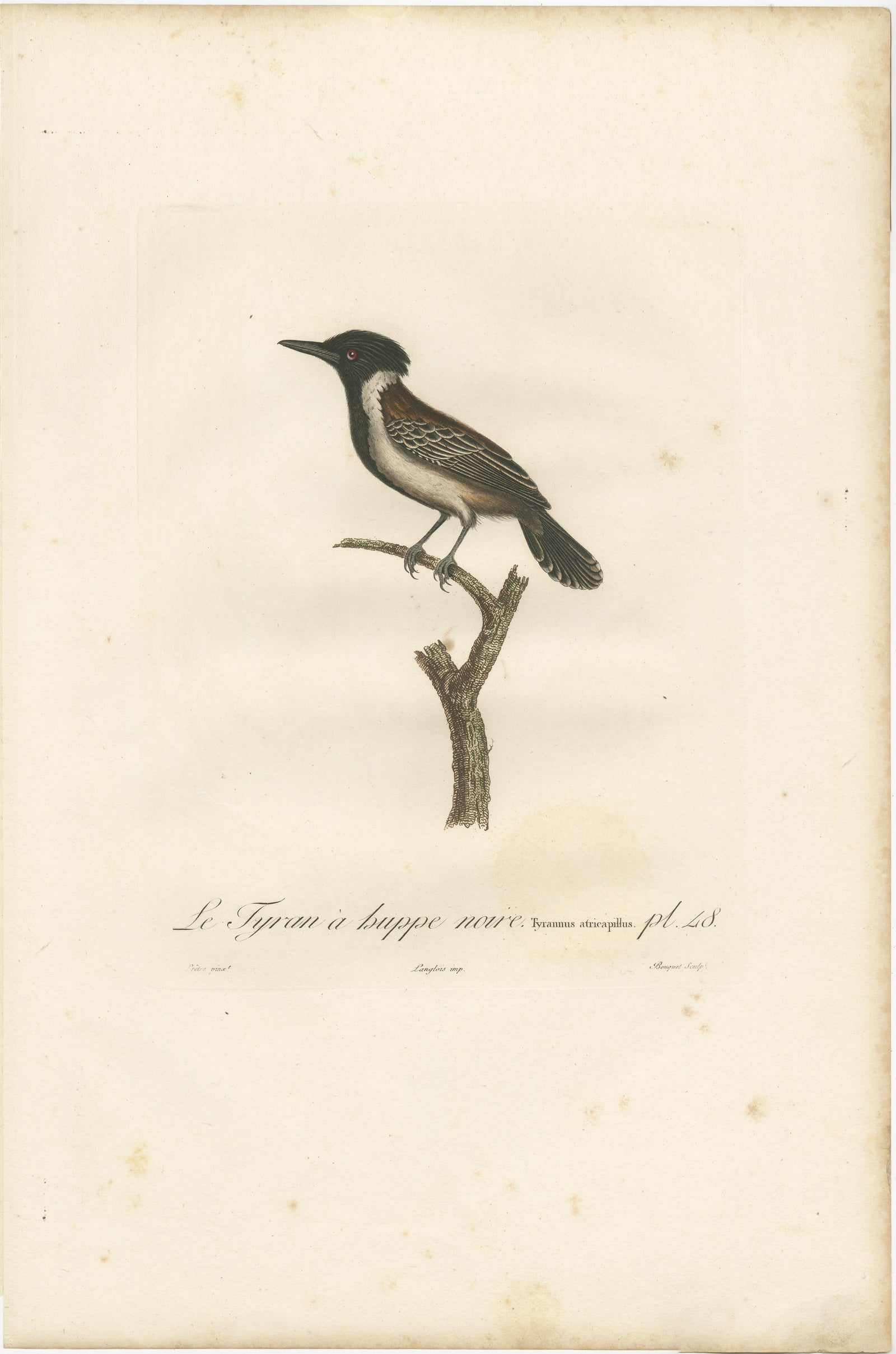
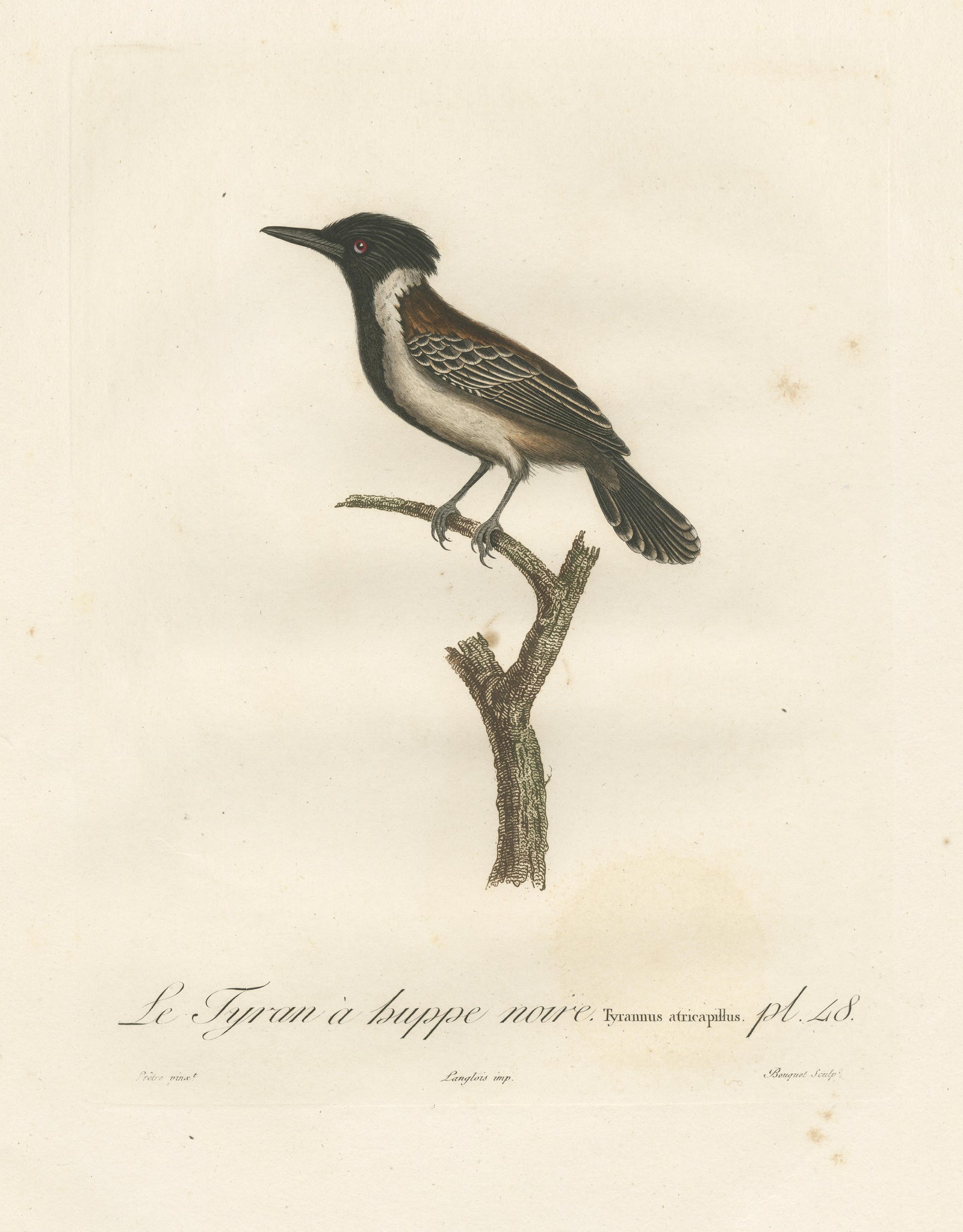
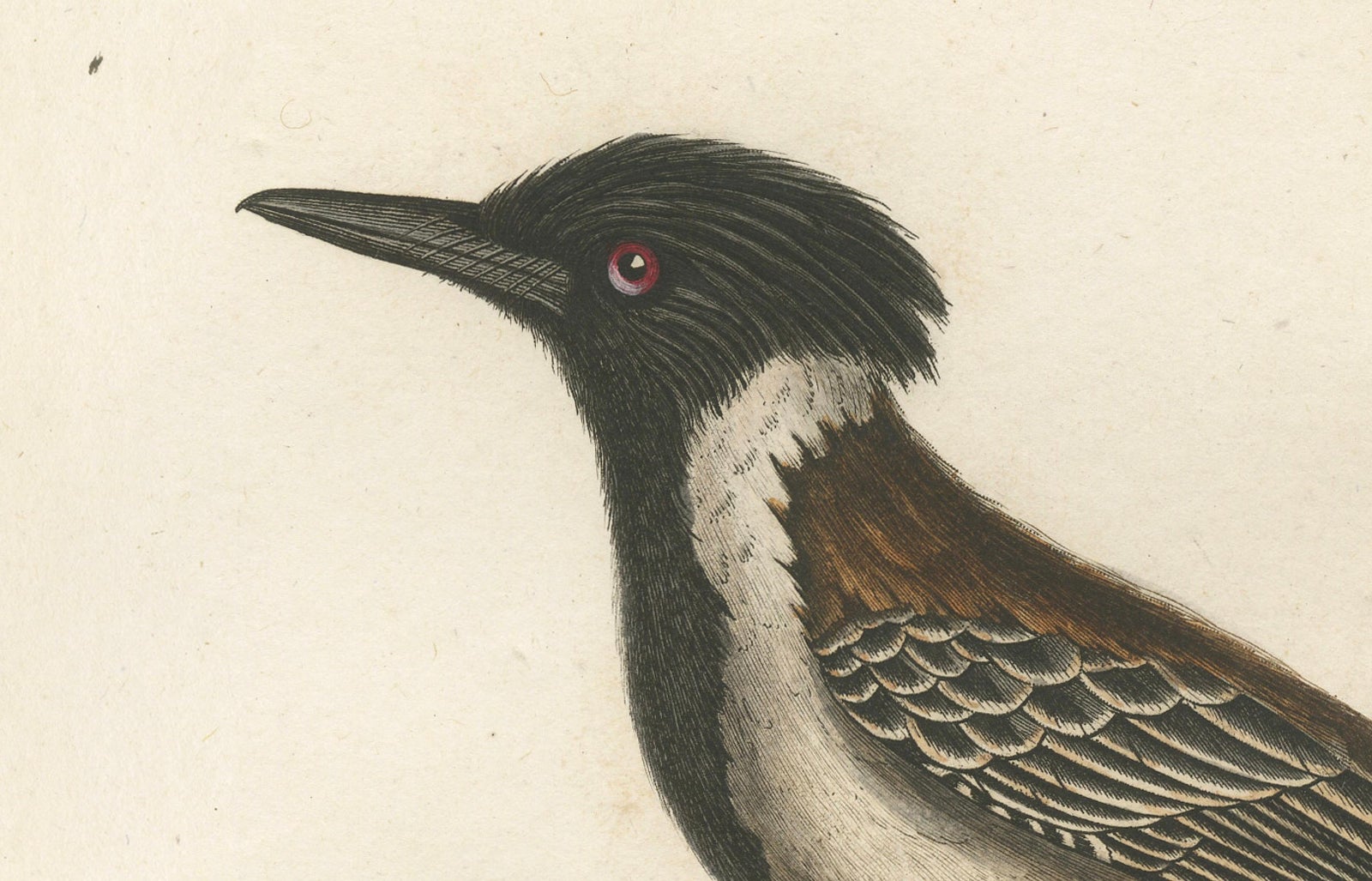
This print, titled 'Le Tyran à huppe noire', represents the Eastern Kingbird (Tyrannus tyrannus). The bird is depicted perched on a branch, rendered in a profile view that showcases its prominent crest and striking plumage. The artwork captures the Eastern Kingbird's characteristic bold black head, white throat, and grayish body, with attention to the fine details of its feathers and the distinctive white tip on the tail.
Below the image, the text 'Le Tyran à huppe noire', 'Tyrannus atricapillus pl. 48' provides the French common name, the presumed Latin name (although the correct scientific name for the Eastern Kingbird is Tyrannus tyrannus), and the plate number of the illustration within the collection. Notations include 'Pretre pinx', 'Langlois sculp.', and 'Bouquet', indicating the original artist, engraver, and the artisan who colored the print by hand, respectively.
The condition of the print suggests a well-preserved piece with typical signs of aging such as foxing, which is evident in the spots and blemishes on the paper, and a general yellowing indicative of the print's age. Despite these marks, the artwork itself maintains its visual appeal, with the colors remaining rich and the drawing precise. The print is part of 'Histoire Naturelle des Oiseaux de l'Amerique Septentrionale' by Louis Jean Pierre Vieillot, published circa 1807, an influential work in ornithology that contributed to a shift towards observing birds in their natural environment rather than as mere specimens.