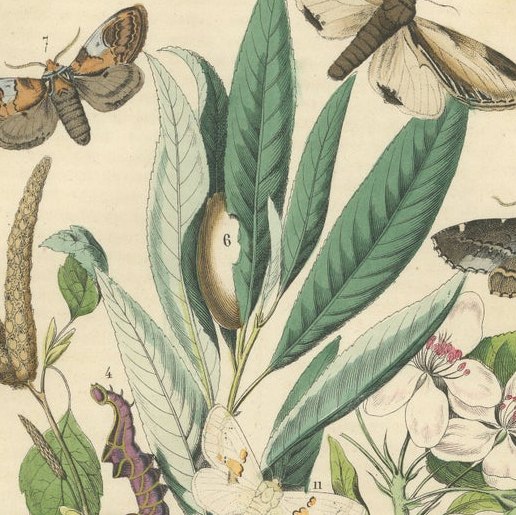
Close-ups
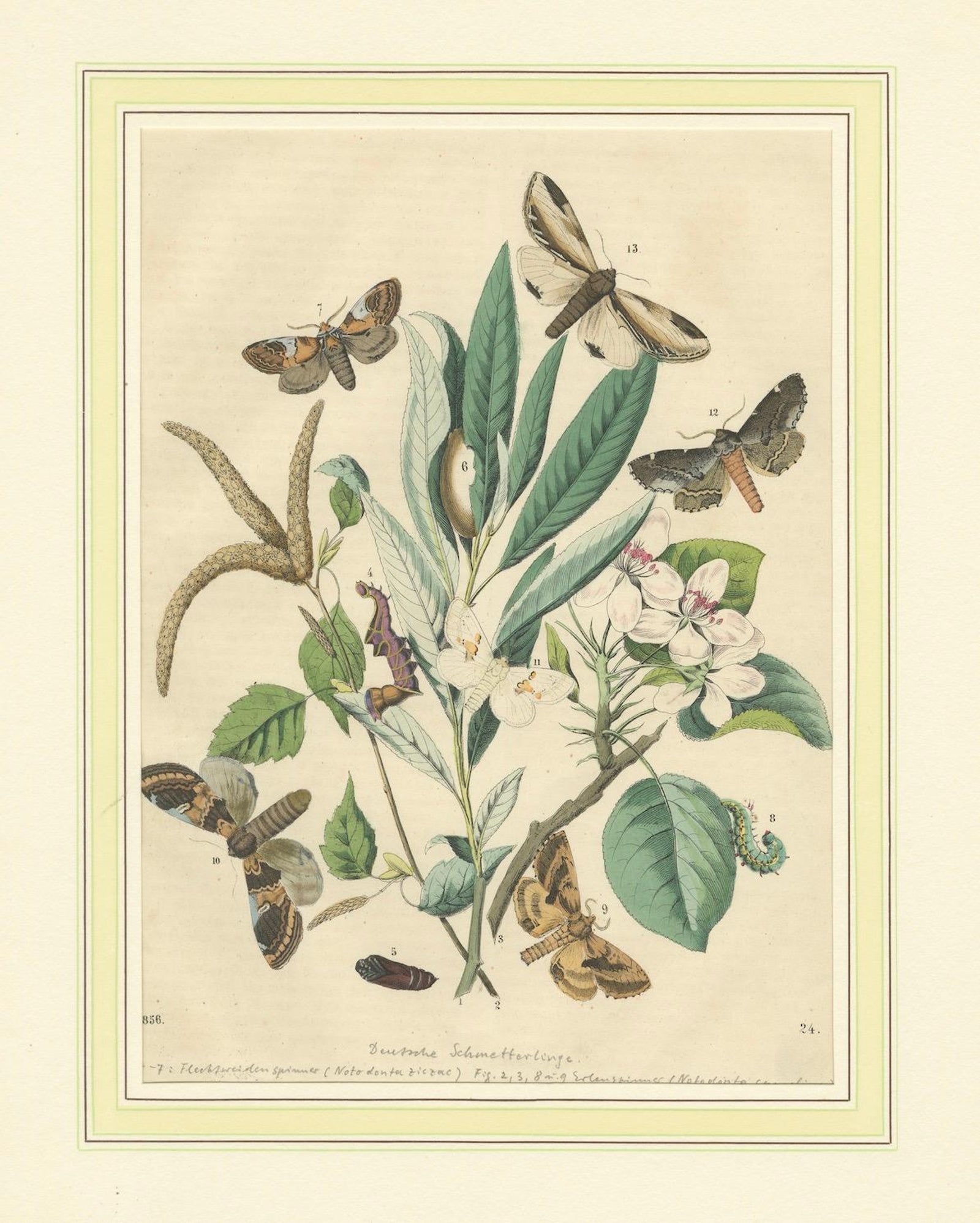
Framed and on the wall
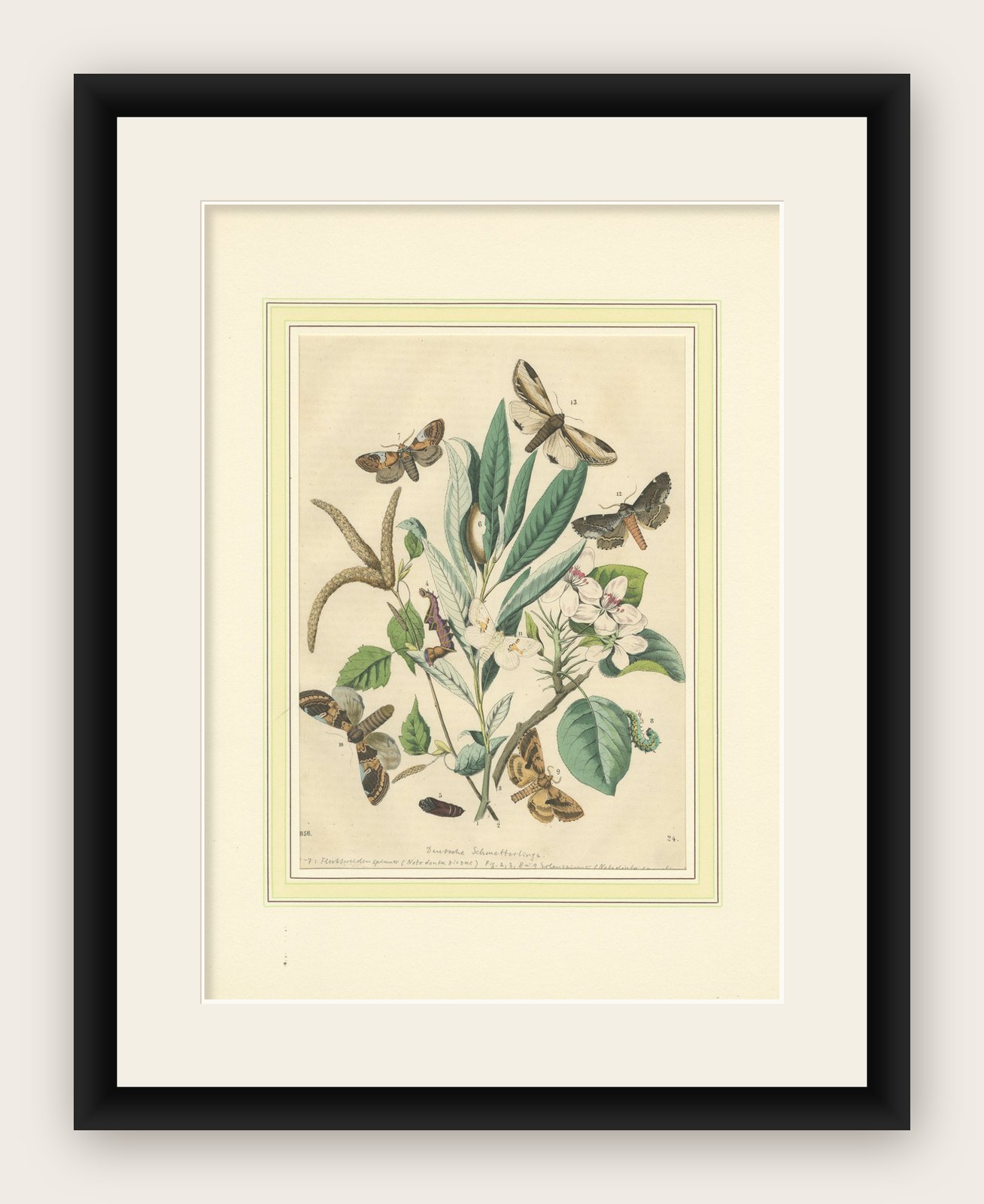


Frame and rooms are illustrations of how the print could look; the description says what is included.
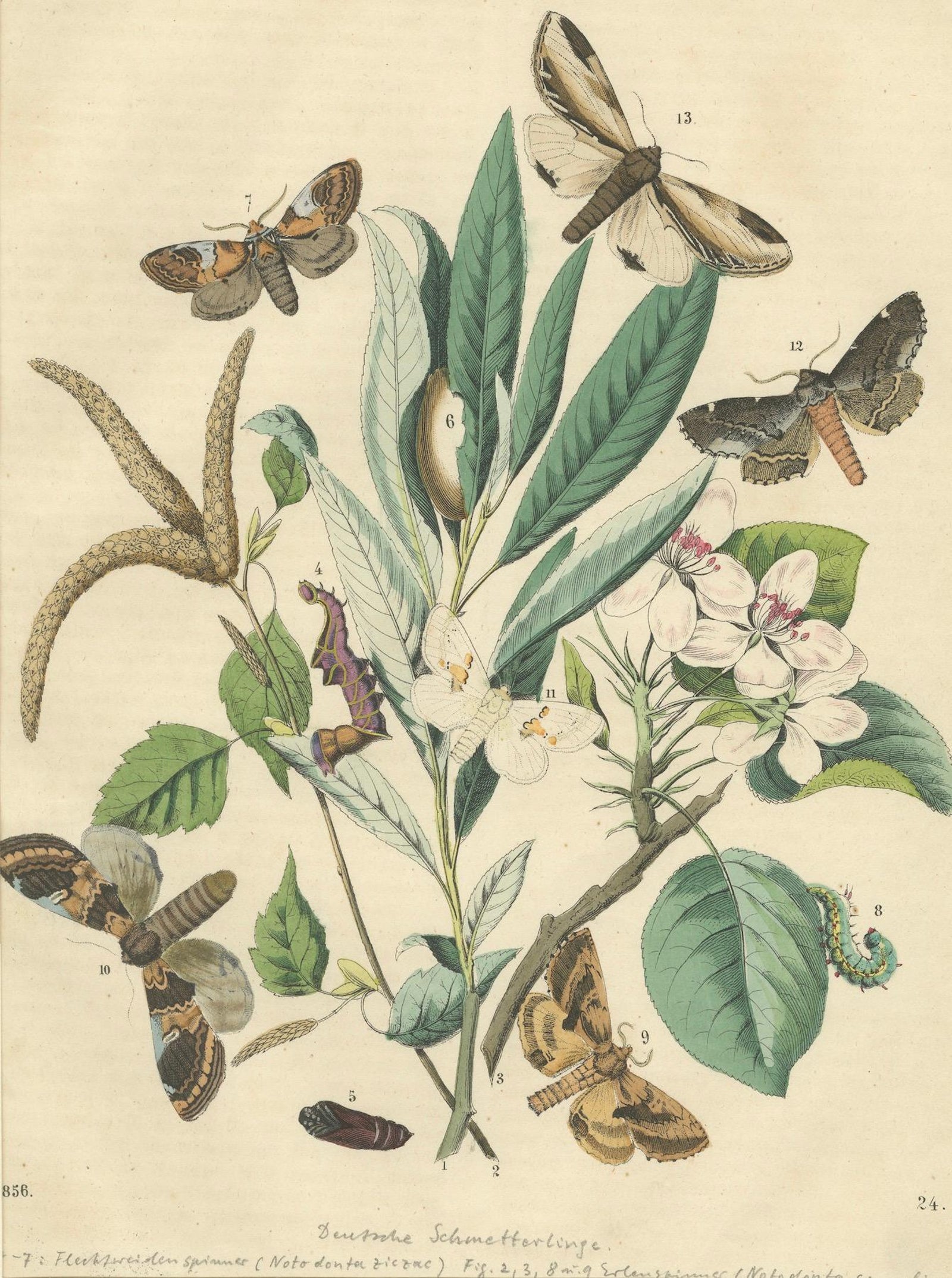
Wings of the Night: Hand-Colored 1856 Litho of Exotic Moths and Their Life Cycle
$145 (£110, €130)
Period original, not a reproduction.
Shipped from the Netherlands, flat, insured and tracked, worldwide. Returns accepted within 14 days.
- Date
- 1856
- Size
- 13.8 × 10.2 in (35 × 26 cm)
- Condition
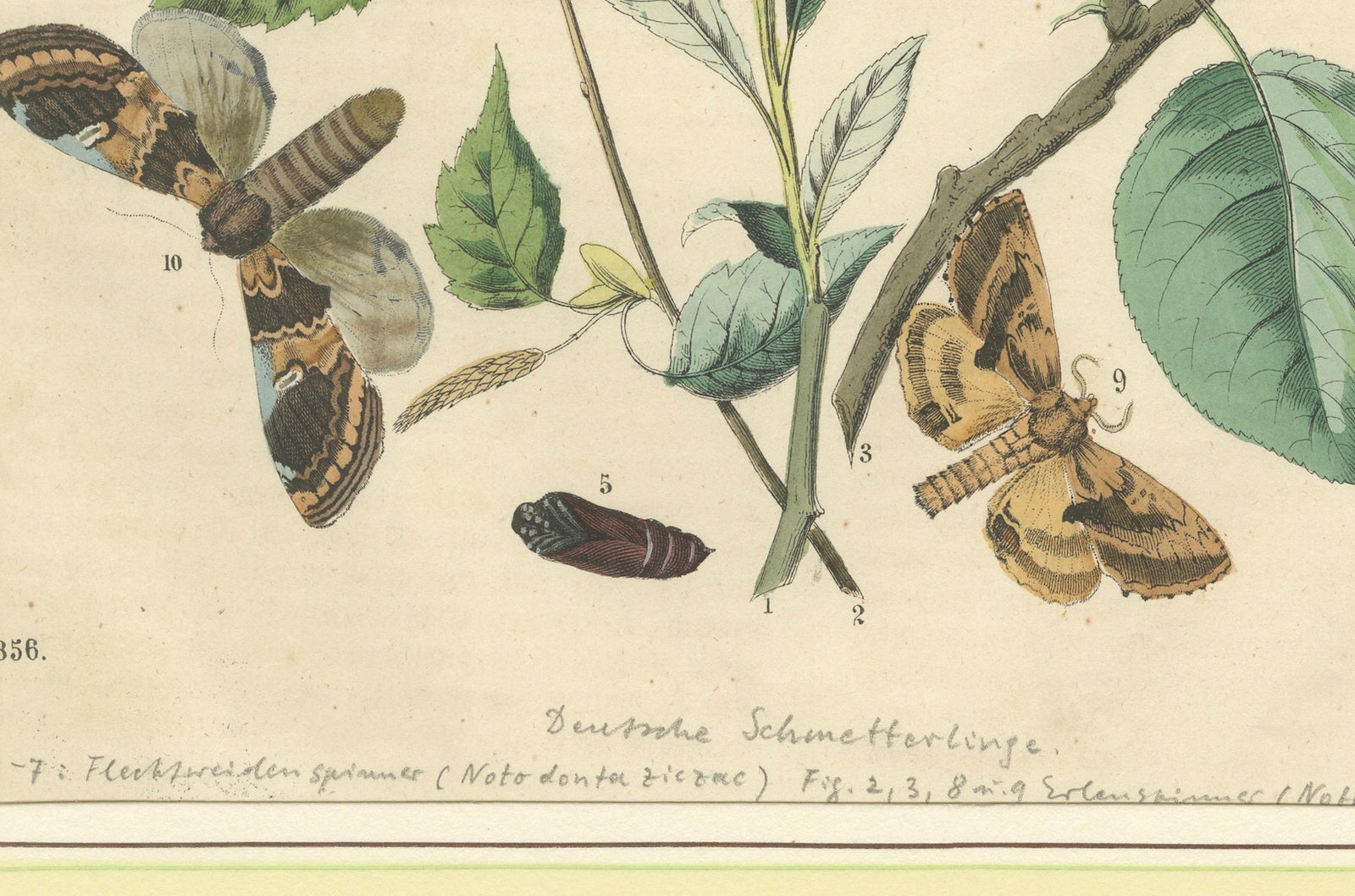
- Good. This antique print is in good condition for its age, with only minor age toning and faint foxing along the margins. The hand-coloring remains vivid, and the paper has been well-preserved. A few pencil scribblings in lower border.
- Period
- Late 19th century
- Section
- Insects and butterflies
- Reference
- f_43967502
Wings of the Night: Hand-Colored 1856 Lithograph of Exotic Moths and Their Life Cycle
Description:
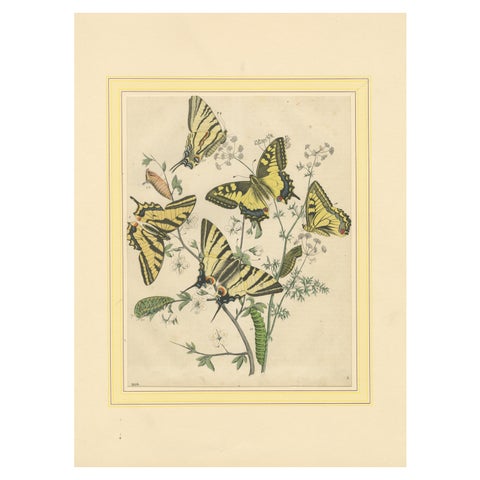
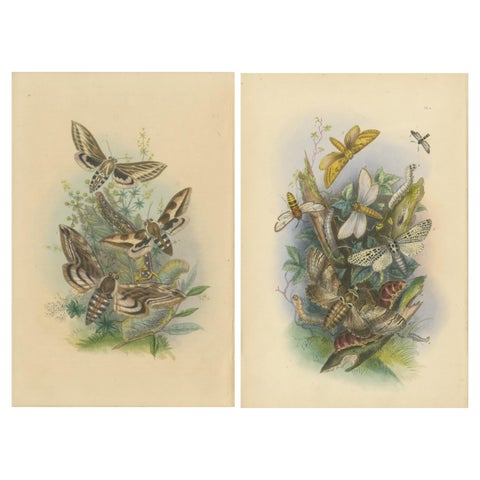
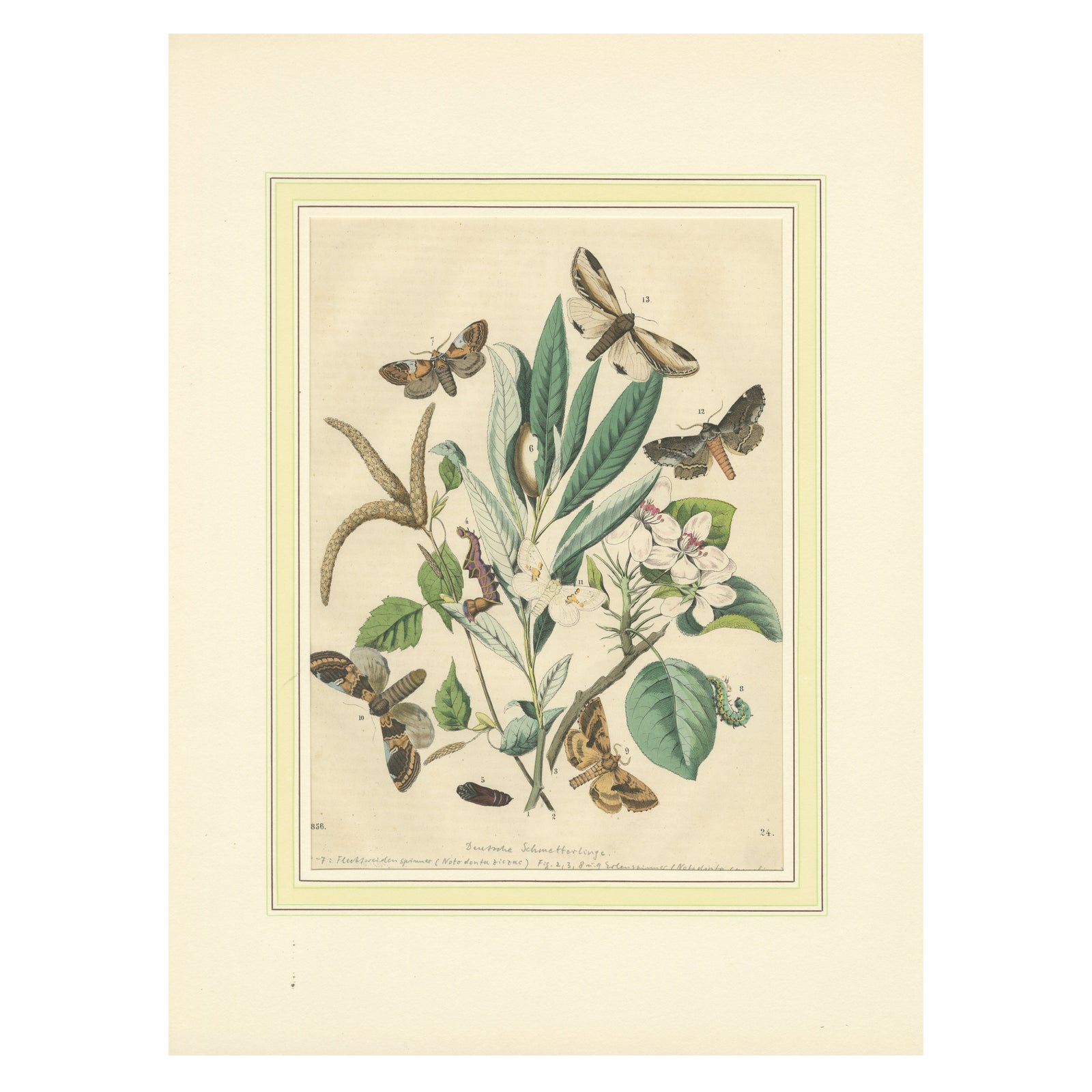
This stunning hand-colored lithograph from 1856 is a fine example of 19th-century entomological illustration, capturing the intricate beauty of moths in their natural environment. Likely originating from a natural history publication, this scientifically accurate yet artistically refined print presents various moth species, their larvae, and pupae, carefully arranged around a flowering botanical specimen.
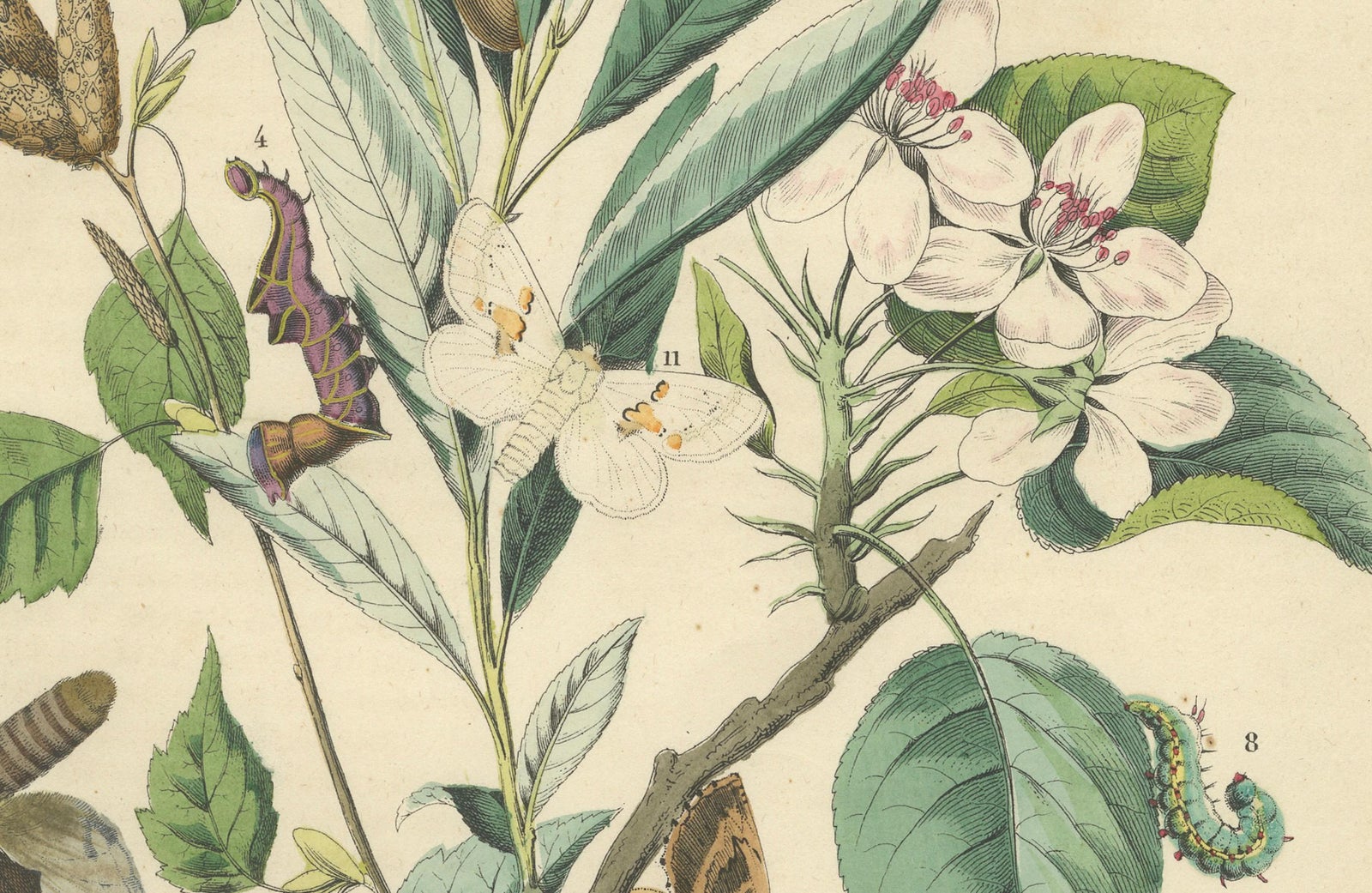
The composition is an exquisite blend of scientific observation and aesthetic appeal, with each moth depicted in a different stage of development, caterpillars crawling along leaves, pupae resting on stems, and fully developed moths spreading their delicately patterned wings. The botanical elements are rendered in soft yet precise detail, providing a rich backdrop that enhances the visual depth of the artwork. The meticulous hand-coloring gives life to the scene, showcasing the moths' earthy browns, creams, and subtle iridescent tones.
Moth Descriptions:
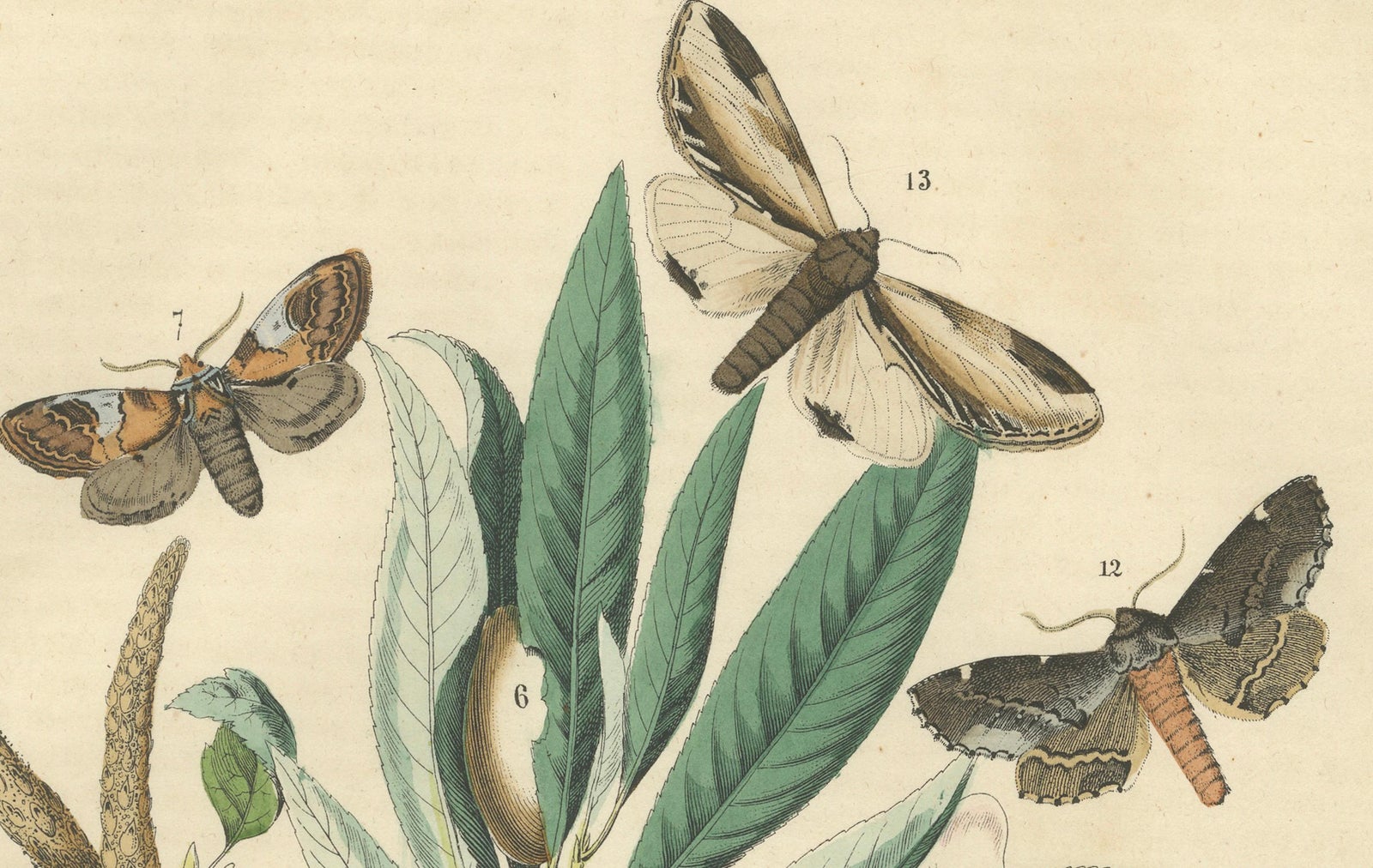
- The largest moth, positioned near the upper right, features striking cream and brown coloration with long, delicate wings, suggestive of the silk moth family.
- Another prominent moth, located centrally, is dark brown with orange markings, possibly from the hawk moth (Sphingidae) family, known for their strong, rapid flight.
- The smaller moths, scattered throughout the composition, display a variety of earthy tones, intricate patterns, and distinctive wing shapes, reflecting the diversity of nocturnal Lepidoptera.
- The presence of caterpillars and pupae adds an educational dimension, illustrating the moth’s complete metamorphosis.
Attribution and Date:
Published in 1856, this lithograph is part of a series dedicated to entomology, likely produced by a German naturalist or scientific illustrator. Lithography was a preferred medium during this period, allowing for fine detail and delicate hand-coloring that elevated these works beyond mere scientific records into true works of art.
Condition Summary:
This antique print is in good condition for its age, with only minor age toning and faint foxing along the margins. The hand-coloring remains vivid, and the paper has been well-preserved. A double-bordered mat enhances the overall presentation, making it ready for display.
Framing Tips:
- Use UV-protective glass to prevent fading and preserve the hand-coloring.
- A classic wooden frame in dark brown or gold will complement the earthy tones of the moths and botanical details.
- Acid-free matting is recommended to prevent discoloration and maintain the integrity of the paper.
- A floating mount can be used to showcase the print’s edges, emphasizing its antique character.
This rare and beautifully executed lithograph is a valuable addition for collectors of entomology prints, natural history enthusiasts, or those who appreciate the elegance of 19th-century scientific illustrations.