Close-ups
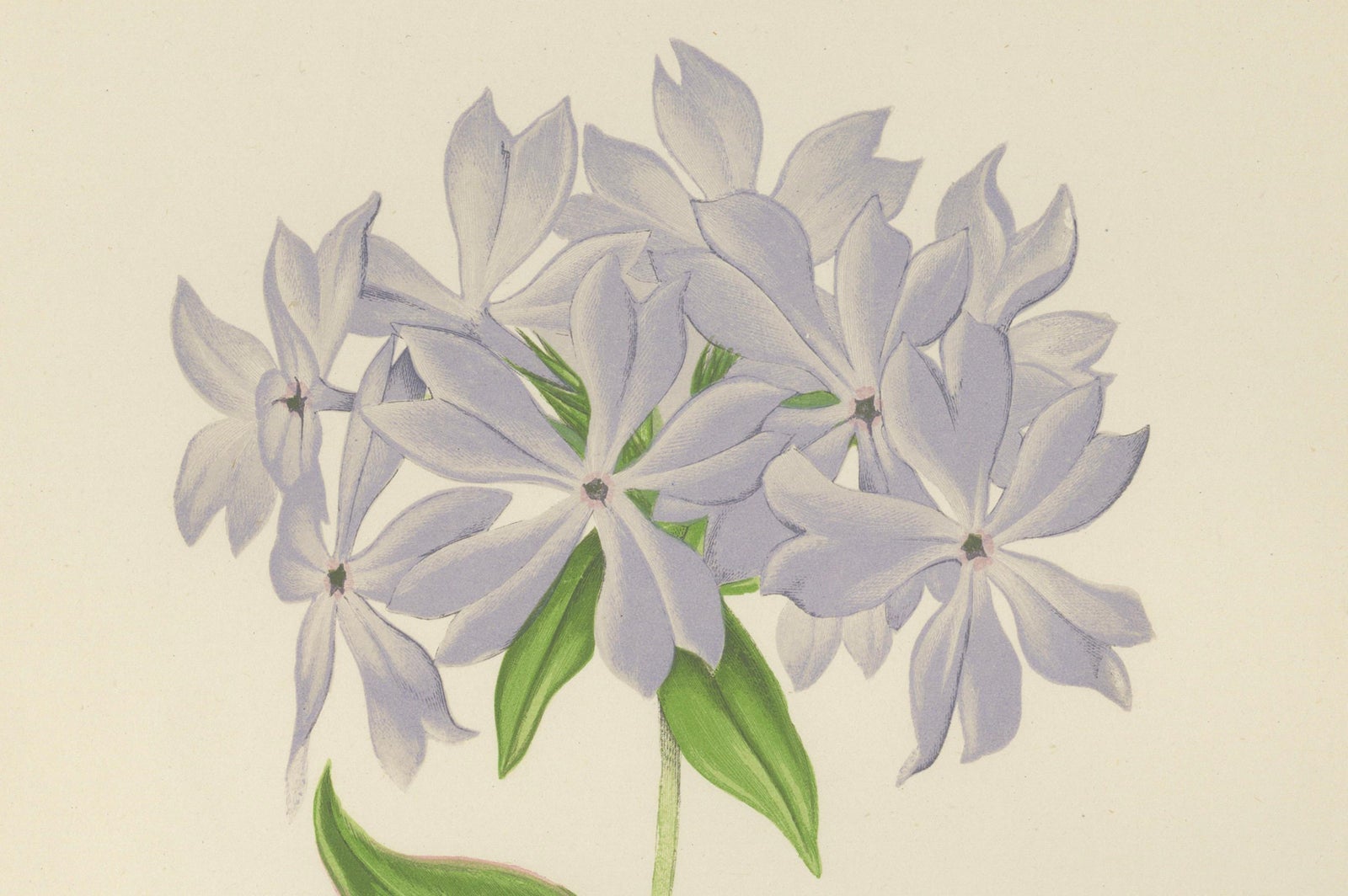
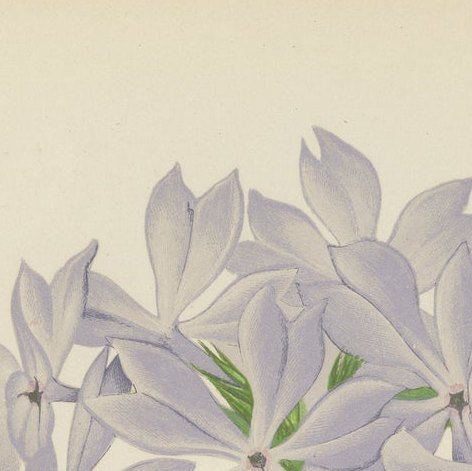
Framed and on the wall
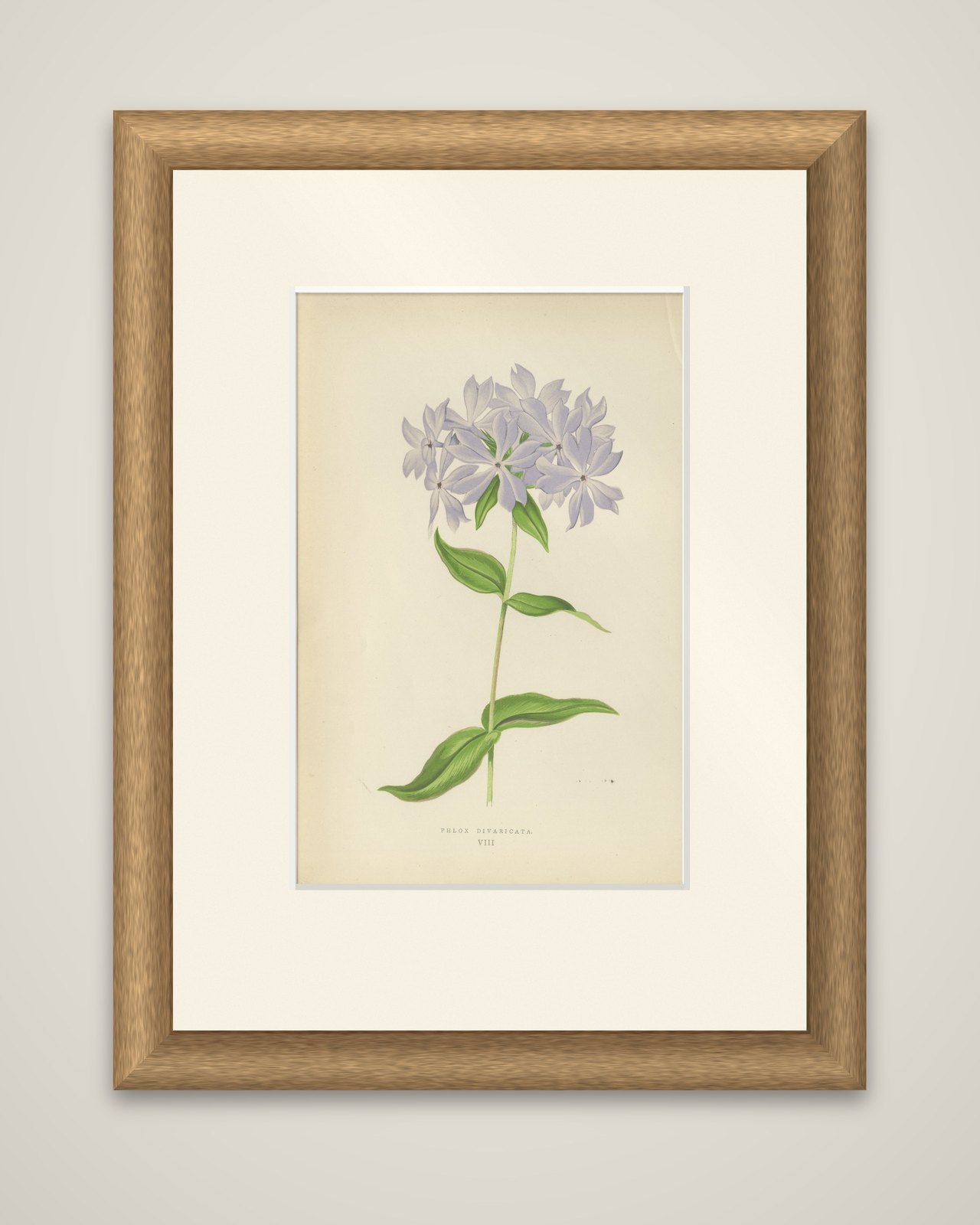
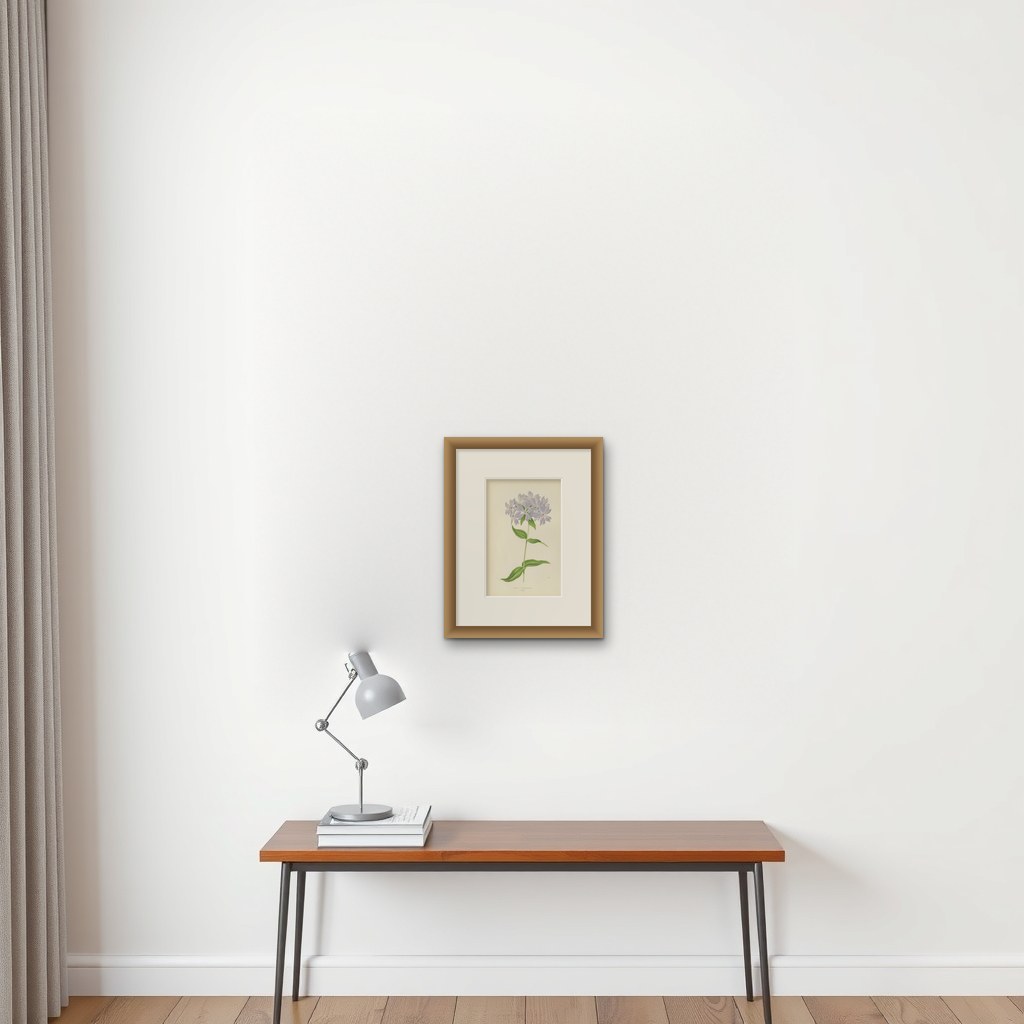

Frame and rooms are illustrations of how the print could look; the description says what is included.
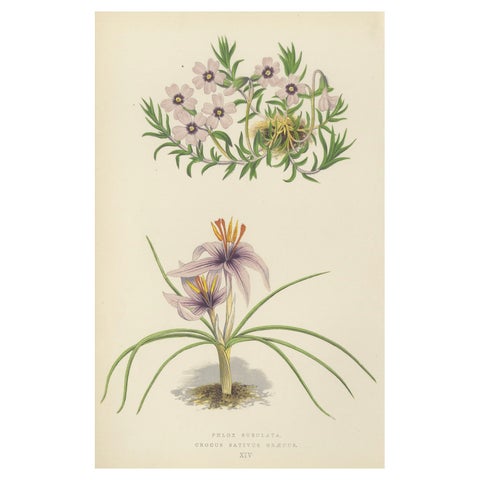
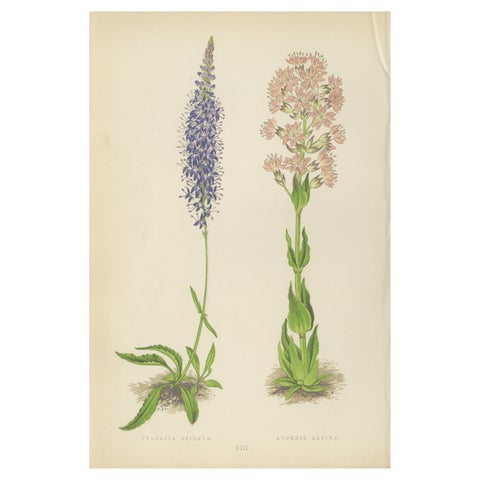
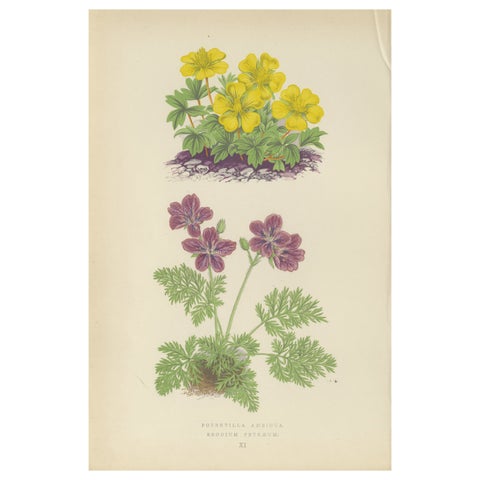
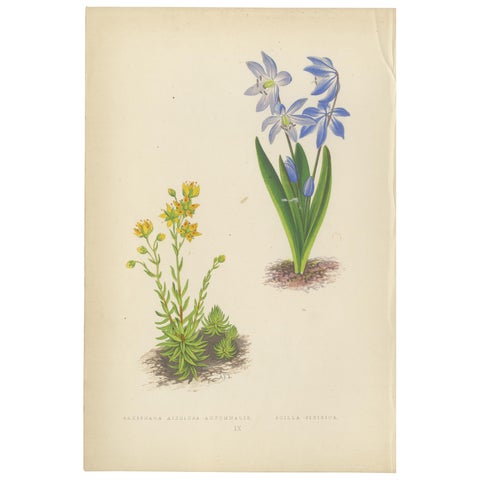
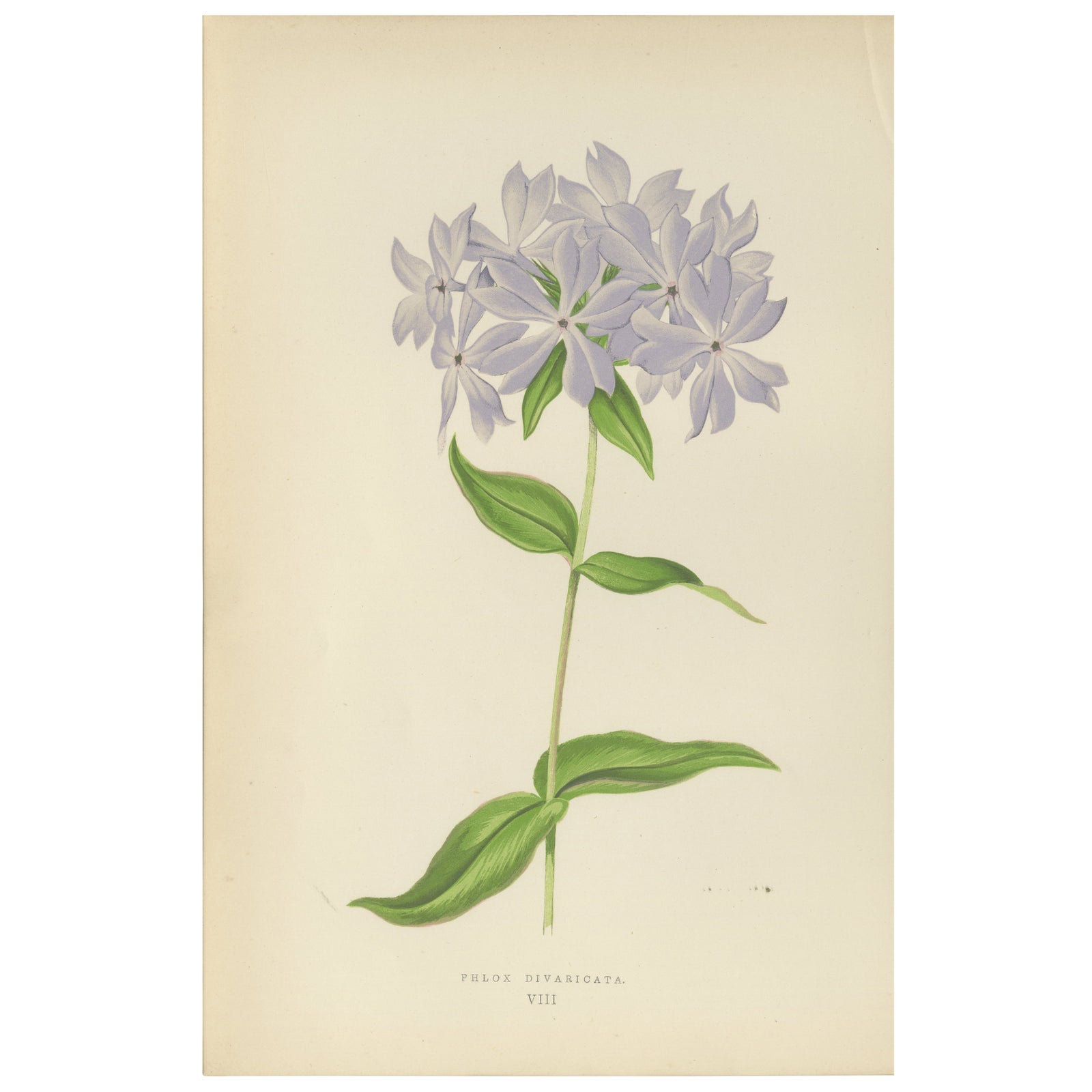
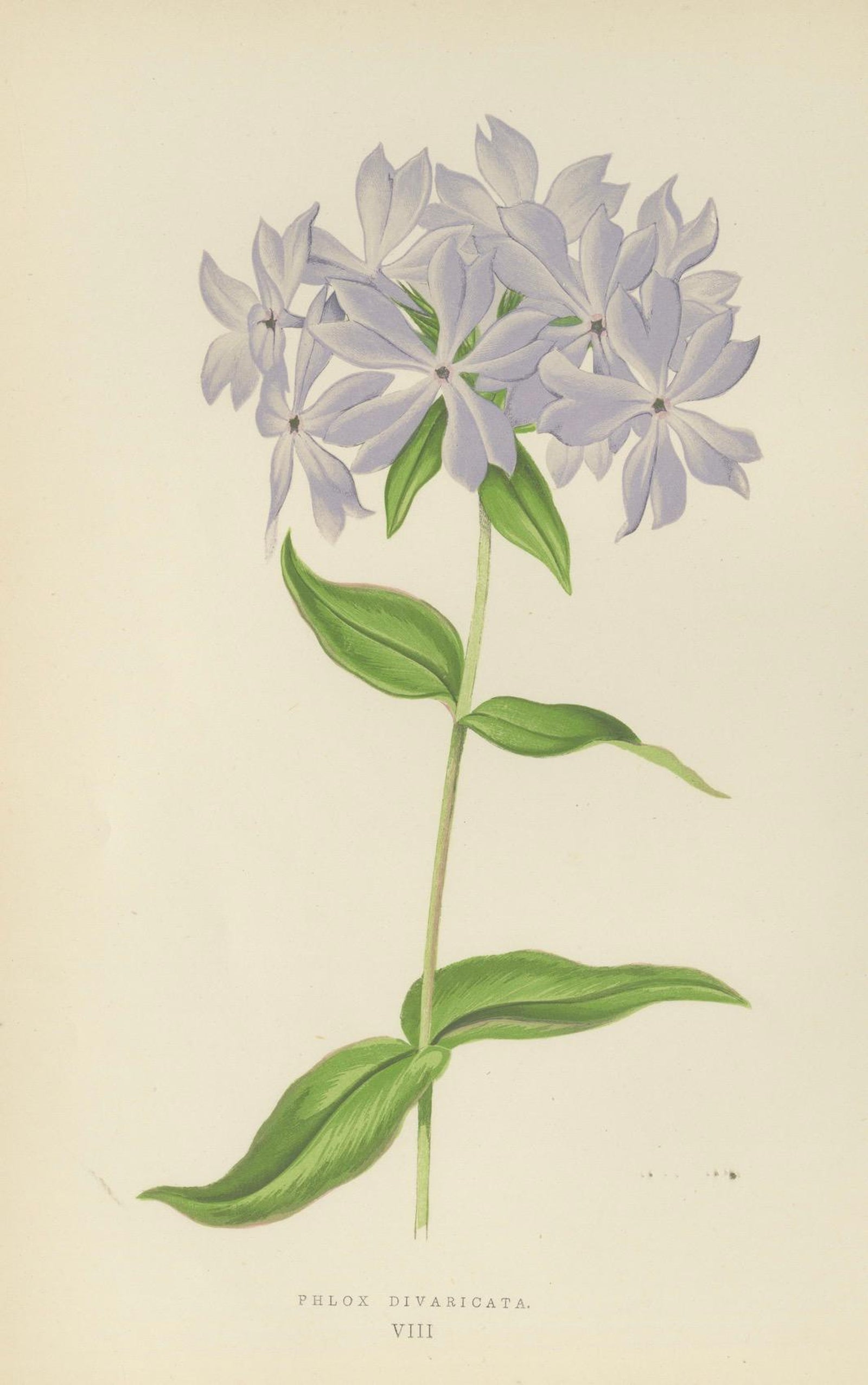
Wild Blue Phlox (Phlox Divaricata), Hand-Coloured Botanical Print, 1874
€140 ($160, £120, €140)
Period original, not a reproduction.
Shipped from the Netherlands, flat, insured and tracked, worldwide. Returns accepted within 14 days.
- Date
- 1874
- Size
- 9.8 × 6.5 in (24.9 × 16.5 cm)
- Condition
- Good. Very good antique condition with minimal signs of age. Clean image area and vibrant colour. Slight toning near margins.
- Period
- Late 19th century
- Section
- Botanical
- Reference
- f_44661012
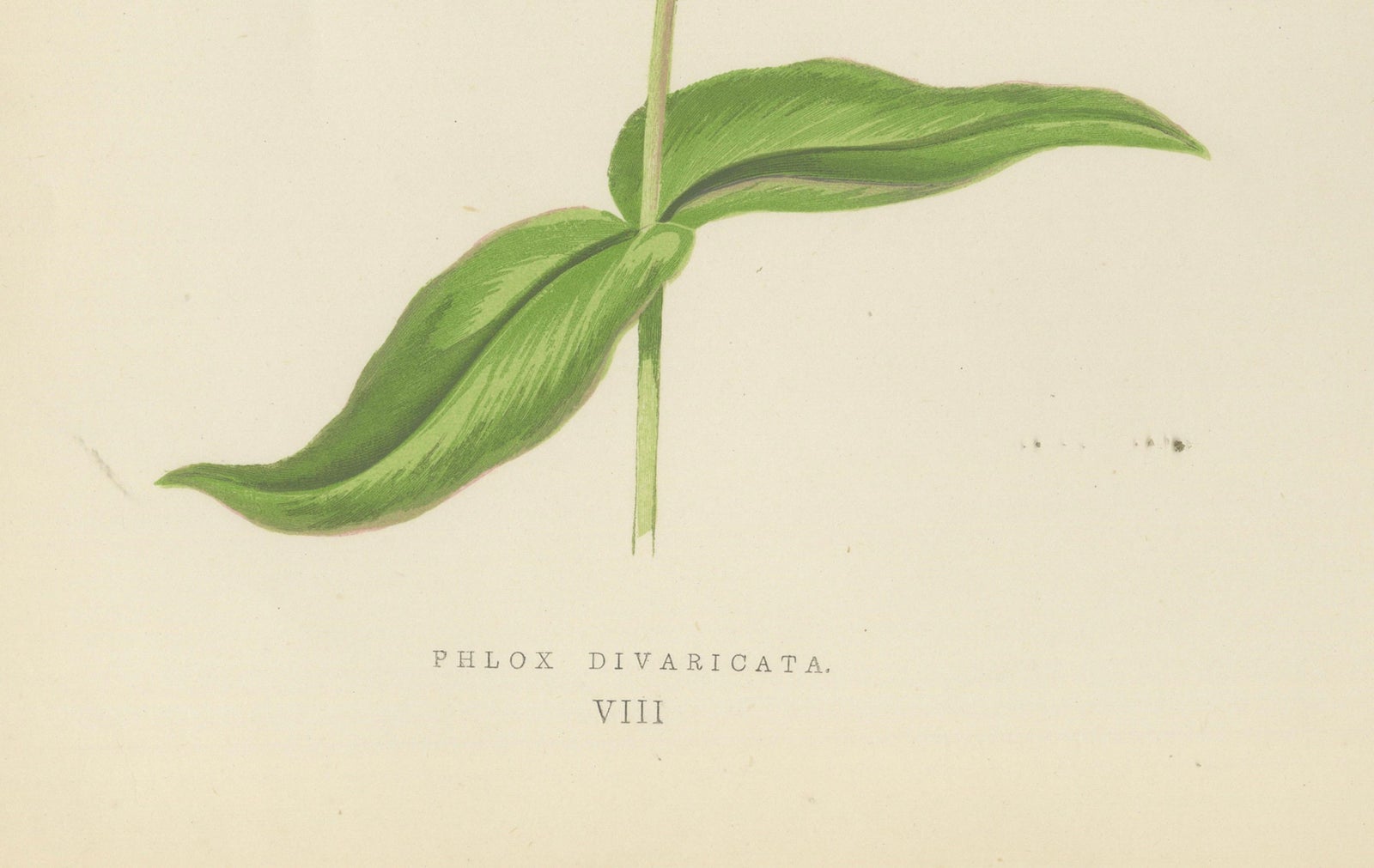
Wild blue phlox, Phlox divaricata, a hand-colored lithograph of 1874 from the second series of Alpine Plants, published in London by George Bell & Sons. The plate is numbered "VIII" and lettered "Phlox divaricata" at the foot.
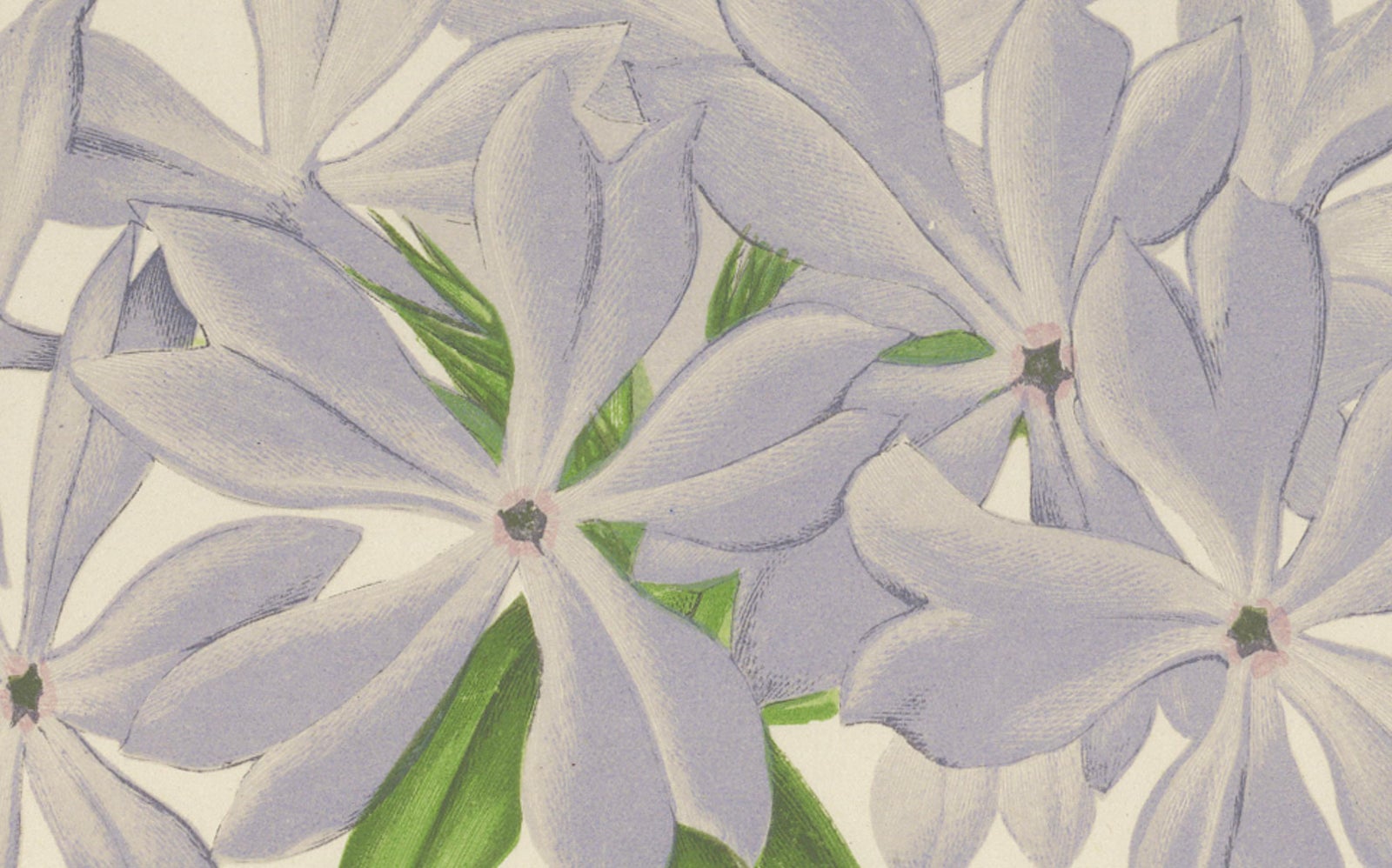
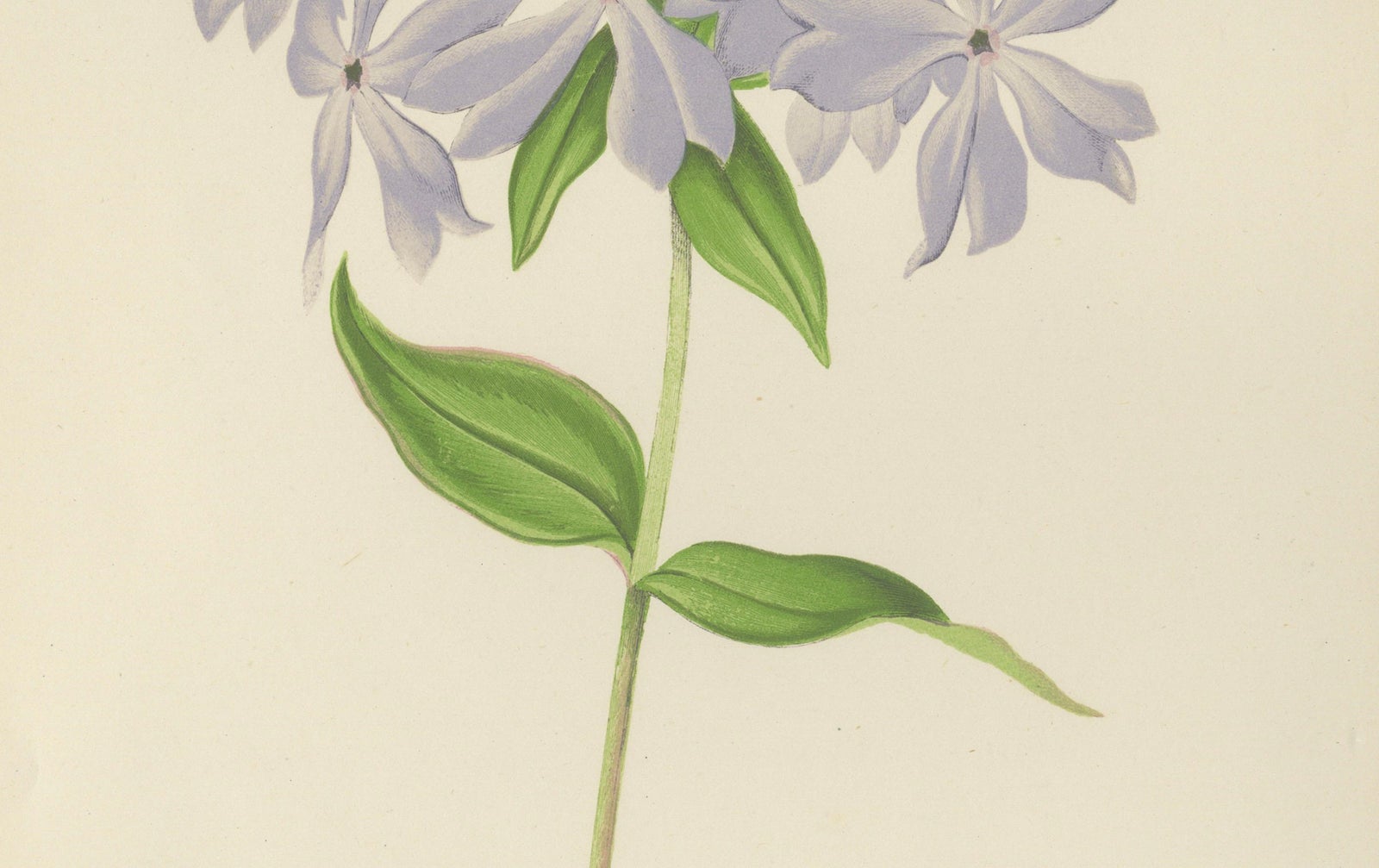
A single upright stem rises from the lower left, carrying a few long, pointed green leaves in opposite pairs, and ends in a domed cluster of lavender-blue flowers with narrow, notched petals and dark centers. The plant is drawn alone on the plain paper with no ground or background, and the pale violet of the petals is laid on in a thin wash that leaves the lighter veining of each flower visible.
Phlox divaricata is a native wildflower of the woodlands and shaded slopes of eastern North America, flowering in spring, and was a familiar plant in English gardens by the Victorian period.