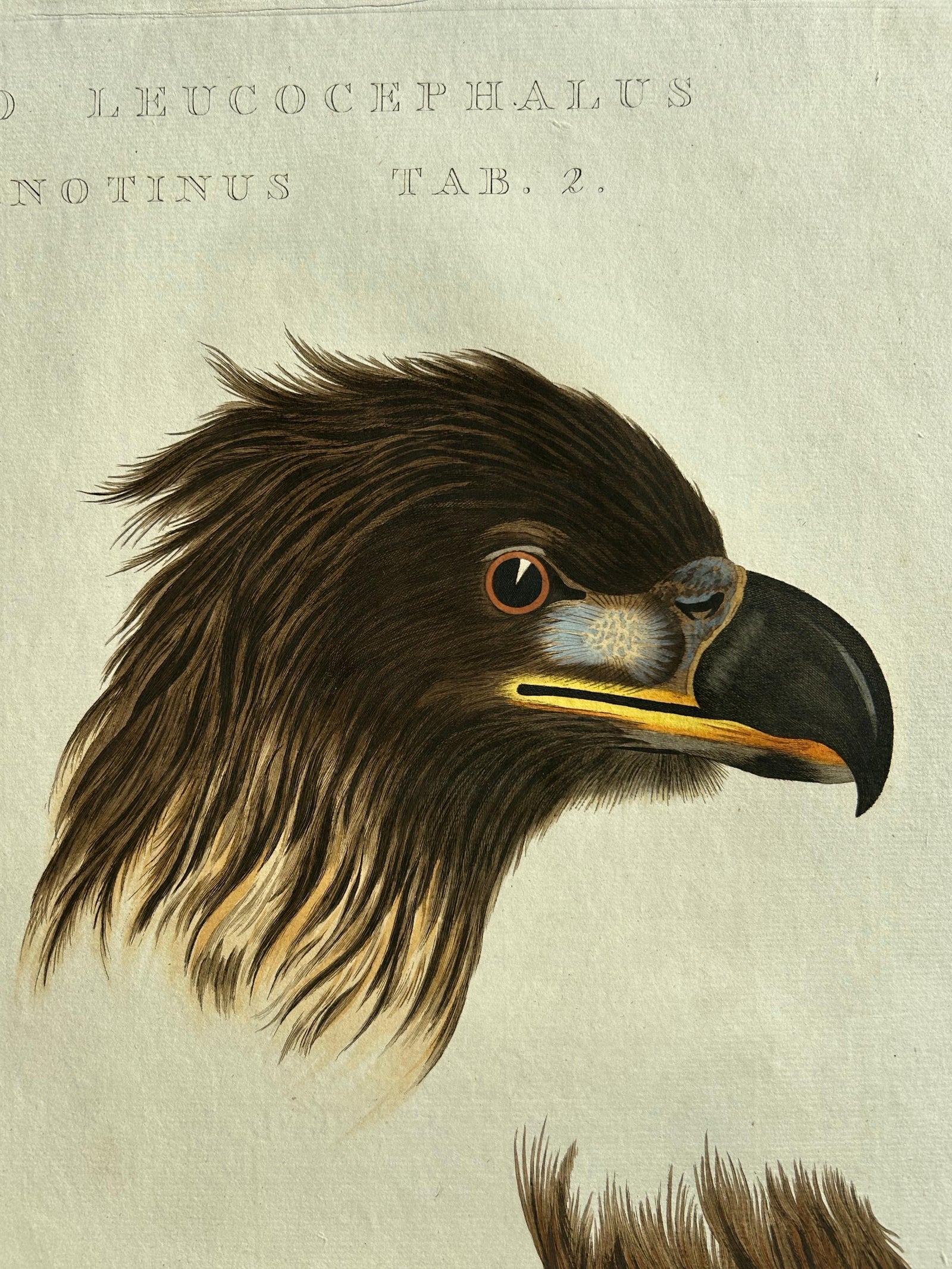
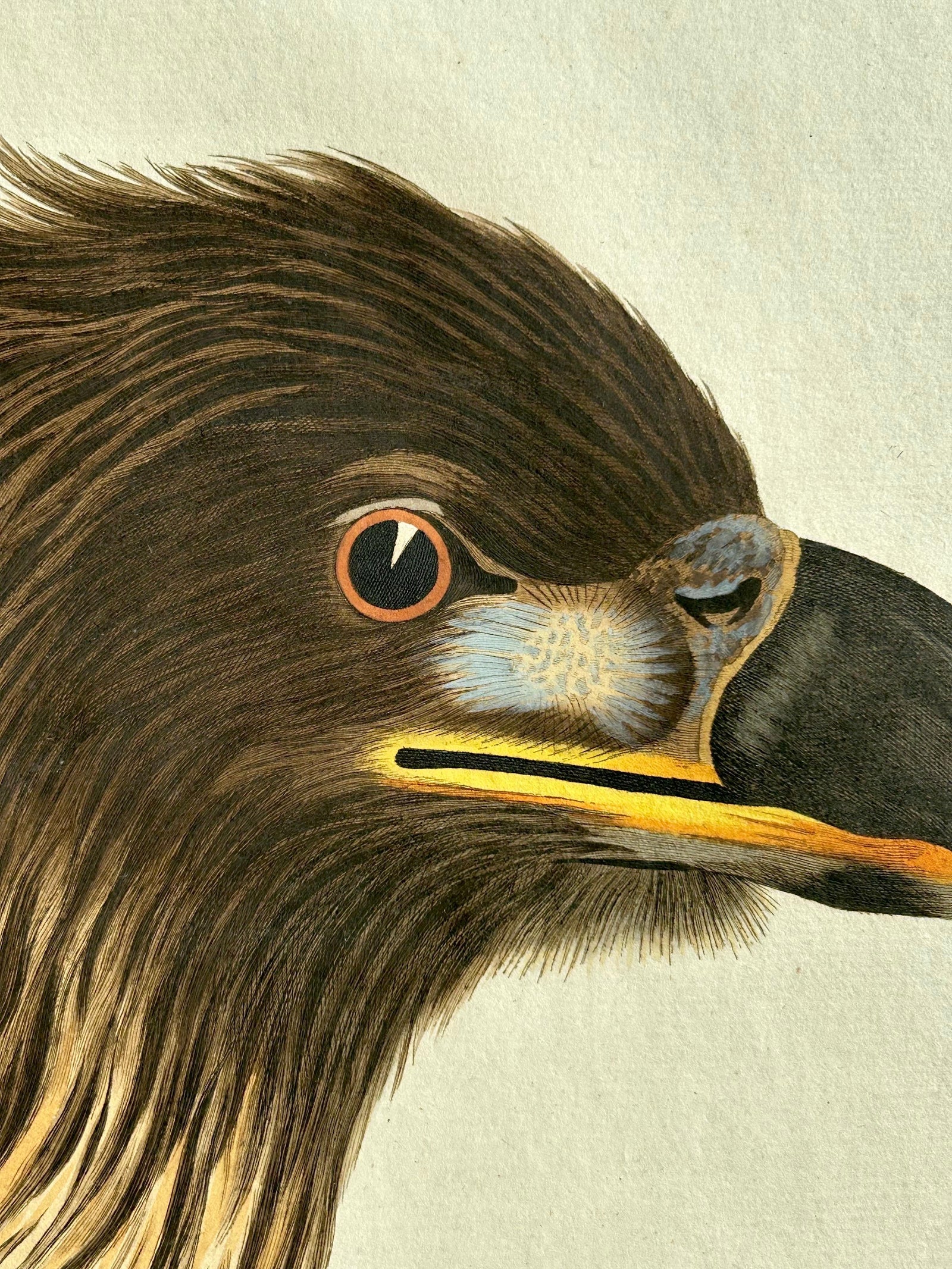
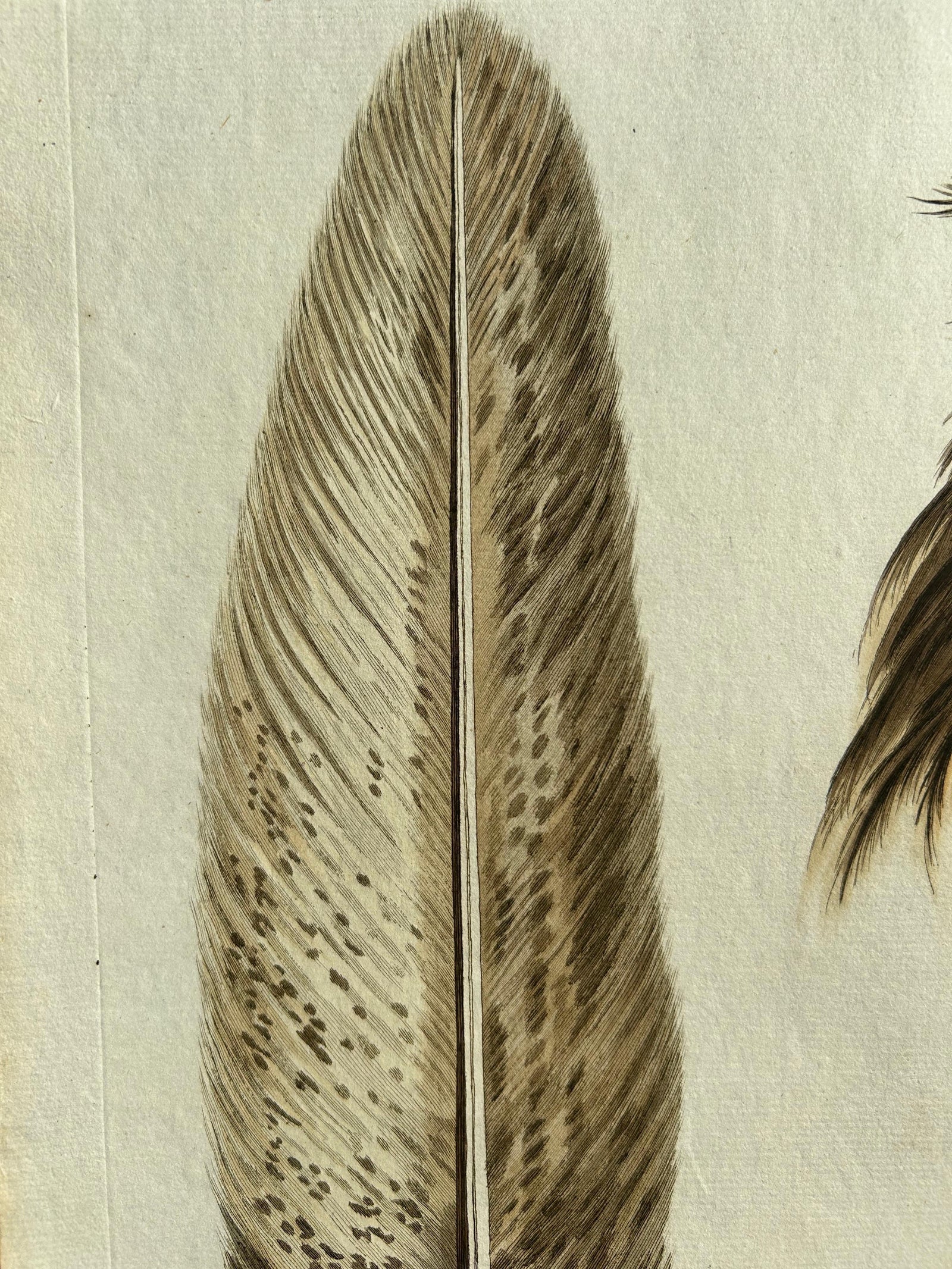
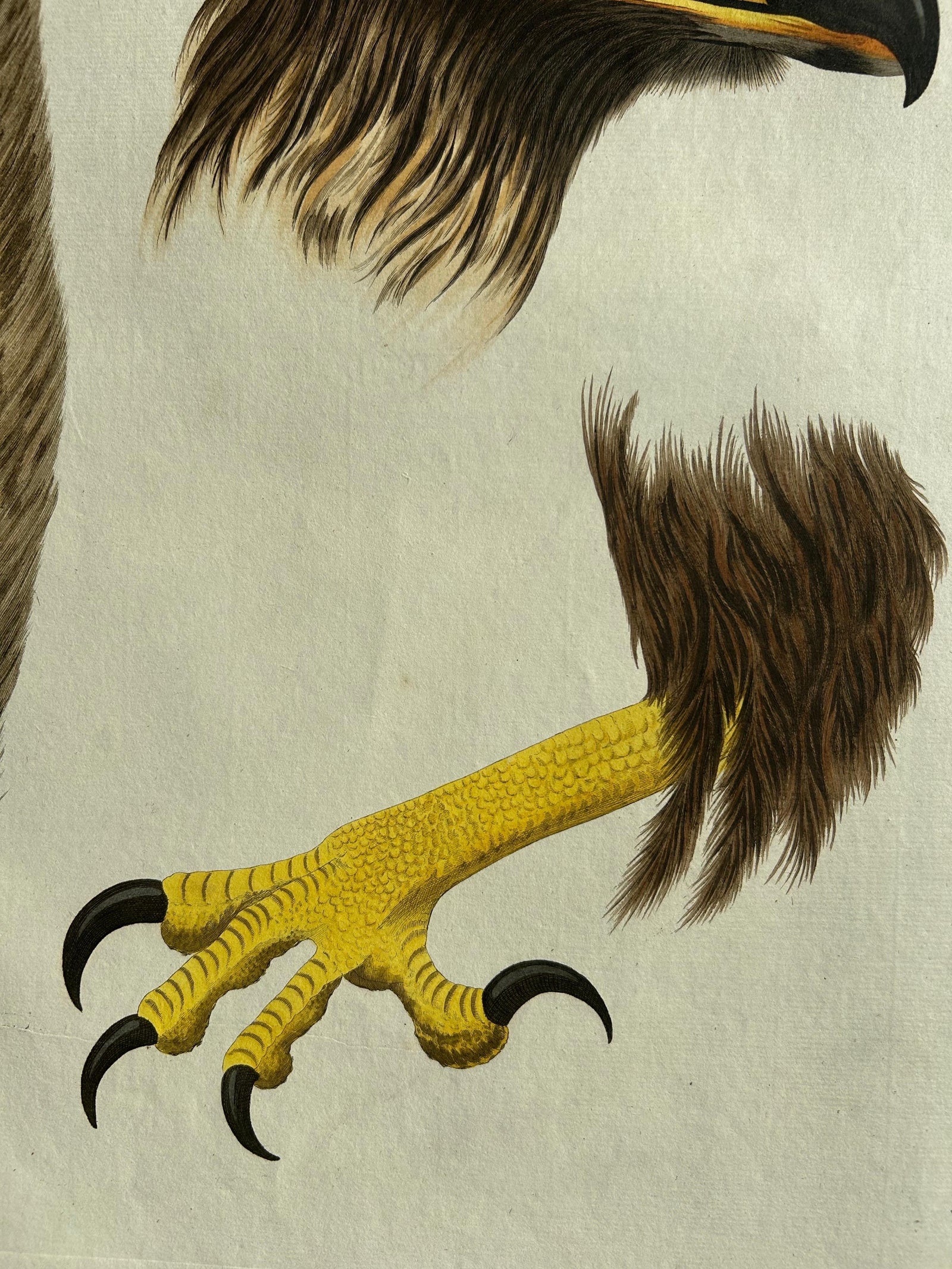
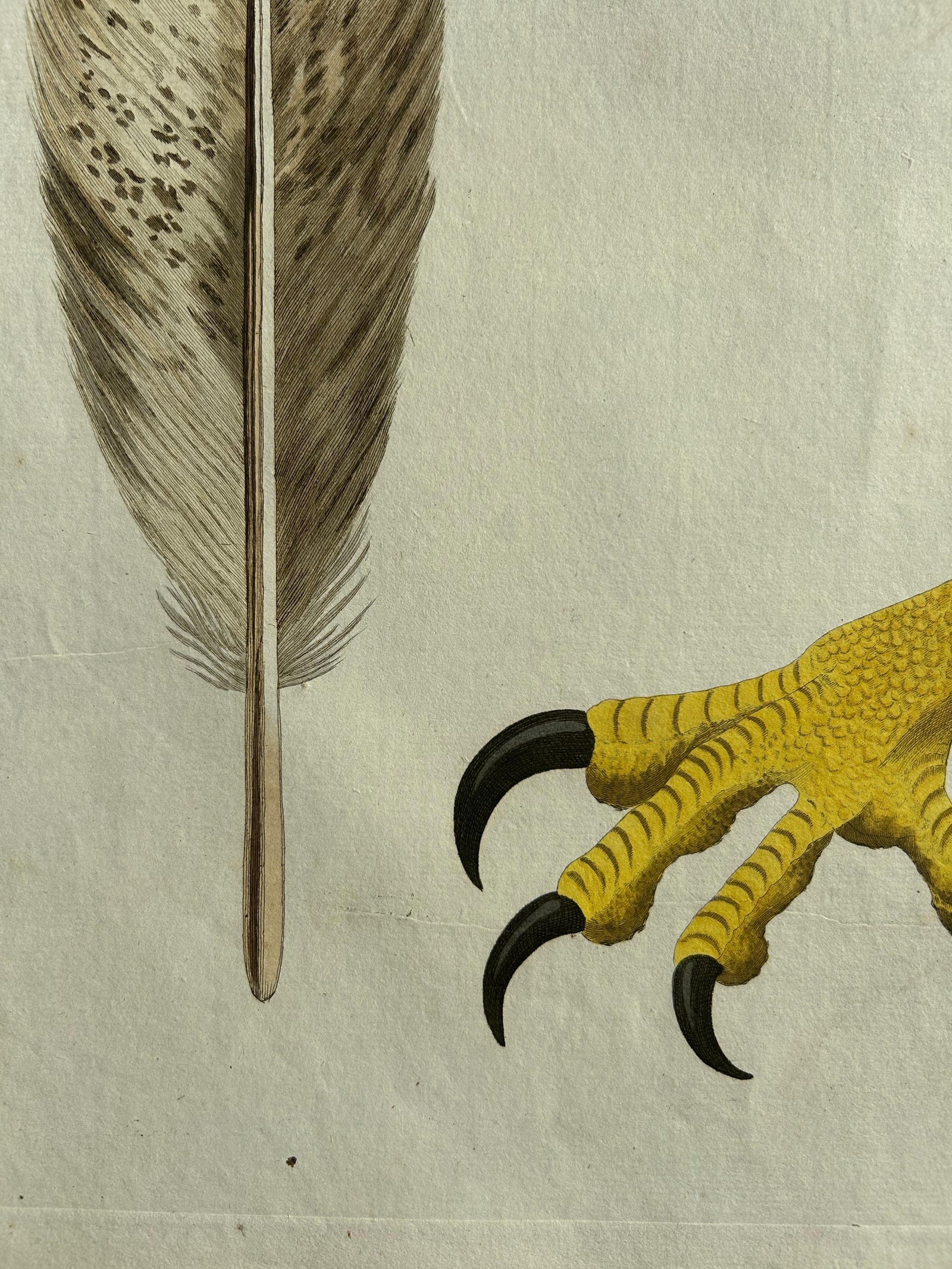
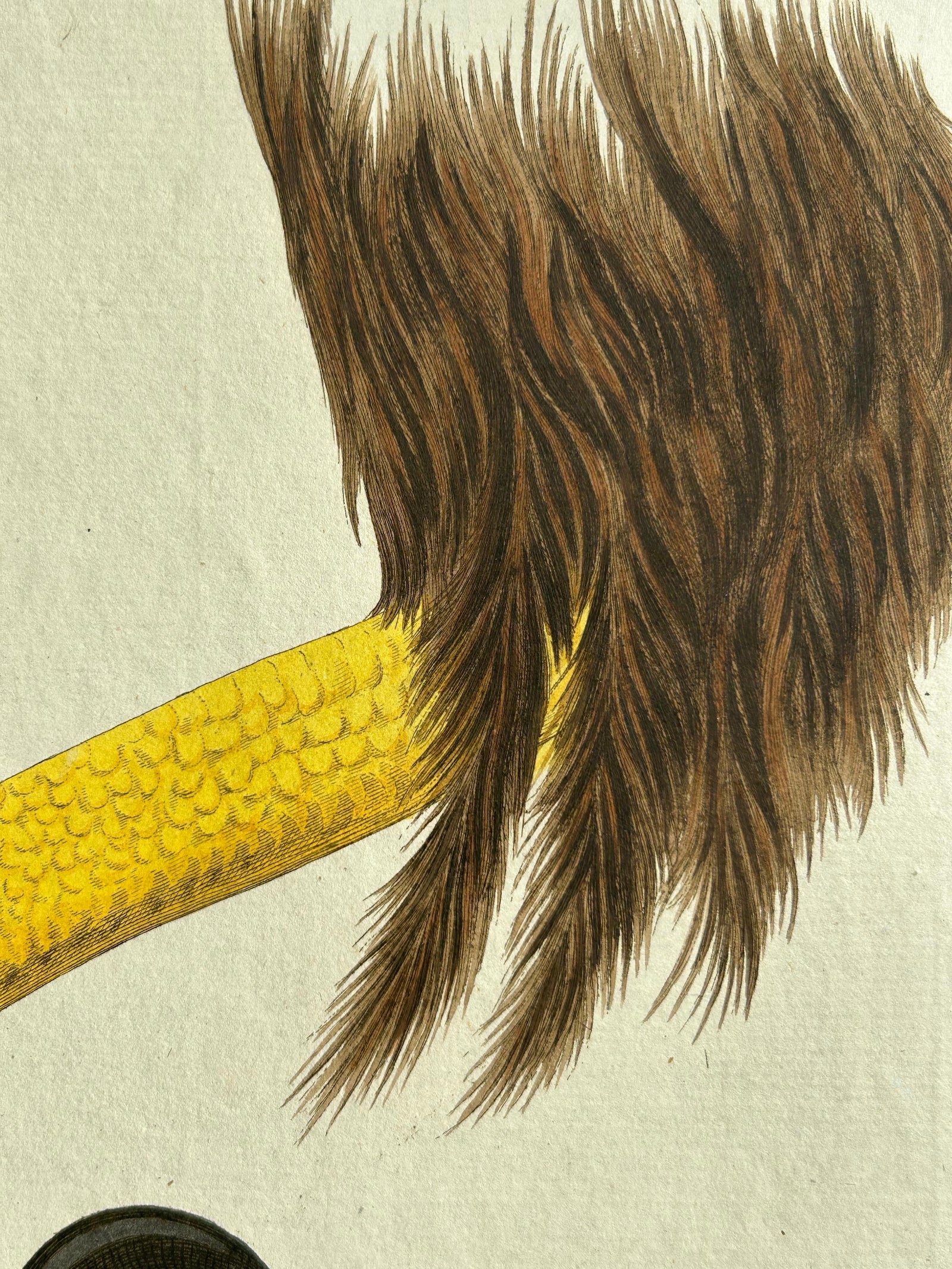
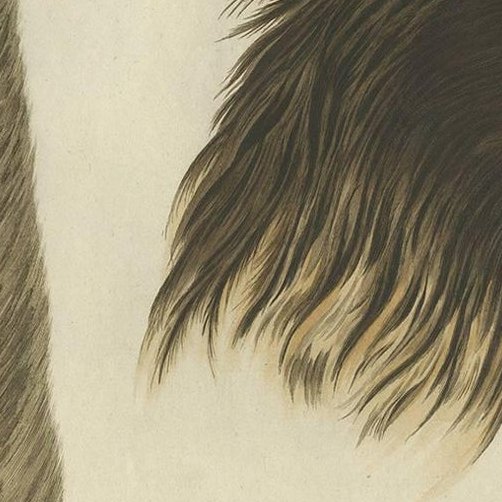
Close-ups
Framed and on the wall
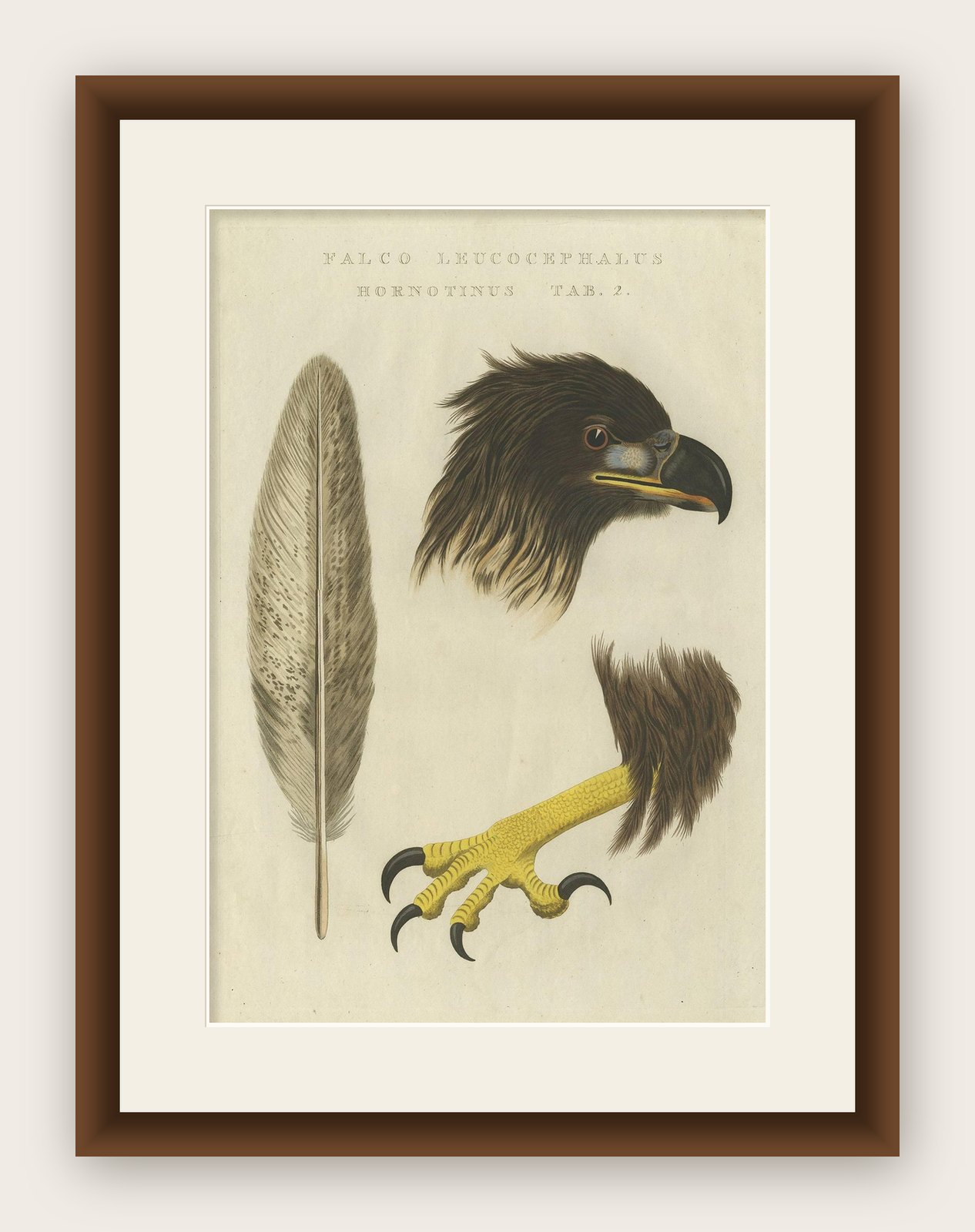

Frame and rooms are illustrations of how the print could look; the description says what is included.
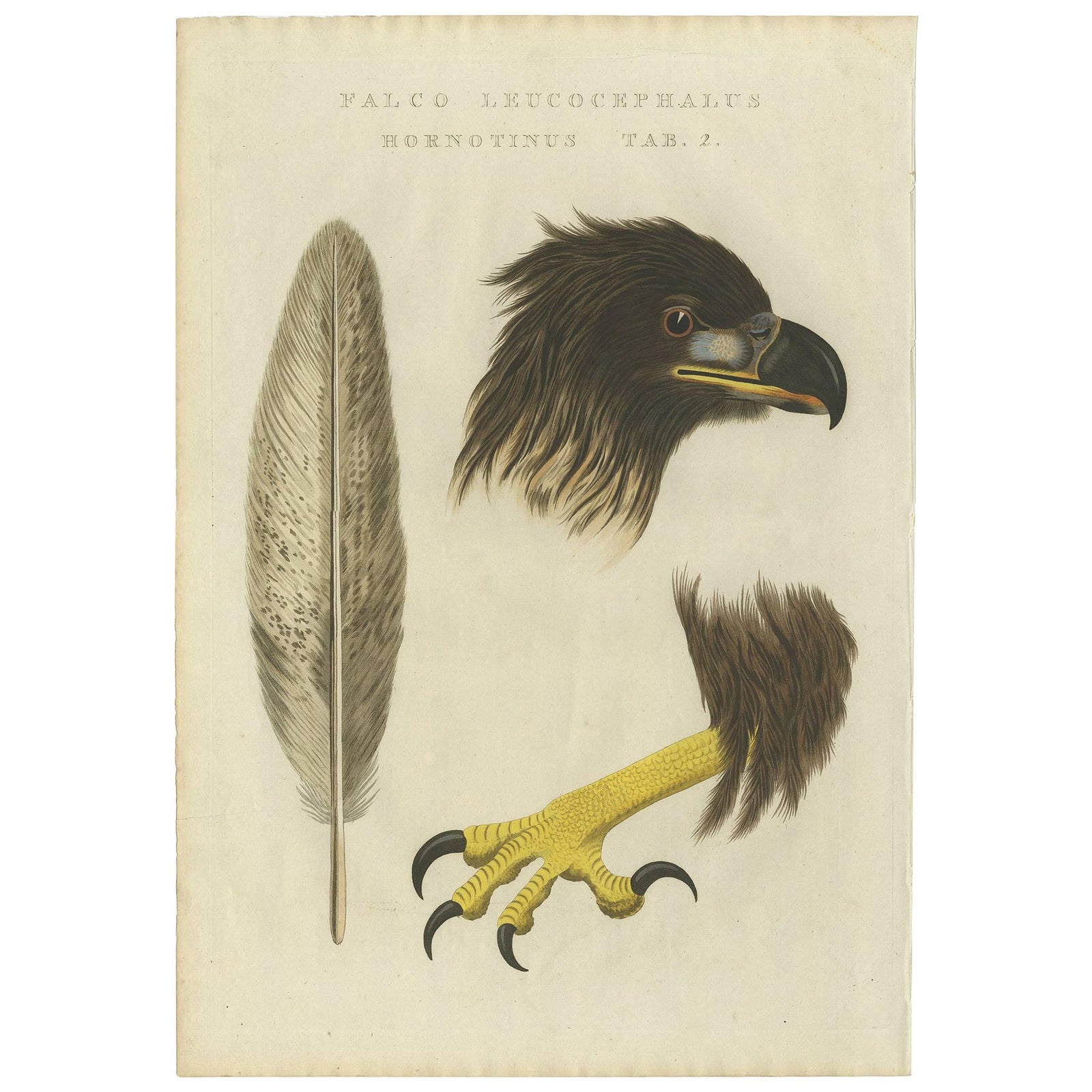
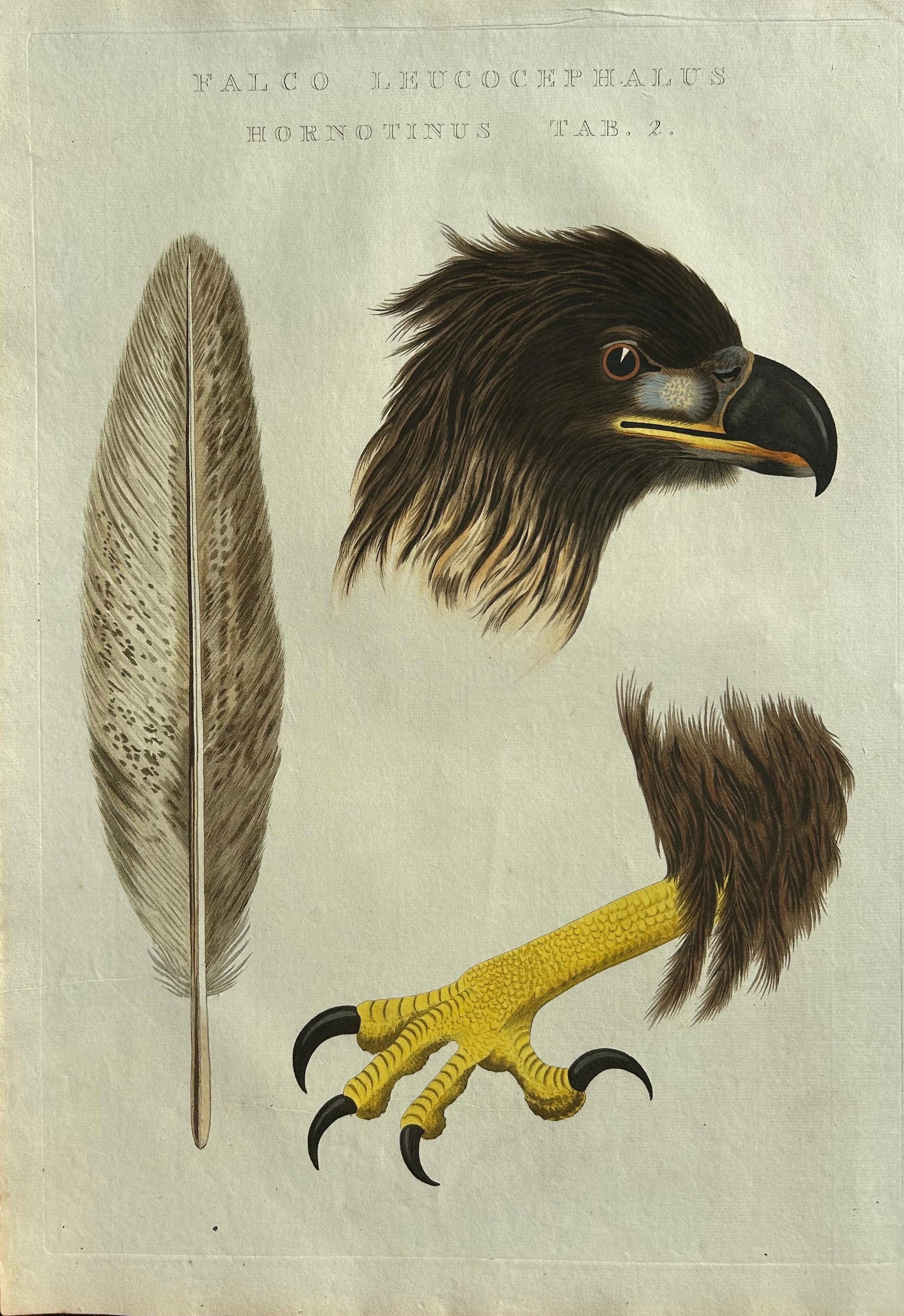
White-Tailed Eagle, Falco leucocephalus hornotinus, Netherlands, 1829
£1,355 ($1,795, €1,600)
Period original, not a reproduction.
Shipped from the Netherlands, flat, insured and tracked, worldwide. Returns accepted within 14 days.
- Date
- 1829
- Size
- 21.1 × 14.6 in (53.5 × 37 cm)
- Technique
- Engraved
- Condition
- Good. Very good condition with vibrant, unfaded hand colouring. Minimal age-related toning to the sheet and only minor handling marks in the margins. One barely visible "line" in the claw. The paper is strong and stable with no tears or repairs.
- Period
- Early 19th century
- Artist or book
- Nozeman and Sepp
- Section
- Birds
- Reference
- f_10950381
White-Tailed Eagle, Falco leucocephalus hornotinus, Netherlands, 1829
This striking antique hand-coloured engraving presents a detailed study of the White-Tailed Eagle (Haliaeetus albicilla), one of Europe’s most powerful birds of prey. The composition is divided into three elements: the impressive hooked beak and fierce gaze of the eagle’s head, a sharply defined talon showing the bird’s formidable hunting equipment, and a large flight feather rendered with delicate precision. Together, these studies highlight the bird’s majesty, strength, and adaptation to its role as an apex predator.
The plate originates from Nederlandsche Vogelen; volgens hunne huishouding, aert, en eigenschappen beschreeven, published in Amsterdam between 1770 and 1829 by Cornelius Nozeman, Martinus Houttuyn, and Jan Christiaan Sepp. This monumental work is considered the first comprehensive ornithological study of the Netherlands and remains one of the most important natural history publications of the 18th and early 19th centuries. Each bird was meticulously documented both in text and illustration, with engravings hand-coloured to capture the true tones of the living animal.
The White-Tailed Eagle, often called the “sea eagle” for its preference for coastal and freshwater habitats, was both admired and feared in the period. Its wingspan can exceed 2.4 metres, and its powerful talons enable it to grasp large fish, waterbirds, and small mammals. This print, with its focus on anatomical details rather than a full-body depiction, reflects the scientific interest in precise observation and classification that defined Enlightenment-era natural history.
Condition report: Very good condition with vibrant, unfaded hand colouring. Minimal age-related toning to the sheet and only minor handling marks in the margins. One barely visible "line" in the claw. The paper is strong and stable with no tears or repairs.
Framing tips: A wide, off-white archival mount will help to frame the composition’s clean detail, paired with a dark mahogany or walnut frame to bring out the golden tones of the talon. For a contemporary presentation, a black frame with a gold fillet can add elegance while maintaining focus on the engraving.