Close-ups
Framed and on the wall
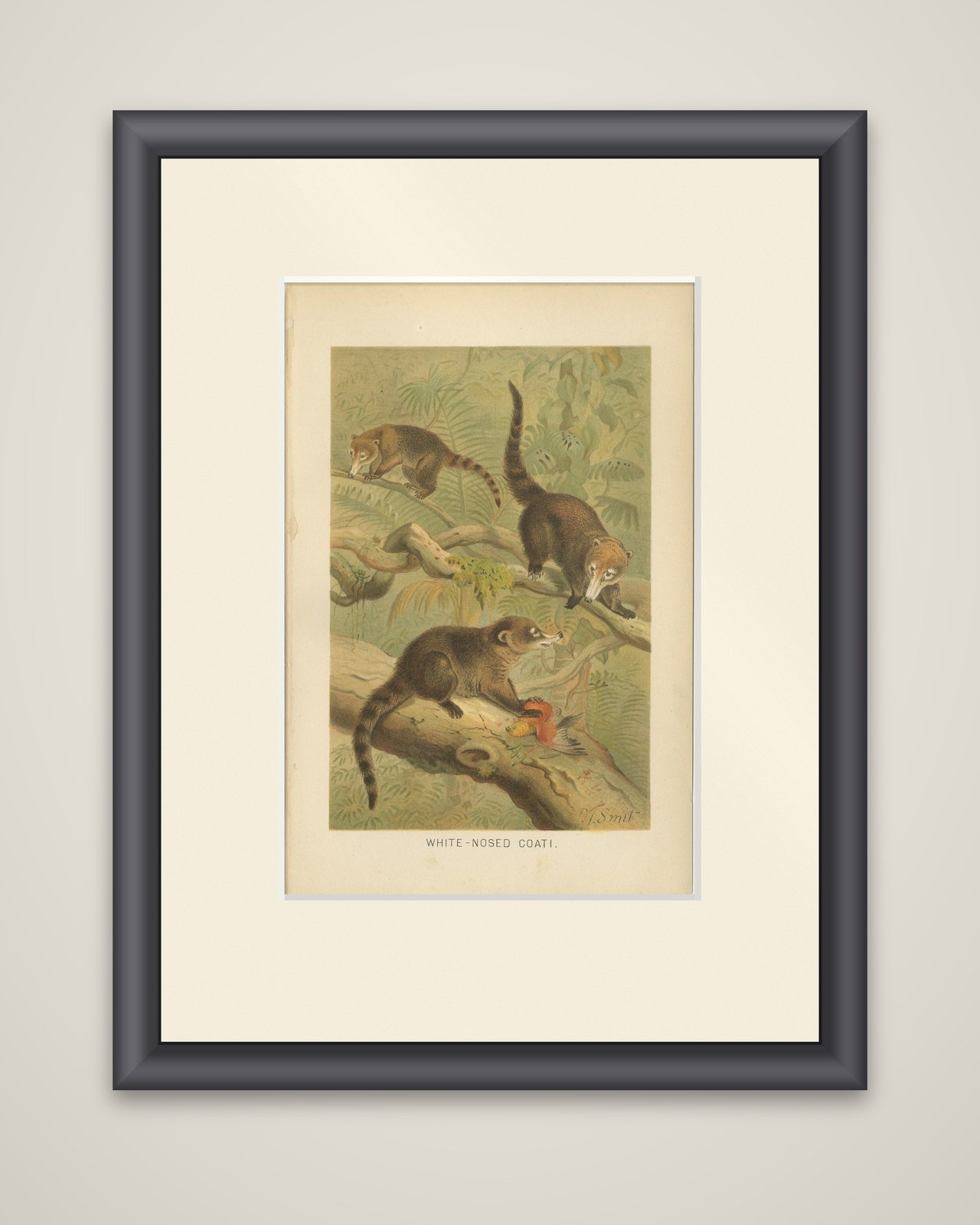


Frame and rooms are illustrations of how the print could look; the description says what is included.
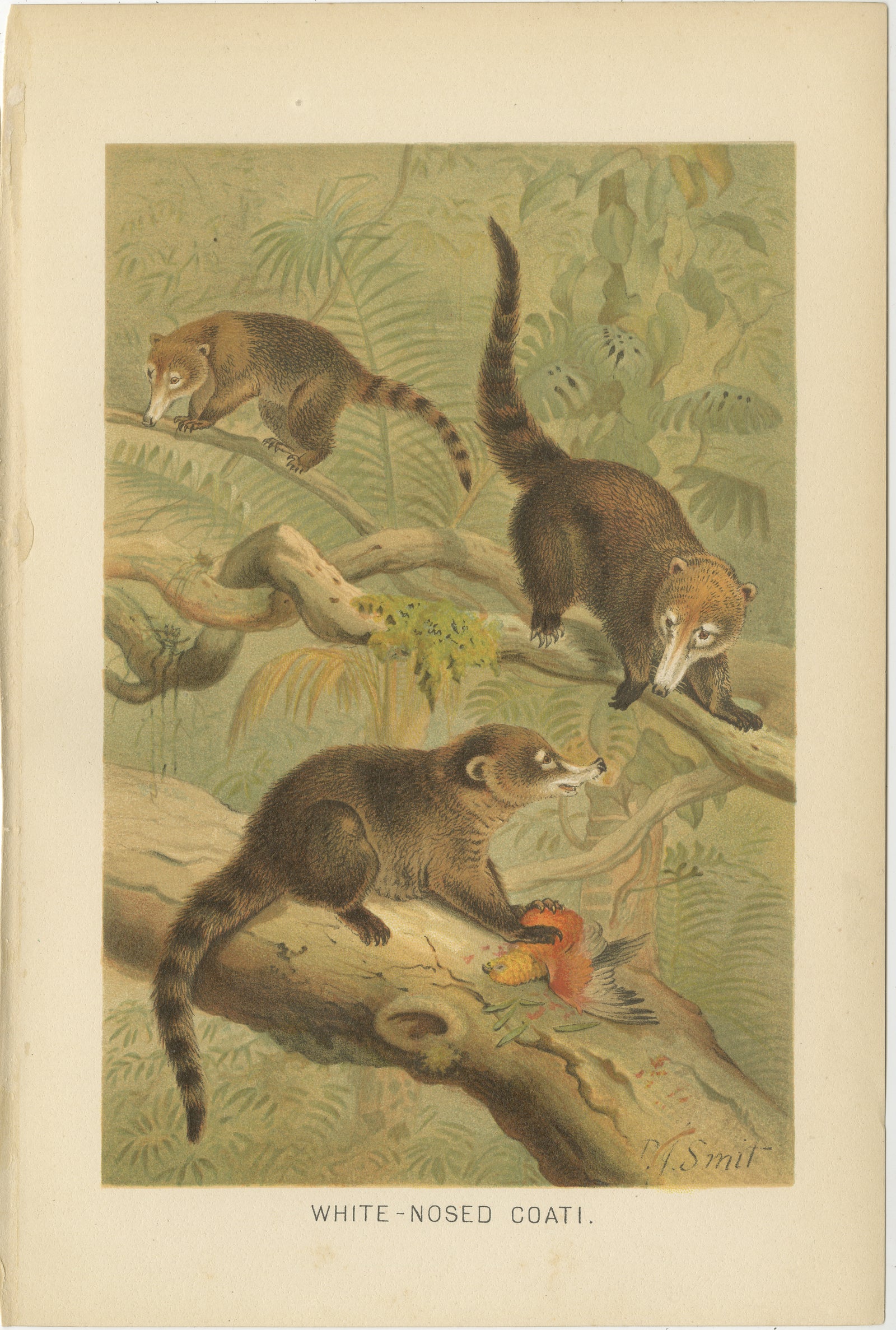
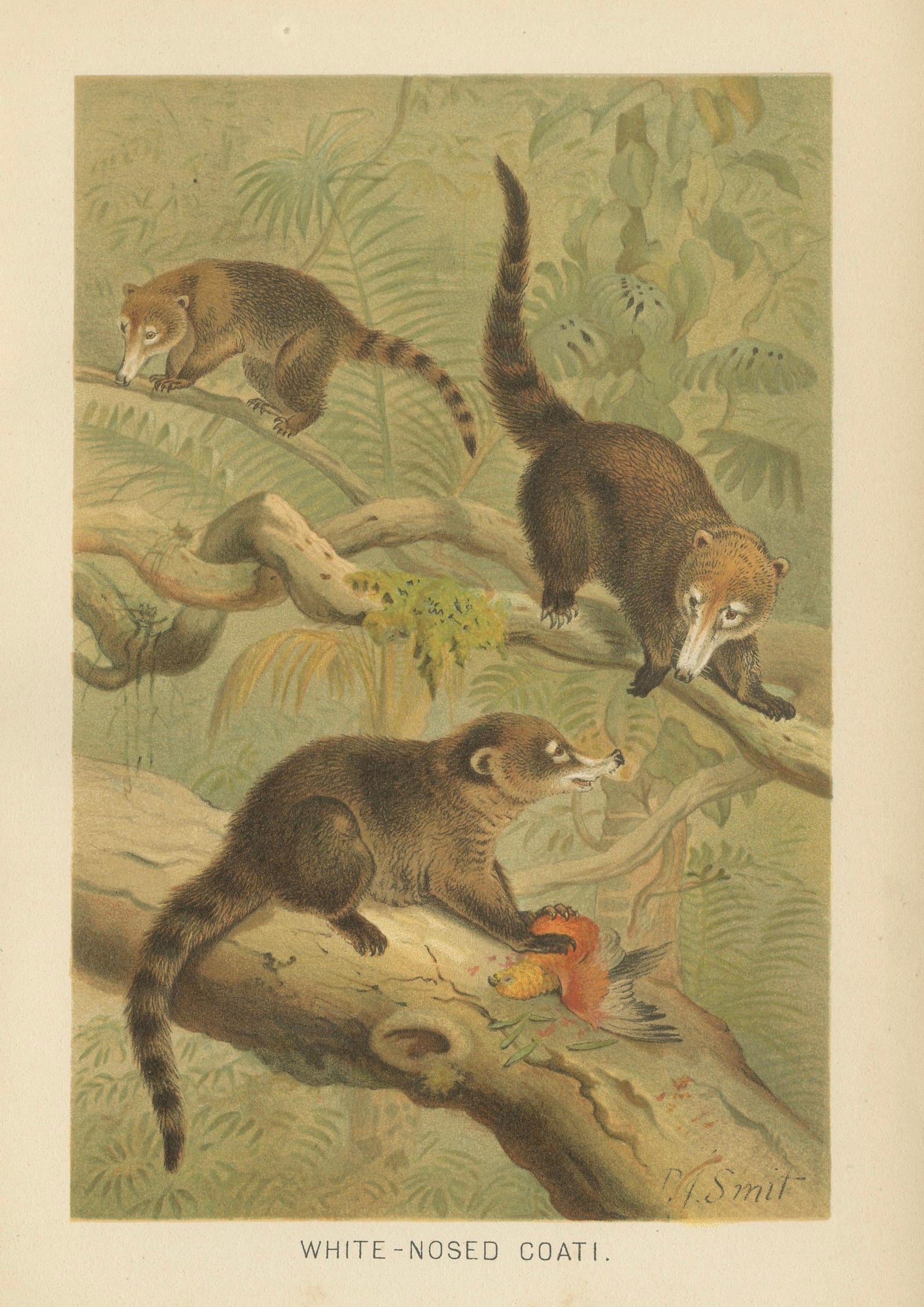
White-Nosed Coati, Antique Tropical Animal Chromolithograph, 1894
€199 ($225, £170, €199)
Period original, not a reproduction.
Shipped from the Netherlands, flat, insured and tracked, worldwide. Returns accepted within 14 days.
- Date
- 1894
- Size
- 10 × 6.7 in (25.5 × 17 cm)
- Condition
- Good. Very good antique condition with mild age toning and light edge wear.
- Period
- Late 19th century
- Section
- Mammals
- Reference
- f_49025912
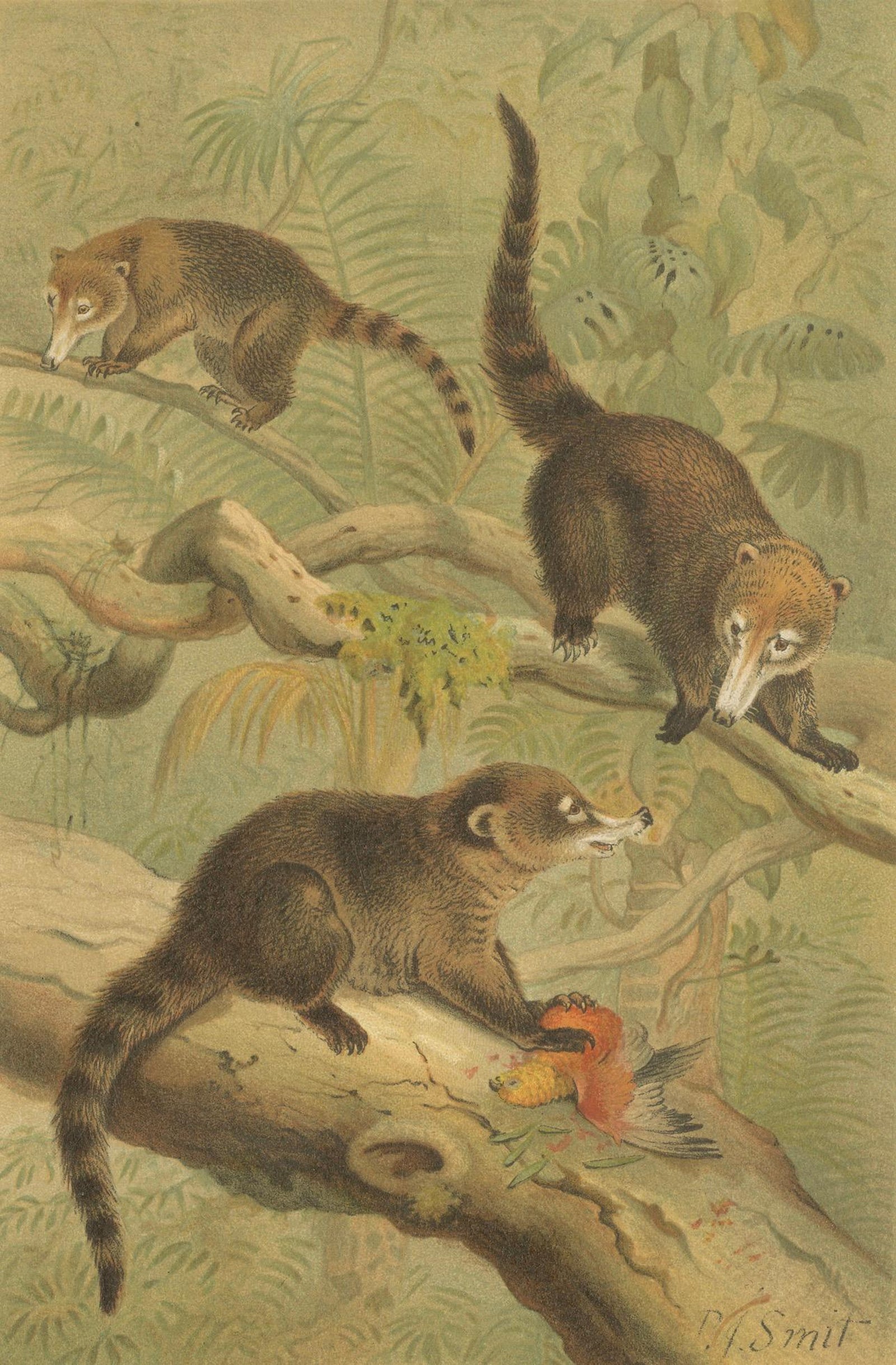
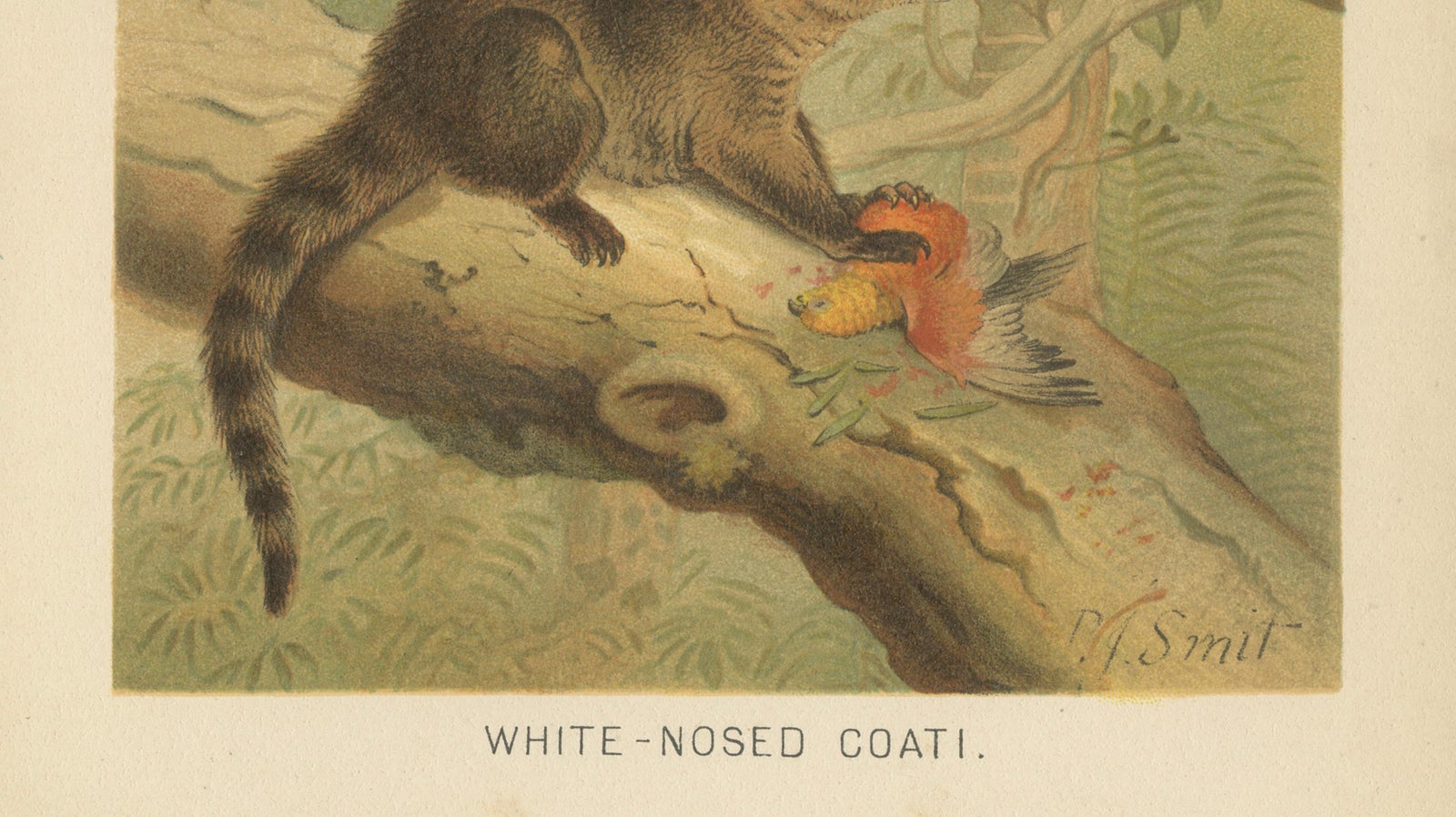
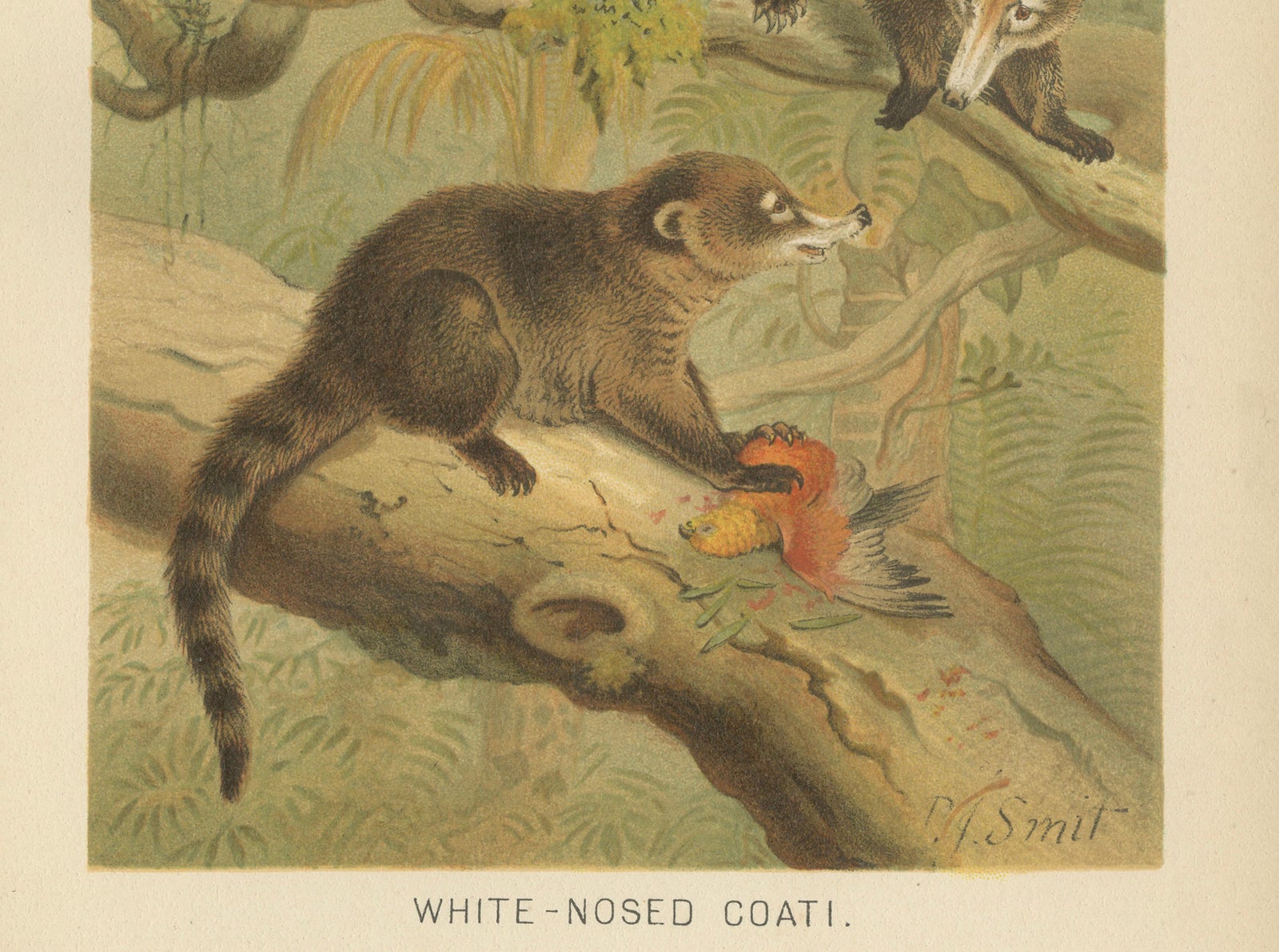
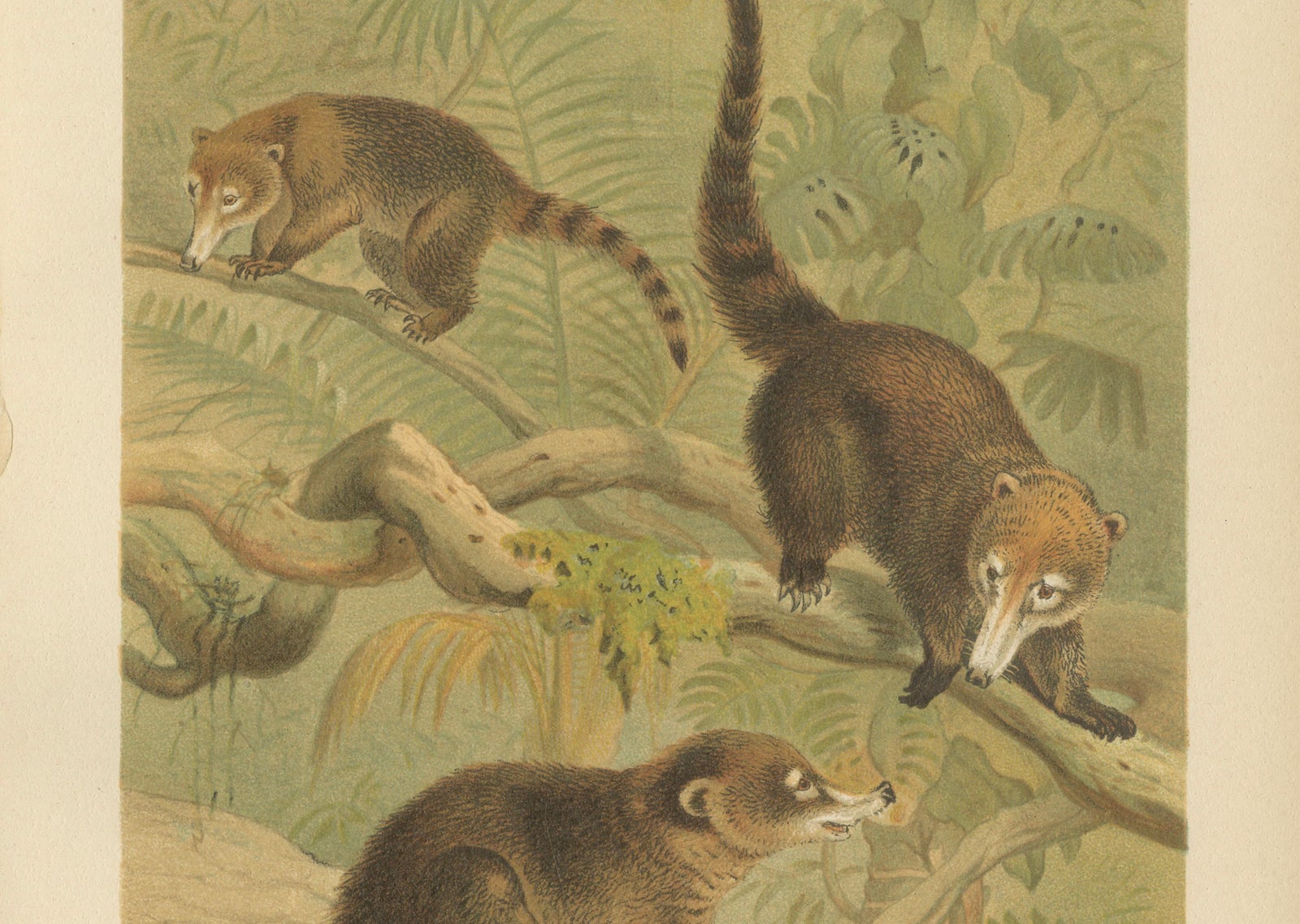
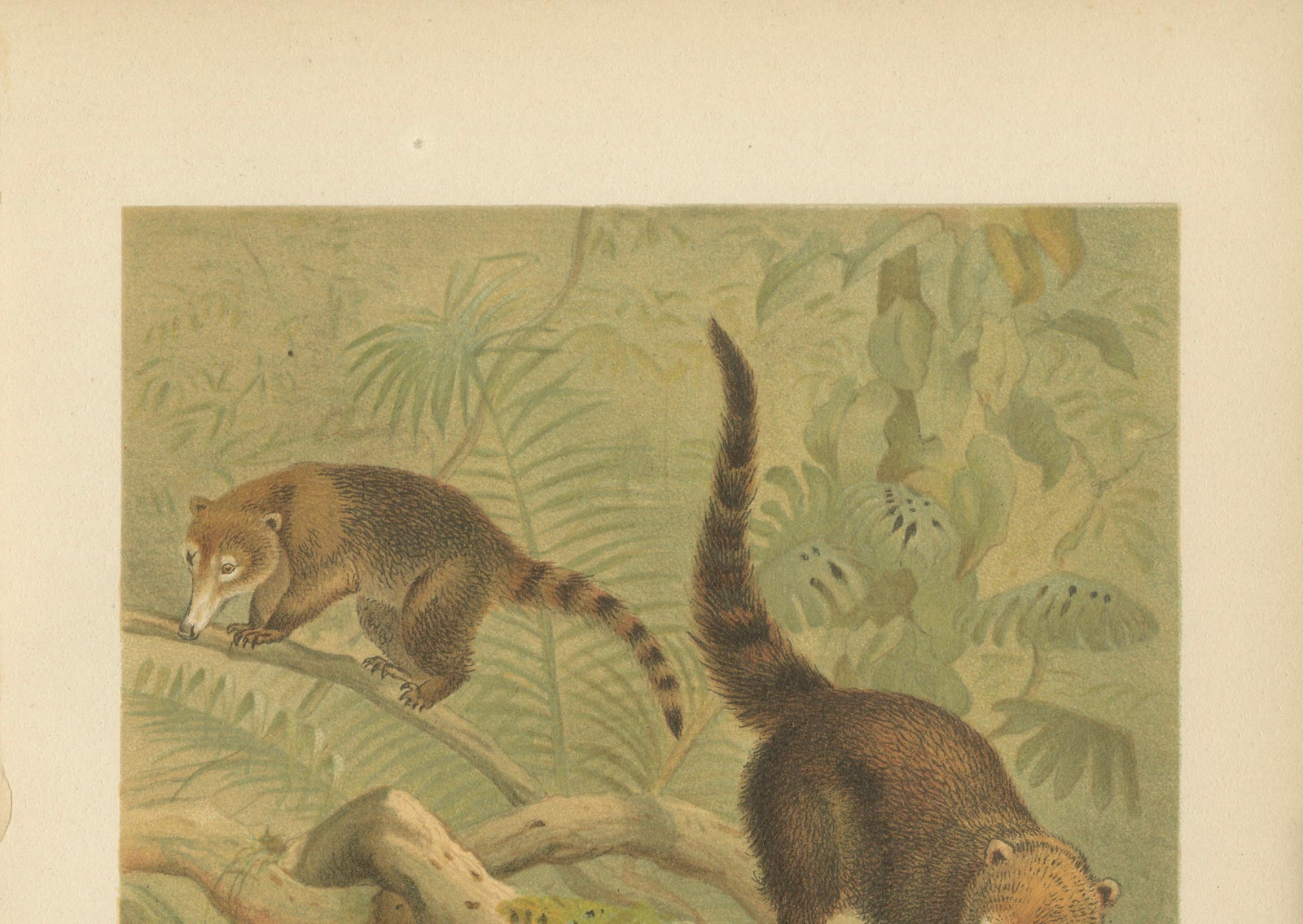
Three white-nosed coatis in a tropical forest, an original chromolithograph after P. J. Smit from The Royal Natural History, published in London in 1894. The plate is printed in full color, with the artist's signature in the lower right corner of the image and the title "White-Nosed Coati" lettered below in the margin.
The animals are shown climbing along a large mossy limb. One coati moves along a branch at the upper left, another stands on its hind legs with its ringed tail raised high at the upper right, and the third crouches on a fallen trunk in the foreground, holding a small orange and red bird under its forepaws. Their long snouts, pale muzzles and banded tails are drawn in fine detail, and palm fronds and broad-leaved plants fill the green background.
The white-nosed coati lives in the forests of Central America and reaches north into the southwestern United States and south into northern South America. The plate is a Victorian color illustration of an animal of the New World, printed as part of a multi-part work on the animal kingdom.