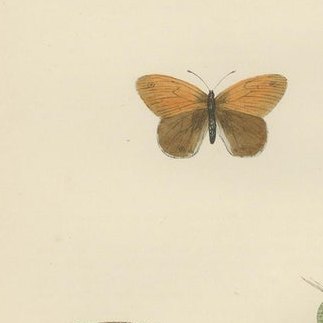
Close-ups
Framed and on the wall
Frame and rooms are illustrations of how the print could look; the description says what is included.
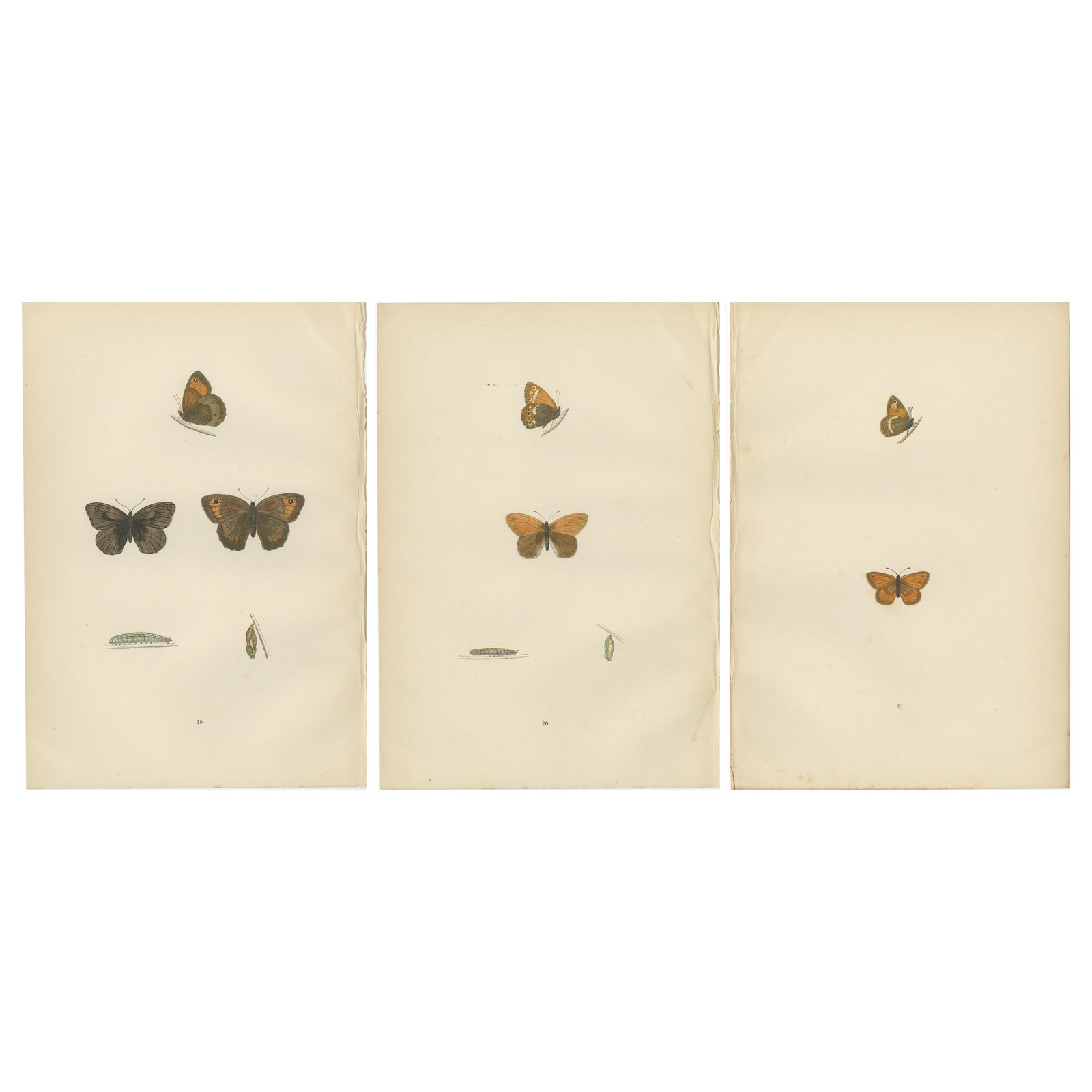
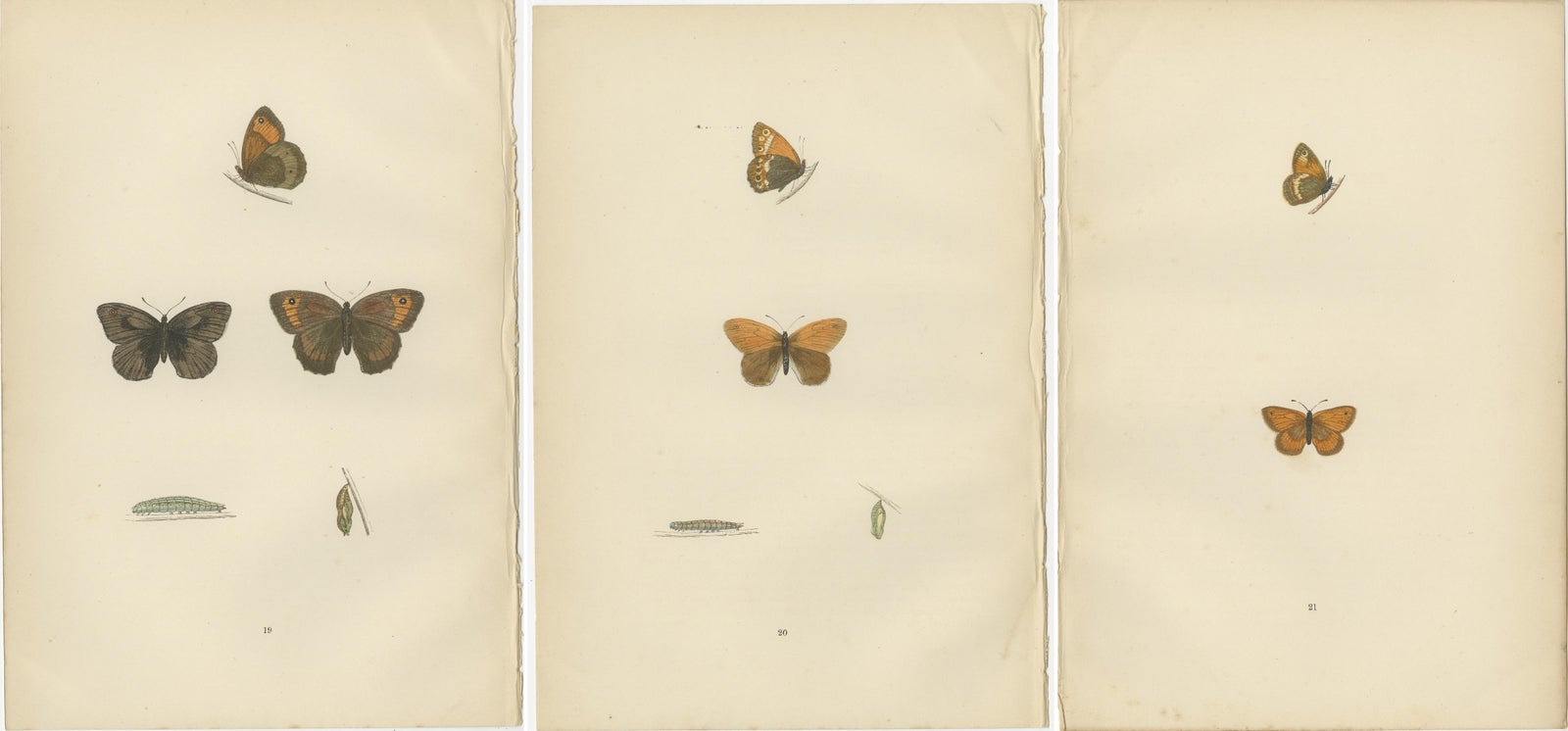
Whispers of Wings: A Butterfly Triptych Collage, 1890
£195 ($260, €230)
Period original, not a reproduction.
Shipped from the Netherlands, flat, insured and tracked, worldwide. Returns accepted within 14 days.
- Date
- 1890
- Size
- 10 × 6.8 in (25.4 × 17.3 cm)
- Condition
- Good. Given age, general age-related toning. Some small spots.. Please study scan carefully.
- Period
- Late 19th century
- Section
- Insects and butterflies
- Reference
- f_38946482
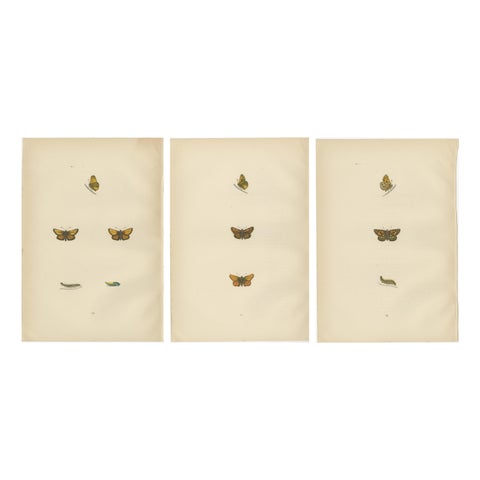
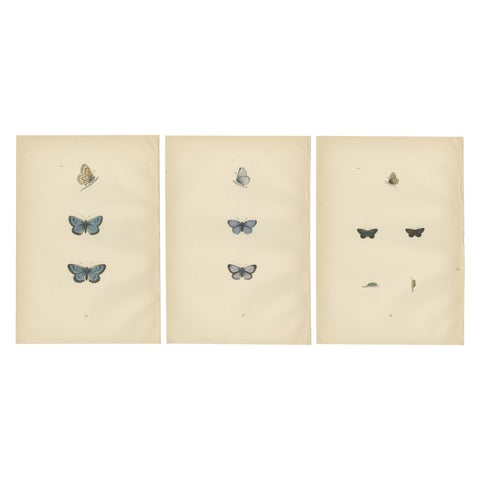
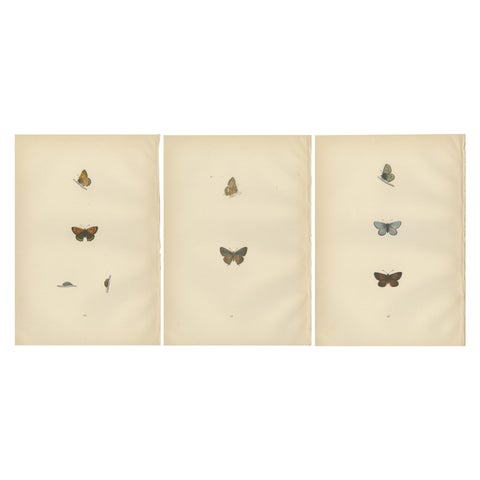
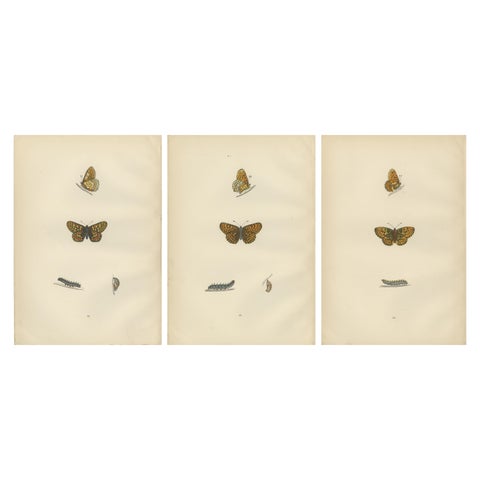
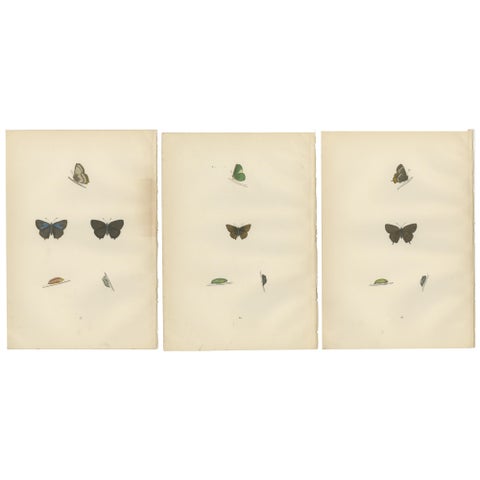
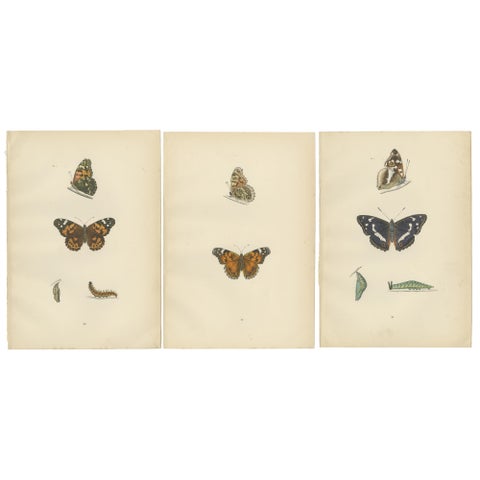
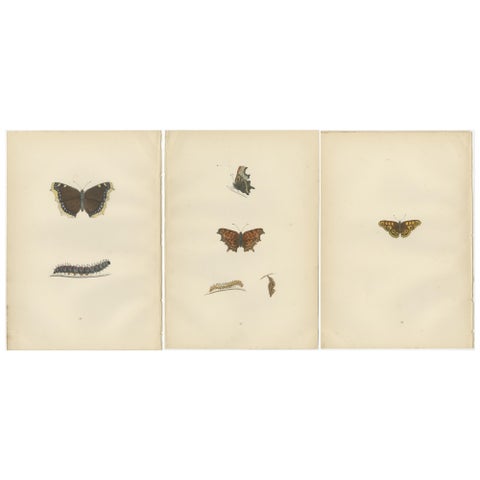
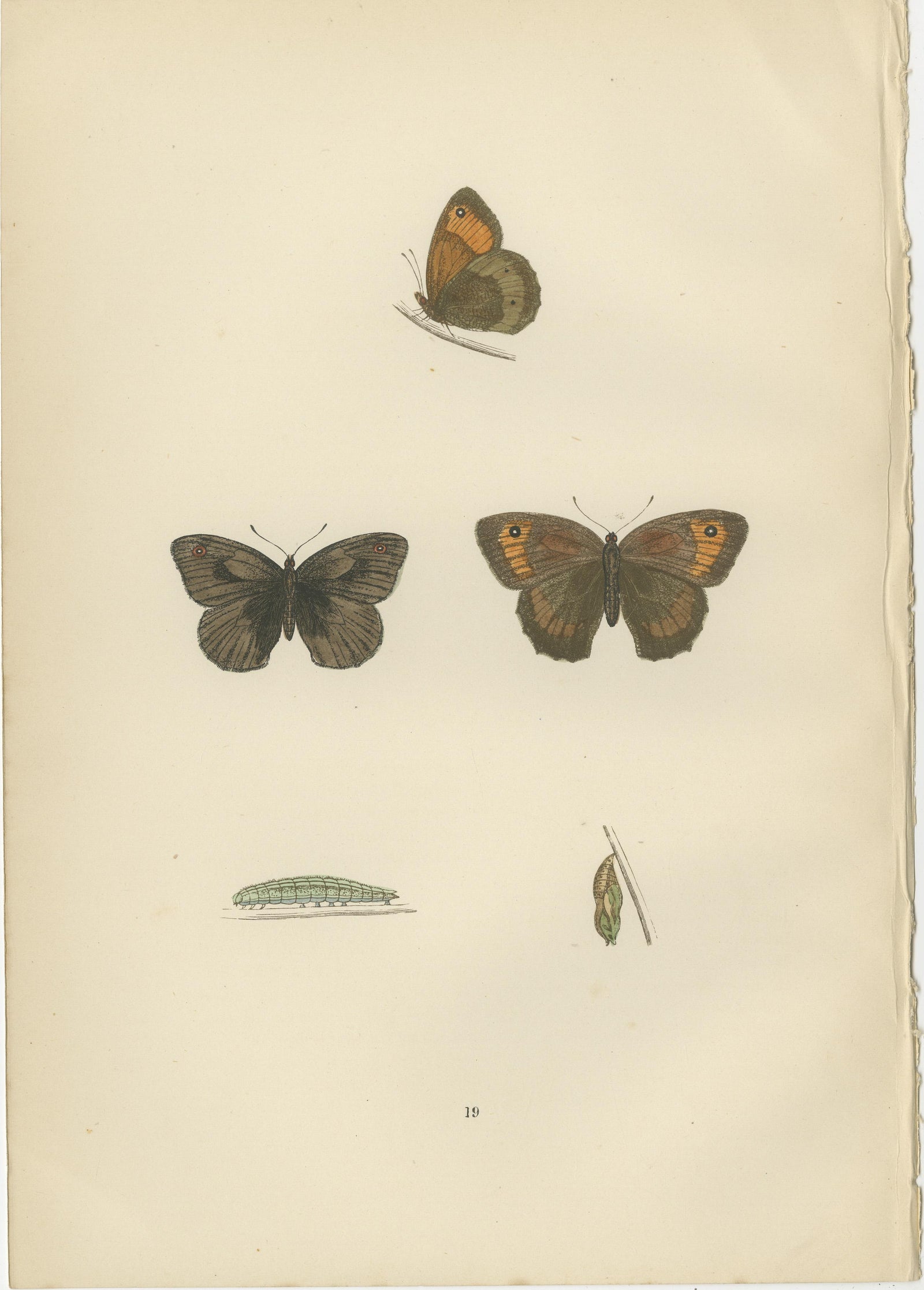
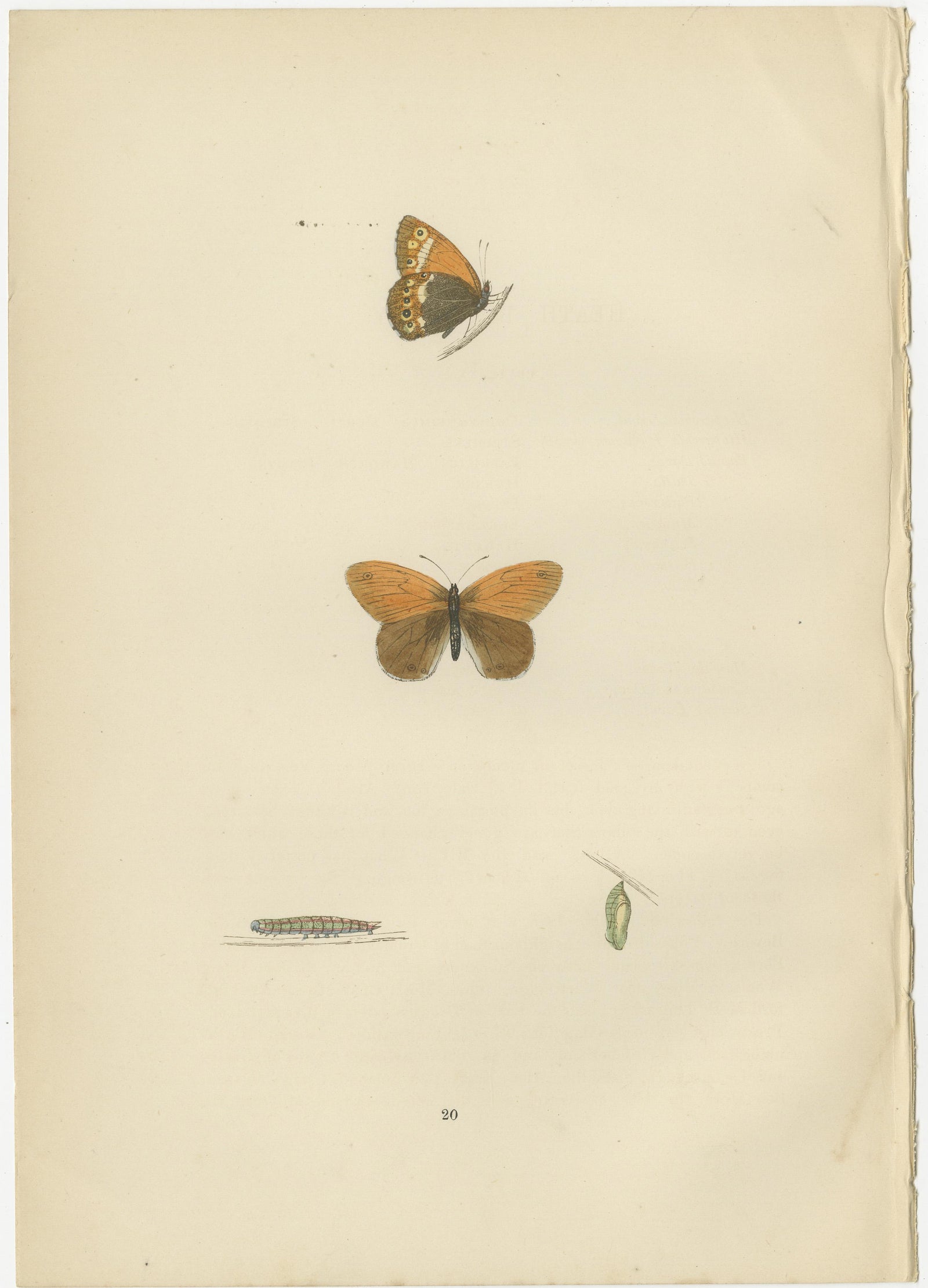
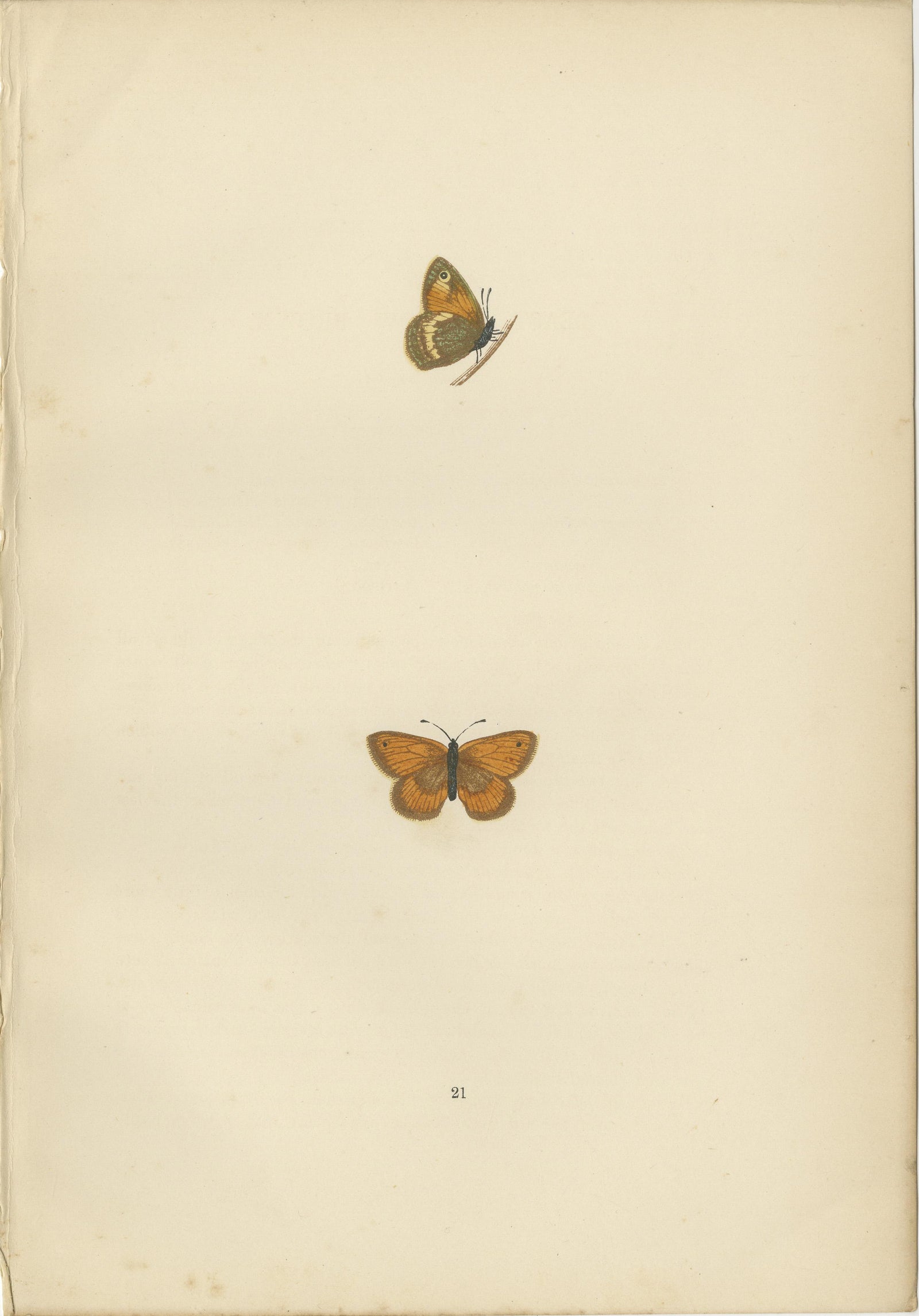
The butterflies presented in these hand-colored plates from the 1890 edition of 'A History of British Butterflies' by Morris include:
1. **Large Meadow Brown (likely Maniola jurtina)** - This butterfly typically showcases wings that are a rich, tawny brown color. The males usually have a single, prominent eyespot on the forewing, whereas the females may have several, more discreet ones. This species is interesting because of its widespread nature and adaptability to various habitats, often found in grassy meadows throughout Europe.
2. **Heath Butterfly (likely Coenonympha pamphilus, also known as the Small Heath)** - The Small Heath is a small butterfly with a wingspan of about 30 mm. It's characterized by its understated yet elegant coloration: earthy browns with eye-catching eye spots on the wings and subtle orange patches. This butterfly is compelling for its behavior of flying low to the ground and its tendency to rest with its wings closed, revealing the camouflaged undersides that blend with the grassy environment.
3. **Least Meadow Brown (this is a less common name, possibly an older term for a known species or a variation of the Small or Common Meadow Brown, which could refer to various species in the Maniola or Hyponephele genus)** - If this refers to a smaller species or subspecies within the aforementioned genera, it would be characterized by its smaller size and perhaps more delicate features. The interest in such species often lies in their specific habitat requirements and behaviors, which can be crucial for understanding biodiversity and conservation needs.
What makes these butterflies particularly interesting is their ability to adapt to the environmental conditions of meadows and grasslands, as well as their contributions to the ecosystem as pollinators. Their varying levels of commonness or rarity also provide insights into the health of their habitats. The hand-colored plates themselves serve as historical artifacts, showcasing the meticulous art of natural history illustration and the endeavor to catalog and understand biodiversity during the period of publication.