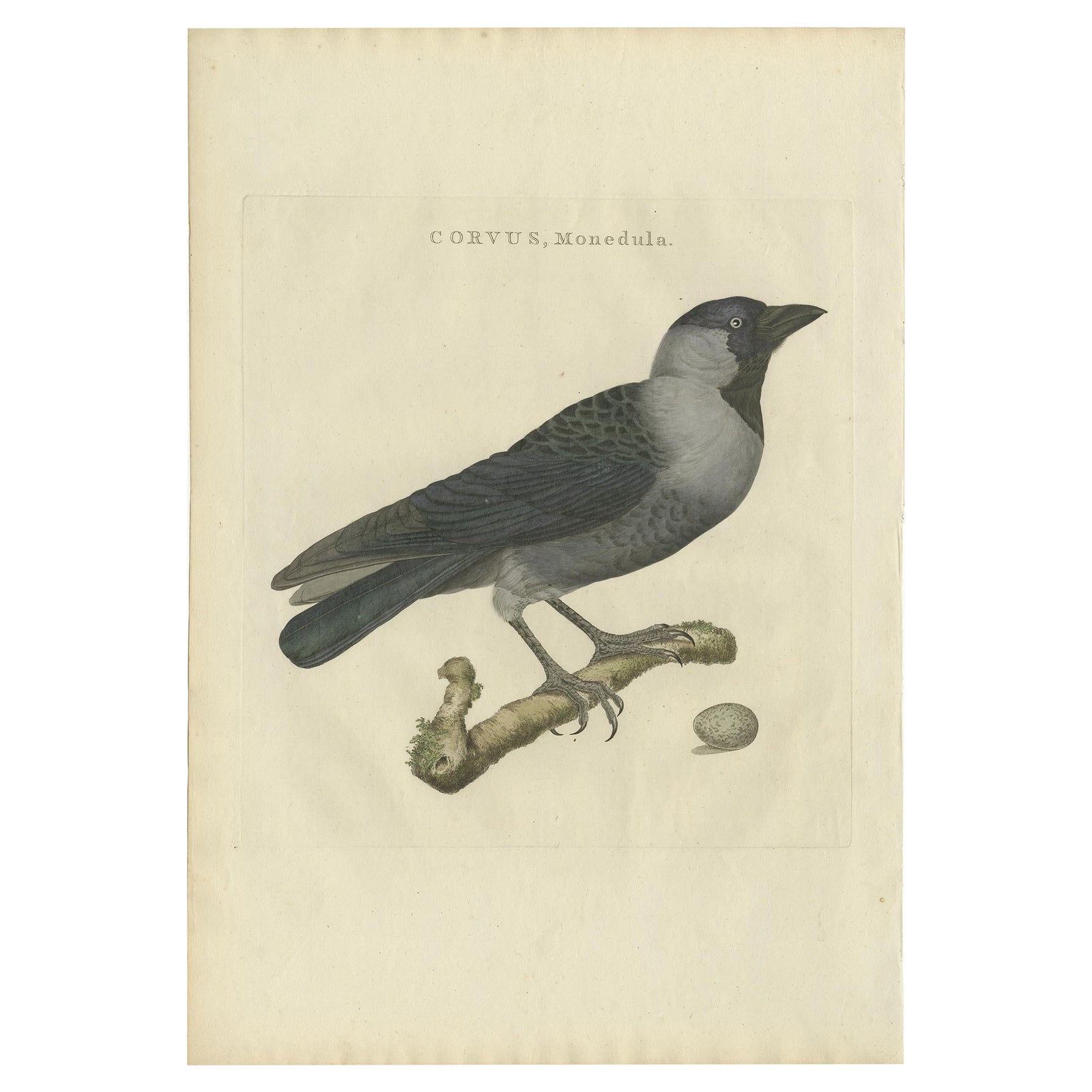
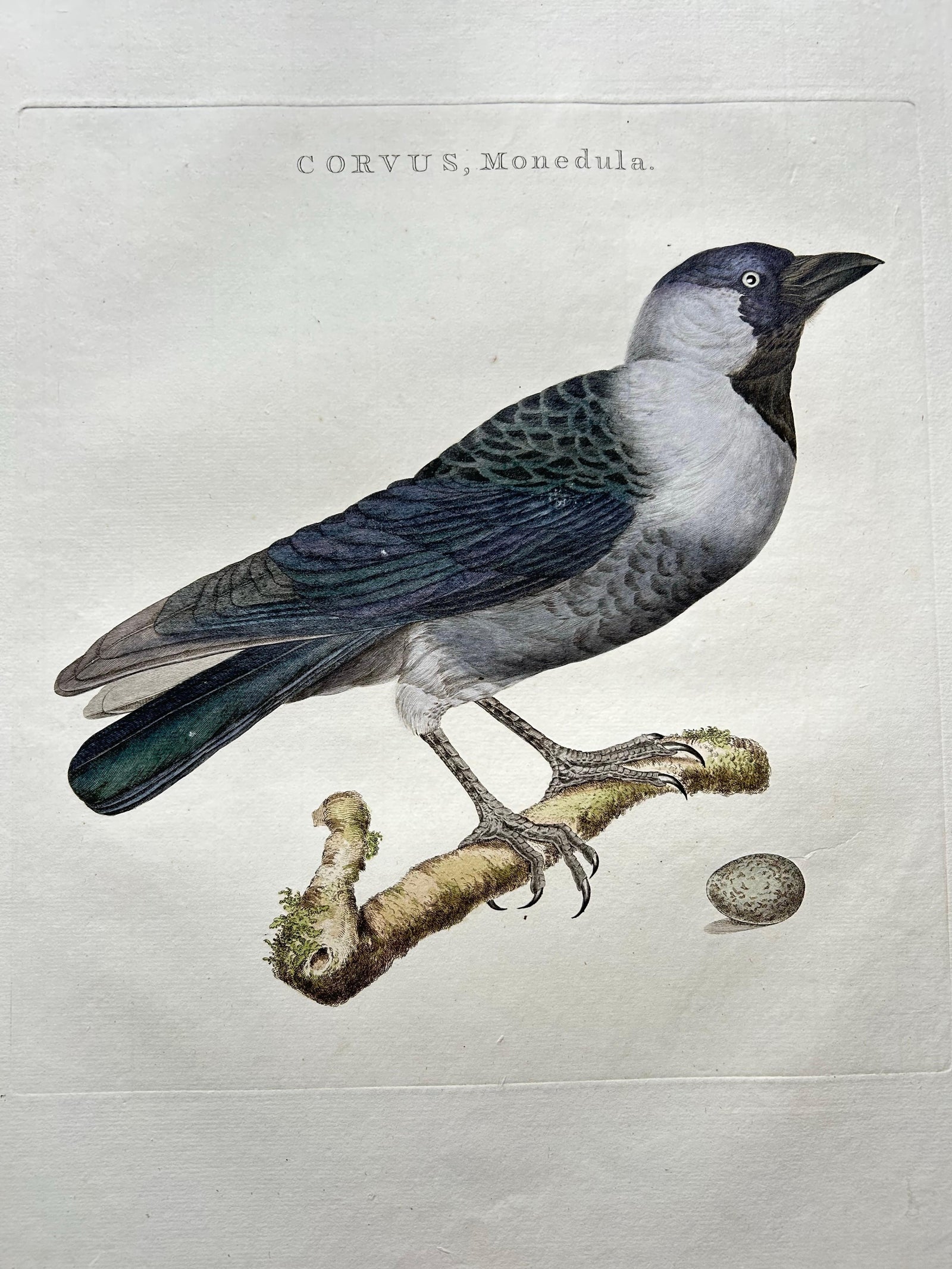
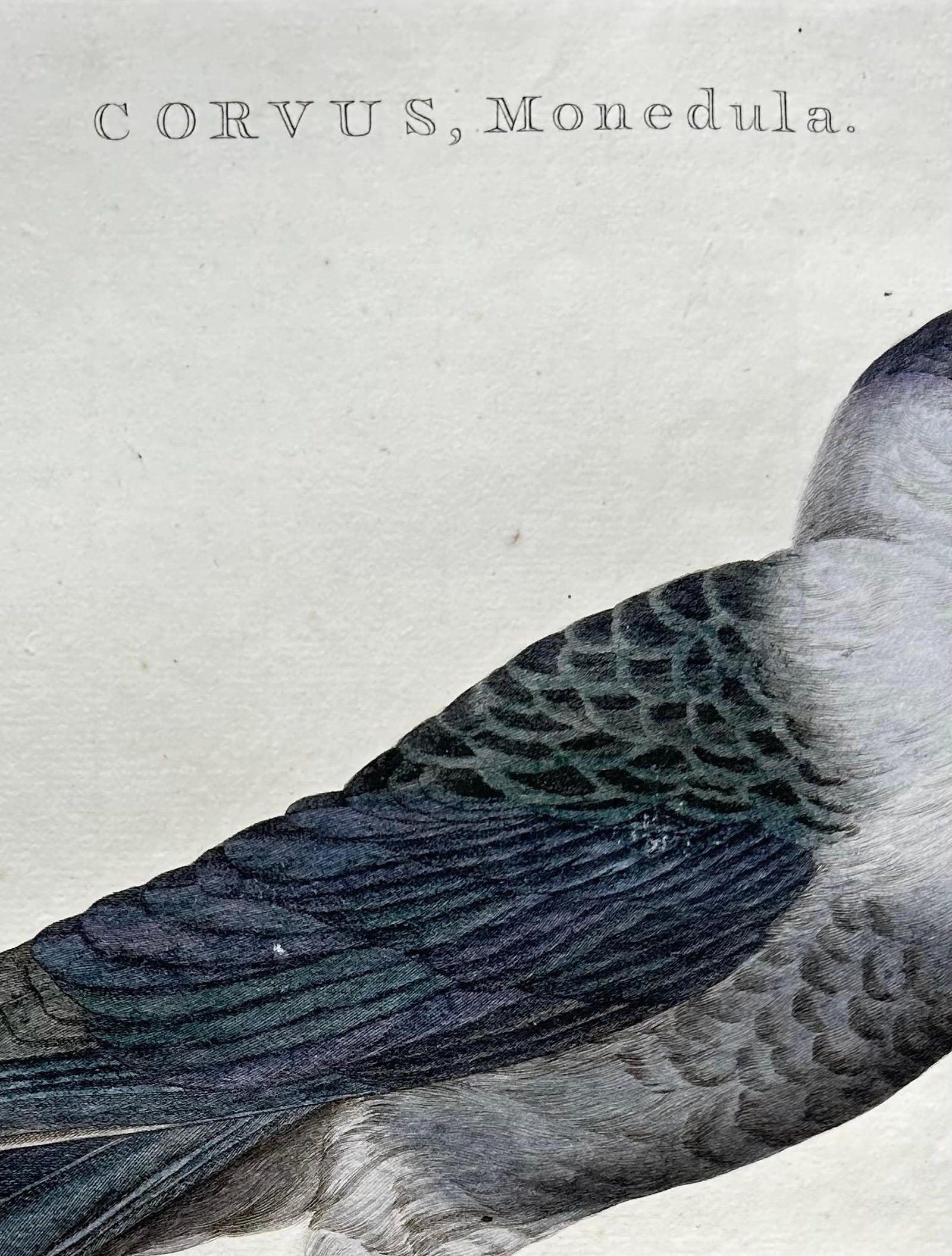
Western Jackdaw Print, Corvus Monedula by Nozeman and Sepp, 1797
$895 (£680, €800)
Period original, not a reproduction.
Shipped from the Netherlands, flat, insured and tracked, worldwide. Returns accepted within 14 days.
- Date
- 1797
- Size
- 20.9 × 14.2 in (53 × 36 cm)
- Condition
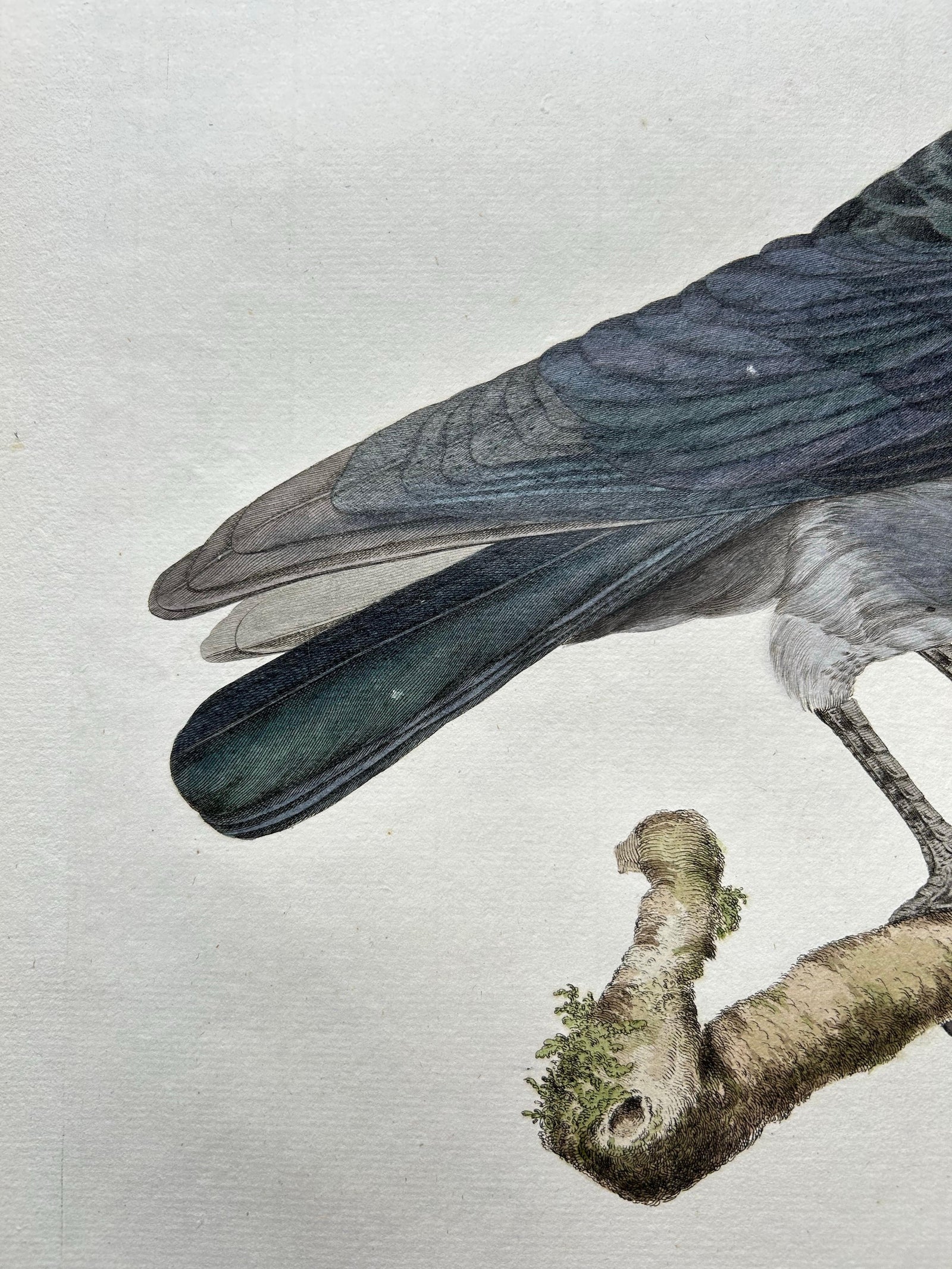
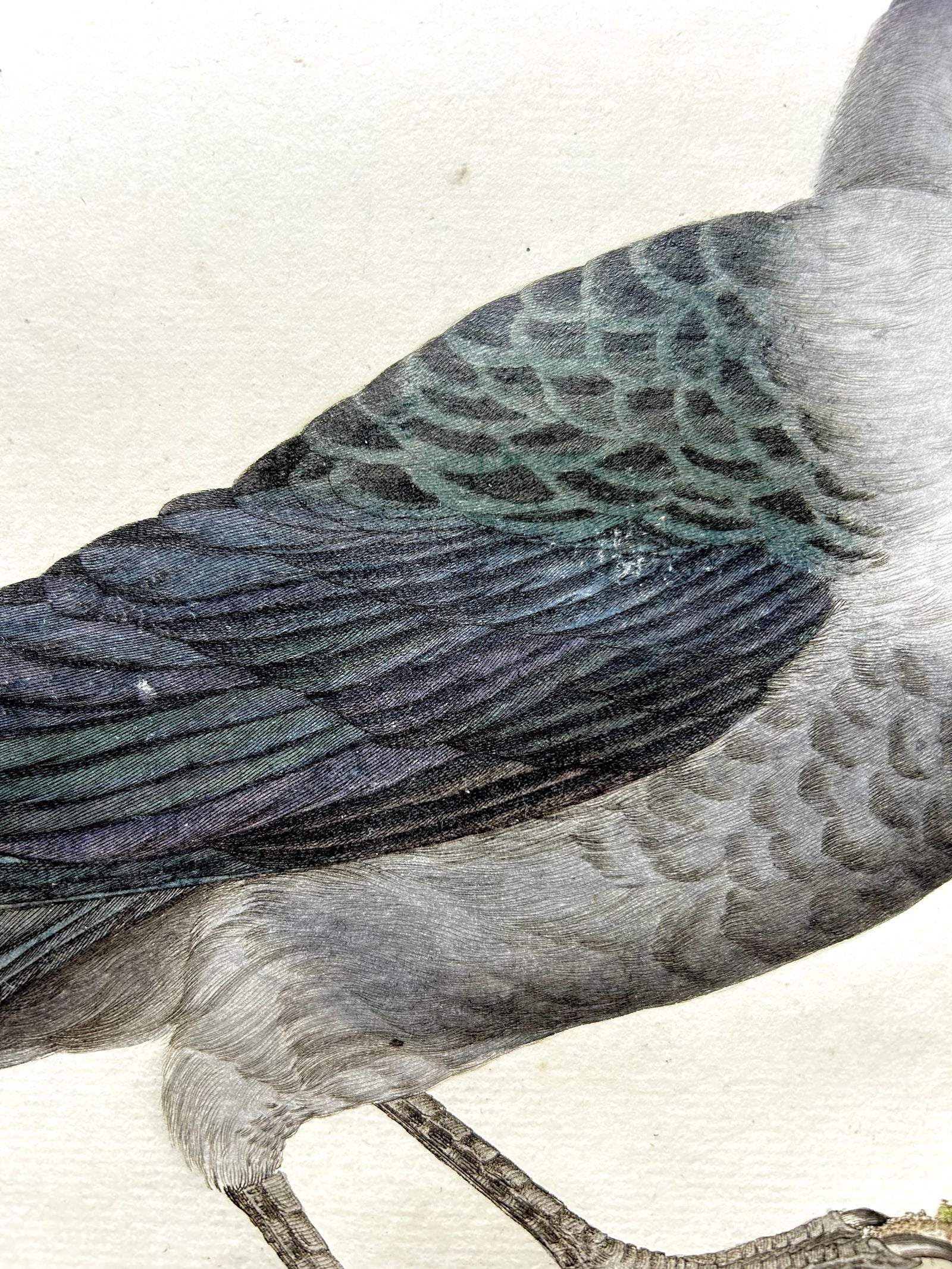
- Good. Very good. Some age-related toning and light handling marks typical of 18th–early 19th century laid paper. Wide margins preserved, with visible plate mark. Accompanied by the original descriptive text sheet.
- Period
- 18th century
- Artist or book
- Nozeman and Sepp
- Section
- Birds
- Reference
- f_25878842
- Color
- Hand colored
What the condition grades mean
- Excellent
- Bright and clean, with no faults worth mentioning.
- Very good
- Only light signs of age, such as faint toning.
- Good
- Normal signs of age for a sheet of this period: toning, some foxing, small marks or neat old repairs.
- Fair
- Clear faults such as staining, tears or repairs, priced to match.
Every fault we see is written in the condition note, and the whole sheet is shown uncropped in the photos.
Western Jackdaw Print, Corvus Monedula by Nozeman and Sepp, 1797
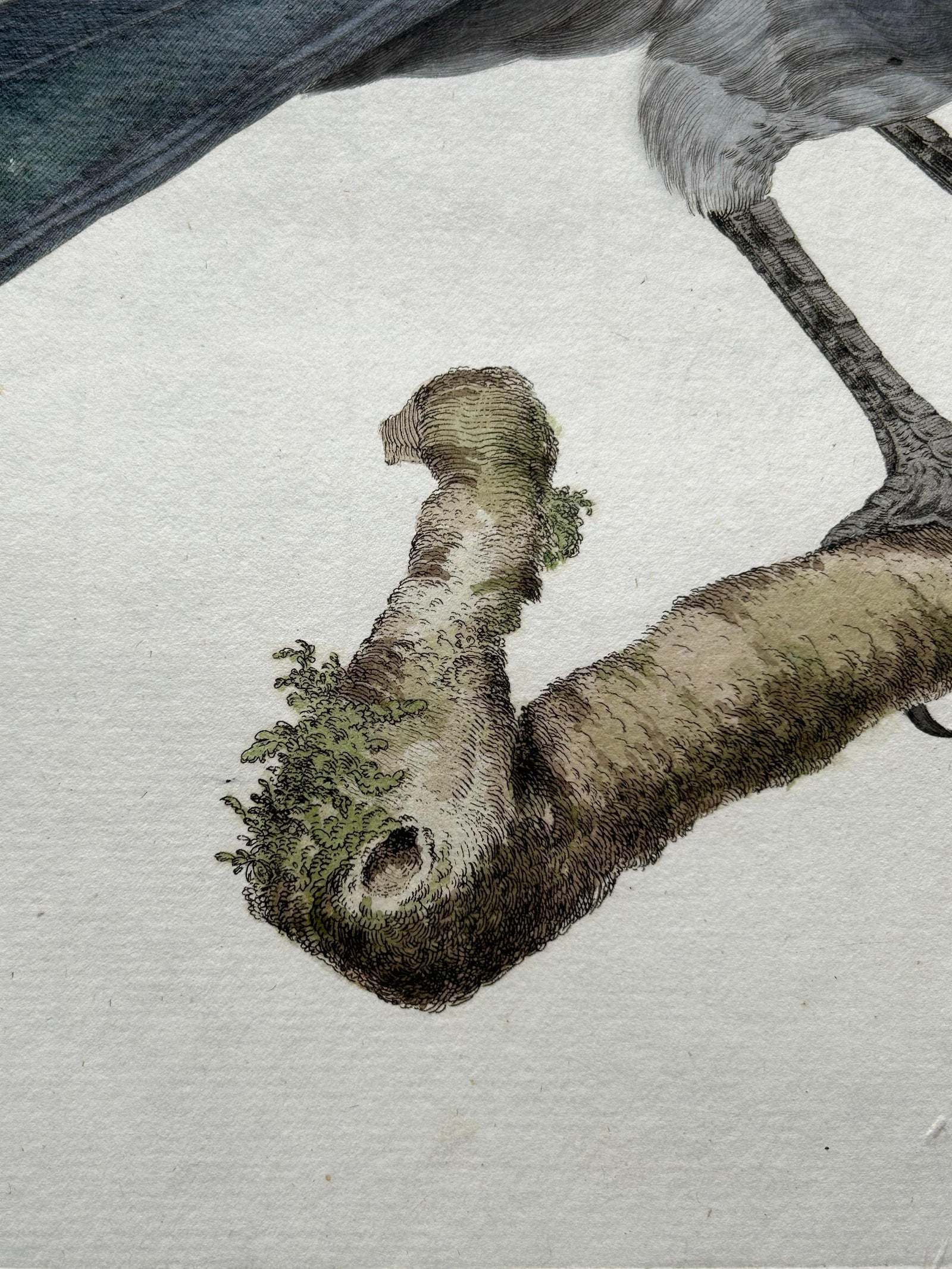
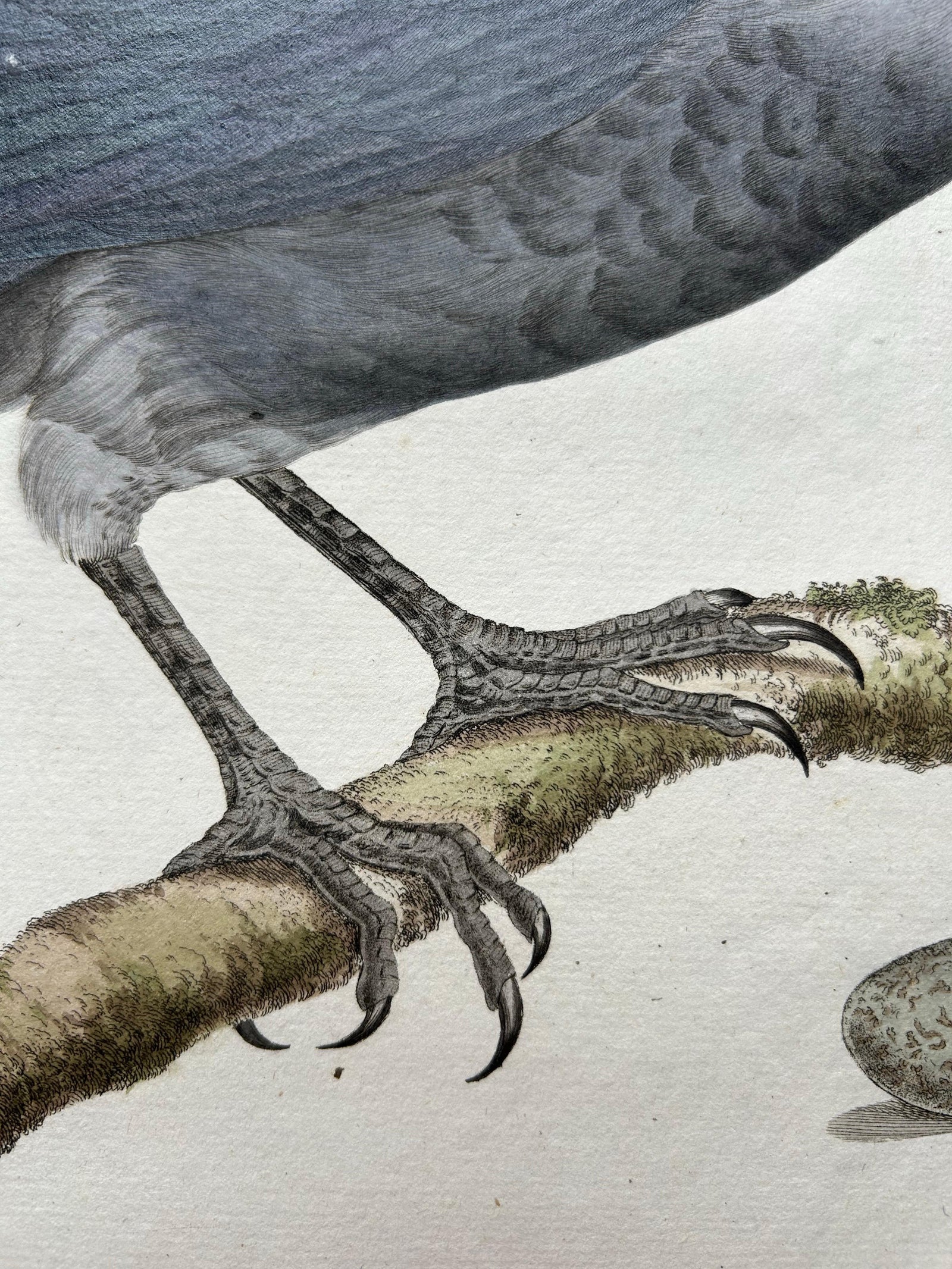
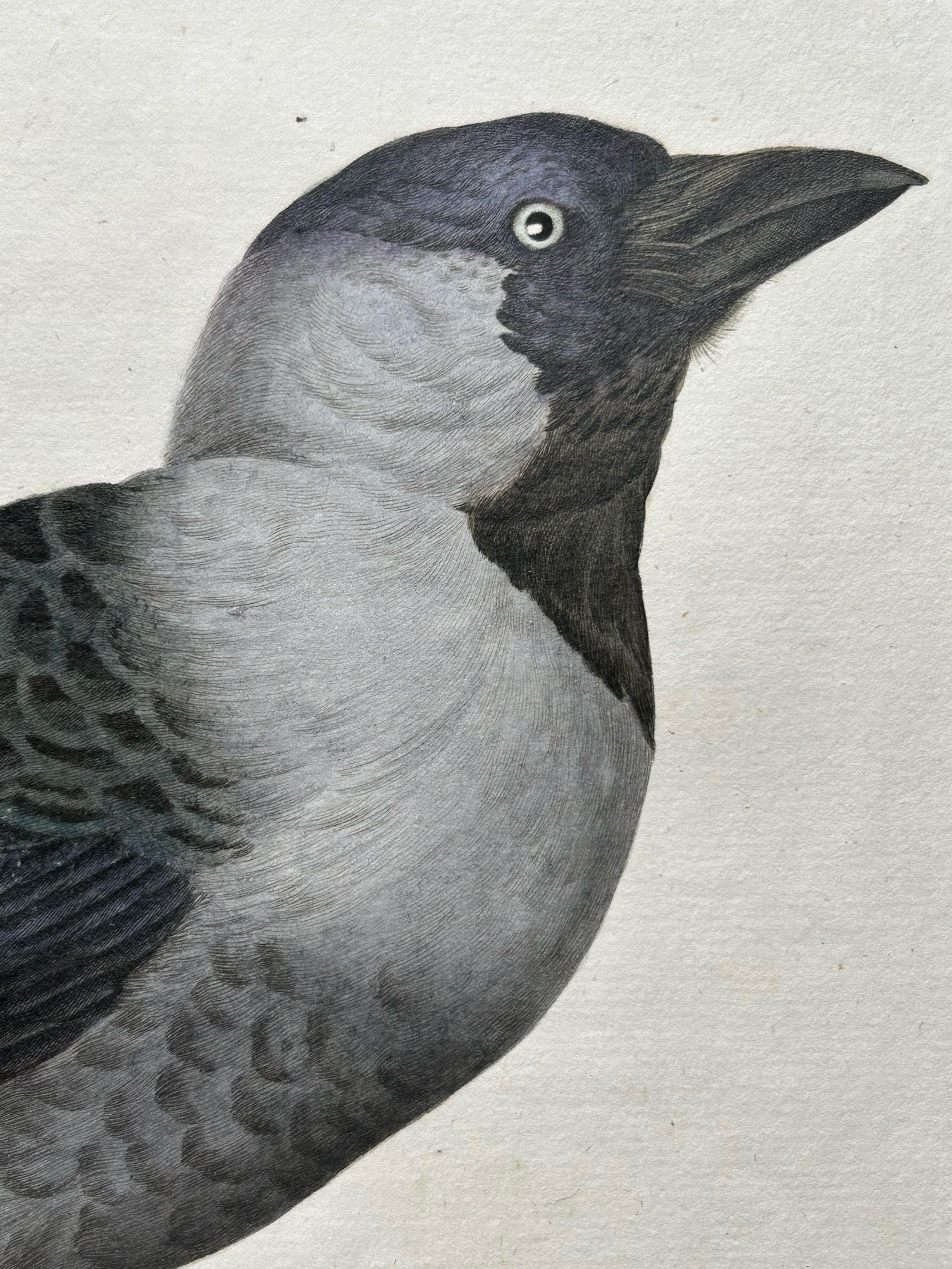
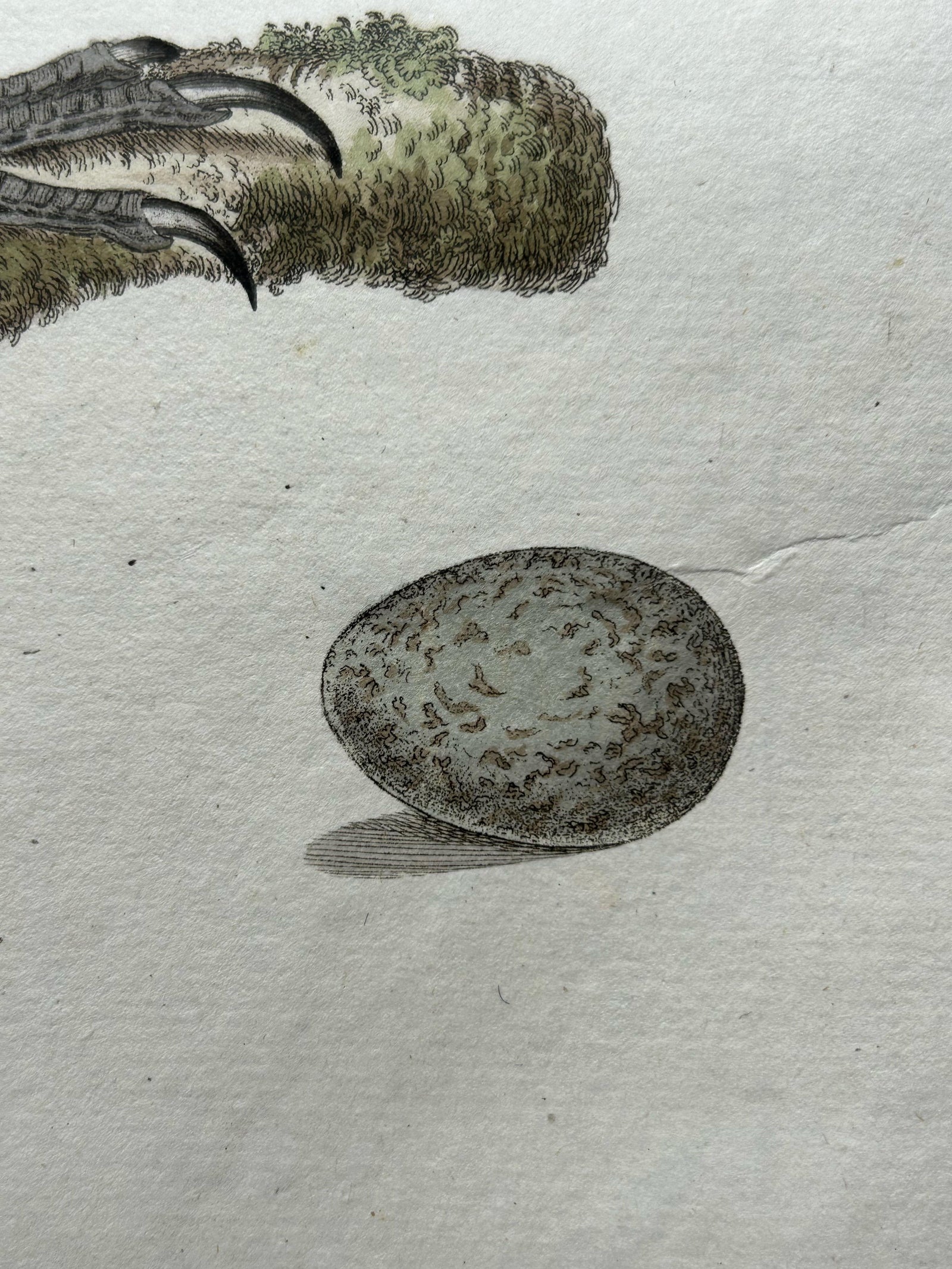
This antique hand-colored copperplate engraving shows the Western Jackdaw (Corvus monedula), known in Dutch as the kauw. Perched on a mossy branch with an egg depicted alongside, the bird is rendered with remarkable detail, highlighting its ash-gray nape, pale eyes, and glossy black wings. Native across Europe, western Asia, and North Africa, the jackdaw is among the smallest members of the crow family and is a familiar sight in towns, farmland, and coastal cliffs.
The species was first described by Linnaeus, who classified it as Corvus monedula. Its common name derives from “jack,” meaning small, and “daw,” the old English word for the bird. In folklore and literature, jackdaws have long been noted for their intelligence and sociable nature, often nesting in chimneys, towers, or old ruins. Subspecies across its range vary slightly in plumage, but all share the characteristic silvery-gray collar that sets them apart from larger corvids.
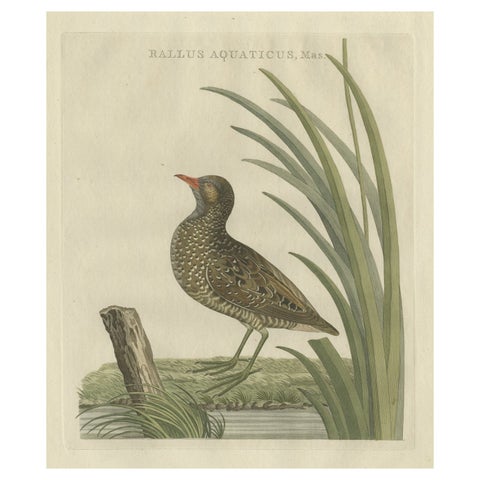
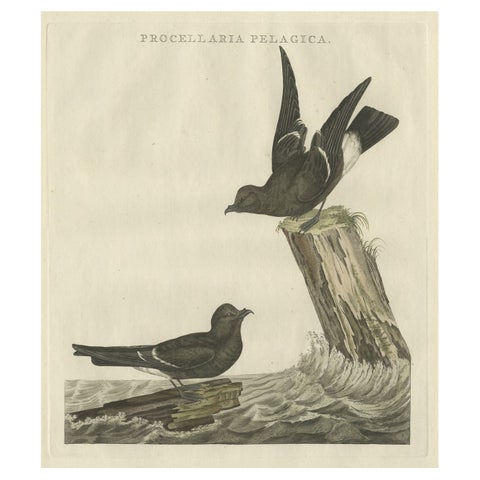
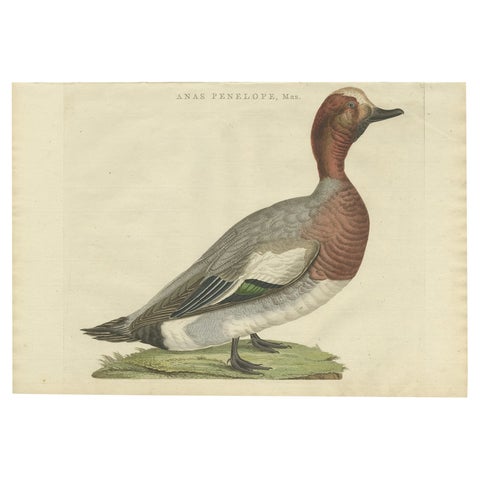
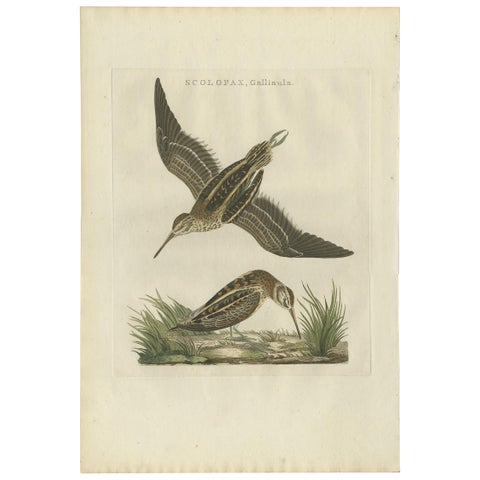
This print originates from Nederlandsche Vogelen; volgens hunne huishouding, aert, en eigenschappen beschreeven (Amsterdam, 1770–1829), the first monumental attempt to document all birds found in the Netherlands. Initiated by Cornelis Nozeman and continued by Martinus Houttuyn, the project was illustrated and published by Christiaan Andreas Sepp and his successors. Each plate was carefully engraved and hand-colored, offering both scientific accuracy and aesthetic refinement. The inclusion of the jackdaw, a familiar species in Dutch towns and countryside, reflects the series’ scope from common native birds to rarer or migratory species.
Original Dutch text pages are included, offering contemporary natural history descriptions of the jackdaw’s habits, voice, nesting behavior, and social patterns.
Condition: Very good. Some age-related toning and light handling marks typical of 18th–early 19th century laid paper. Wide margins preserved, with visible plate mark.
Framing tips: A dark wooden or ebonised frame paired with a soft cream or pale gray mount will enhance the subtle gray tones of the plumage. For a more striking presentation, a black frame with a narrow gilt inner edge highlights the bird’s eye and wing sheen.