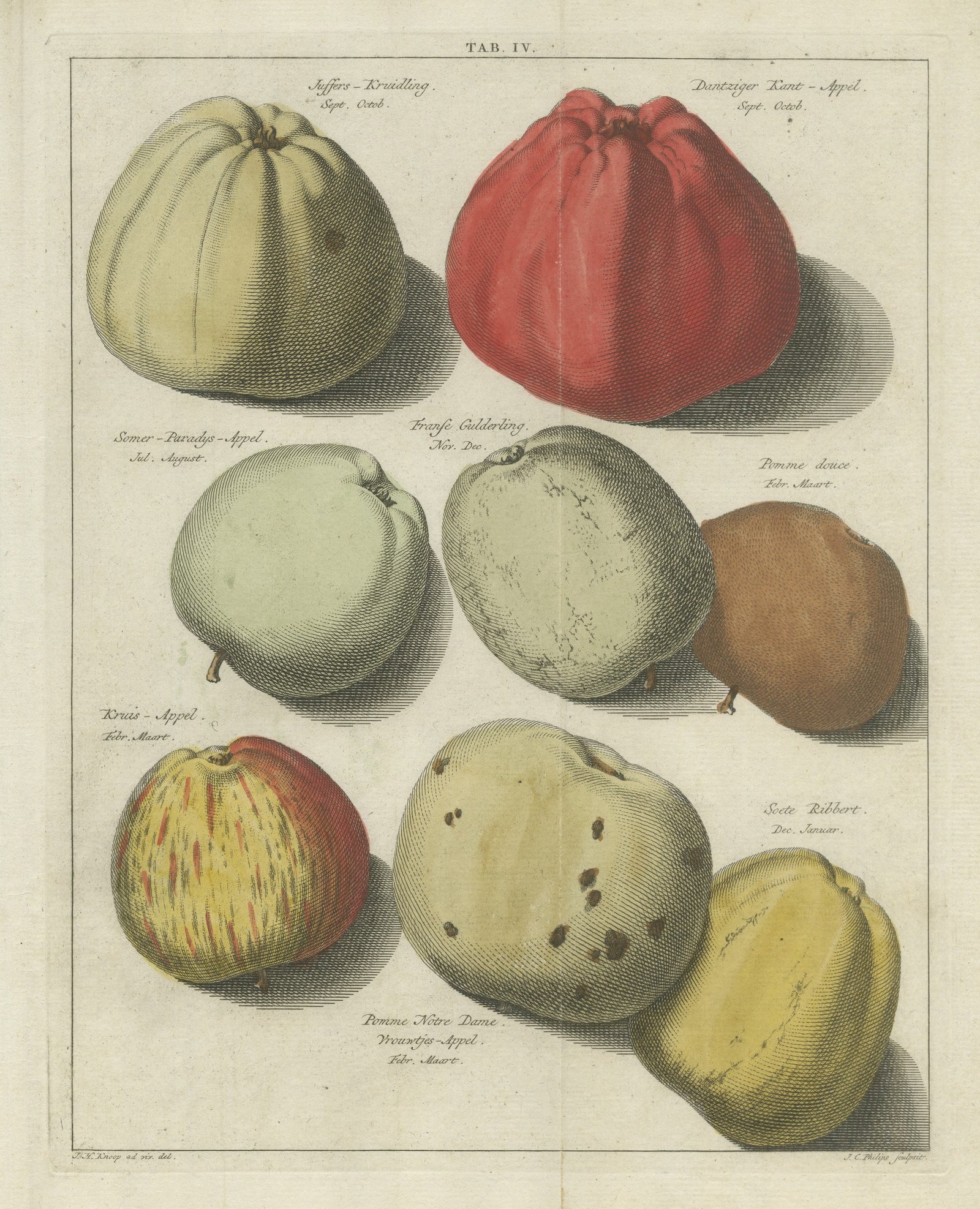
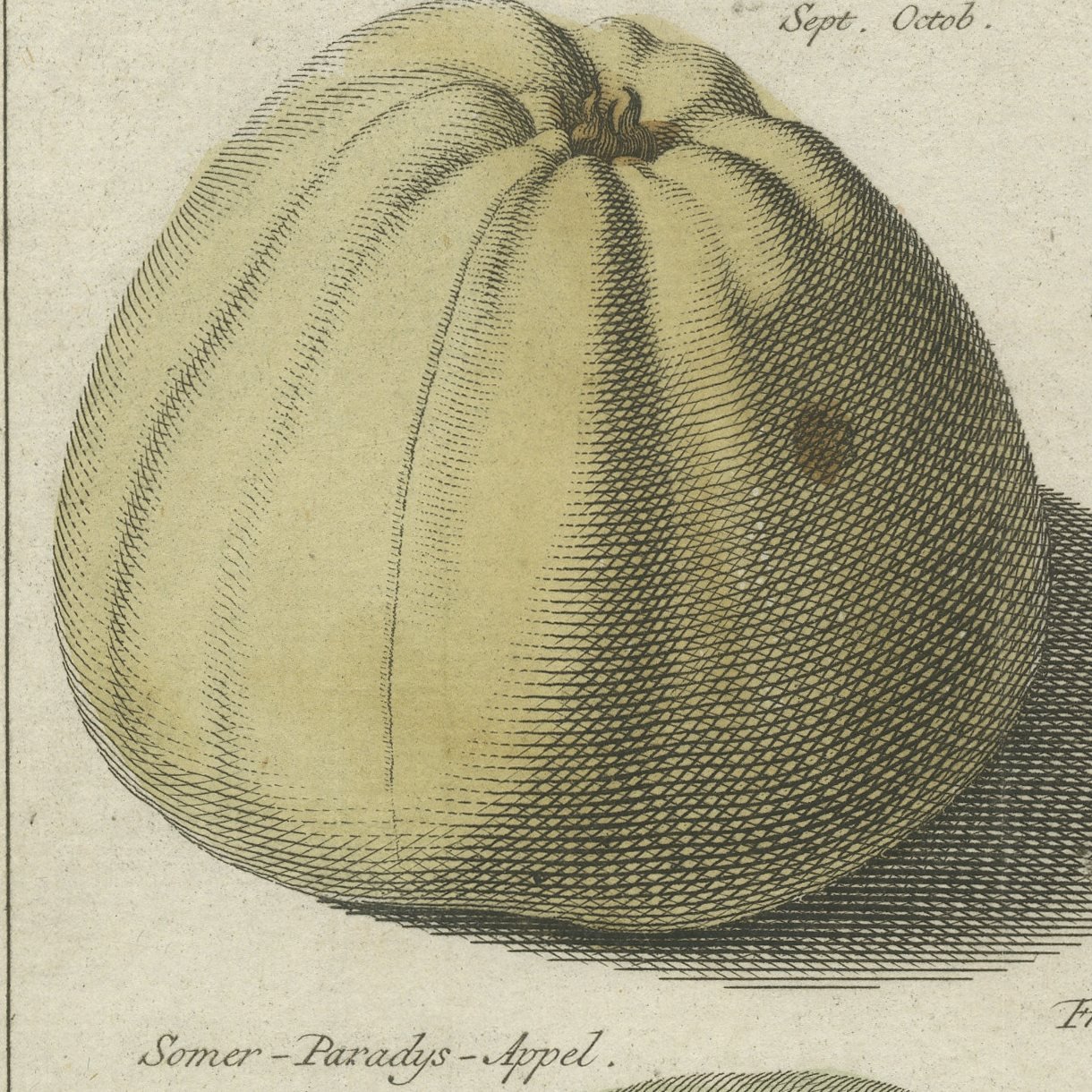
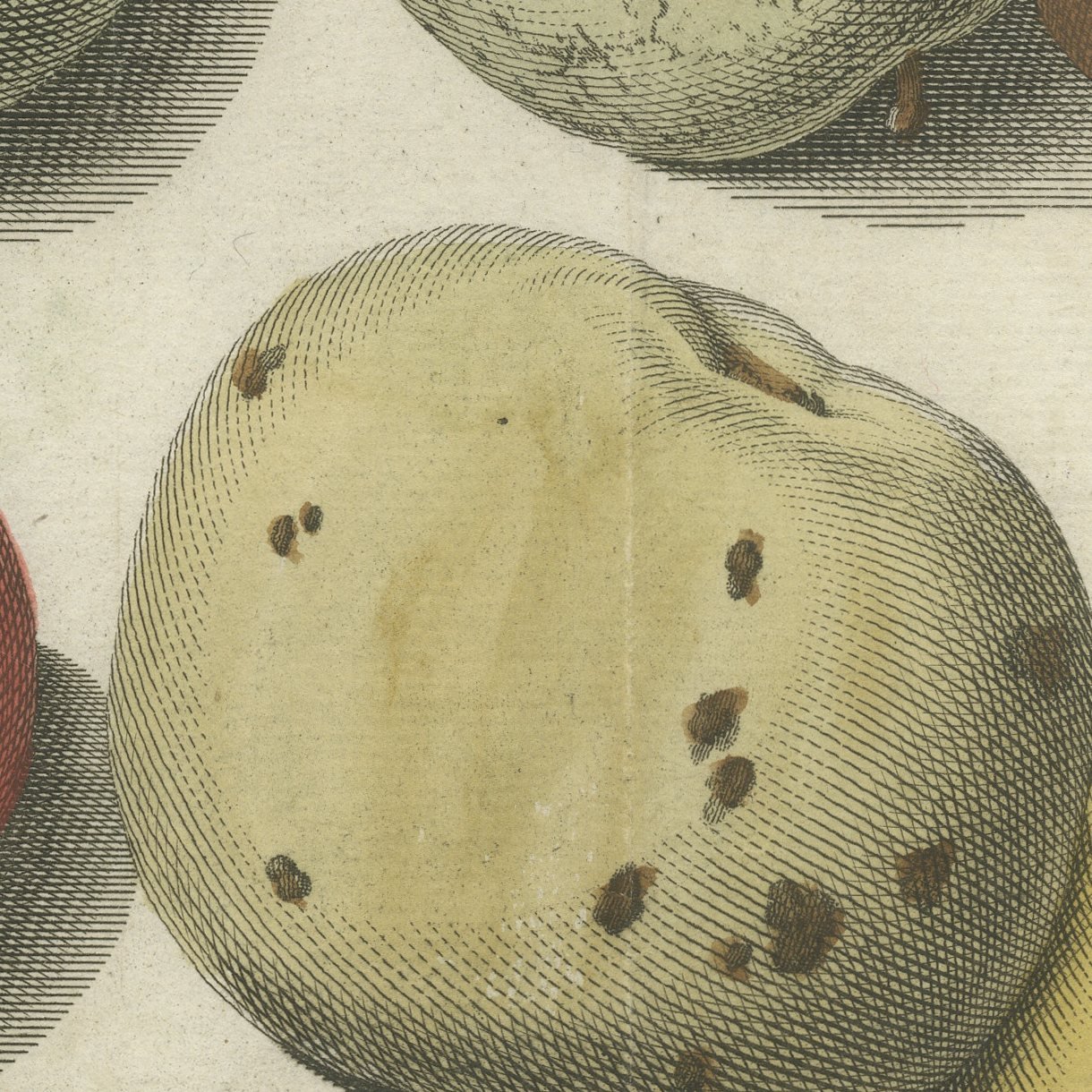
Close-ups
Framed and on the wall
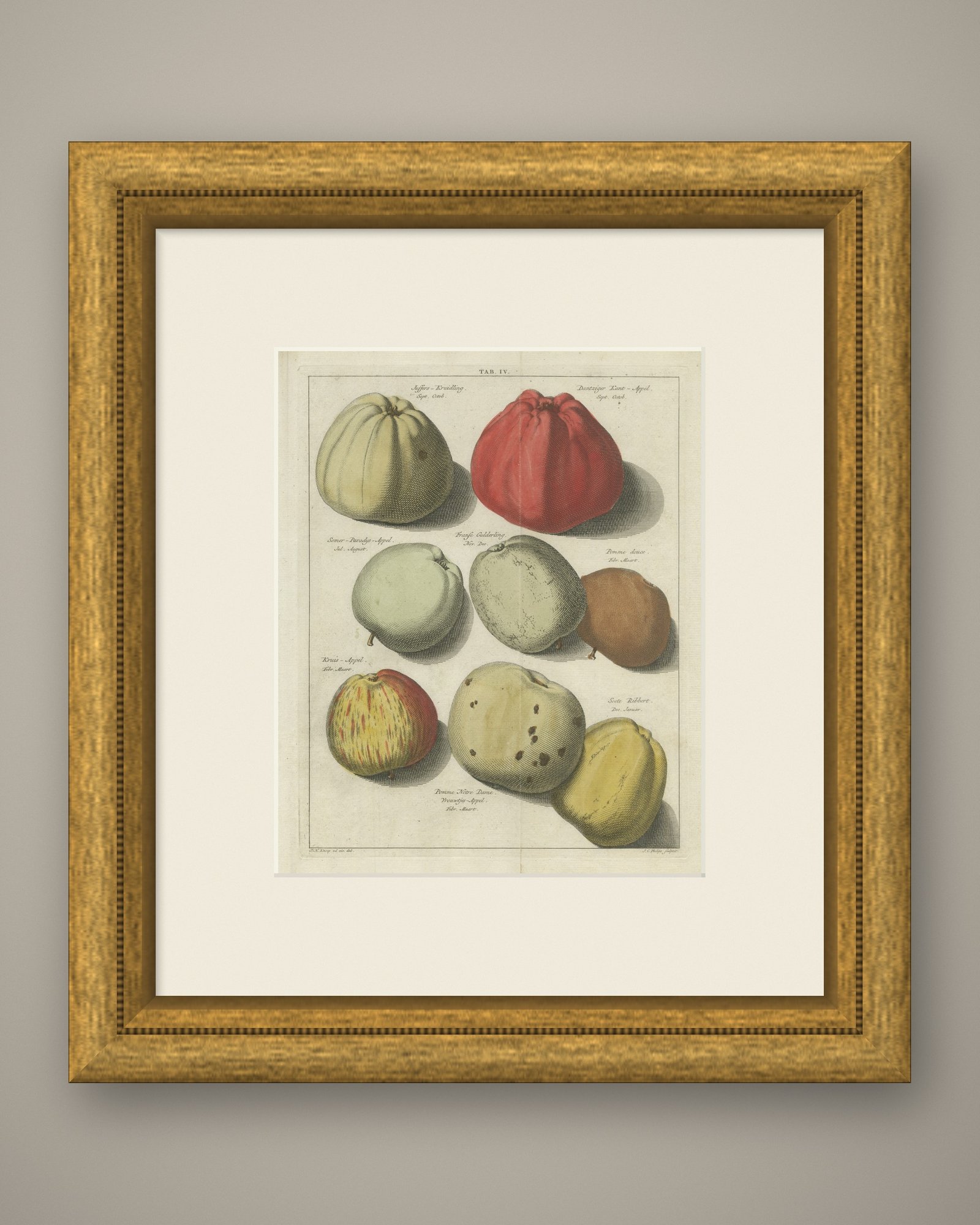
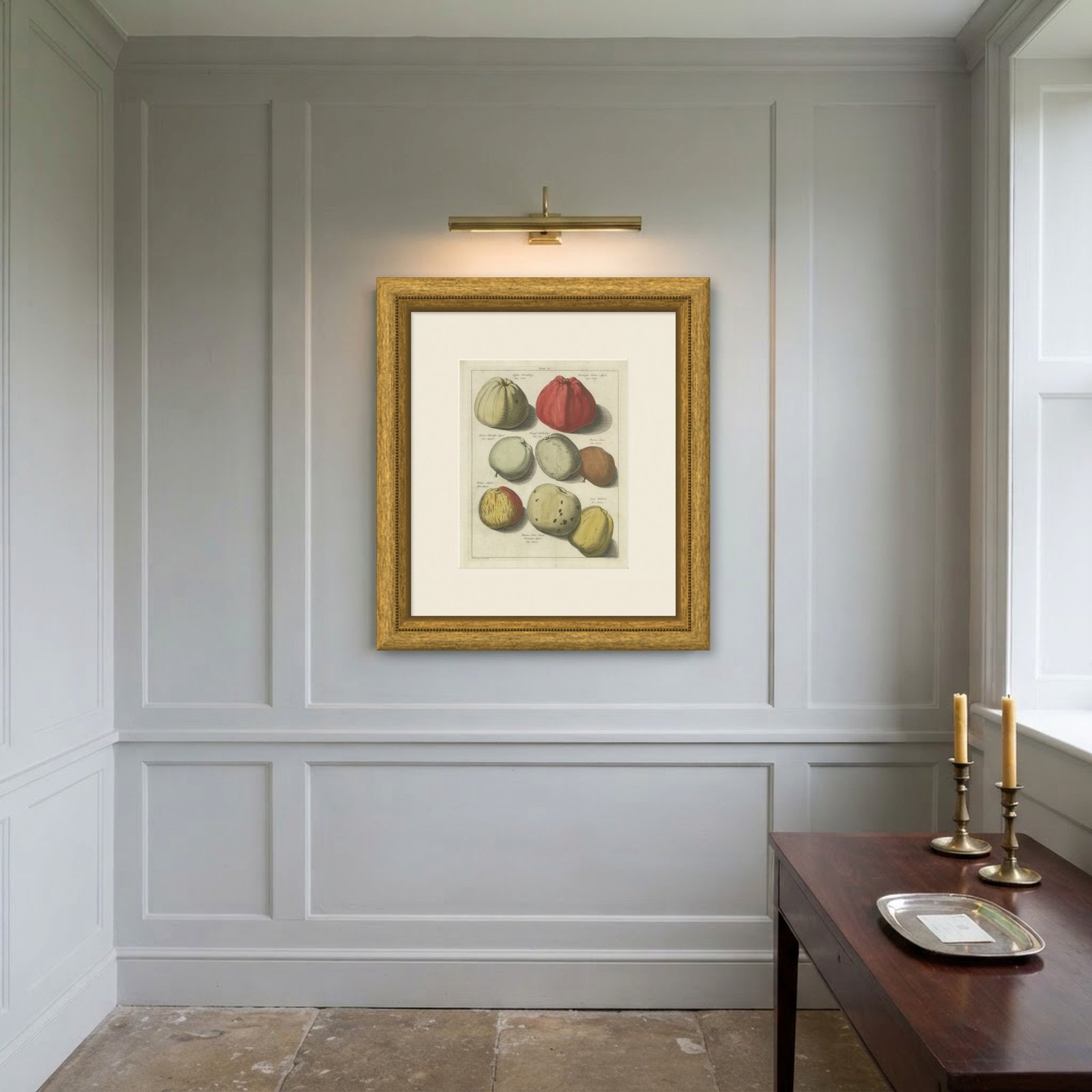
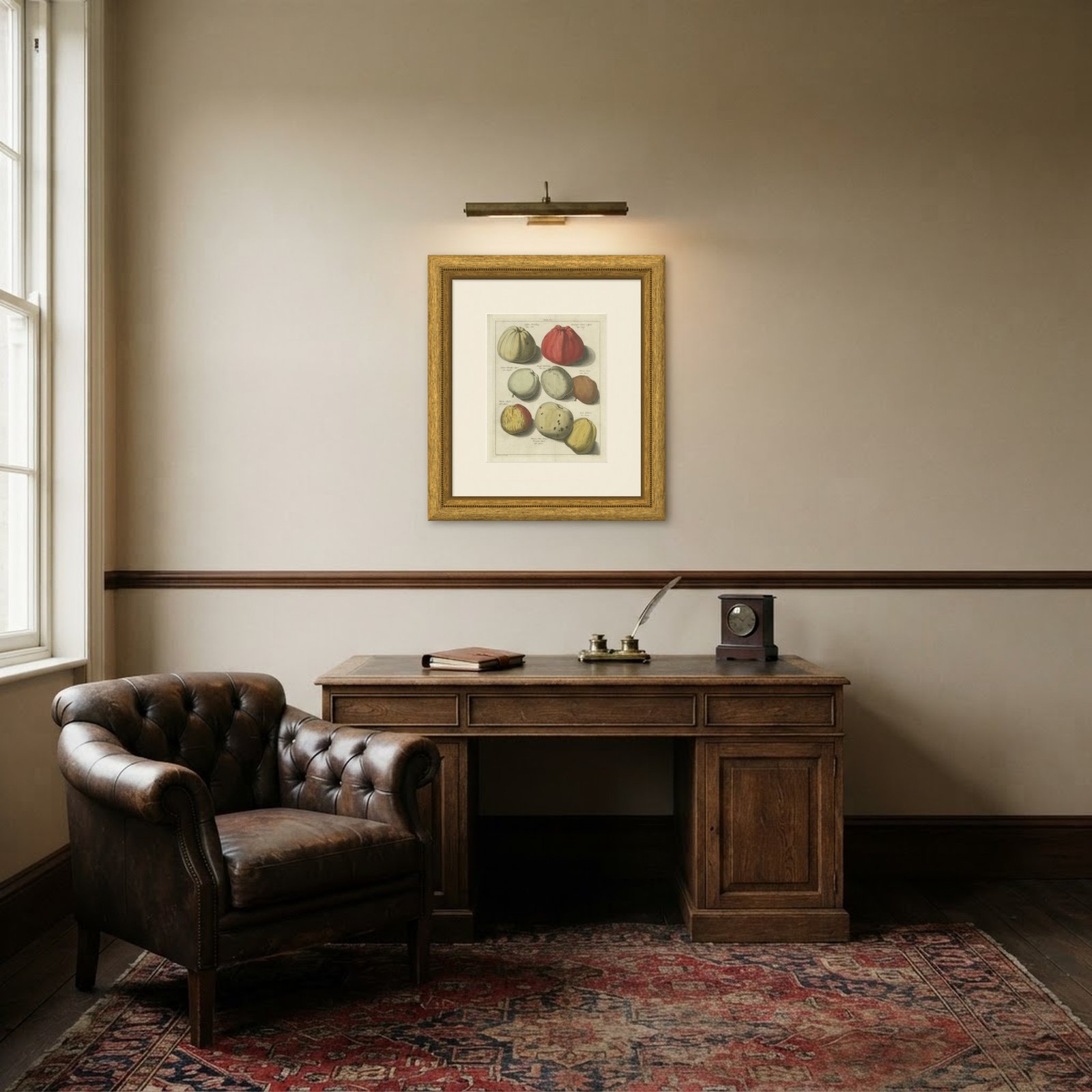
Frame and rooms are illustrations of how the print could look; the description says what is included.
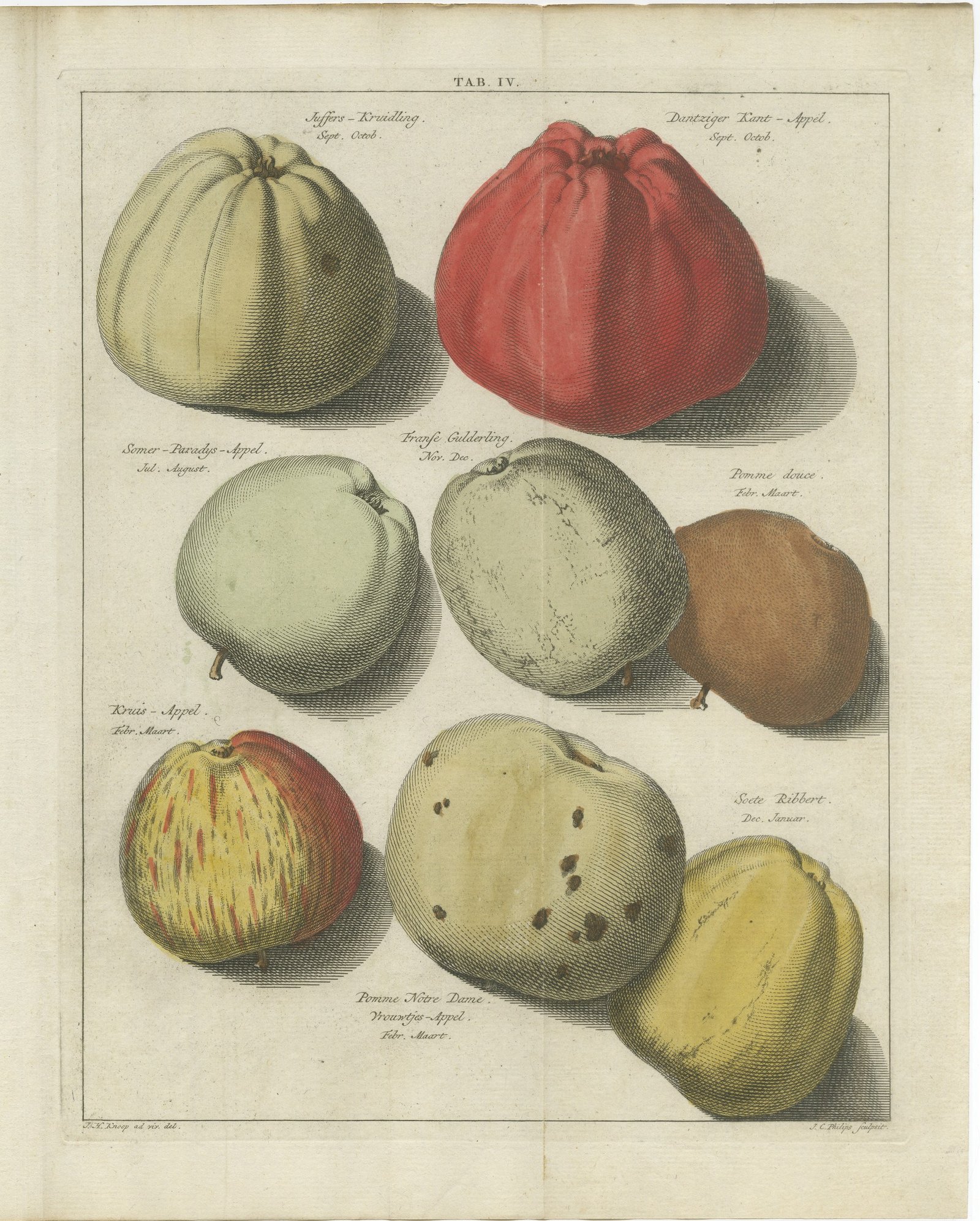
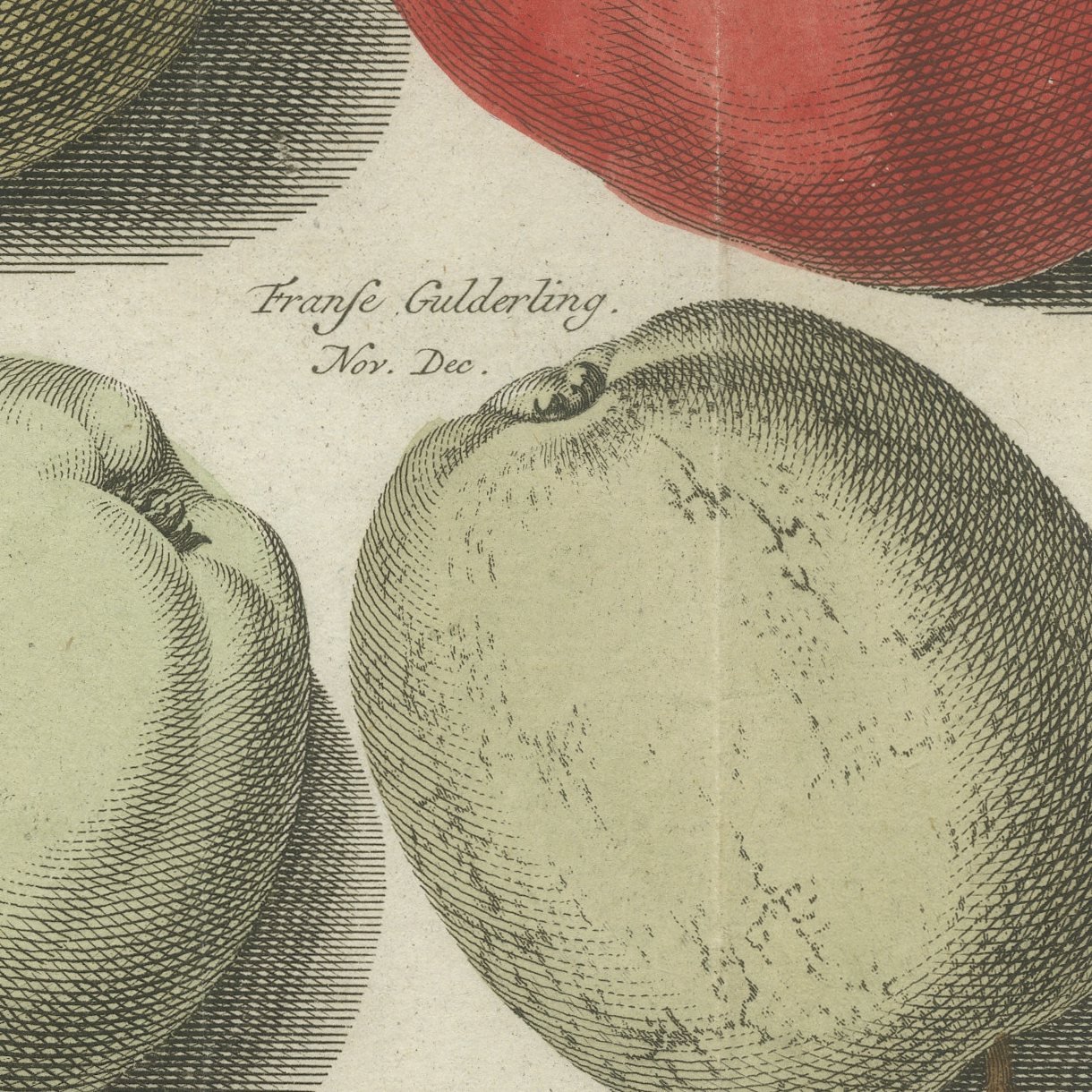
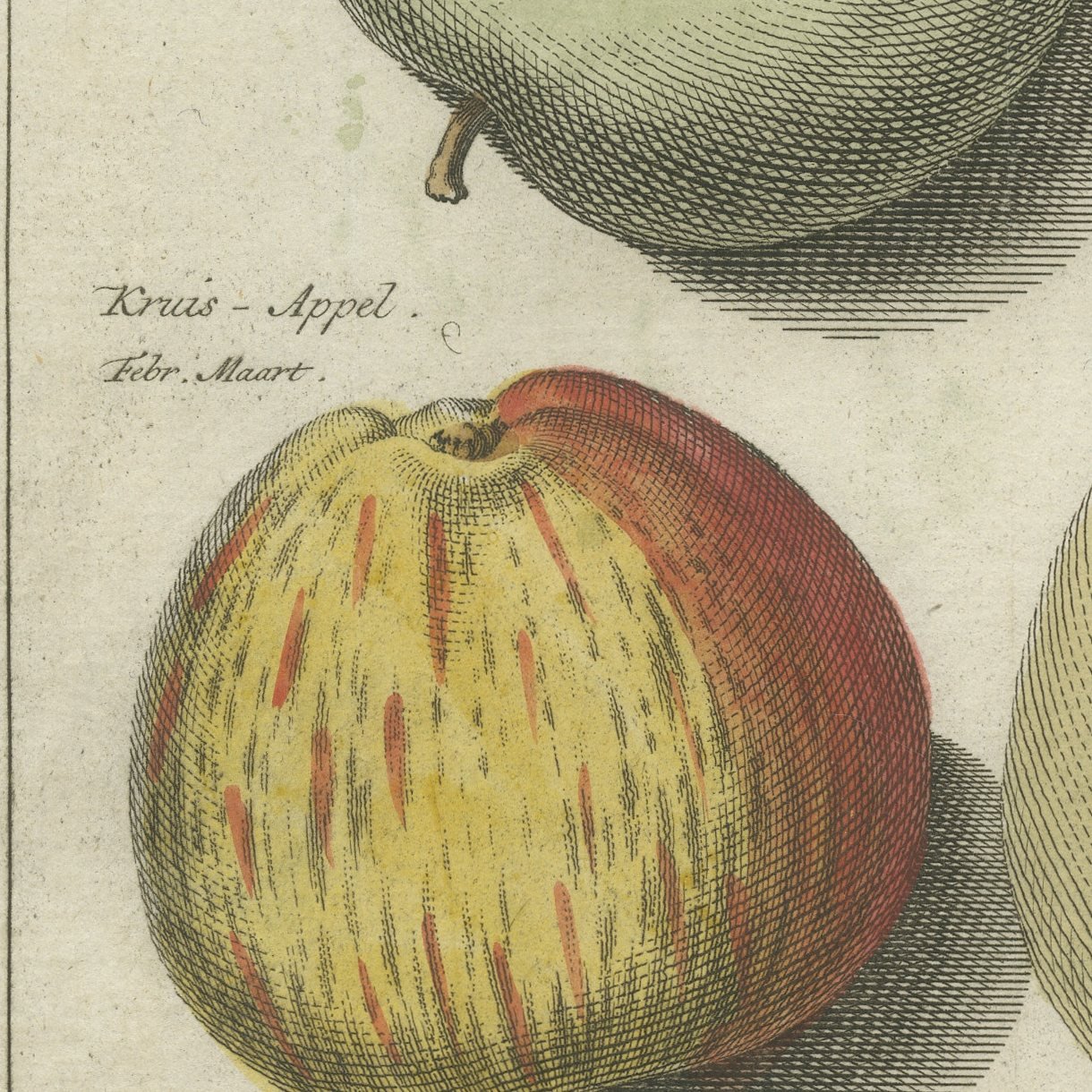
Vrouwtjes-Appel and Franse Gulderling, Antique Dutch Apple Plate, 1790
£240 ($315, €285)
Period original, not a reproduction.
Shipped from the Netherlands, flat or rolled, insured and tracked, worldwide. Returns accepted within 14 days.
- Date
- 1790
- Size
- 12.6 × 9.4 in (32 × 24 cm)
- Technique
- Copper Engraving
- Coloring
- Original hand color
- Condition
- Good. Light uneven toning, browner towards the edges. Marked handling soiling along the bottom and top edges. Scattered foxing in the margin. Slight wear at the bottom right corner.
- Period
- 18th century
- Section
- Botanical
- Reference
- BG-05122-4
What the condition grades mean
- Excellent
- Bright and clean, with no faults worth mentioning.
- Very good
- Only light signs of age, such as faint toning.
- Good
- Normal signs of age for a sheet of this period: toning, some foxing, small marks or neat old repairs.
- Fair
- Clear faults such as staining, tears or repairs, priced to match.
Every fault we see is written in the condition note, and the whole sheet is shown uncropped in the photos.
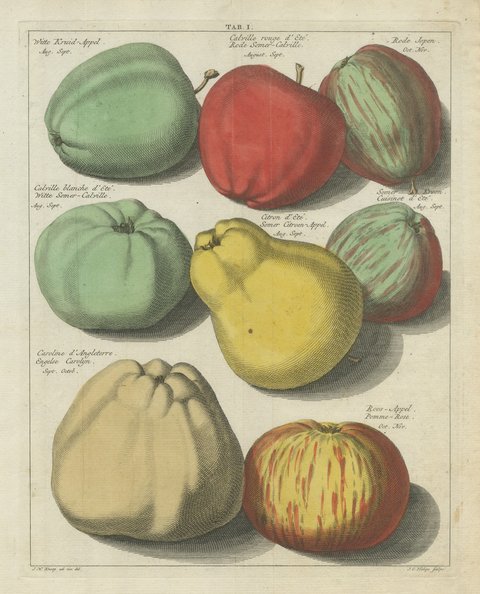
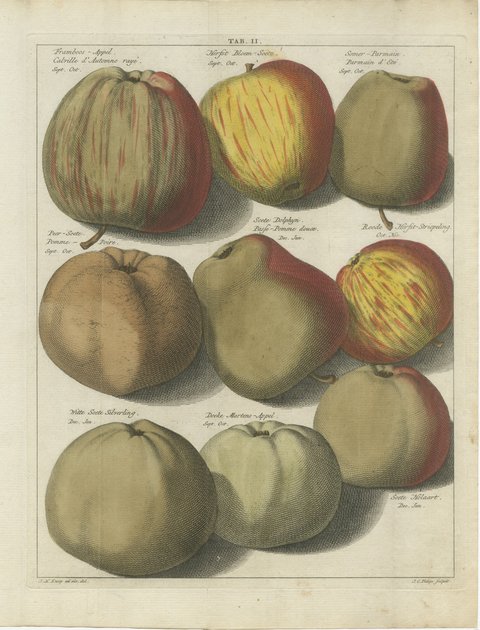
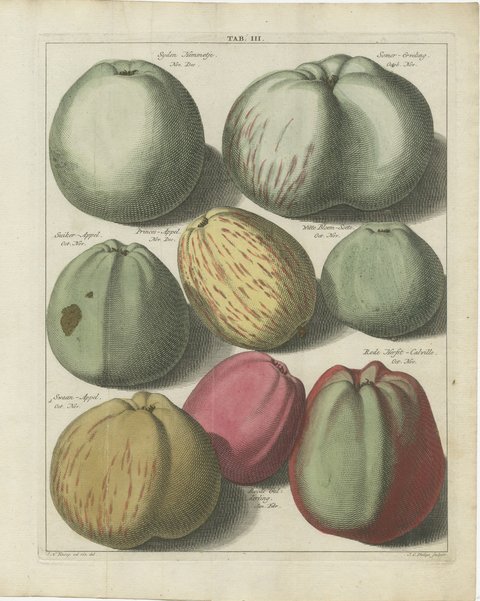
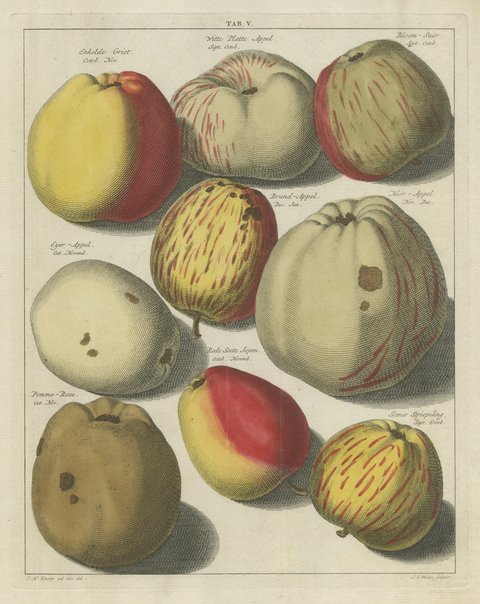
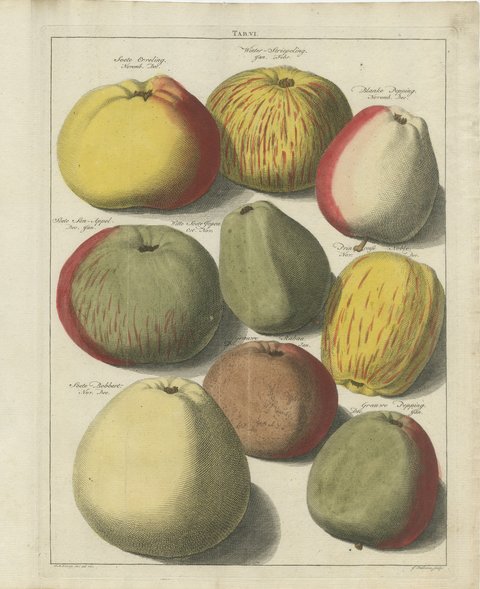
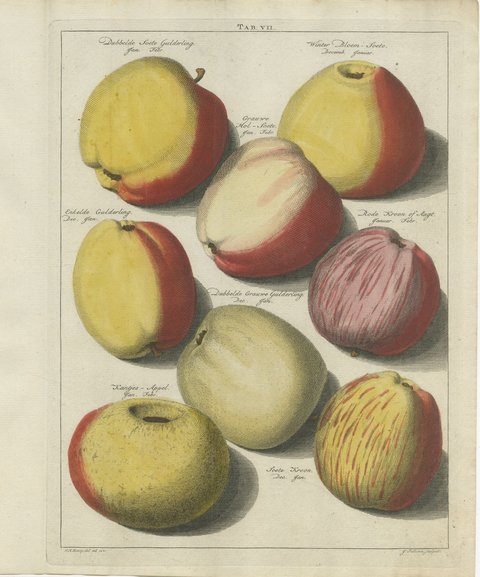
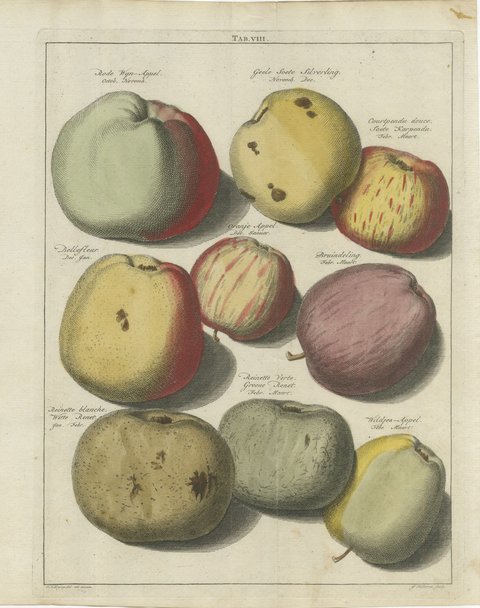
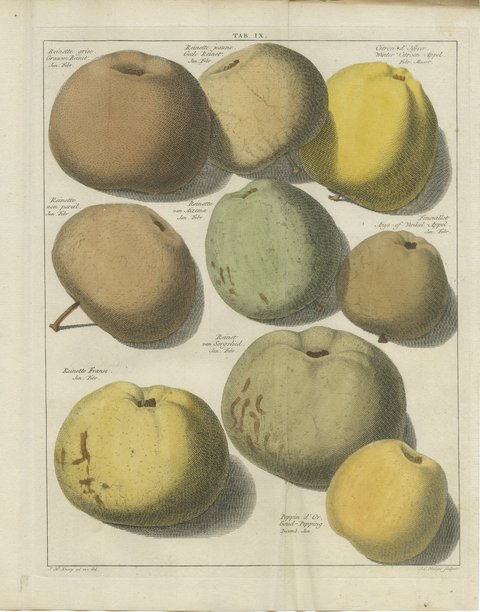
An antique hand-colored copper engraving of eight named apple varieties, each with its name and ripening months engraved beneath it. The plate ranges from the earliest fruit in the whole series, the Somer-Paradys-Appel of July and August, through to the late keepers: Juffers-Kruidling, Dantziger Kant-Appel, Franse Gulderling, Pomme douce, Kruis-Appel, Pomme Notre Dame or Vrouwtjes-Appel, and Soete Ribbert. Several carry both their Dutch name and the French one used by nurserymen of the period, a reminder of how freely fruit traveled between the two countries. Knoop drew each apple from the living specimen and turned it to show its profile, its crown and the depth of its eye. The hand-applied washes vary within a single fruit, gathering strength on the sunward cheek and fading toward the stalk.
The plate comes from Johann Hermann Knoop's Beschrijving en Afbeeldingen van de beste soorten van Appelen en Peeren, published at Amsterdam and Dordrecht by Allart, Holtrop, de Leeuw and Krap in 1790, with a preface by the Zutphen minister and naturalist Johannes Florentius Martinet. Knoop was gardener to the widow of the Frisian stadtholder at Leeuwarden and the first systematic Dutch pomologist. He drew every fruit from the living specimen, and the plates are lettered ad vivum to say so. The engraving is on copper and the color is original hand color in watercolor, laid over the engraved hatching.
Dutch pomology was practical work, and this sheet shows why: a gardener could carry the names, the shapes and the seasons of eight apples on a single page. Knoop's own garden at Leeuwarden supplied many of the specimens, and a variety such as the Dantziger Kant-Appel maps the Baltic trade routes that brought fruit into the Netherlands. Very few of these apples survive outside heritage collections today. Framed simply and hung in a row along a hallway or a kitchen, plates of this kind carry color without noise, and for collectors of fruit and garden history each one stands as a record of what was worth growing in a Dutch orchard of the later eighteenth century.
Light uneven toning, browner towards the edges. Marked handling soiling along the bottom and top edges. Scattered foxing in the margin. Slight wear at the bottom right corner.
This is an original antique plate, not a modern reproduction. This item is sold unframed.