Vivid Lepidoptera: Hand-Colored 18th-Century Butterfly and Moth Studies
$145 (£110, €130)
Period original, not a reproduction.
Shipped from the Netherlands, flat, insured and tracked, worldwide. Returns accepted within 14 days.
- Date
- Not stated
- Size
- 9.1 × 8.7 in (23 × 22 cm)
- Condition
- Good. The condition is good for its age, with foxing and slight wear on the edges, due to age and handling. This piece would be a captivating addition to a collection focused on antique natural history prints.
- Artist or book
- Bertuch
- Section
- Insects and butterflies
- Reference
- f_43119512
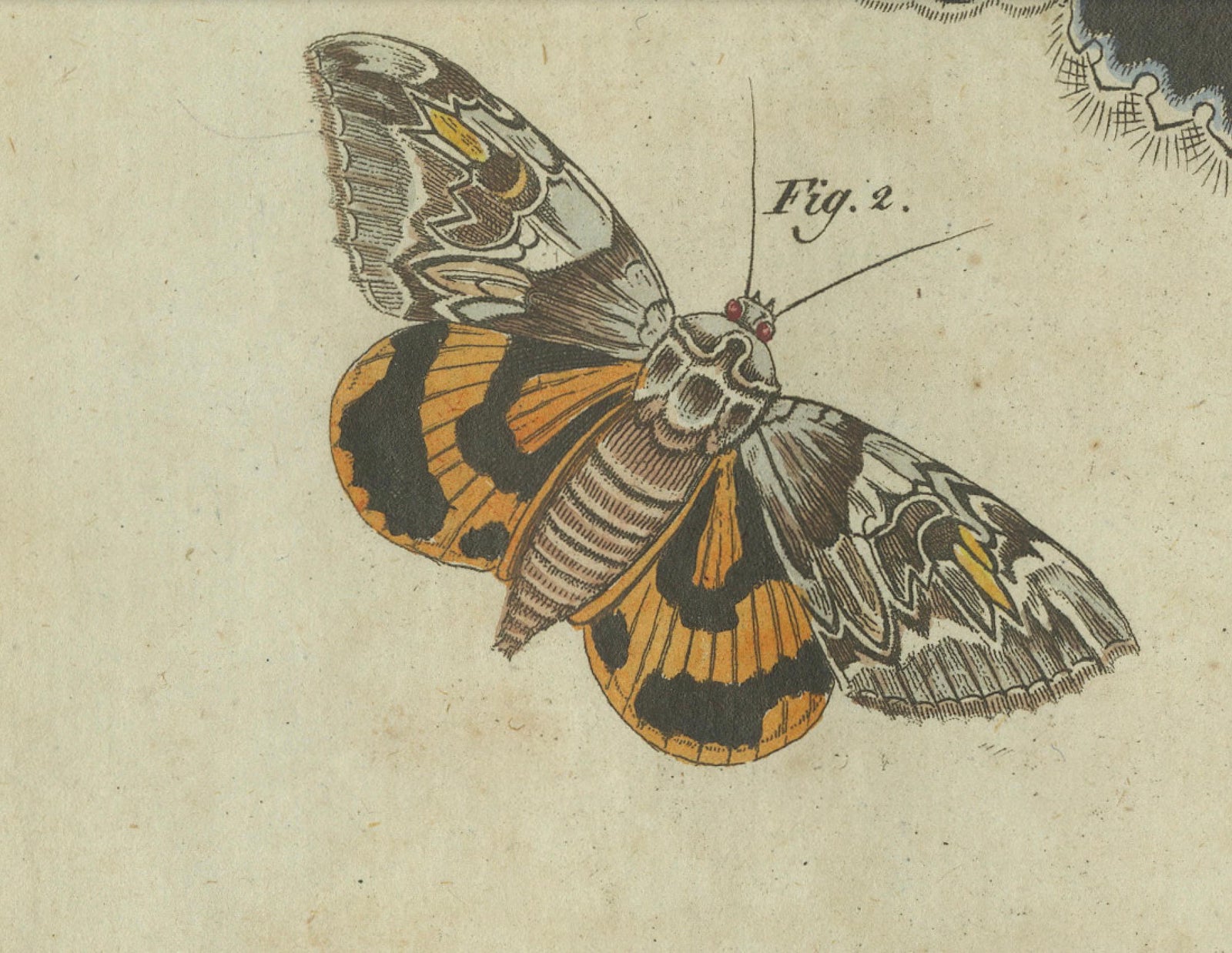
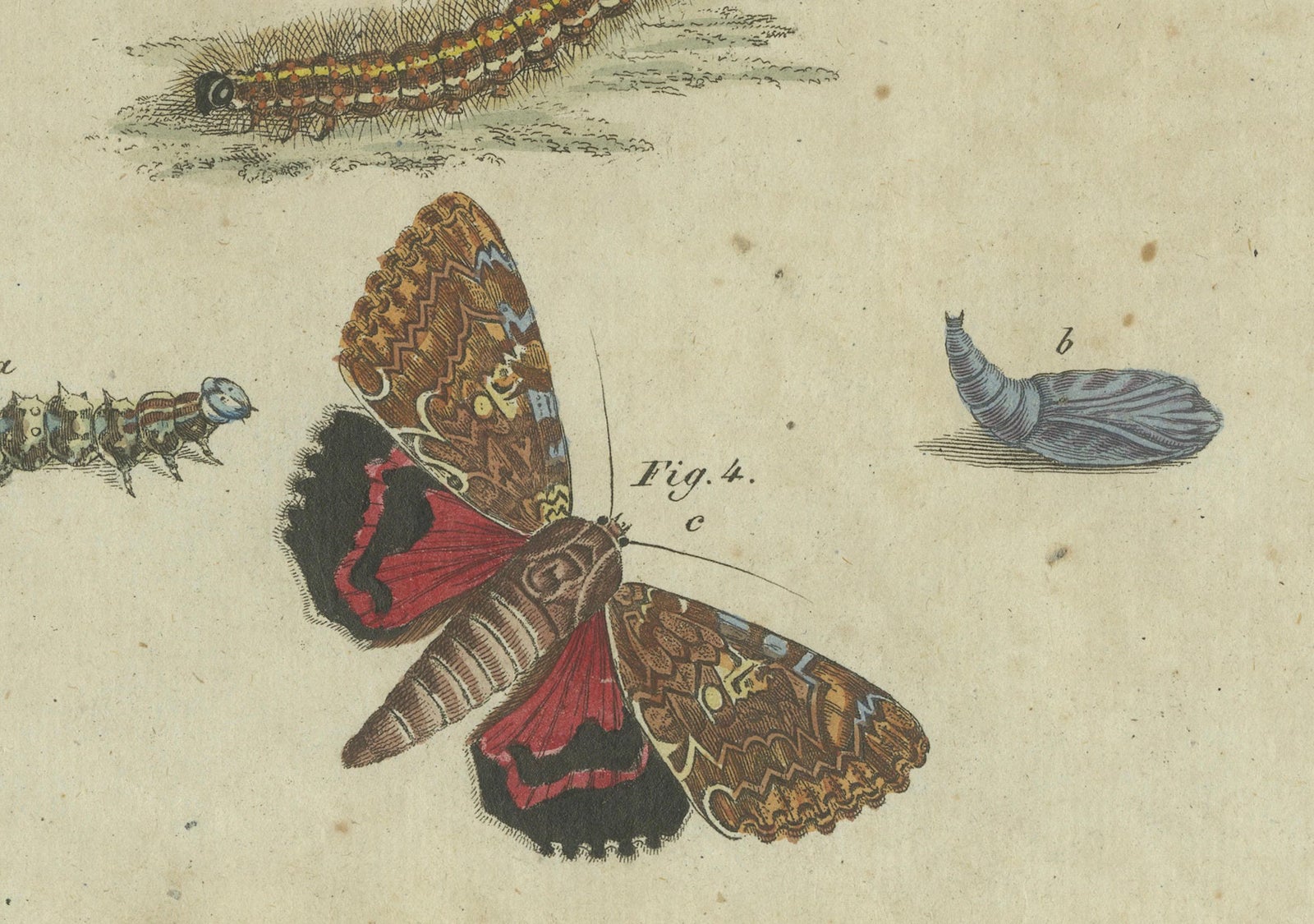
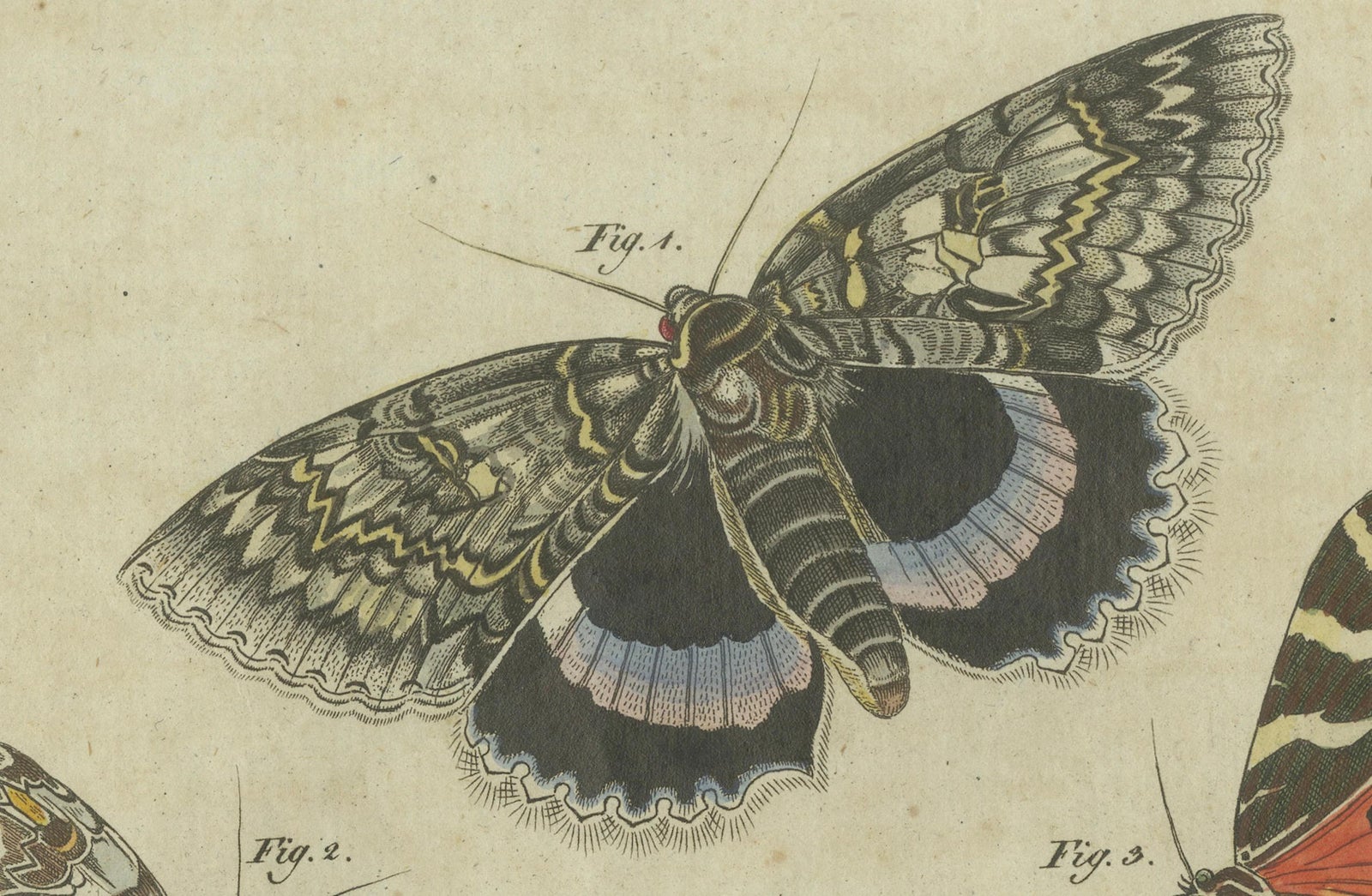
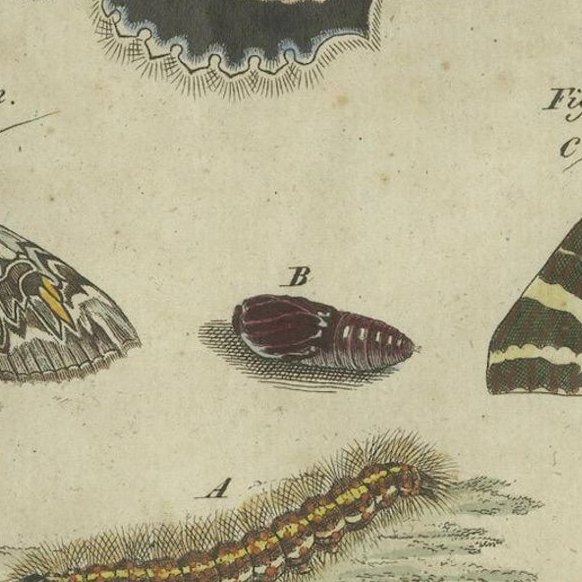
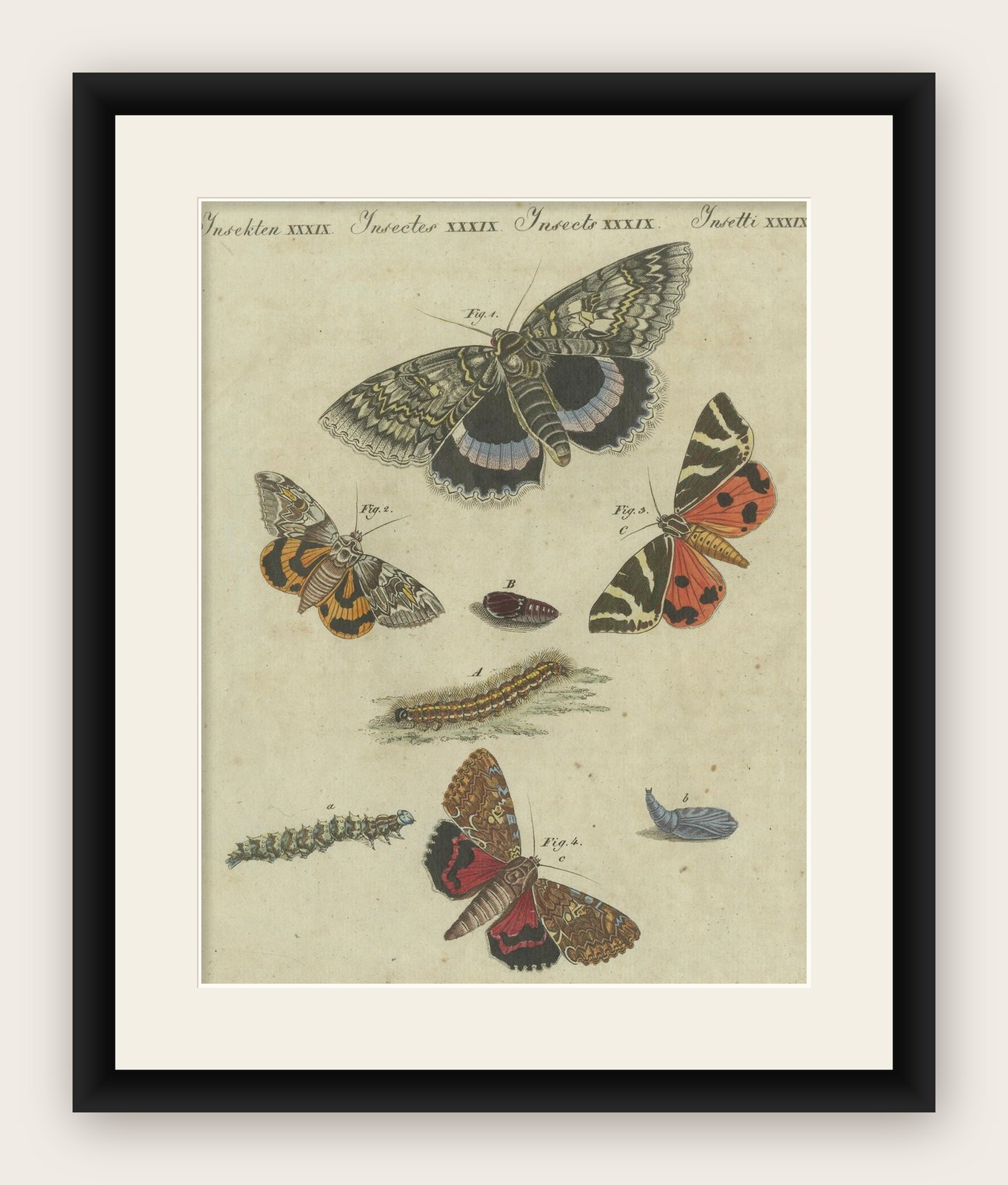
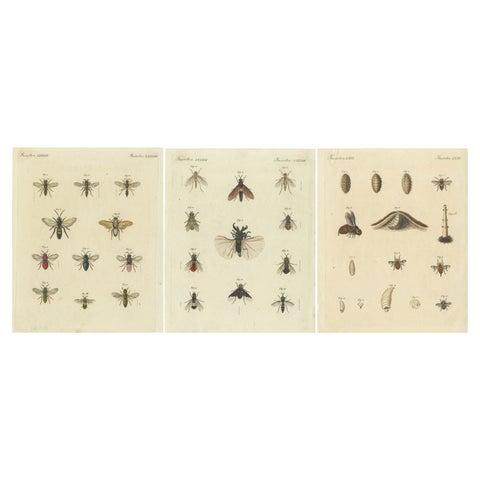
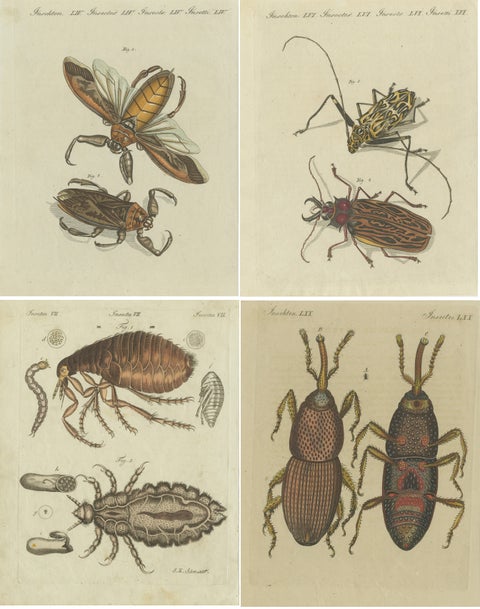
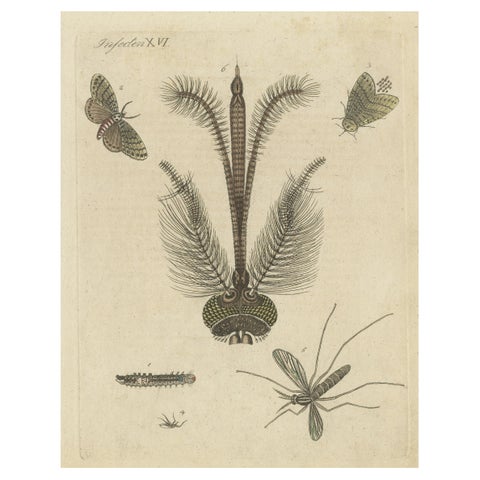
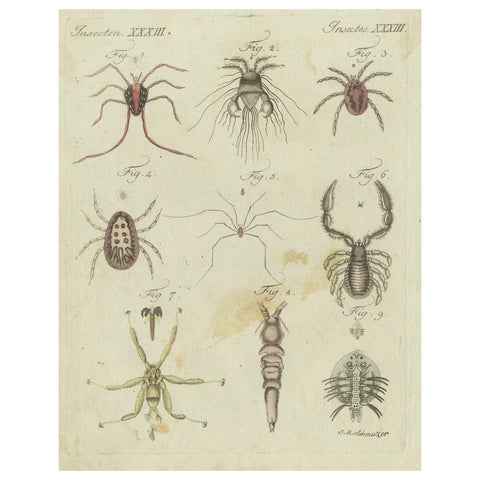
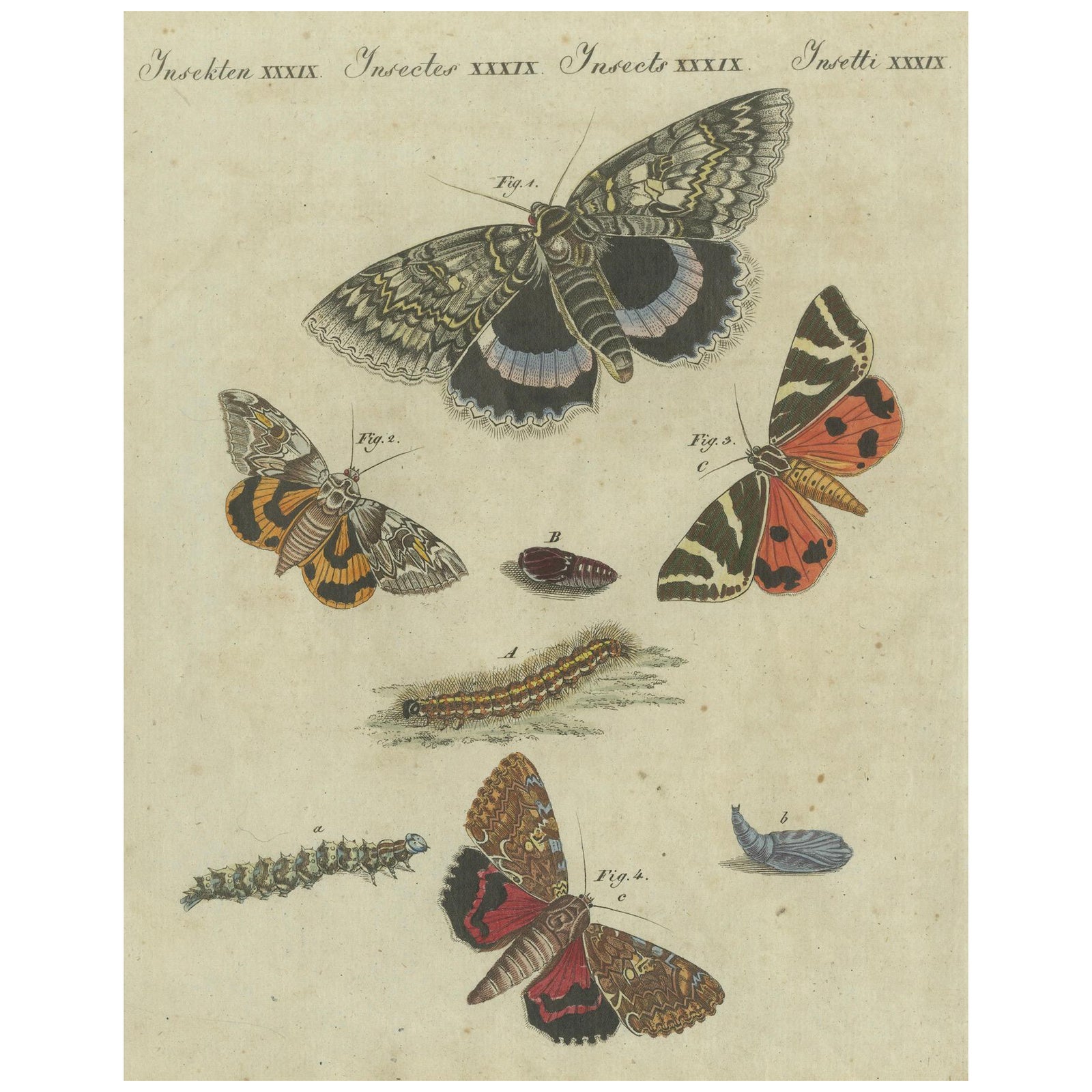
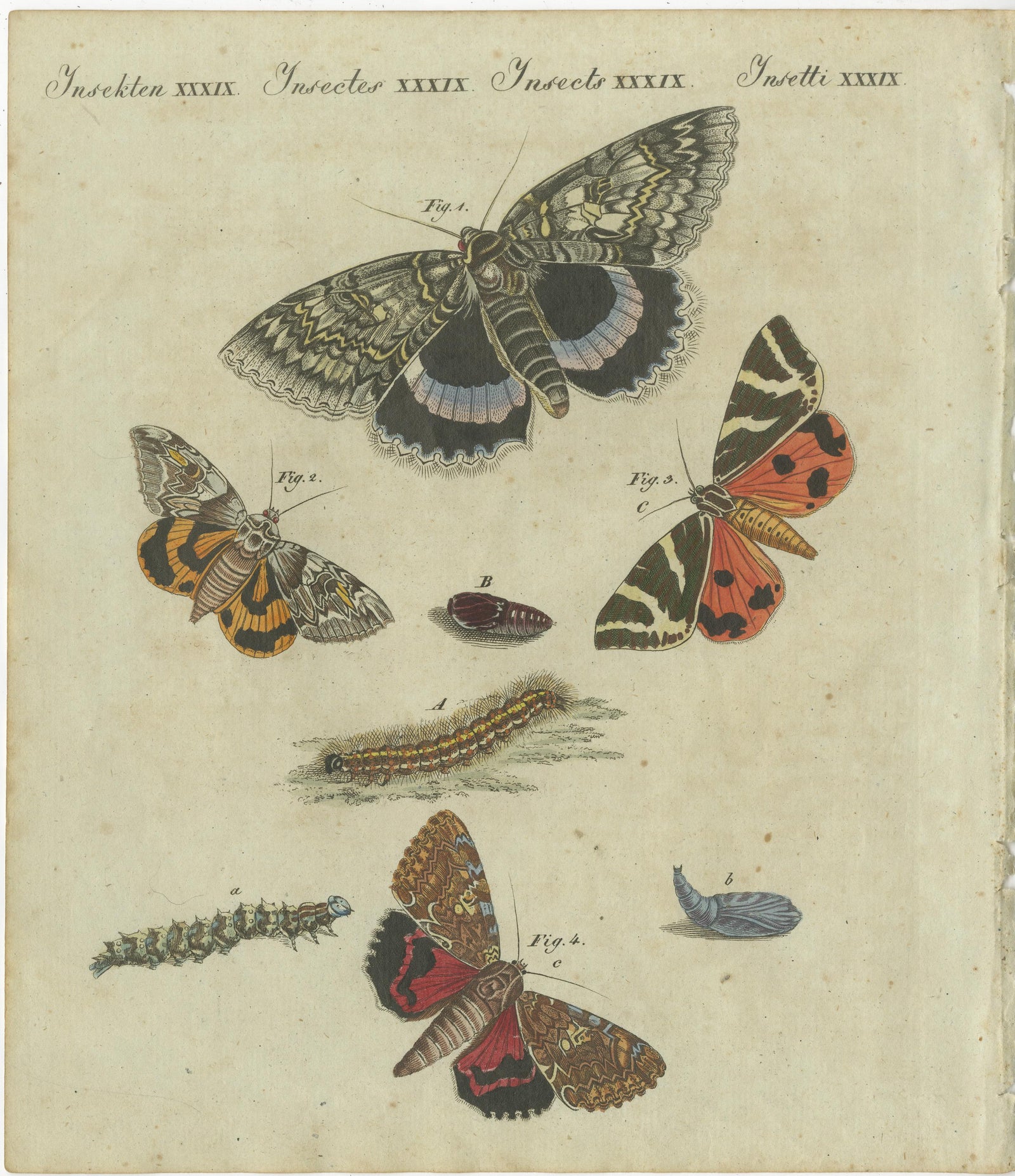
This exquisite hand-colored copperplate engraving from Friedrich Johann Bertuch's renowned "Bilderbuch für Kinder" (Picture Book for Children), published in Weimar in 1805, presents a captivating study of butterflies and moths. The plate features a variety of lepidopteran species, meticulously depicted in their different life stages, including caterpillars, pupae, and fully developed insects. Each figure is illustrated with remarkable attention to detail, showcasing the vibrant patterns, delicate wings, and intricate body structures of these creatures.
The engraving includes species with striking designs, such as the eye-catching tiger moth and other vividly patterned butterflies, as well as their corresponding larvae and cocoons. The coloration is particularly notable, with the vibrant hand-applied pigments enhancing the naturalistic representation of each subject. The precision in both the anatomical details and the overall composition underscores Bertuch’s dedication to education and artistry.
What makes this engraving particularly fascinating is its dual appeal as both a scientific and an artistic work. Created during the Enlightenment era, it reflects the period’s emphasis on the study of natural history and the dissemination of knowledge. Bertuch's 12-volume encyclopedia for children, illustrated with over 1,200 engraved plates, remains an extraordinary achievement in combining education with visual beauty.
The engraving is an excellent example of 18th-century natural history art, combining aesthetic refinement with pedagogical intent. It serves as a testament to the scientific curiosity and artistic excellence of its time, making it a valuable addition to any collection of antique natural history prints. The engraving’s superb quality, vibrant coloration, and historical significance make it an exceptional piece for display or study.