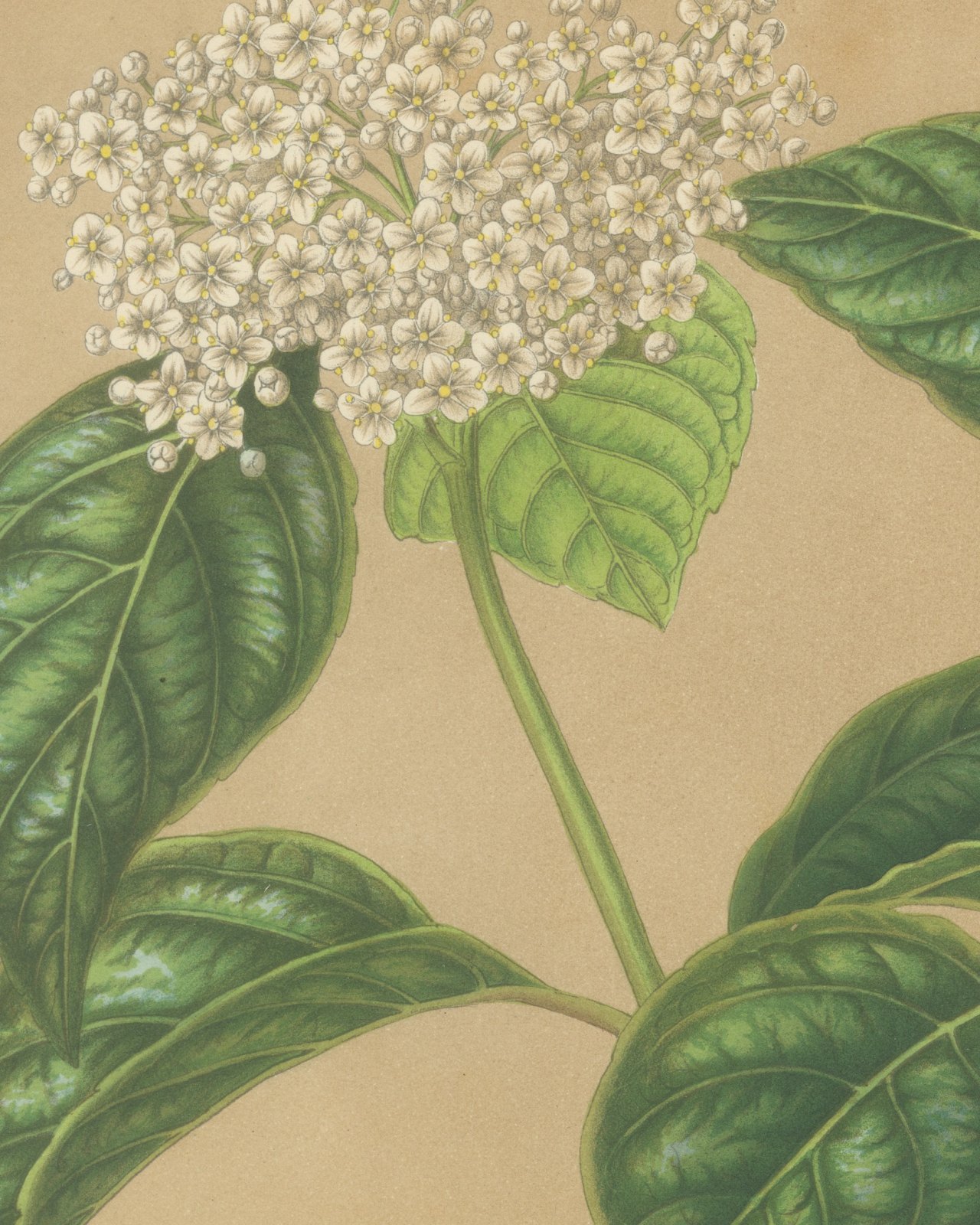
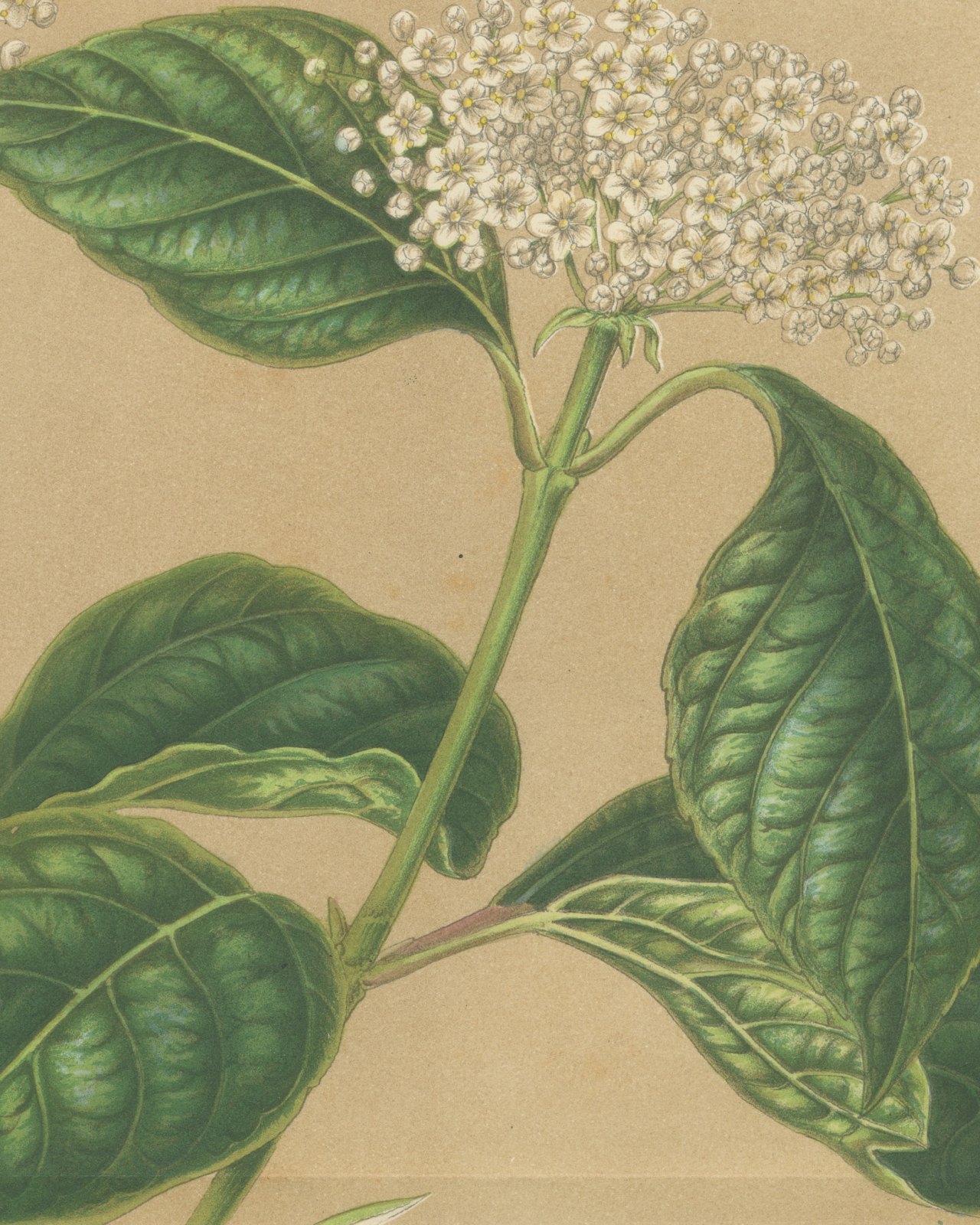
Close-ups
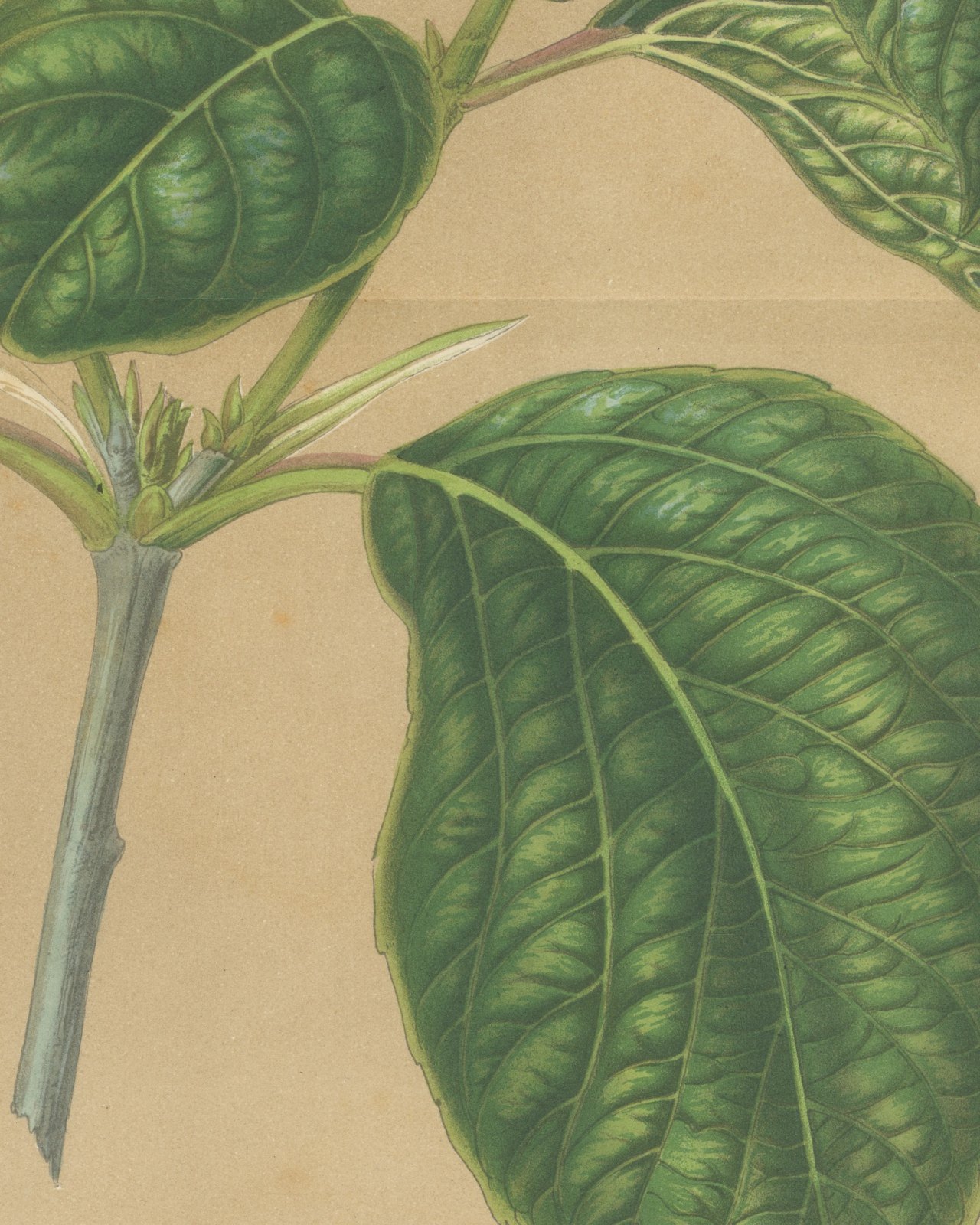
Framed and on the wall
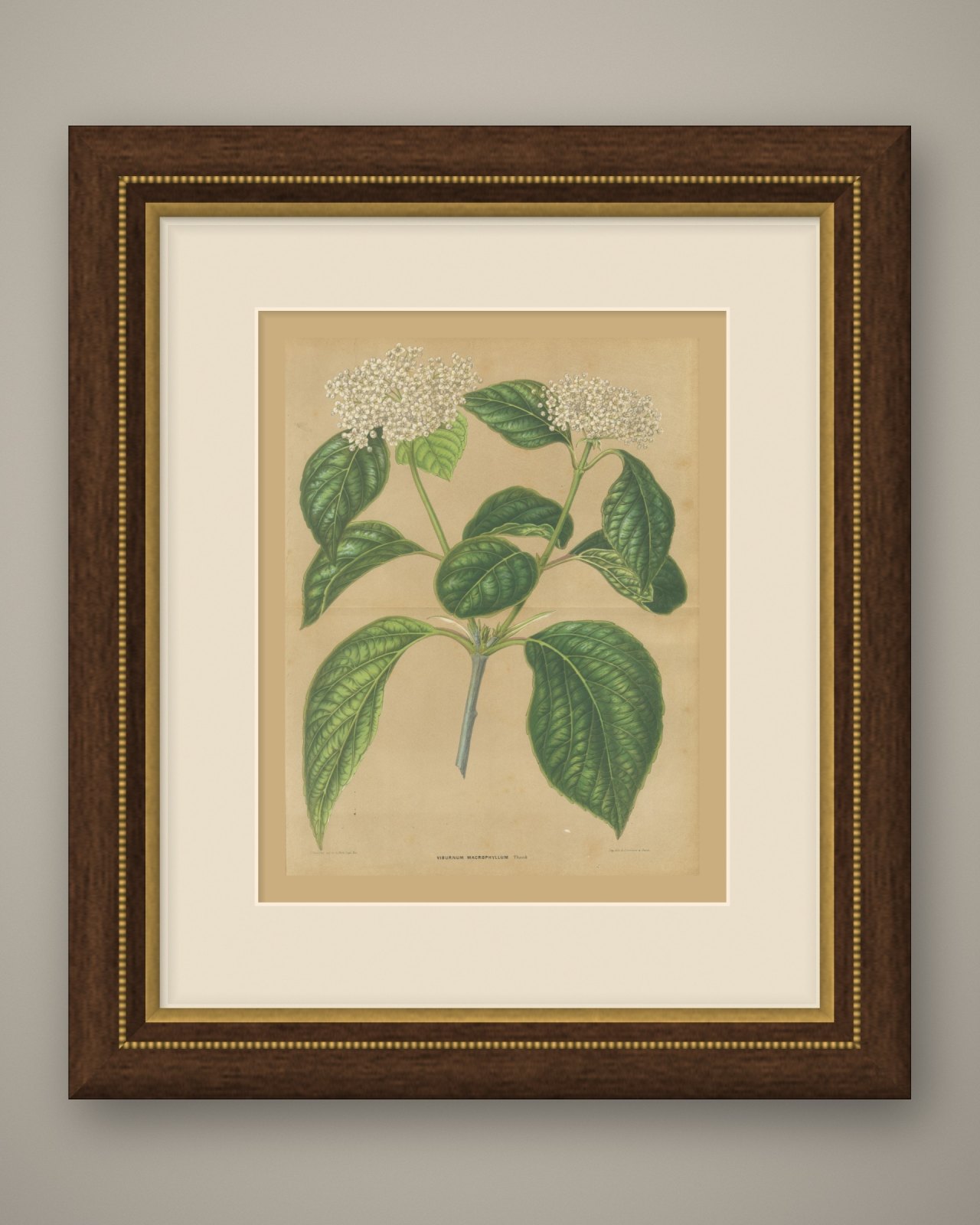
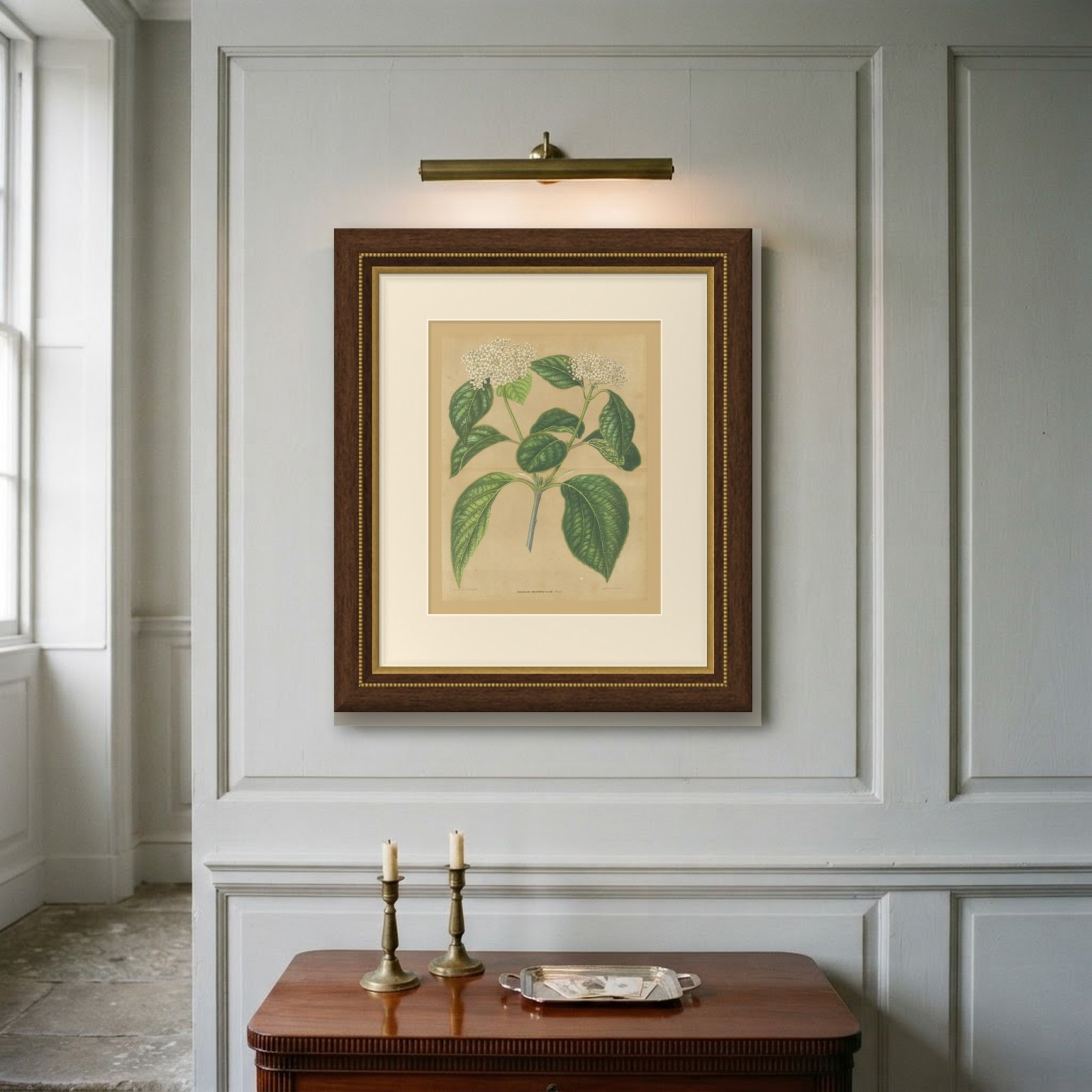
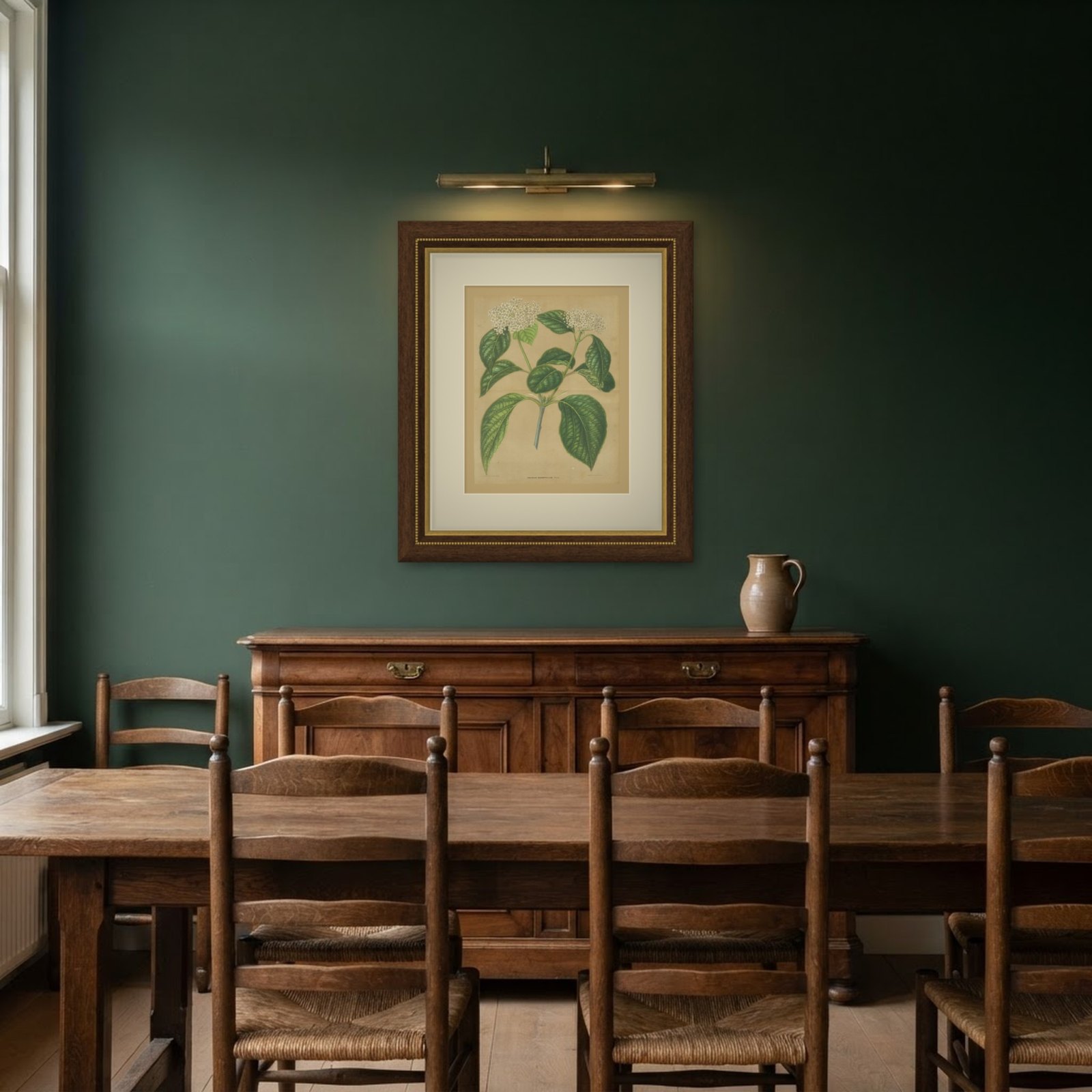
Frame and rooms are illustrations of how the print could look; the description says what is included.
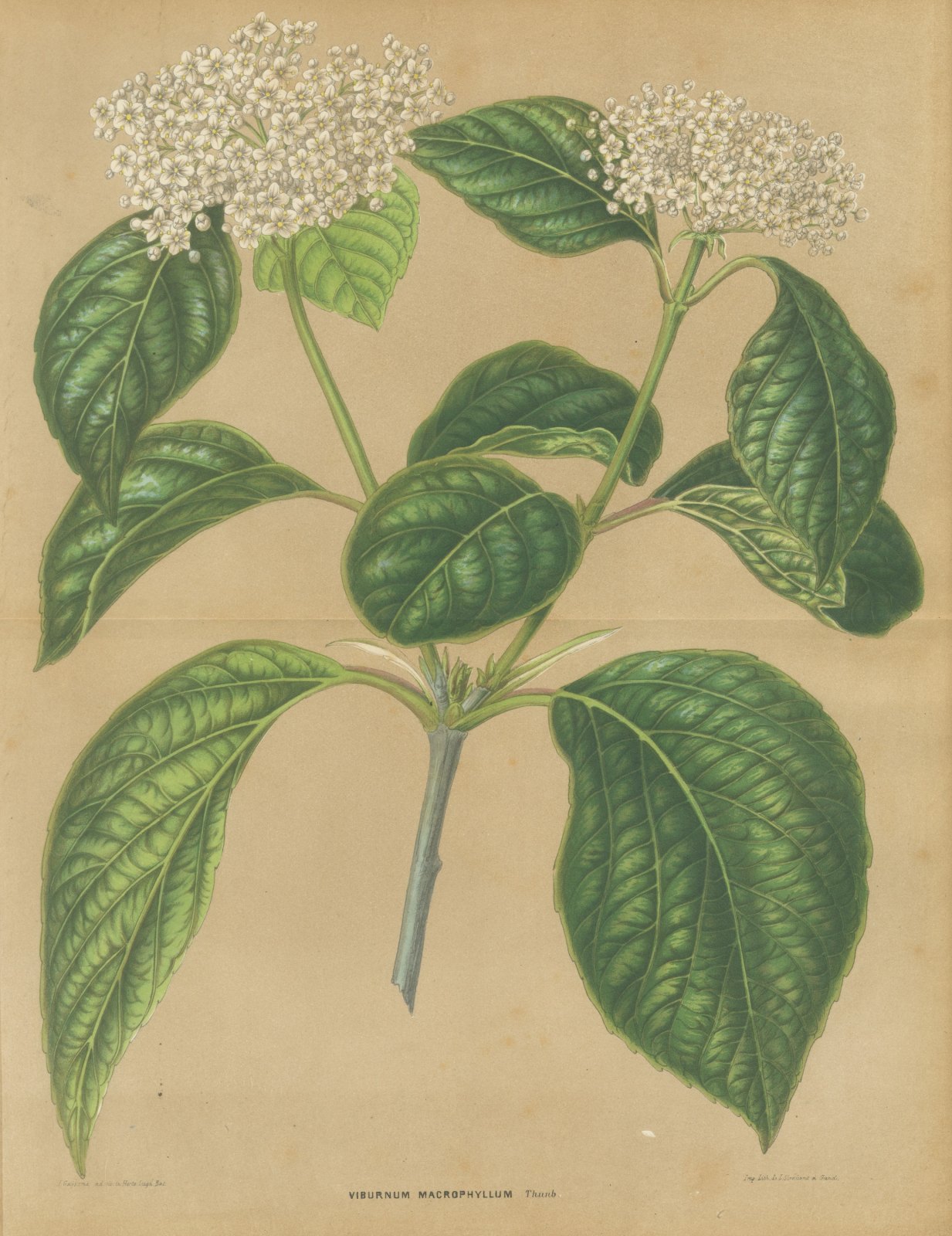
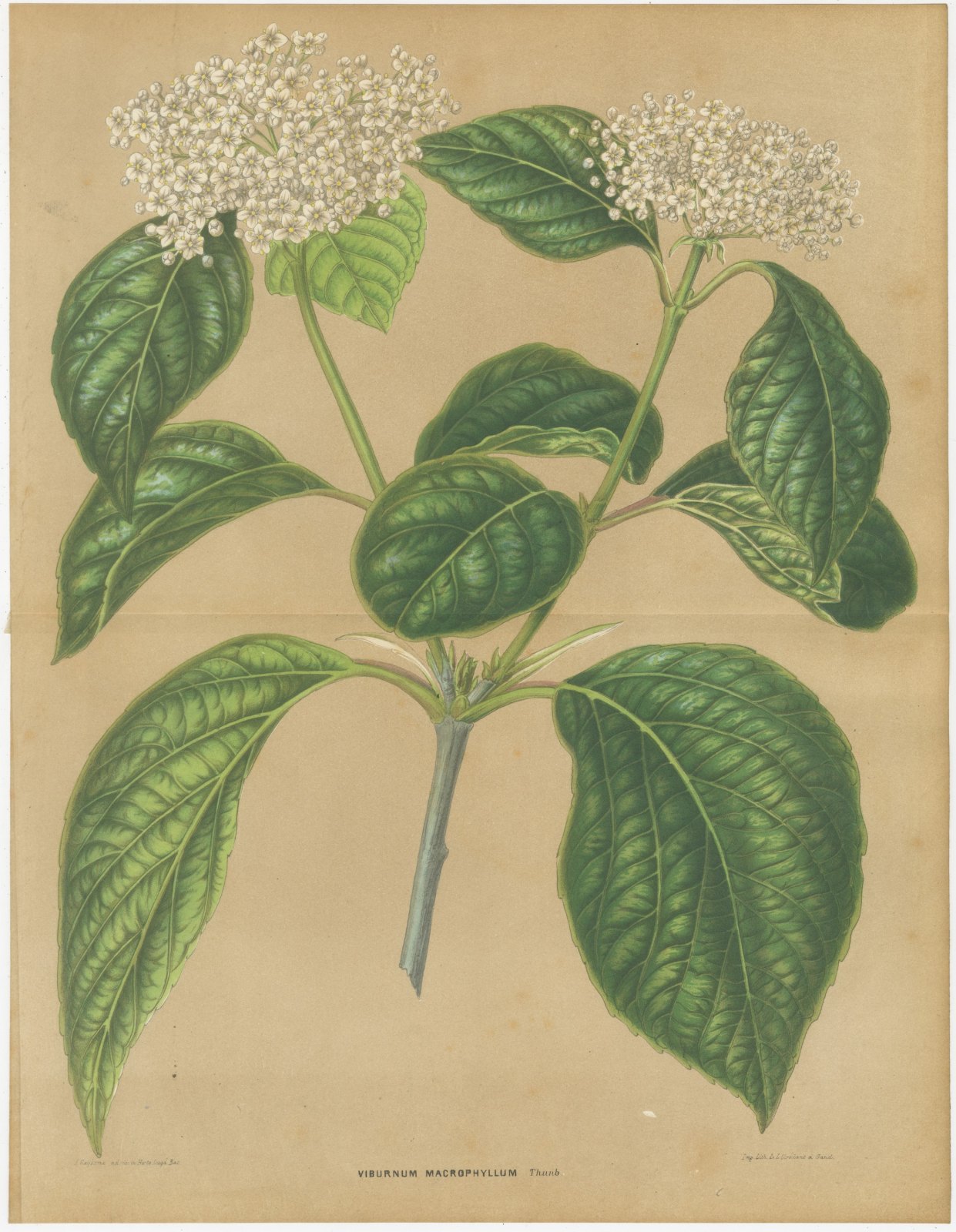
Viburnum Macrophyllum, Flowering Branch on Buff Ground, 1859
£245 ($325, €290)
Period original, not a reproduction.
Shipped from the Netherlands, flat, insured and tracked, worldwide. Returns accepted within 14 days.
- Date
- 1859
- Technique
- Chromolithograph
- Coloring
- Printed in color
- Condition
- Good. Age toning, darker at the edges; handling soiling along the edges and scattered foxing in the margins. A horizontal center fold, as issued. Small light flecks in the image, otherwise clean.
- Period
- Late 19th century
- Section
- Botanical
- Reference
- BG-12376-2-9
What the condition grades mean
- Excellent
- Bright and clean, with no faults worth mentioning.
- Very good
- Only light signs of age, such as faint toning.
- Good
- Normal signs of age for a sheet of this period: toning, some foxing, small marks or neat old repairs.
- Fair
- Clear faults such as staining, tears or repairs, priced to match.
Every fault we see is written in the condition note, and the whole sheet is shown uncropped in the photos.
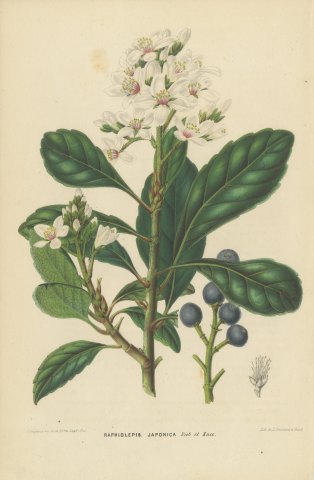
This is an original antique botanical print, a chromolithograph printed in color on a buff tint ground, lettered "VIBURNUM MACROPHYLLUM Thunb." A branch of viburnum divides from a gray green stem into two shoots, each topped by a broad flat head of small creamy white flowers and round buds. Large, glossy, deeply veined leaves in dark and mid green spread to either side, set against the warm printed ground that covers the whole image area.
The name is lettered in capitals with the authority "Thunb." (Thunberg). At lower left the artist's line reads "J. Gaÿkema, ad. viv. in Horto Lugd. Bat." (drawn by J. Gaÿkema from the living plant in the botanic garden at Leiden), and at lower right "Imp. Lith. de L. Stroobant à Gand." (printed at the lithographic press of L. Stroobant in Ghent). No plate number is printed on this plate.
The plate comes from the second volume of the Annales d'horticulture et de botanique, ou Flore des jardins du royaume des Pays-Bas, published at Leiden by A. W. Sythoff in 1859 for the Société royale d'horticulture des Pays-Bas under the patronage of King William III. The journal recorded cultivated and ornamental plants grown in the Netherlands and introduced from the Dutch possessions in the East Indies, from America and from Japan. Hort. Lugd. Bat. stands for Hortus Lugduno-Batavus, the botanic garden of Leiden University. L. Stroobant was a lithographer working in Ghent (Gand in French).
The strong color and clear drawing make it a good choice for a study, a garden room or a hallway, framed singly or in a group of plates from the same work.
Condition: Age toning, darker at the edges; handling soiling along the edges and scattered foxing in the margins. A horizontal center fold, as issued. Small light flecks in the image, otherwise clean.
This is an original antique print, not a modern reproduction. This item is sold unframed. Any framed or interior images are shown for presentation and inspiration only, unless the listing explicitly states that the item is sold framed.