Framed and on the wall
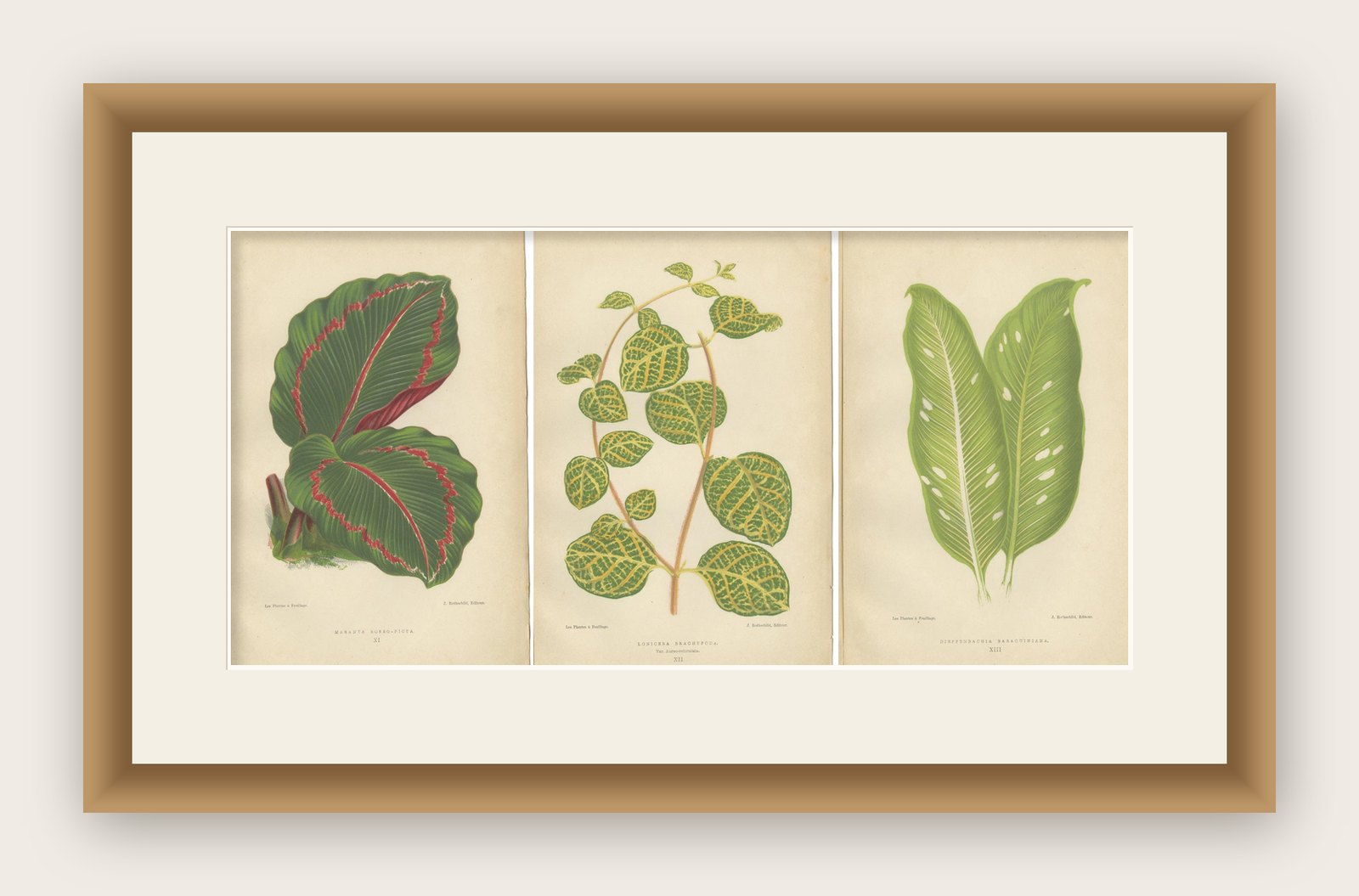
Frame and rooms are illustrations of how the print could look; the description says what is included.
Vibrant Elegance: Botanical Illustrations of Foliage from 1880 Paris
$270 (£205, €240)
Period original, not a reproduction.
Shipped from the Netherlands, flat, insured and tracked, worldwide. Returns accepted within 14 days.
- Date
- 1880
- Size
- 10.6 × 7.1 in (27 × 18 cm)
- Condition
- Good. Given age. General age-related toning and/or occasional minor defects from handling. Please study scan carefully. Comes with protective sheet and text sheet in French.
- Period
- Late 19th century
- Section
- Botanical
- Reference
- f_38830332
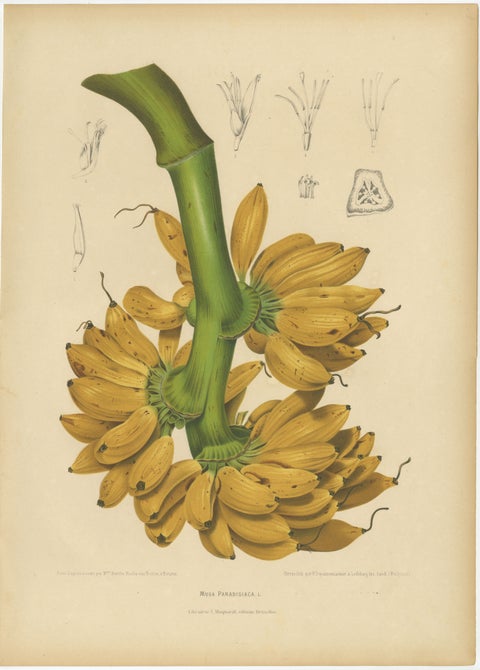
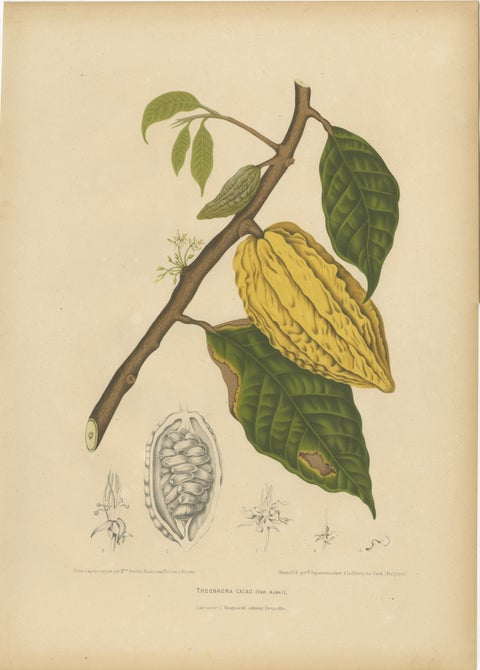
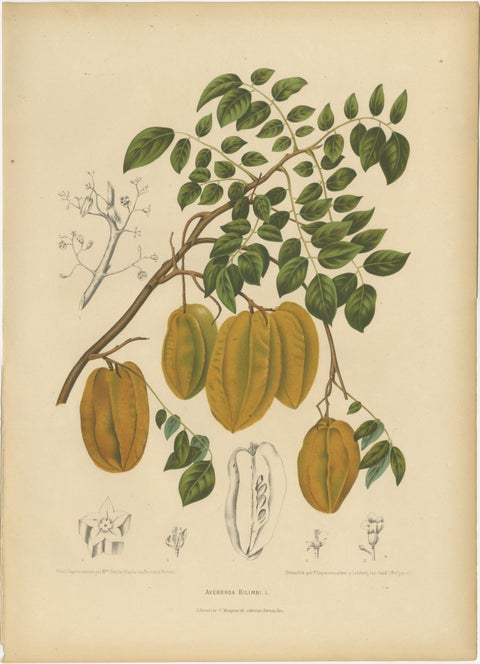
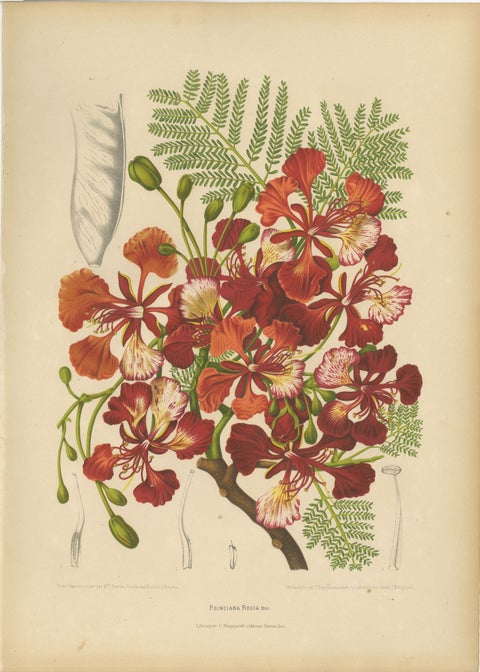
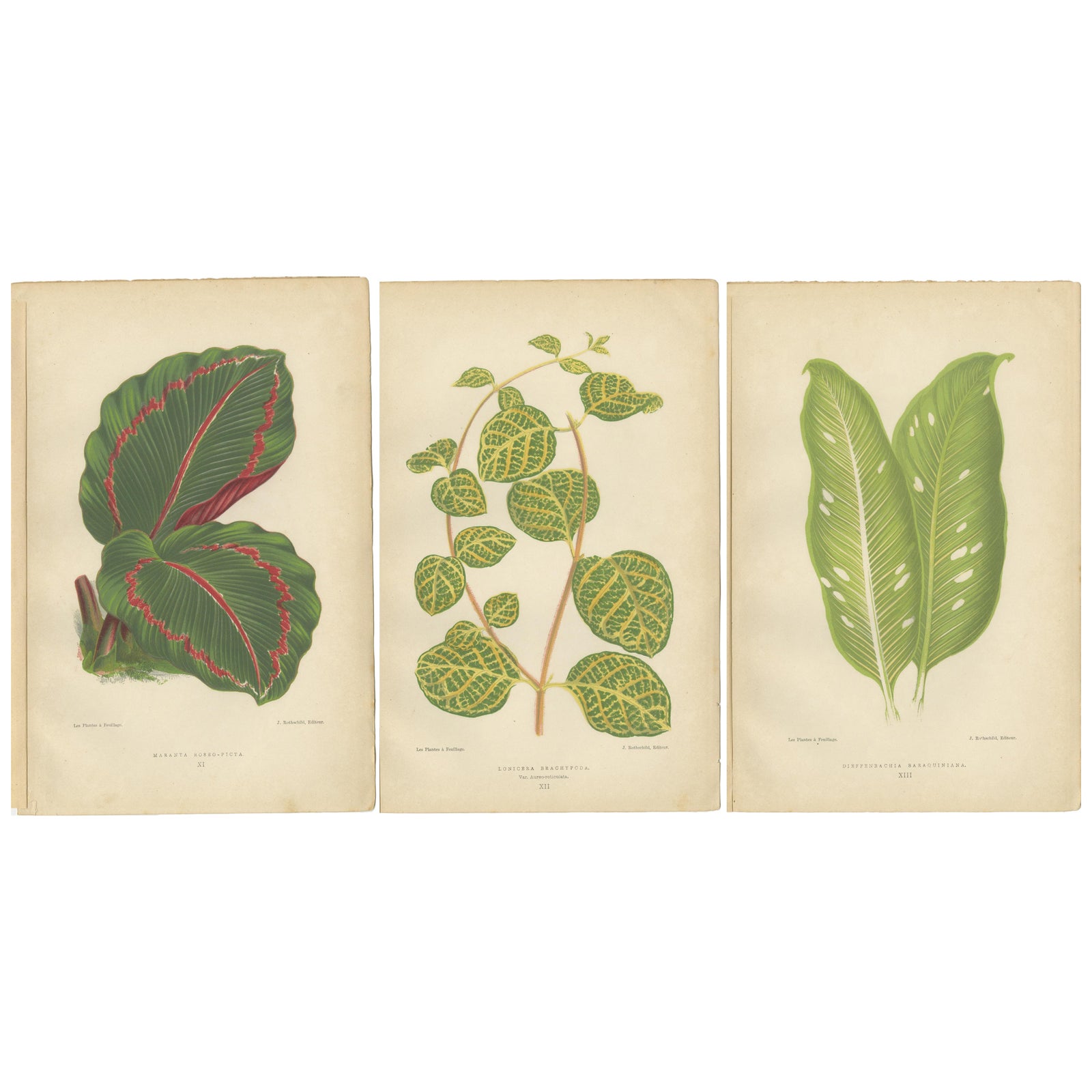
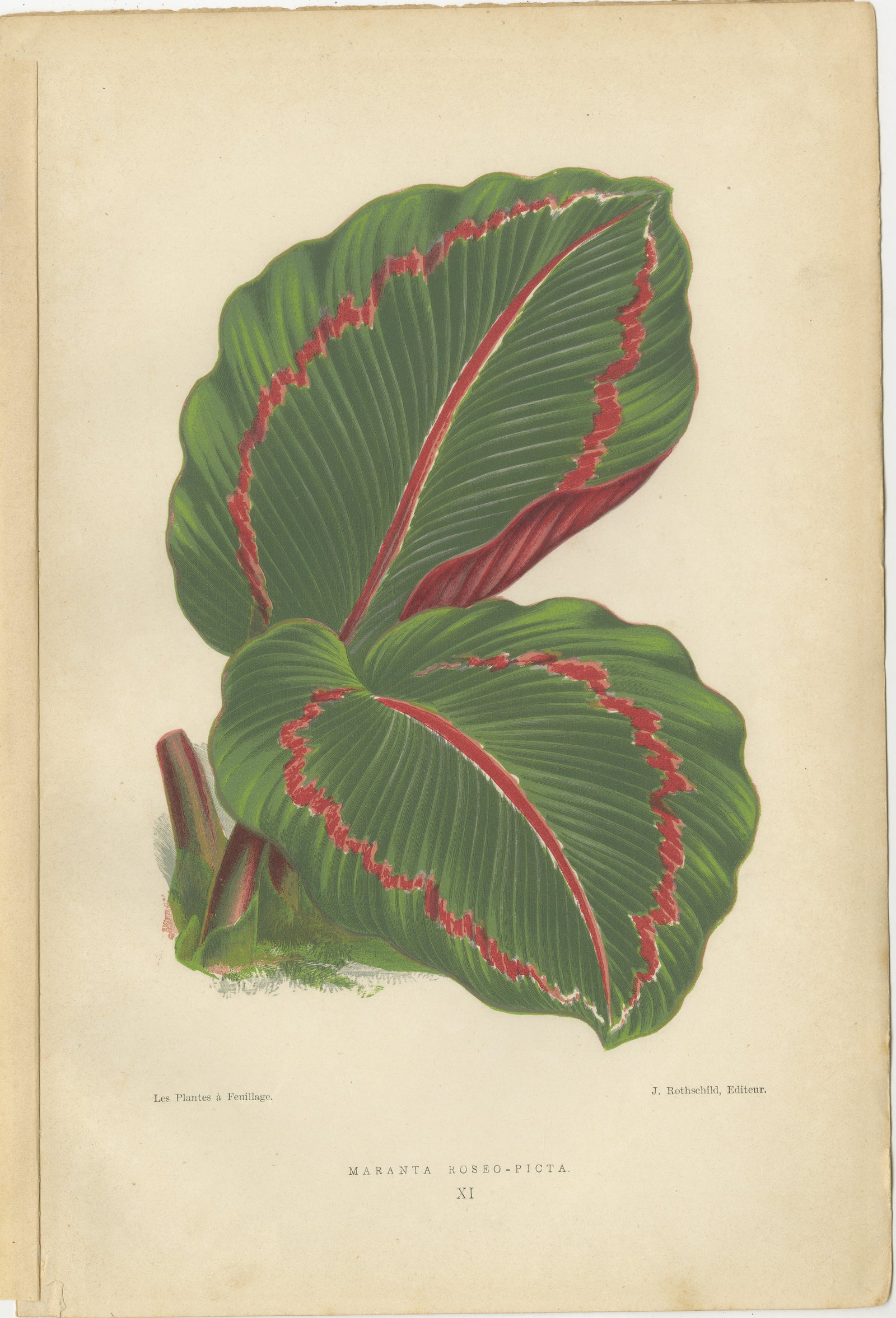
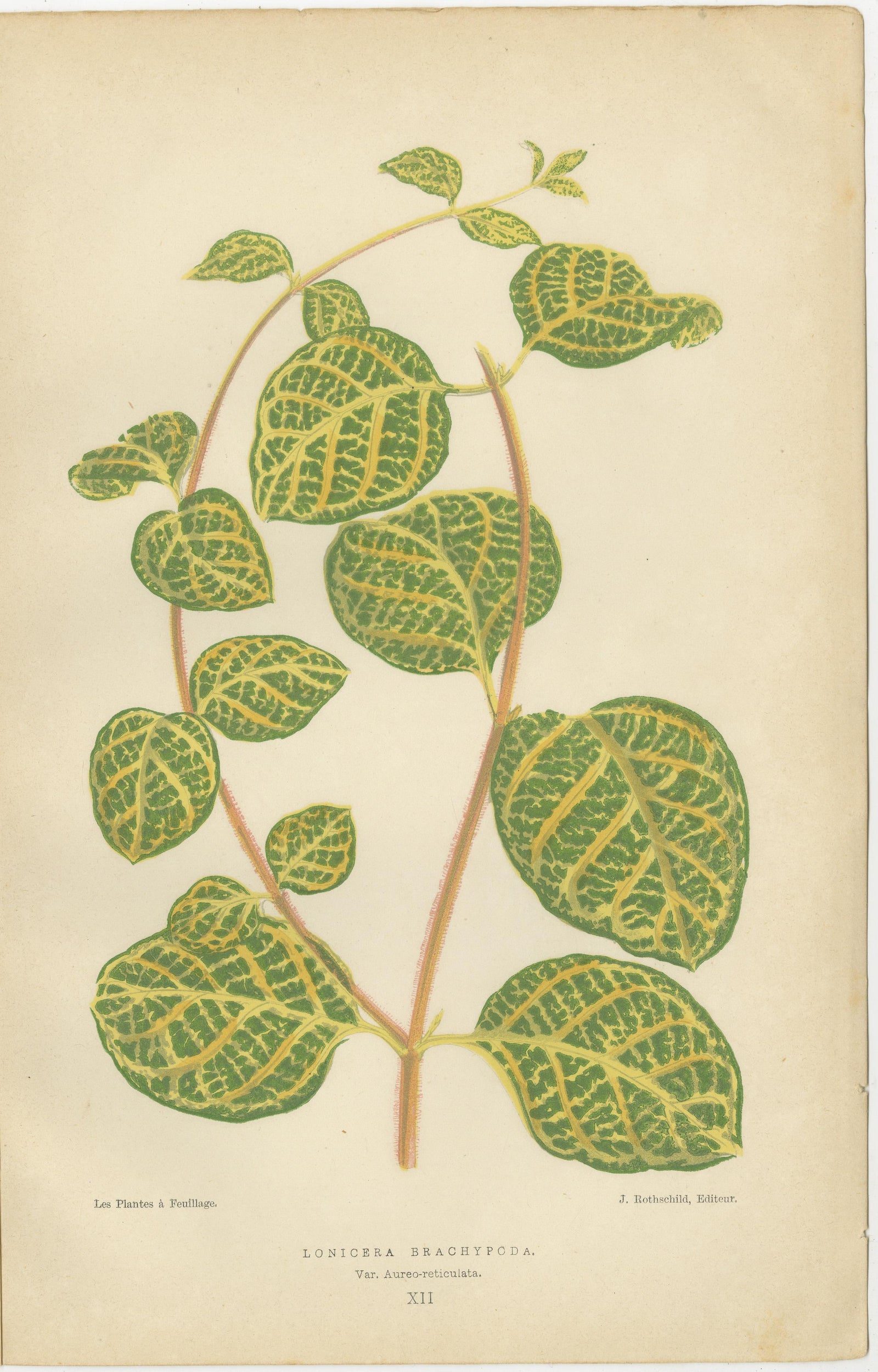
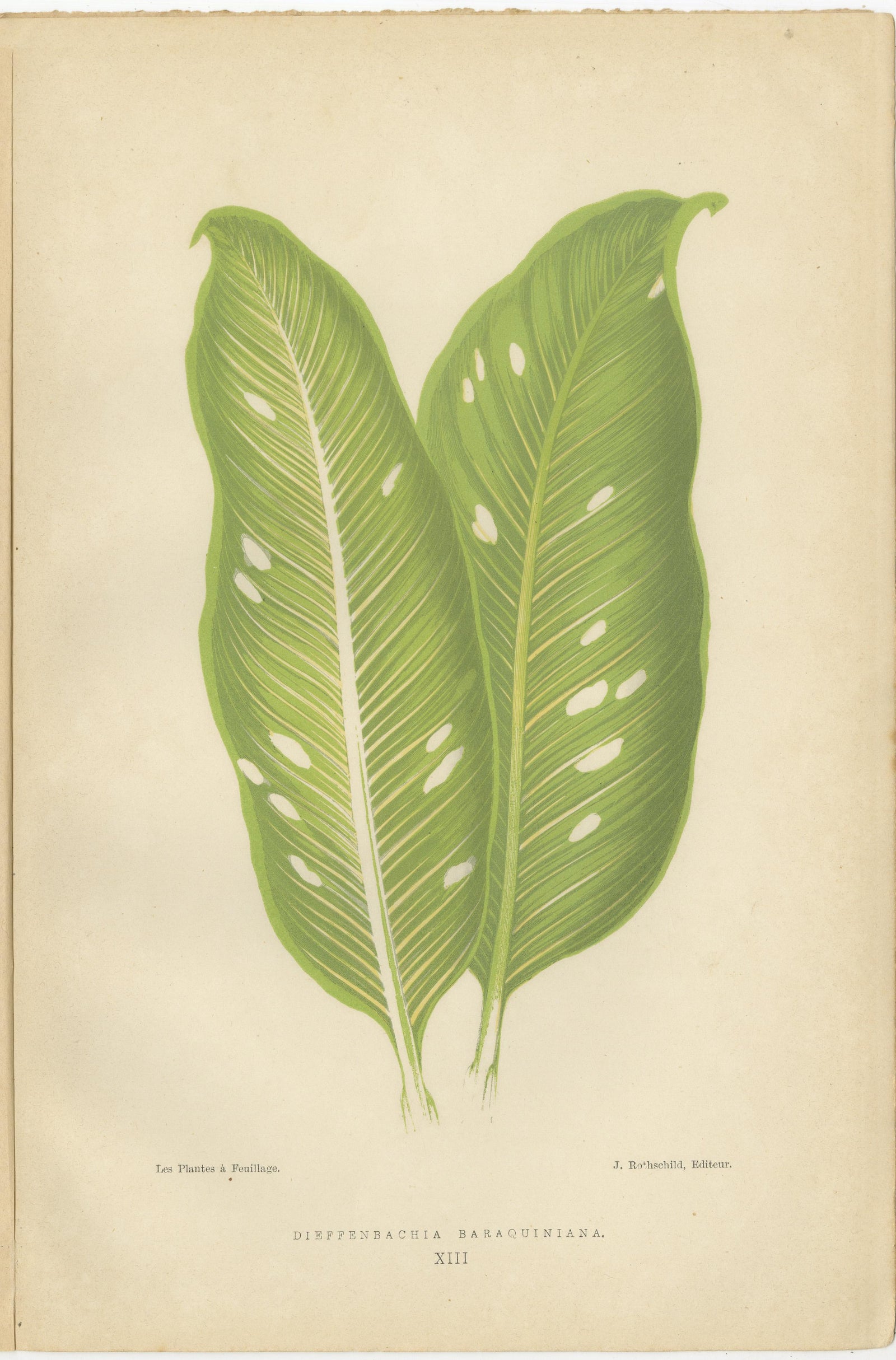
Decorative original antique botanical illustrations from "Les Plantes à Feuillage Coloré," published in 1880 in Paris with J. Rothschild as the editor. Each illustration depicts a different plant, characterized by its unique and colorful foliage, which was a common theme of interest during that period, especially among botanists and plant enthusiasts.
1. The first illustration shows "Maranta roseo-picta," commonly known as the Red-veined Prayer Plant. The depiction highlights the striking red veins against the deep green leaves, with a wavy margin lined with red as well. The leaves have an almost velvety texture, which is typical for the Maranta genus.
2. The second illustration presents "Lonicera brachypoda var. aureo-reticulata," which appears to be a variety of honeysuckle, characterized by its golden-yellow netted pattern on the leaves. The leaves are oval with a pointed tip, and the stems show a reddish hue. This variety is not commonly referenced, so it might be either a historical variety or an old botanical name.
3. The third image is of "Dieffenbachia seguine 'Tropic Snow,'" commonly known as dumb cane. The leaves are large, elliptical, and feature a prominent white variegation along the veins. The plant is known for its striking patterned foliage and is a popular ornamental plant.
These illustrations are detailed and were likely used for scientific study as well as for horticultural interest. They demonstrate the high level of artistry and botanical knowledge present in the 19th century, particularly in the meticulous detail given to the colors and patterns on the leaves.