Close-ups
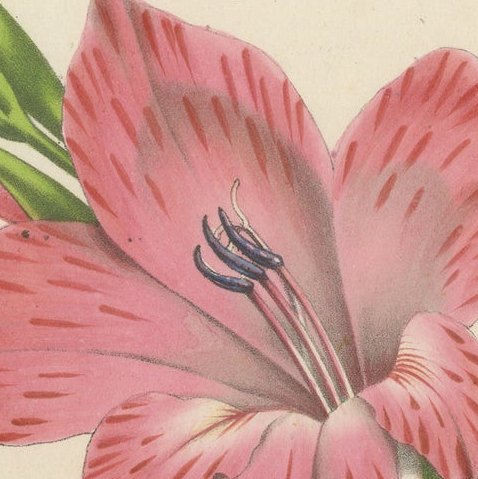
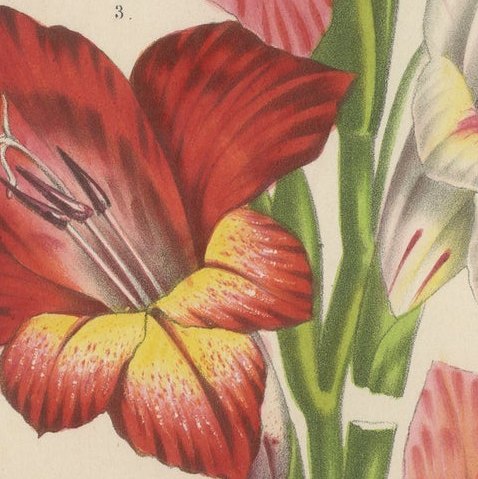
Framed and on the wall
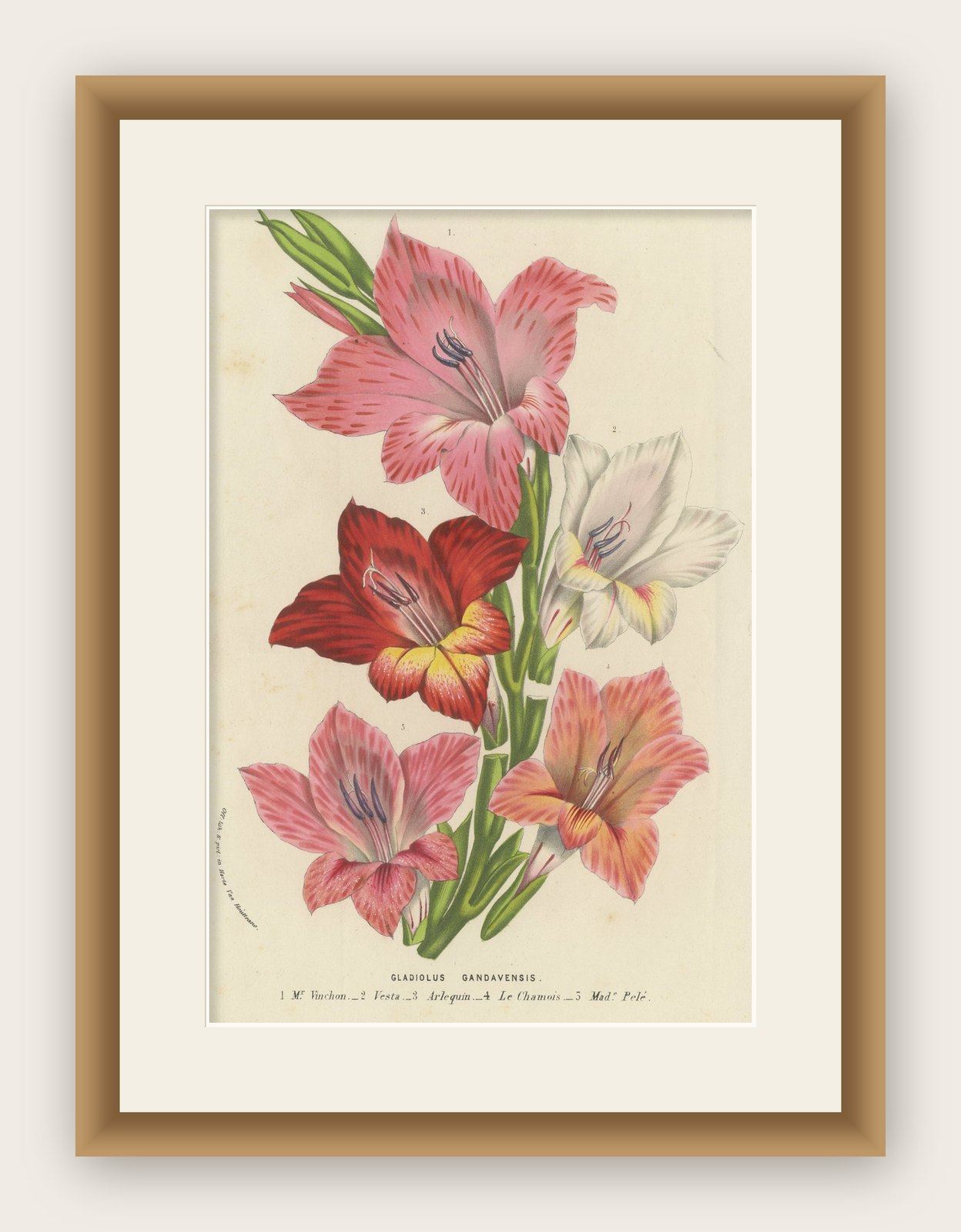


Frame and rooms are illustrations of how the print could look; the description says what is included.
Vibrant Blooms of Sword Lily: Gladiolus Gandavensis Botanical Illustration, 1855
$155 (£120, €140)
Period original, not a reproduction.
Shipped from the Netherlands, flat, insured and tracked, worldwide. Returns accepted within 14 days.
- Date
- 1855
- Size
- 9.4 × 6.3 in (24 × 16 cm)
- Condition
- Good. The condition of this print is good, with vibrant colors and clear details that have been well-preserved over time. General age-related toning and/or occasional minor defects from handling. Study scans carefully.
- Period
- Late 19th century
- Section
- Botanical
- Reference
- f_41294592
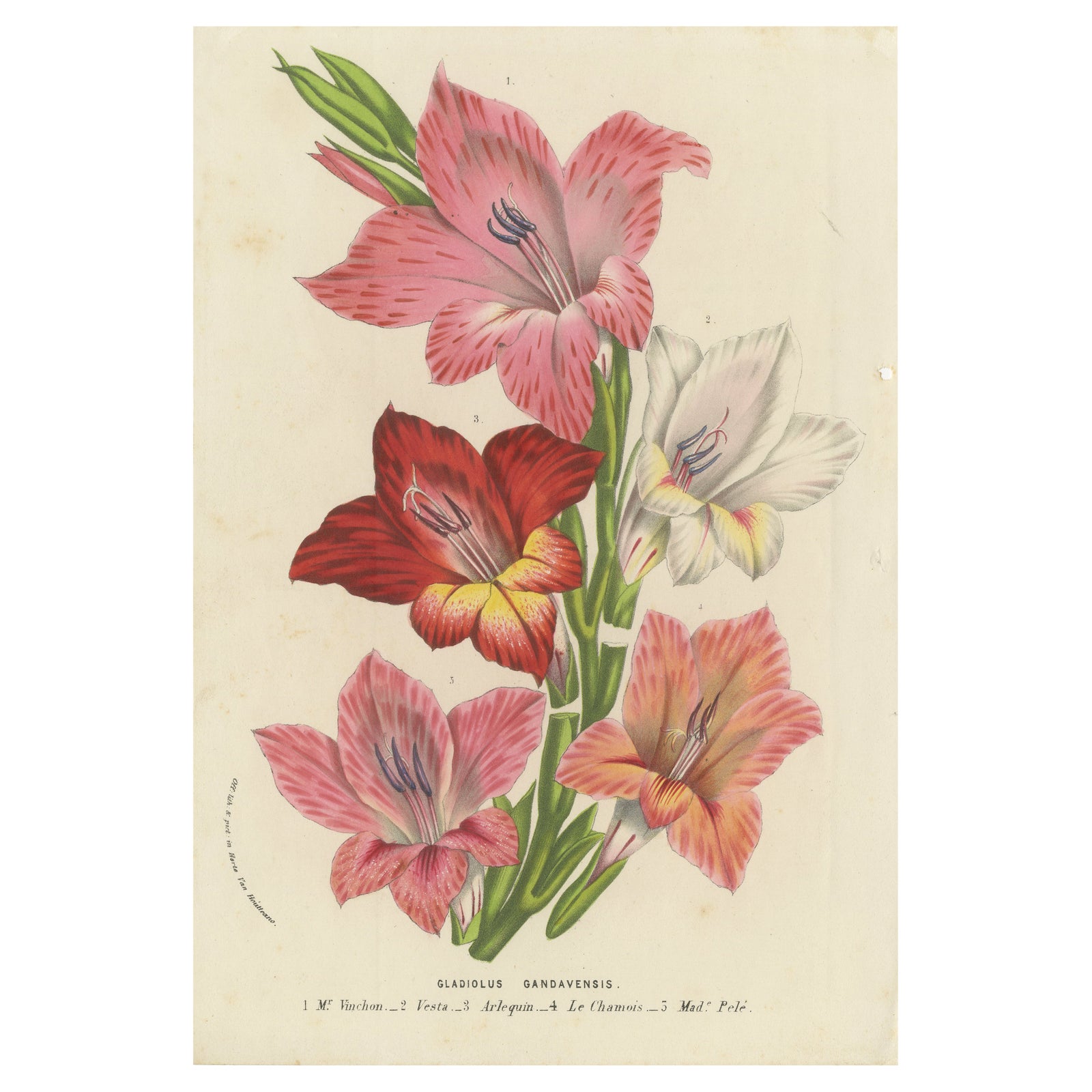
Colorful Blooms of Gladiolus Gandavensis: A Botanical Illustration
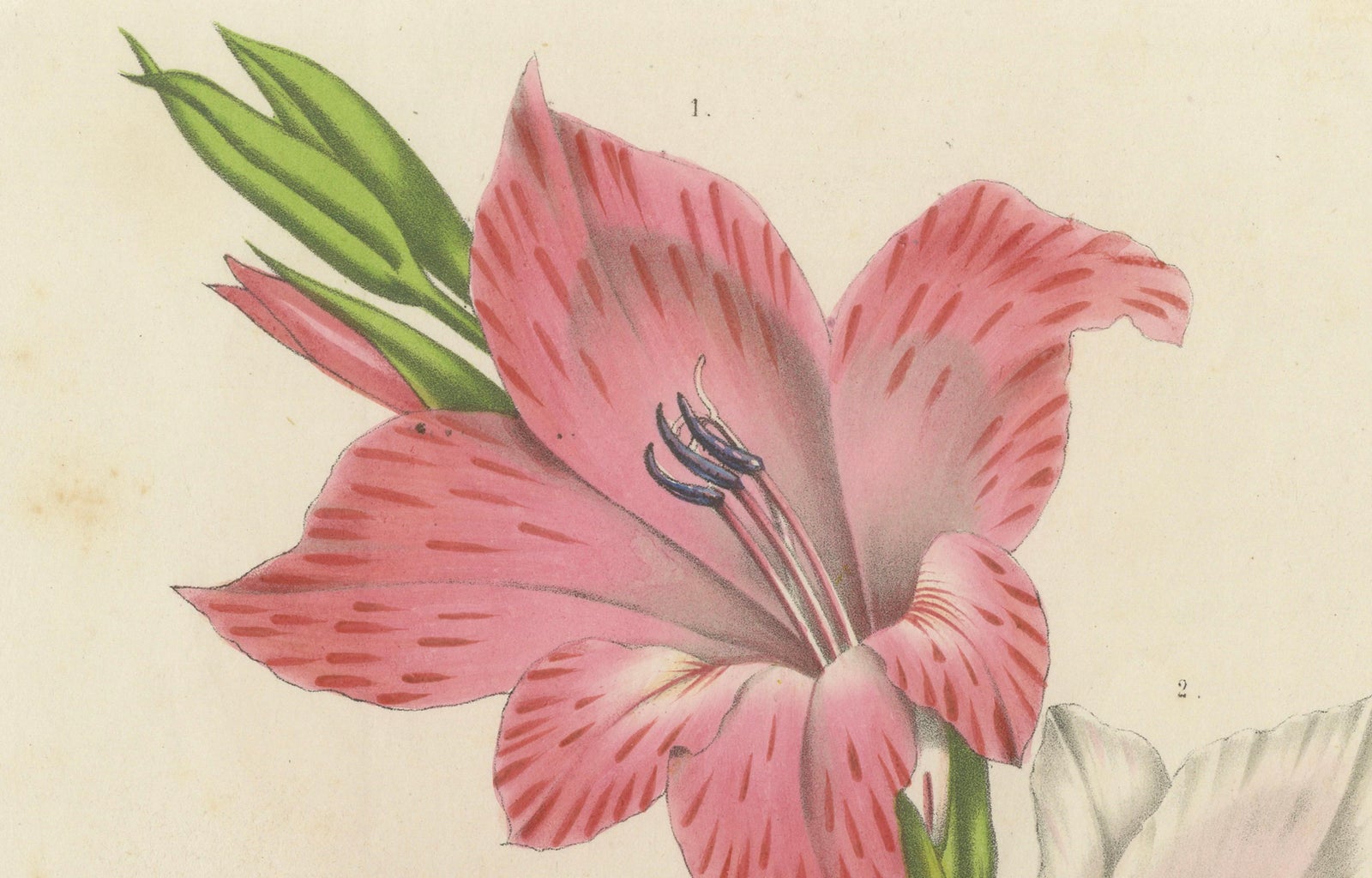
This vivid lithograph showcases the Gladiolus gandavensis, commonly referred to as the Sword Lily. This particular hybrid of gladiolus, also known as the Ghent Gladiolus, is notable for its striking, vibrant flowers, which come in a variety of colors and patterns.
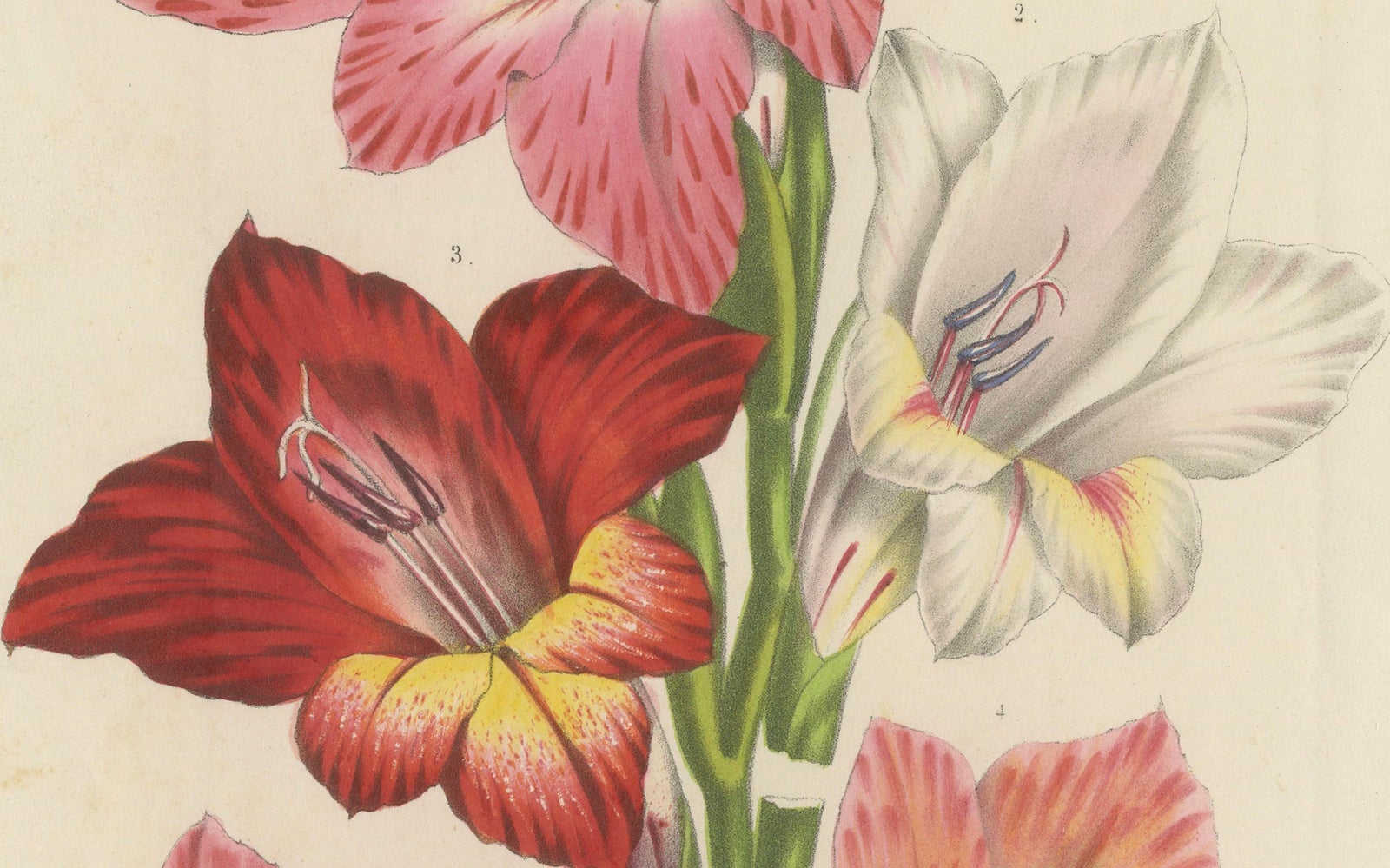
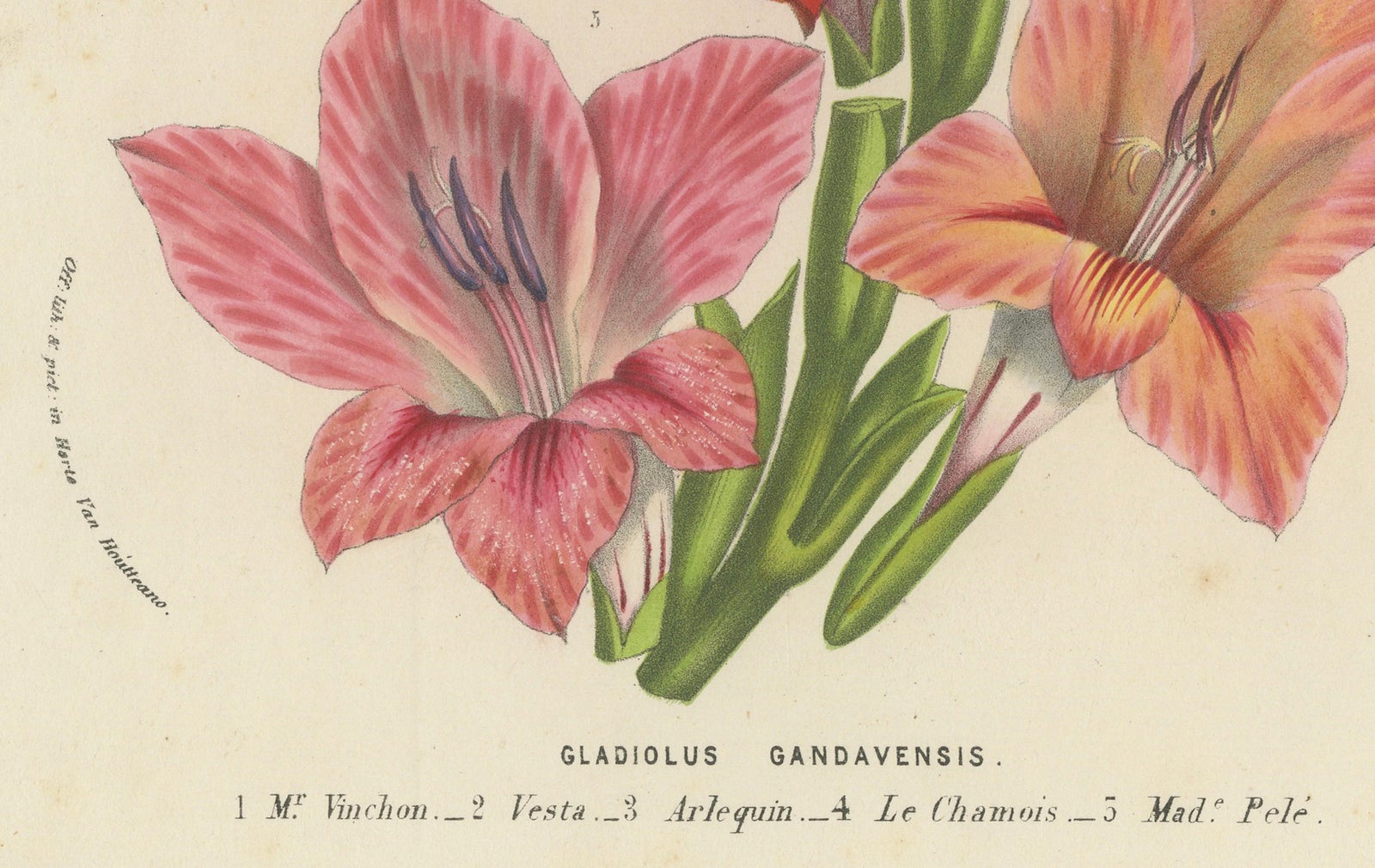
The illustration depicts five different varieties, labeled as M. Vinchon, Vesta, Arlequin, Le Chamois, and Mad. Pelé, each showcasing unique colorations from deep reds and yellows to soft pinks and whites.
The image is part of the renowned 19th-century botanical work "Flore des Serres et des Jardins de l'Europe," curated by Louis van Houtte, a distinguished Belgian horticulturist.
This series is famous for its high-quality botanical illustrations that provided both scientific information and aesthetic enjoyment to its viewers.
Hand-colored lithography, the technique used for this illustration, was widely appreciated for its ability to reproduce the vivid hues and delicate details of plants.
The lithograph is in good condition, with vibrant colors and fine details preserved, though it may show minor signs of age such as slight foxing or yellowing around the edges, common in historical prints. It has two small pinholes in the right margin.
This piece beautifully captures the diversity and ornamental appeal of gladiolus flowers, reflecting the 19th-century fascination with horticulture and the cultivation of decorative plants.