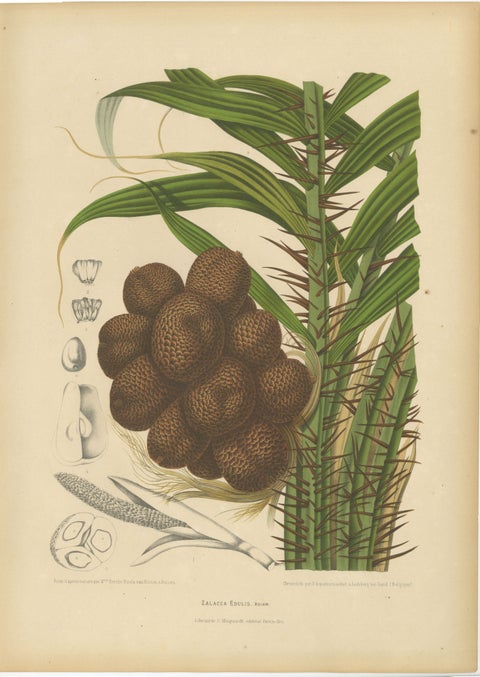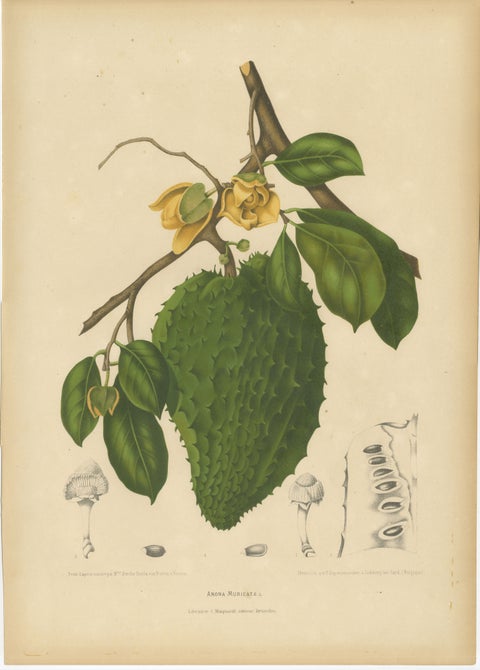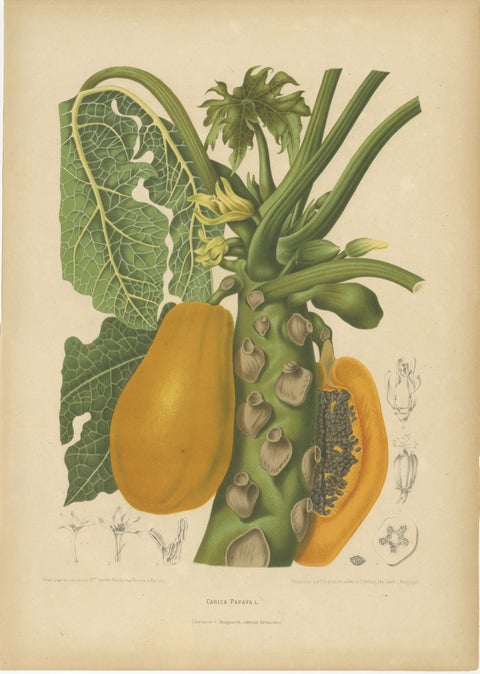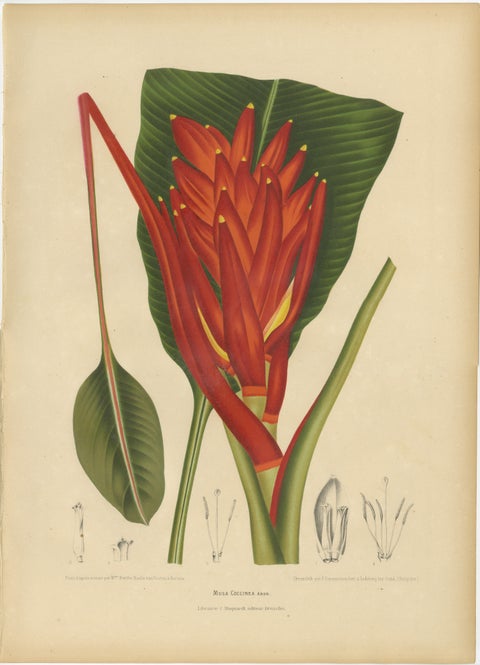
Framed and on the wall
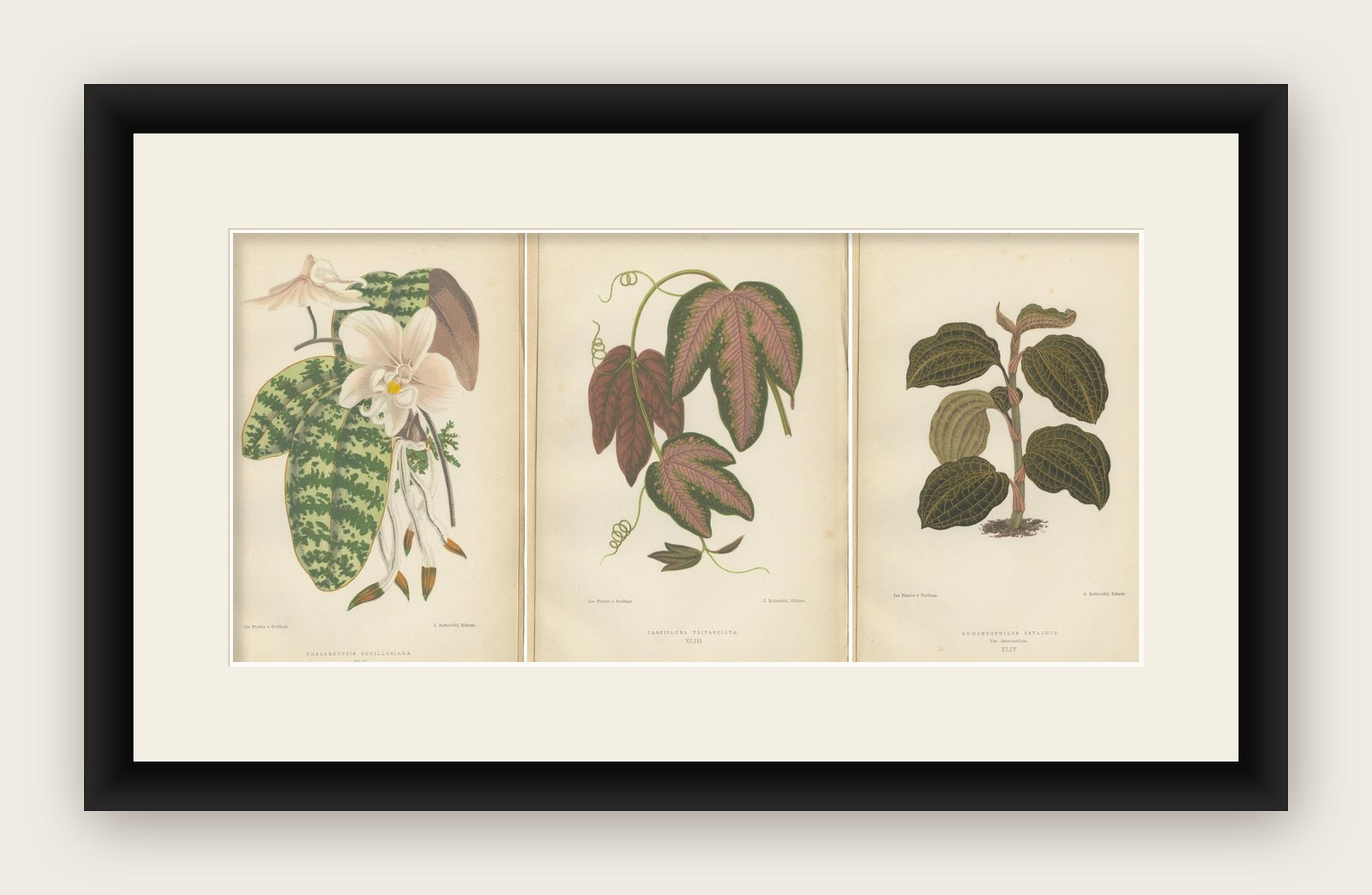

Frame and rooms are illustrations of how the print could look; the description says what is included.
Verdant Varieties: A Vintage Botanical Collection from 1880
€240 ($270, £205, €240)
Period original, not a reproduction.
Shipped from the Netherlands, flat, insured and tracked, worldwide. Returns accepted within 14 days.
- Date
- 1880
- Size
- 10.6 × 7.1 in (27 × 18 cm)
- Condition
- Good. Given age. General age-related toning and/or occasional minor defects from handling. Please study scan carefully. Comes with protective sheet and text sheet in French.
- Period
- Late 19th century
- Section
- Botanical
- Reference
- f_38839622
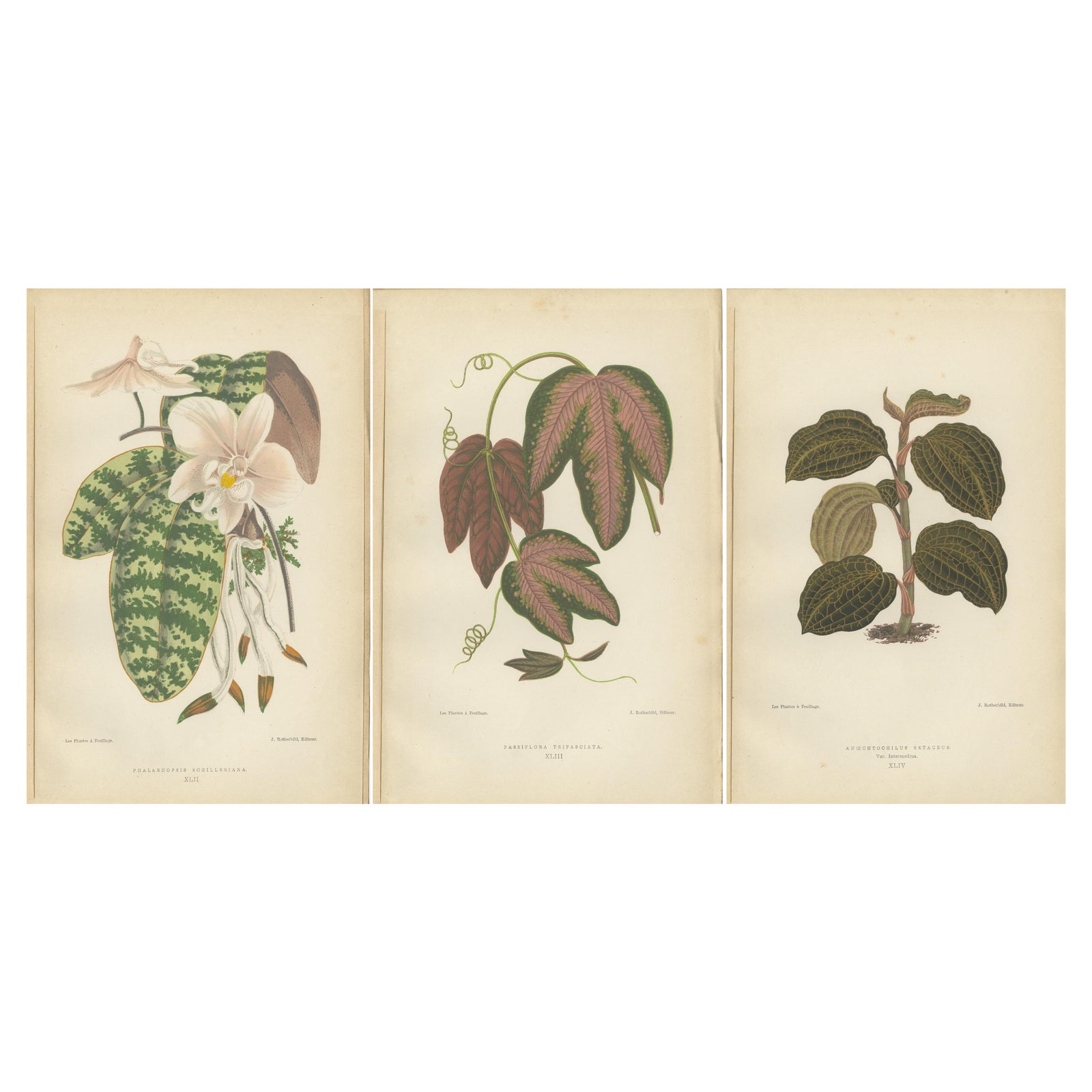
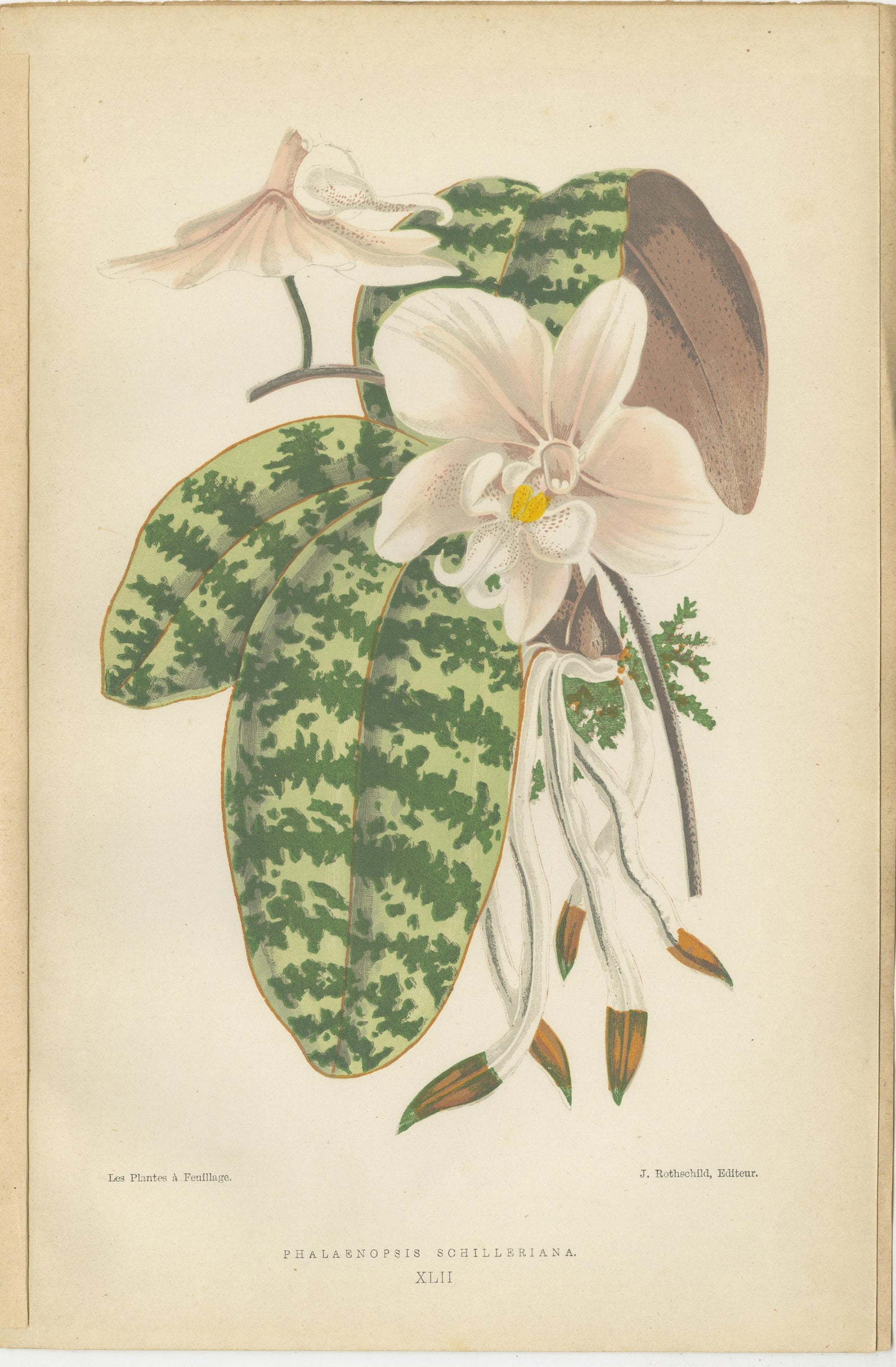
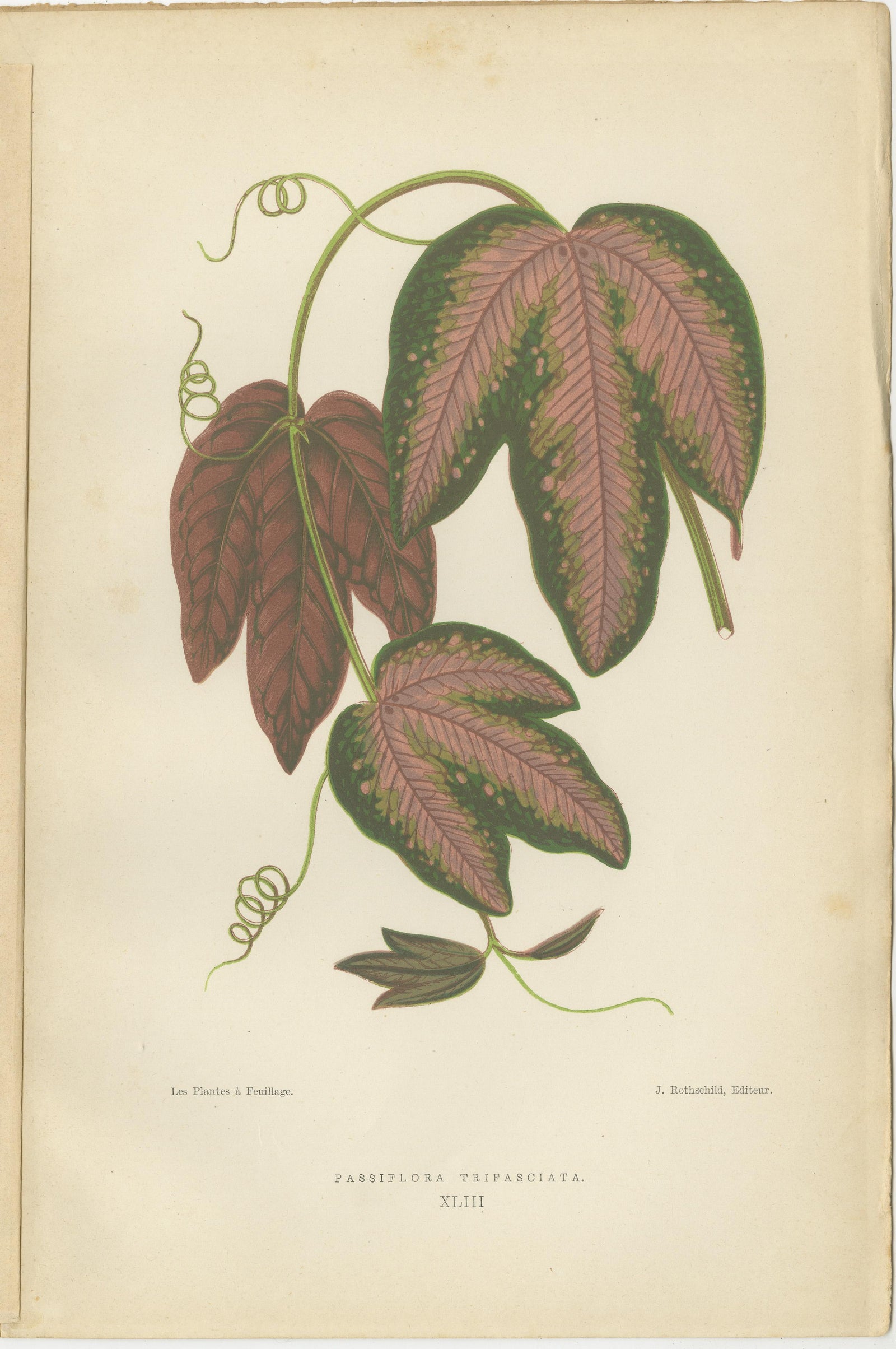
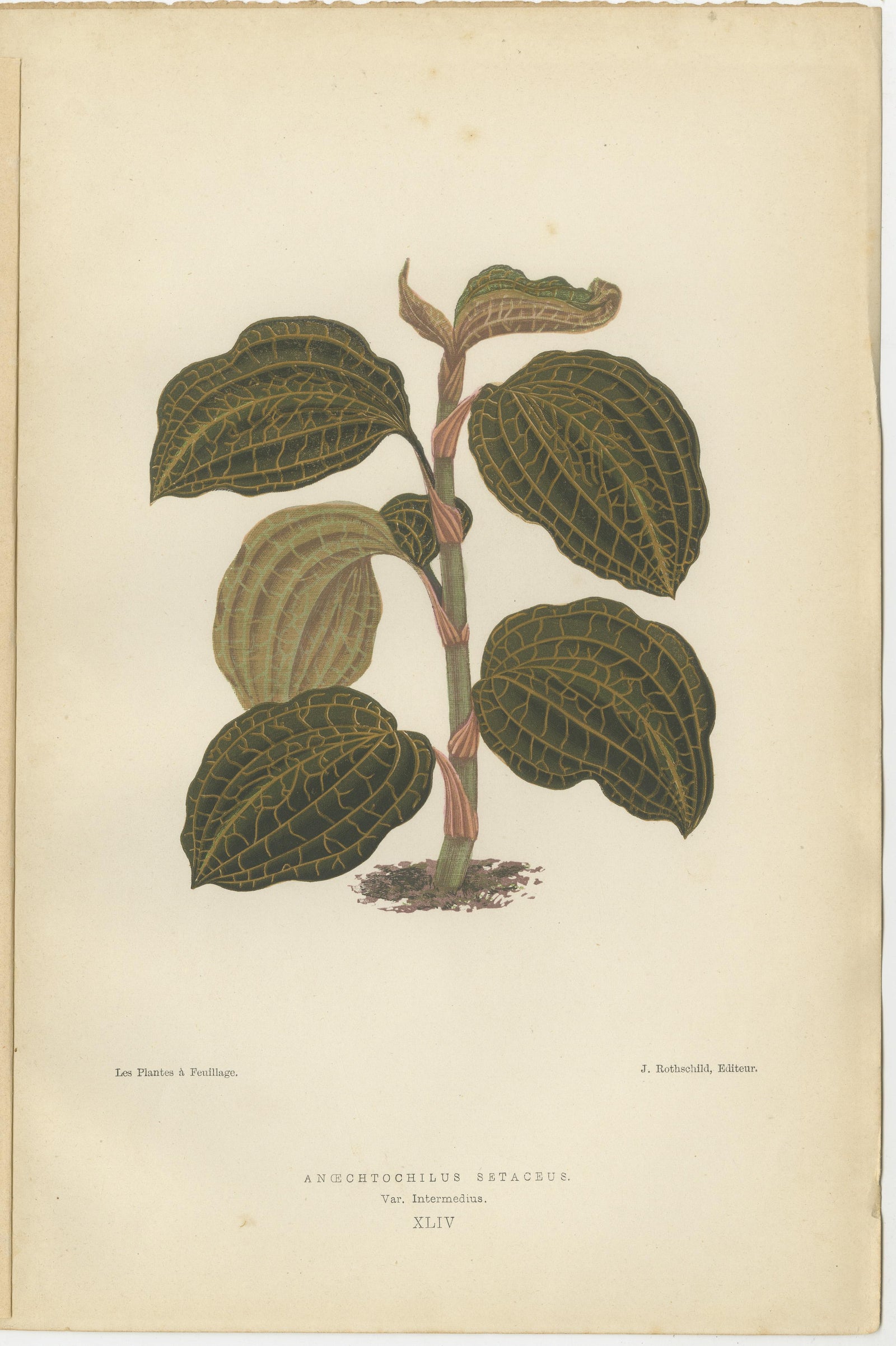
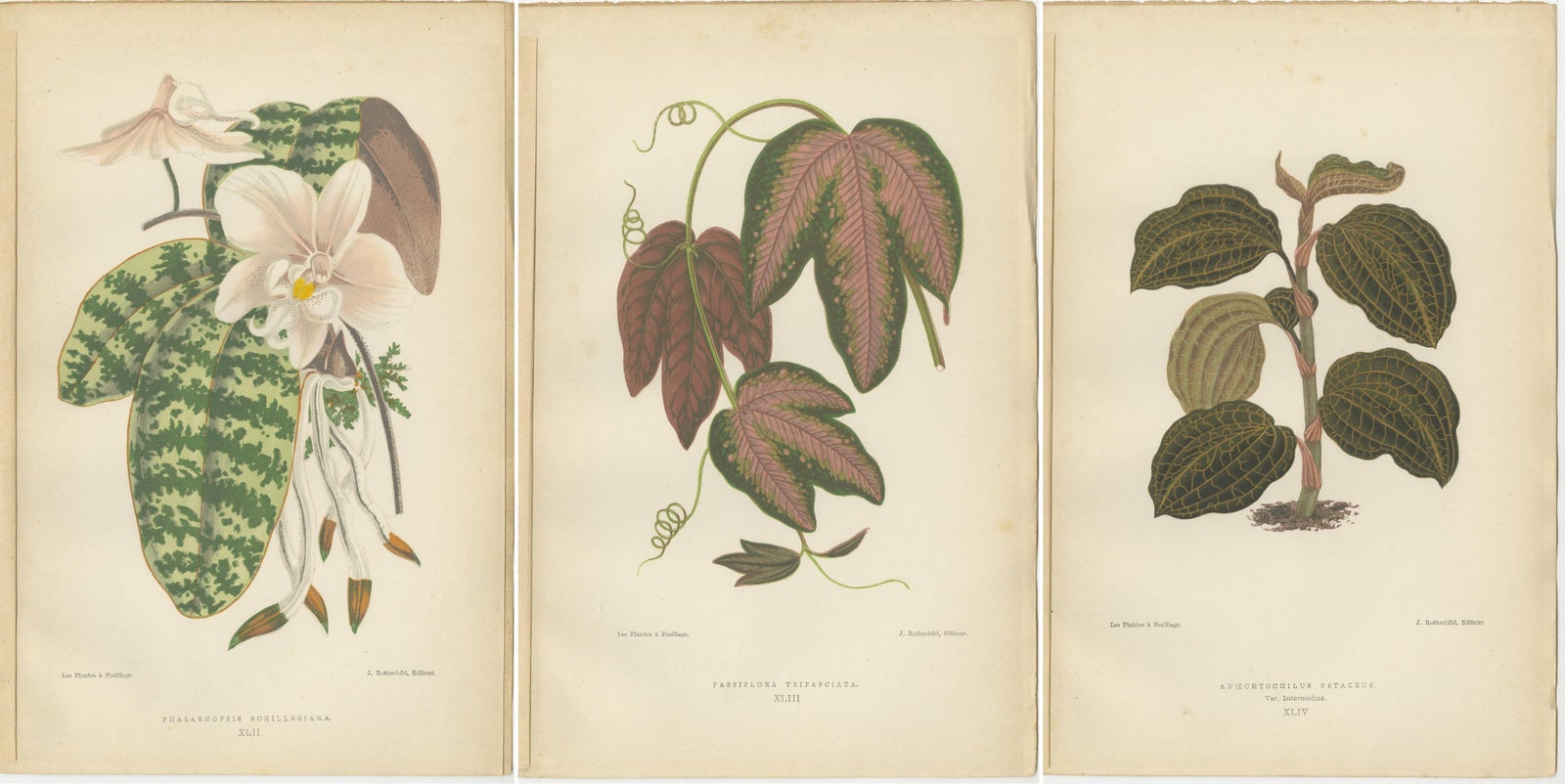
The original antique prints are from "Les Plantes à Feuillage Coloré" (Plants with Colored Foliage), Tome Second, which reflects the 19th-century European fascination with botany and plant illustration. Published in Paris in 1880, with J. Rothschild as the publisher, these prints exemplify the intricate detailing and scientific accuracy that was typical of the era, as botanical illustration was both a scientific endeavor and an art form. Here's a description of each:
1. **Phalaenopsis Schilleriana**: This print displays a species of Phalaenopsis, commonly known as the "Moth Orchid." It's characterized by its broad, mottled green leaves and the striking, pale pink and white blossoms that feature a delicate pattern of spots. The blooms are depicted with a natural droop, hanging gracefully from the stem, showcasing the detailed structure of the flower's anatomy.
2. **Passiflora Tripartita var. Mollissima**: Also known as "Banana Passionfruit," this illustration captures the distinct features of a passiflora vine with its tri-lobed leaves that have a beautiful, reddish-purple underside. Tendrils spiral out from the vine, showing how the plant would climb and support itself. The foliage is detailed with a fine pattern of veins and a subtle interplay of green and purple hues.
3. **Anoectochilus Setaceus**: Commonly referred to as the "Laceleaf Plant," this print illustrates a terrestrial orchid known for its ornamental leaves. The leaves are oval-shaped with an intricate network of veining, resembling a fine lace pattern. The color palette is a rich combination of green and yellow, with each vein delicately highlighted to show the texture and depth.
Each print demonstrates a deep appreciation for the natural world, capturing not just the scientific detail, but also the aesthetic beauty of these plants. The coloring is soft yet vivid, showing a range of hues that would have required careful mixing and application by the artists of the time. These prints would have been both educational for those studying botany and decorative for those who appreciated the artistry of nature.