Close-ups
Framed and on the wall
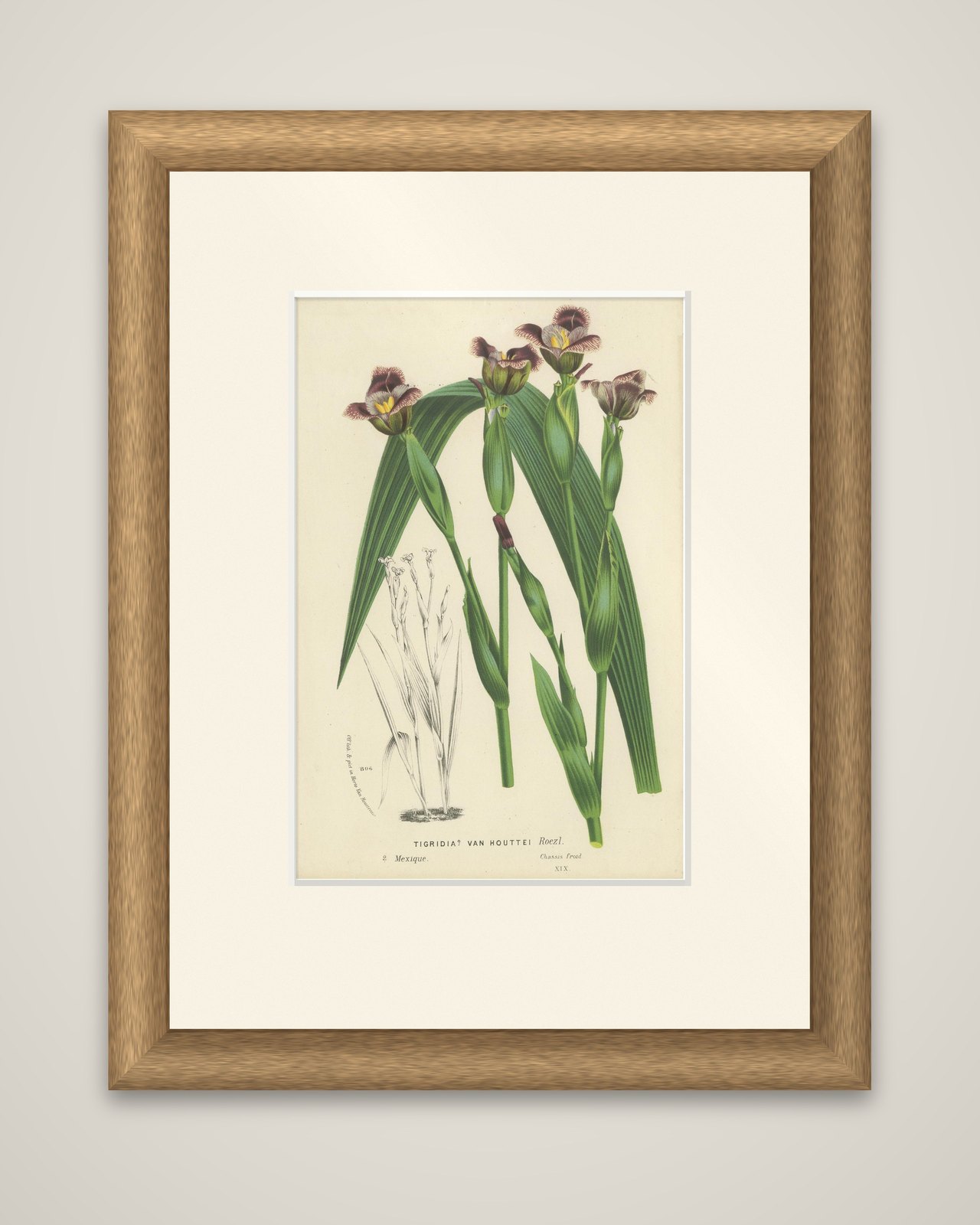
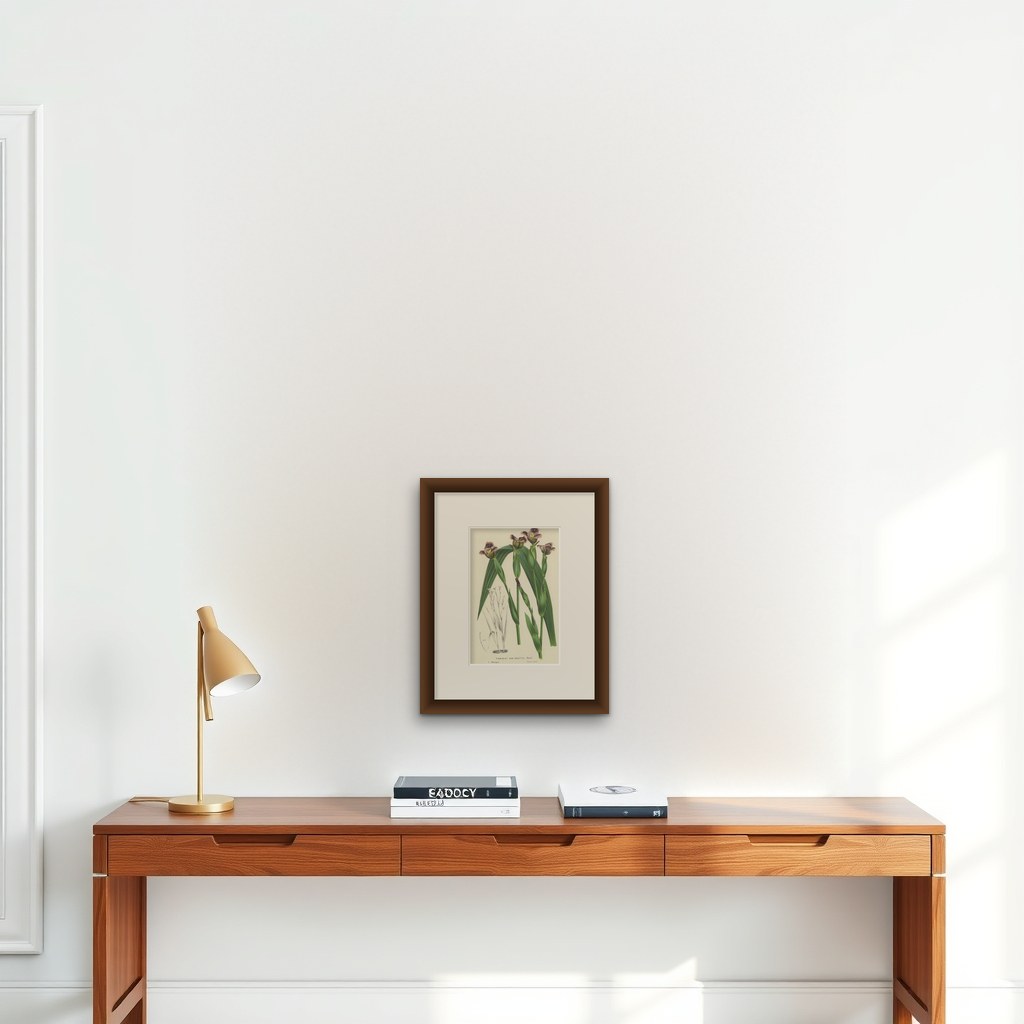

Frame and rooms are illustrations of how the print could look; the description says what is included.
Van Houtte's Tigridia Botanical Illustration by Louis van Houtte, 19th Century
€140 ($155, £120, €140)
Period original, not a reproduction.
Shipped from the Netherlands, flat, insured and tracked, worldwide. Returns accepted within 14 days.
- Date
- Not stated
- Size
- 9.4 × 6.3 in (24 × 16 cm)
- Condition
- Good. The condition of this print is good, with vibrant colors and clear details that have been well-preserved over time. General age-related toning and/or occasional minor defects from handling. Please study scans carefully.
- Artist or book
- Louis van Houtte
- Section
- Botanical
- Reference
- f_41290392
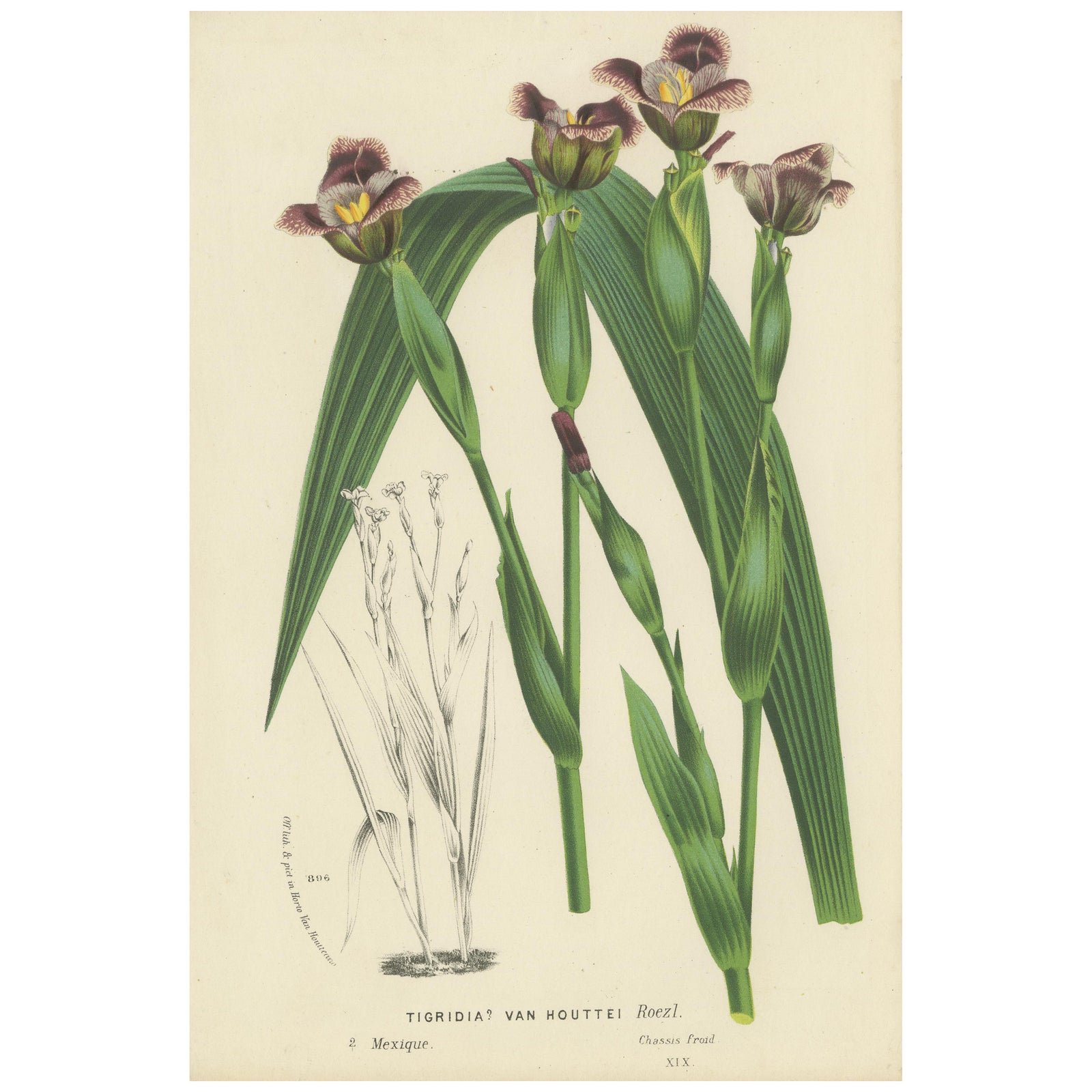
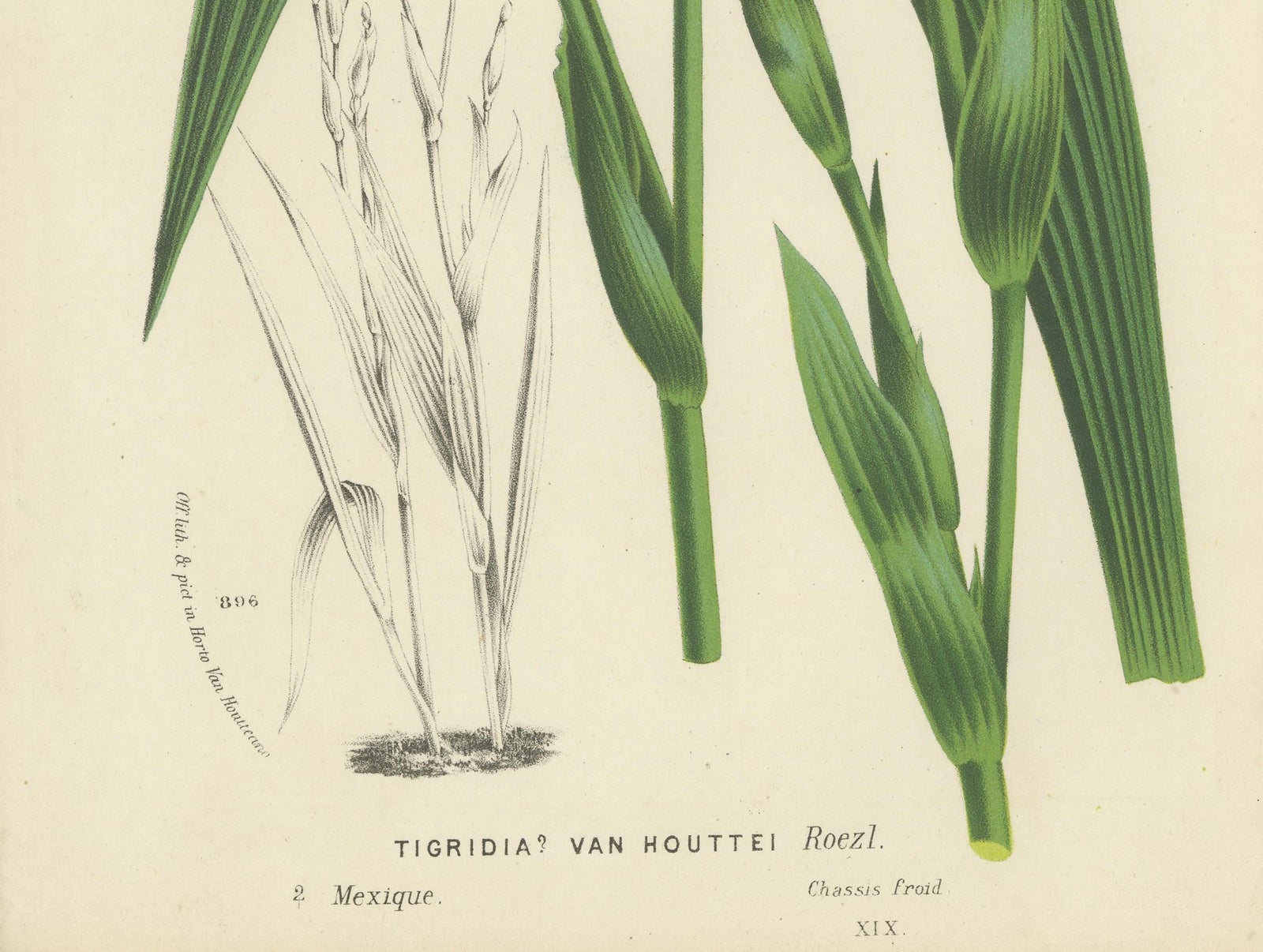
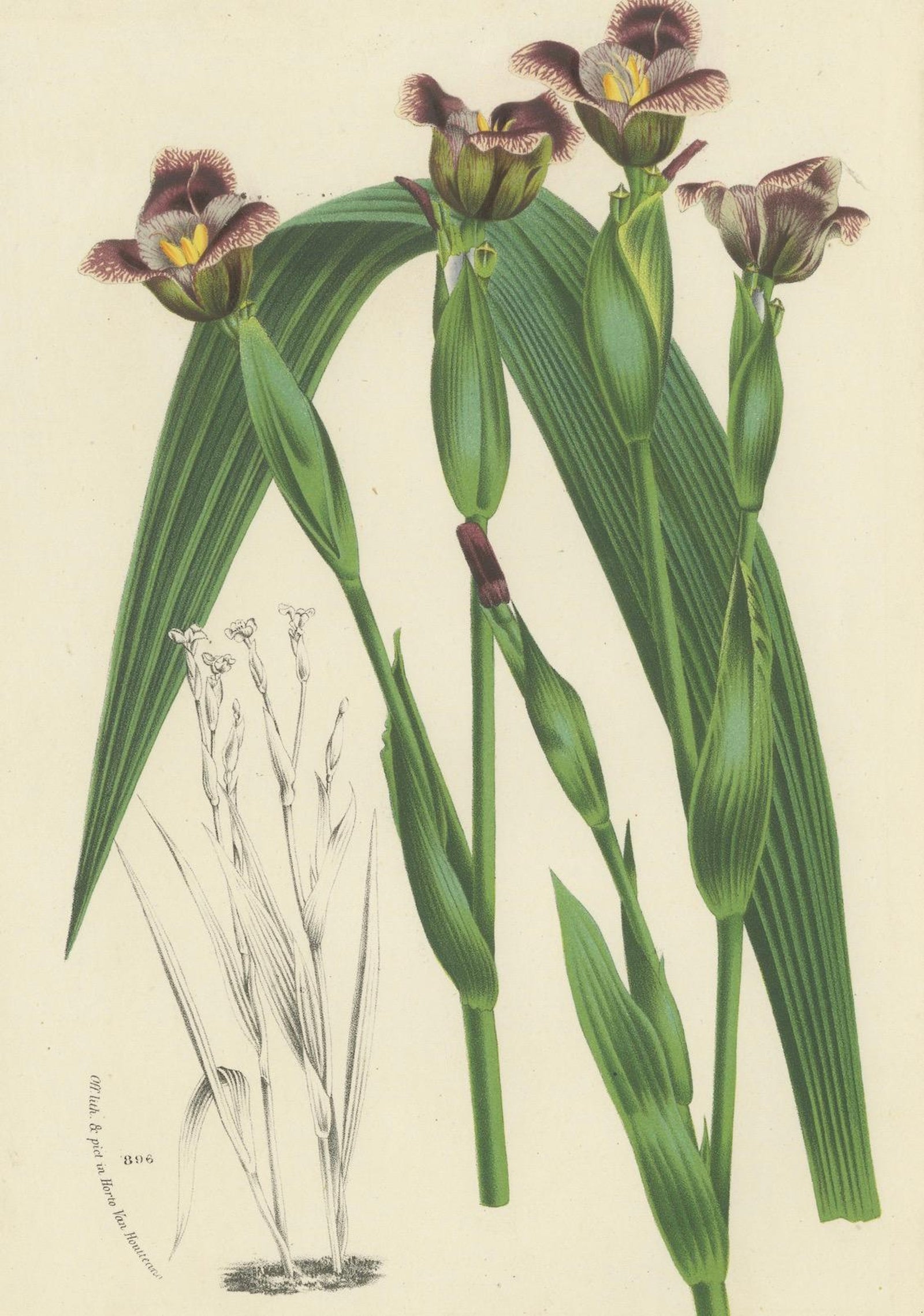
Tigridia van Houttei, a chromolithograph from Louis van Houtte's Flore des Serres et des Jardins de l'Europe, issued in Ghent in the nineteenth century. The sheet is lettered "Tigridia? Van Houttei Roezl" with the origin "Mexique" and the note "Châssis froid" (cold frame).
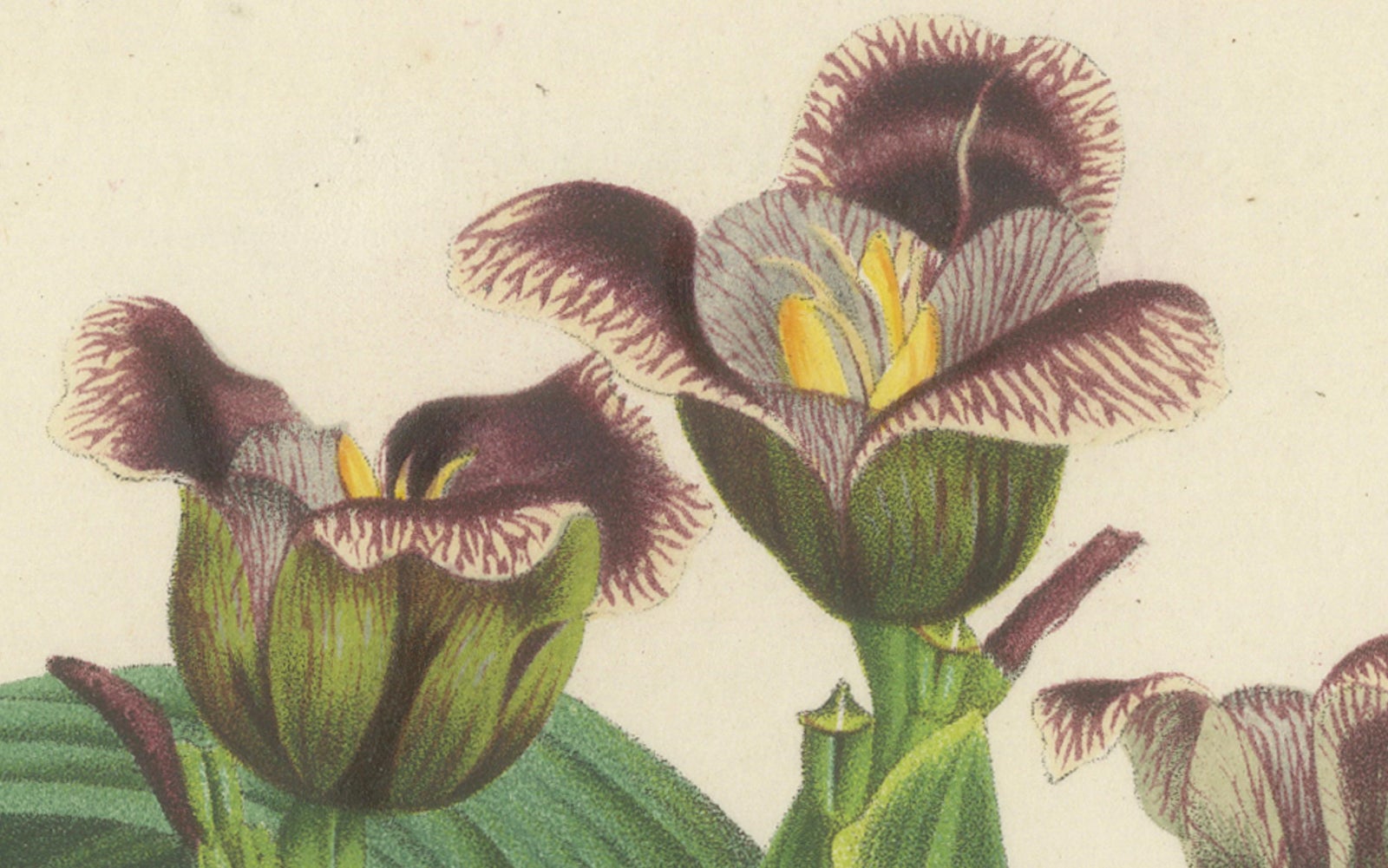
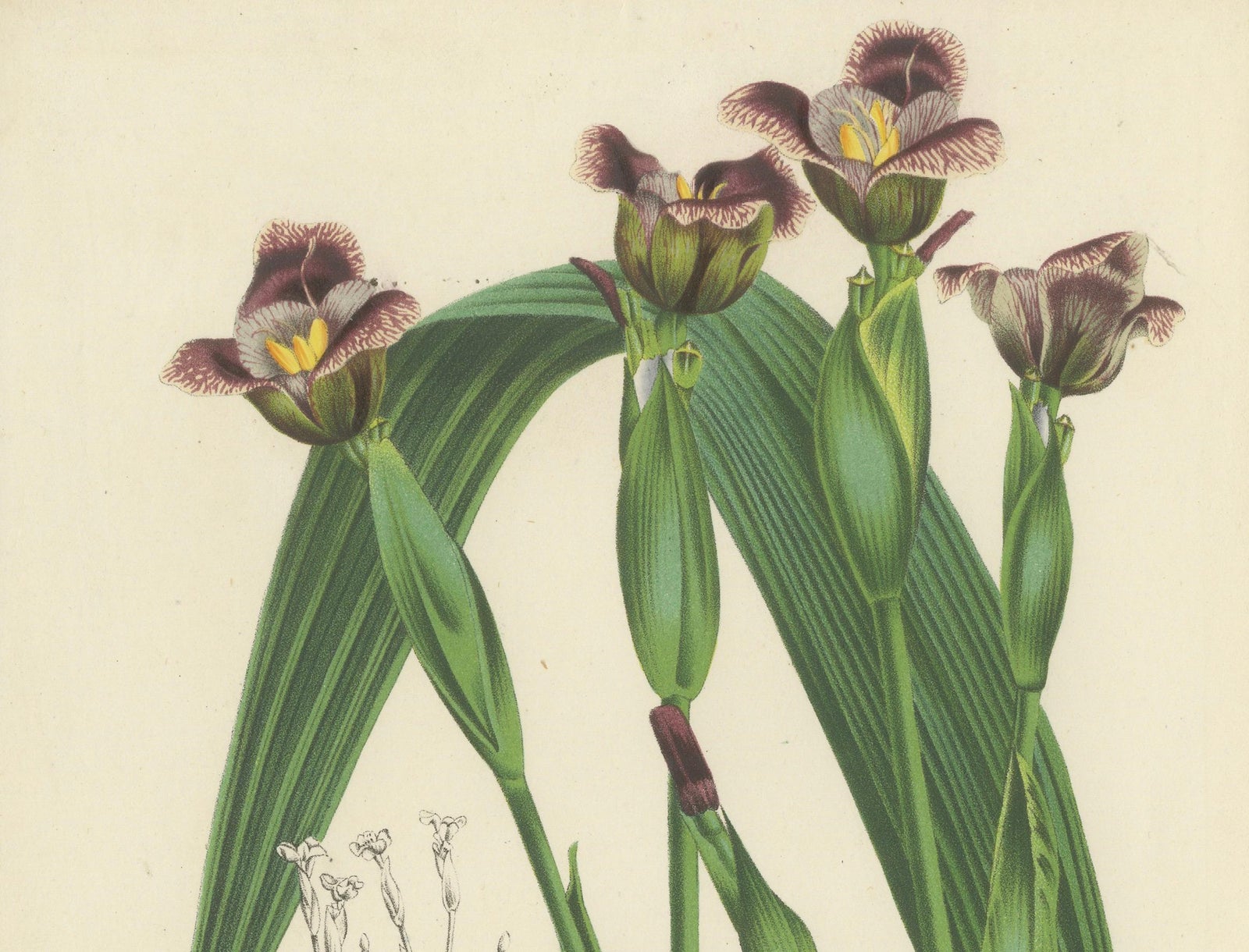
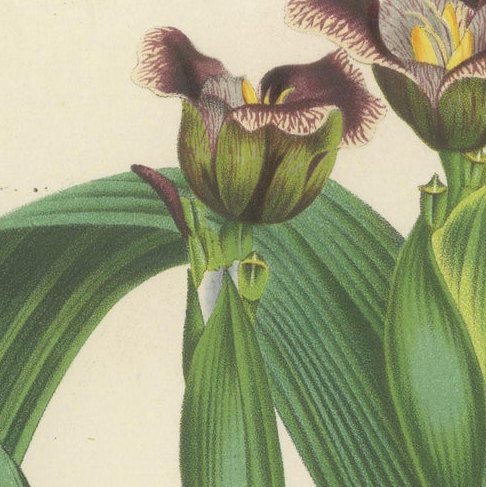
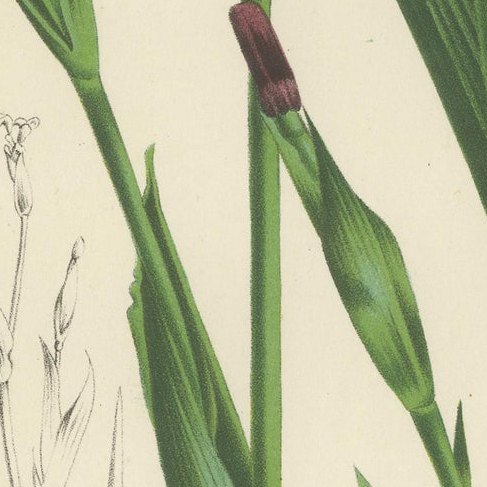
Four flowers open at the tops of upright stems, each with fringed petals in dark maroon and purple, and a yellow throat. The stems and buds are green, with long, ribbed, sword-shaped leaves sweeping across the sheet in an arching curve. At the lower left a small line drawing in outline shows the whole plant's habit, with its slender stems and narrow leaves.
The plant was named in honor of the Ghent nurseryman, and the Roman numeral at the foot marks its place in the volume. The origin on the plate, Mexico, was where the collector named in the lettering, Roezl, found it.