Close-ups
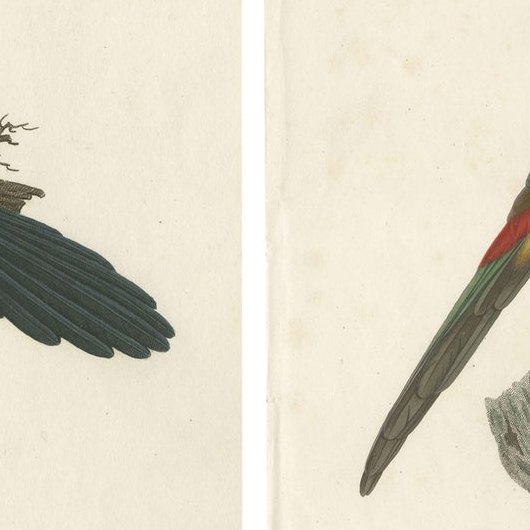
Framed and on the wall
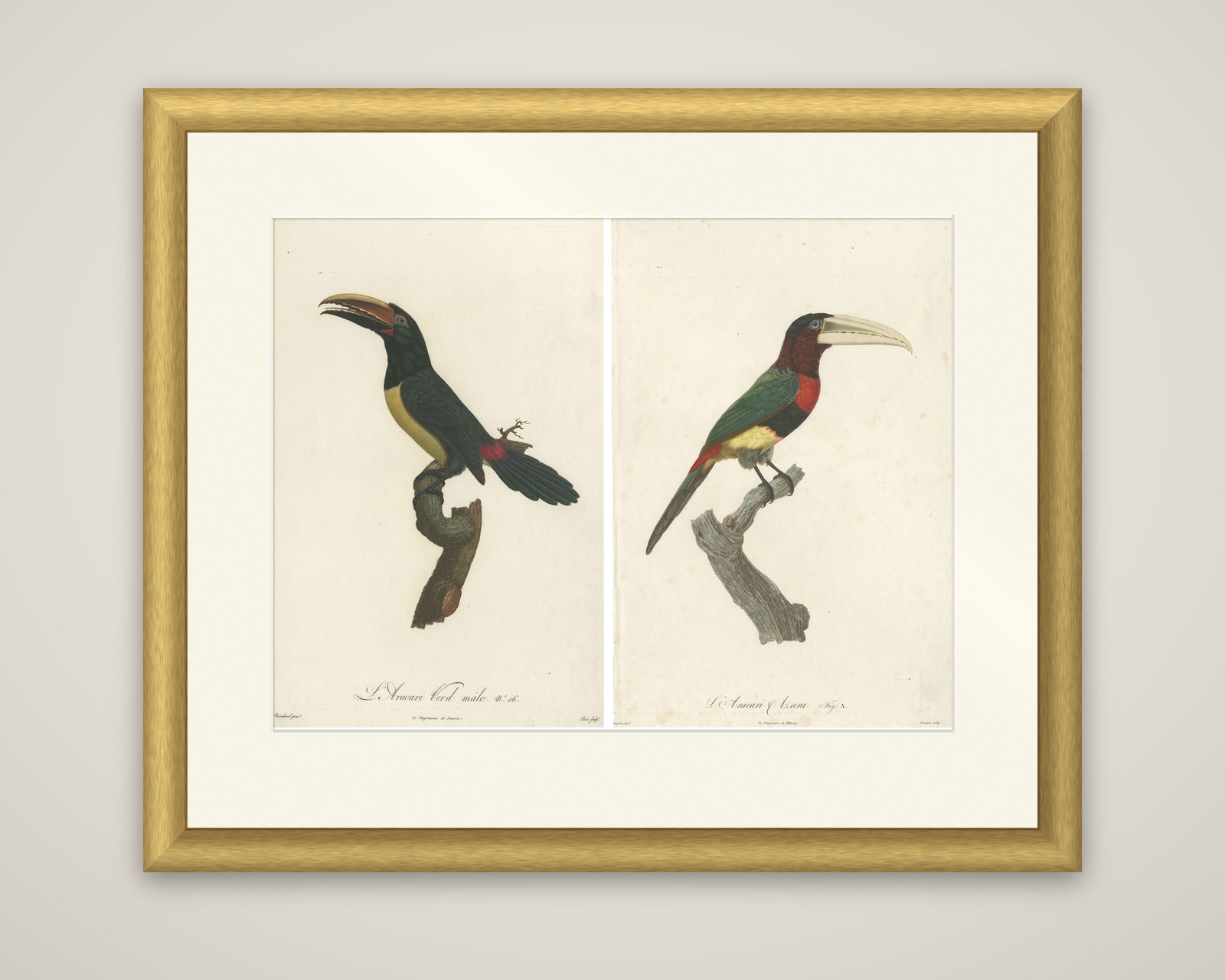

Frame and rooms are illustrations of how the print could look; the description says what is included.
Two Magnificent Hand-Colored Antique Prints of a Toucan, Ca.1805, Rare
£3,140 ($4,170, €3,700)
Period original, not a reproduction.
Shipped from the Netherlands, flat, insured and tracked, worldwide. Returns accepted within 14 days.
- Date
- 1805
- Size
- 21.2 × 14.2 in (53.8 × 36 cm)
- Condition
- Good. A few spots due to aging but otherwise fine. These two framed on the wall will look stunning. Please study image carefully. The prints are sold without a frame.
- Period
- Early 19th century
- Artist or book
- Levaillant
- Section
- Birds
- Reference
- f_28911462
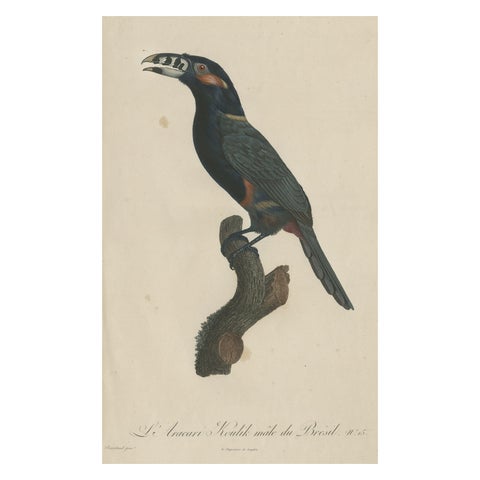
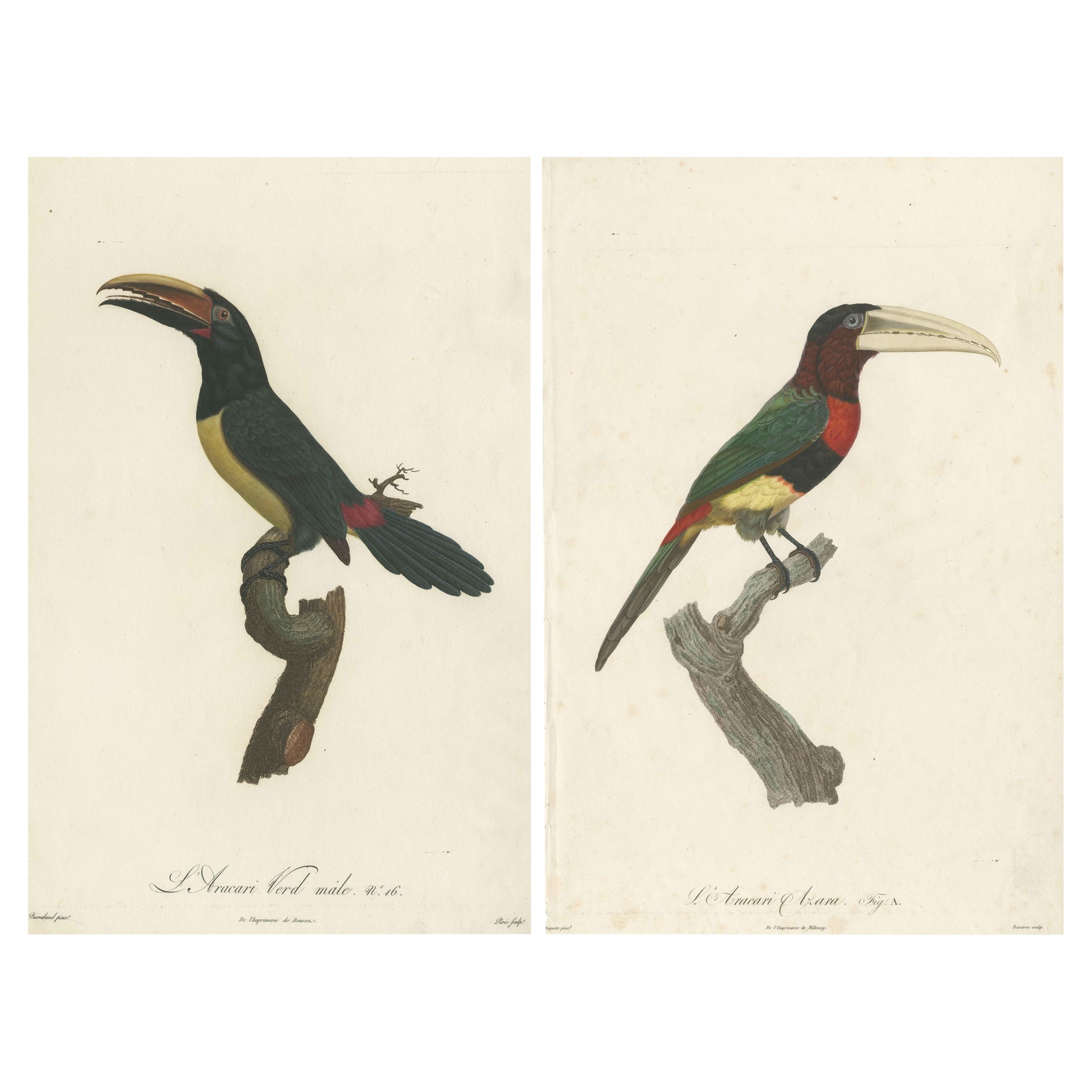
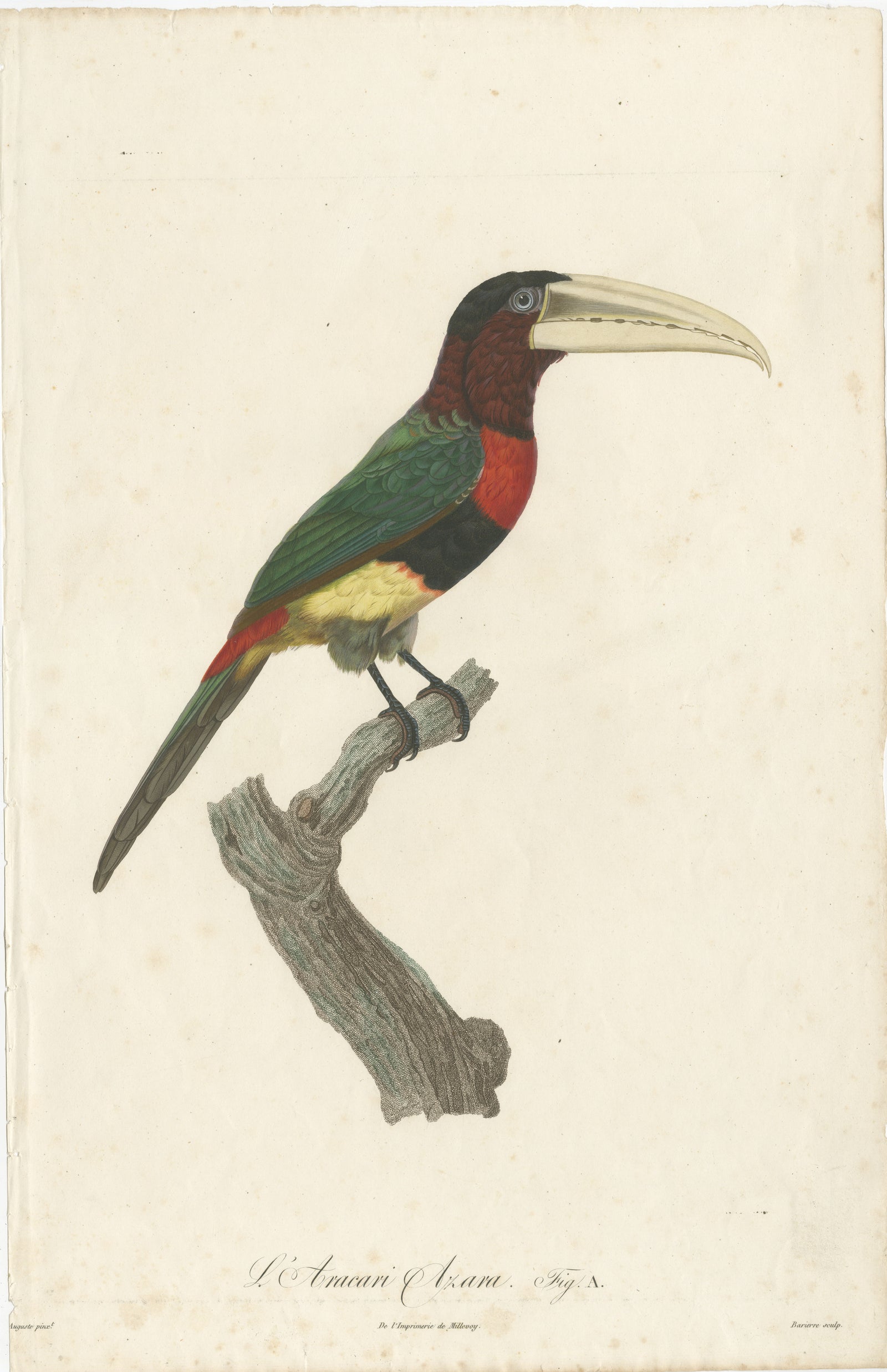
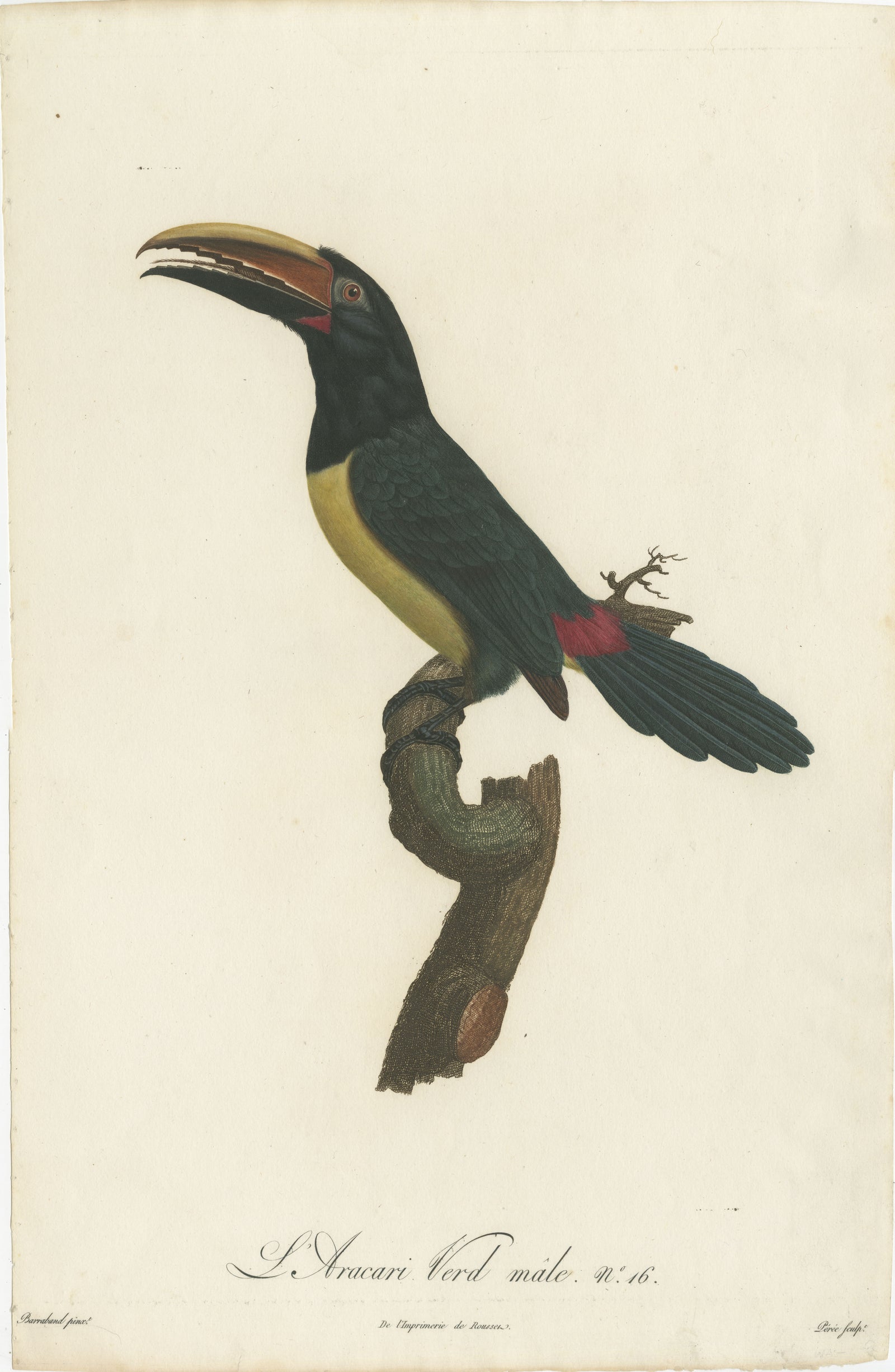
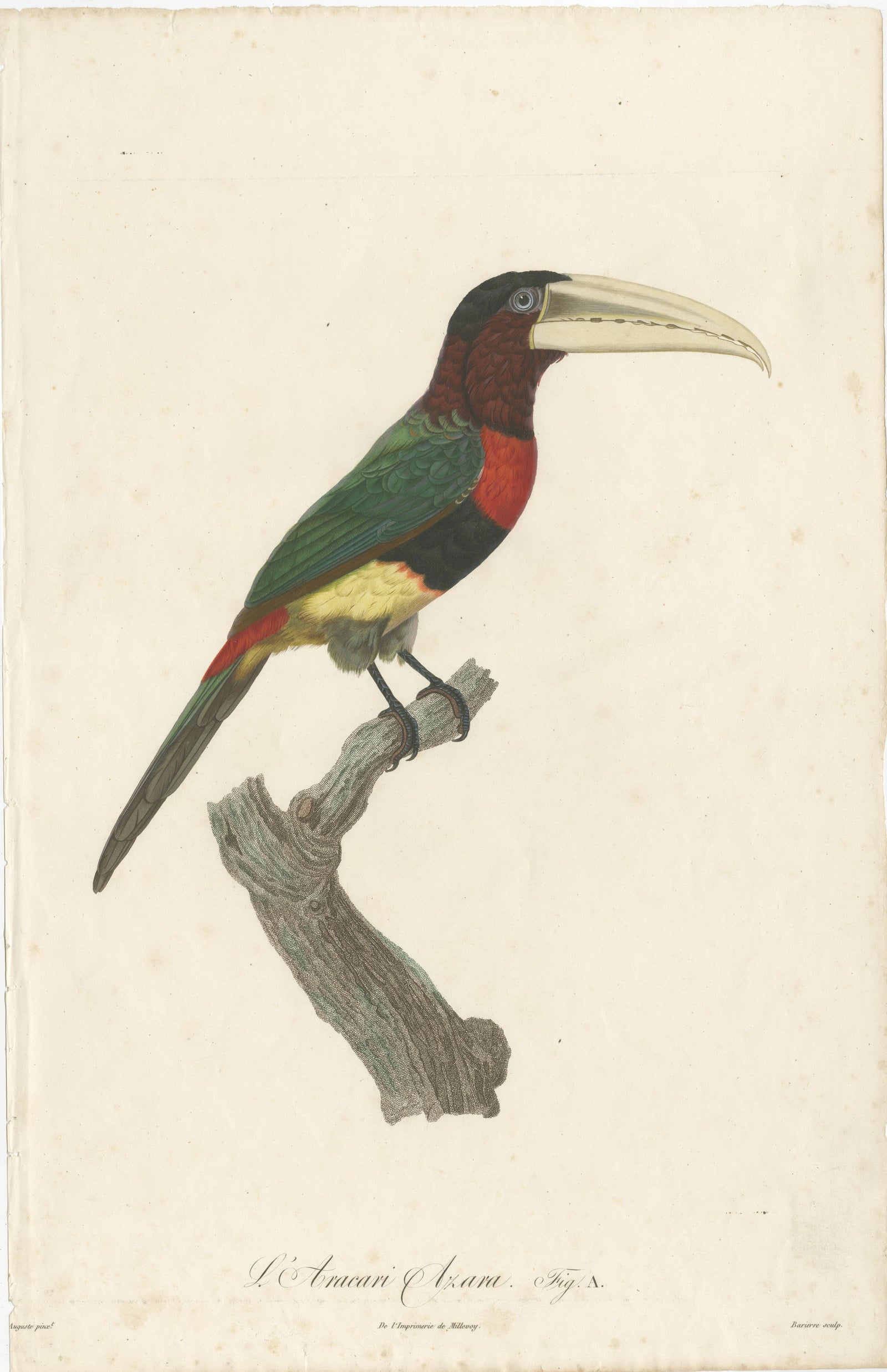
Two aracaris, the toucans of the South American forests, in colour-printed stipple engravings finished by hand, from the first edition of Francois Levaillant's Histoire naturelle des oiseaux de paradis et des rolliers, suivie de celle des toucans et des barbus, published in Paris between 1801 and 1806. The two sheets are lettered "L'Aracari Verd male" (numbered 16) and "L'Aracari Azara", and each is drawn by Auguste Barraband and engraved by Barriere and Peree.
The left sheet shows the green aracari (Pteroglossus viridis) perched on a gnarled branch with its heavy bill, black head, green back and wings, yellow breast and red patch at the rump. The right sheet shows the ivory-billed aracari, named for the naturalist Felix de Azara, with a pale bill, chestnut head, a red band across the breast, black belly marking and a long green tail. Both birds are set on a bare branch against a plain ground with no background, a hallmark of Barraband's style.
The green aracari lives in the lowland forests of the Guiana Shield and the northeastern Amazon basin, and the ivory-billed aracari ranges across Bolivia, Brazil, Colombia, Ecuador, Peru and Venezuela. Levaillant's work, cited by Nissen as IVB 559, is among the most comprehensive on the toucans.