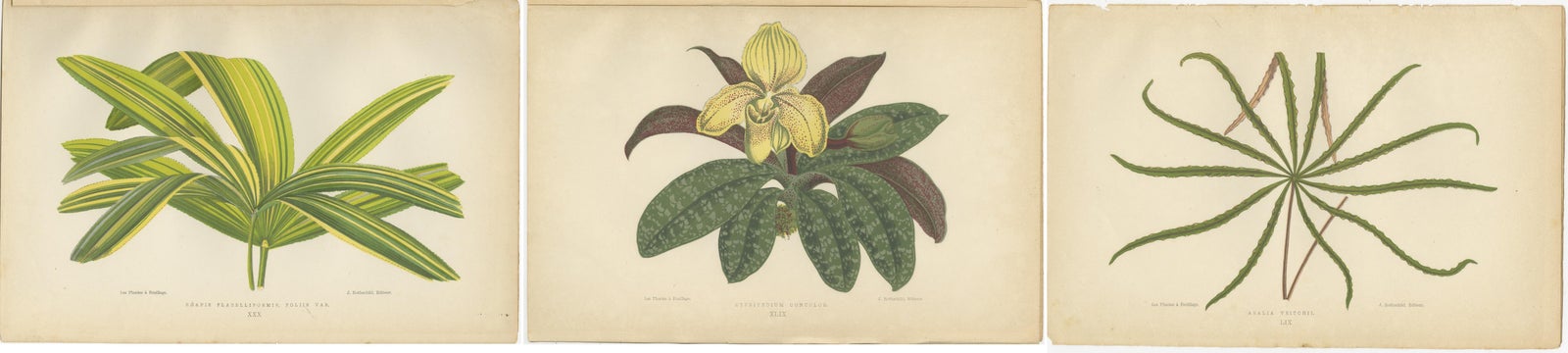
Close-ups
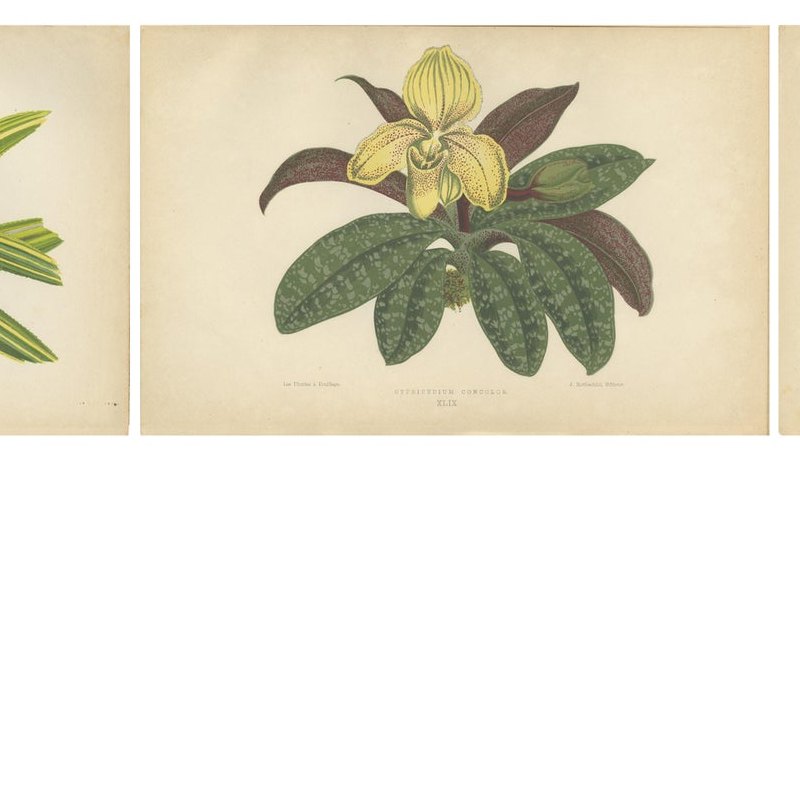
Framed and on the wall
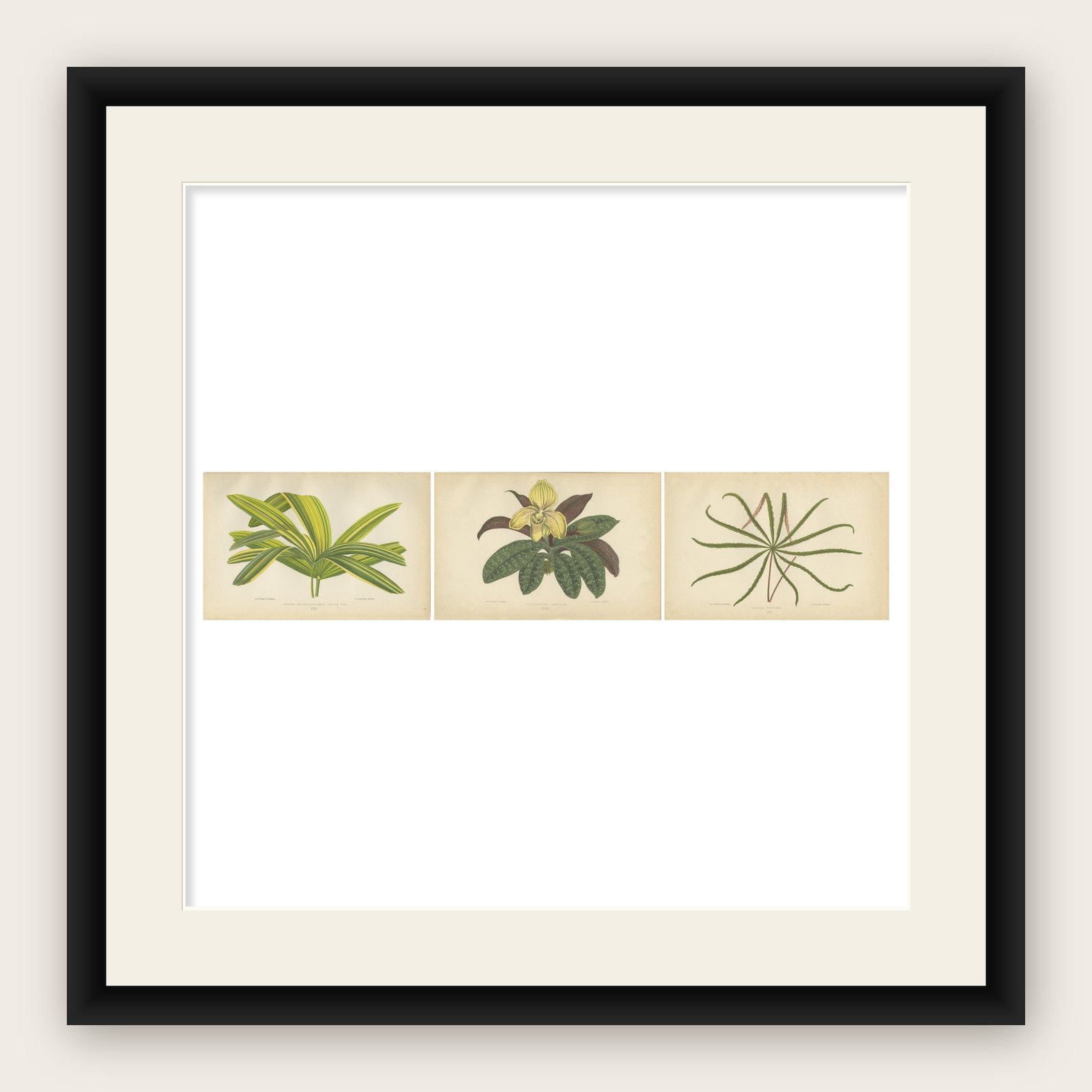


Frame and rooms are illustrations of how the print could look; the description says what is included.
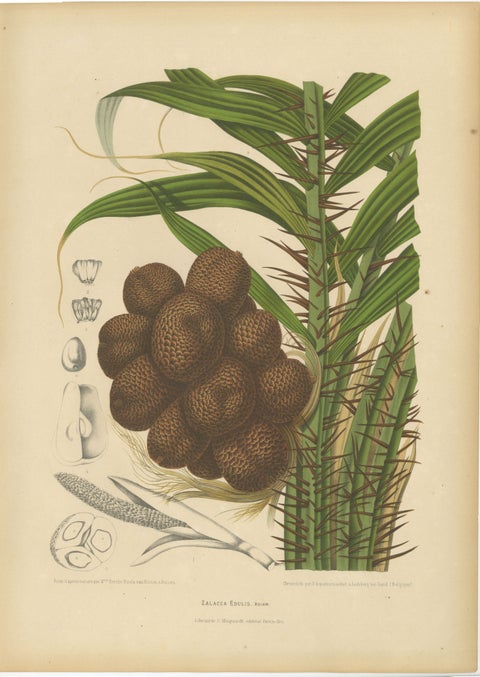
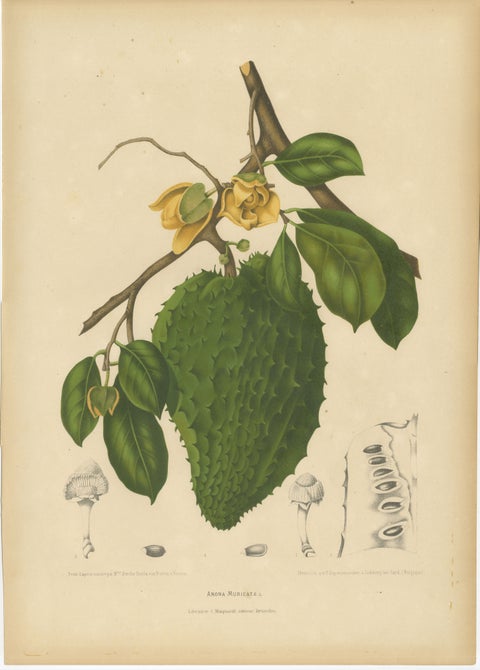
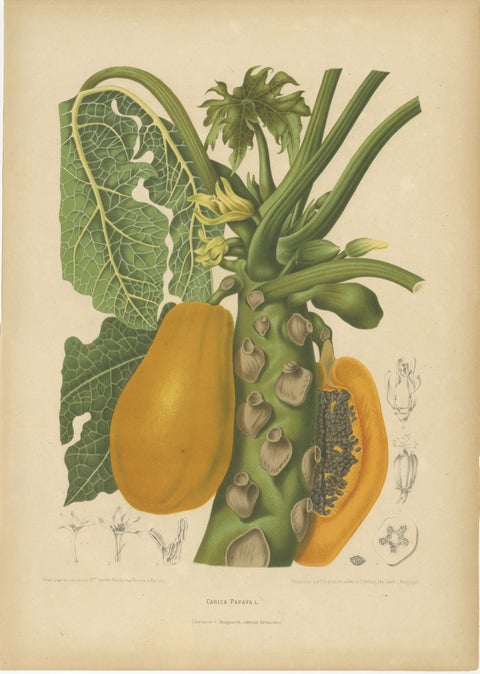
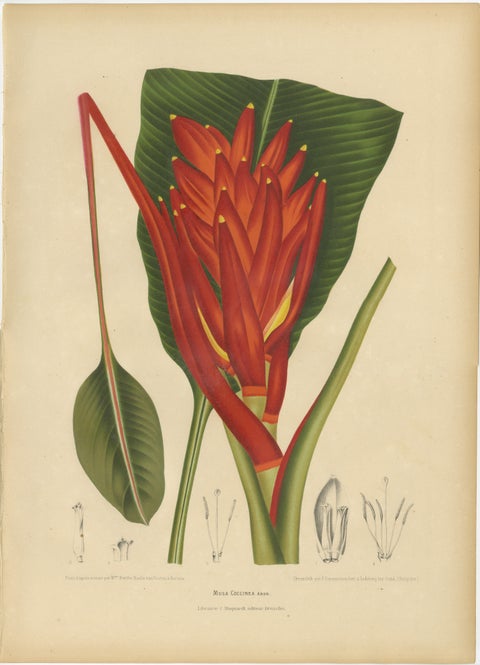
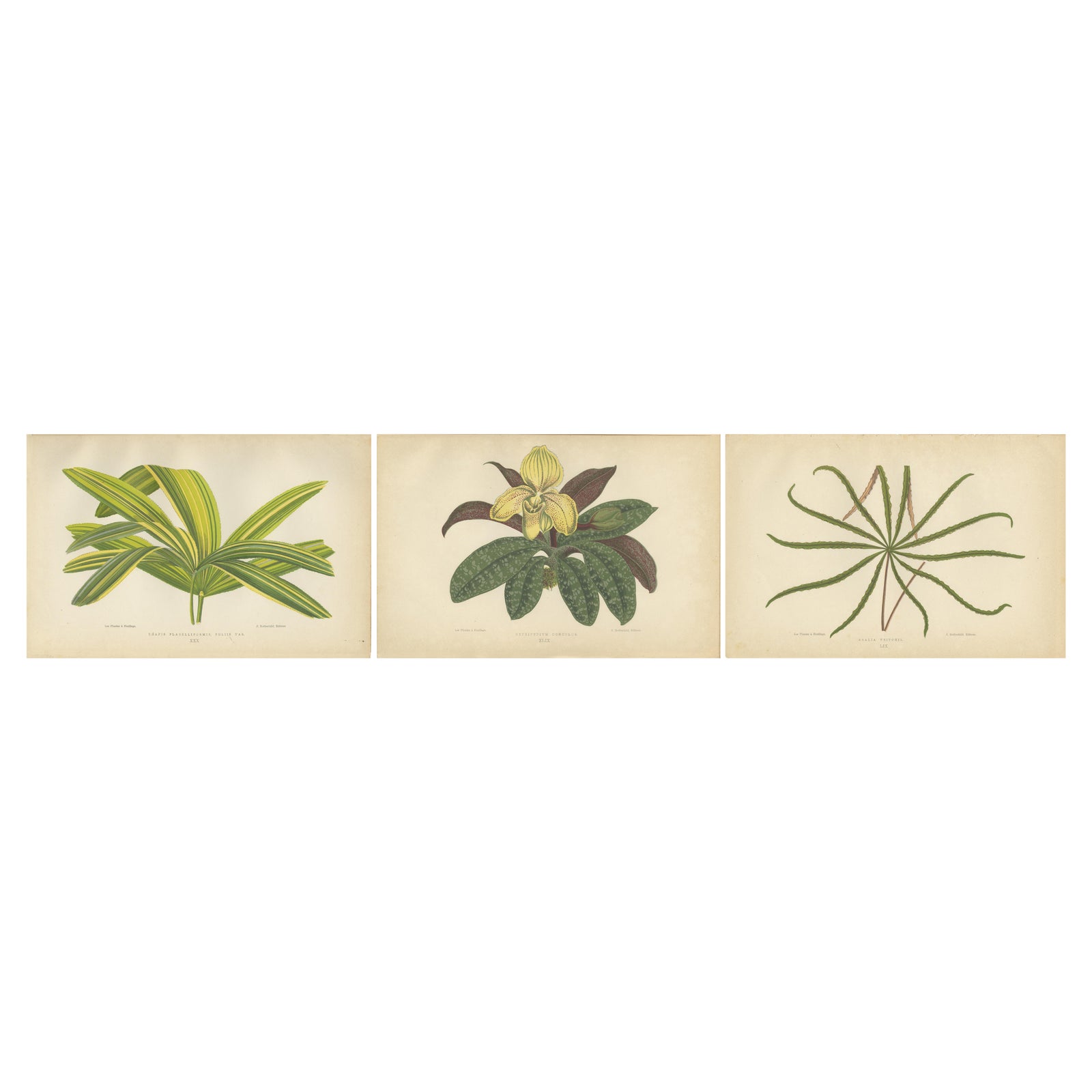
Trio of Elegance: Vintage Botanical Prints, Published in 1880
€240 ($270, £205, €240)
Period original, not a reproduction.
Shipped from the Netherlands, flat, insured and tracked, worldwide. Returns accepted within 14 days.
- Date
- 1880
- Size
- 7.1 × 10.6 in (18 × 27 cm)
- Condition
- Good. Given age. General age-related toning and/or occasional minor defects from handling. Please study scan carefully. Comes with protective sheet and text sheet in French.
- Period
- Late 19th century
- Section
- Botanical
- Reference
- f_38839822
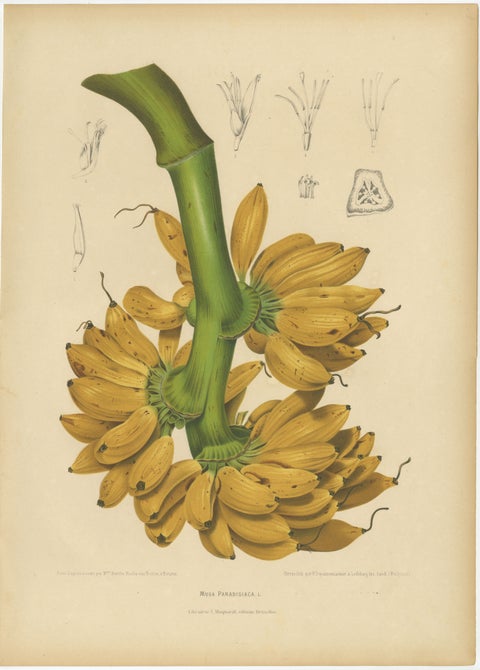
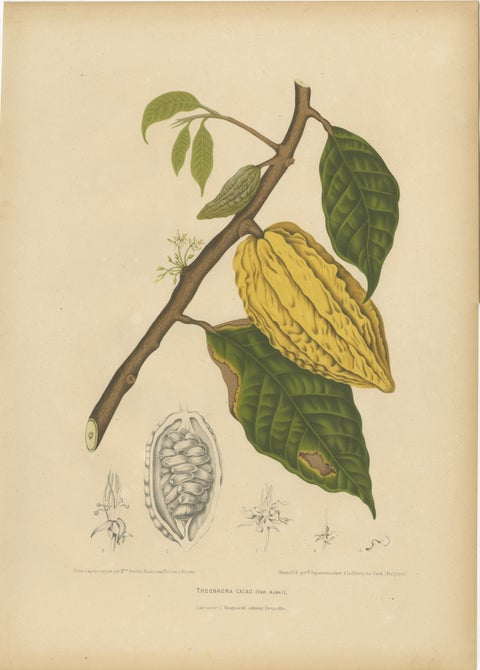
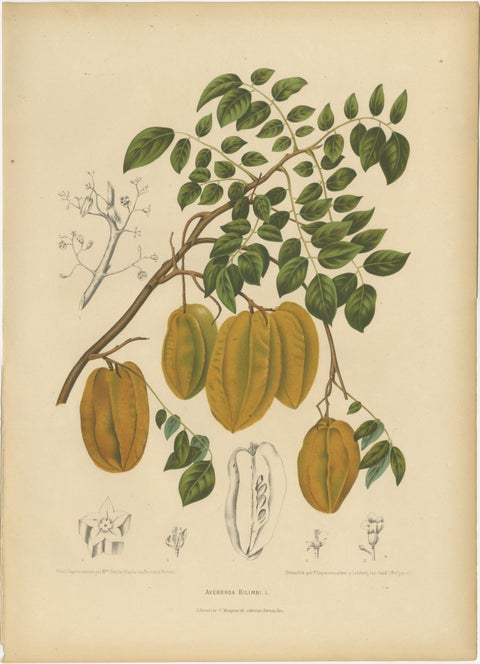
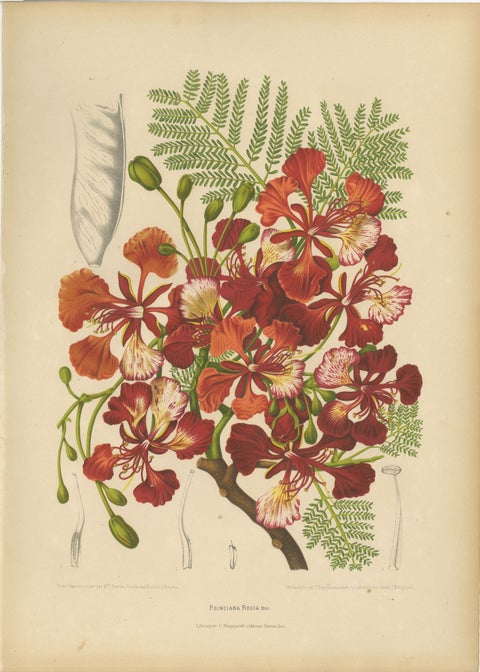
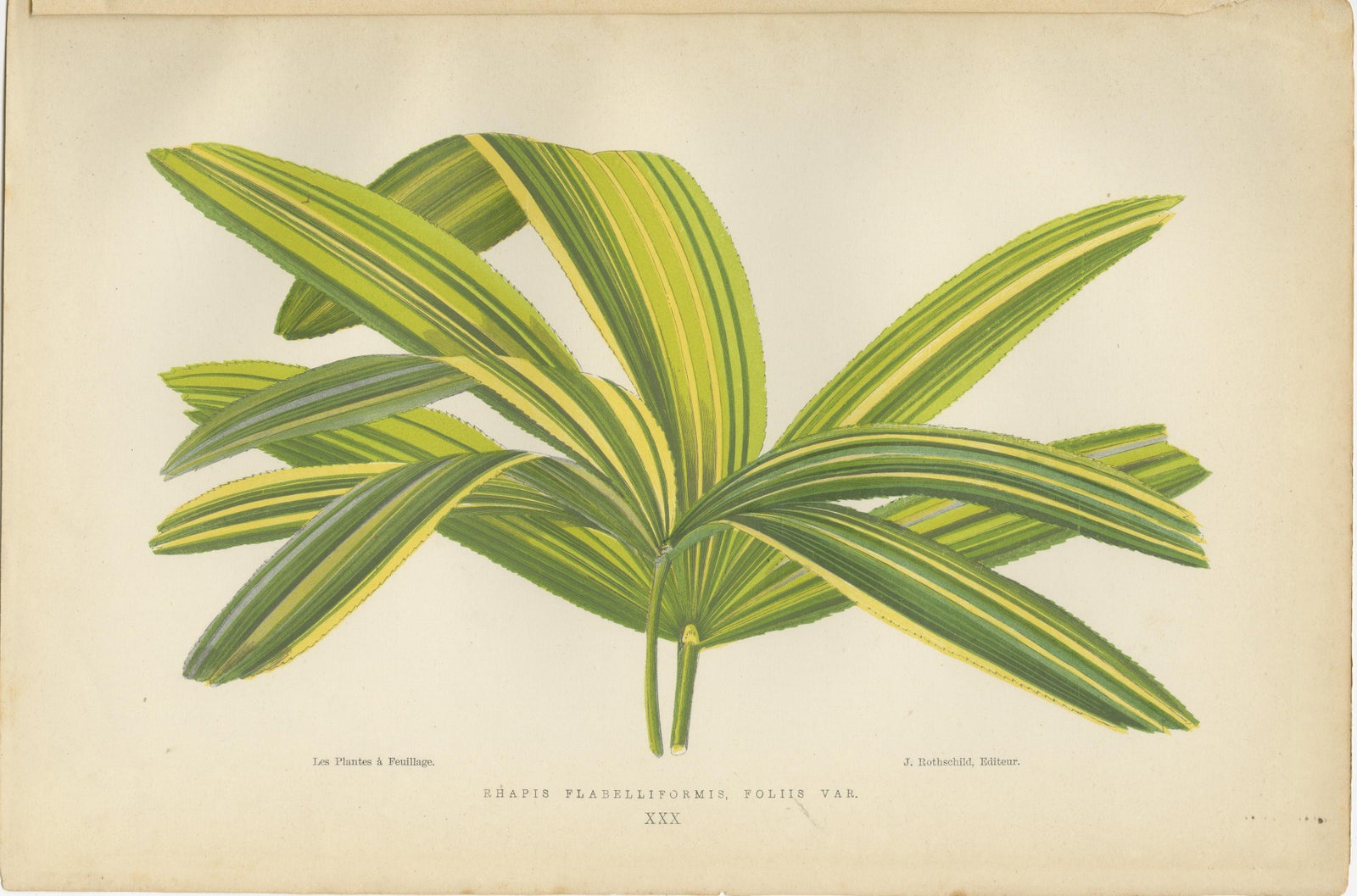
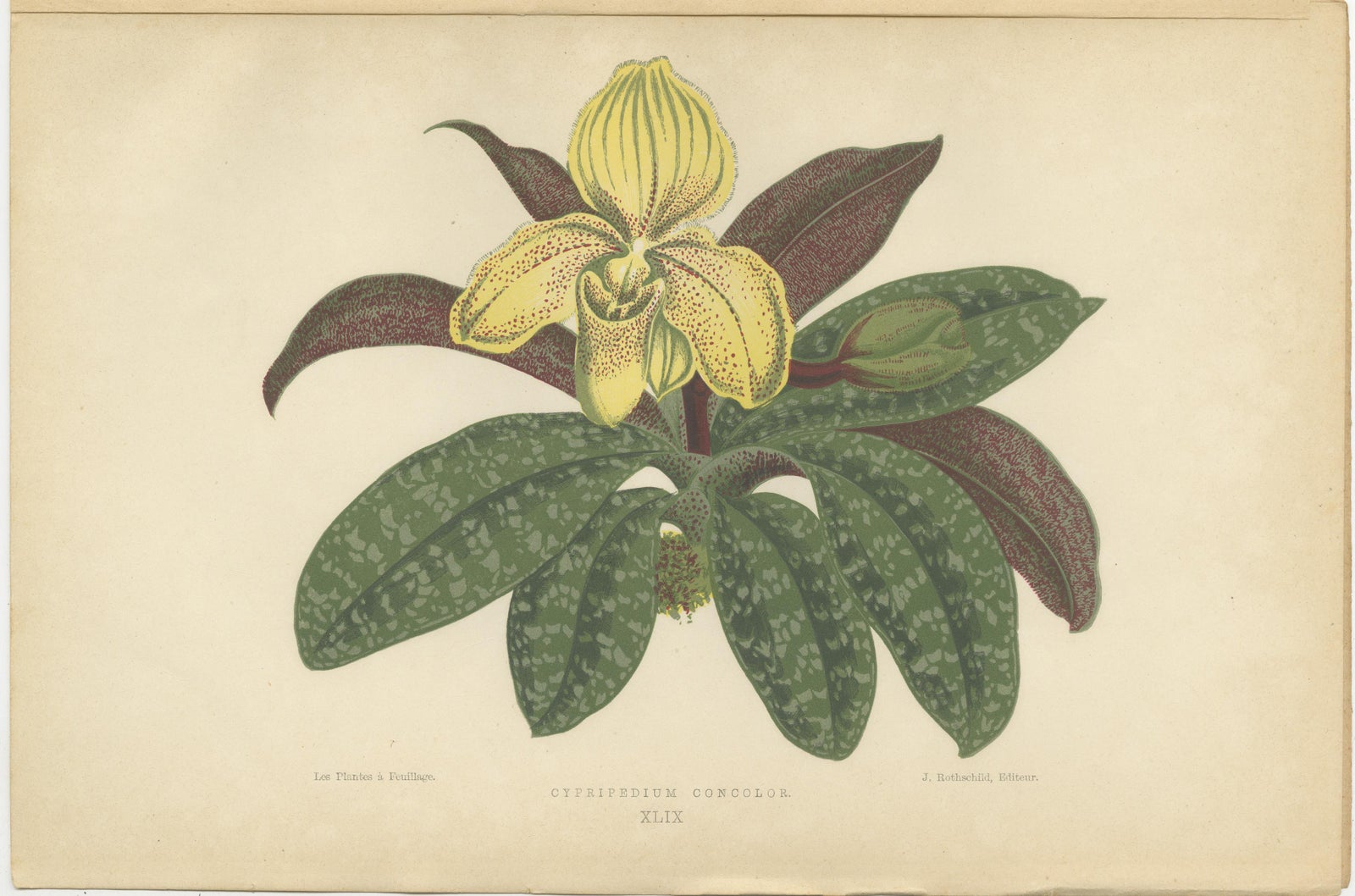
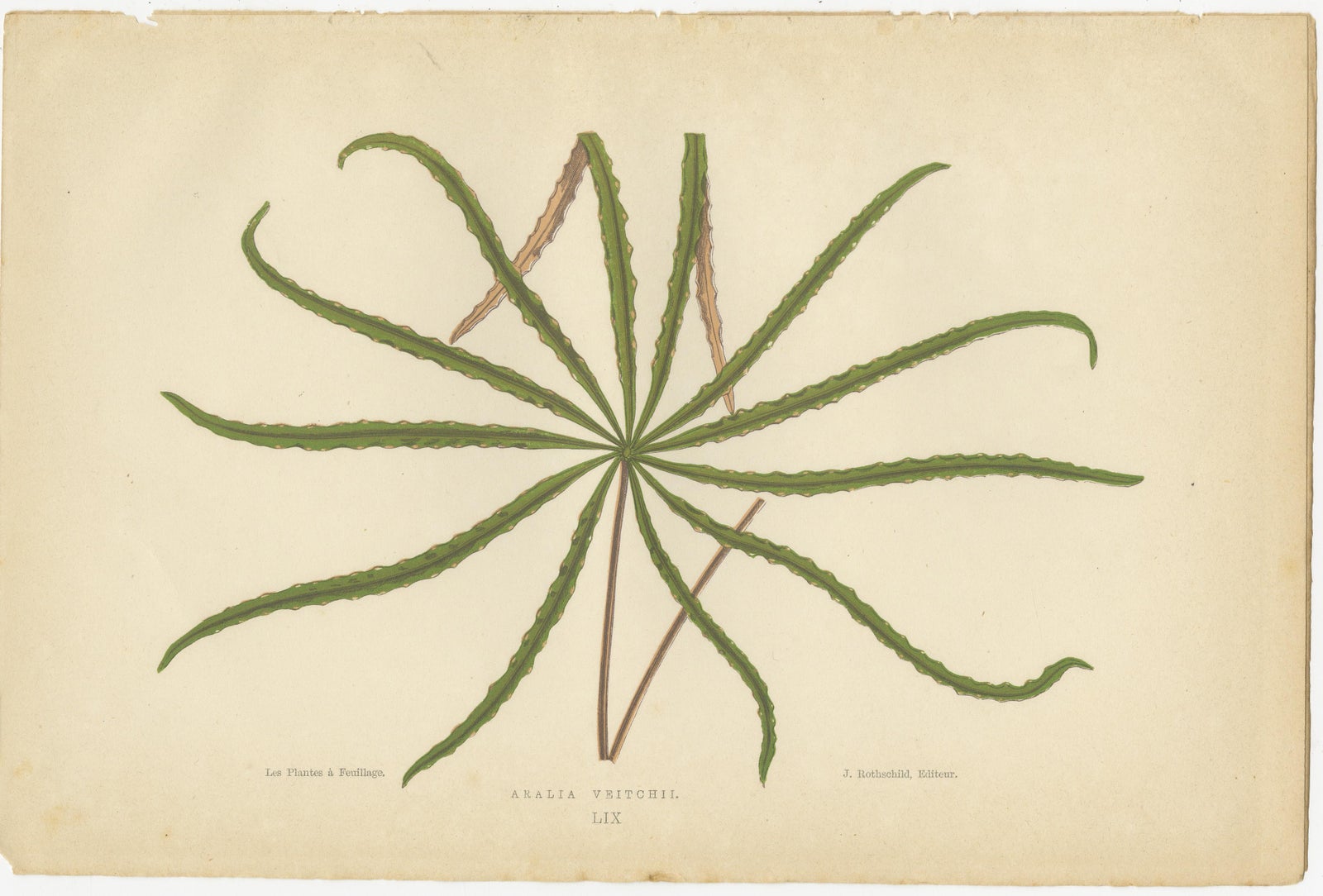
These botanical prints from "Les Plantes à Feuillage Coloré, Tome Second," published in 1880 by J. Rothschild in Paris, are exquisite examples of 19th-century botanical illustration. Each print showcases a plant species with remarkable attention to detail, capturing the vibrant patterns and color variations in their leaves, which is a hallmark of the book's focus on plants with ornamental foliage.
The first print depicts the "Rhapis flabelliformis, foliis var.," commonly known as the Lady Palm, with its characteristic broad, fan-shaped leaves prominently displaying variegated stripes of yellow and green.
The second illustration features the "Cypripedium concolor," a type of slipper orchid. This print emphasizes the unique mottled and spotted foliage, as well as the distinct, pouch-like structure of the flower, rendered in shades of yellow with burgundy accents.
The third image represents the "Aralia Veitchii," known as the Veitch's Aralia. This print illustrates the plant's long, slender leaves with deep grooves and serrated edges, radiating from a central point like spokes on a wheel.
All three prints are notable for their botanical accuracy and artistic presentation, which would have been invaluable for both the scientific community and horticultural enthusiasts of the era. The lithographs are rendered with a sensitivity to the textures and patterns that make each species unique, providing a window into the rich diversity of the plant kingdom as understood in the late 19th century.