Close-ups
Framed and on the wall
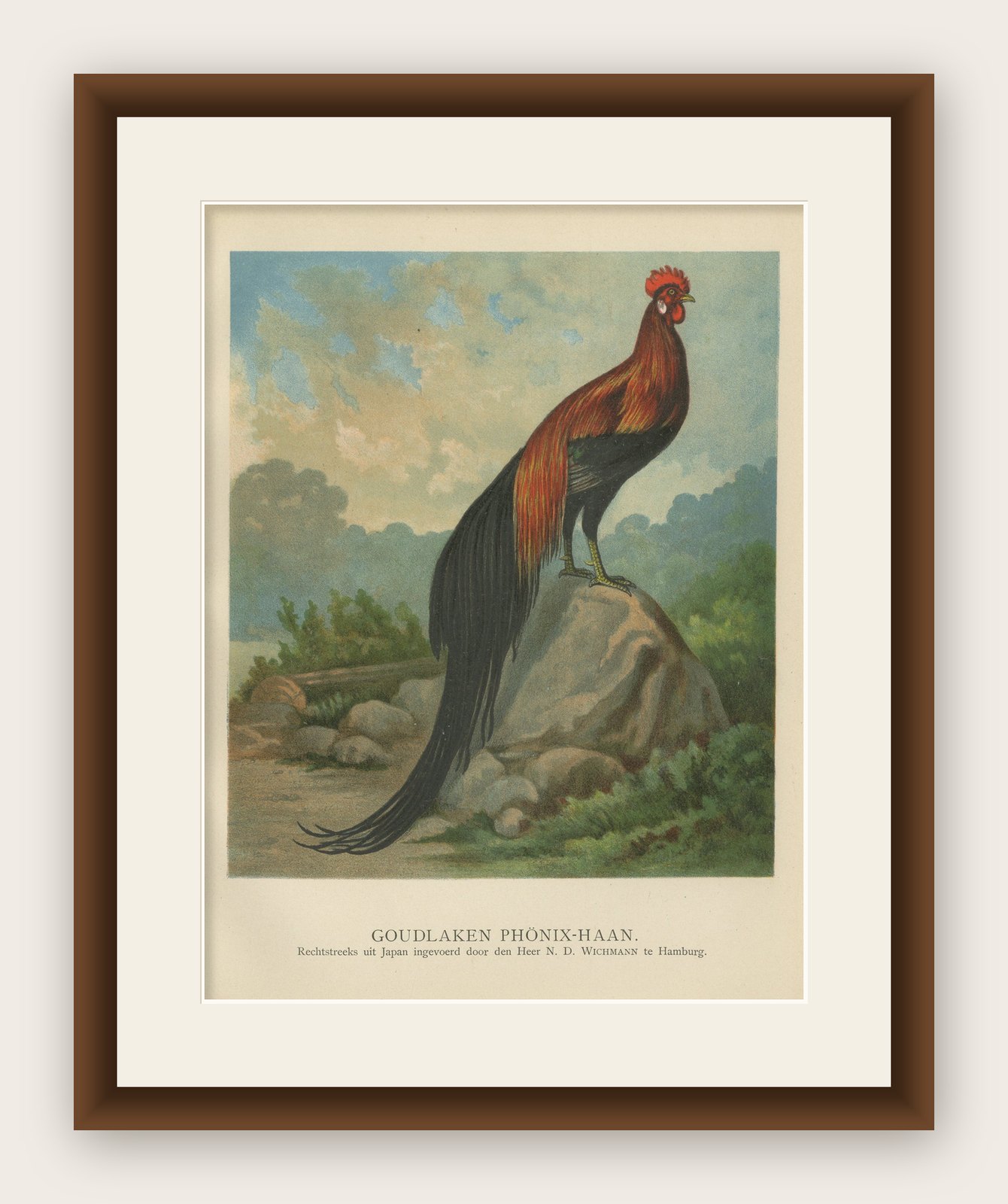



Frame and rooms are illustrations of how the print could look; the description says what is included.
The Golden Phoenix Rooster - A Rare 19th Century Poultry Lithograph
£200£14030% off ($185, €168)
Period original, not a reproduction.
Shipped from the Netherlands, flat or rolled, insured and tracked, worldwide. Returns accepted within 14 days.
- Date
- Not stated
- Size
- 10.6 × 7.9 in (27 × 20 cm)
- Condition
- Good. The print remains in very good condition, with well preserved colors and crisp details. There is some mild age related toning along the edges, as well as minor foxing spots, which are common in prints of this age.
- Section
- Birds
- Reference
- f_44034012
- Color
- Printed color
What the condition grades mean
- Excellent
- Bright and clean, with no faults worth mentioning.
- Very good
- Only light signs of age, such as faint toning.
- Good
- Normal signs of age for a sheet of this period: toning, some foxing, small marks or neat old repairs.
- Fair
- Clear faults such as staining, tears or repairs, priced to match.
Every fault we see is written in the condition note, and the whole sheet is shown uncropped in the photos.
The Golden Phoenix Rooster A Rare 19th Century Poultry Lithograph
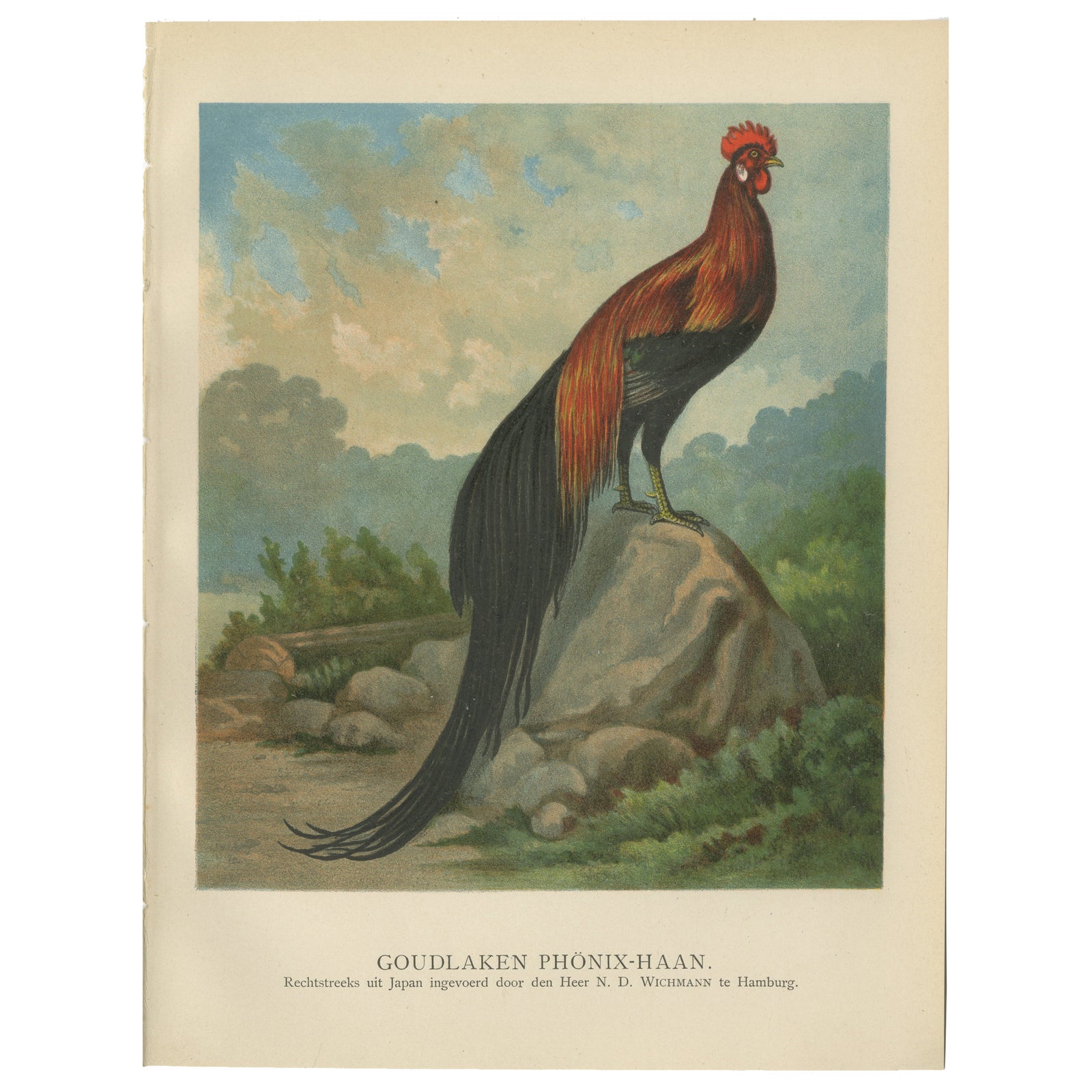
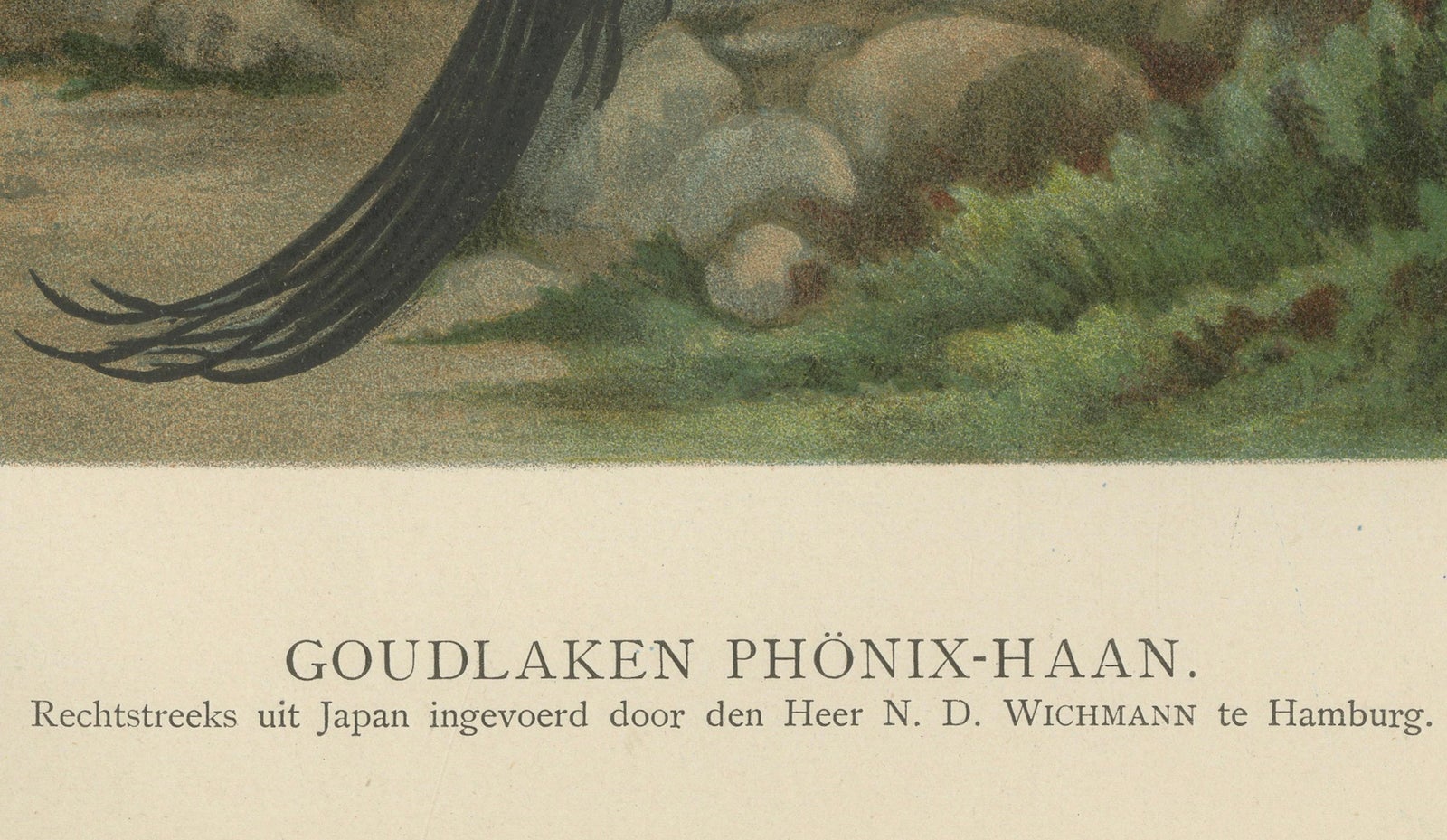
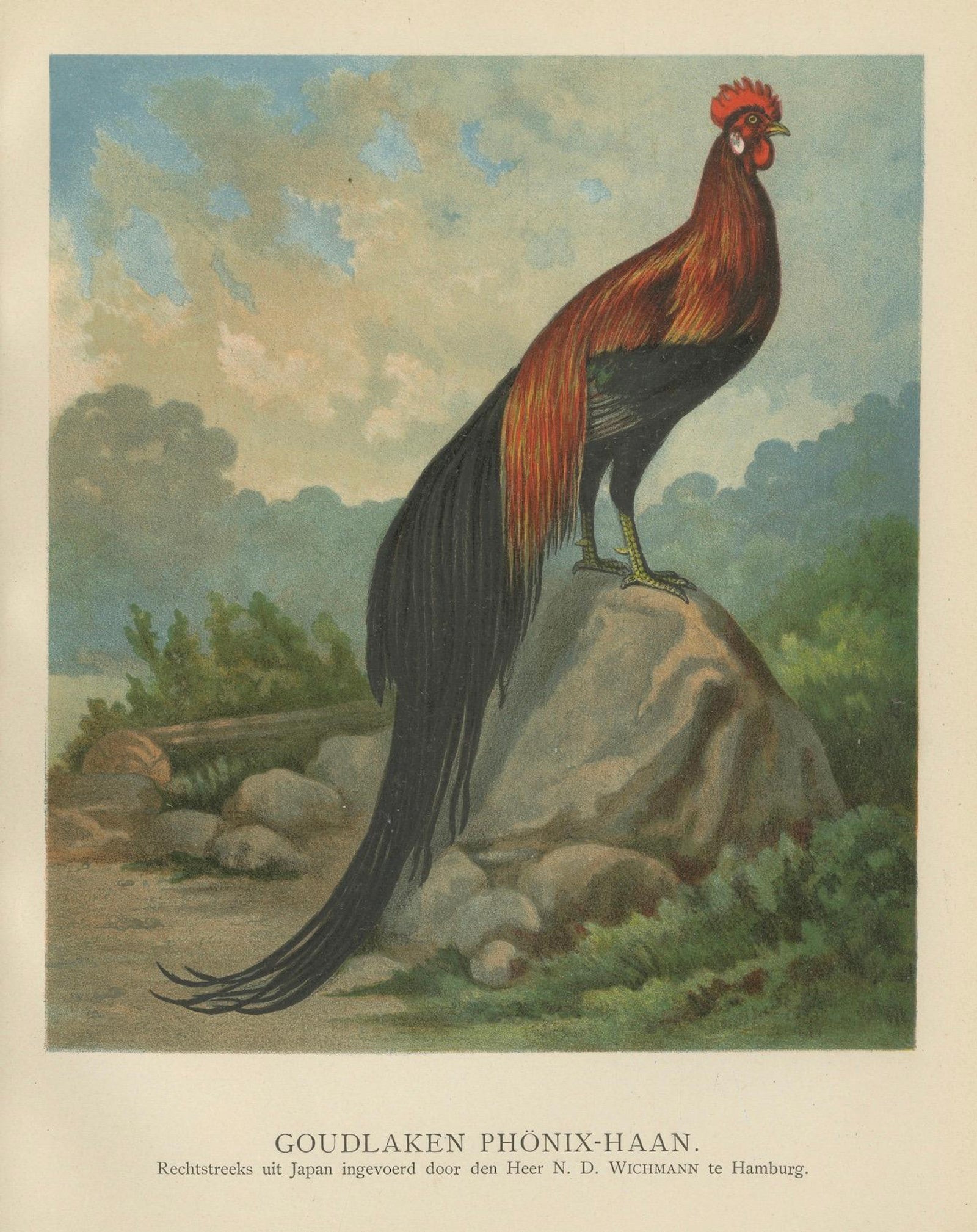
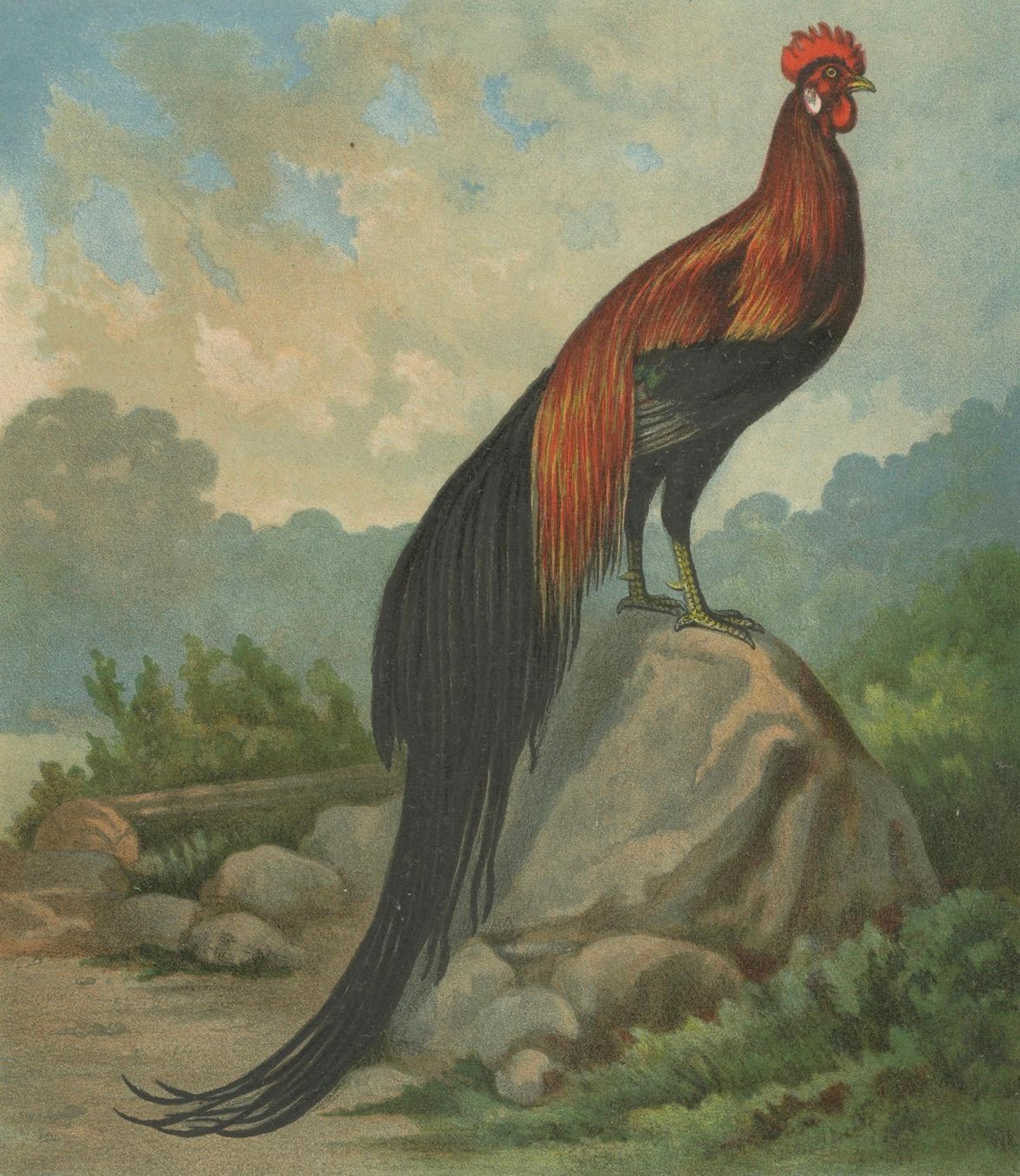
This exquisite 19th century chromolithograph features the striking Golden Phoenix rooster, a breed renowned for its extraordinarily long tail feathers and regal posture. The print, titled Goudlaken Phönix Haan, originates from Geïllustreerd Hoenderboek, an Illustrated Poultry Book published in 1888 by Elsevier. Compiled by Julius Volschau and adapted for Dutch readers by Dr. A. C. Oudemans Jzn., this work provides a detailed exploration of poultry breeding and selection. The caption beneath the title states that this particular bird was directly imported from Japan by Mr. N. D. Wichmann of Hamburg, underscoring its rarity and prestige at the time.
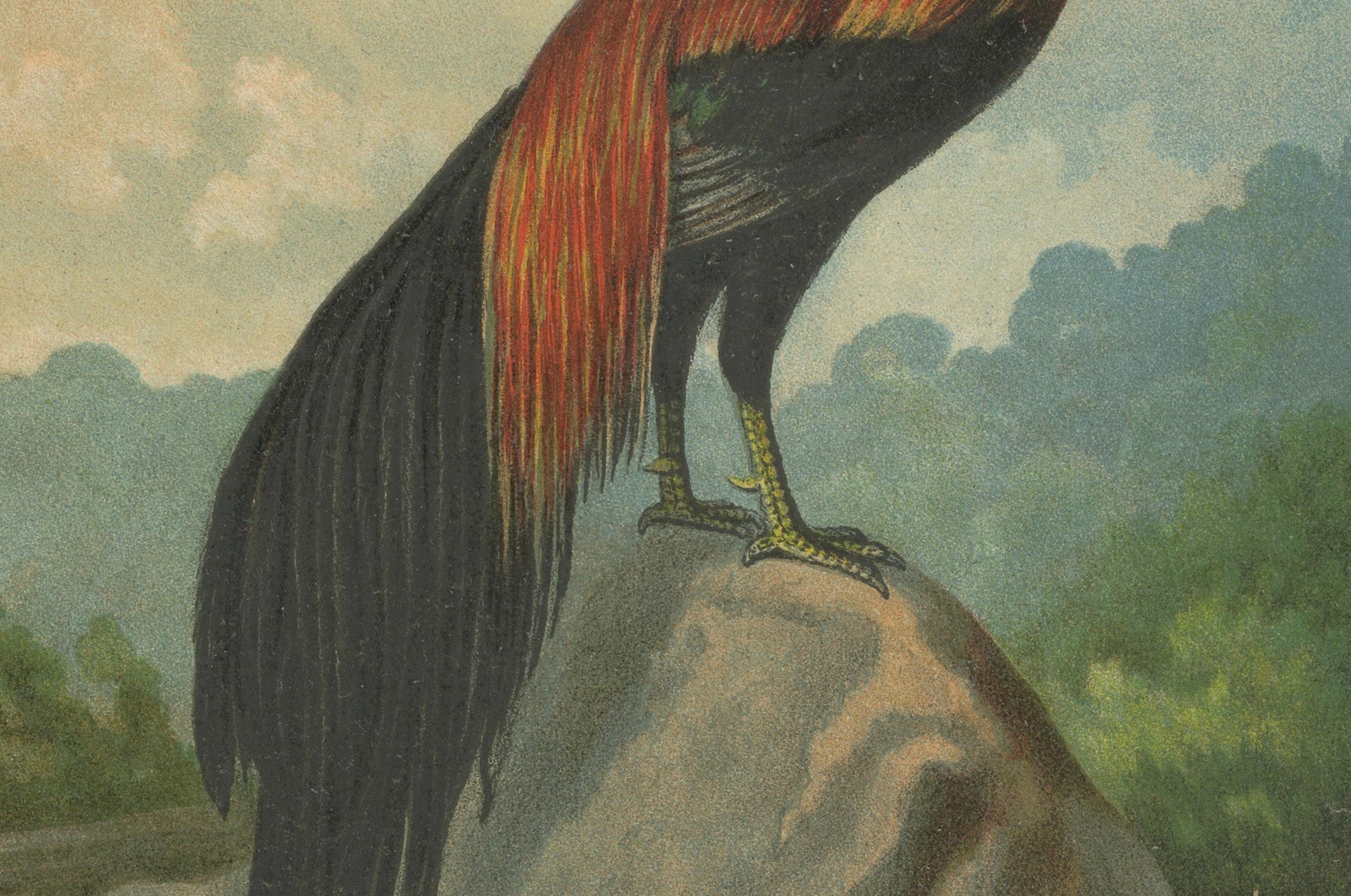
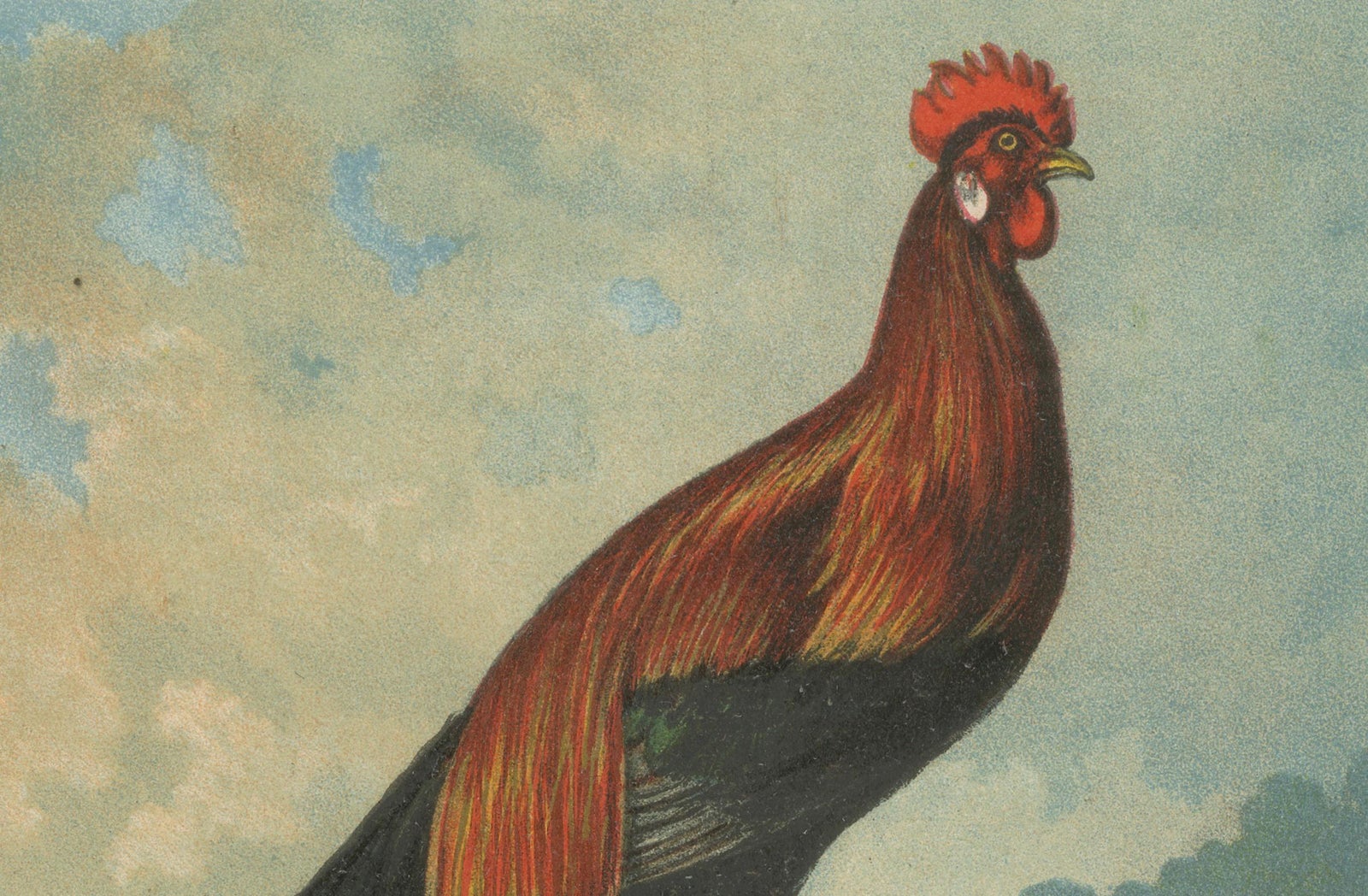
The Phoenix breed descends from the ancient Japanese Onagadori, a chicken famous for its exceptionally long tail, which can grow to several meters when properly cared for. Bred selectively in Japan for centuries, these birds were revered for their beauty and were often associated with nobility and traditional gardens. European breeders sought to develop a more practical version of the breed, resulting in the Phoenix, which maintained the elegance and long flowing tail but with slightly more manageable growth patterns. The Golden Phoenix variety, depicted in this print, features a rich golden red plumage contrasted with glossy black tail feathers that cascade in dramatic waves.
This lithograph was created using chromolithography, a detailed and richly colored 19th century printing technique. The illustration is based on an original drawing by Christian Förster, a skilled animal artist of the period. Chromolithographs were produced by applying multiple layers of color using separate stone plates, ensuring depth and vibrancy in the final print. The fine rendering of the Phoenix rooster’s shimmering feathers and dignified stance highlights the meticulous craftsmanship involved in this artistic process.
Condition Summary
The print remains in very good condition, with well preserved colors and crisp details. There is some mild age related toning along the edges, as well as minor foxing spots, which are common in prints of this age. The paper is stable with only slight signs of wear, making this an exceptional piece for collectors of antique poultry prints or those fascinated by rare ornamental breeds.
Framing Tips
To best showcase and protect this lithograph, consider the following framing techniques
- Use acid free matting to prevent long term deterioration. A warm beige or light gold mat can complement the golden hues of the rooster’s feathers
- Choose UV protective glass to safeguard the colors from fading due to light exposure
- A wooden frame in a deep mahogany, black lacquer, or gold finish will enhance the regal nature of the Phoenix rooster
- Float mounting can be used to highlight the original sheet edges, providing a more historical presentation
This lithograph is a rare and elegant example of 19th century poultry illustration, capturing the refined beauty of one of the world’s most unique chicken breeds. Whether displayed in a study, gallery, or antique print collection, it remains a timeless and historically significant piece of avian artistry.