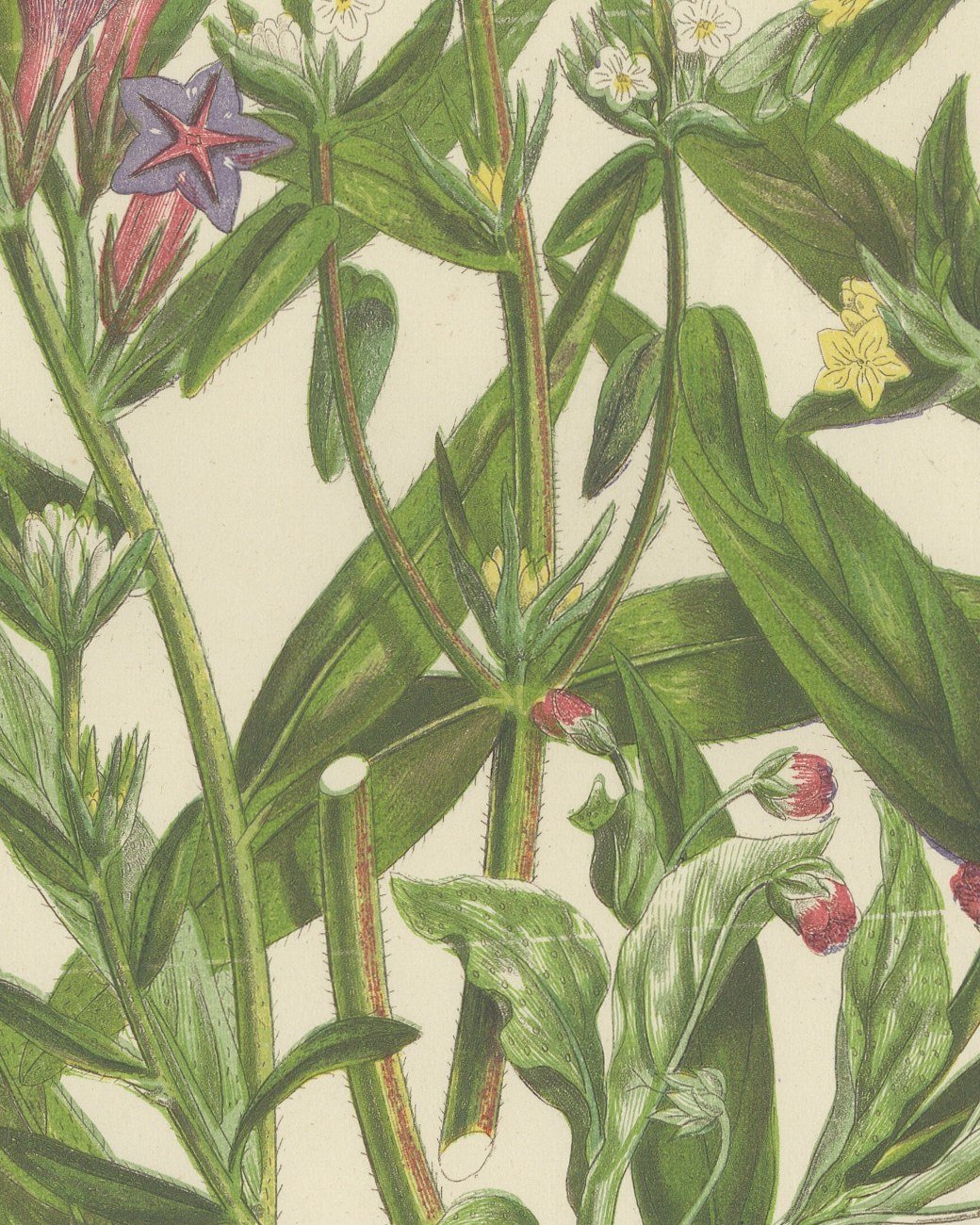
Close-ups
Framed and on the wall
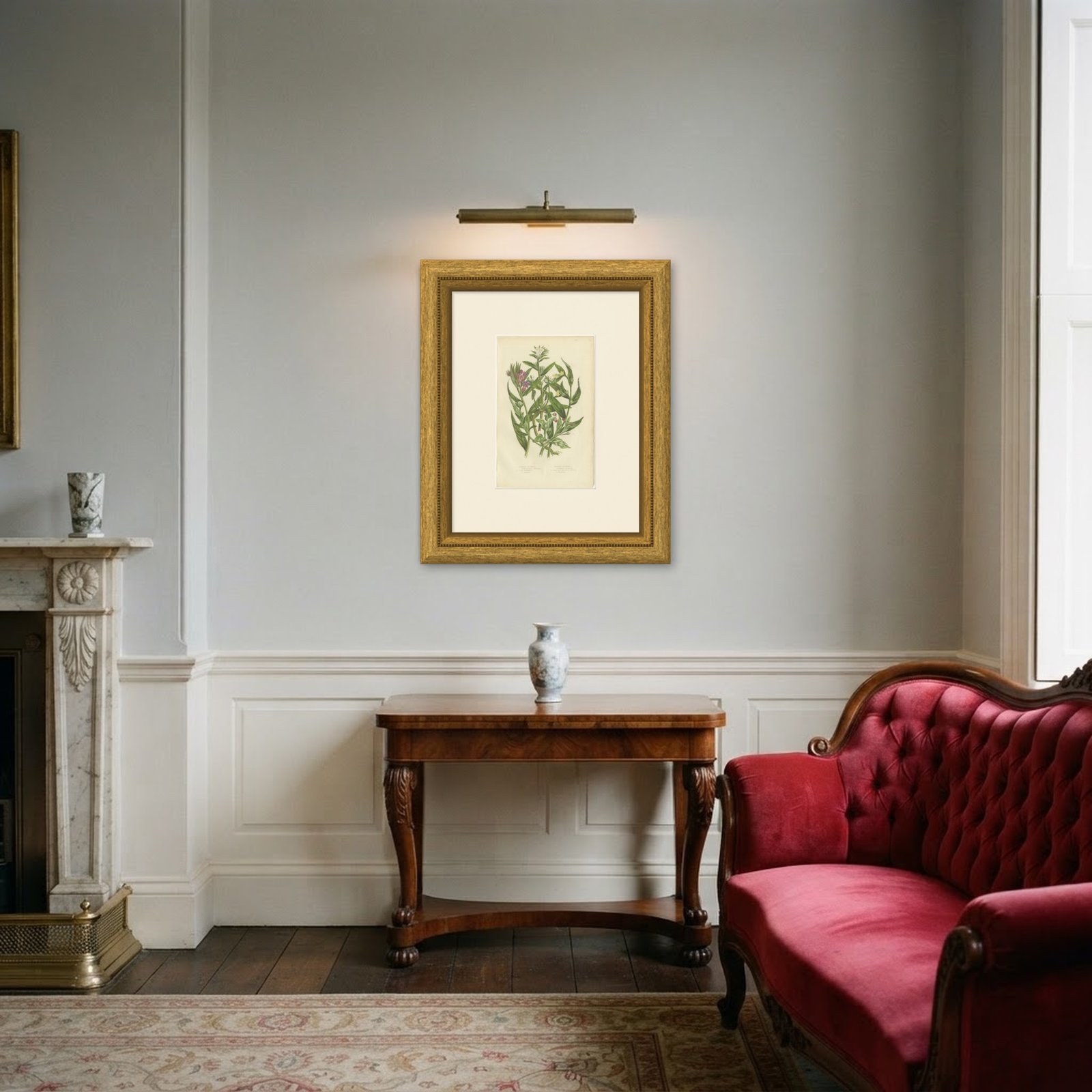
Frame and rooms are illustrations of how the print could look; the description says what is included.
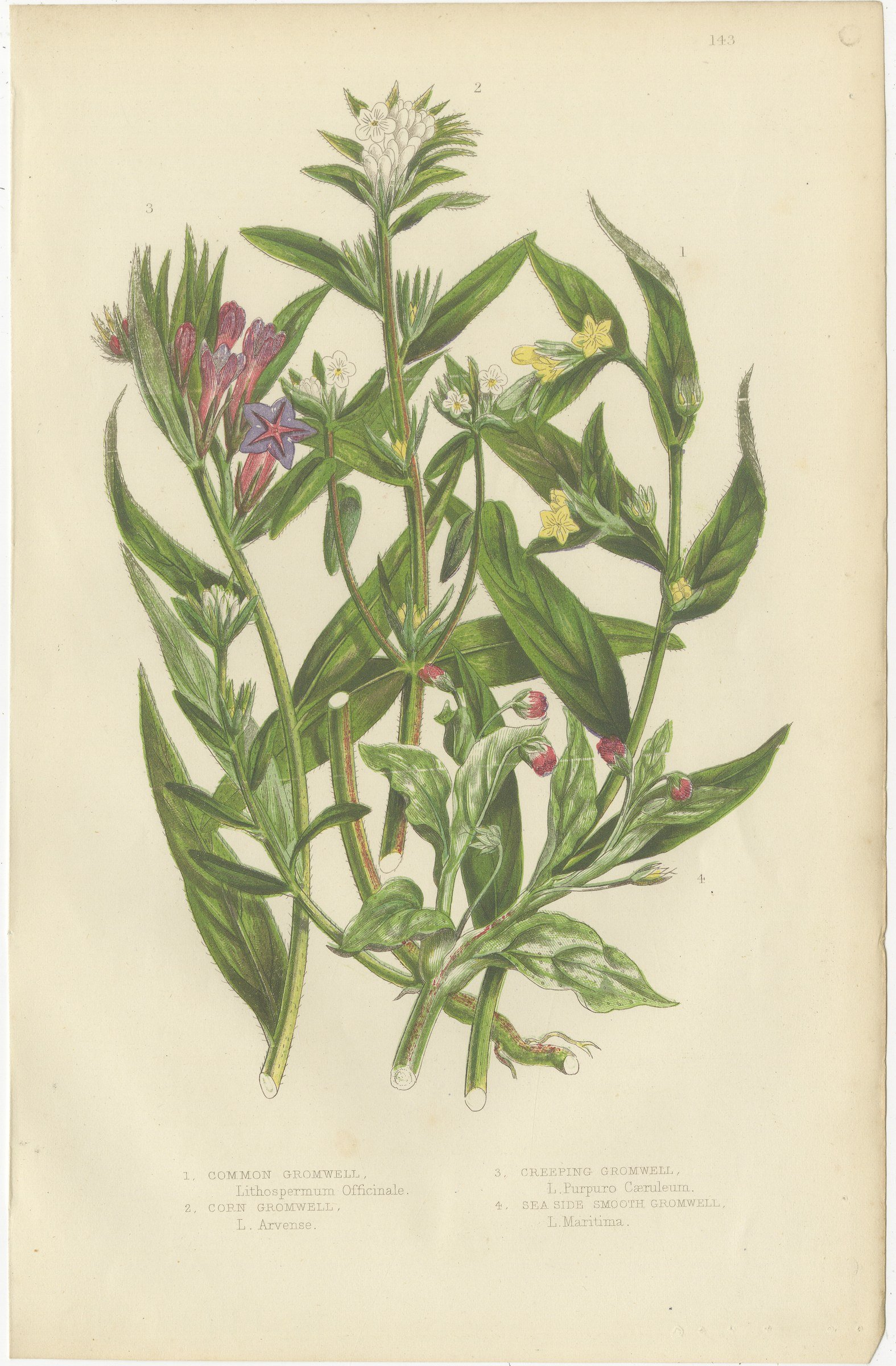
The British Gromwells, Antique Natural History Plate by Anne Pratt, circa 1873
€115 ($125, £95, €115)
Period original, not a reproduction.
Shipped from the Netherlands, flat or rolled, insured and tracked, worldwide. Returns accepted within 14 days.
- Date
- circa 1873
- Size
- 9.4 × 6.1 in (24 × 15.5 cm)
- Technique
- Chromolithograph
- Coloring
- Printed color
- Condition
- Good. Even age toning. Handling soiling along the right and top edges. All four corners complete.
- Period
- Late 19th century
- Section
- Botanical
- Reference
- BG-14434-7
What the condition grades mean
- Excellent
- Bright and clean, with no faults worth mentioning.
- Very good
- Only light signs of age, such as faint toning.
- Good
- Normal signs of age for a sheet of this period: toning, some foxing, small marks or neat old repairs.
- Fair
- Clear faults such as staining, tears or repairs, priced to match.
Every fault we see is written in the condition note, and the whole sheet is shown uncropped in the photos.
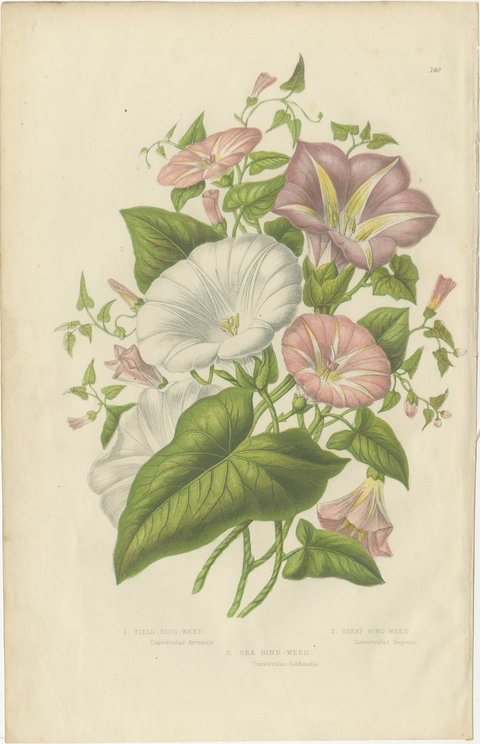
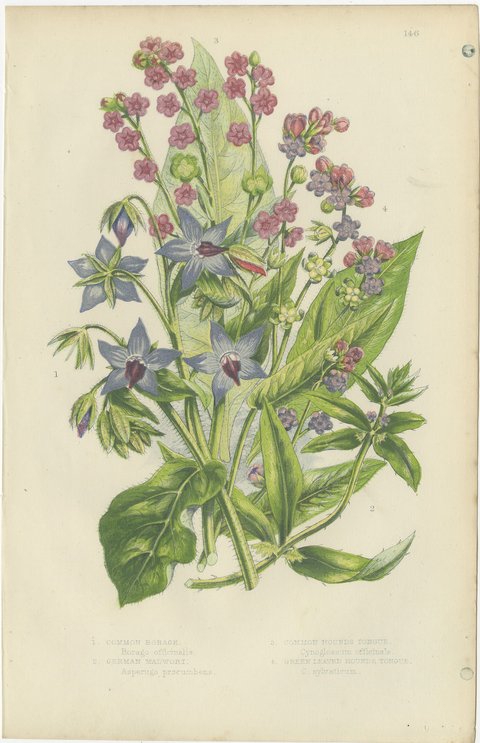
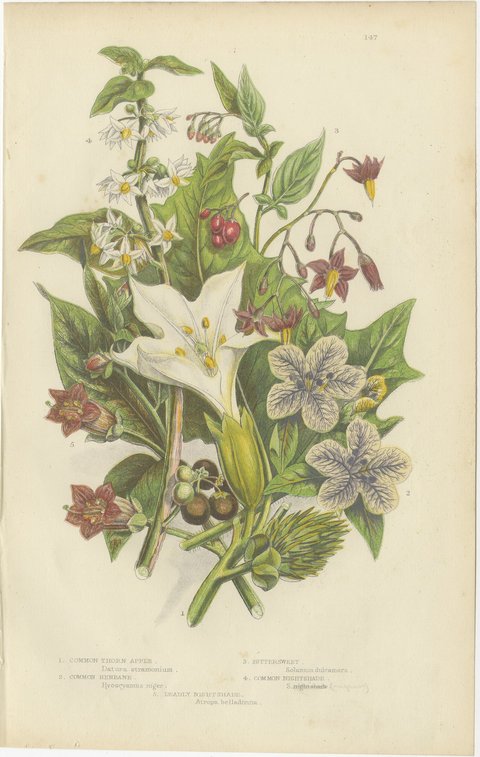
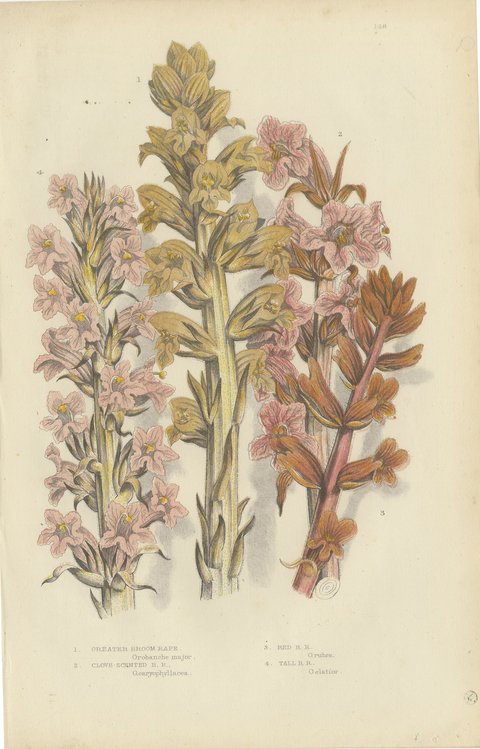
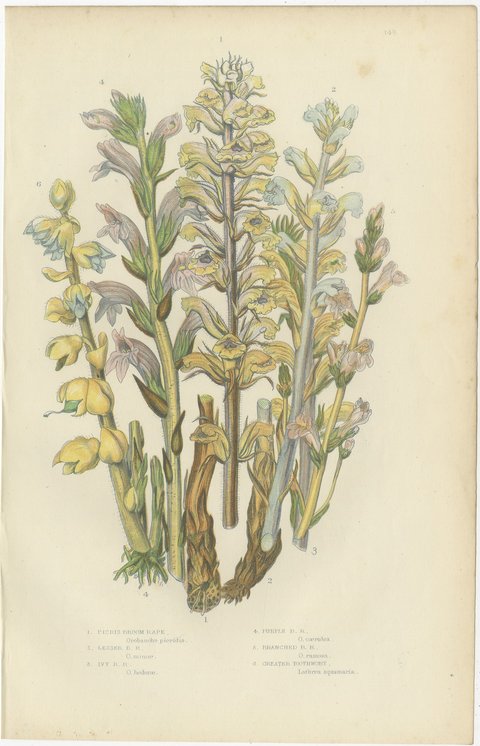
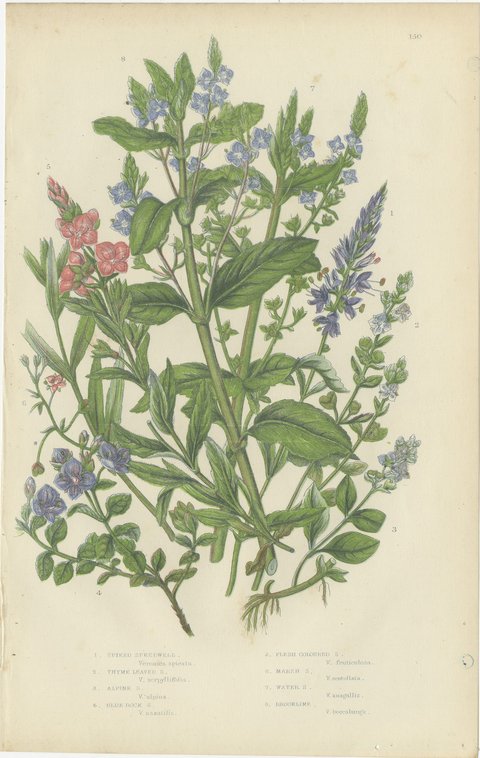
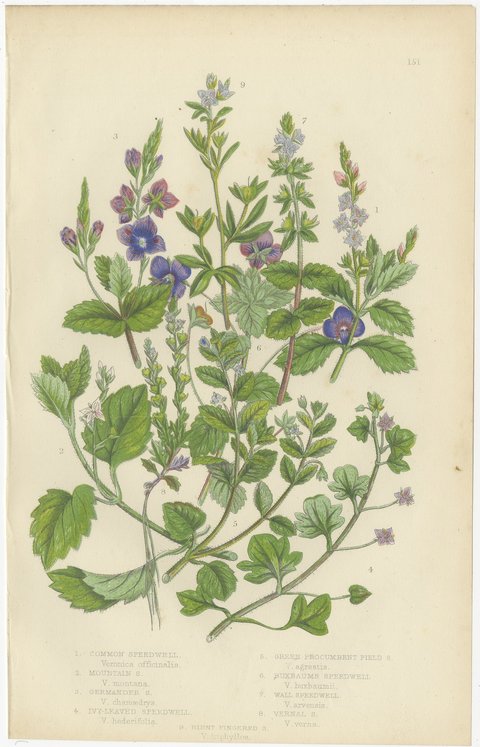
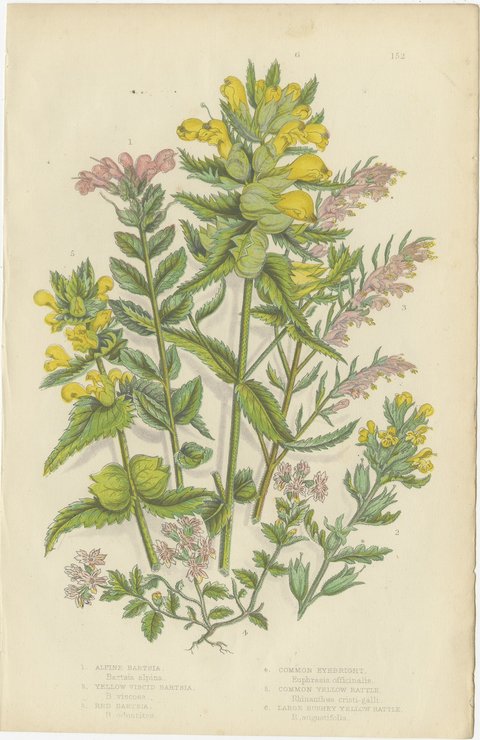
Plate 143 of Anne Pratt's British flora, an original antique color plate printed for Frederick Warne and Co. of London, gives the four British gromwells, from the common gromwell of the hedge bank to the smooth gromwell of the shore. A white flowered spike of the corn gromwell, Lithospermum arvense, stands at the top of the sheet above long ribbed leaves. Crimson buds opening to a violet blue star mark the creeping gromwell at the left, small pale yellow flowers the common gromwell at the right, and the gray green fleshy leaves of the sea side species spread low across the bottom of the page.
This is one of the color plates of The Flowering Plants, Grasses, Sedges, and Ferns of Great Britain, Anne Pratt's six volume account of the wild plants of the British Isles, published in London by Frederick Warne and Co. under the direction of the Society for Promoting Christian Knowledge. The plates were printed in color by the London printer William Dickes, who worked a color process licensed from George Baxter and produced the plates for Pratt's natural history books.
What makes Pratt's plates worth hanging is her method. Each species is given whole, with root, stem, leaf, flower and often the ripe fruit on the same sheet, and several related species are grouped together so that the differences between them can be read at a glance. The result is a composition rather than a specimen sheet, and it reads as a picture at a distance and as botany close up.
Even age toning. Handling soiling along the right and top edges. All four corners complete.
This is an original antique print, not a modern reproduction. This item is sold unframed.