Close-ups
Framed and on the wall
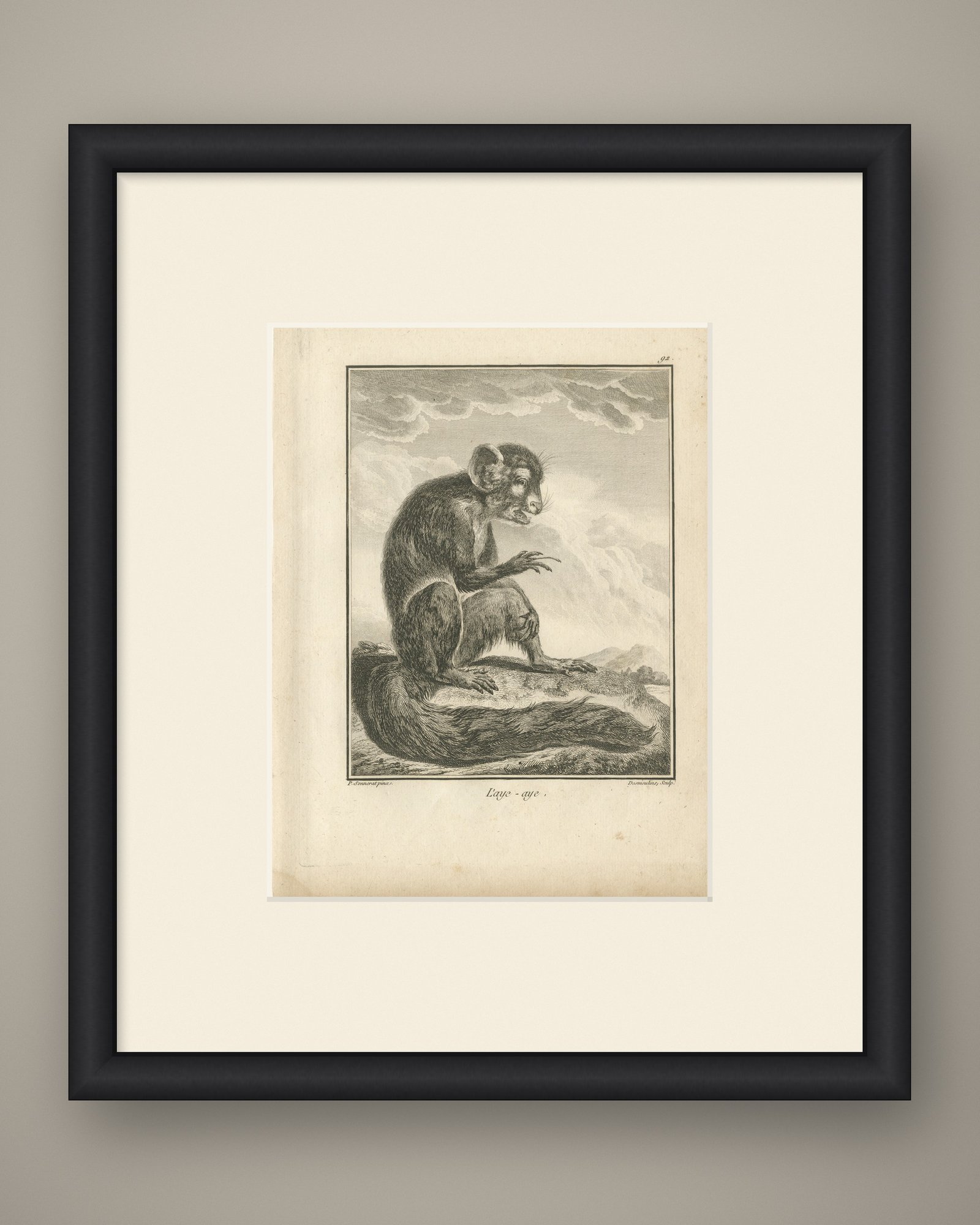

Frame and rooms are illustrations of how the print could look; the description says what is included.
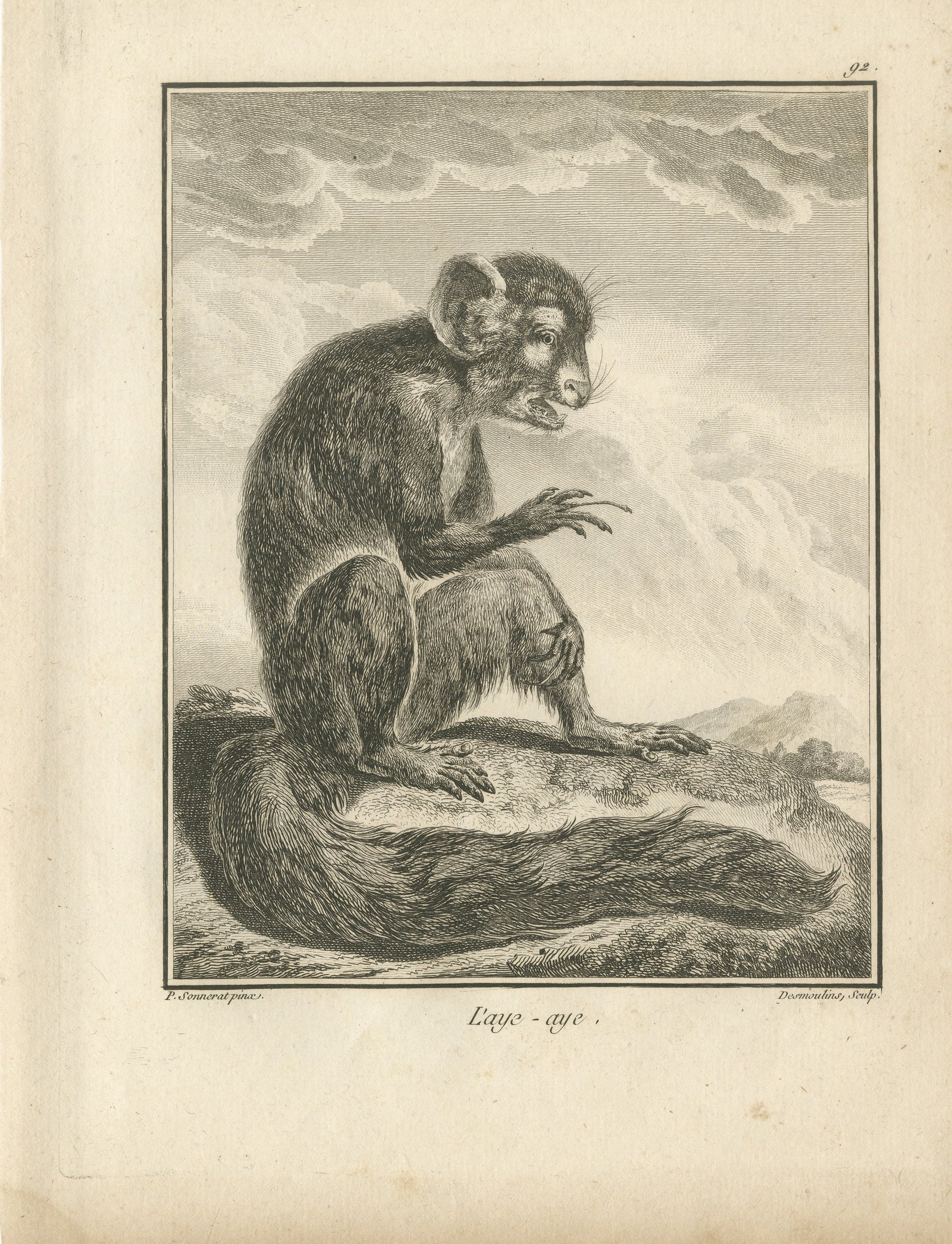
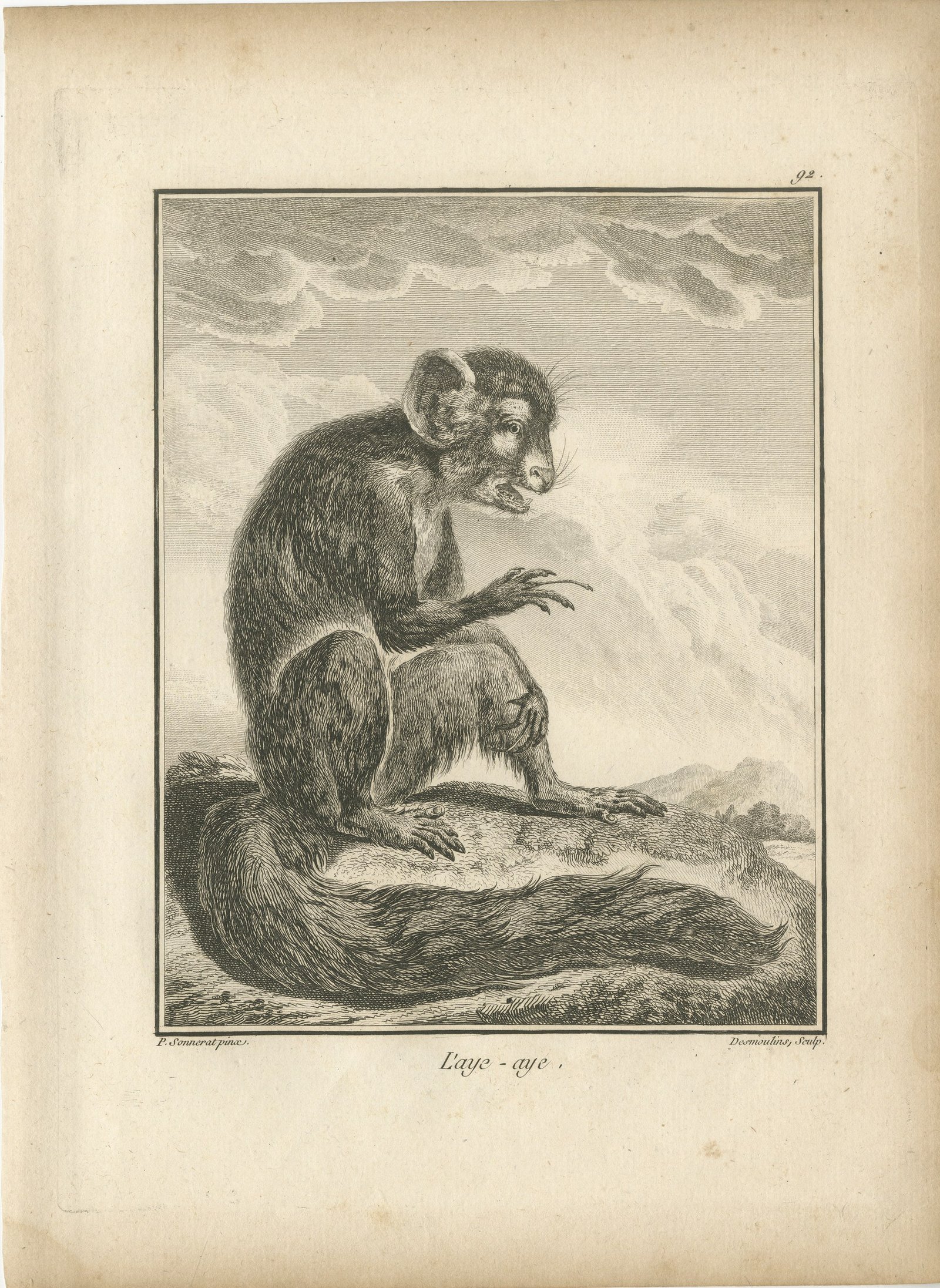
The Aye-Aye of Madagascar, Antique Sonnerat Lemur Engraving, 1806
$430 (£325, €390)
Period original, not a reproduction.
Shipped from the Netherlands, flat or rolled, insured and tracked, worldwide. Returns accepted within 14 days.
- Date
- 1806
- Size
- 11.2 × 8.3 in (28.5 × 21 cm)
- Technique
- Copper Engraving
- Coloring
- Uncolored
- Condition
- Good. Noticeable uneven toning. Marked handling soiling along the bottom, right and top edges. Scattered light foxing in the margin. Slight wear at the top left corner.
- Period
- Early 19th century
- Section
- Mammals
- Reference
- BG-13429-90
What the condition grades mean
- Excellent
- Bright and clean, with no faults worth mentioning.
- Very good
- Only light signs of age, such as faint toning.
- Good
- Normal signs of age for a sheet of this period: toning, some foxing, small marks or neat old repairs.
- Fair
- Clear faults such as staining, tears or repairs, priced to match.
Every fault we see is written in the condition note, and the whole sheet is shown uncropped in the photos.
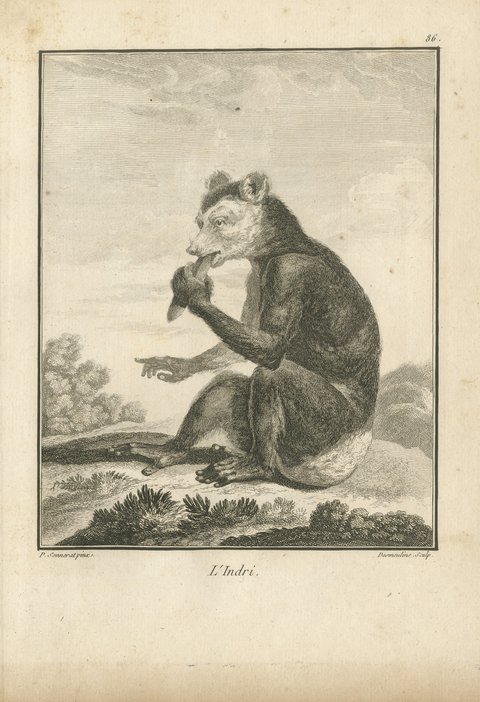
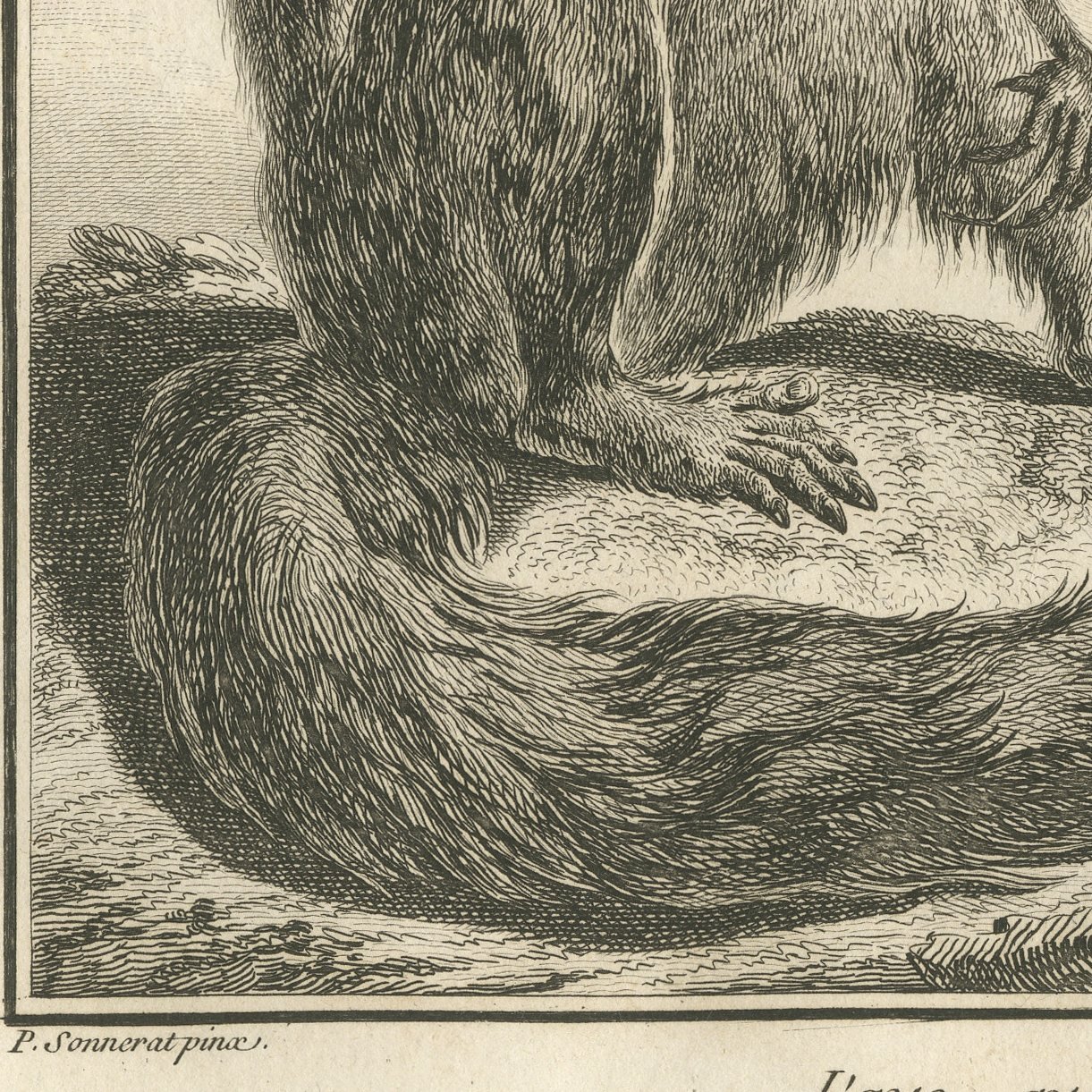
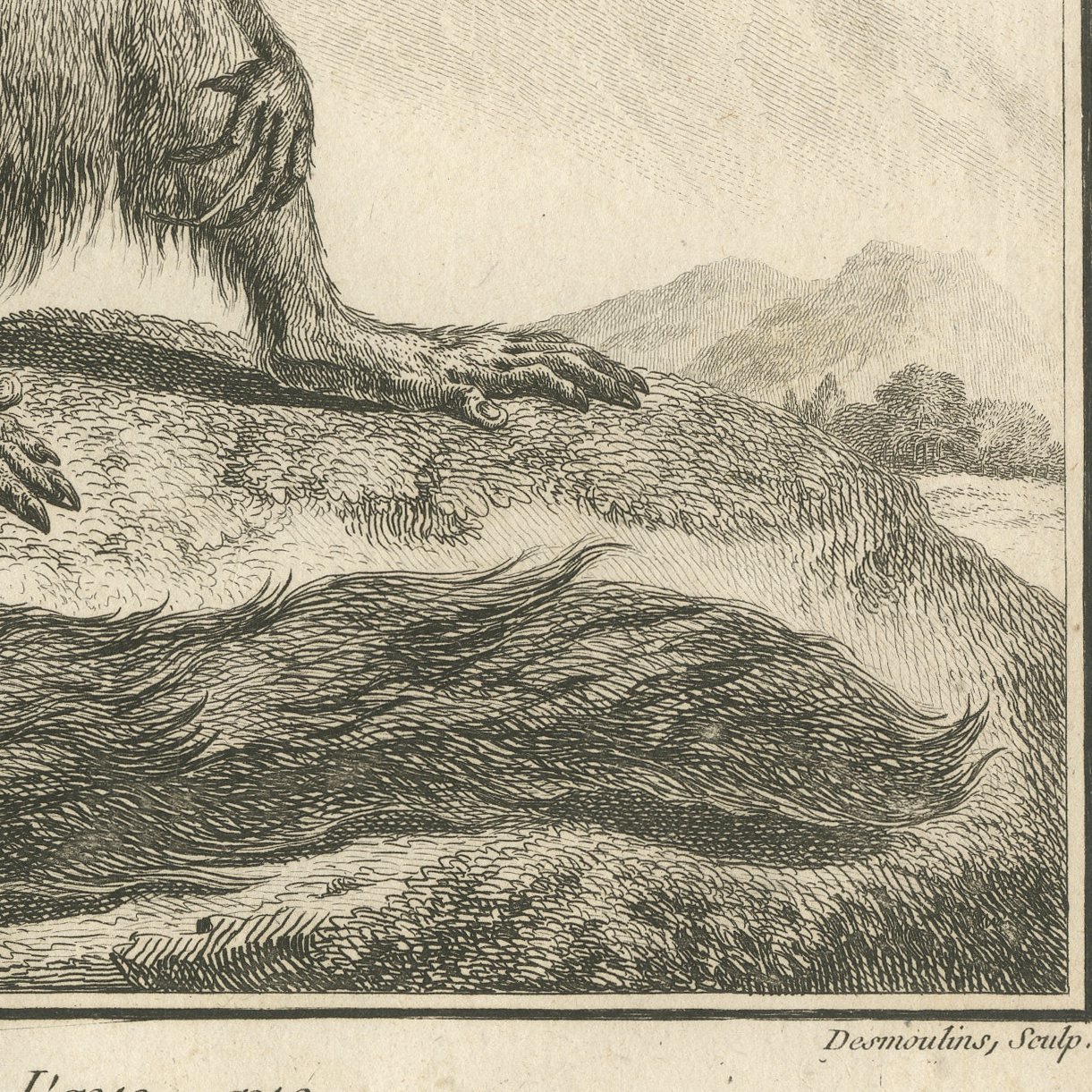
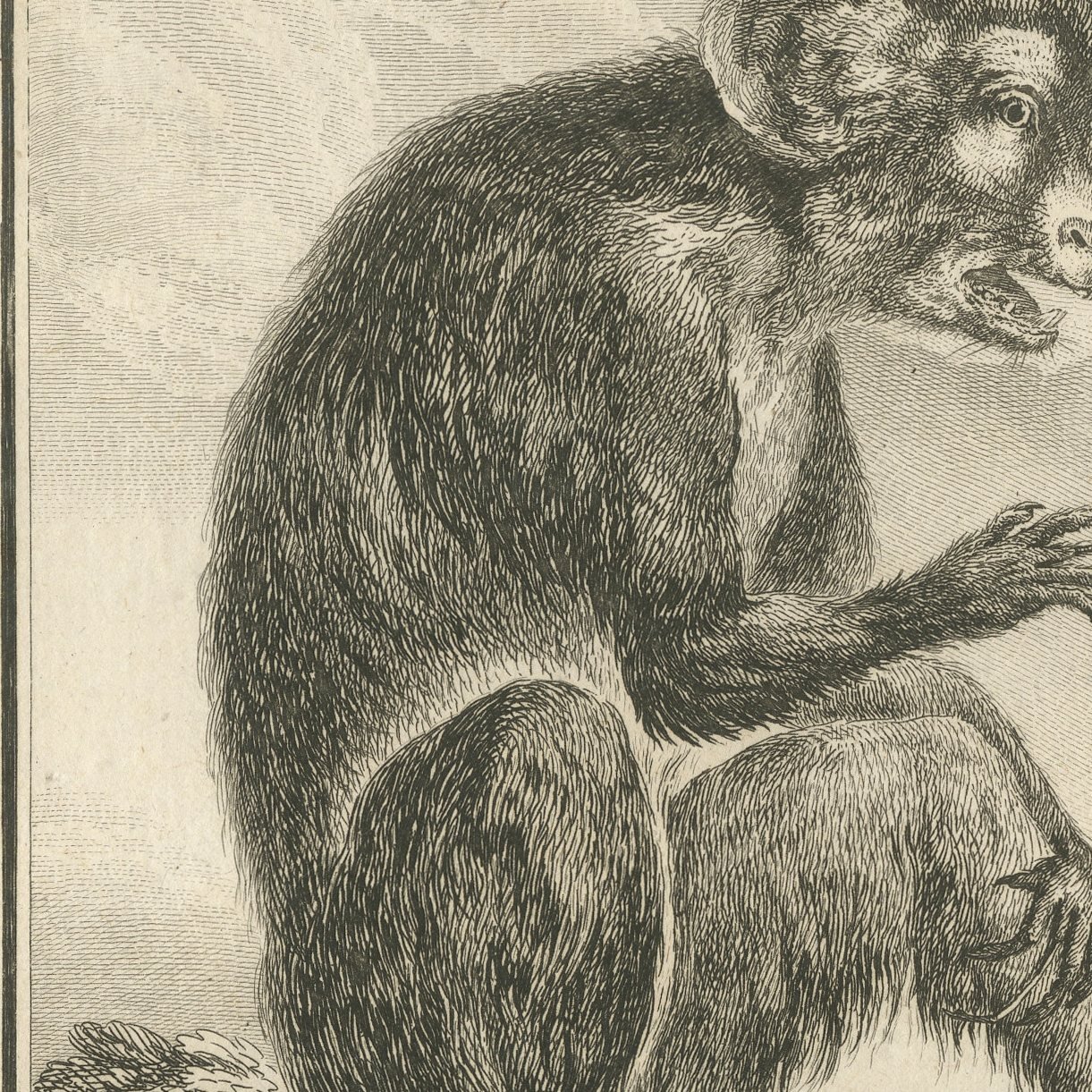
An original antique plate from Sonnerat's Voyage aux Indes Orientales et a la Chine, numbered 92, showing the aye-aye of Madagascar, clinging to a branch with its great ears, bushy tail and the long thin middle finger that is its most famous feature. Beneath the image the sheet is lettered L'Aye-aye., with P. Sonnerat pinx. at the lower left and Desmoulins sculp. at the lower right, and the plate number 92 at the upper right.
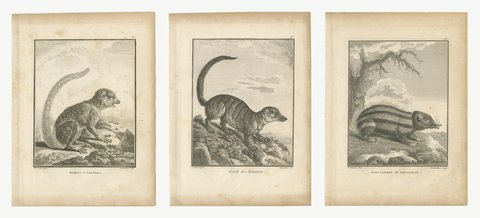
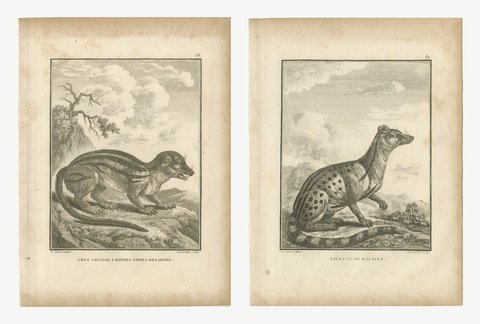
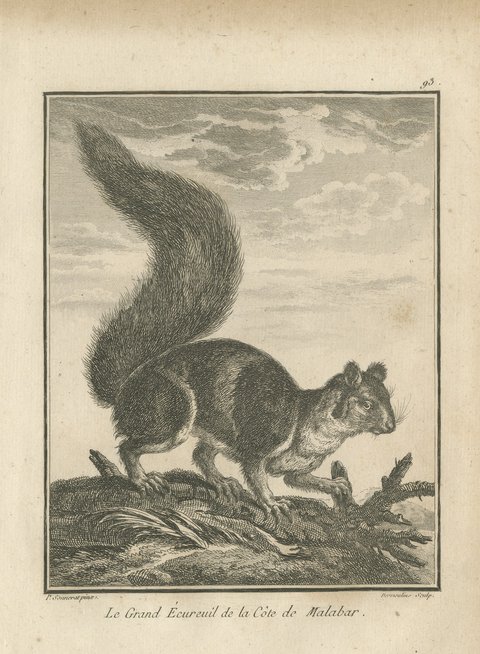
This plate belongs to the Collection de planches pour servir au Voyage aux Indes Orientales et a la Chine, published in Paris by Dentu in 1806. It is the plate volume that accompanies Sonnerat's account of the years he spent in India, China, Malacca, Madagascar and the islands of the Indian Ocean as a naturalist and naval commissary in the service of France. The image is a copper engraving, printed in black on laid paper with a clear plate mark, the lettering cut below the image in the same plate. No color was applied, which is how the volume was issued.
The mammal plates are the part of the volume that natural history collectors pursue. Several of the animals Sonnerat drew were new to European science when the book appeared, and the Madagascar sheets in particular are among the earliest printed images of their subjects. Sonnerat was the first to put the name aye-aye into print, in 1782, when he described and illustrated the animal. This plate is that illustration, reissued in the 1806 folio. The long thin middle finger the animal uses to hook grubs out of dead wood is clearly drawn, and it is the feature that still defines the species.
Noticeable uneven toning. Marked handling soiling along the bottom, right and top edges. Scattered light foxing in the margin. Slight wear at the top left corner.
This is an original antique print, not a modern reproduction. This item is sold unframed.