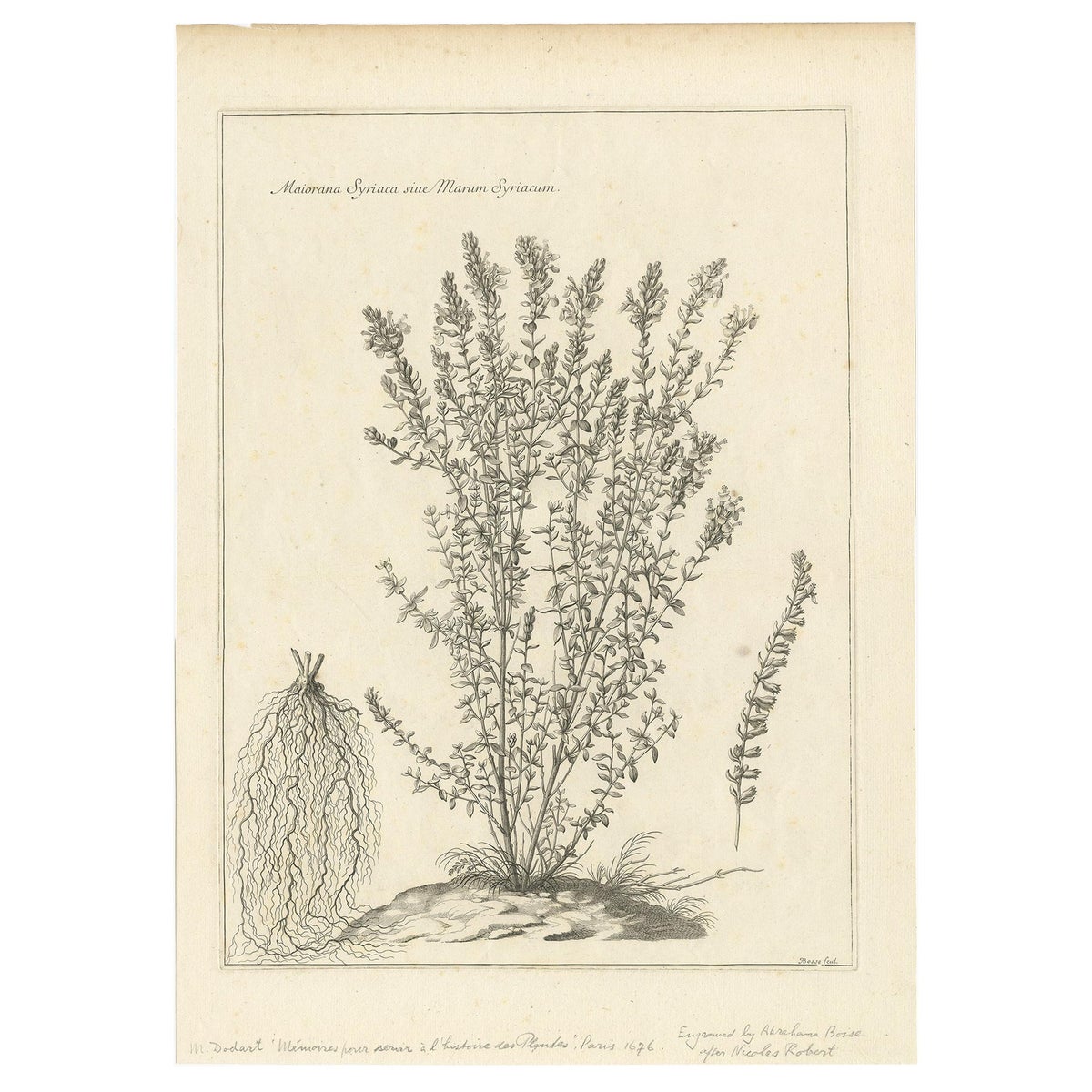
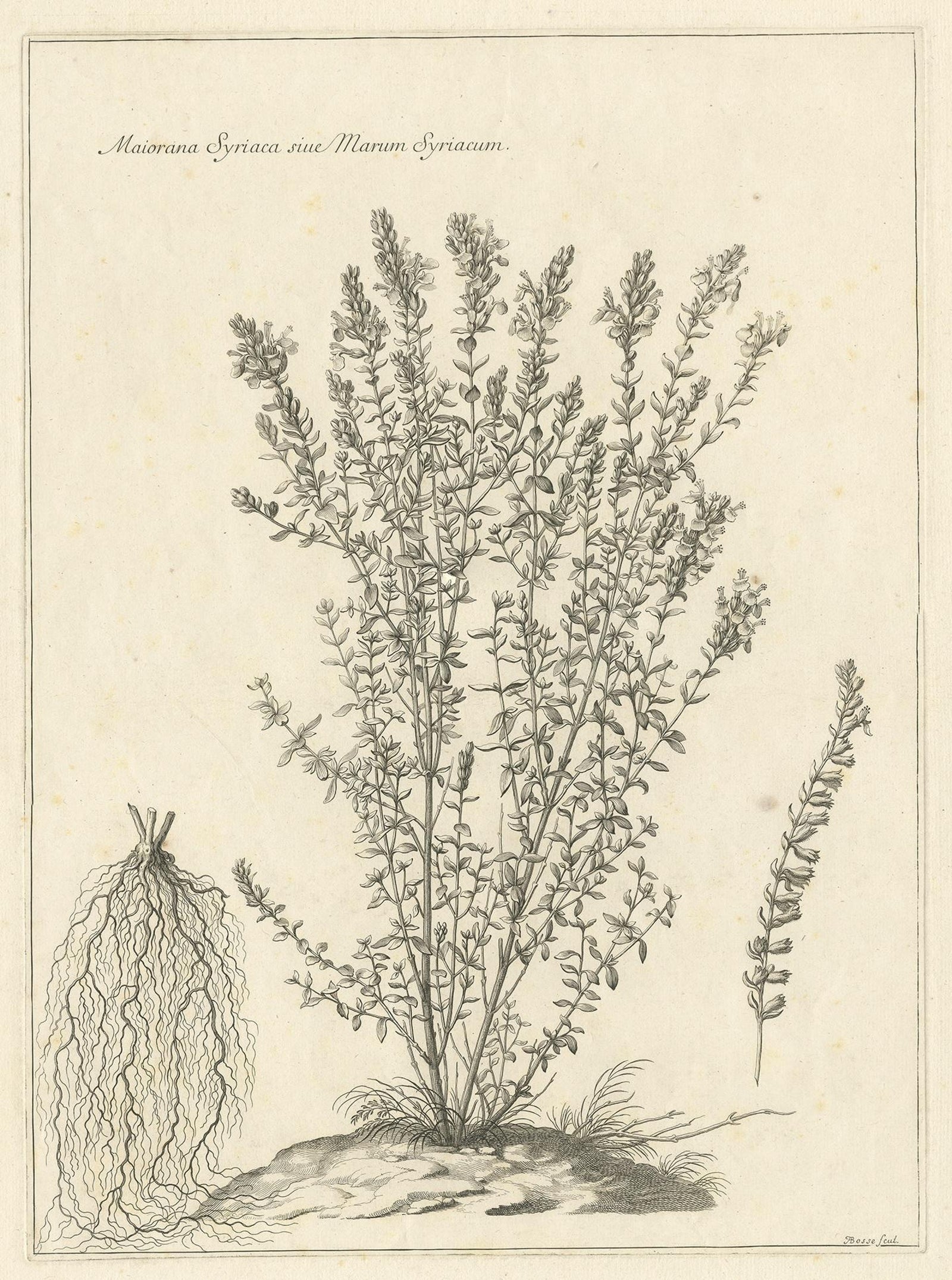
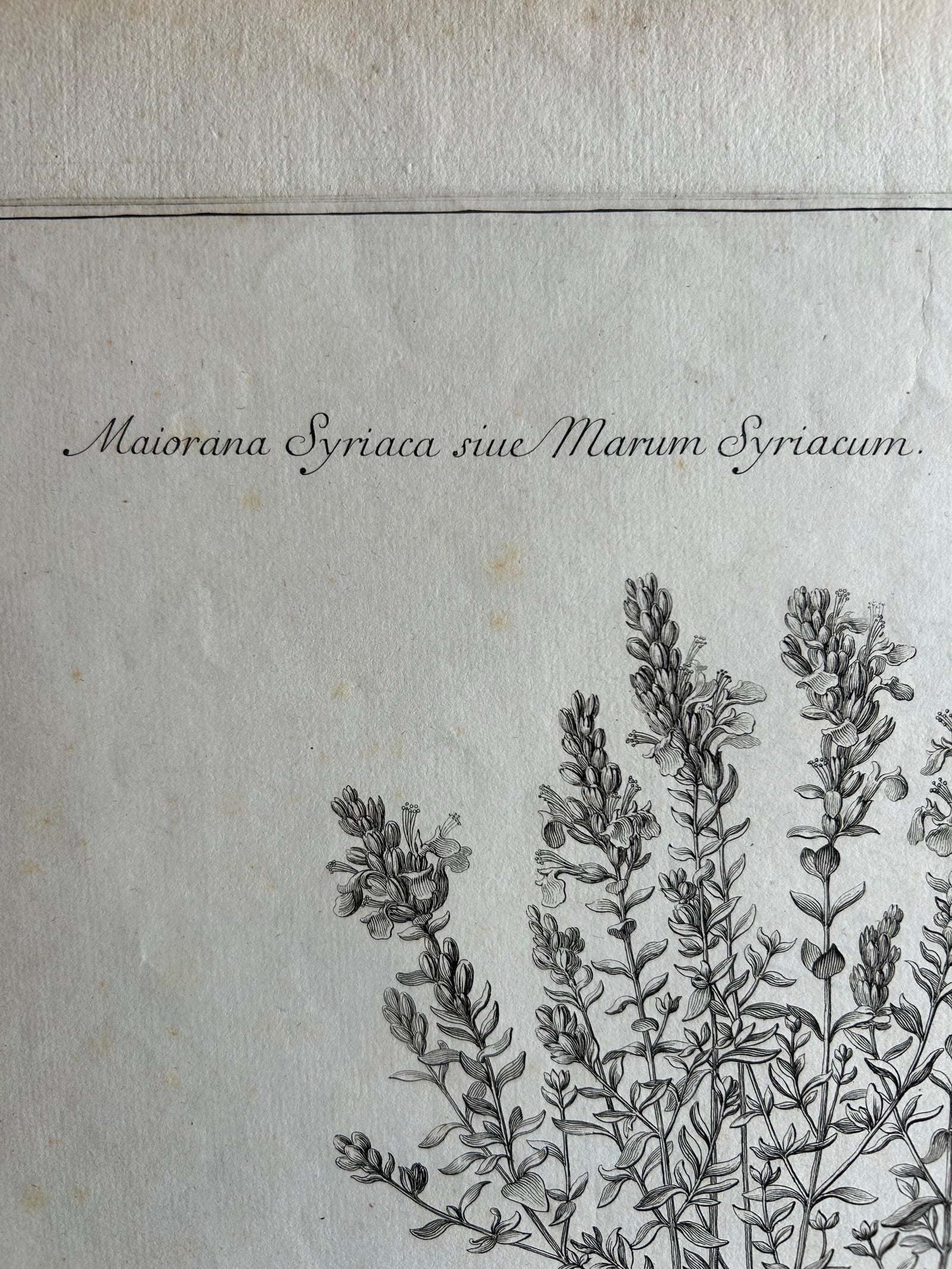
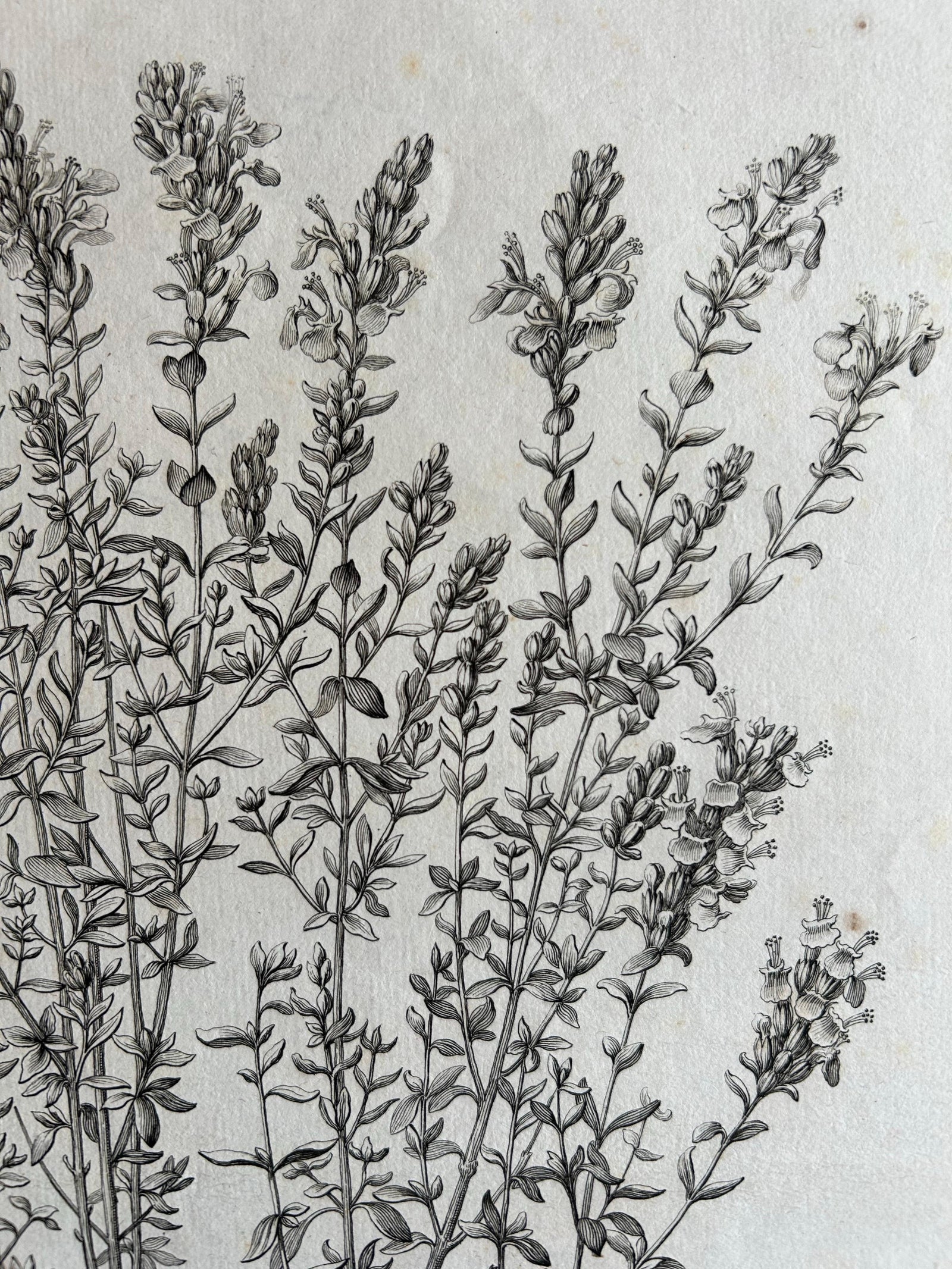
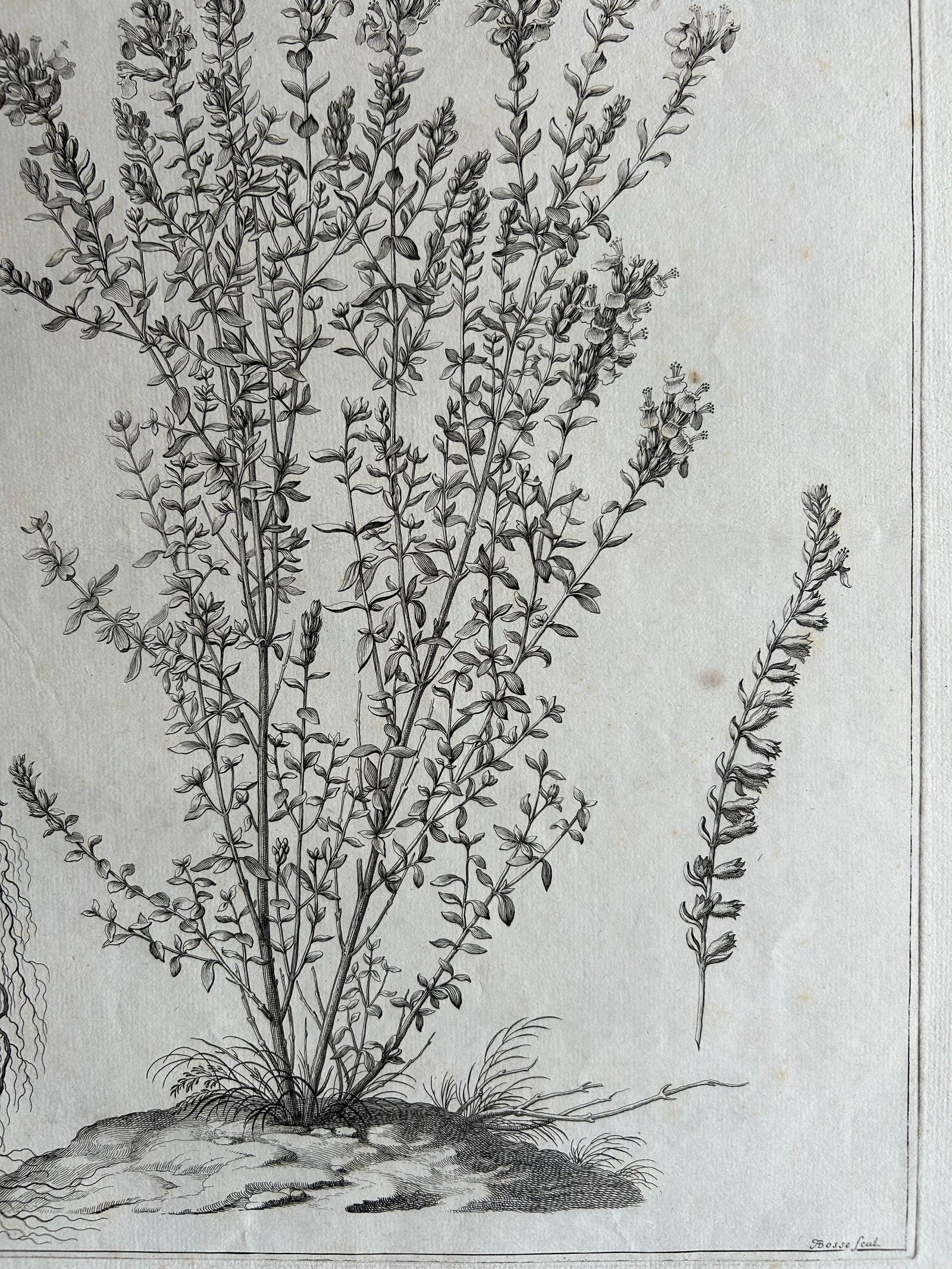
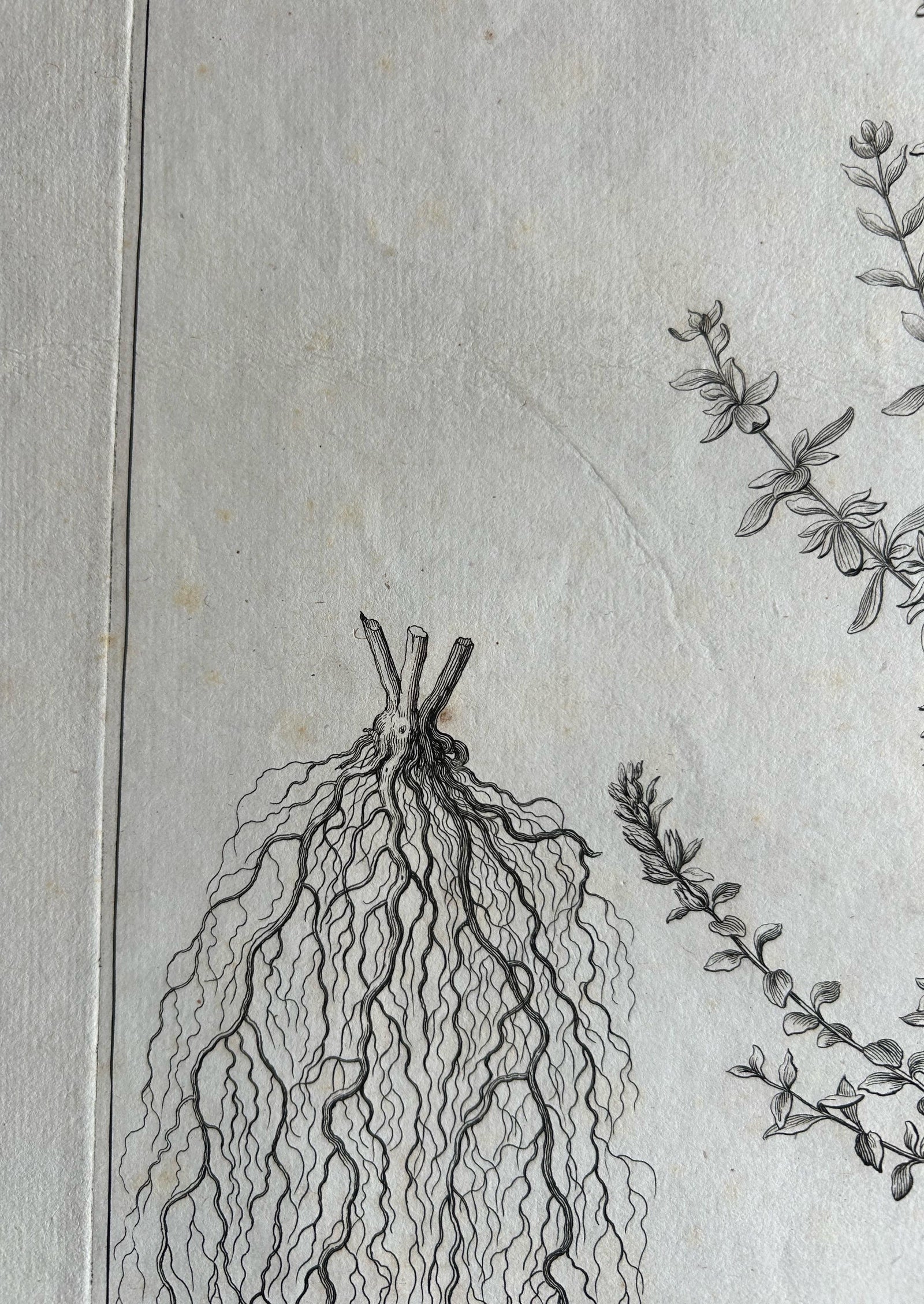
Syrian Oregano (Origanum Syriacum), Antique Botanical Engraving c.1676
$280 (£210, €250)
Period original, not a reproduction.
Shipped from the Netherlands, flat, insured and tracked, worldwide. Returns accepted within 14 days.
- Date
- 1676
- Size
- 19.3 × 13.6 in (49 × 34.5 cm)
- Technique
- Engraved
- Condition
- Good. Condition summary: Very good condition with a strong impression and clean paper. Minor age-toning, occasional faint foxing near the margins and some spots across the paper. No tears or repairs; wide margins intact.
- Period
- Before 1700
- Section
- Botanical
- Reference
- f_19950342
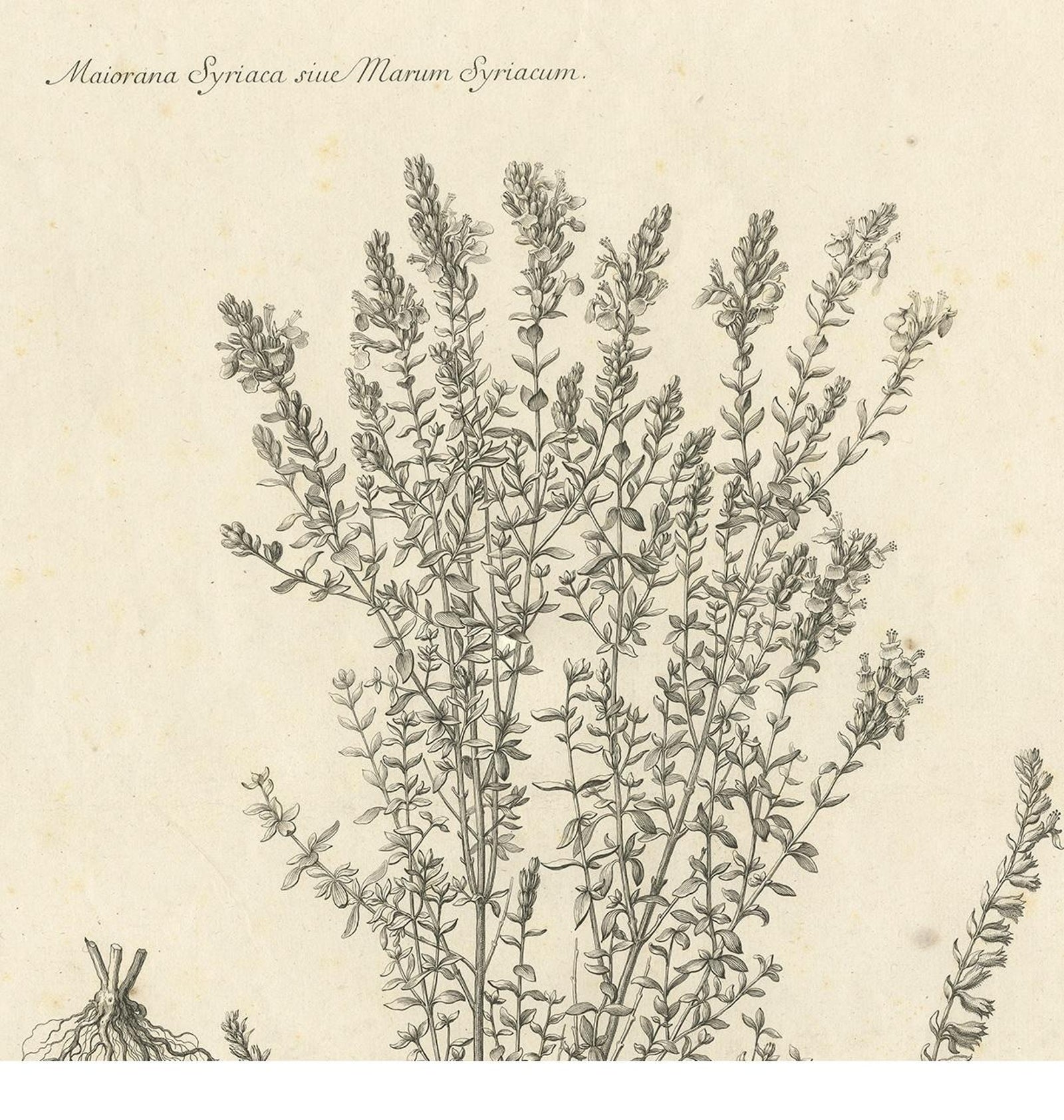
Maiorana Syriaca sive Marum Syriacum, Origanum Syriacum Botanical Engraving c.1676
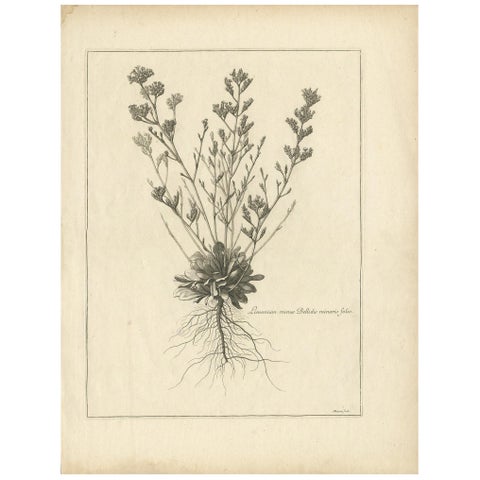
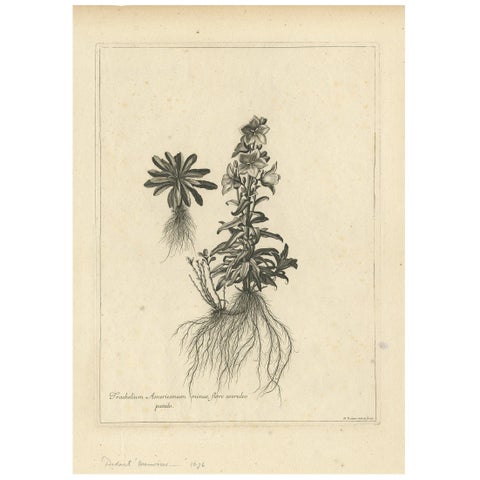
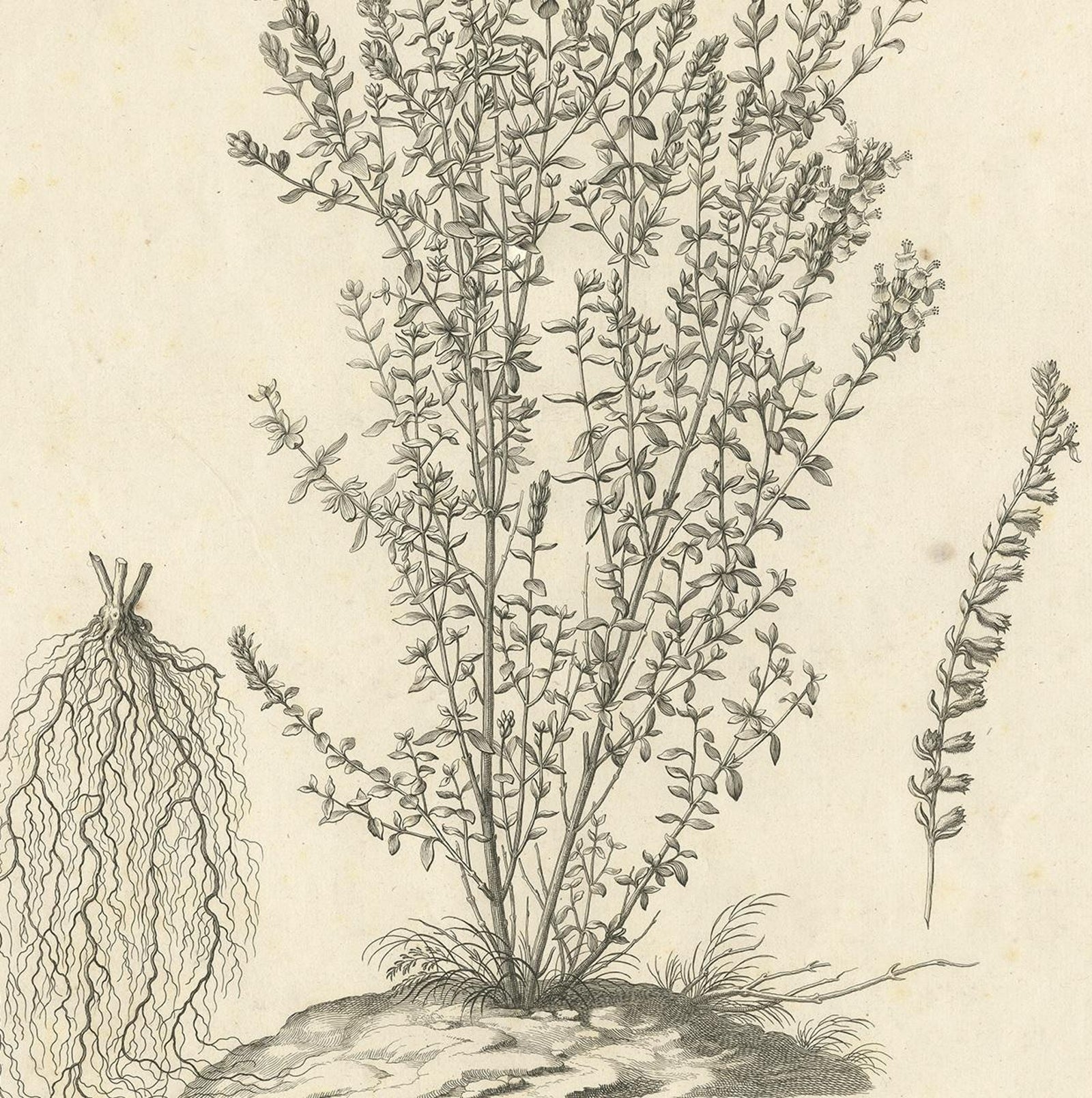
This antique botanical engraving features Origanum syriacum, also known as Bible hyssop, Lebanese oregano, Syrian oregano, or marum syriacum. The print presents a full view of the flowering plant in fine line detail, with tall, slender stems covered in small, rounded leaves and dense flower clusters. To the left is a bundled specimen as it would appear when harvested and dried for culinary or medicinal use. To the right is a botanical detail of the stem, aiding scientific study and species identification.
This plate originates from Mémoires pour servir à l'histoire des plantes (1676), one of the earliest major botanical publications from France, authored by Denis Dodart and published under the patronage of the French Academy of Sciences. The engravings were created by Nicolas Robert, one of the leading botanical illustrators of the 17th century. This work was a landmark in botanical and medicinal plant research, integrating scientific classification with detailed visual observation during the reign of Louis XIV.
The technique is copperplate engraving, known for its precision and clarity in rendering fine botanical features. These early scientific engravings were made entirely in monochrome and later served as references for hand colouring or herbarium comparison.
Condition summary: Very good condition with a strong impression and clean paper. Minor age-toning, occasional faint foxing near the margins and some spots across the paper. No tears or repairs; wide margins intact.
Framing tips: A soft cream or warm grey mount pairs well with the monochrome engraving. For framing, choose a simple black or walnut frame, or a gold moulding for a classic 17th-century presentation. UV-protective glass is advised to protect the paper and ink from fading.