Framed and on the wall
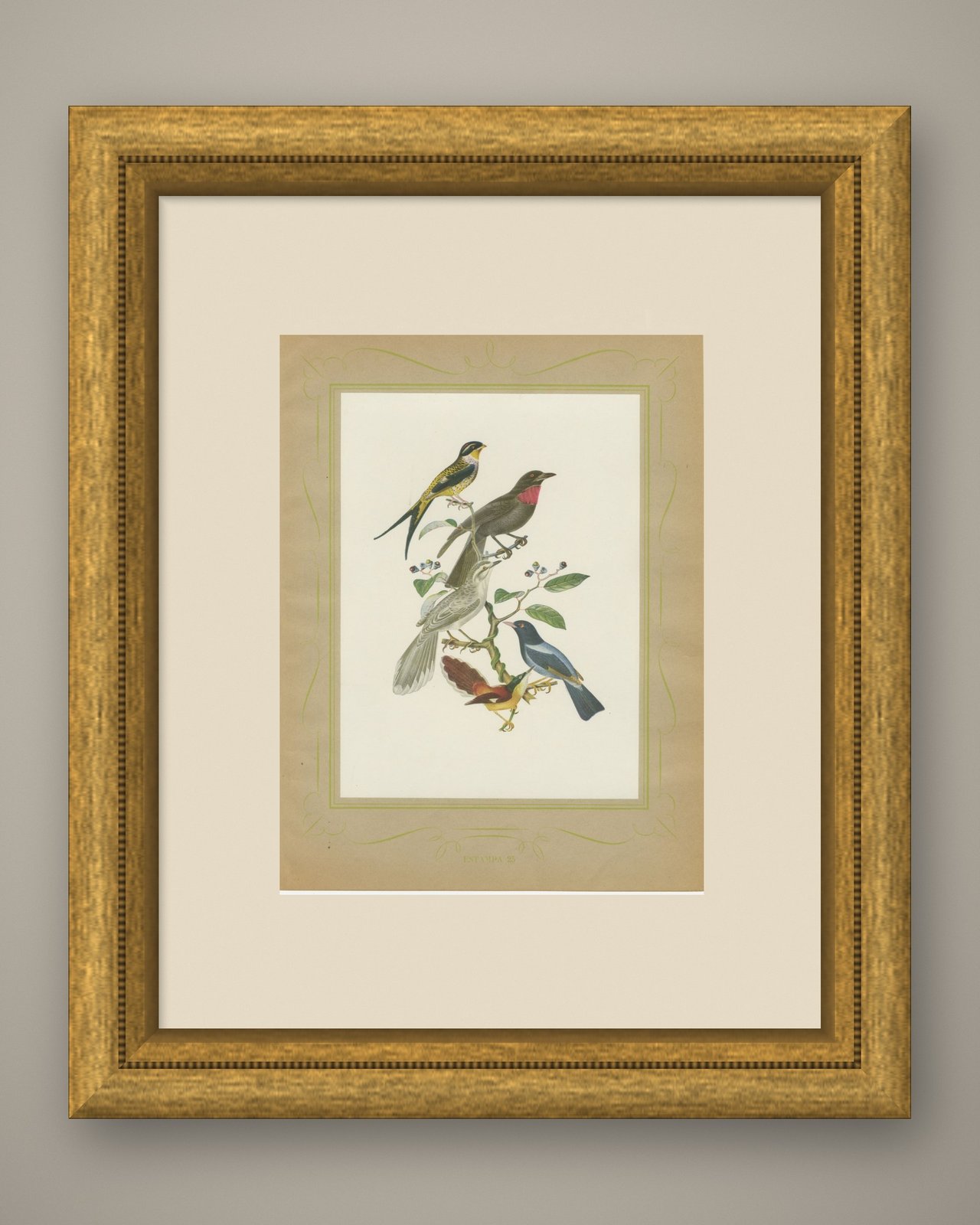
Frame and rooms are illustrations of how the print could look; the description says what is included.
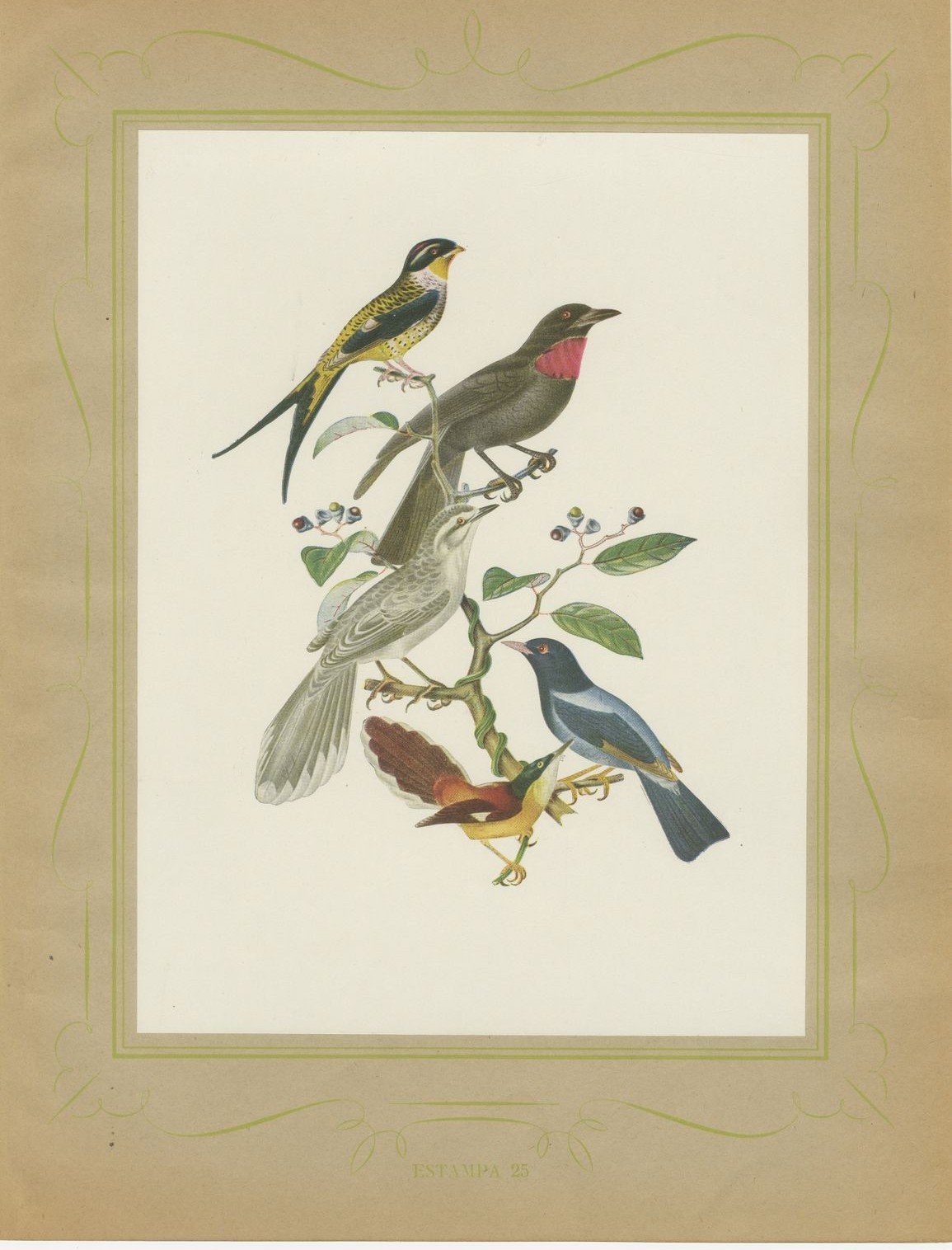
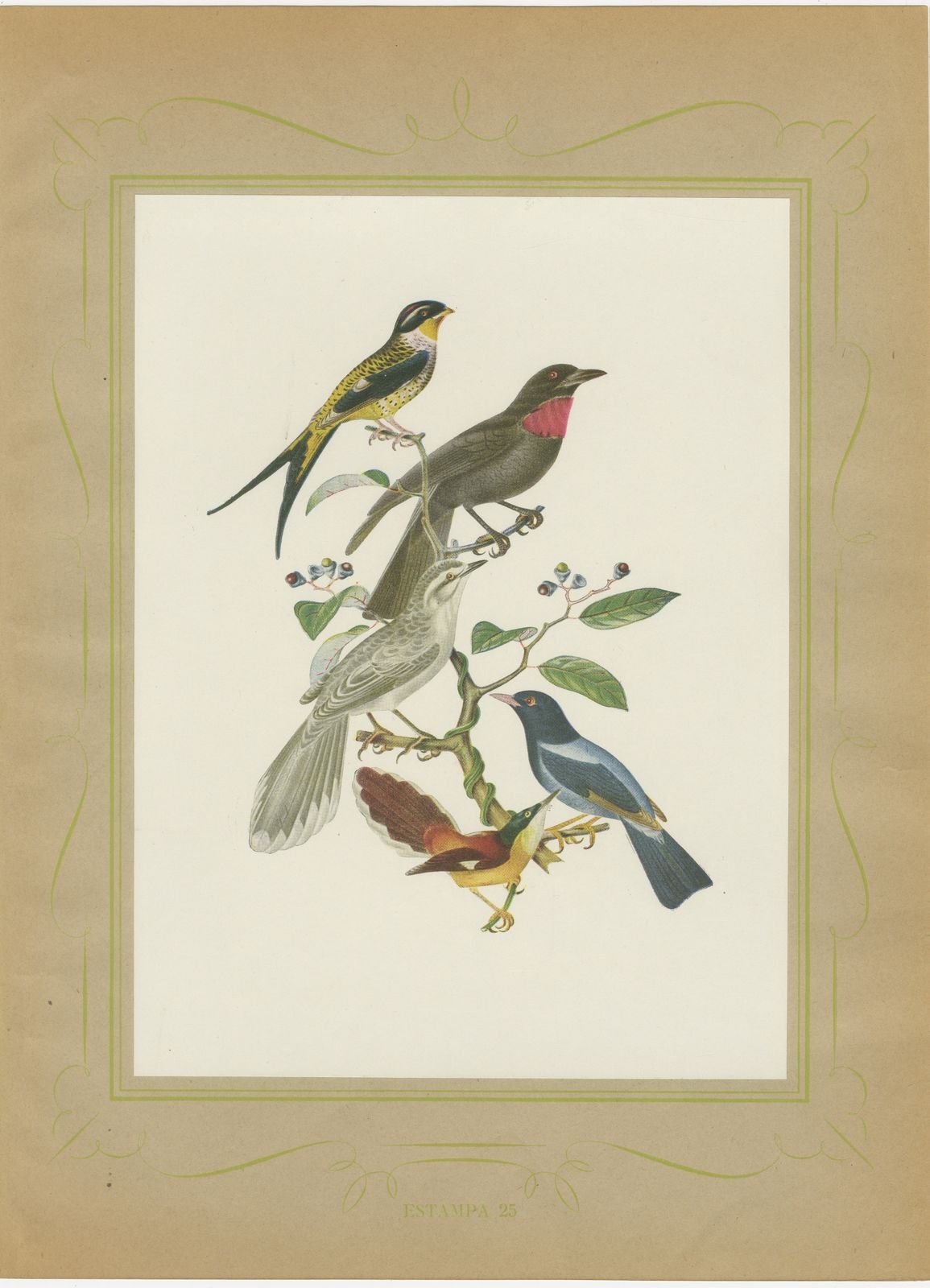
Swallow-Tailed Cotinga and Fruitcrow, Brazilian Bird Print, Descourtilz, 1944
$290 (£220, €260)
Period original, not a reproduction.
Shipped from the Netherlands, flat, insured and tracked, worldwide. Returns accepted within 14 days.
- Date
- 1944
- Technique
- Other
- Coloring
- Printed color
- Condition
- Good. Good condition for its age. The mount is toned with a few small spots, including a small cluster of dark spots in the lower left, and light edge wear. Please review the images for further condition details.
- Period
- 20th century
- Section
- Birds
- Reference
- BG-14389-1-25
What the condition grades mean
- Excellent
- Bright and clean, with no faults worth mentioning.
- Very good
- Only light signs of age, such as faint toning.
- Good
- Normal signs of age for a sheet of this period: toning, some foxing, small marks or neat old repairs.
- Fair
- Clear faults such as staining, tears or repairs, priced to match.
Every fault we see is written in the condition note, and the whole sheet is shown uncropped in the photos.
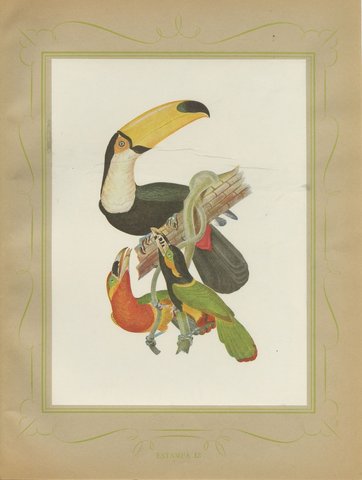
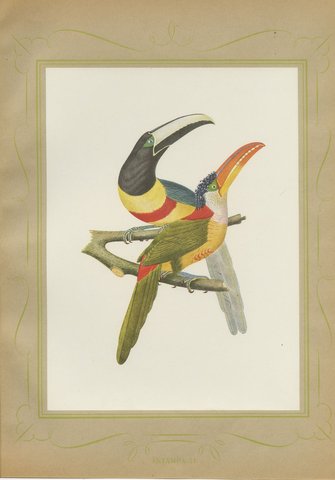
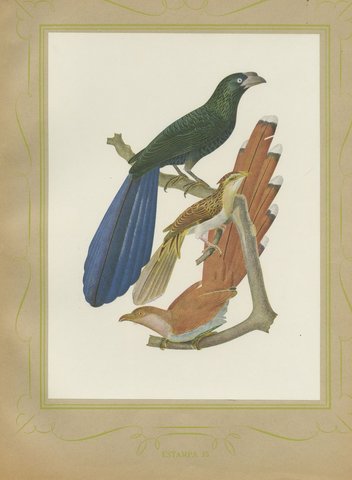
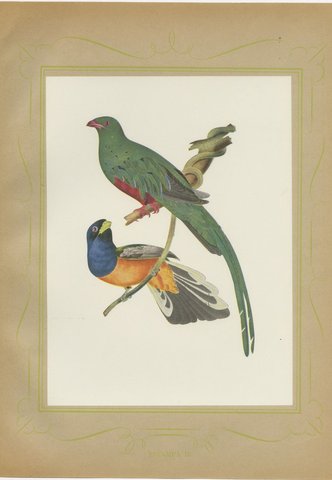
Swallow-tailed cotinga and fruitcrow print after Descourtilz, Estampa 25 of the Ornitologia Brasileira, published in Rio de Janeiro in 1944 and printed in color by offset from Jean-Théodore Descourtilz's own painting.
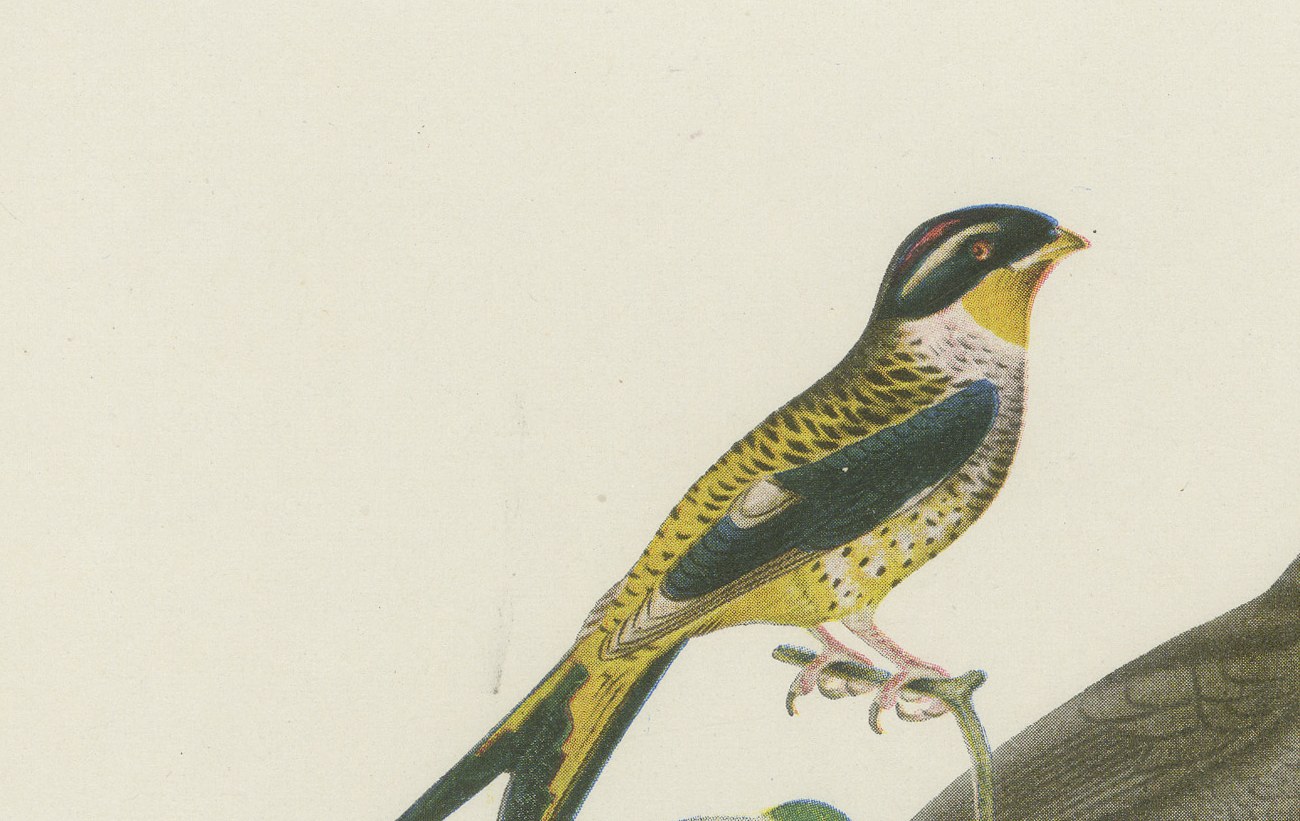
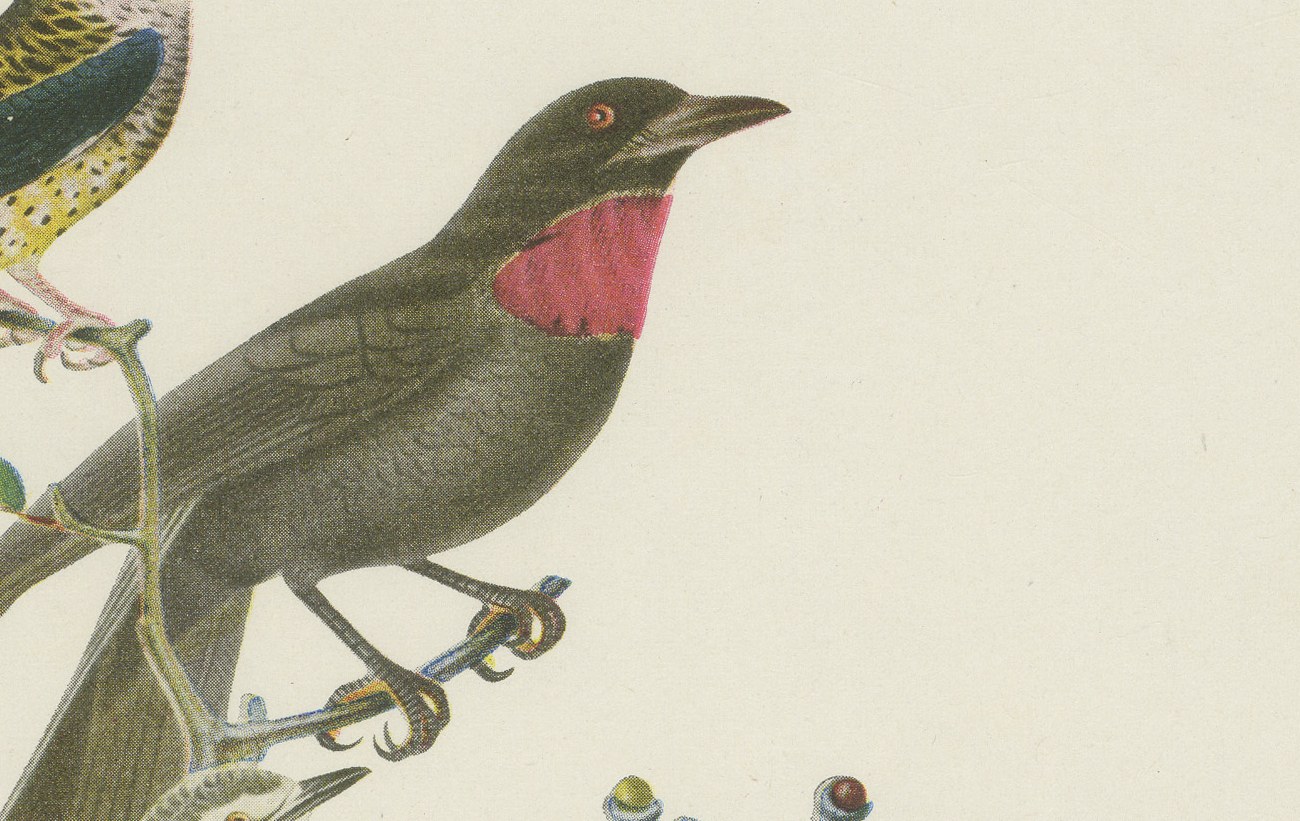
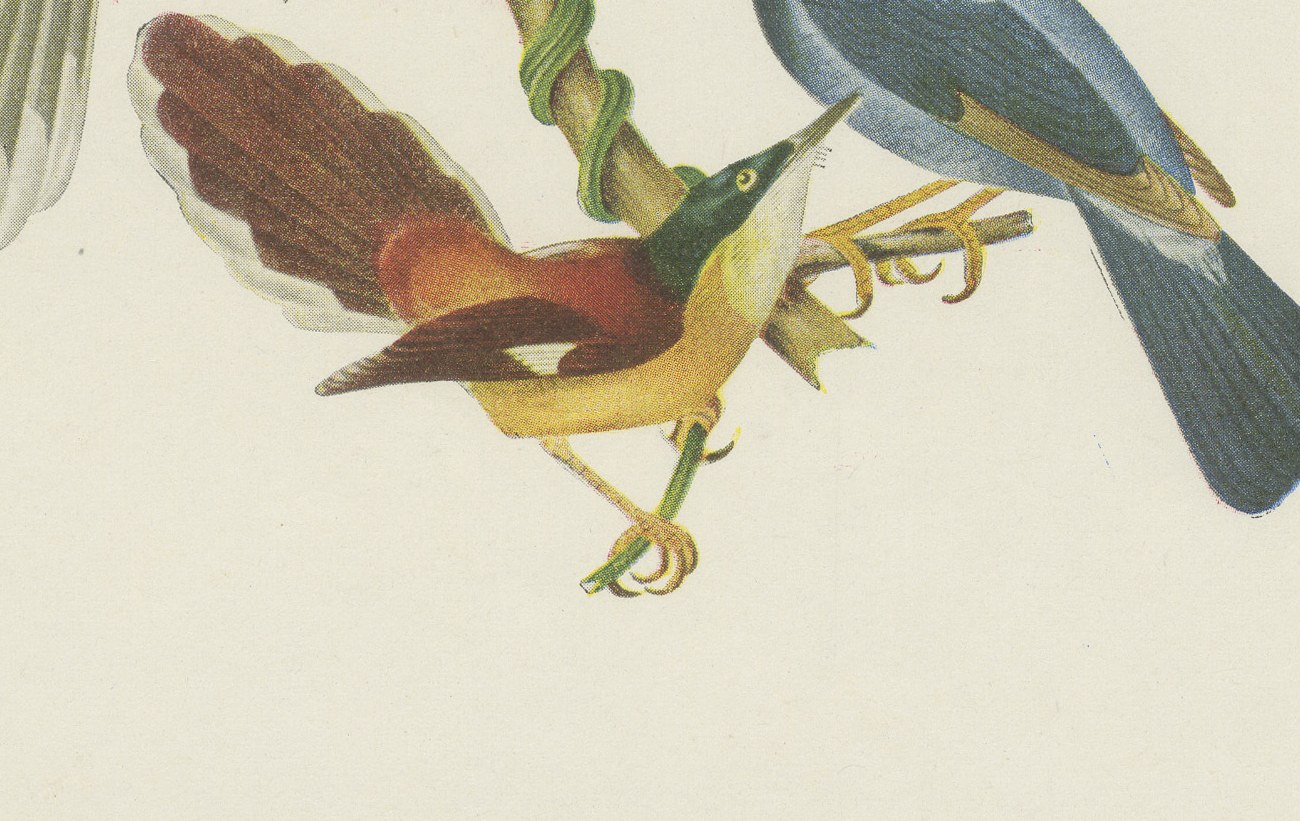
Five birds share a fruiting branch hung with small dark berries. At upper left, a strikingly patterned bird shows a head marked in black, yellow and a small patch of red, a breast streaked black over white, and a body otherwise yellow and black; its very long, deeply forked black tail extends well beyond the branch. This is the swallow-tailed cotinga, Phibalura flavirostris, a bird of the forests of south-eastern Brazil. To its right, a larger, plainer dark gray-brown bird is marked by a patch of pink-red at the throat, the gorget of a fruitcrow. Below them, a gray-and-brown bird with a long tail and a finely mottled back perches at the center of the composition, its plumage considerably more subdued than its companions. At lower right, a bird with blue-black upperparts and a pale bill perches near a cluster of the same dark berries, while at the bottom of the plate a fifth bird, its head patterned in black, yellow and orange, shows a warm brown body and a long, softly fanned tail. The berries and simple leaves of the branch are common to several plates in this volume, used here again to link the birds into a single design.
The Ornitologia Brasileira ou História Natural das Aves do Brasil, notáveis por sua plumagem, canto e hábitos was published by Livraria Kosmos Editora in Rio de Janeiro and São Paulo in 1944: the first Portuguese edition, translated by Eurico Santos, of a work first published in French in the 1850s, limited to 1,315 copies (1,000 plus 315 numbered). Its 48 color offset plates reproduce Descourtilz's own paintings of Brazilian birds, each captioned "Estampa" with its number and mounted on a toned card within a printed green ornamental border.
The artist, Jean-Théodore Descourtilz (circa 1796 to 1855), was a French painter and naturalist. He traveled to Brazil in the late 1820s, devoted himself to painting its birds, and published his first work on the birds of Brazil in 1834.
Decorative and strong in color, this swallow-tailed cotinga and fruitcrow print after Descourtilz would frame well for a study, library or garden room, or sit alongside other Brazilian bird prints in a natural history collection.
This plate is in good condition for its age. The mount shows ordinary age toning, with a few small spots, including a small cluster of dark spots in the lower left, and light edge wear. Please review the images for further condition details.
This is an original print, not a modern reproduction. This item is sold unframed. Any framed or interior images are shown for presentation and inspiration only, unless the listing explicitly states that the item is sold framed.