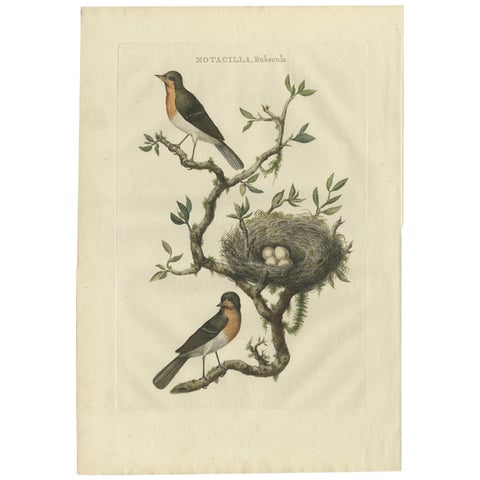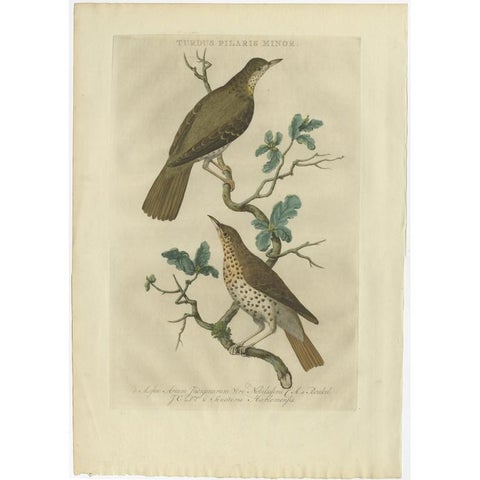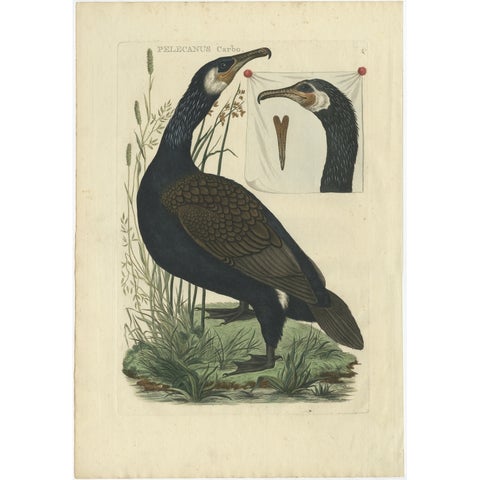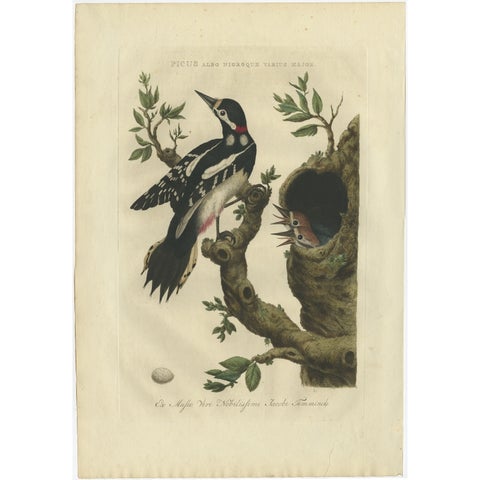
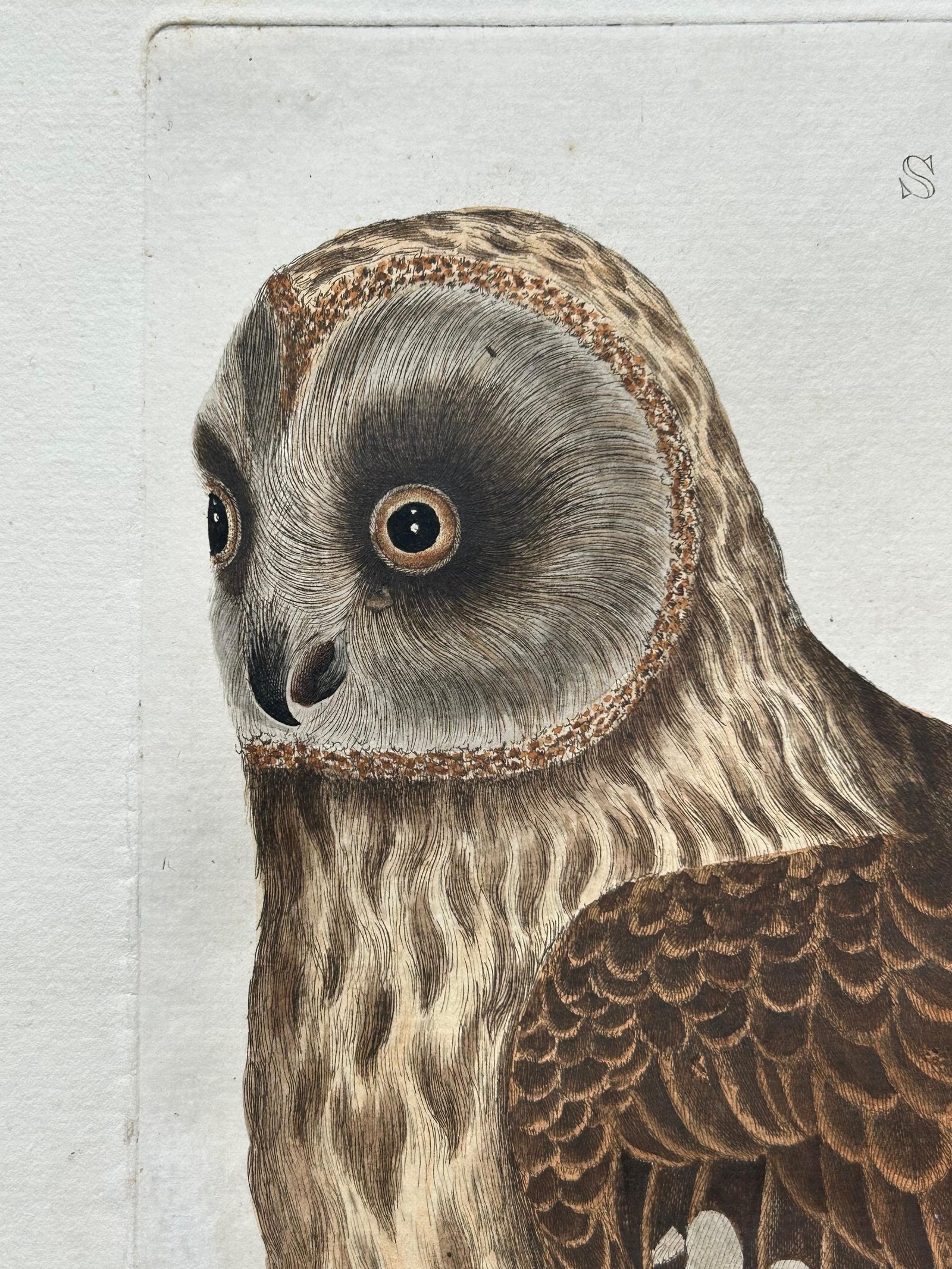
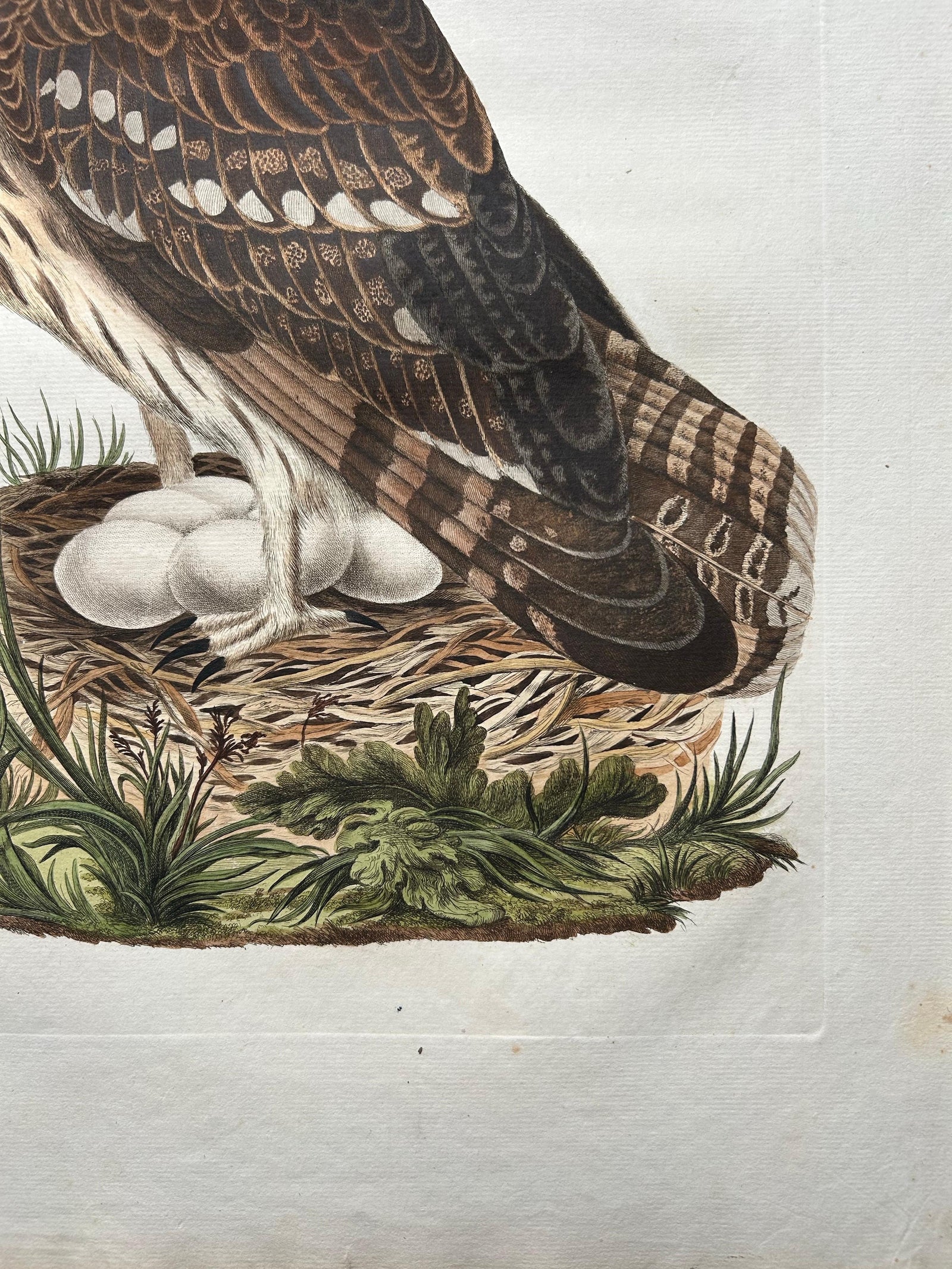
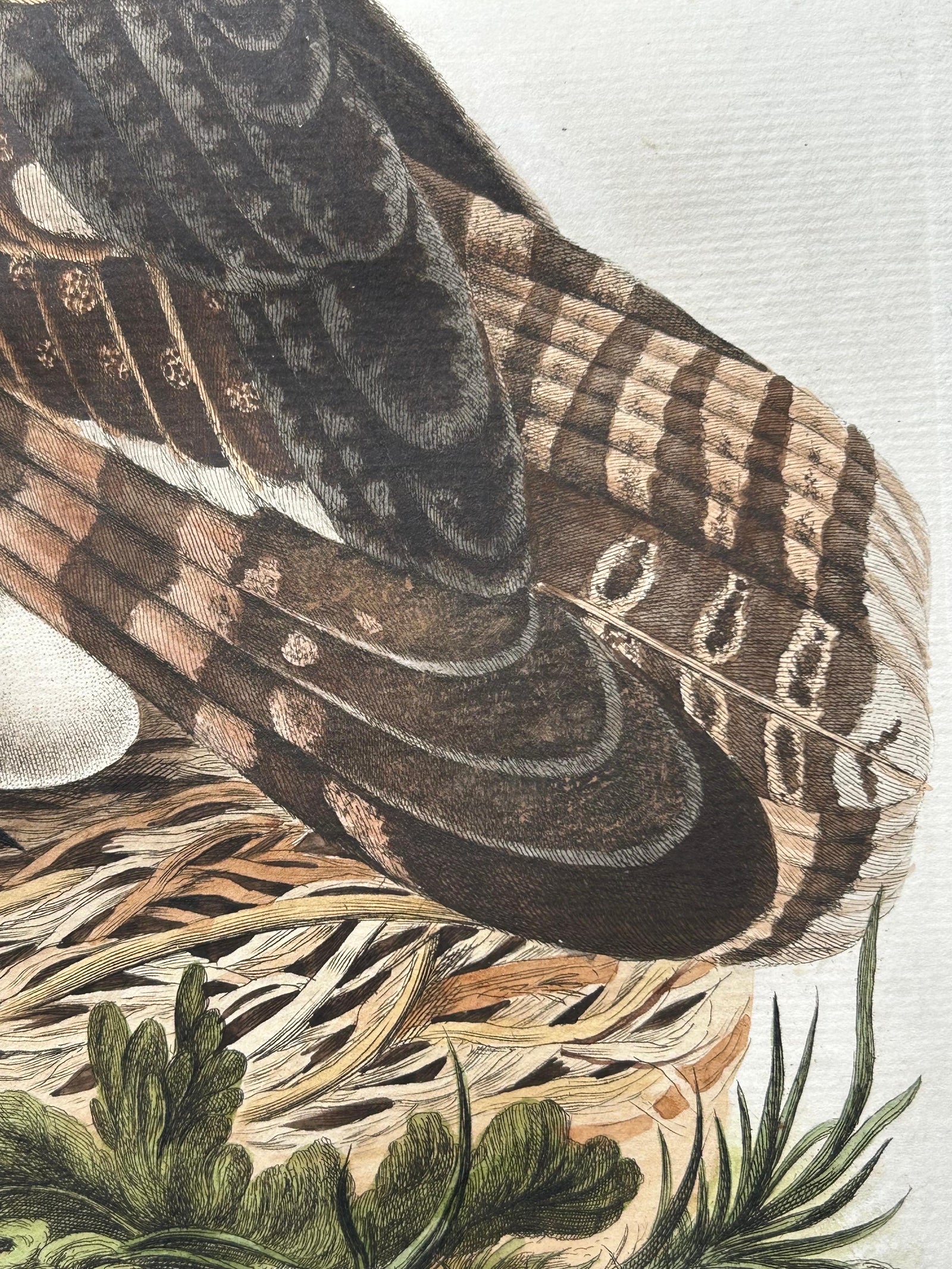
Close-ups
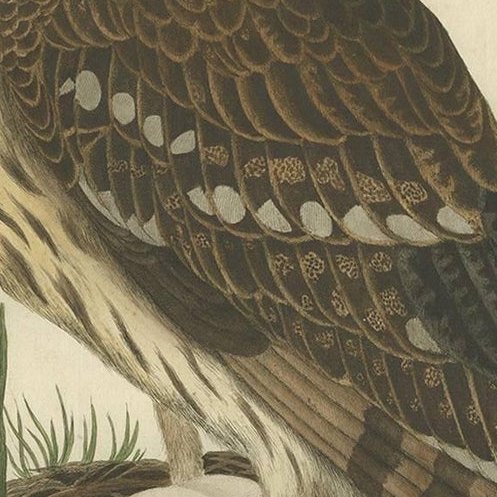
Framed and on the wall
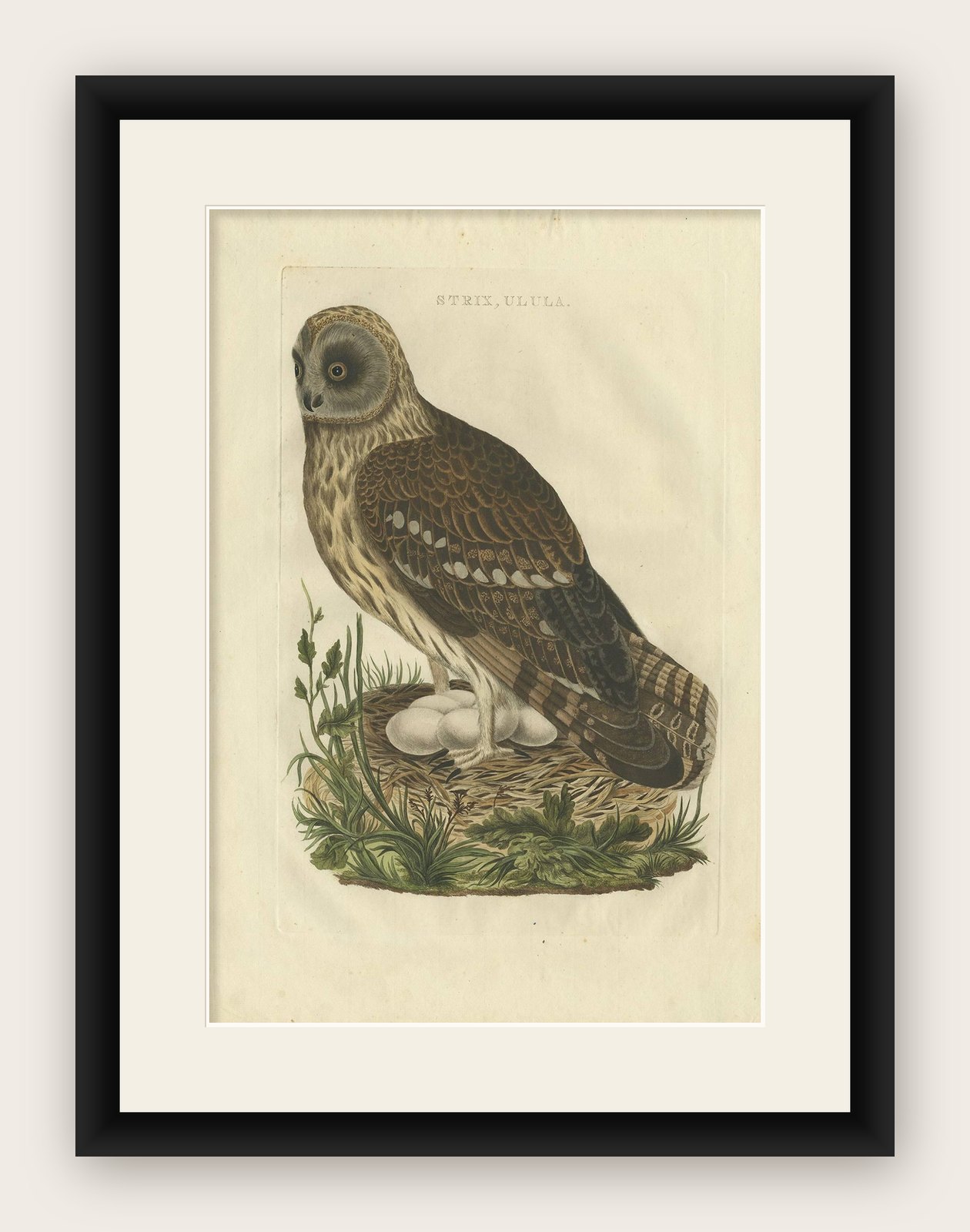
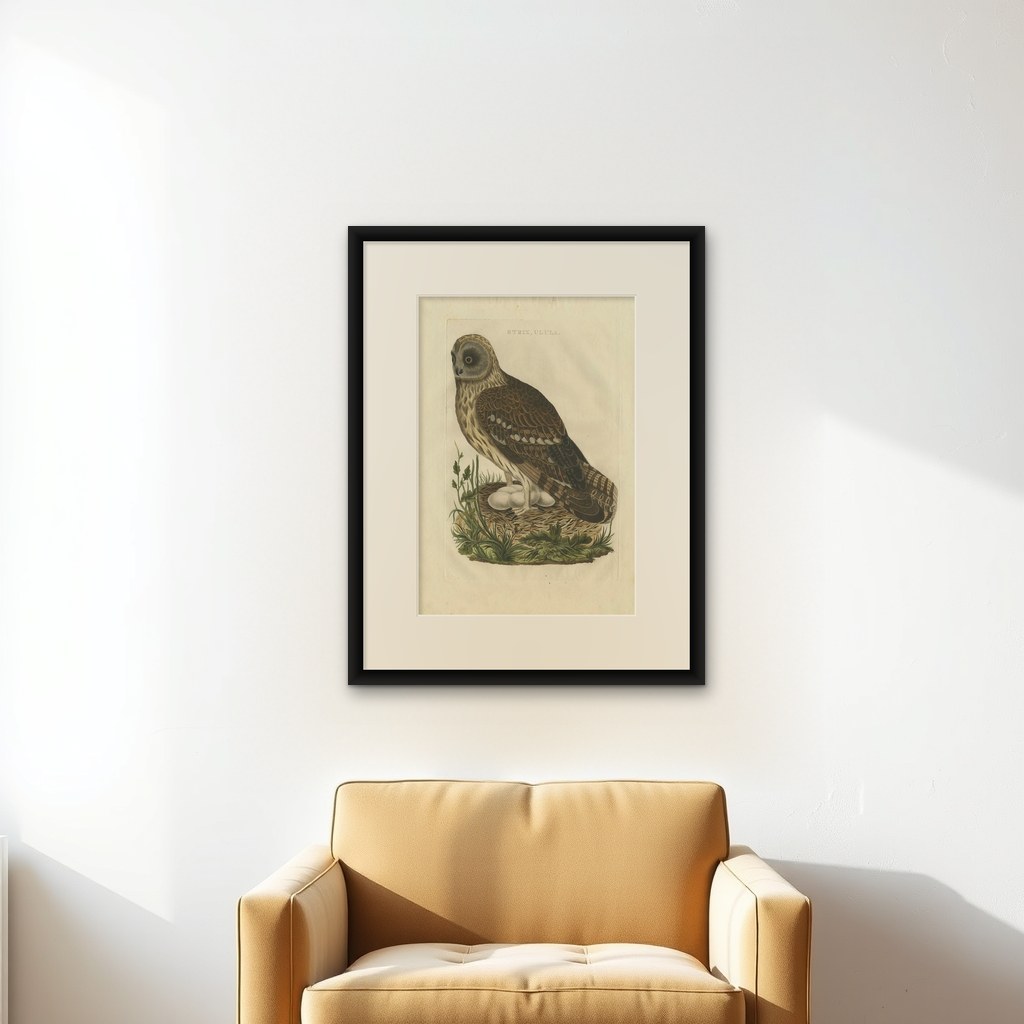
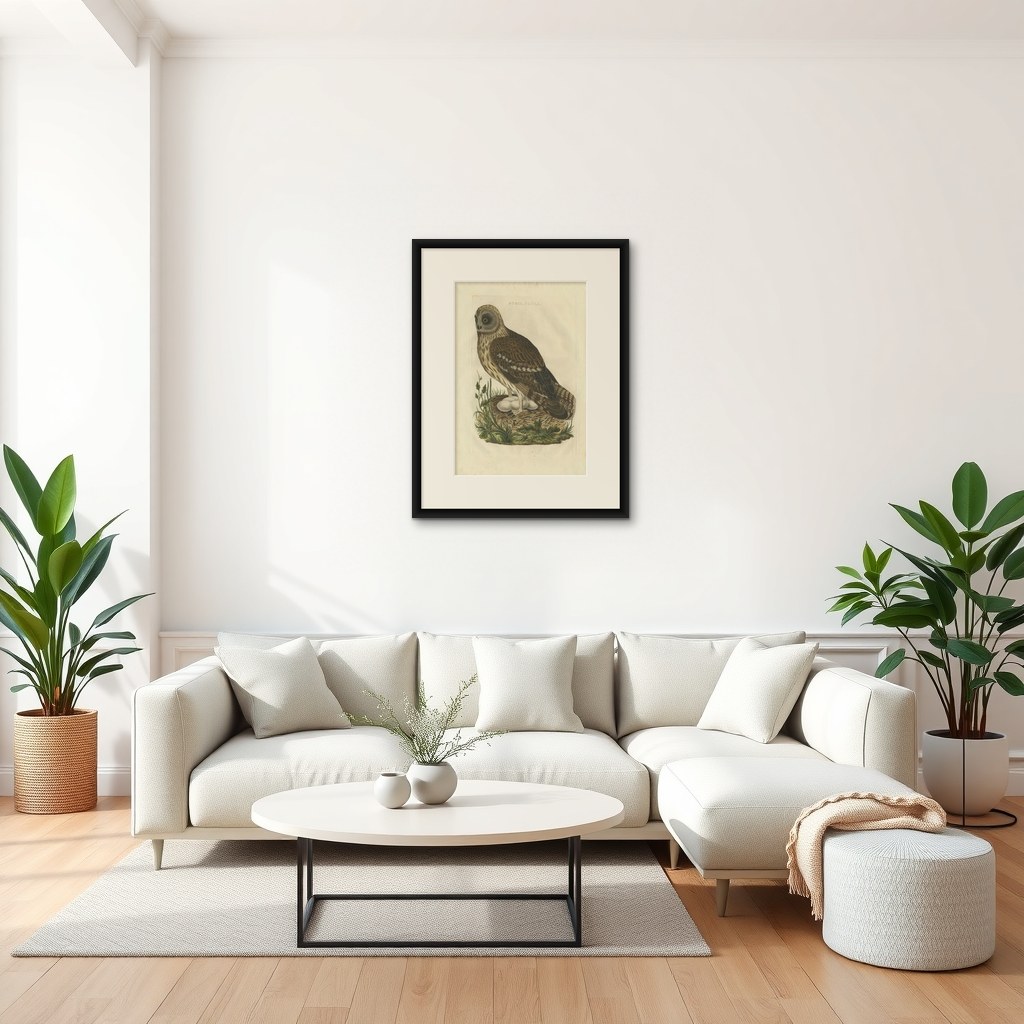
Frame and rooms are illustrations of how the print could look; the description says what is included.
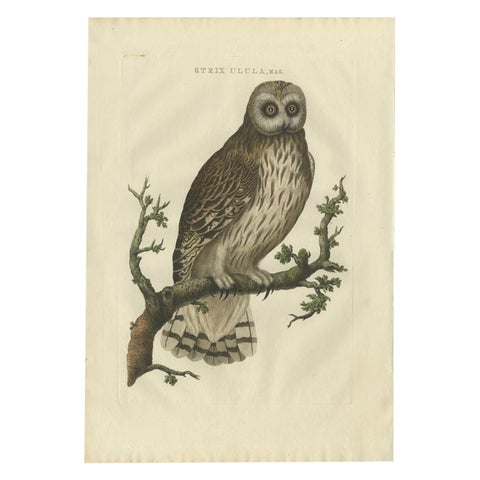
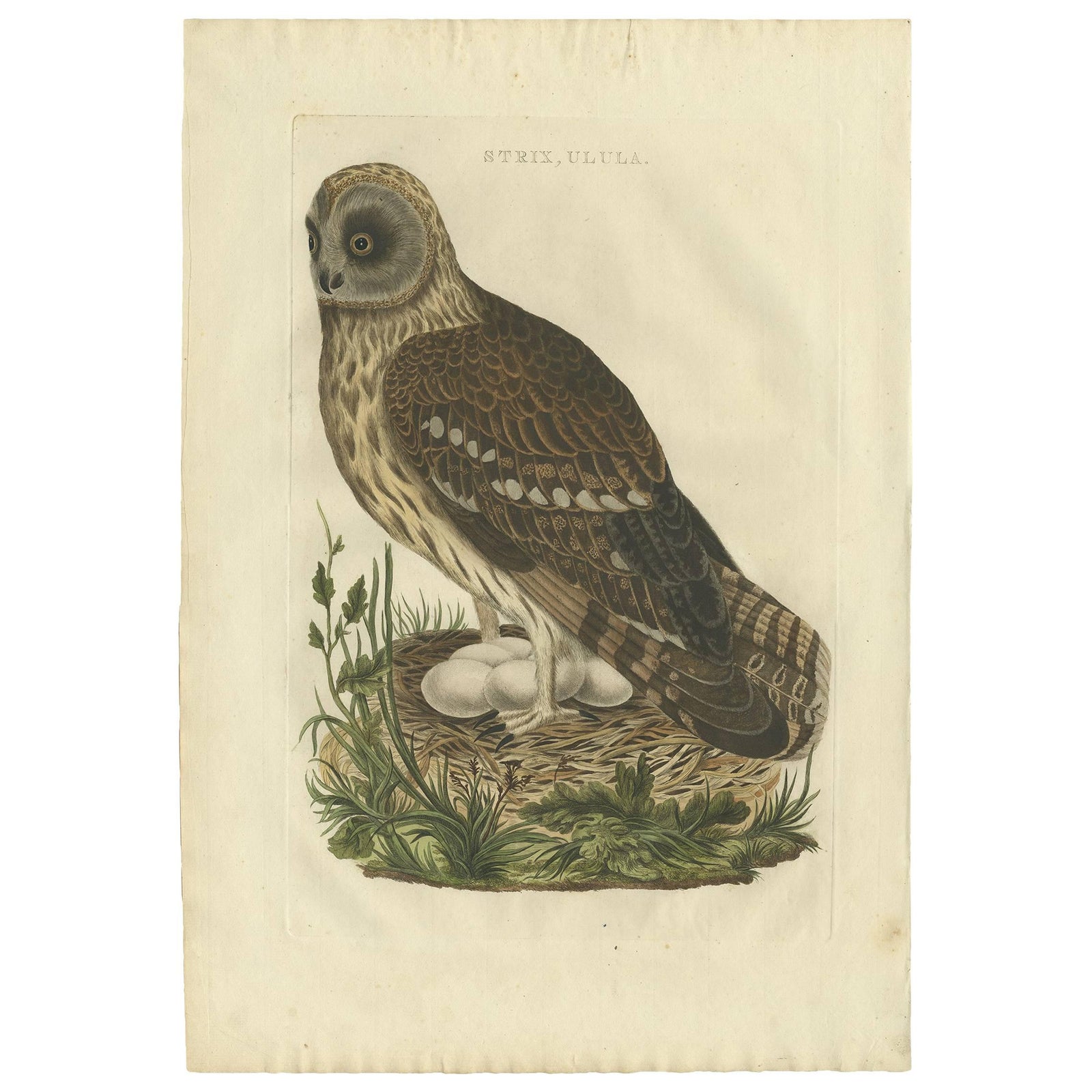
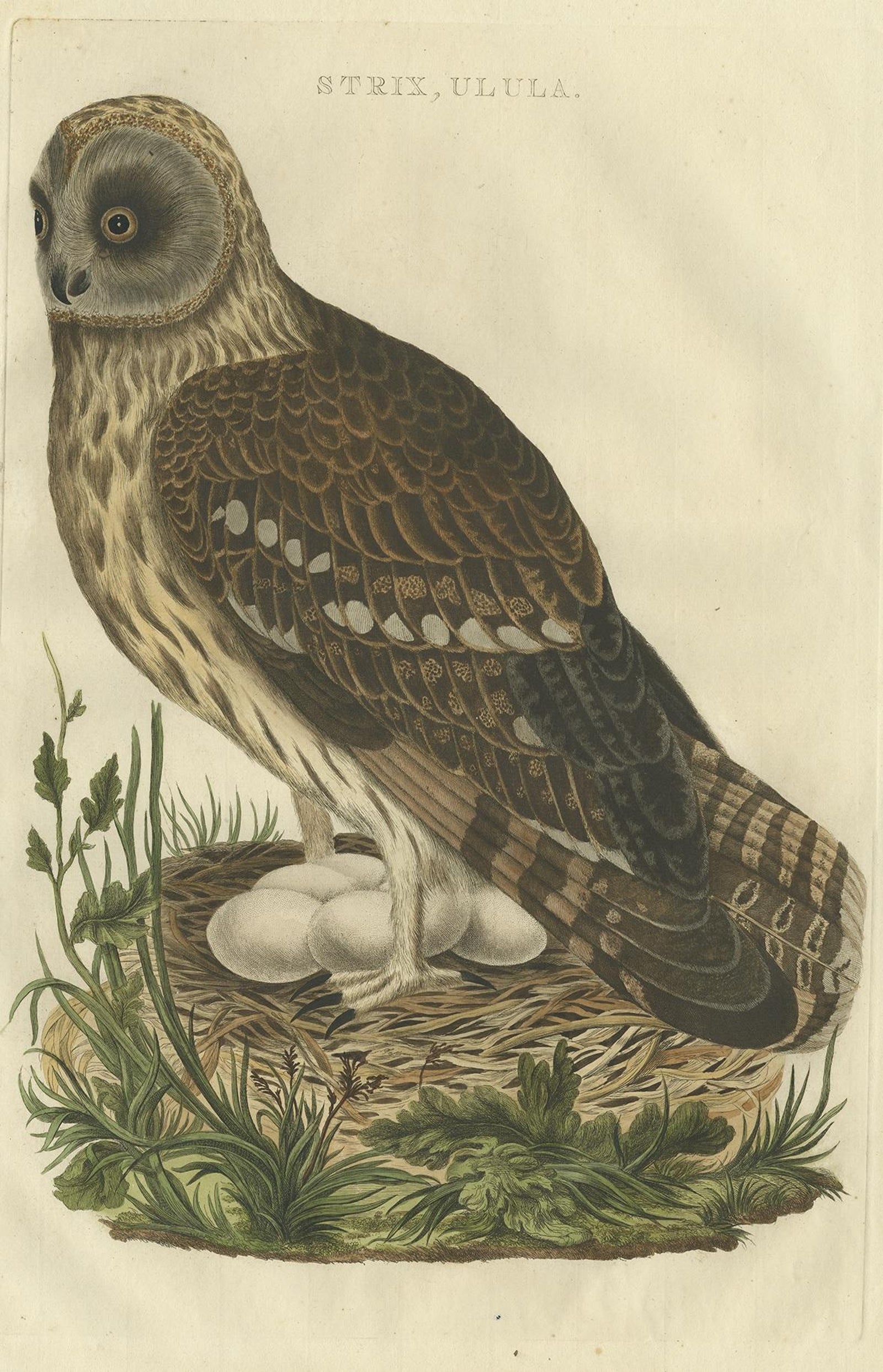
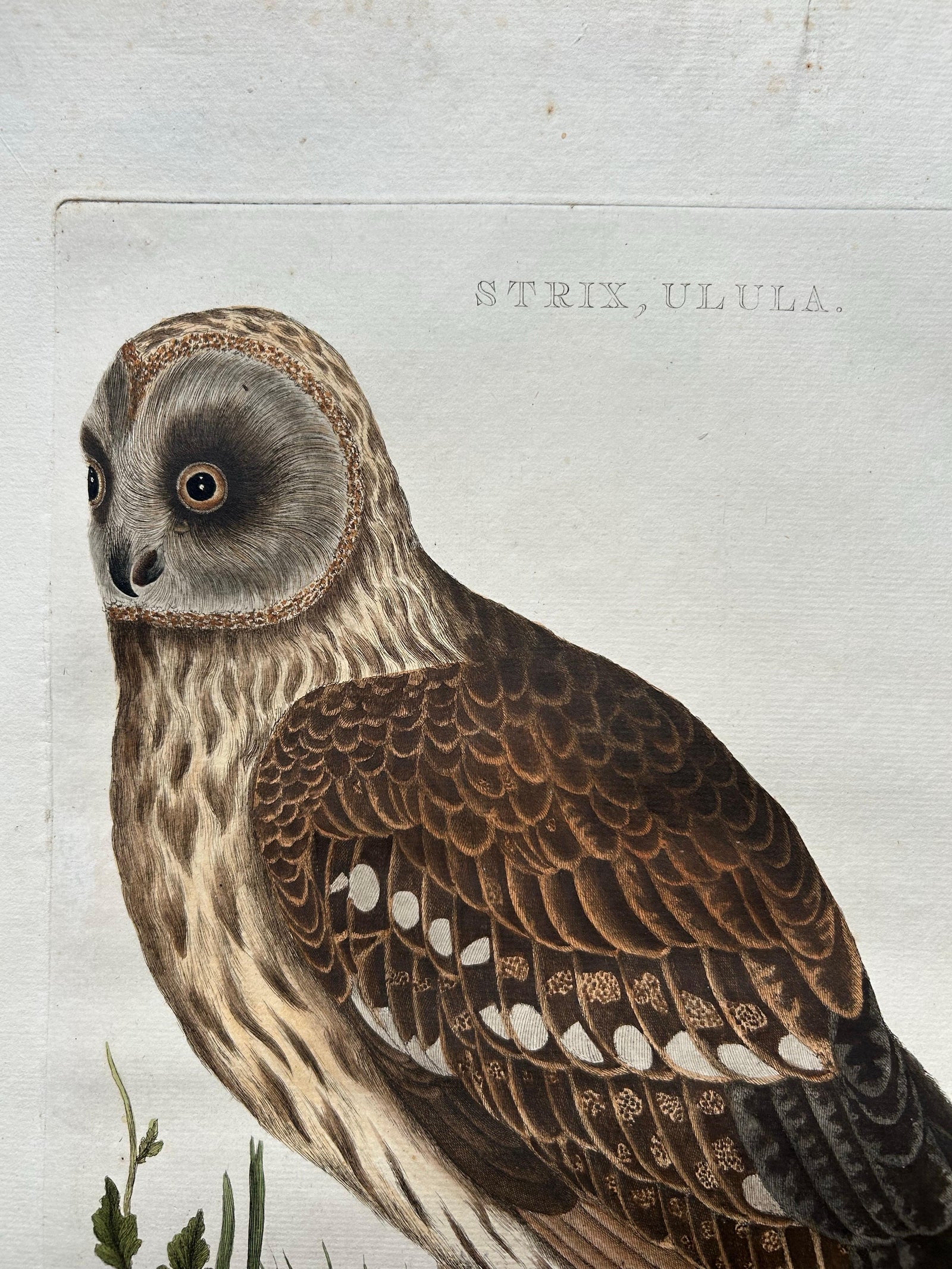
Strix Ulula, Hand-Coloured Engraving of Short-Eared Owl with Eggs, 1770–1829
£1,615 ($2,140, €1,900)
Period original, not a reproduction.
Shipped from the Netherlands, flat, insured and tracked, worldwide. Returns accepted within 14 days.
- Date
- 1770
- Size
- 21.1 × 14.6 in (53.5 × 37 cm)
- Technique
- Engraved
- Condition
- Good. Strong paper with light age toning and occasional minor handling marks in margins, well away from the image, plus some marginal foxing. Plate mark clearly visible. Original hand-colouring fresh, text pages clean and well preserved.
- Period
- 18th century
- Artist or book
- Nozeman and Sepp
- Section
- Birds
- Reference
- f_10821163
Strix Ulula, Hand-Coloured Engraving of Short-Eared Owl with Eggs, 1770–1829
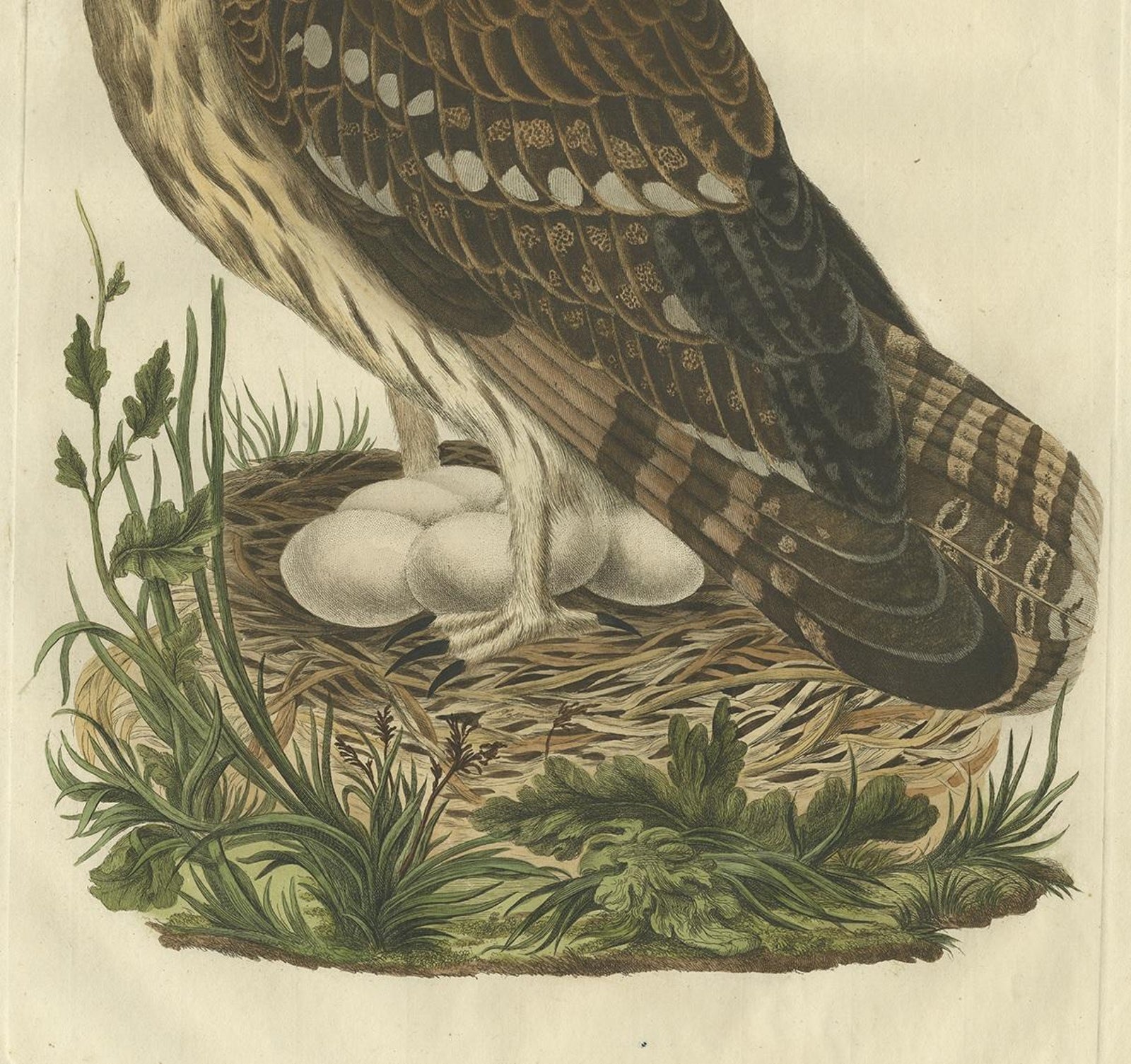
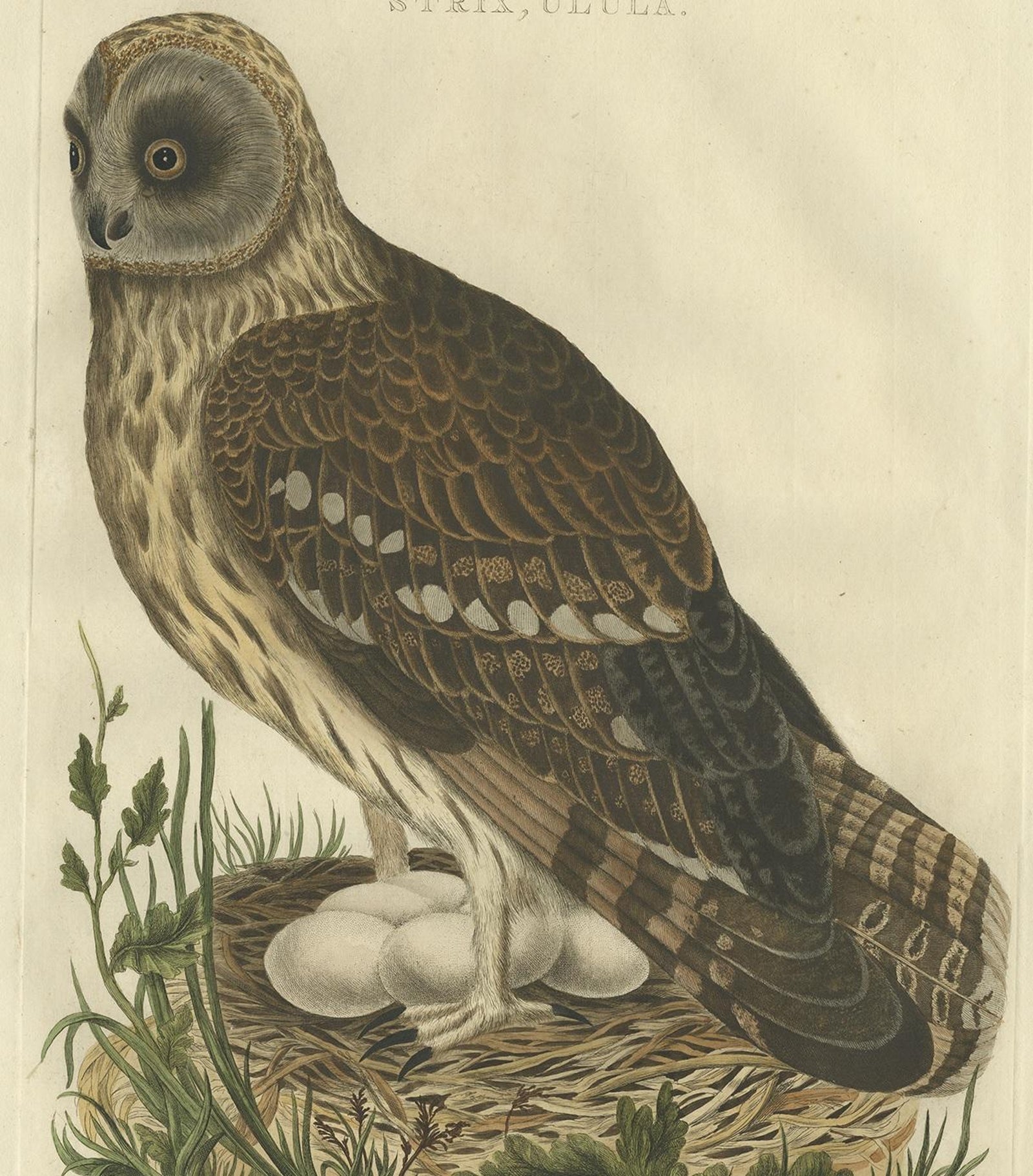
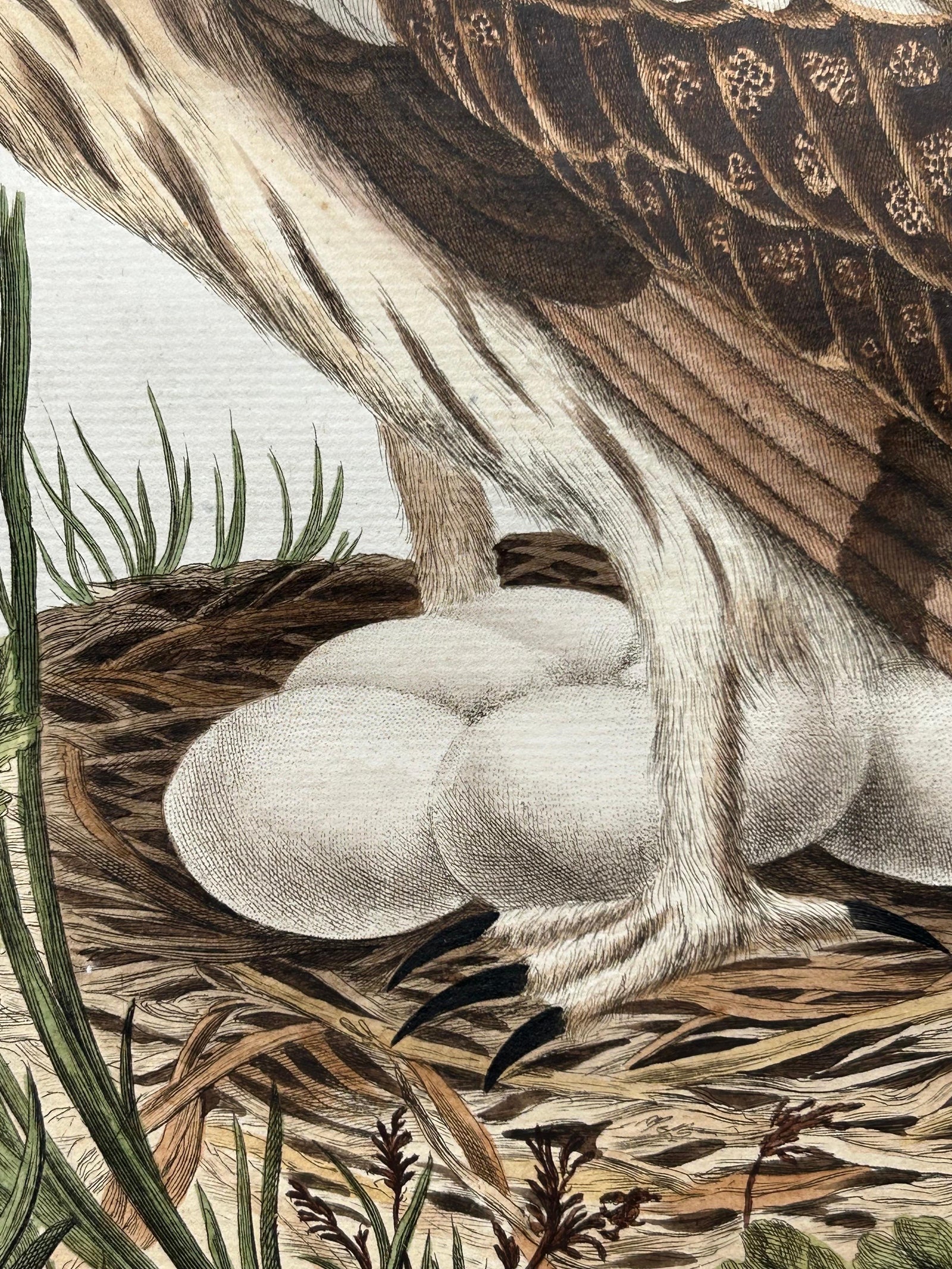
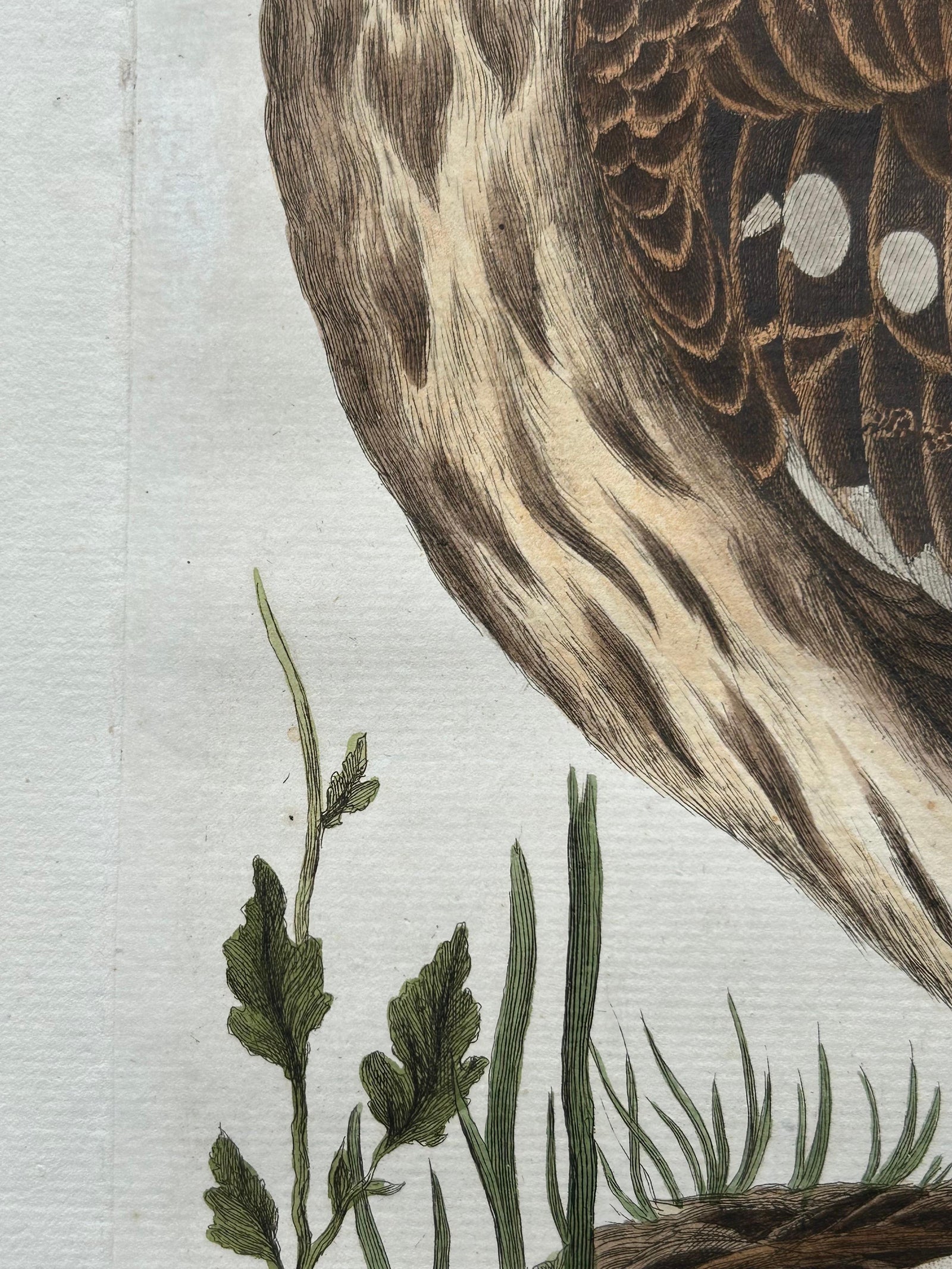
This fine hand-coloured engraving, titled Strix, Ulula, presents a detailed and lifelike depiction of an owl identified in the 18th-century Dutch text as the Velduil, or short-eared owl (Asio flammeus). The bird is shown standing on the ground among grass and plants, guarding its clutch of five eggs, a naturalistic portrayal characteristic of the celebrated ornithological series Nederlandsche Vogelen; volgens hunne huisdouding, aert, en eigenschappen beschreeven. Published in Amsterdam between 1770 and 1829 by Cornelius Nozeman, Martinus Houttuyn, and Jan Christiaan Sepp, this monumental work was the first comprehensive study of Dutch birdlife. Each plate depicts the species in a setting that reflects its natural environment, often close to life size, and accompanied by scholarly descriptive text.
Owls of the genus Strix are medium to large, robustly built birds of prey with a powerful presence and a largely nocturnal lifestyle. They are noted for their lack of ear tufts, rounded heads, and penetrating gaze. The short-eared owl in particular is a ground-nesting species, often found in open fields, grasslands, and marshes, and is a skilled hunter of rodents. The Dutch text included with this plate describes its behaviour, feeding habits, and nesting patterns, noting its preference for hunting at dusk and during the night, and its remarkable efficiency in controlling rodent populations.
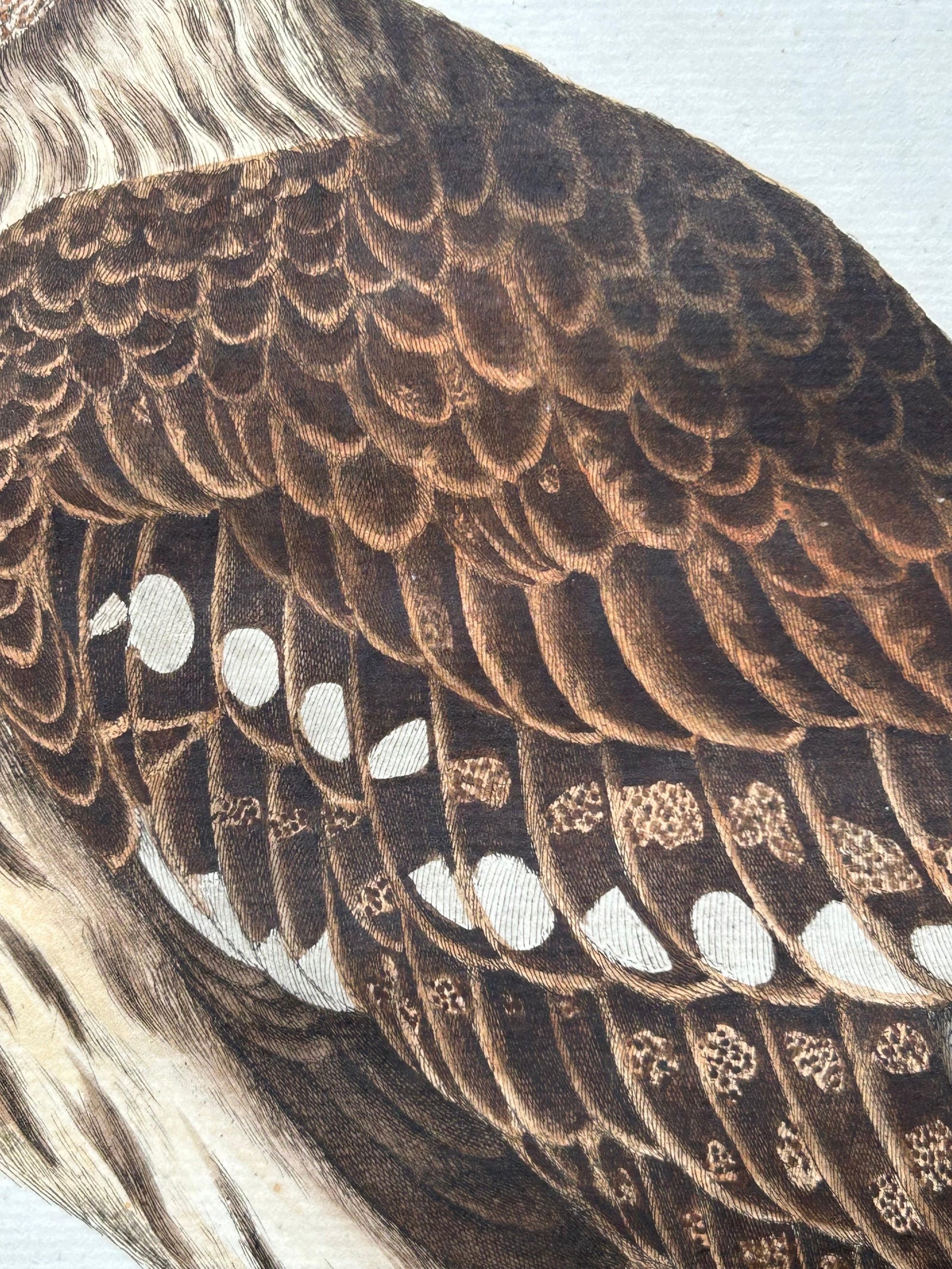
This engraving displays meticulous detail in the feather patterns, from the mottled browns of the wings to the barred tail feathers and the contrasting pale facial disk. The composition reflects the 18th-century scientific ideal of combining beauty with accuracy, making it both an important zoological record and a work of art. The two original pages of letterpress text in Dutch describing the species in depth, including observations on its physical characteristics, nesting, and seasonal behaviour, are included with this print, adding further historical and scholarly value.
Condition: Very good condition. Strong paper with light age toning and occasional minor handling marks in margins, well away from the image, plus some marginal foxing. Plate mark clearly visible. Original hand-colouring fresh; text pages clean and well preserved.
Framing tips: A dark wood or walnut frame paired with a warm off-white or light cream archival mat will complement the natural tones of the owl and its surroundings. For a more dramatic presentation, a double mat with a thin dark brown inner mount will help draw the viewer’s focus to the engraving.