Close-ups
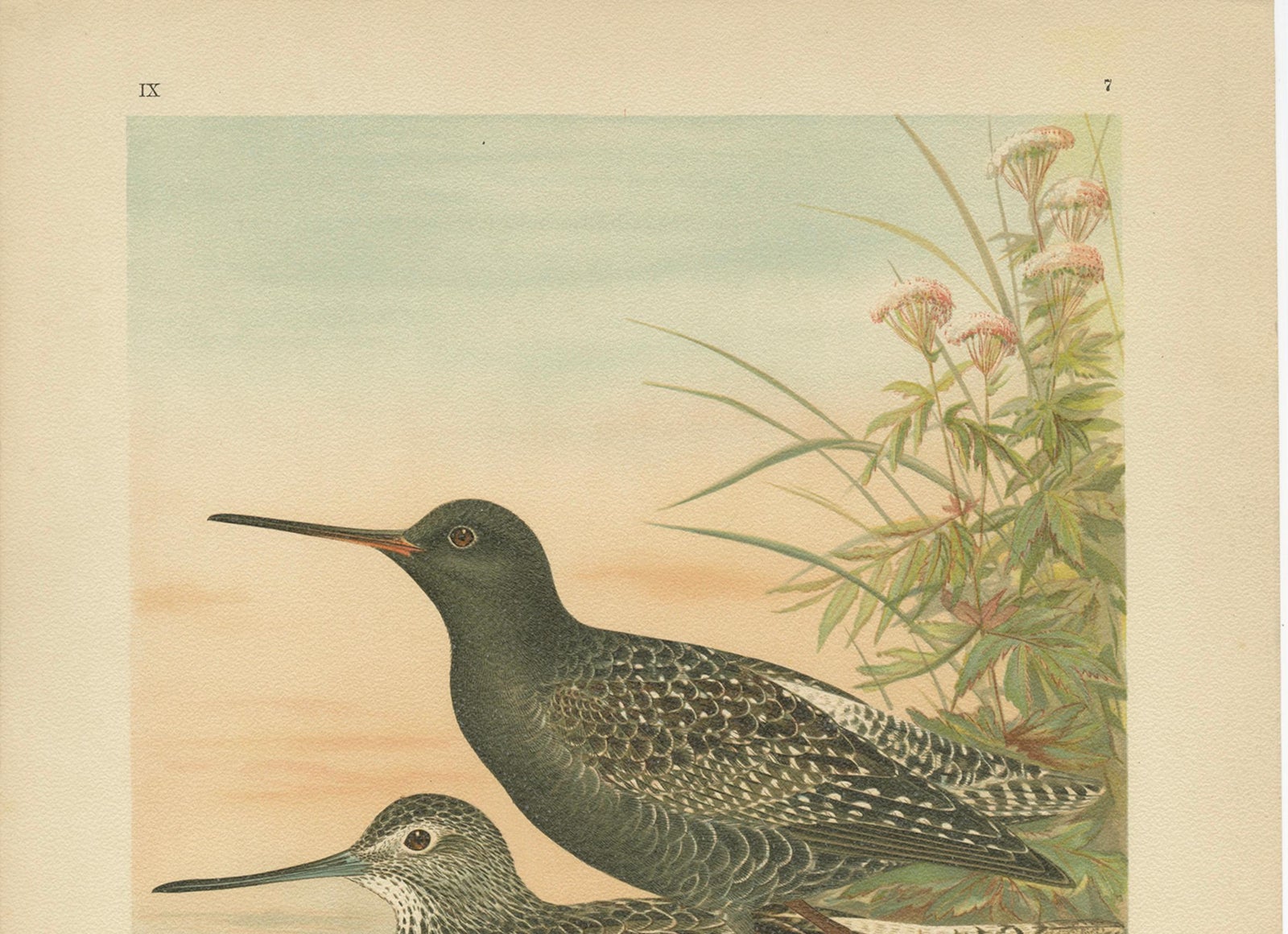
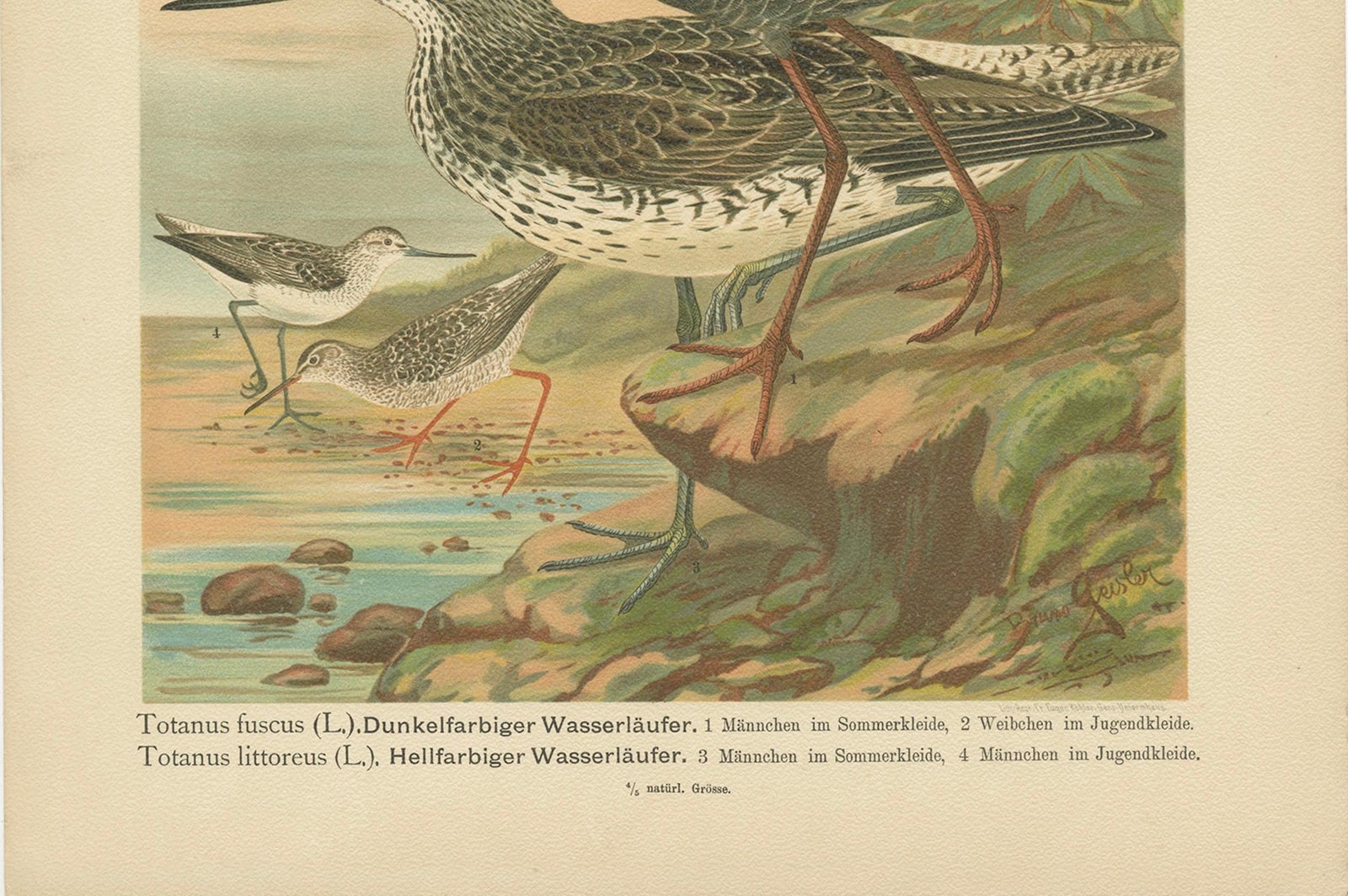
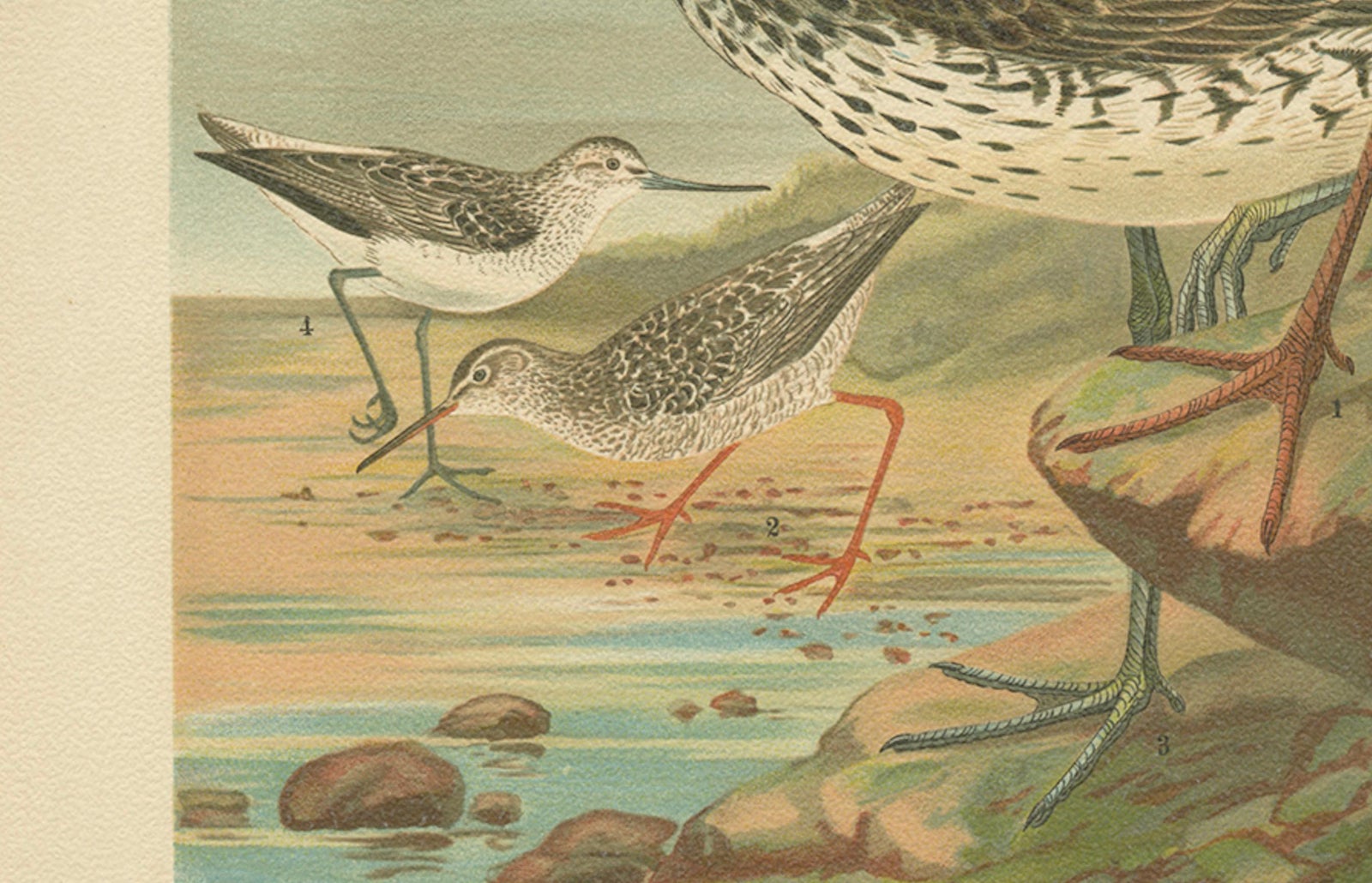
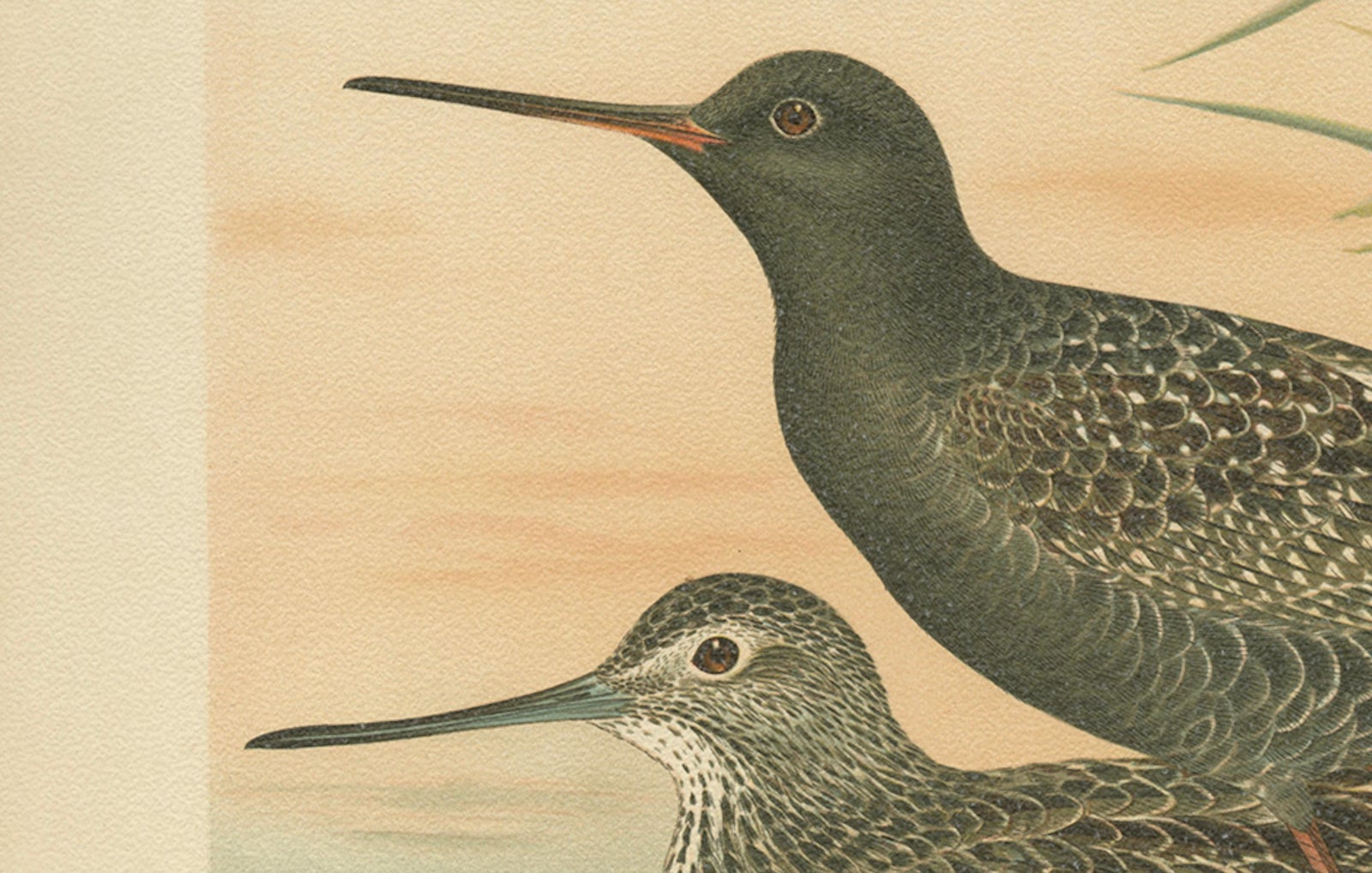
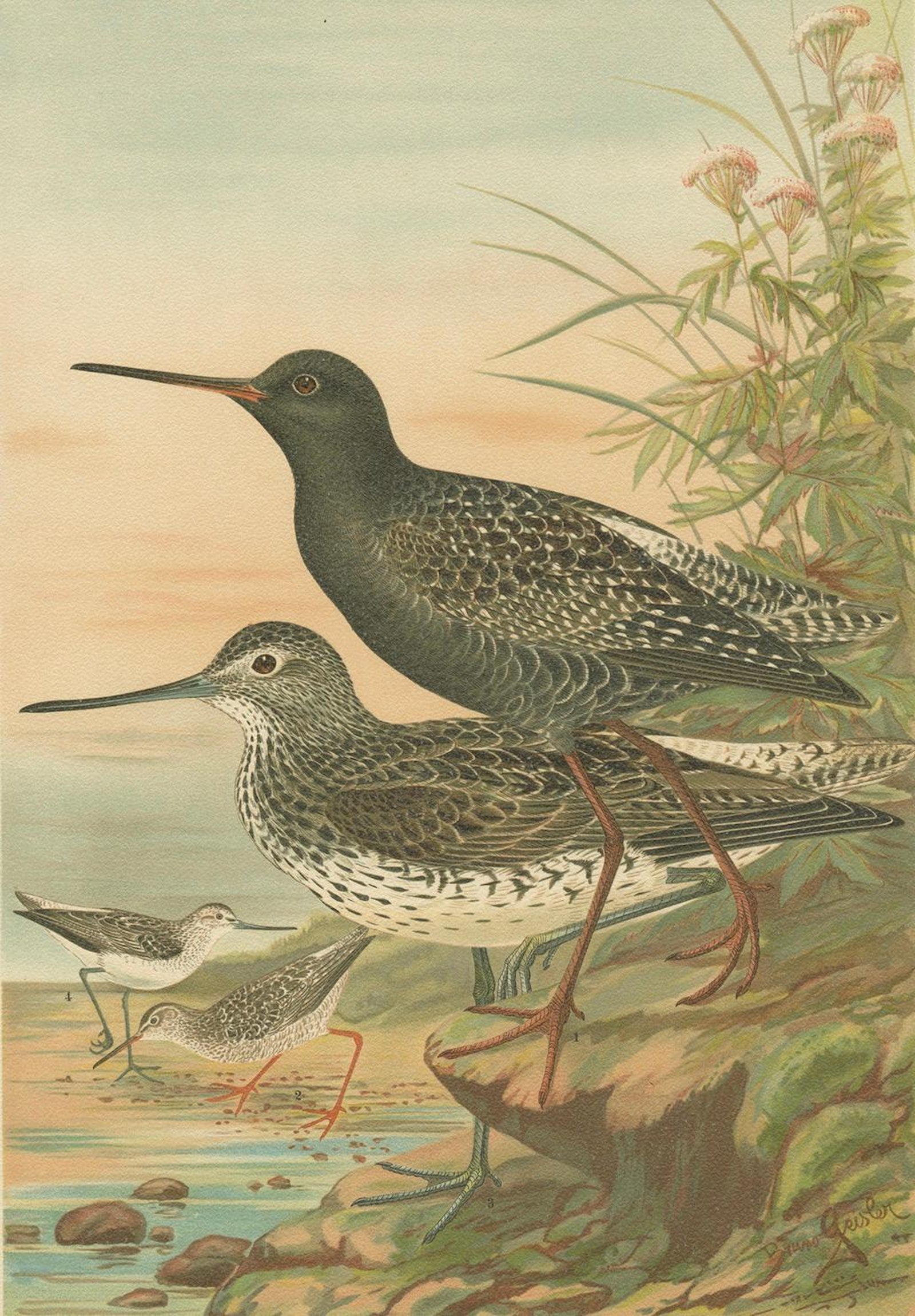
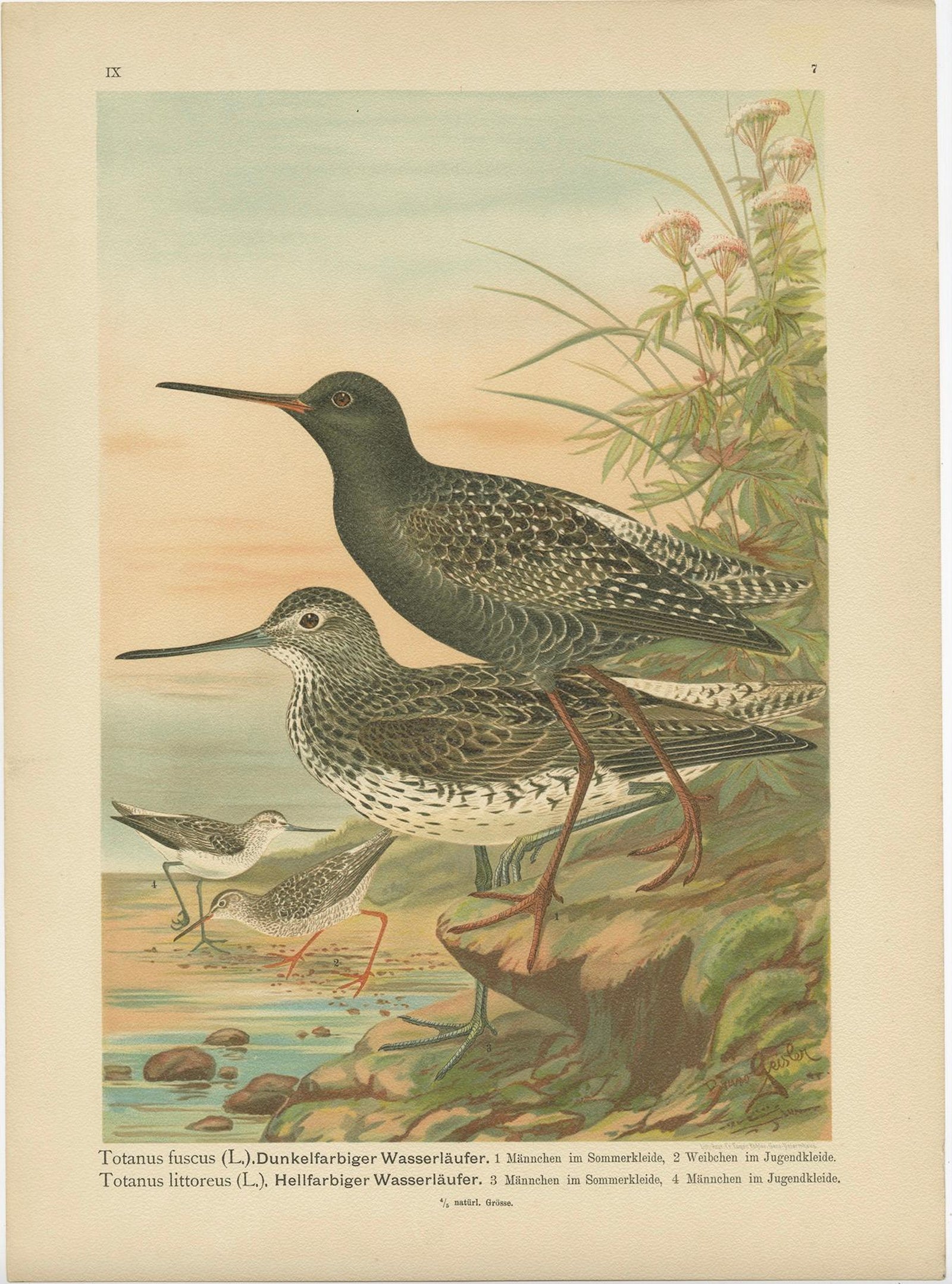
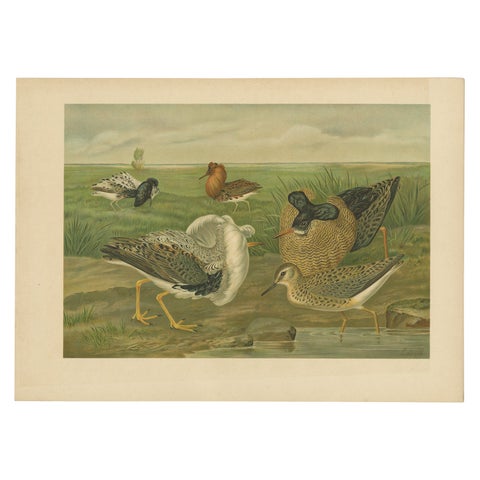
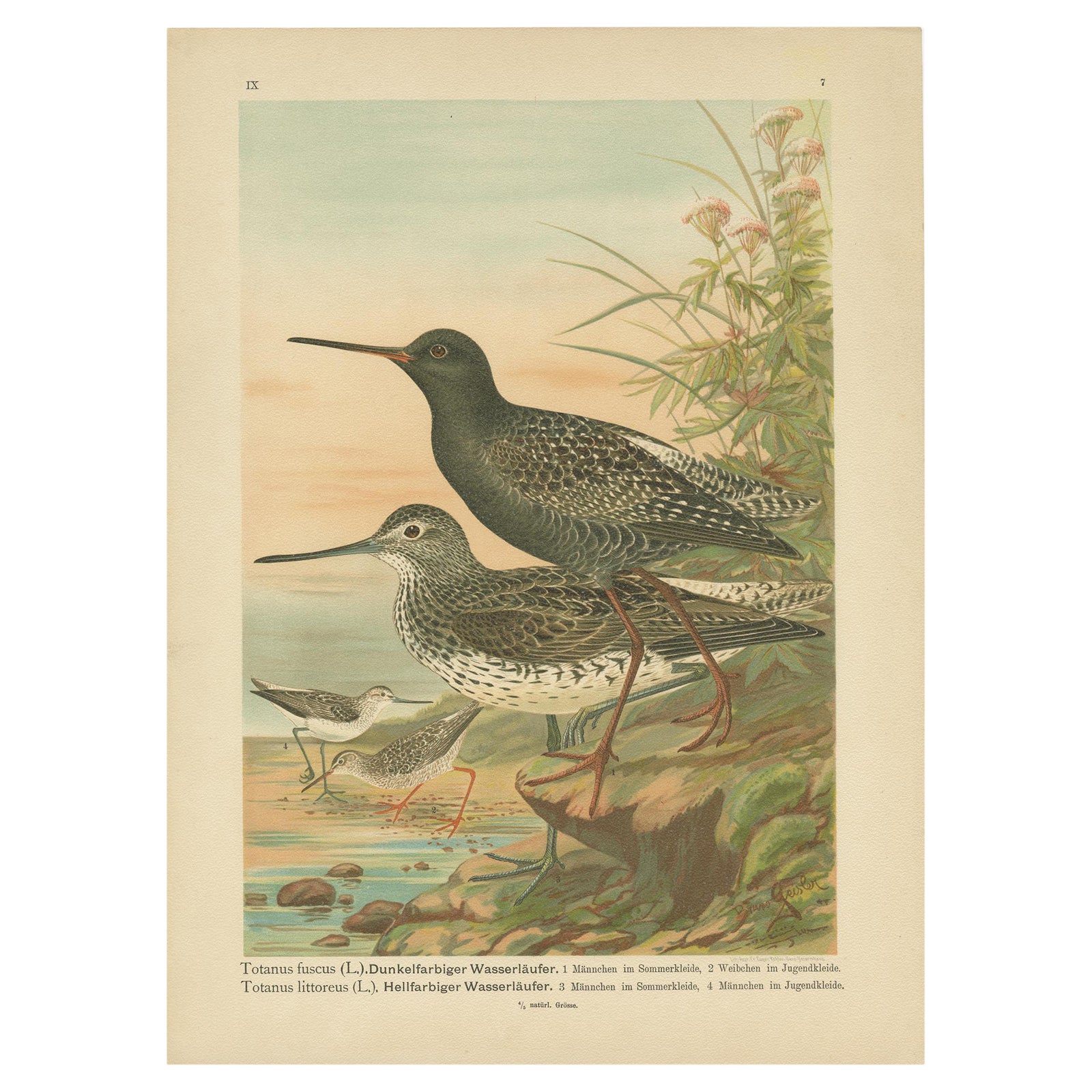
Spotted Redshank and Greenshank, Antique Shorebird Lithograph c.1895
$135 (£100, €120)
Period original, not a reproduction.
Shipped from the Netherlands, flat, insured and tracked, worldwide. Returns accepted within 14 days.
- Date
- 1895
- Size
- 15.7 × 11.4 in (40 × 29 cm)
- Condition
- Good. General age-related toning. Minor wear and foxing, blank verso. Good condition with age spotting in the margins. Please study image carefully.
- Period
- Late 19th century
- Section
- Birds
- Reference
- f_45367752
- Colour
- Printed colour
What the condition grades mean
- Excellent
- Bright and clean, with no faults worth mentioning.
- Very good
- Only light signs of age, such as faint toning.
- Good
- Normal signs of age for a sheet of this period: toning, some foxing, small marks or neat old repairs.
- Fair
- Clear faults such as staining, tears or repairs, priced to match.
Every fault we see is written in the condition note, and the whole sheet is shown uncropped in the photos.
Spotted Redshank and Greenshank, Antique Shorebird Lithograph c.1895
This richly colored antique ornithological print depicts two closely related European wading birds: the Spotted Redshank (*Totanus fuscus*) and the Common Greenshank (Totanus littoreus). The German labels at the bottom identify them as “Dunkelfarbiger Wasserläufer” (dark-colored wader) and “Hellfarbiger Wasserläufer” (light-colored wader), referring to their summer and juvenile plumages.
Printed around 1900 using chromolithography, a technique prized for its ability to reproduce subtle tonal variations, this plate was likely part of a larger scientific ornithology volume, possibly from a German or Central European bird atlas. The attention to natural detail and lifelike postures strongly suggest that the print was based on field observations, with the birds shown in a typical riverside habitat. Grasses and blooming wildflowers in the background frame the elegant forms of the birds as they wade, forage, and rest at the water’s edge.
The Spotted Redshank, illustrated here in its striking black summer plumage and also in juvenile form, is identifiable by its slightly upturned, red-based bill and longer legs. The Common Greenshank is presented with a contrastingly pale underside and olive-toned legs, also shown in both mature and immature stages. The dynamic composition not only showcases the morphological differences between the species, but also emphasizes the seasonal changes that made these birds of special interest to both scientists and birdwatchers.
Signed in the lithographic plate by the artist, the image is a compelling blend of scientific precision and decorative charm. These types of prints were often used for educational purposes but are now highly valued as decorative artworks.
Condition and framing tips:
Very good condition with soft toning and minimal foxing near the margin. Frame in a warm wood or soft gold frame with a light cream or pale sage mat to accentuate the delicate hues and natural setting of these beautifully rendered waders.