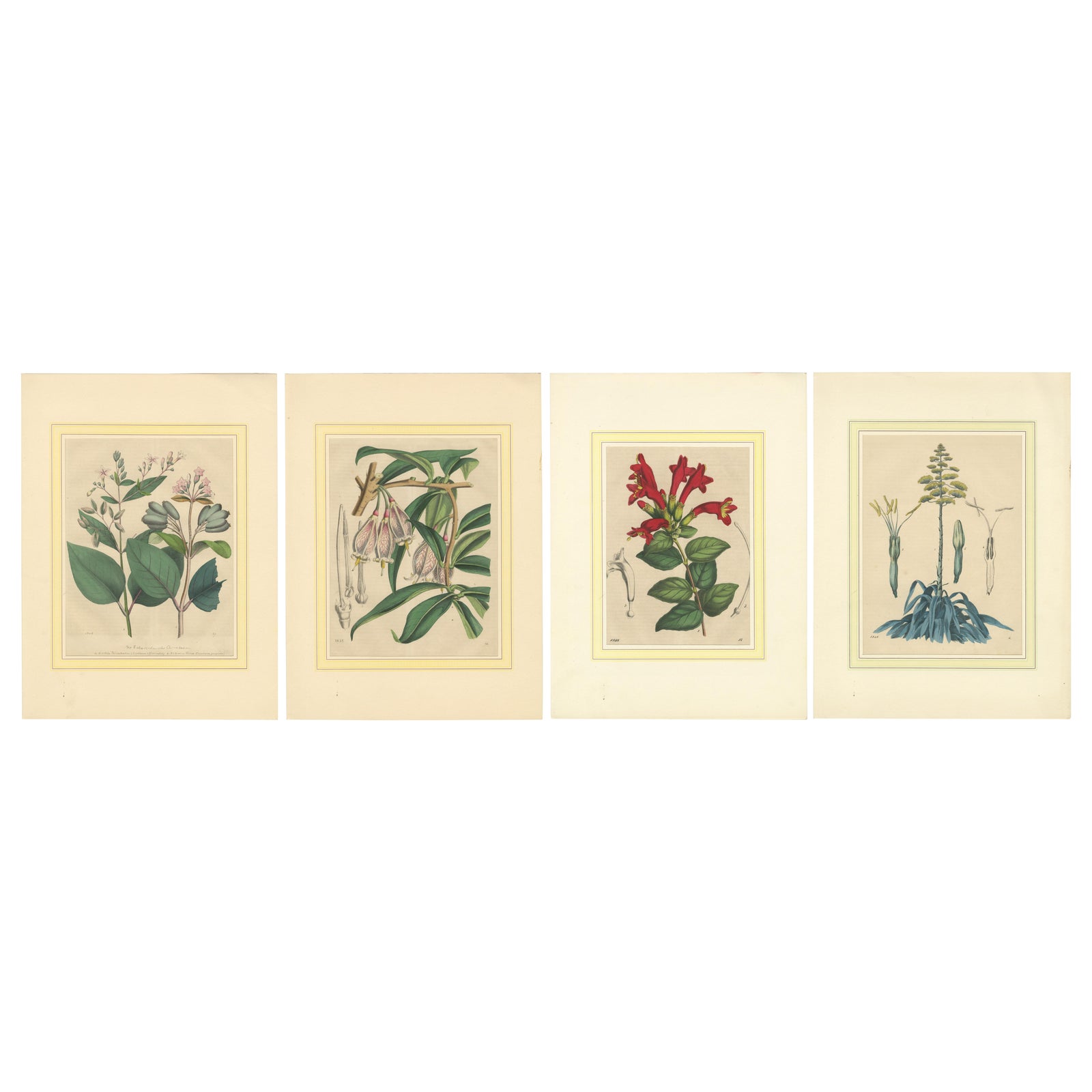
Close-ups
Framed and on the wall
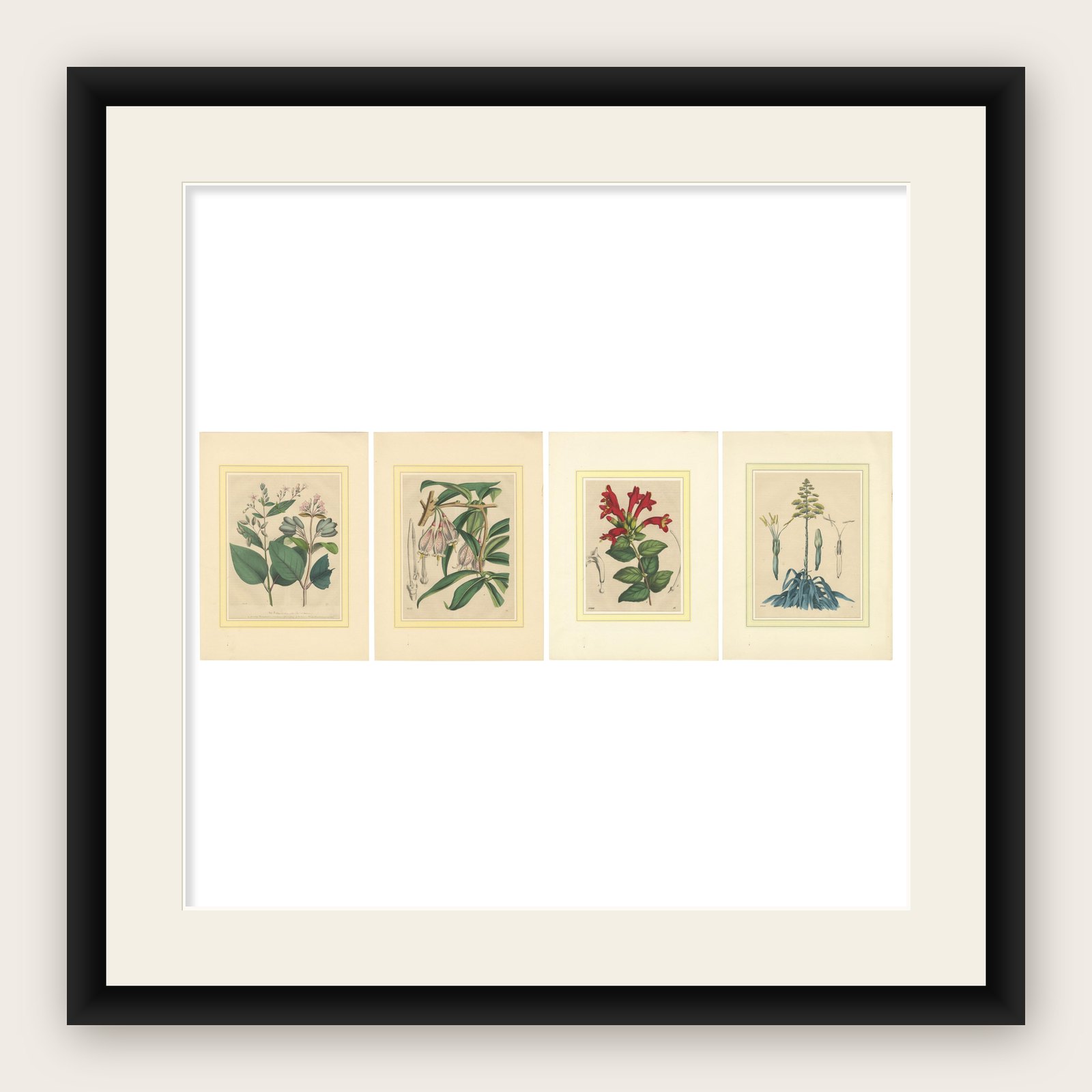


Frame and rooms are illustrations of how the print could look; the description says what is included.
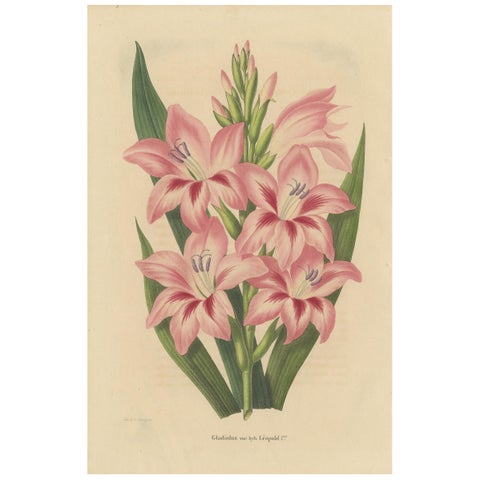
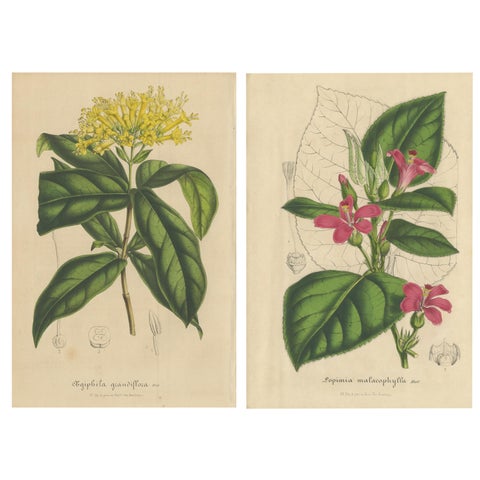
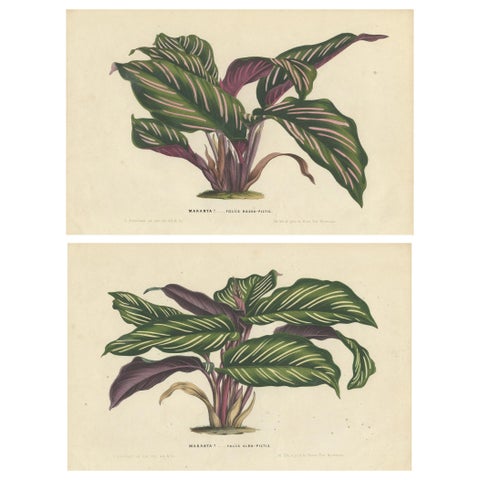
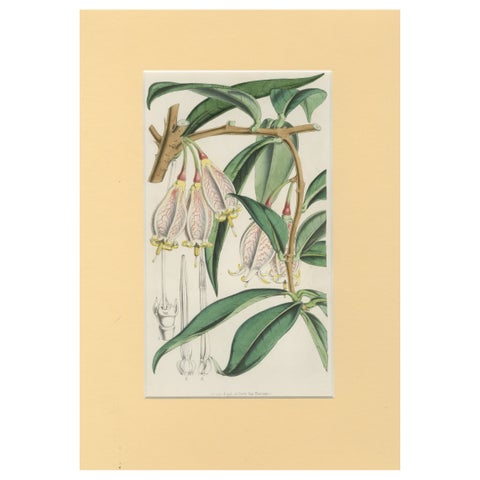
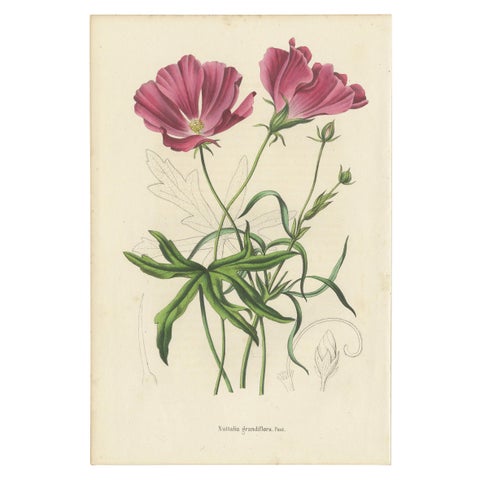
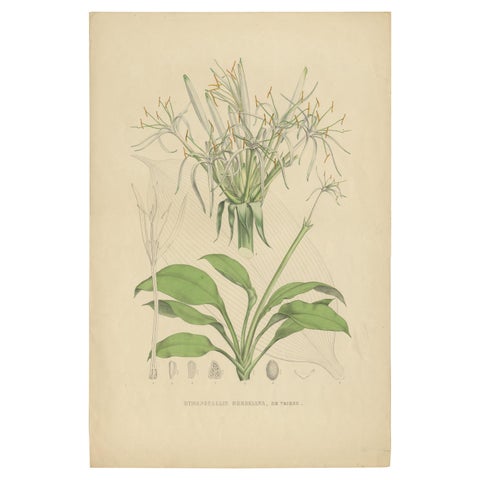
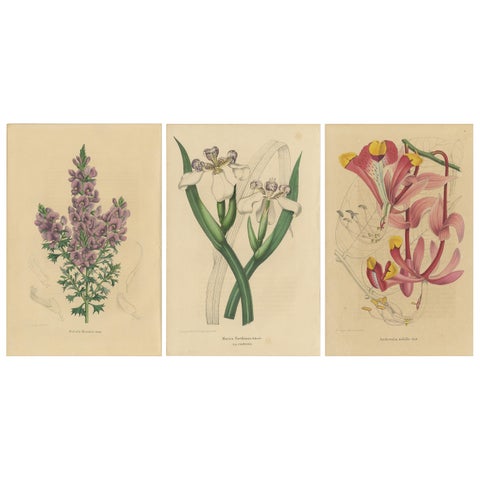
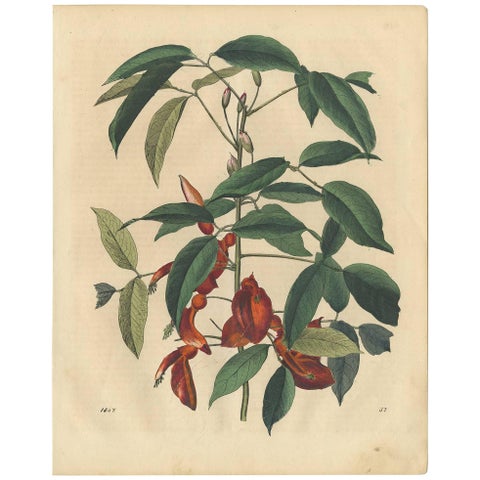
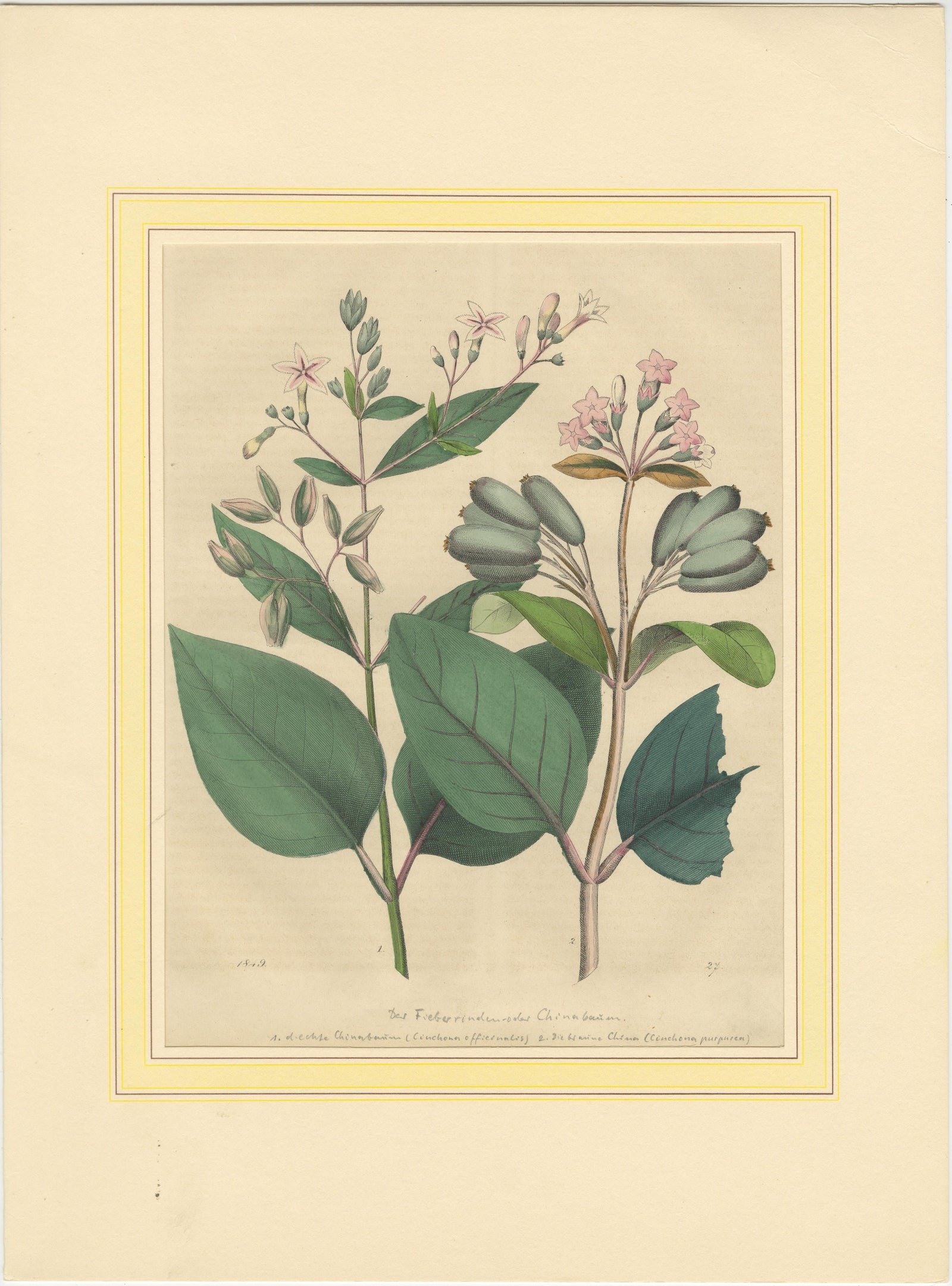
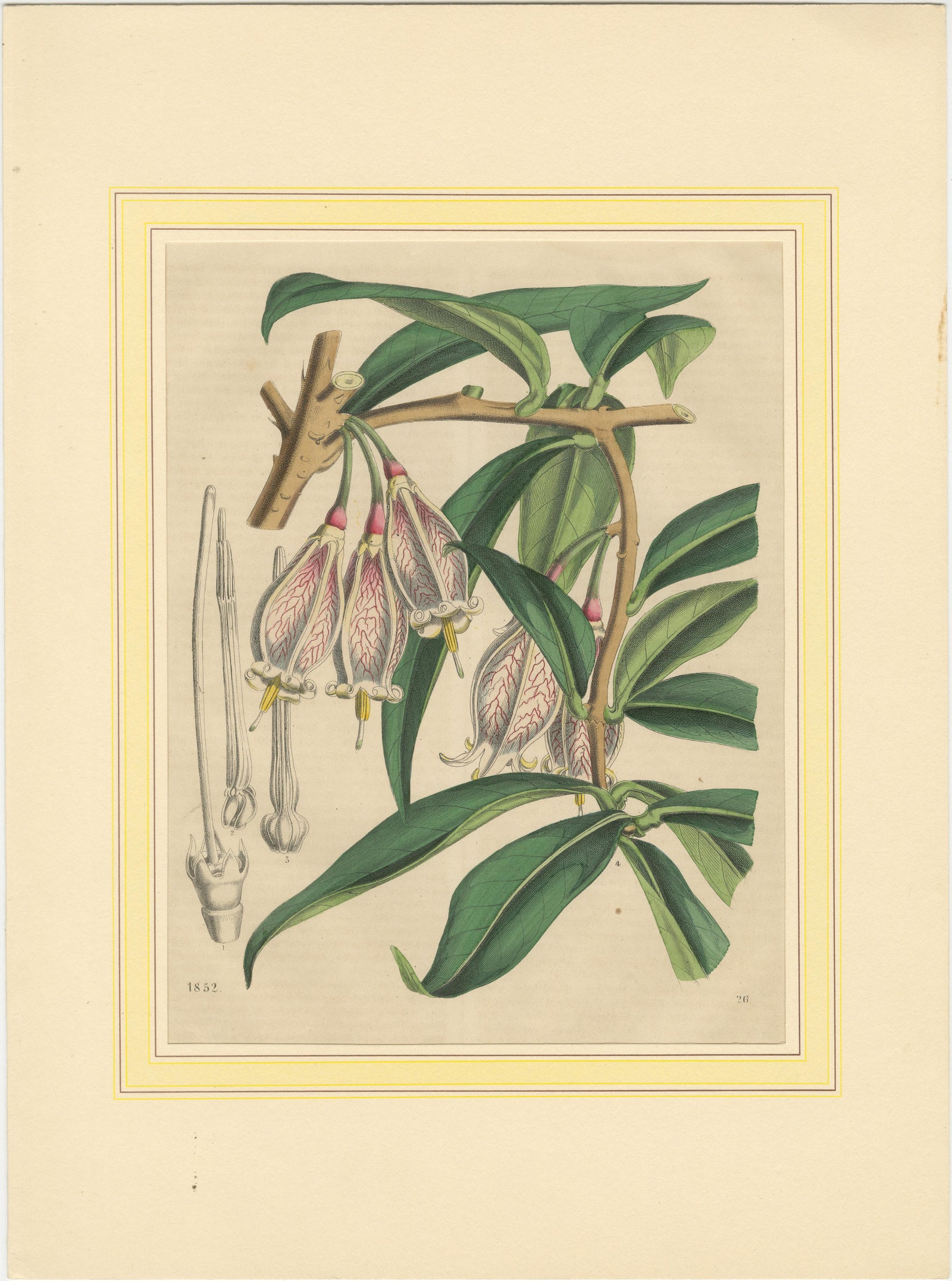
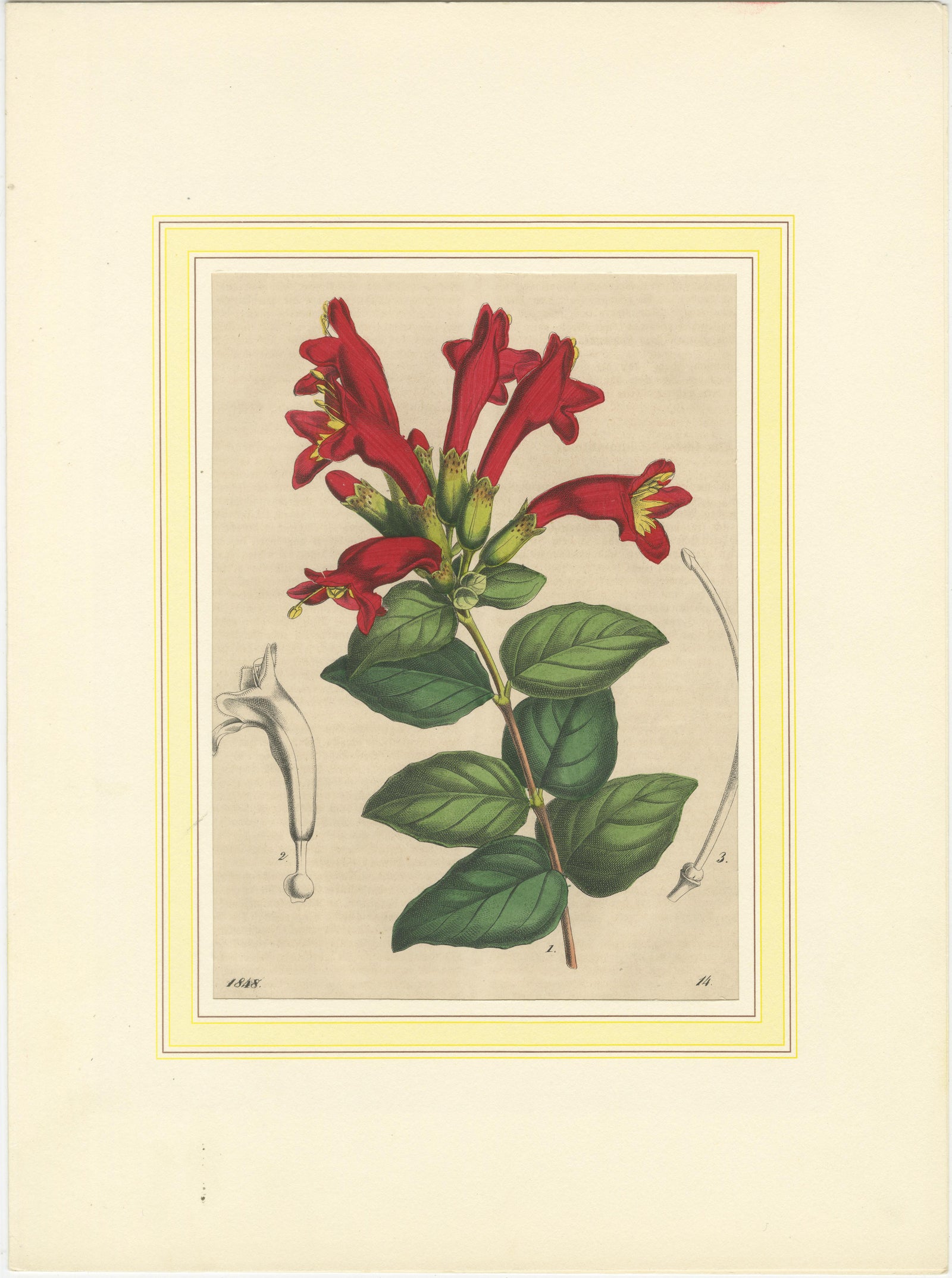
Set of Four Hand-Colored Botanical Prints from Book of Worlds, 1848
€240 ($270, £205, €240)
Period original, not a reproduction.
Shipped from the Netherlands, flat, insured and tracked, worldwide. Returns accepted within 14 days.
- Date
- 1848
- Size
- 13.7 × 10.2 in (34.8 × 25.9 cm)
- Condition
- Good. Good condition with strong plate marks, original hand-coloring intact and vibrant. Only minimal toning and faint foxing in margins. No tears, repairs, or creases. Paper remains firm.
- Period
- Early 19th century
- Section
- Botanical
- Reference
- f_45117842
Set of Four Hand-Colored Botanical Prints from Book of Worlds, 1848
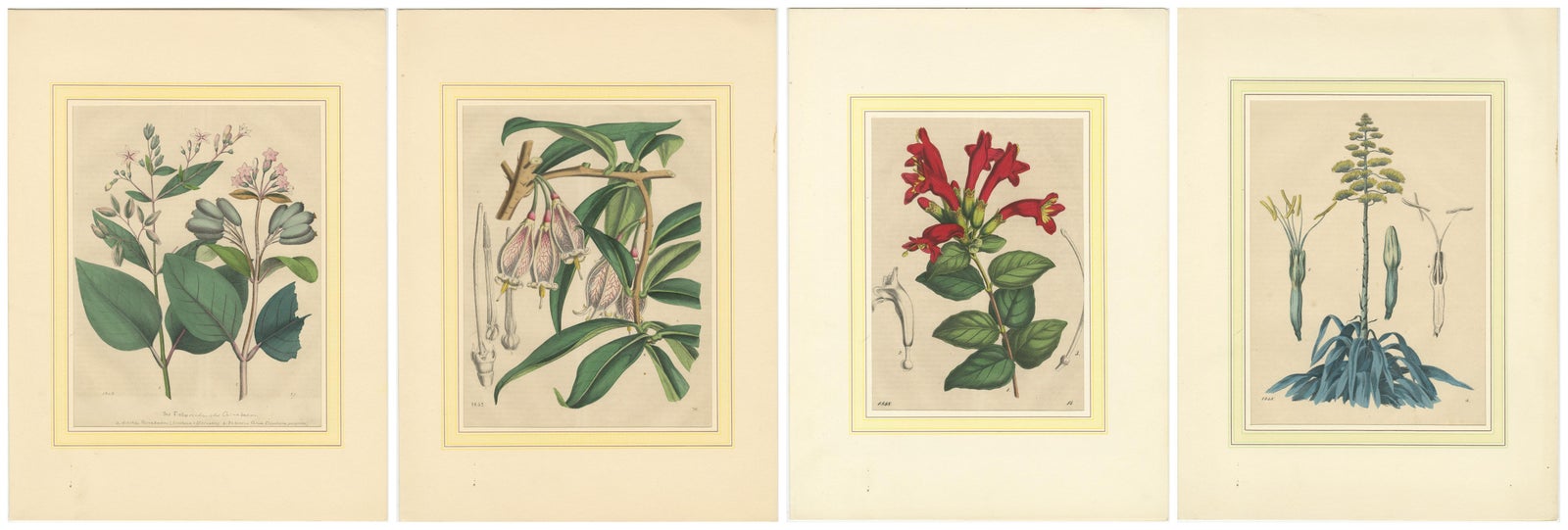
This elegant set of four hand-colored botanical lithographs originates from the 1848 German natural history publication *Book of Worlds* (Buch der Welt), an ambitious project aimed at cataloguing global biodiversity in a beautifully illustrated and educational format. Each of the plates showcases exceptional detail and precision, capturing flowering plants from diverse tropical and subtropical regions with scientific clarity and artistic finesse. The meticulous coloring and fine lithographic lines are typical of mid-19th century European botanical works, blending scientific observation with decorative appeal.
The first print depicts the medicinal Cinchona tree, famed for its bark, which produces quinine, a historically vital remedy for malaria. The print includes two species, Cinchona officinalis and Cinchona pubescens, both rendered with attention to leaf texture, floral structure, and seed pod formation.
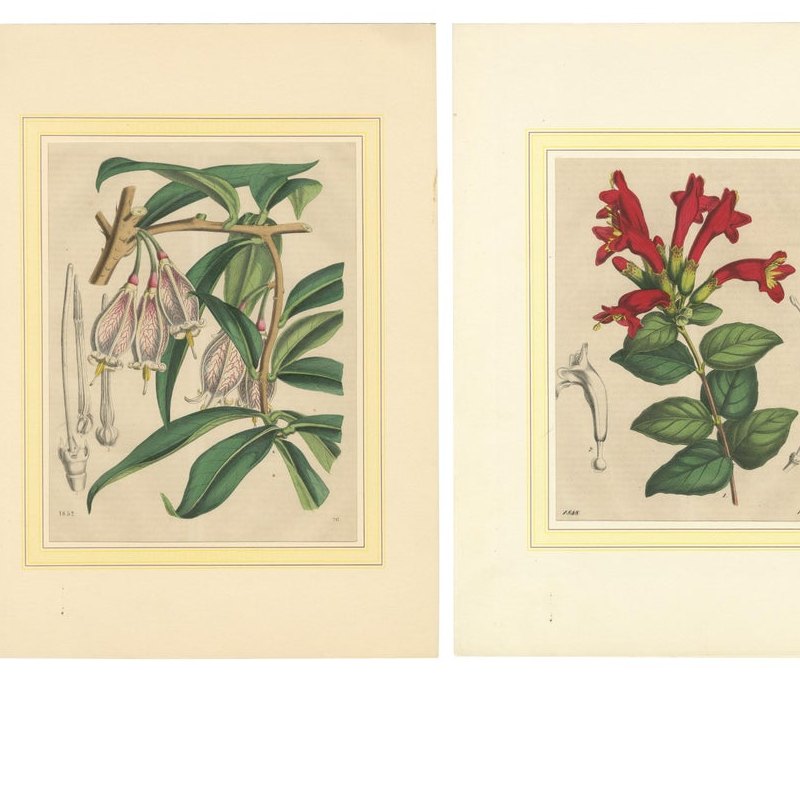
The second plate, dated 1852, features the vibrant flowers of an Allamanda species, possibly Allamanda cathartica, a plant native to South America known for its ornamental value. The distinctive tubular flowers with pink veining and yellow interiors are elegantly displayed alongside a botanical dissection of floral anatomy.
The third plate, from 1838, shows a Lophospermum or related Gesneriaceae species bearing trumpet-shaped scarlet blossoms. The bold red tones contrast with the deep green leaves, and the lithograph includes detailed diagrams of its floral structure.
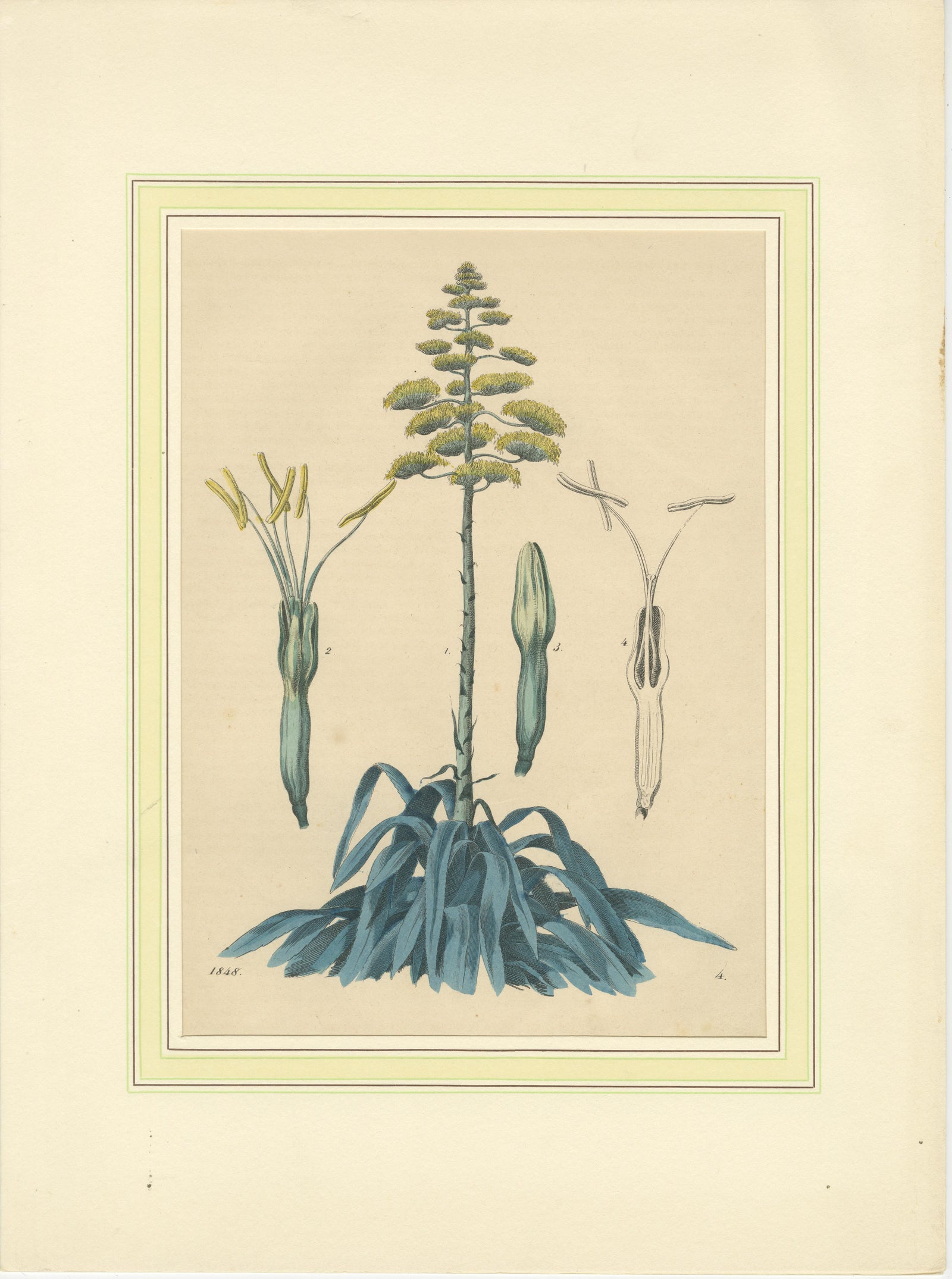
The final print, dated 1836, illustrates the Agave americana, or century plant, renowned for its dramatic flowering stalk and utility in producing fibers and spirits. Botanical cross-sections of flower and fruit enhance the plate's educational value.
Together, these prints offer not only aesthetic charm but also a glimpse into 19th-century scientific exploration and global botanical discovery. They reflect the fascination with exotic plants during an era of colonial botanical expansion and public curiosity.
Condition Report:
Good condition with strong plate marks, original hand-coloring intact and vibrant. Only minimal toning and faint foxing in margins. No tears, repairs, or creases. Paper remains firm.
Framing Tips:
Frame each print with a soft cream or ivory mat to complement the background tone. A narrow inner mat in muted green or gold enhances the botanical palette. Use natural wood or antique gold frames with UV-protective glass to preserve color.