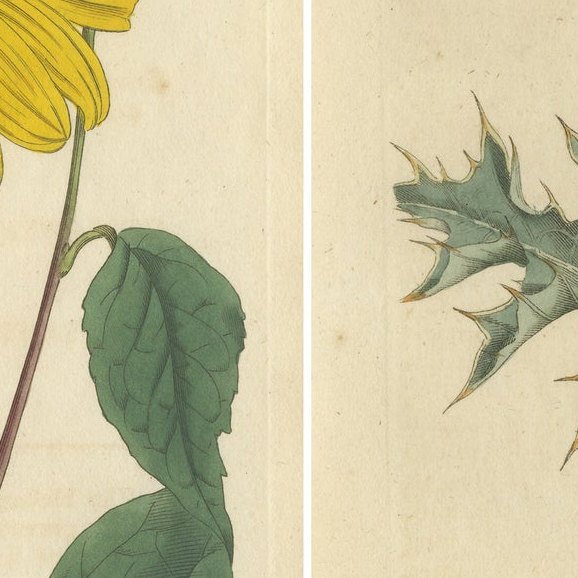
Close-ups
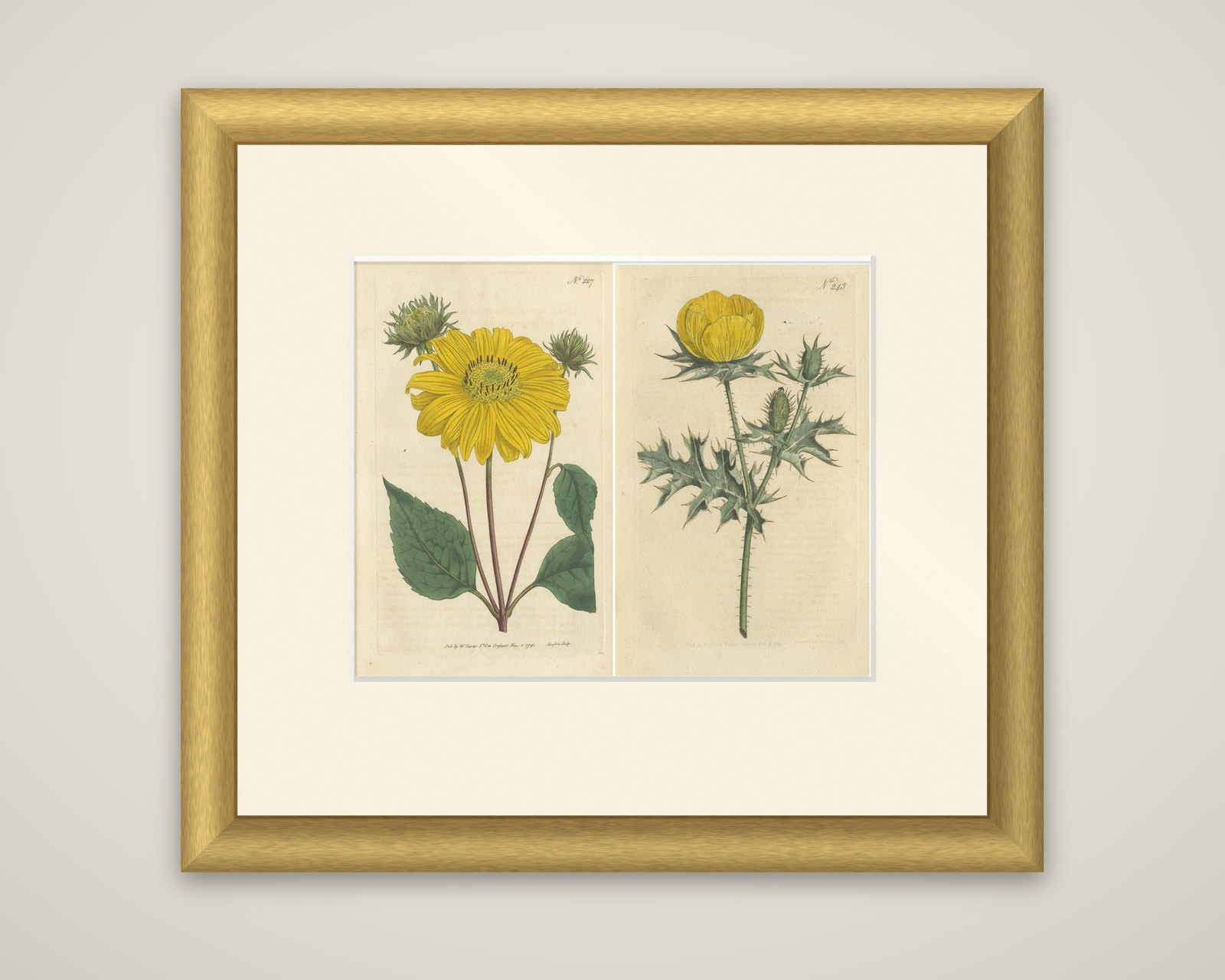
Framed and on the wall

Frame and rooms are illustrations of how the print could look; the description says what is included.
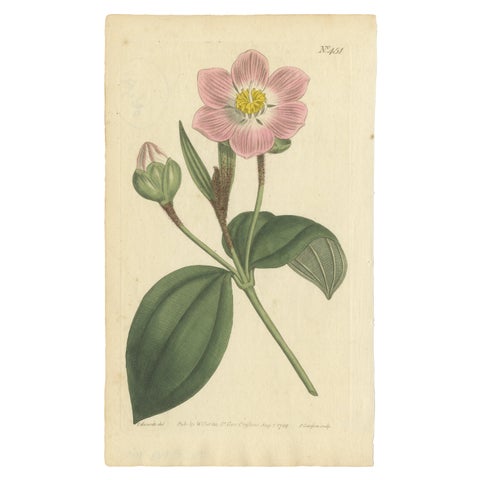
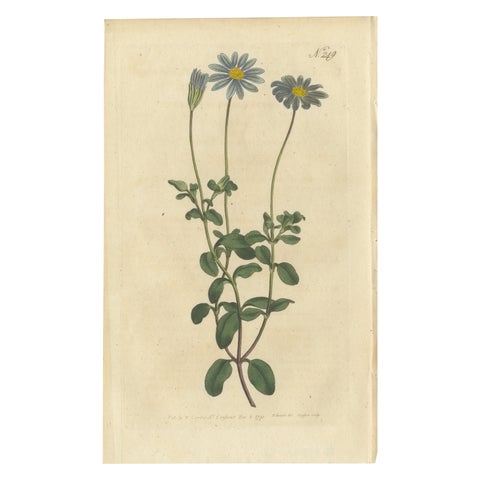
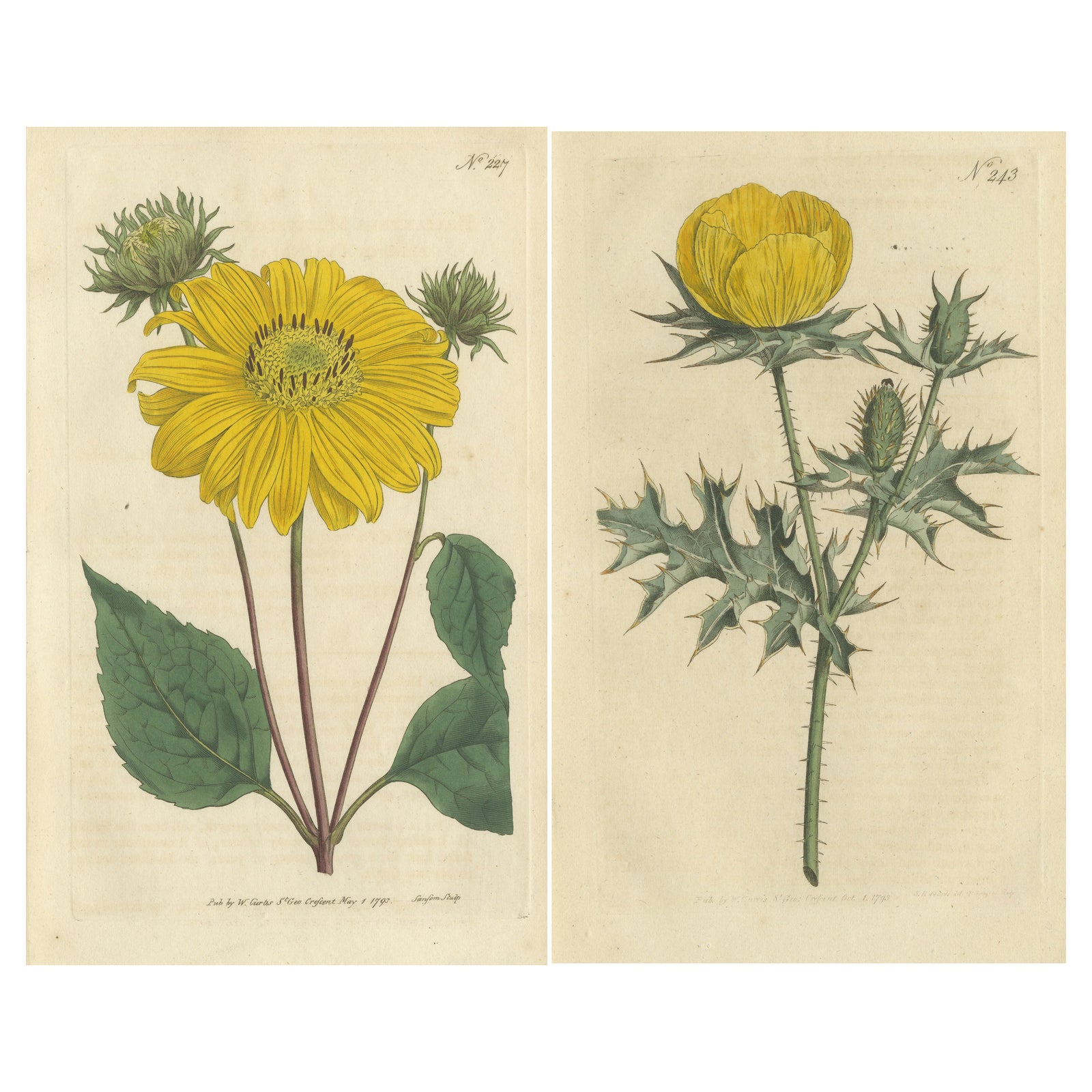
Set of 2 Antique Botany Prints - Prickly Poppy - Perennial Sunflower
€290 ($325, £245, €290)
Period original, not a reproduction.
Shipped from the Netherlands, flat, insured and tracked, worldwide. Returns accepted within 14 days.
- Date
- Not stated
- Size
- 9.1 × 5.5 in (23 × 14 cm)
- Condition
- Good. Wear consistent with age and use. Age-related toning, some wear and soiling. Blank verso. Please study image carefully.
- Artist or book
- Curtis's Botanical Magazine
- Section
- Botanical
- Reference
- f_31165232
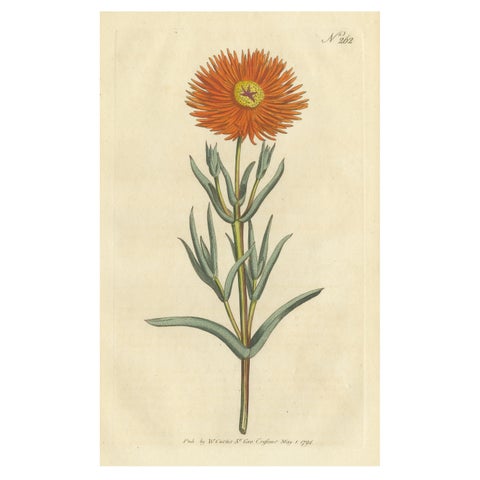
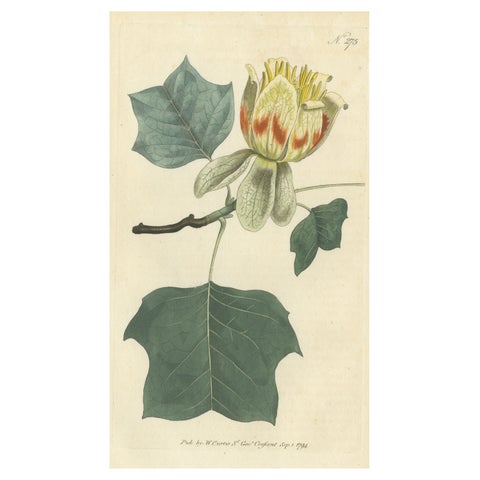
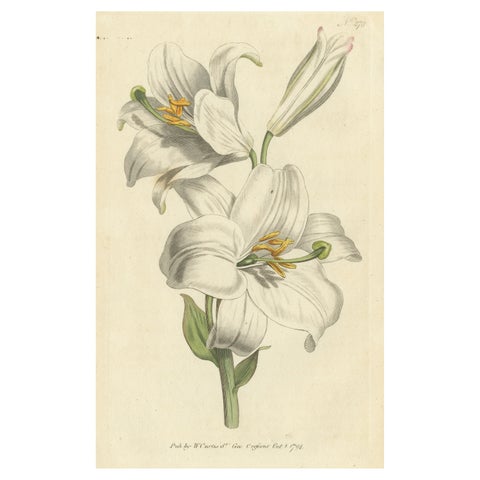
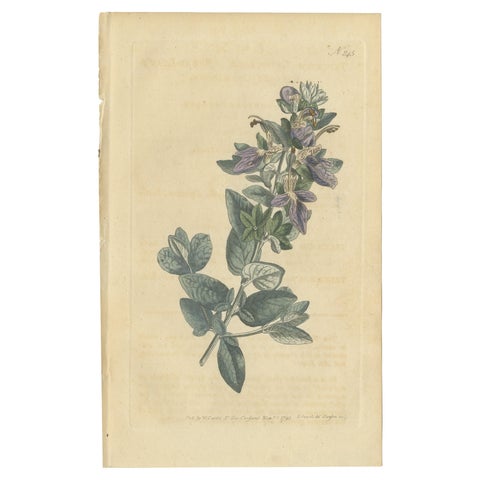
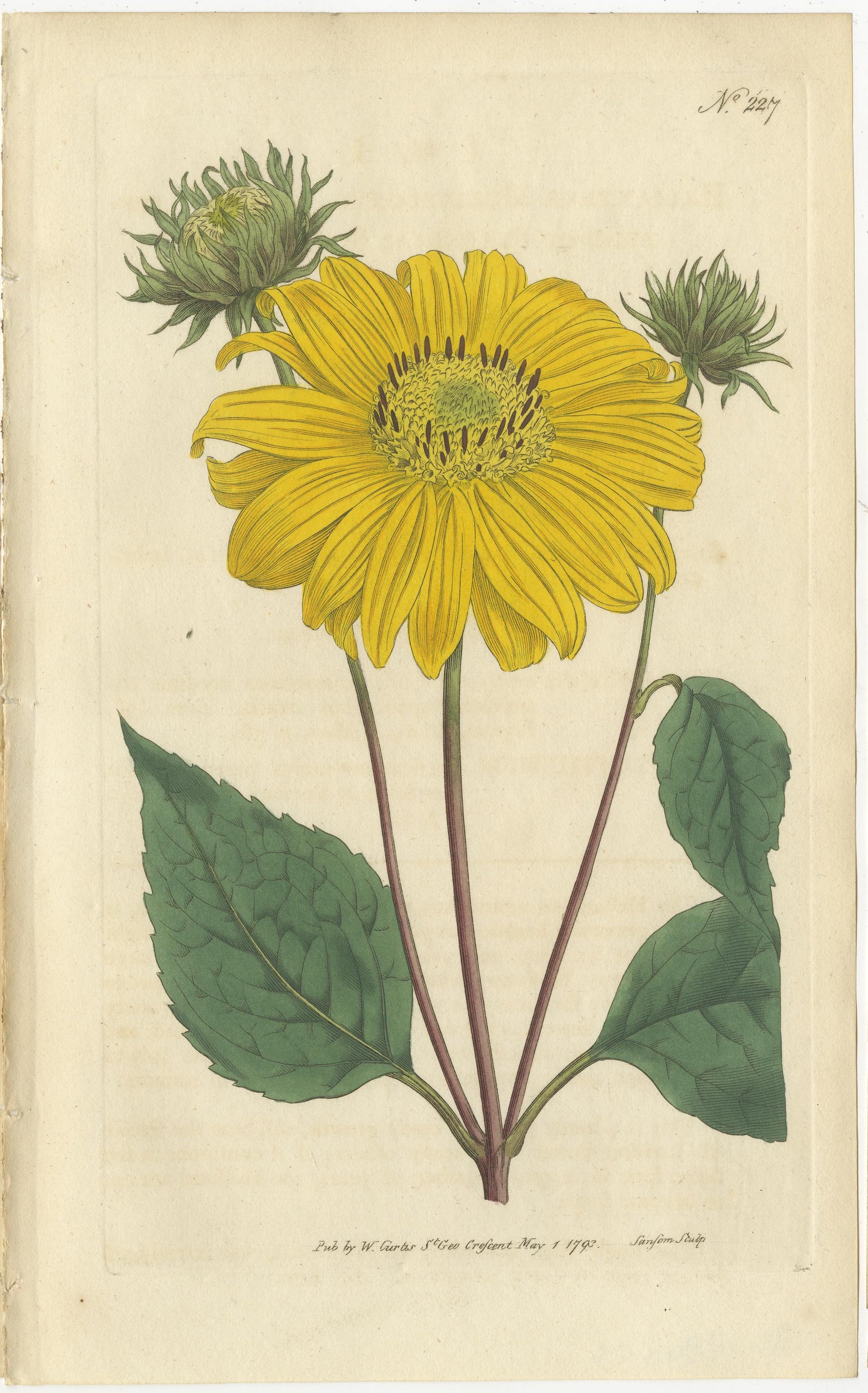
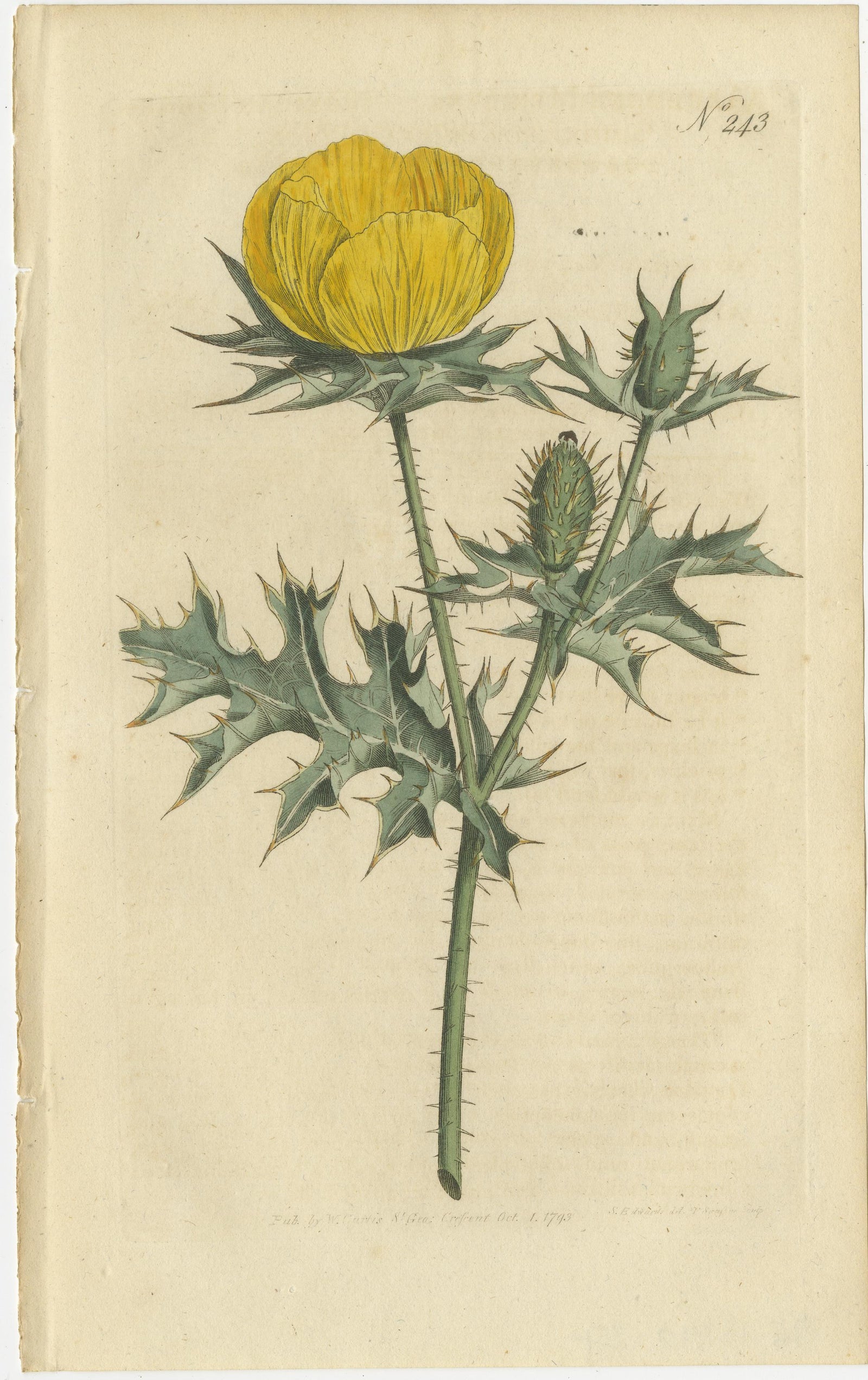
Two original antique botanical prints from The Botanical Magazine; or Flower-Garden Displayed, begun by William Curtis in 1787. Each is a copper engraving with hand coloring and carries a plate number and the publisher's imprint line from Curtis's Botanical Magazine, issued from St. George's Crescent in London in the 1790s.
One plate shows the Mexican Argemone, or prickly poppy, a plant with a yellow cup-shaped flower and spiny, blue-green leaves and stems; the other shows the many-flowered or perennial sunflower, a large yellow daisy-like head with unopened buds and broad leaves on purple-tinged stalks. In each case the plant is drawn at natural size, with a single stem or spray set against the blank paper.
The Botanical Magazine is the longest-running botanical periodical and is widely known by the later name Curtis's Botanical Magazine. Each number described its subjects in text, with common names, growth habits and uses, and many plants were first illustrated in its pages. Its plates were initially hand-colored copper engravings meant to accompany the descriptions.