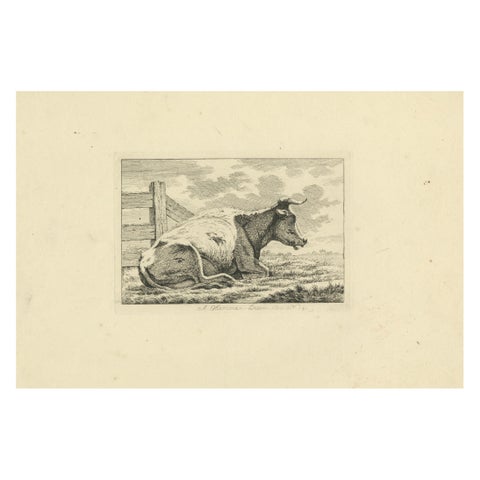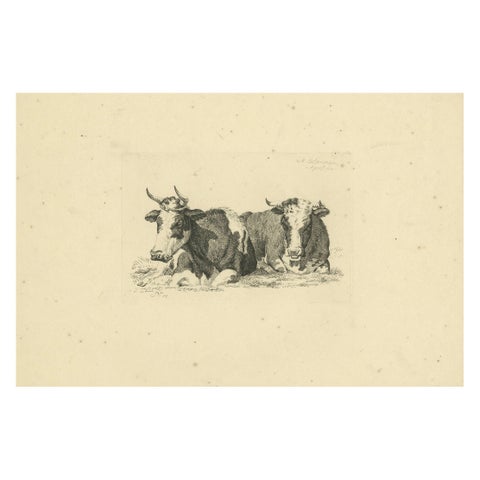
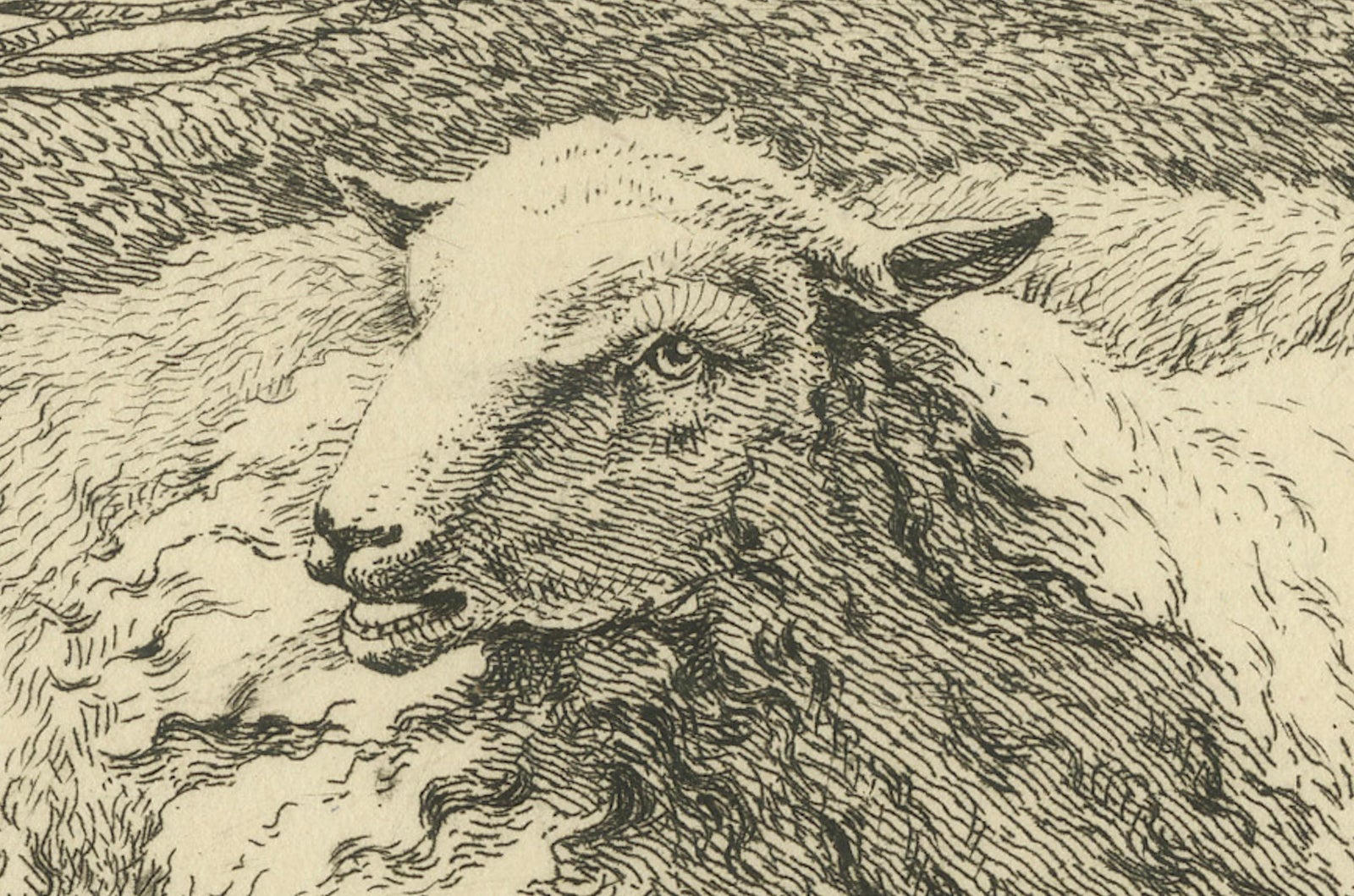
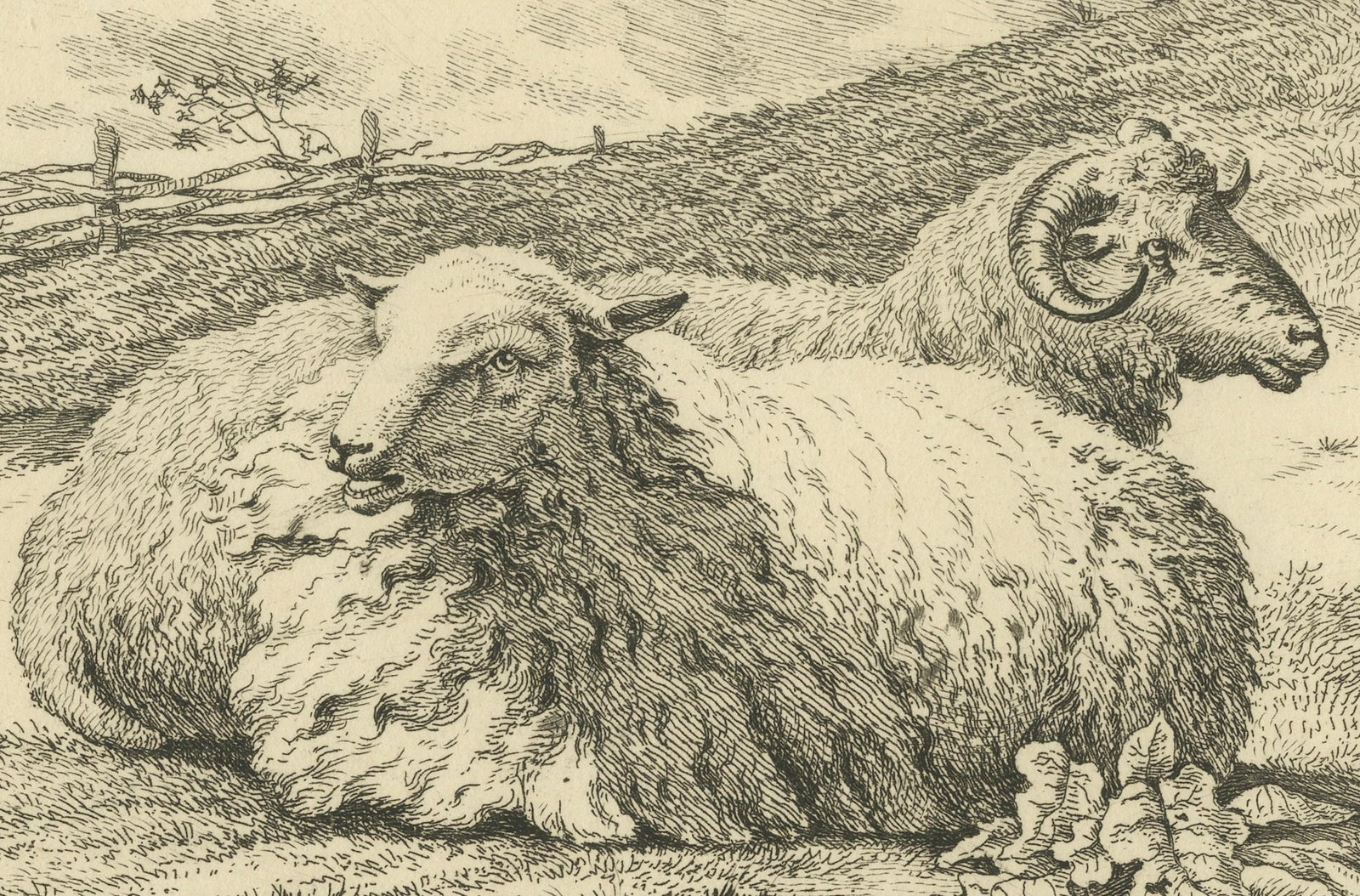
Close-ups
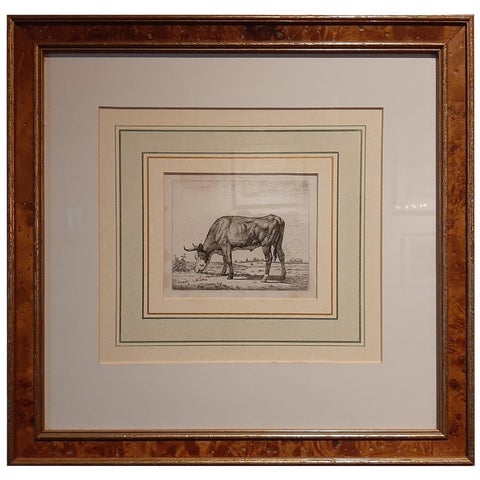
Framed and on the wall
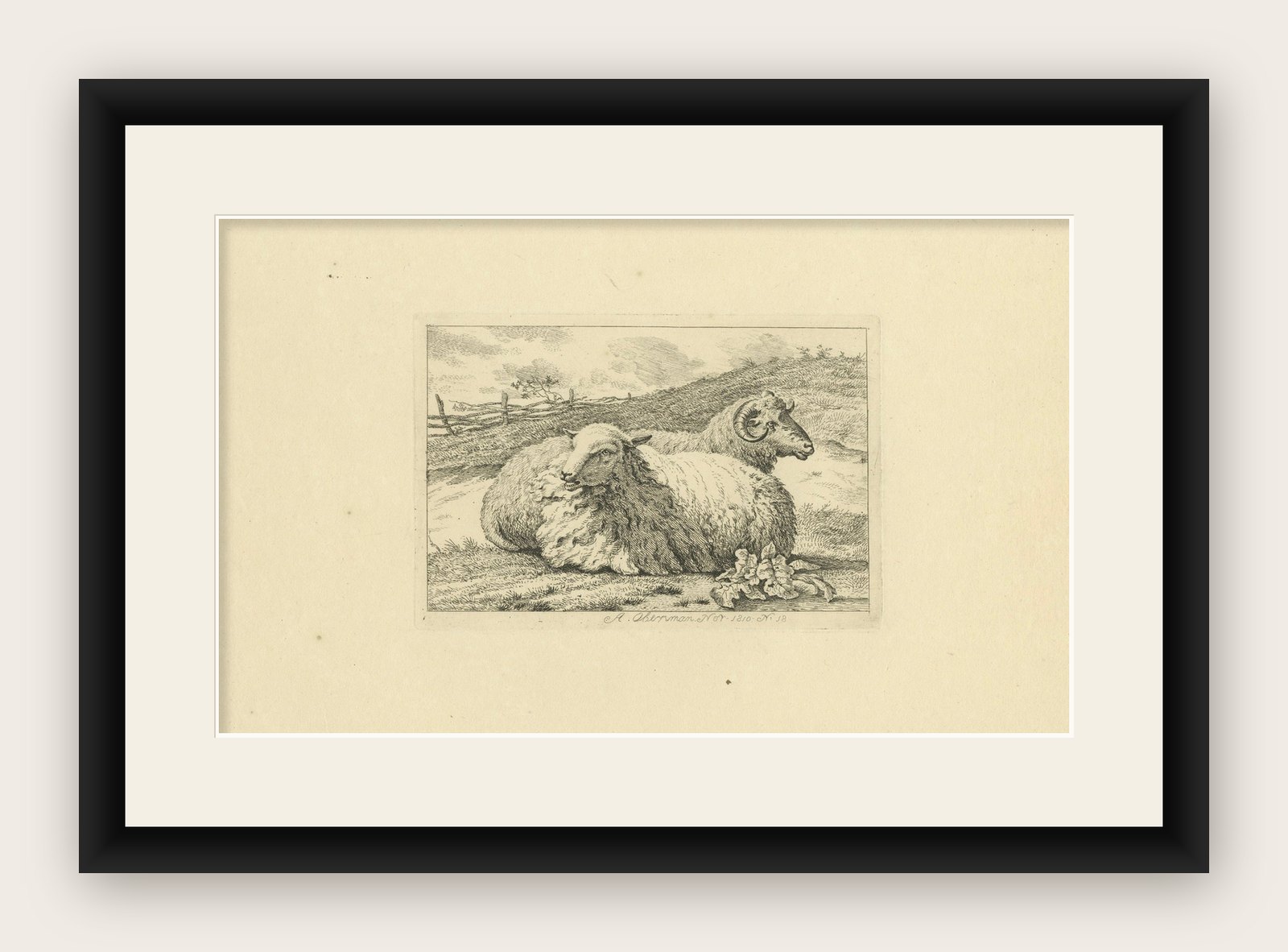
Frame and rooms are illustrations of how the print could look; the description says what is included.
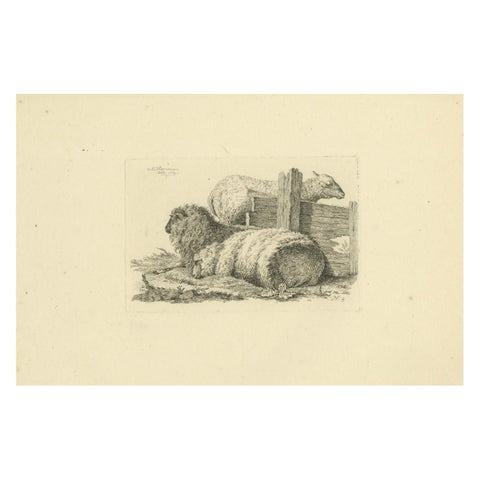
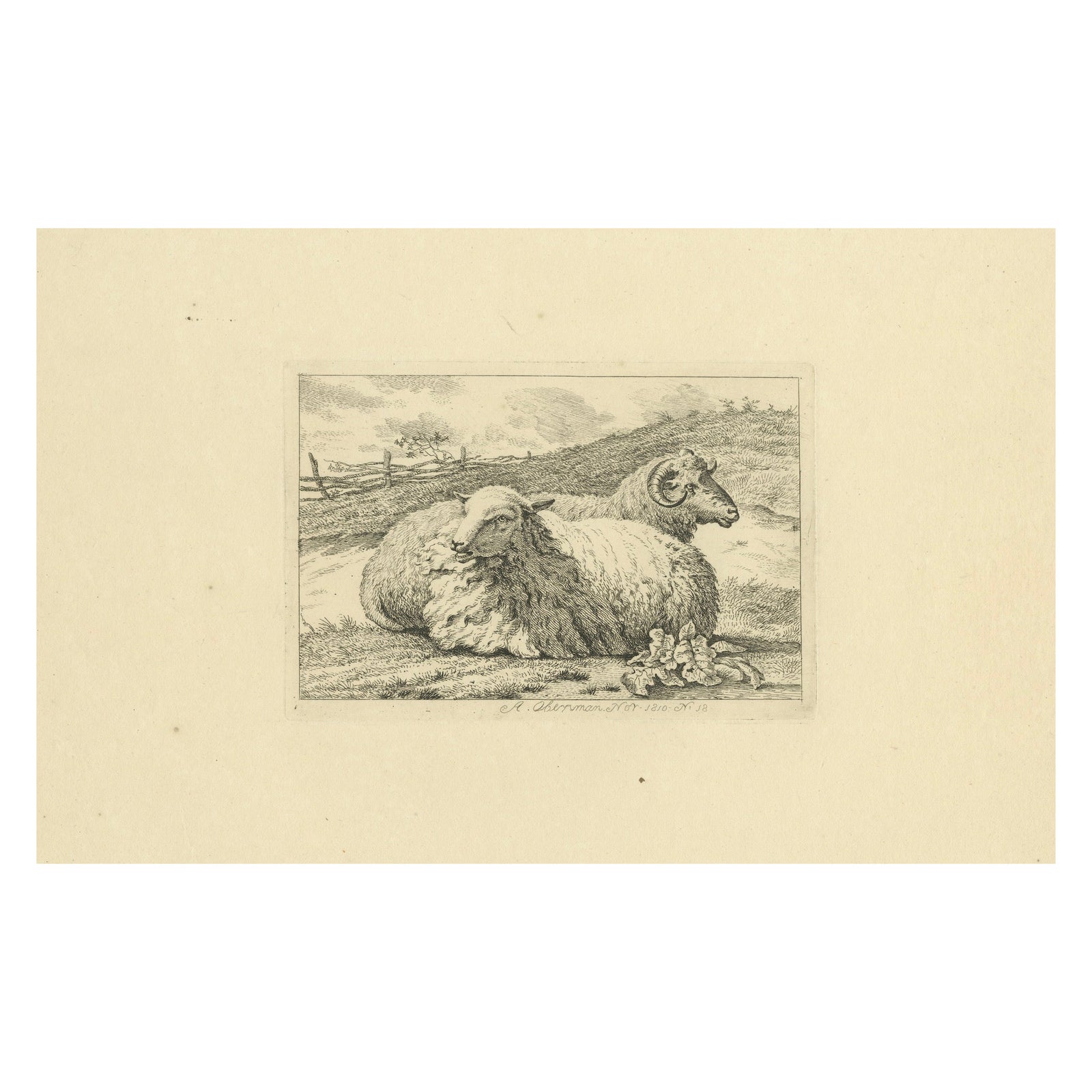
Serene Pastoral Scene with Two Resting Sheep: Etching by Anthony Oberman, 1810
£400 ($525, €470)
Period original, not a reproduction.
Shipped from the Netherlands, flat, insured and tracked, worldwide. Returns accepted within 14 days.
- Date
- 1810
- Size
- 10.6 × 16.9 in (27 × 43 cm)
- Condition
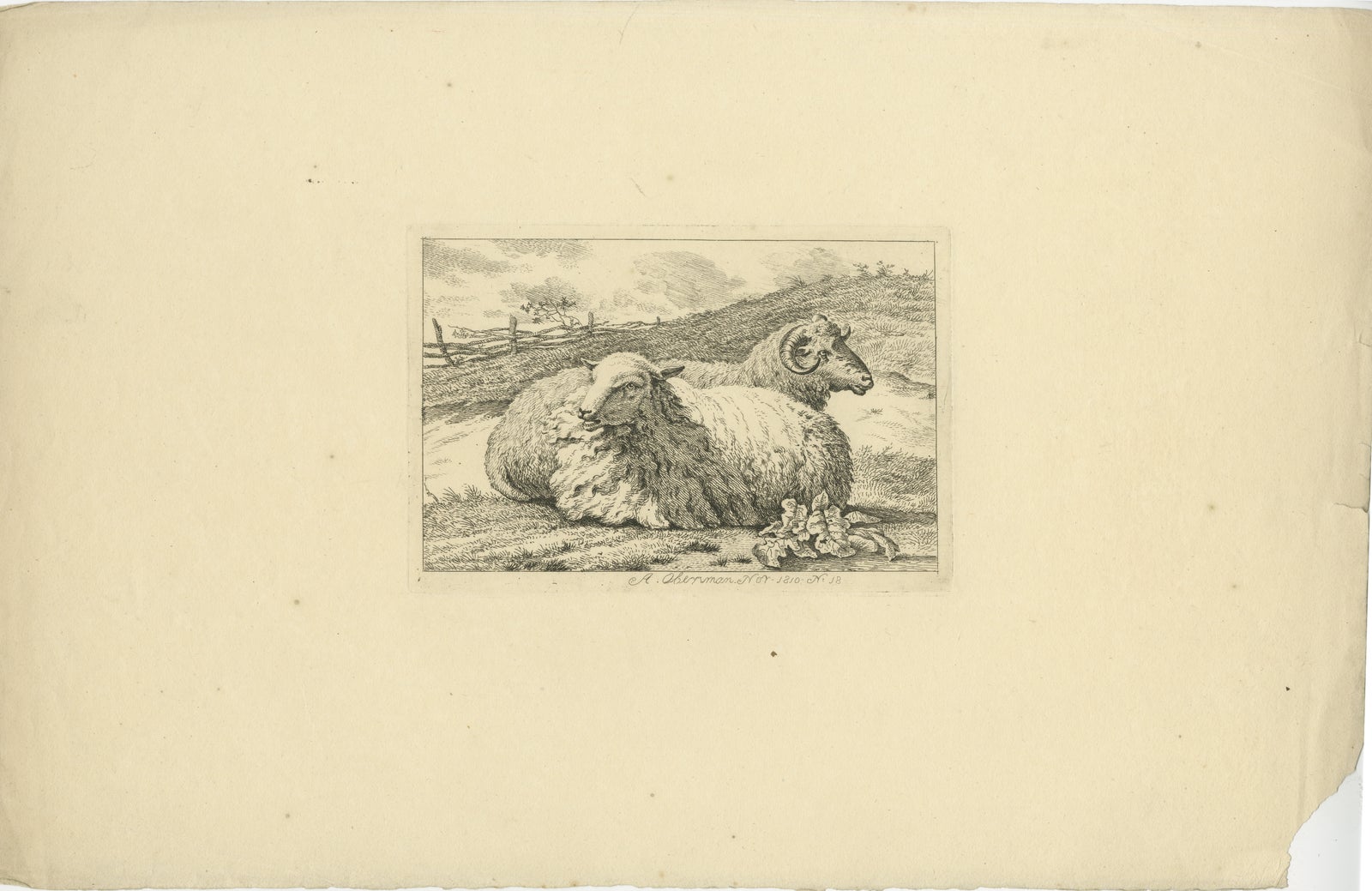
- Good. Good, with some signs of aging, such as minor spots, which are typical for prints of this age. The edges of the paper are mostly intact with some minor wear and small tears, particularly at the bottom right corner. Study the images carefully.
- Period
- Early 19th century
- Section
- Mammals
- Reference
- f_40593212
This print is part of a series titled "Studies van koeien, schapen en geiten" (Studies of Cows, Sheep, and Goats). The print was made by Anthony Oberman, a printmaker.
Anthony Oberman (1781-1845) was a Dutch artist known for his detailed and realistic depictions of animals. His work often focused on studies of various farm animals, capturing their features with precision and skill. Oberman's prints are characterized by their fine lines and meticulous attention to detail, which is evident in this print of a lamb's head.
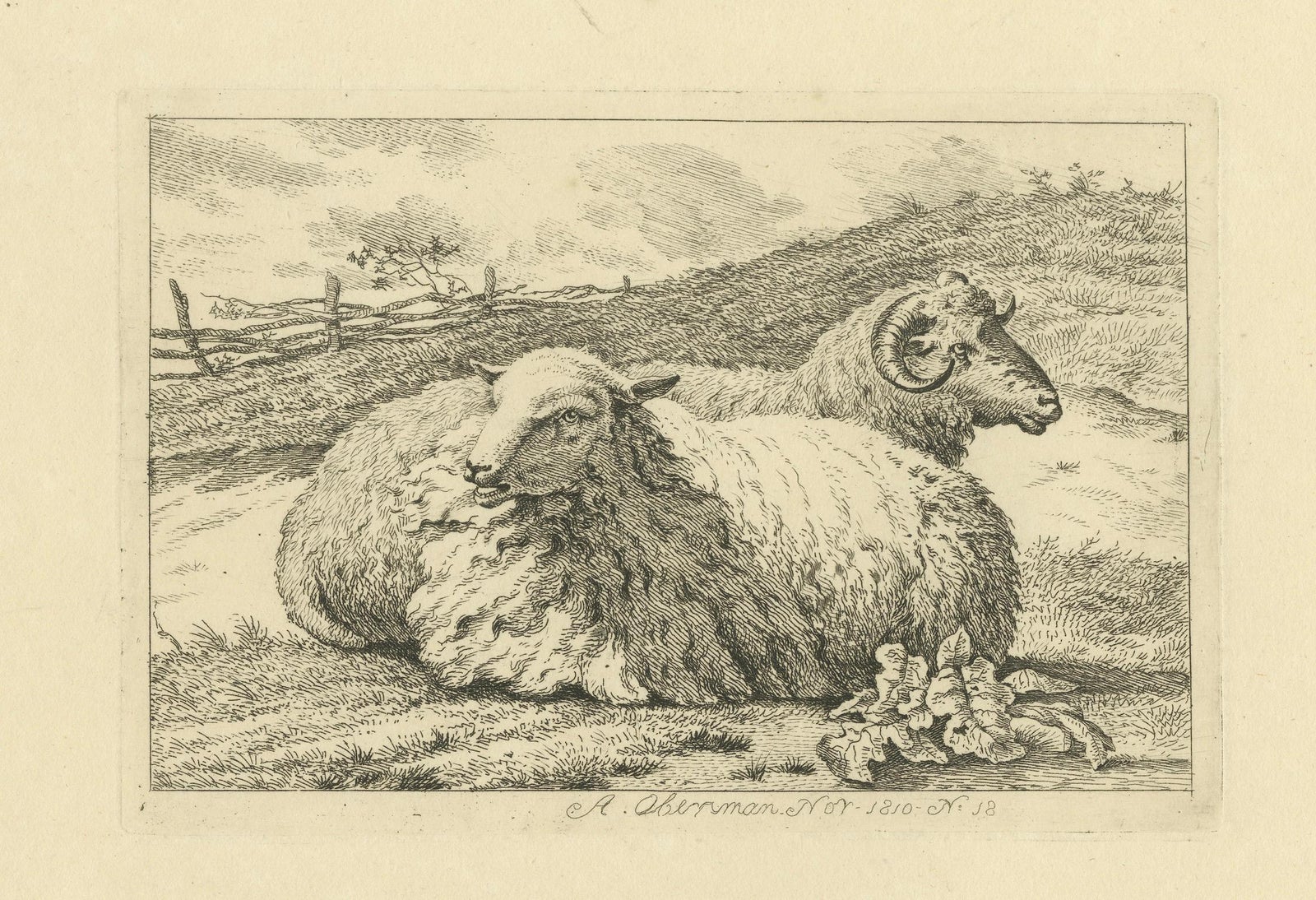
The print depicts a pastoral scene with two sheep resting in a landscape. Here's a detailed description of this etching:
Composition:
1. Foreground Sheep:
- The print features a large sheep lying down in the foreground. The texture of its wool is meticulously detailed, showcasing Oberman's skill in etching the intricate patterns and curls of the sheep's coat.
2. Background Sheep:
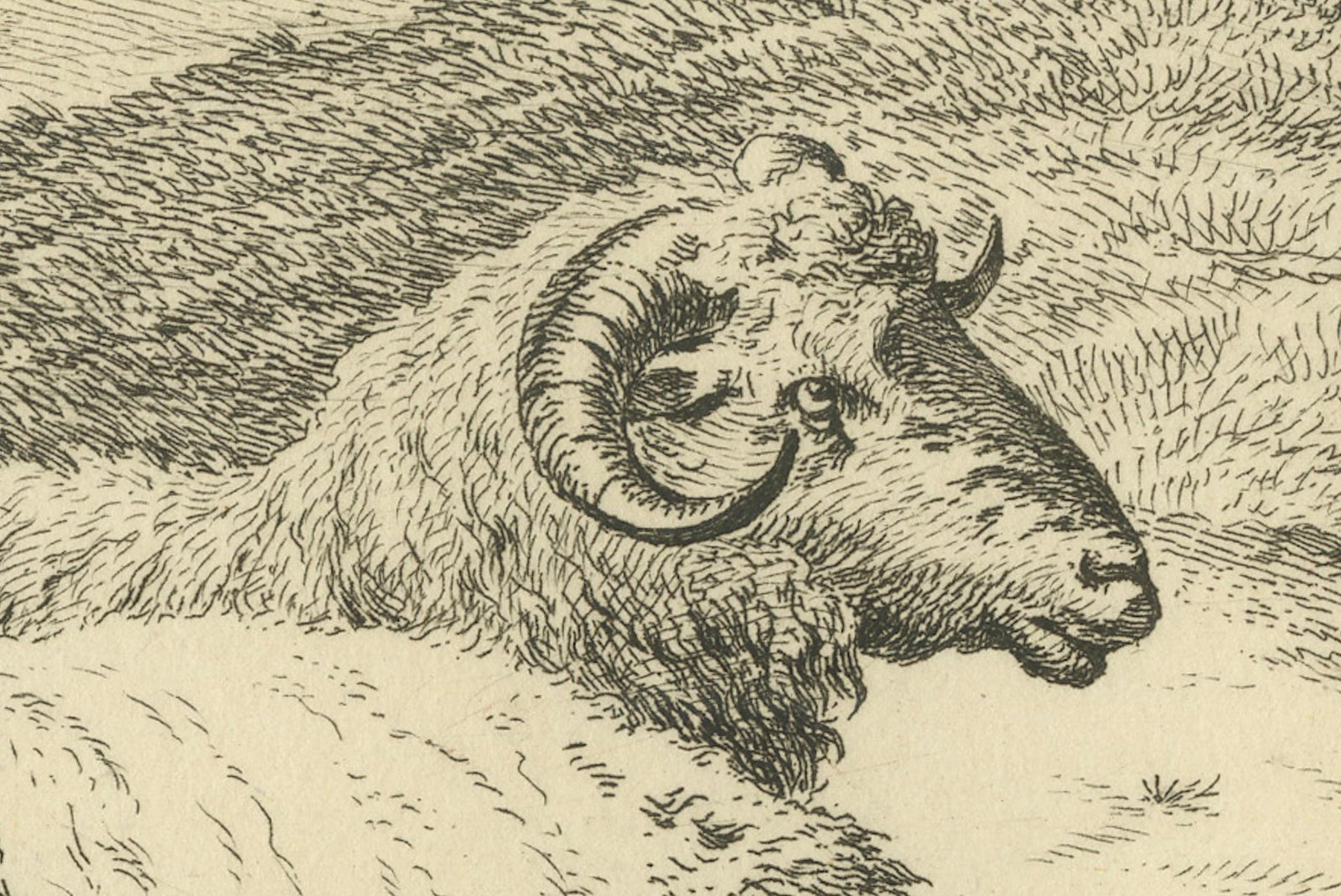
- Behind the foreground sheep, another sheep is seen, also resting but with its head turned to the right. This sheep has prominent curved horns, indicating it might be a ram.
3. Background Landscape:
- The background includes a gentle hillside with a rustic wooden fence. There are sparse trees and a clear sky, adding to the serene rural setting.
Artistic Elements:
- Technique: As with Oberman's other works, this etching demonstrates fine detail and precision, particularly in the rendering of the sheep's wool and the landscape elements.
- Composition: The composition is balanced, with the two sheep forming the central focus. The gentle curves of the landscape and the fence provide a pleasing backdrop.
- Background: The simplicity of the background ensures that the viewer's attention remains on the sheep while providing enough context to establish the rural setting.
Condition:
- The paper shows some signs of aging, such as slight yellowing and minor spots, which are typical for prints of this age.
- The edges of the paper are mostly intact with some minor wear and small tears, particularly at the bottom right corner.
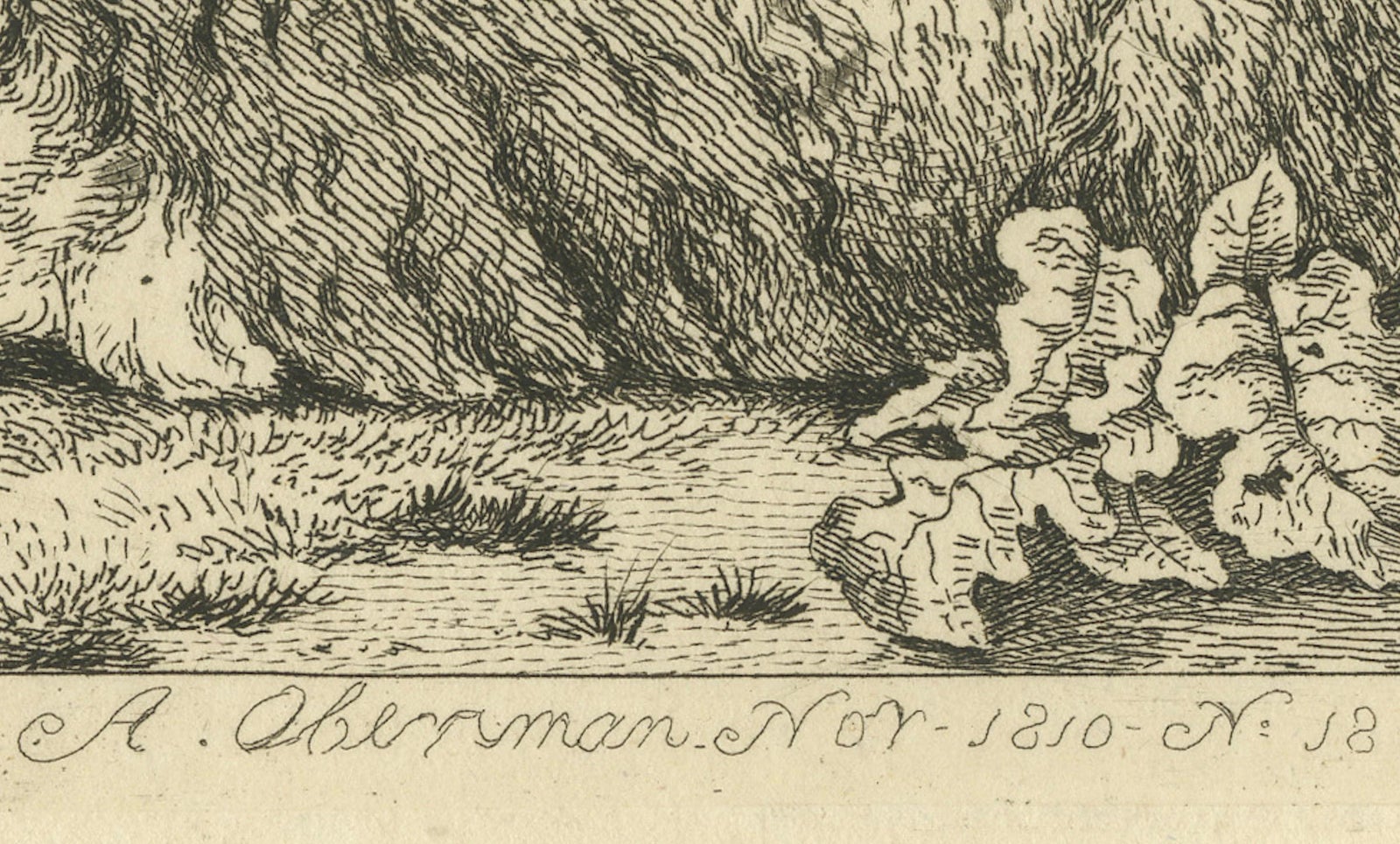
The signature and date on the print indicate that it was created in May 1810. Oberman's prints were likely used as reference materials for other artists or for educational purposes, given their accuracy and detail.
This particular series includes an edition size of 20 prints.
THE TECHNIQUE USED:
The technique used for the print "Kop van een lam" by Anthony Oberman is etching. Etching is a printmaking process that involves using acid to carve into the unprotected parts of a metal surface to create a design in the metal. The metal plate is then inked, and the ink is transferred to paper to create the print.
This technique allows for fine detail and intricate line work, which is evident in Oberman's detailed depiction of these sheep.