Close-ups
Framed and on the wall
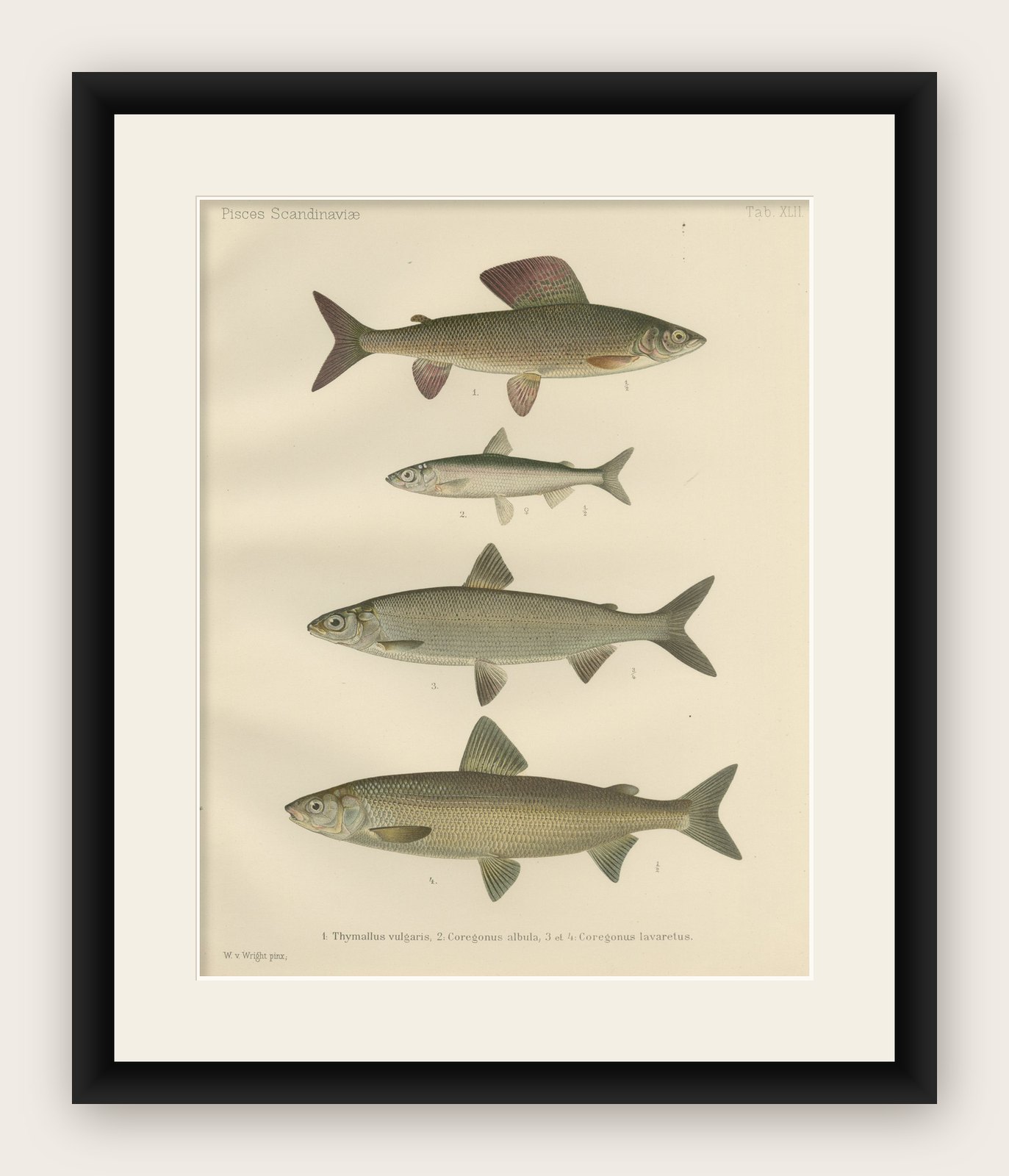


Frame and rooms are illustrations of how the print could look; the description says what is included.
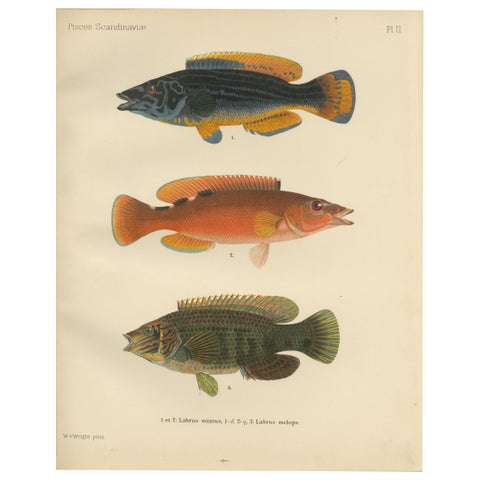
Scandinavian Fishes: Grayling and Whitefish in Exquisite Lithographic Detail
$315 (£240, €280)
Period original, not a reproduction.
Shipped from the Netherlands, flat, insured and tracked, worldwide. Returns accepted within 14 days.
- Date
- Not stated
- Size
- 13 × 10.6 in (33 × 27 cm)
- Condition
- Good. The print is in excellent condition with minimal toning and bright, vivid colors. A few light age spots are present but do not detract from the overall aesthetic appeal.
- Section
- Fish and shells
- Reference
- f_44166492
Title: Scandinavian Fishes: Grayling and Whitefish in Exquisite Lithographic Detail
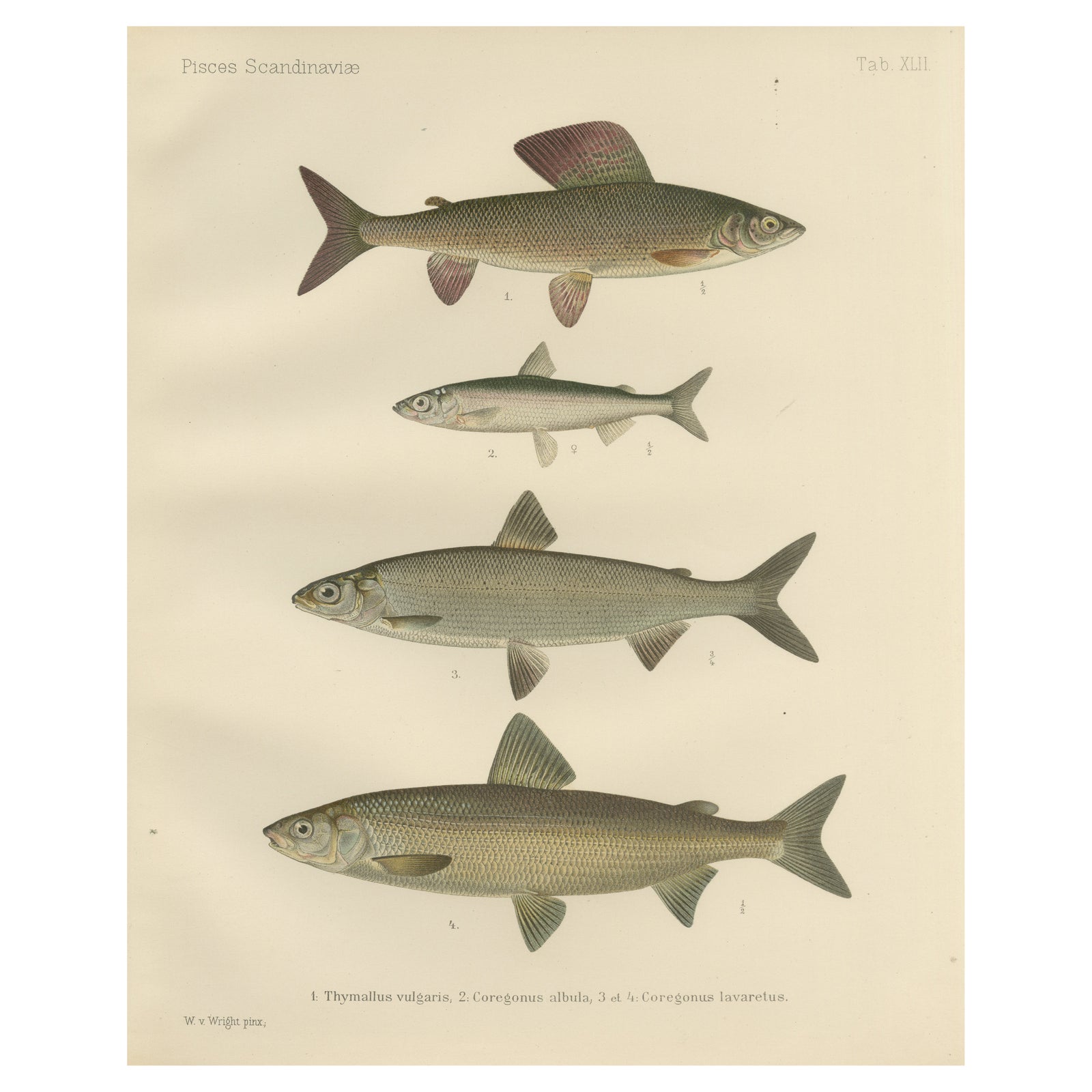
Description: This captivating lithograph from the Pisces Scandinaviae series beautifully illustrates four iconic Scandinavian fish species. Created by W. v. Wright, it showcases a fine blend of scientific accuracy and artistic finesse. The precise lithographic technique, enhanced by meticulous hand-coloring, results in lifelike depictions that capture the essence of each species.
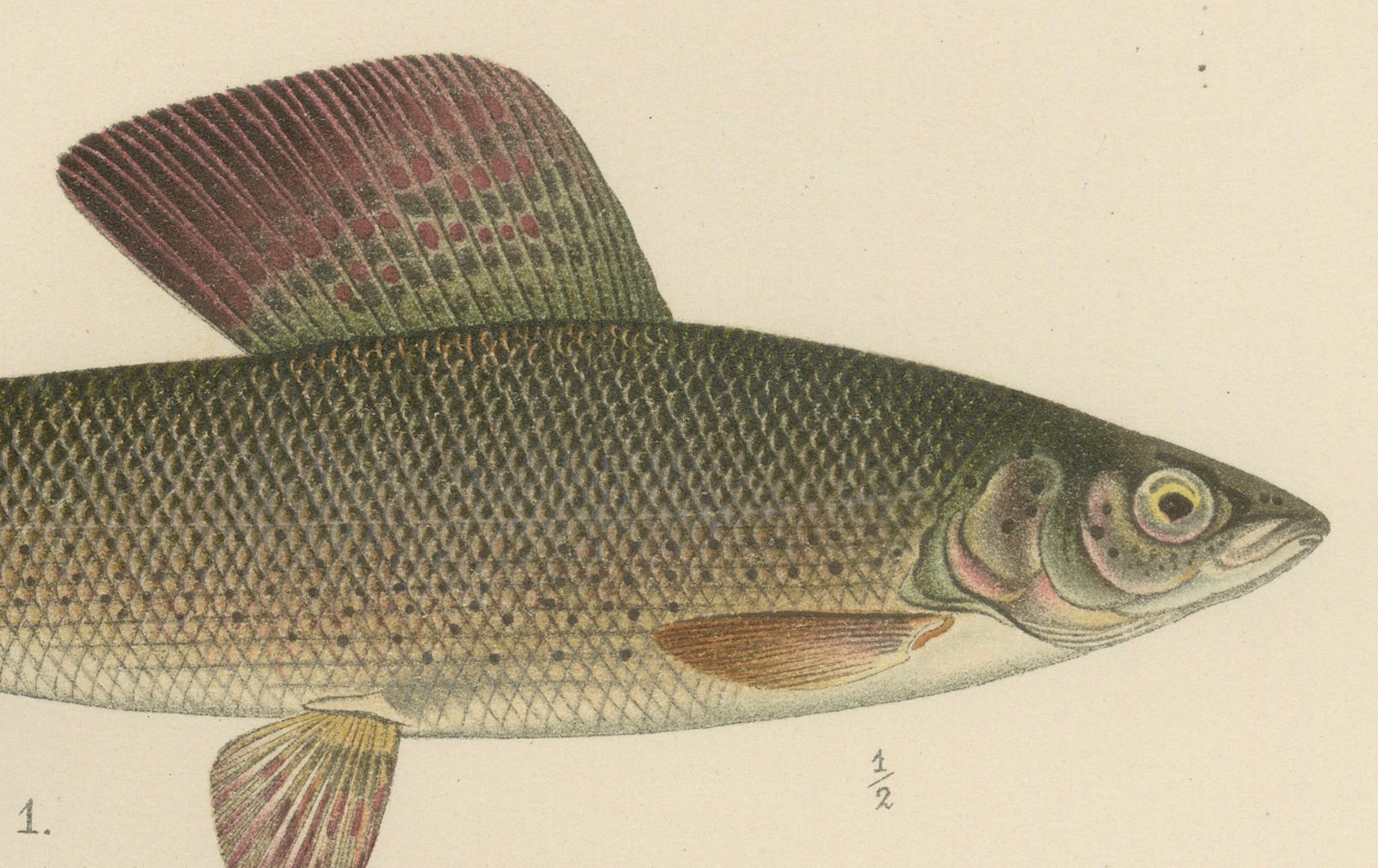
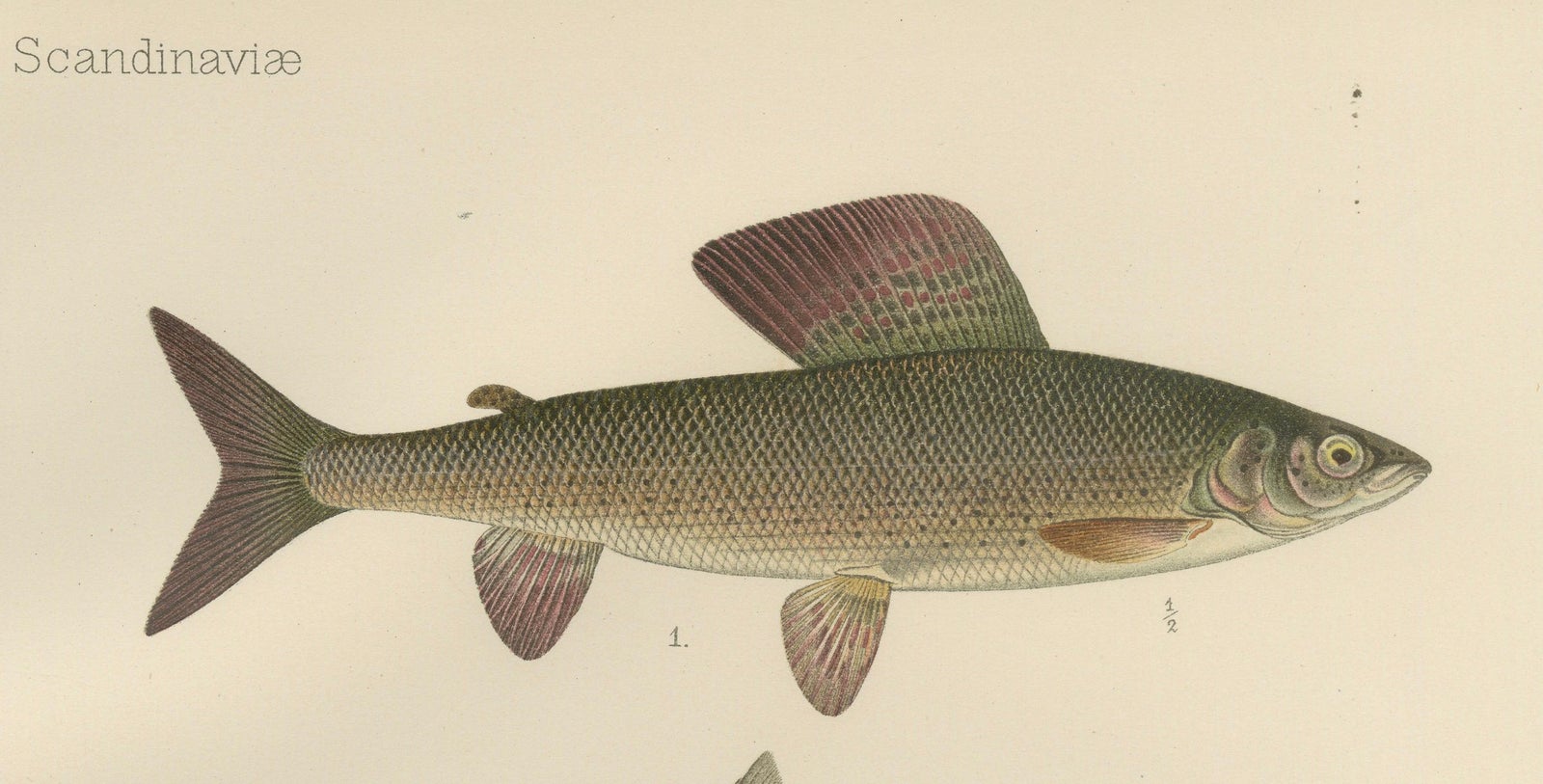
The first fish shown is the Thymallus vulgaris, commonly known as the grayling. Its distinctive high dorsal fin, adorned with iridescent hues of green and red, stands out elegantly against its sleek, silver-toned body. Grayling are known for their graceful movements and are often found in clear, fast-flowing rivers. The detailed rendering of the fin and scales brings a sense of vitality to the composition.
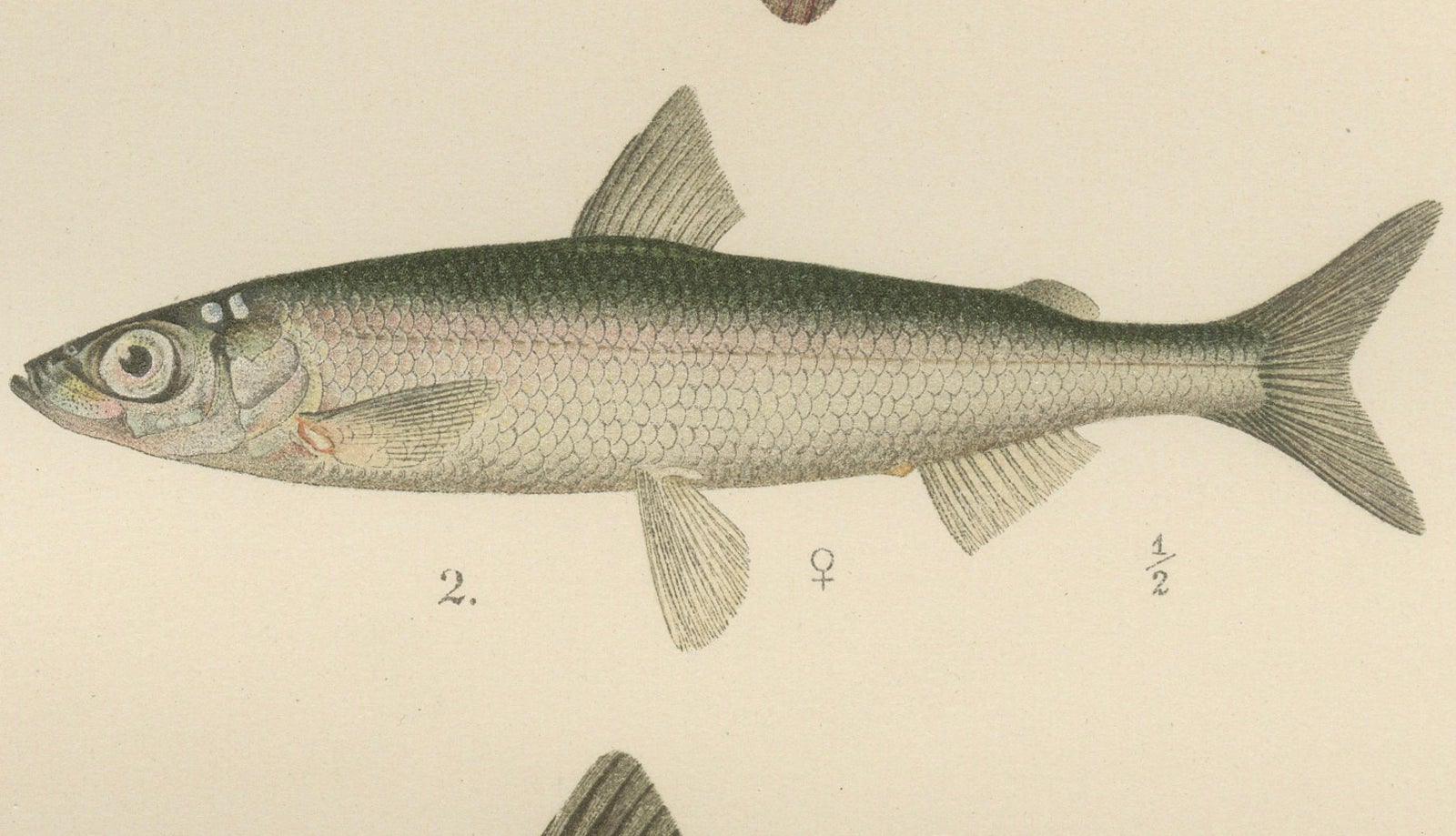
Next is Coregonus albula, commonly called the vendace, a smaller fish with a slender body and a shiny, silver appearance. Vendace are renowned for their delicate flavor and are a staple of Scandinavian freshwater fisheries. The lithograph accurately portrays the subtle variations in shading and the delicate fins, emphasizing its delicate yet streamlined form.
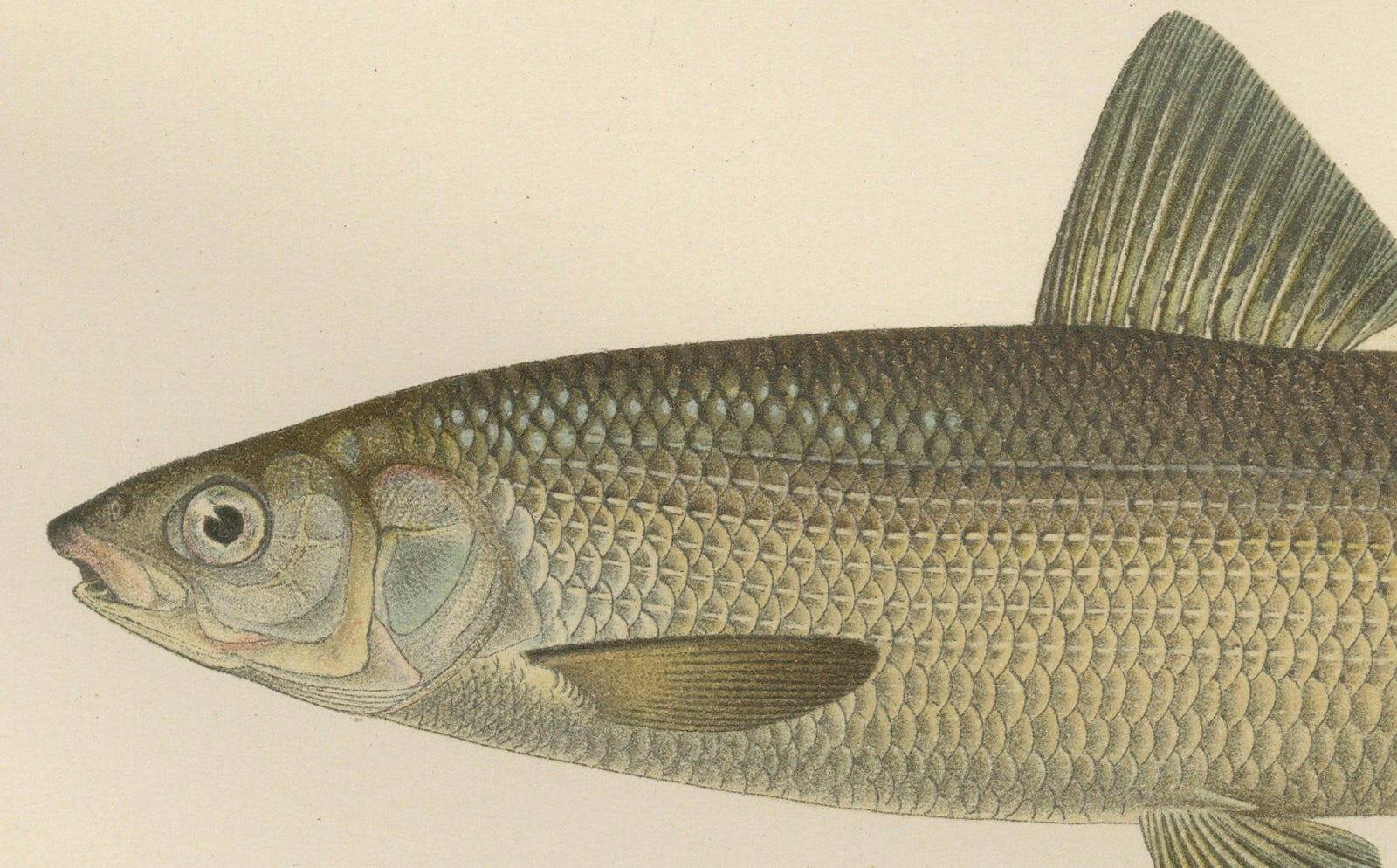
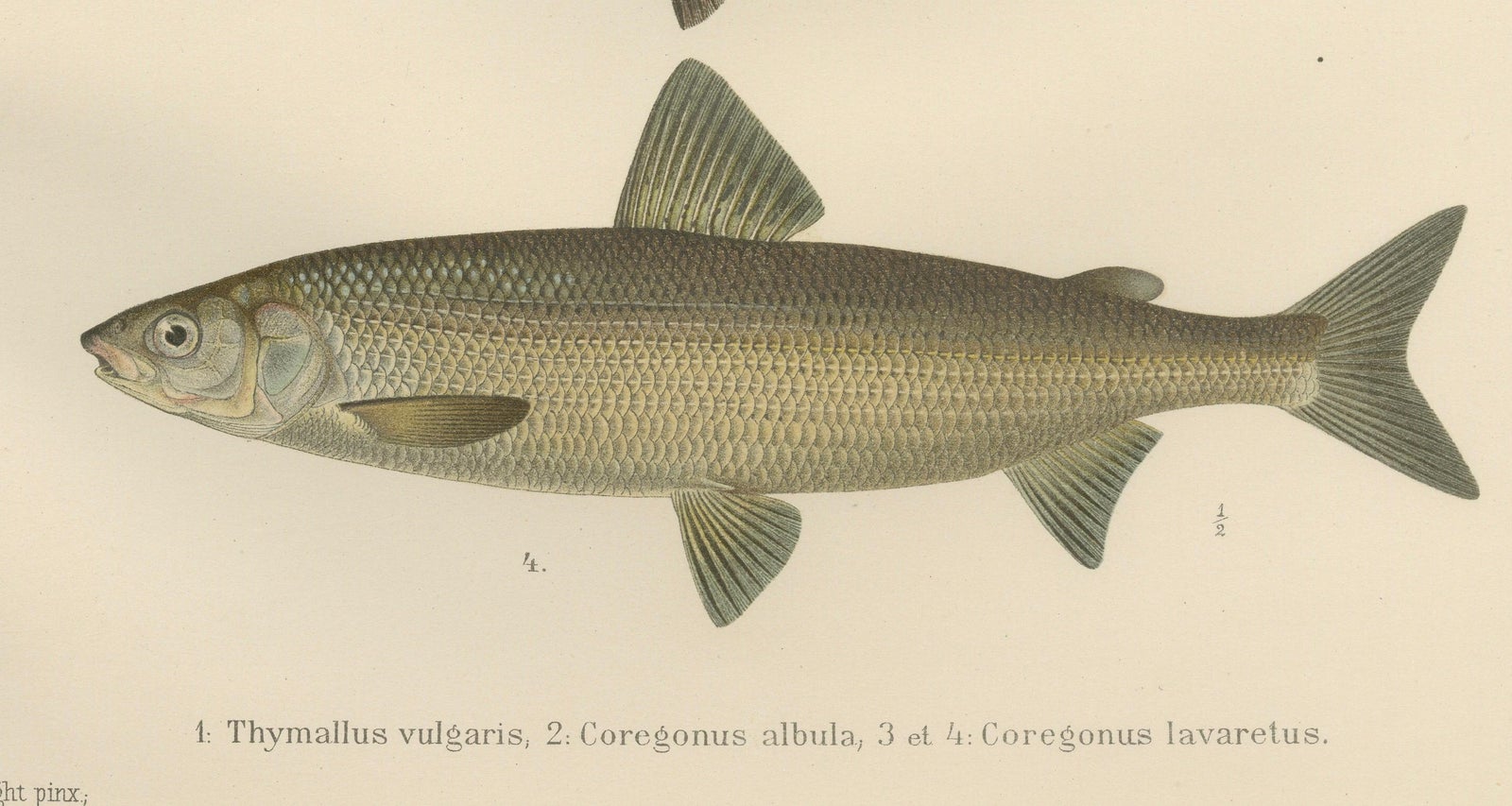
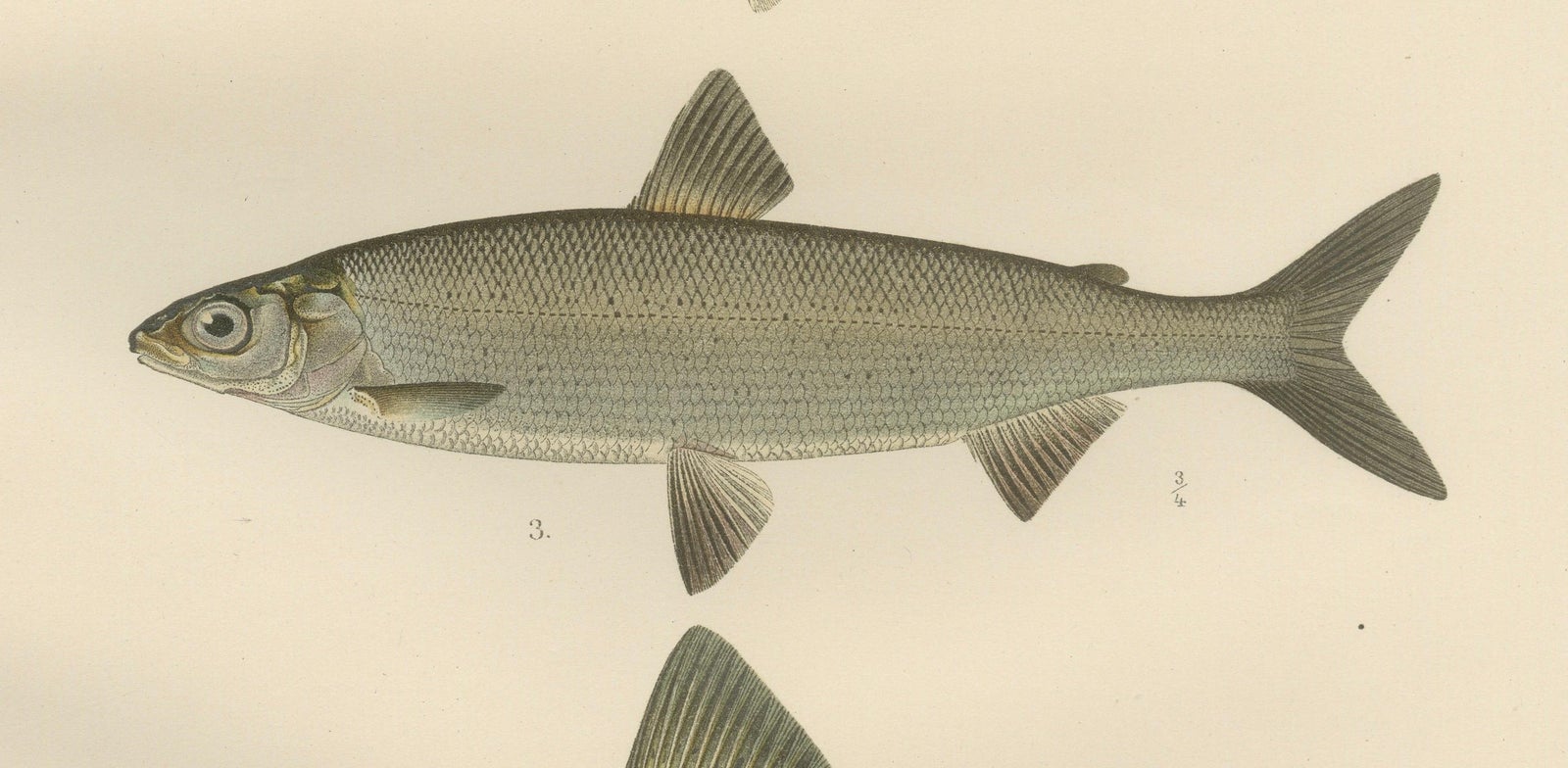
The third and fourth fishes are the Coregonus lavaretus, or whitefish, known for their robust bodies and silvery, shimmering scales. These fish are highly valued for their mild flavor and are typically found in colder lakes and rivers. The artist has masterfully highlighted the subtle differences between the two specimens, with attention to scale pattern and fin positioning, adding depth and realism to the artwork.
This print is not only scientifically valuable but also visually captivating. Its detailed depiction of fish anatomy, combined with accurate color application, reflects the artistic dedication of the period. The harmonious arrangement of species and the balanced use of light and shadow enhance the natural appeal of each fish, making it an exemplary piece of natural history illustration.
Condition summary:
The print is in excellent condition with minimal toning and bright, vivid colors. A few light age spots are present but do not detract from the overall aesthetic appeal.
Framing tips:
Choose a simple wooden frame with a natural or lightly stained finish to complement the earthy tones of the fish. A cream or light-colored mat will add contrast and draw the eye to the intricate details. For long-lasting preservation, consider UV-resistant glass to protect against fading.