Framed and on the wall
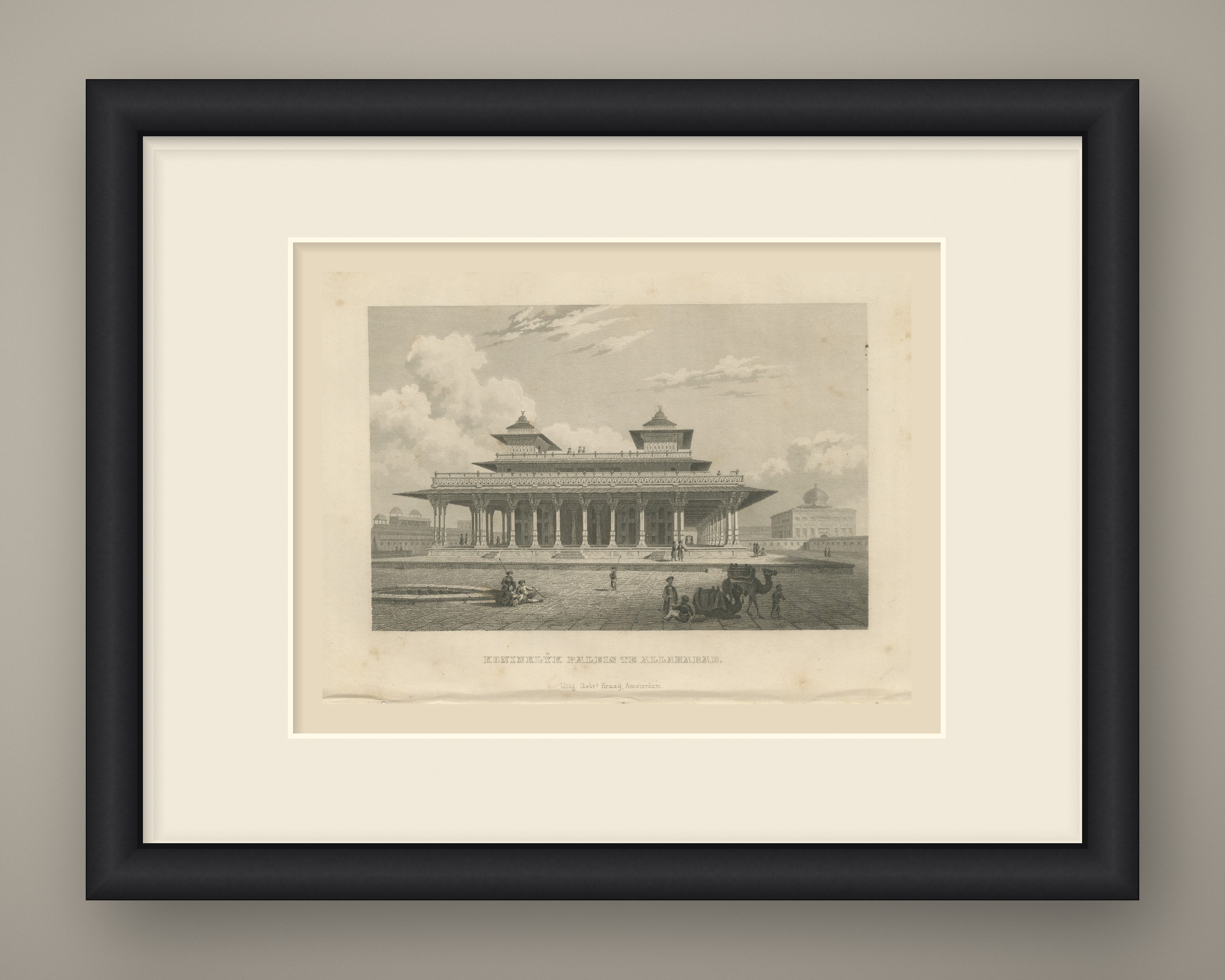
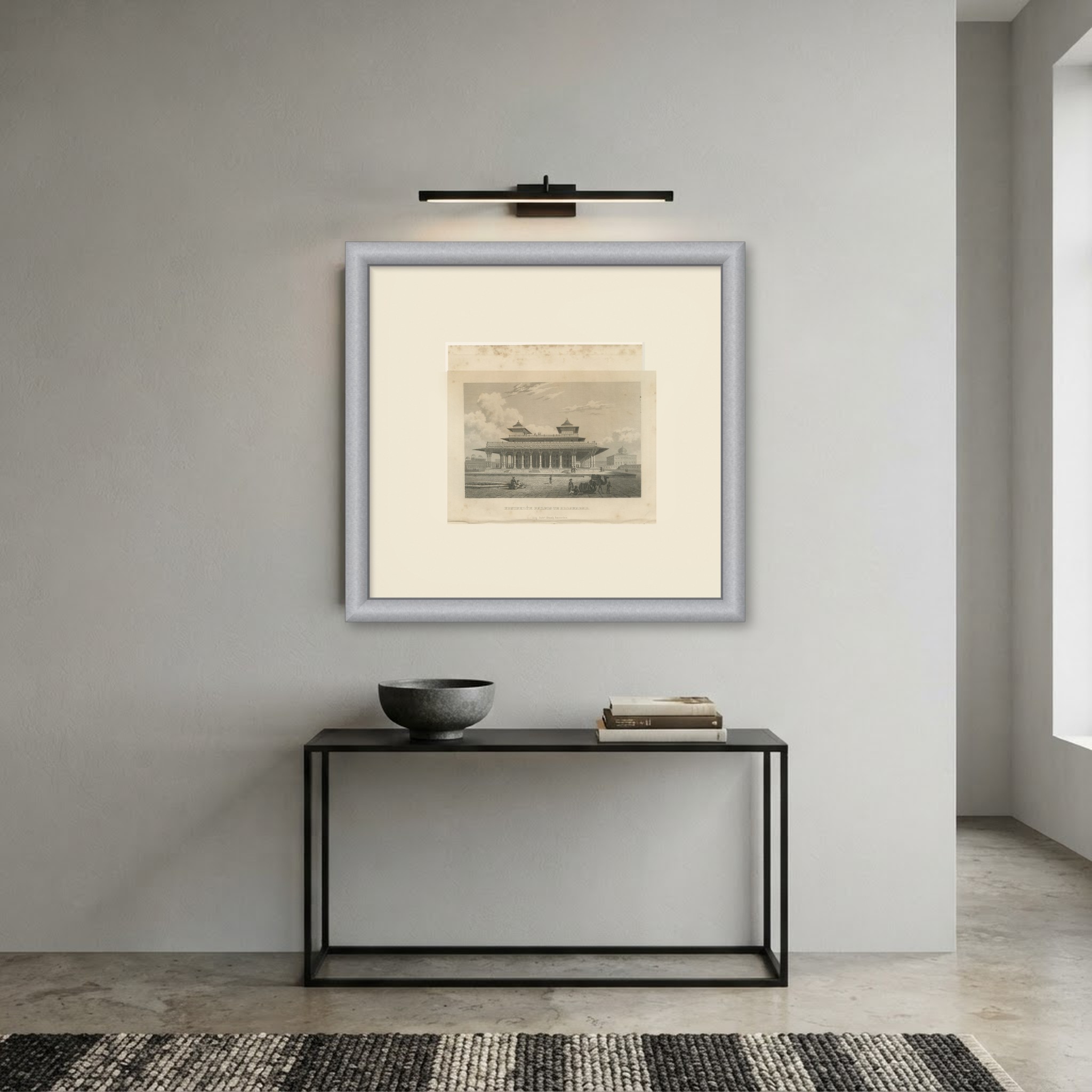
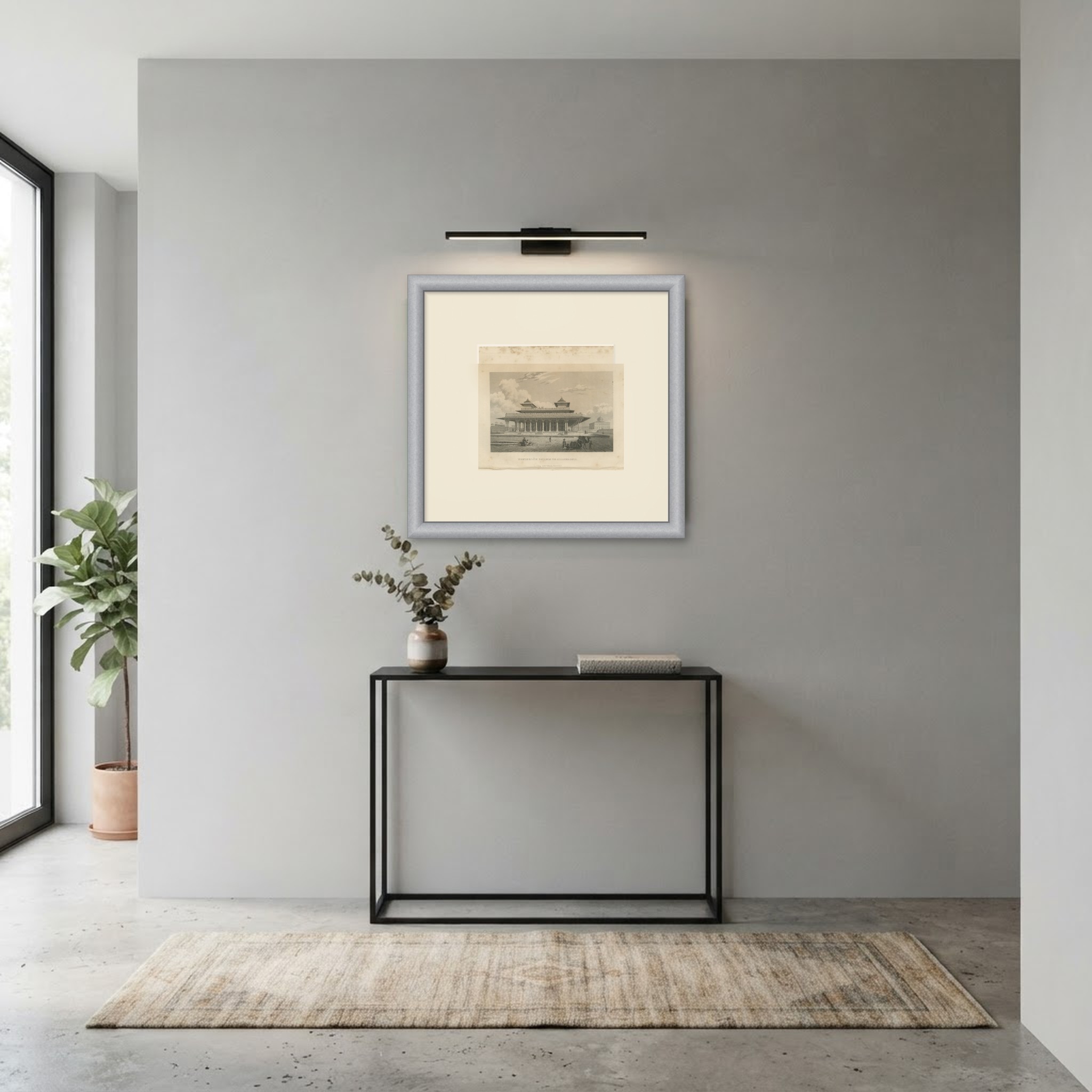
Frame and rooms are illustrations of how the print could look; the description says what is included.
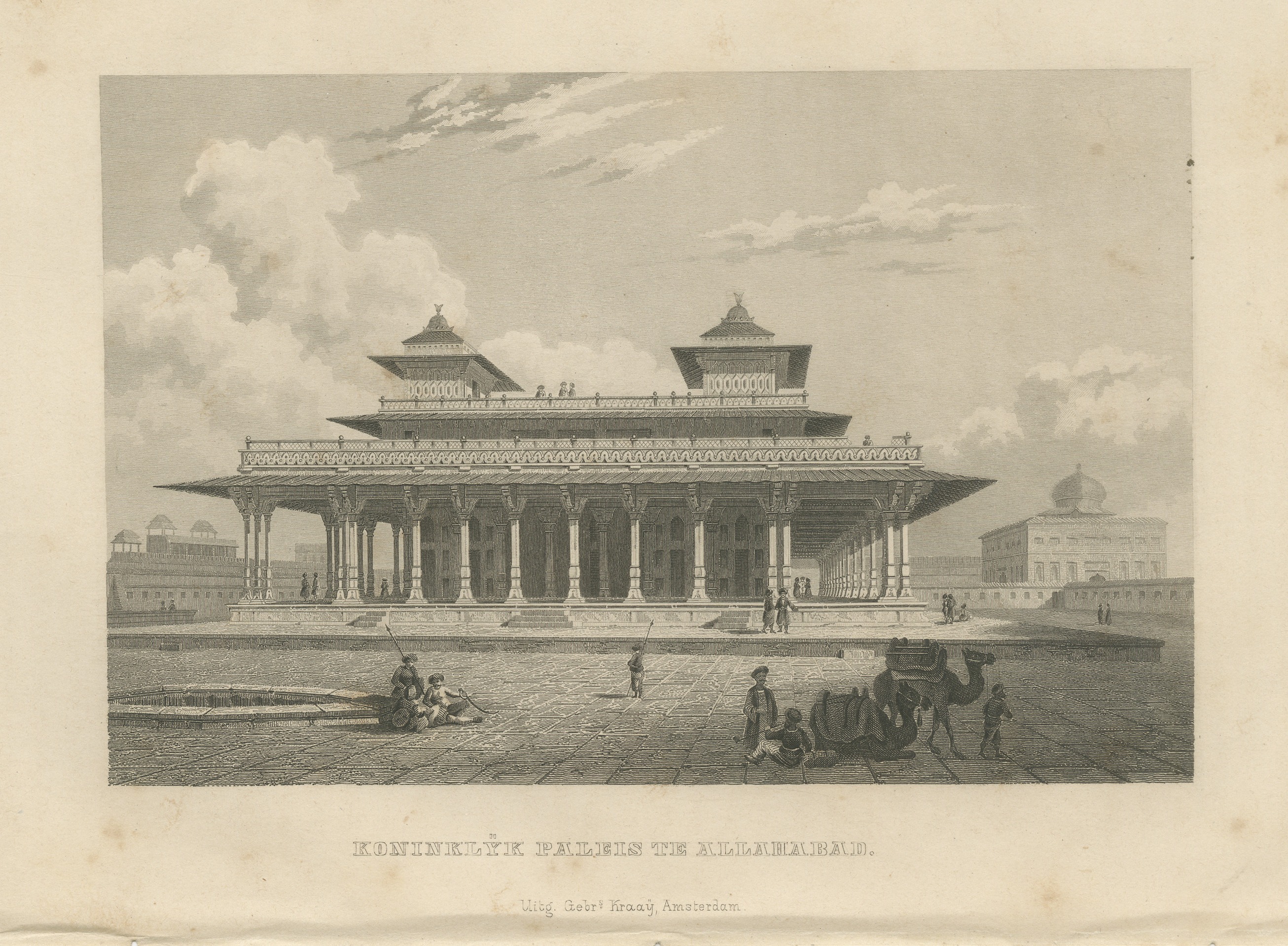
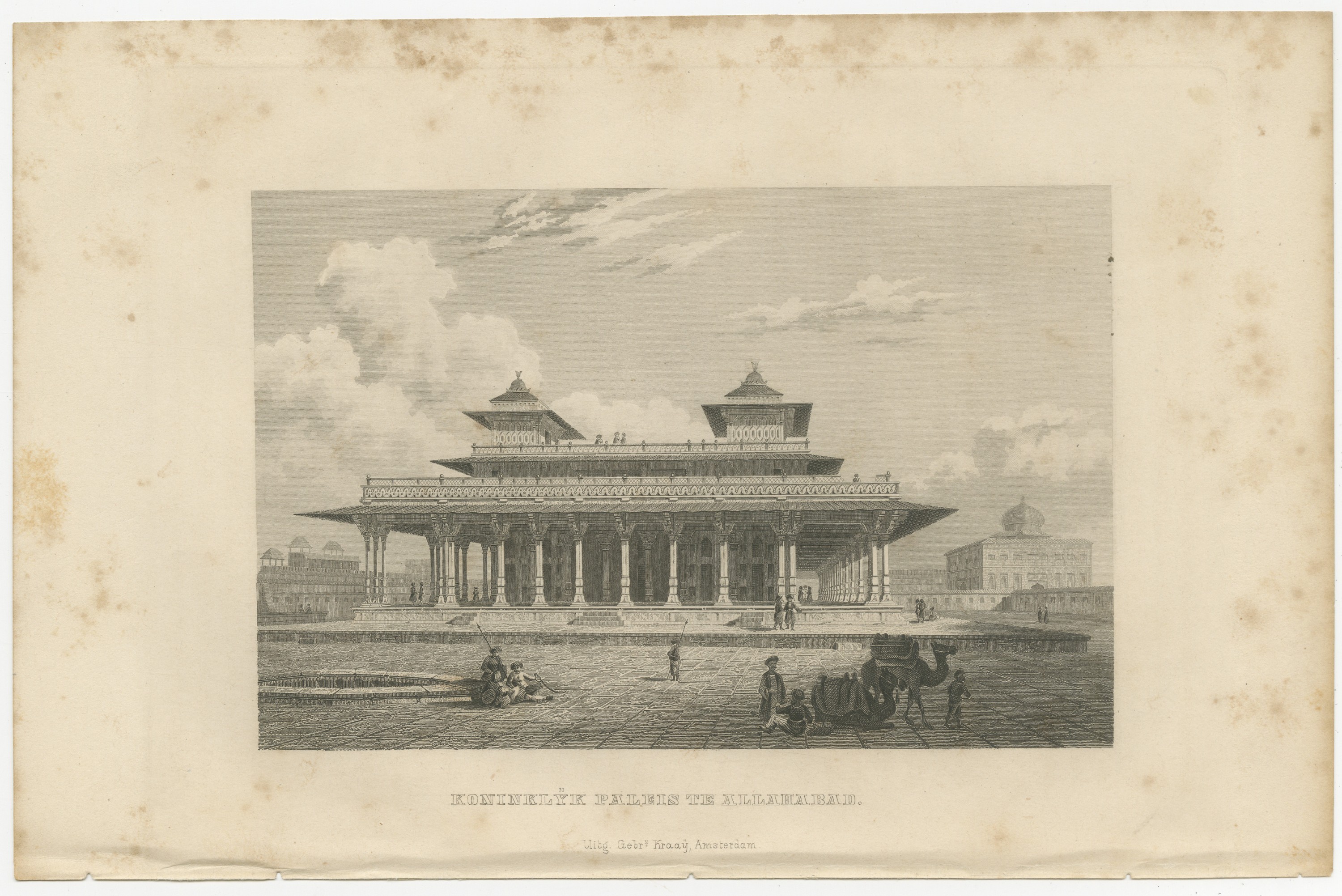
Royal Palace at Allahabad, Columned Pavilion, Antique Steel Engraving, 1859
€170 ($190, £145, €170)
Period original, not a reproduction.
Shipped from the Netherlands, flat, insured and tracked, worldwide. Returns accepted within 14 days.
- Date
- 1859
- Technique
- Steel Engraving
- Coloring
- Uncolored
- Condition
- Good. Light handling wear to the top left and bottom right corners; edges straight and without nicks. Even age toning, lightly soiled along the bottom, right and top edges. Scattered light foxing in the margin.
- Period
- Late 19th century
- Section
- Insects and butterflies
- Reference
- BG-00114-10
What the condition grades mean
- Excellent
- Bright and clean, with no faults worth mentioning.
- Very good
- Only light signs of age, such as faint toning.
- Good
- Normal signs of age for a sheet of this period: toning, some foxing, small marks or neat old repairs.
- Fair
- Clear faults such as staining, tears or repairs, priced to match.
Every fault we see is written in the condition note, and the whole sheet is shown uncropped in the photos.
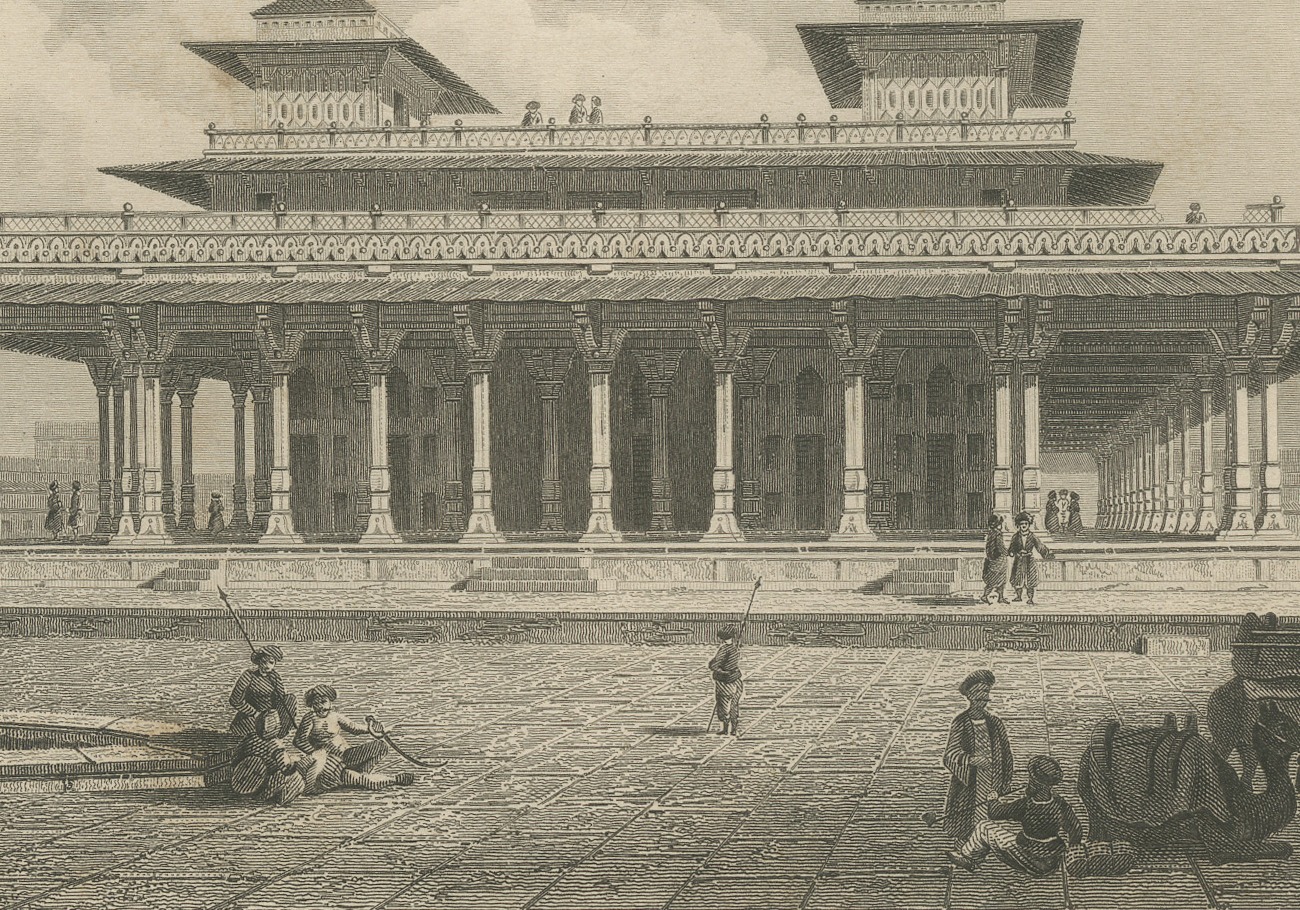
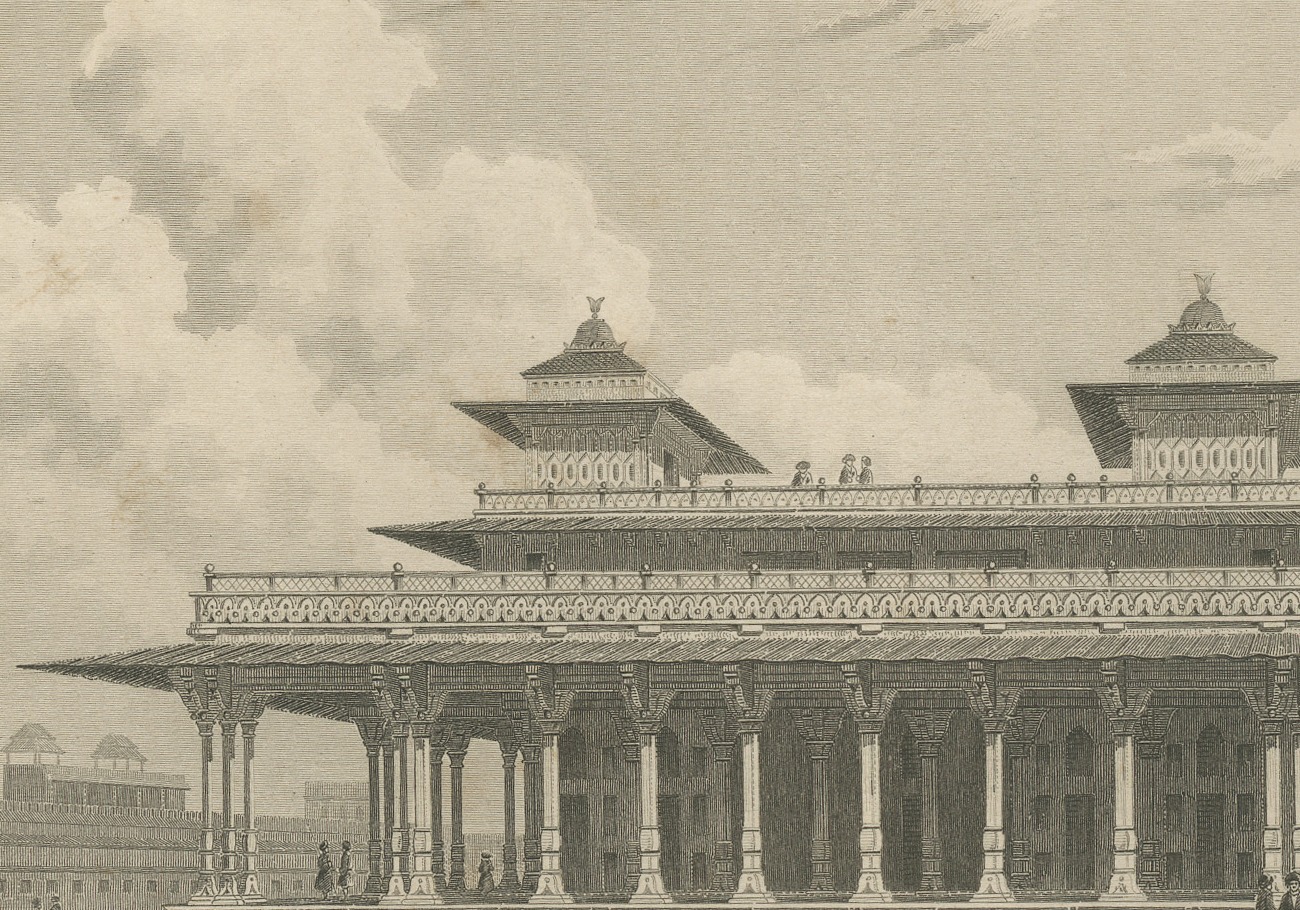
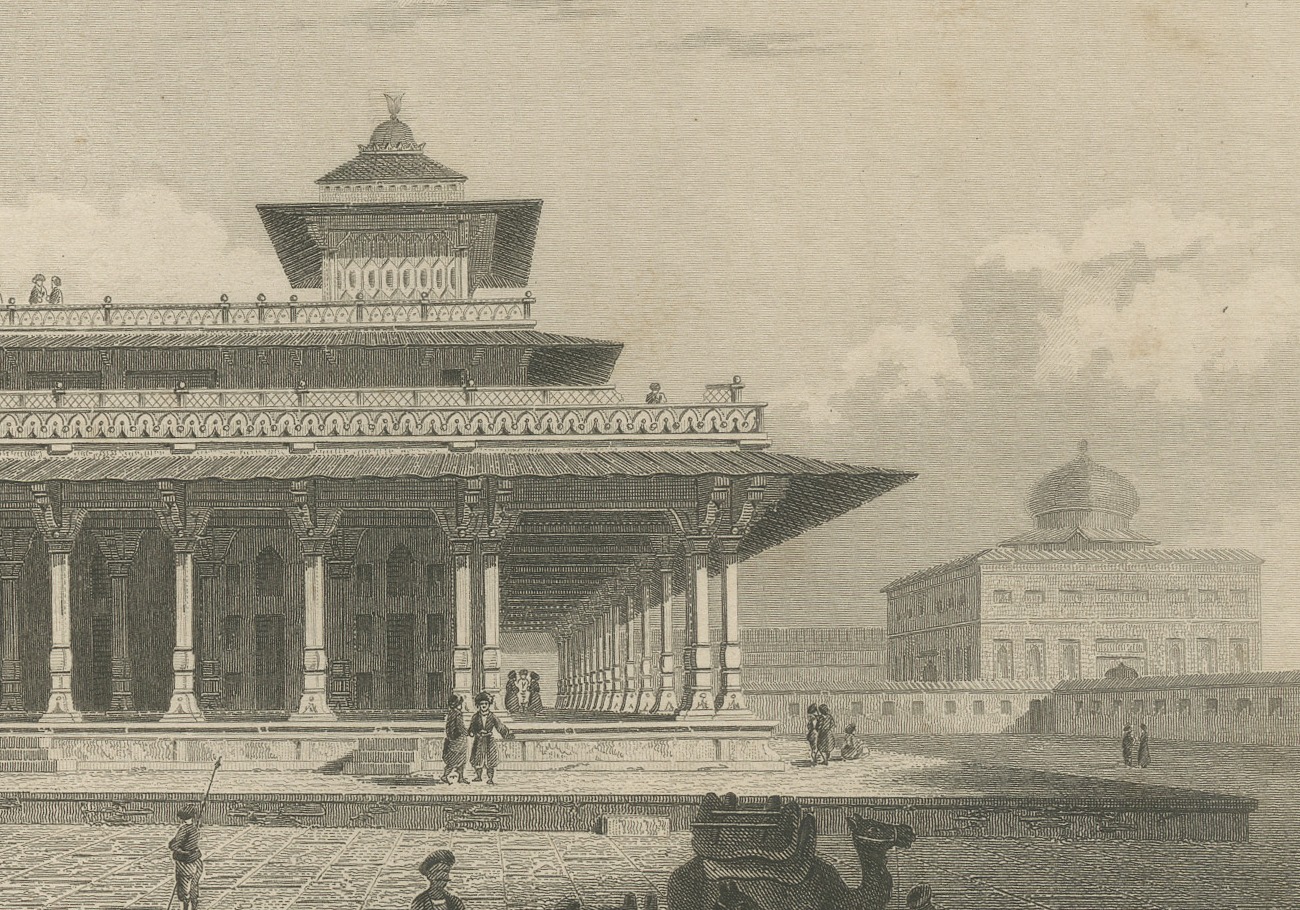
An original antique steel engraving, uncolored, titled "KONINKLŸK PALEIS TE ALLAHABAD." A broad, open pavilion stands on a low platform in the center of a paved courtyard, its deep overhanging roof carried on rows of slender carved columns, with an upper terrace and two small roof pavilions where a few figures look out. At the right a domed building and long walls enclose the court, and other buildings line the left. In the foreground a group of men reclines beside a low rectangular basin at the left, a guard with a spear stands in the middle of the court, and at the right two camels, one kneeling and one standing with a saddle, rest with their attendants. White clouds drift across the sky.
The plate is lettered below the image in Dutch: "KONINKLŸK PALEIS TE ALLAHABAD.", which translates as "Royal palace at Allahabad". Beneath the caption, in a small script, is the publisher's imprint "Uitg. Gebrs Kraaÿ, Amsterdam.", short for uitgegeven (published) by the Kraay brothers of Amsterdam. No artist or engraver is named on the plate.
The plate comes from Britsch-Indië, beschreven naar de nieuwste bronnen (British India, described from the newest sources) by A. van Otterloo, published in Amsterdam by Gebroeders Kraay in 1859. The book is the first part, or Eerste Deel, of the publisher's series Vreemde Landen en Volken (Foreign Lands and Peoples), and its title page announces twenty-four steel engravings and a map. Steel plates held fine, even lines through long print runs, which suited illustrated books of this kind.
Allahabad, at the meeting of the Ganges and the Jumna, was fortified by the emperor Akbar in the sixteenth century. The strong symmetry of the pavilion gives the plate an architectural, almost diagrammatic clarity that frames well.
Condition: Light handling wear to the top left and bottom right corners; edges straight and without nicks. Even age toning, lightly soiled along the bottom, right and top edges. Scattered light foxing in the margin.
This is an original antique print, not a modern reproduction. This item is sold unframed. Any framed or interior images are shown for presentation and inspiration only, unless the listing explicitly states that the item is sold framed.