Close-ups
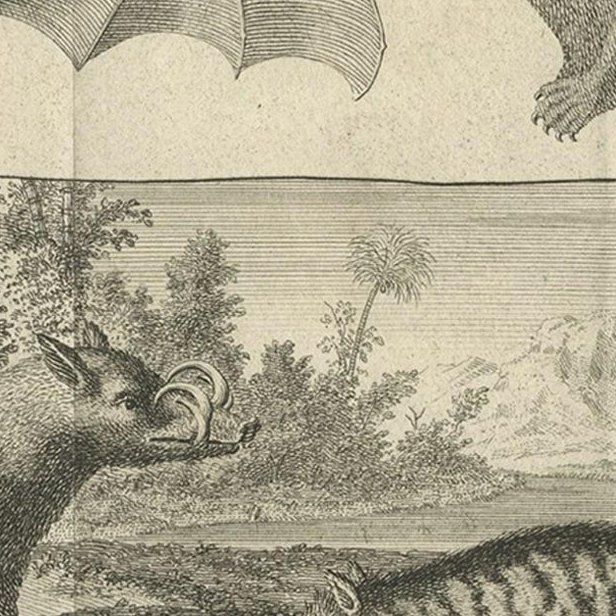
Framed and on the wall
Frame and rooms are illustrations of how the print could look; the description says what is included.
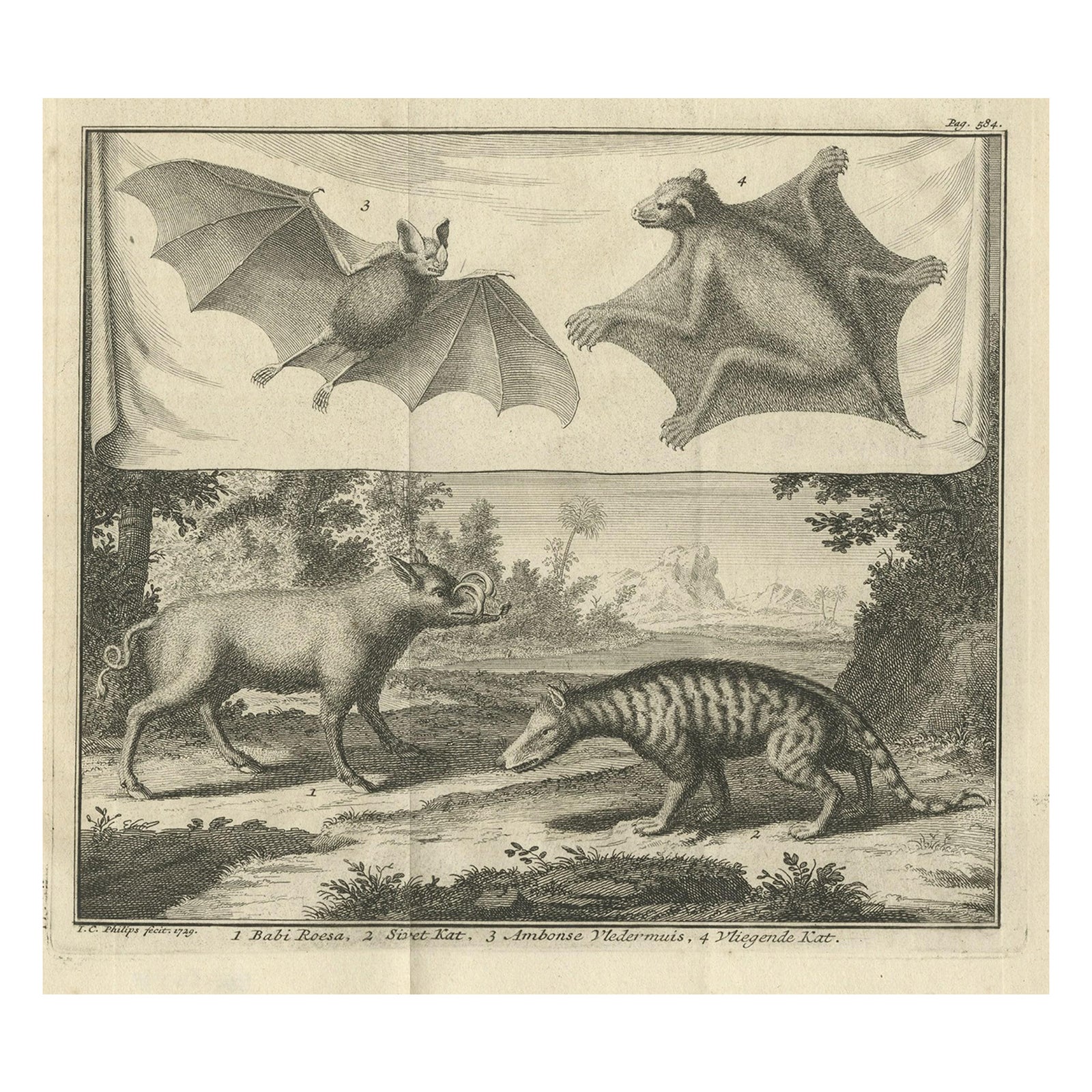
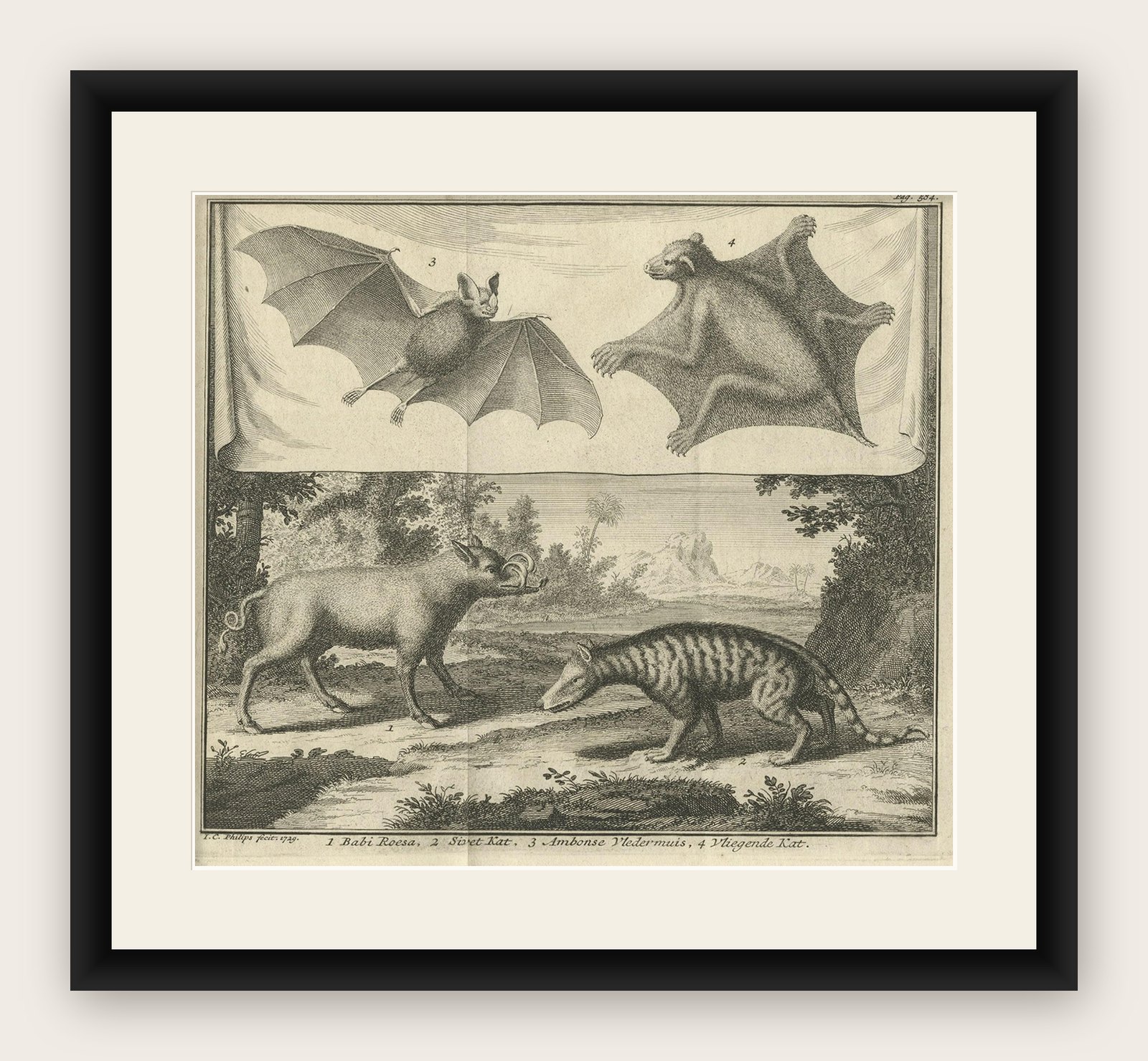
Rare Old Copper Engraved Print of a Flying Cat, a Pig, a Bat and Civet Cat, 1729
€290 ($325, £245, €290)
Period original, not a reproduction.
Shipped from the Netherlands, flat, insured and tracked, worldwide. Returns accepted within 14 days.
- Date
- 1729
- Size
- 8.3 × 9.3 in (21 × 23.5 cm)
- Condition
- Very good. General age-related toning. Please study image carefully.
- Period
- 18th century
- Section
- Mammals
- Reference
- f_27350742
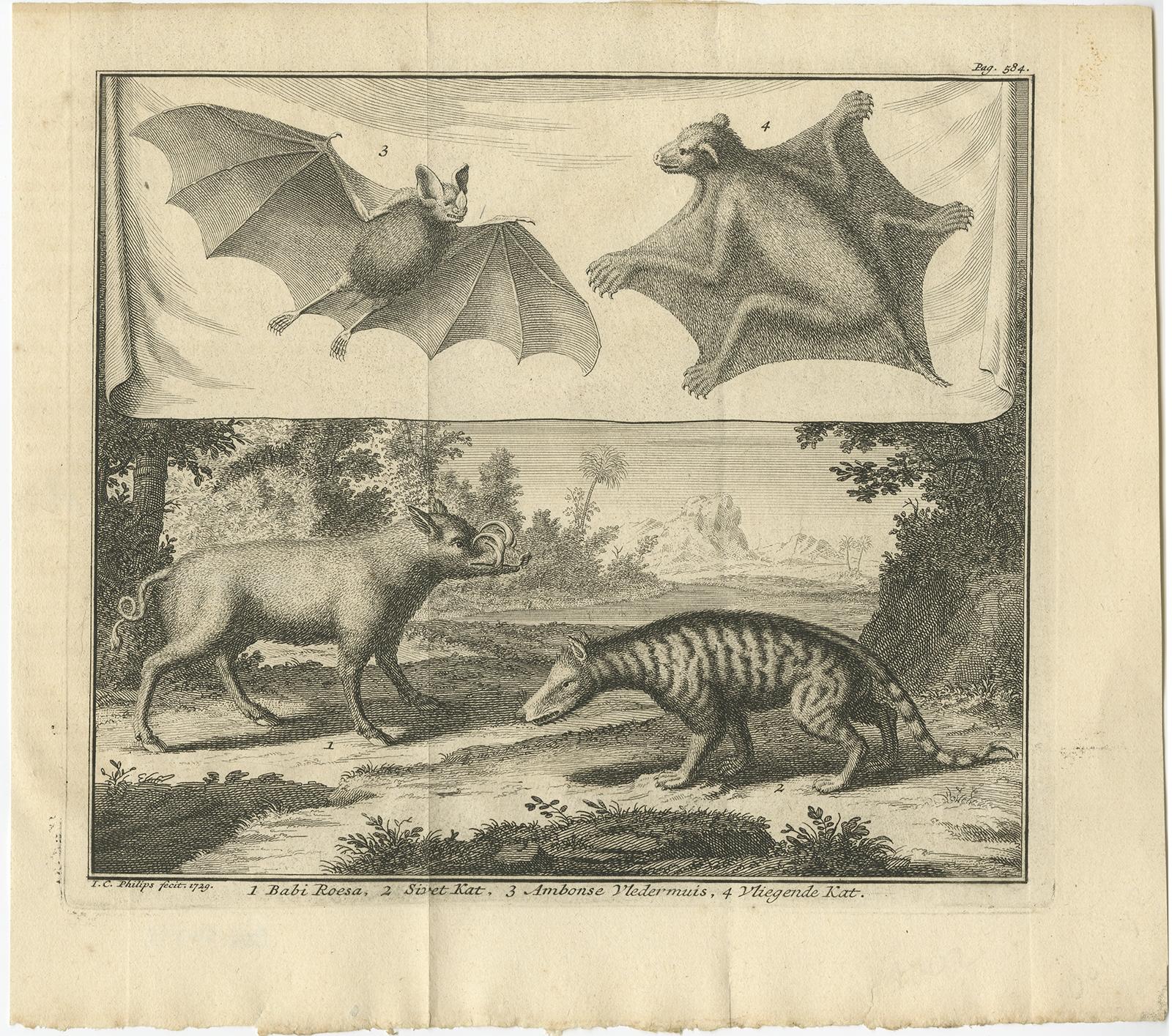
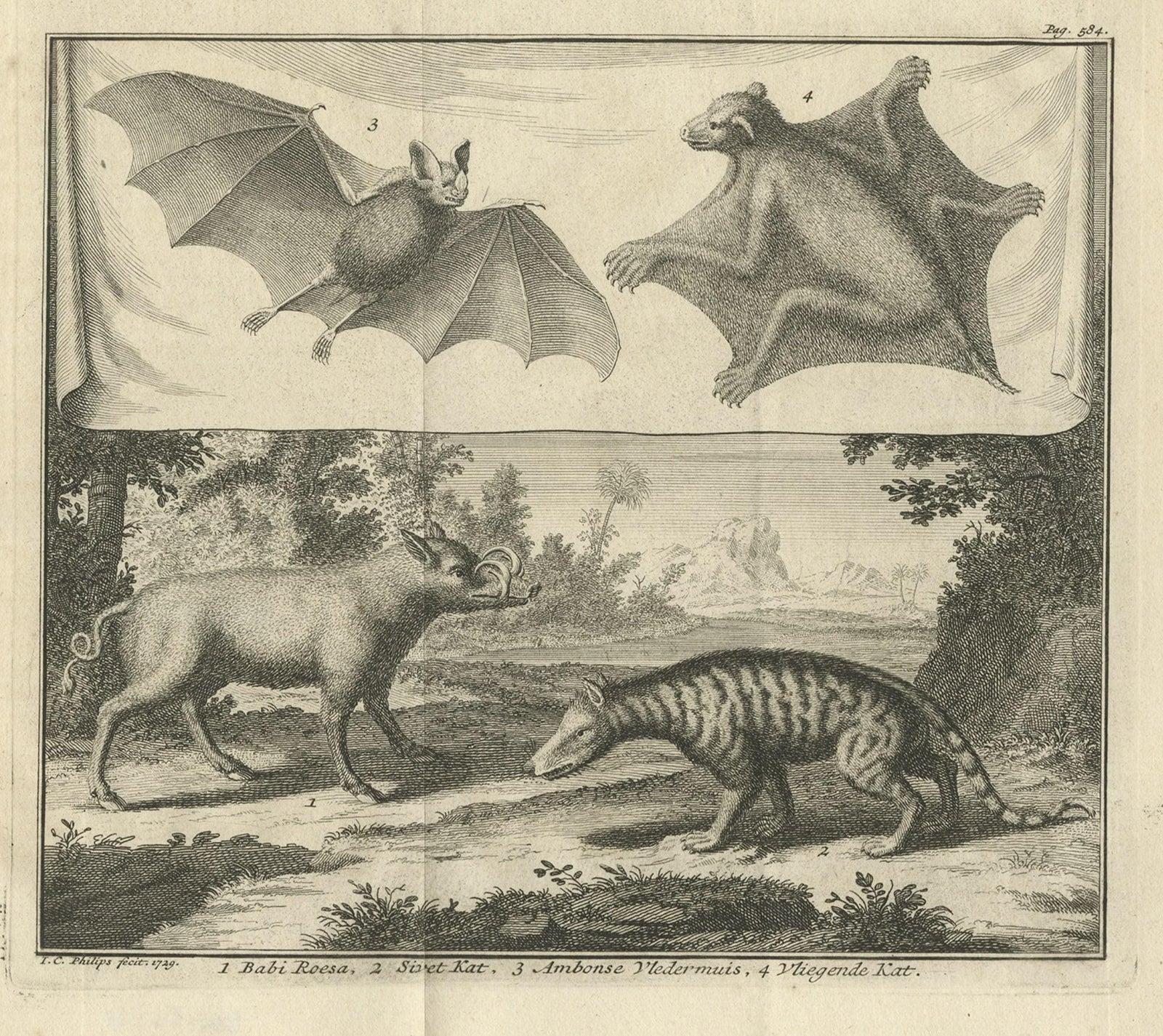
Untitled print of various wild cats and bats. Dutch subtitles ‘1 Babi Roesa, 2 Sivet Kat, 3 Ambonse Vledermuis, 4 Vliegende Kat’.
A civet is a small, lean, mostly nocturnal mammal native to tropical Asia and Africa, especially the tropical forests. The term civet applies to over a dozen different species, mostly from the family Viverridae. Most of the species diversity is found in southeast Asia. The best-known species is the African civet, Civettictis civetta, which historically has been the main species from which a musky scent used in perfumery, also referred to as "civet", was obtained.
A caged civet - Kopi luwak (also called caphe cut chon (fox-dung coffee), in Vietnam, and kape alamid, in the Philippines) is coffee that is prepared using coffee cherries that have been eaten and partly digested by the Asian palm civet, then harvested from its fecal matter. The civets digest the flesh of the coffee cherries but pass the pits (beans) inside, where stomach enzymes affect the beans, which adds to the coffee's prized aroma and flavor. 0.5 kg (1 lb) can cost up to $600 in some parts of the world and about $100 a cup in others. This demand has led to civet farms on which the civets are fed a diet composed almost exclusively of such cherries, causing them to become severely malnourished. Farm conditions are also routinely described as deplorable. Filipino and Vietnamese oversight of these farms is non-existent.
This print originates from the first volume of ‘Hedendaegsche historie, of tegenwoordige staat van alle volkeren’ published 1729.
Artists and Engravers: Engraved by J.C. Philips. Author: T. Salmon.