Rare 1769 Tapir Trio, Original Hand-Coloured Buffon Engravings
$585 (£440, €520)
Period original, not a reproduction.
Shipped from the Netherlands, flat, insured and tracked, worldwide. Returns accepted within 14 days.
- Date
- 1769
- Size
- 10.2 × 7.9 in (26 × 20 cm)
- Condition
- Good. Very good condition overall. Wide margins with light age toning. Occasional small foxing spots in the margins. Hand colouring intact and fresh. Strong plate impressions. No tears or repairs.
- Period
- 18th century
- Artist or book
- Buffon
- Section
- Mammals
- Reference
- f_47540482
Rare 1769 Tapir Trio, Hand-Coloured Buffon Engravings from Amsterdam Edition
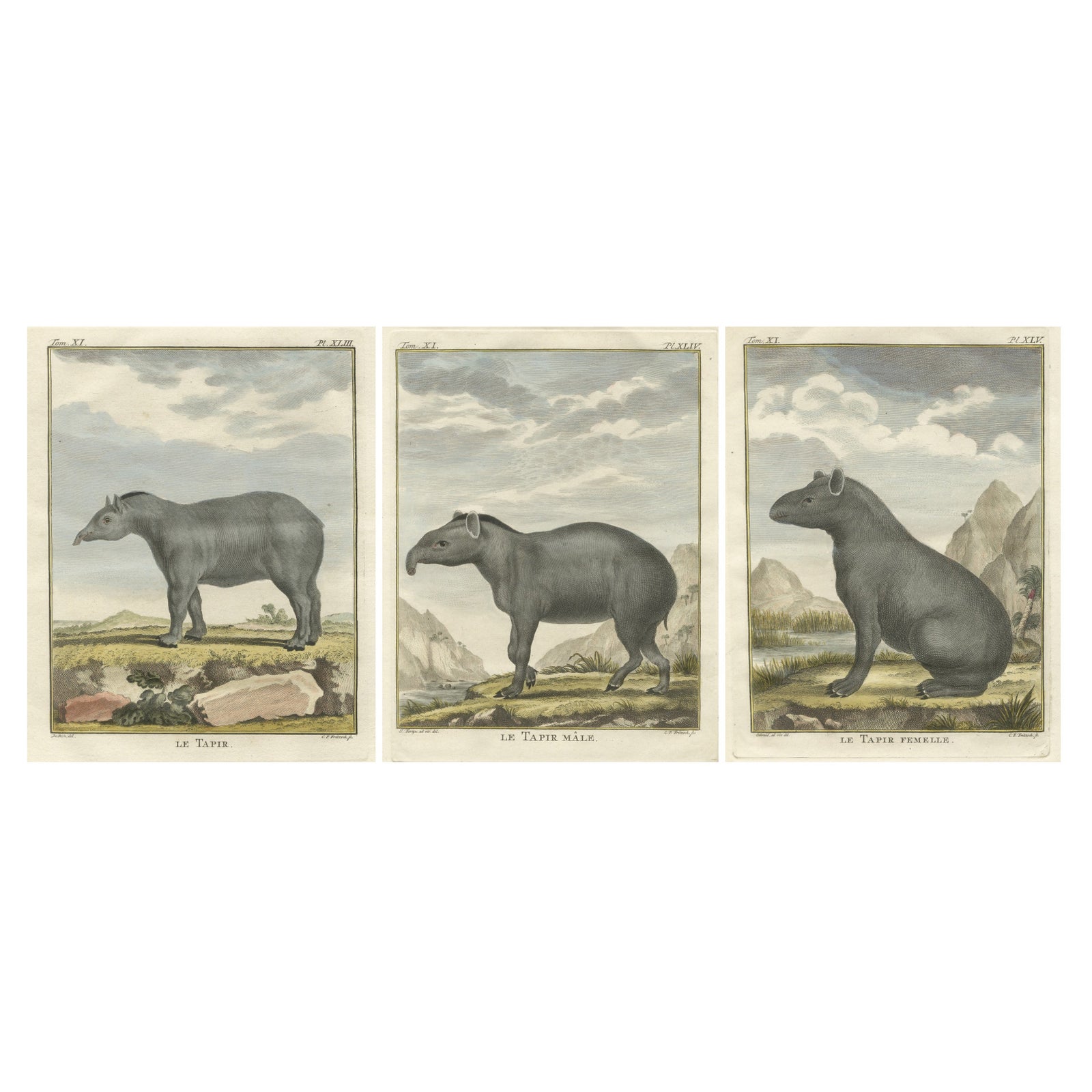
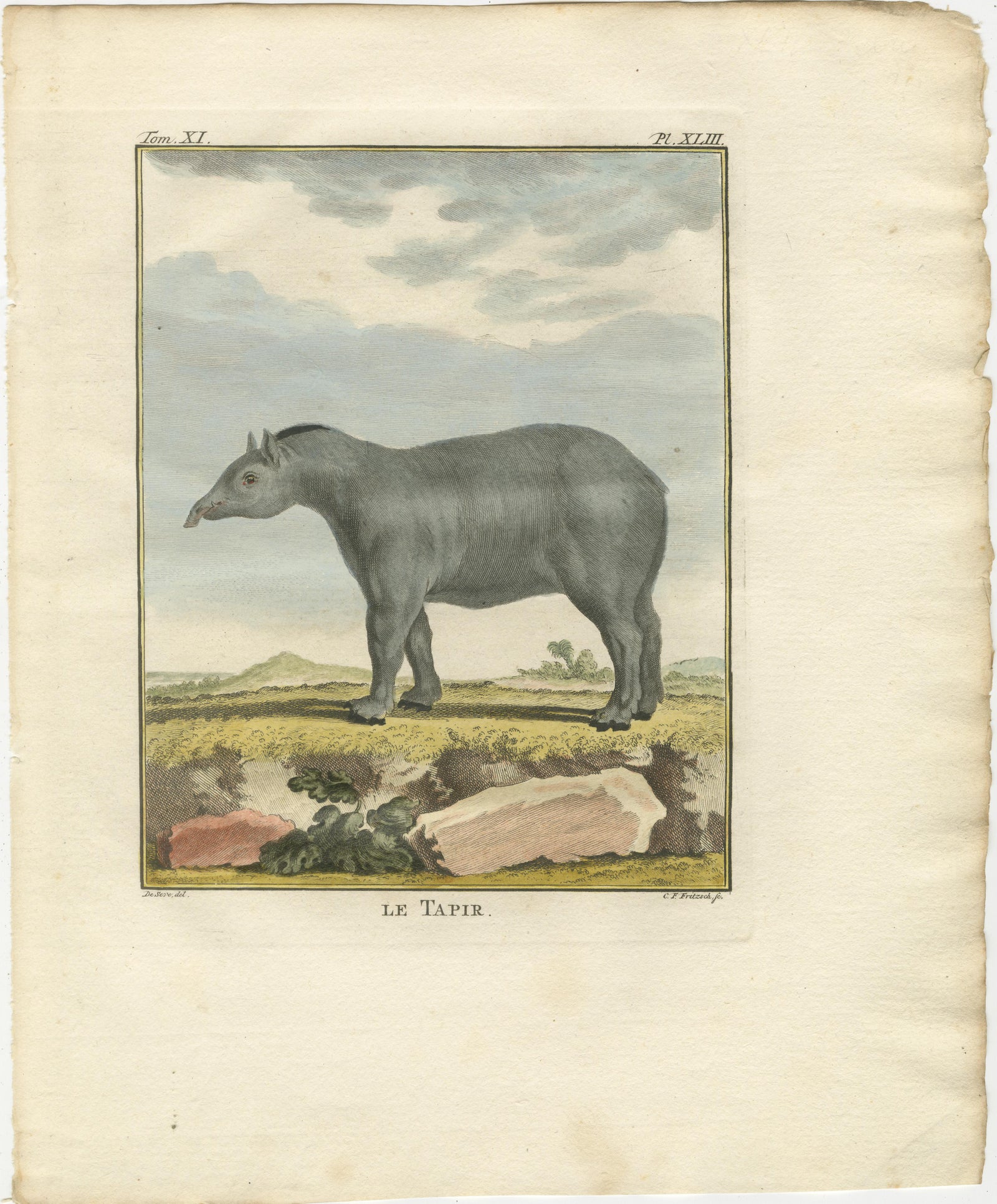
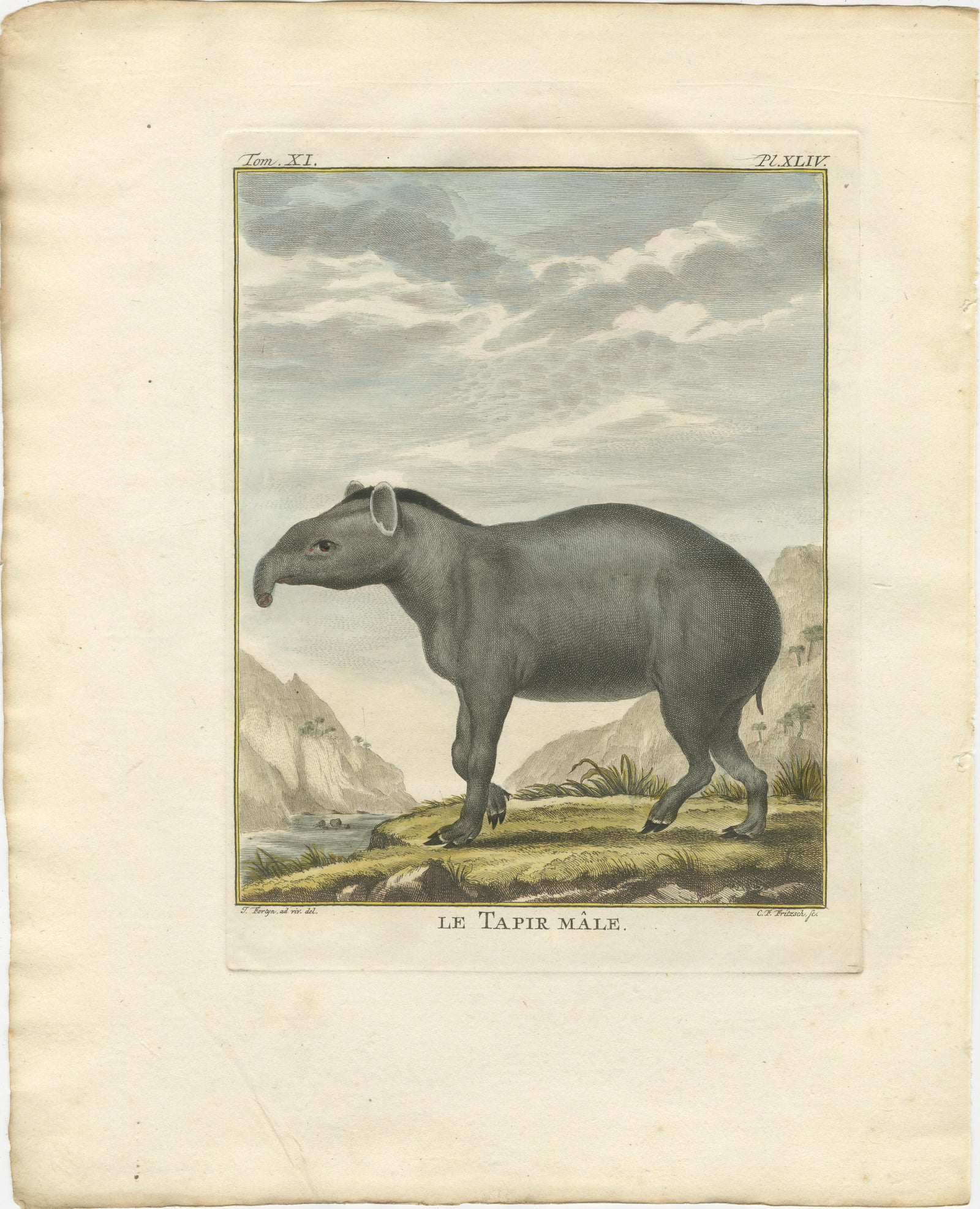
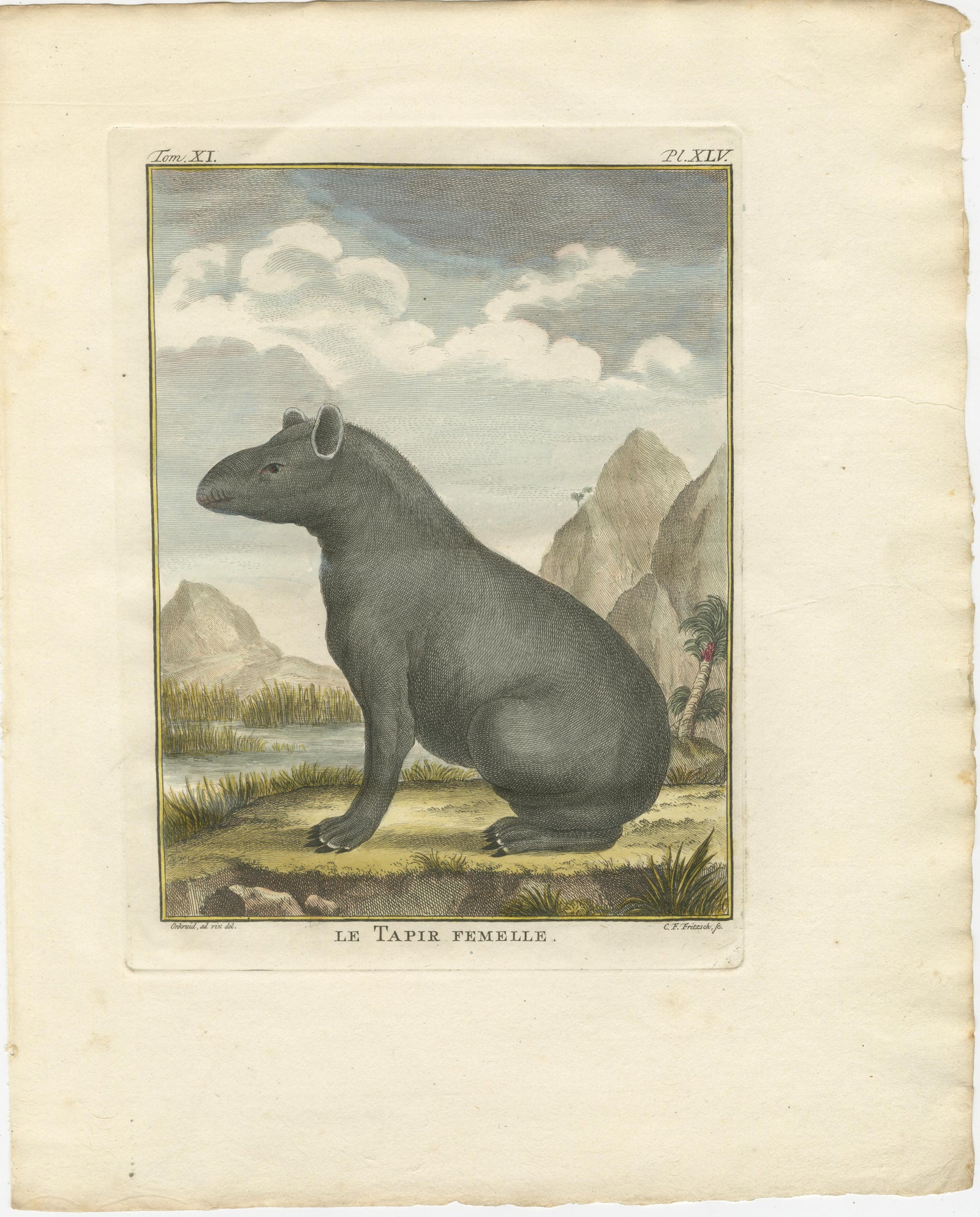
This outstanding three-plate tapir set comes from the 1769 Amsterdam Dutch edition of Buffon’s Histoire Naturelle, one of the most influential natural-history works of the Enlightenment. The group includes Le Tapir (Plate XLIII), Le Tapir Mâle (Plate XLIV), and Le Tapir Femelle (Plate XLV), forming one of the most complete early European portrayals of this unusual New World mammal.
Tapirs were still scarcely known to European science in the 18th century, and Buffon’s team provided some of the earliest widely circulated visual records. These engravings are all drawn in the elegant, precise manner typical of Jacques de Sève and engraved with remarkable clarity by the Amsterdam craftsmen. The hand colouring of the Schneider edition enriches the animals with soft grey, blue, and charcoal tones, giving body to their thick forms while preserving the gentle, naturalistic appearance Buffon intended.
Each plate presents a slightly different pose and setting. Le Tapir (XLIII) shows the animal standing in profile on a rocky foreground, with delicate foliage framing the lower edge. Le Tapir Mâle (XLIV) is slightly more muscular in appearance, placed in front of a dramatic landscape of rocks, hills, and water, with a sky full of lively cloud formations. Le Tapir Femelle (XLV) is shown seated beside a marshy pool, creating a calmer and more contemplative composition. Together, the three form a balanced and coherent series, unified by their matching borders, colouring, and complementary landscapes.
This trio is especially appealing to collectors because Buffon devoted great interest to describing newly reported American fauna. To 18th-century readers, the tapir was a creature of mystery, part pig, part elephant, part horse, and these engravings remain historically significant for their early role in documenting exotic mammals from the Americas.
The plates make a striking decorative ensemble when hung as a triptych, equally suitable for classic interiors, country houses, studies, libraries, or modern natural-history-themed walls. Their large margins, fine impression, and atmospheric backgrounds give them a visual presence that continues to attract collectors.
Condition report:
Very good condition overall. Wide margins with light age toning. Occasional small foxing spots in the margins. Hand colouring intact and fresh. Strong plate impressions. No tears or repairs. Clean paper with the typical texture of 18th-century laid stock.
Framing tips:
Hang as a horizontal trilogy for the best effect. Use warm ivory or soft grey matting. Walnut, oak, or black frames work well. Floating the sheets is ideal if you want to show the generous margins and plate marks.
Keywords:
Buffon tapir engravings
Amsterdam 1769 edition
hand coloured natural history
Le Tapir XLIII XLIV XLV
Jacques de Sève drawings
18th century zoology prints
American fauna illustration
antique exotic animal art
museum quality copperplate
decorative natural history set